Was the "Shot Heard Round the World" Really Fired Here? Concord's Old North Bridge
A modest wooden bridge in Concord, Massachusetts, is famous as the place where the American Revolution began on April 19, 1775. Using National Park Service records, we trace where Emerson's "shot heard round the world" was actually fired.
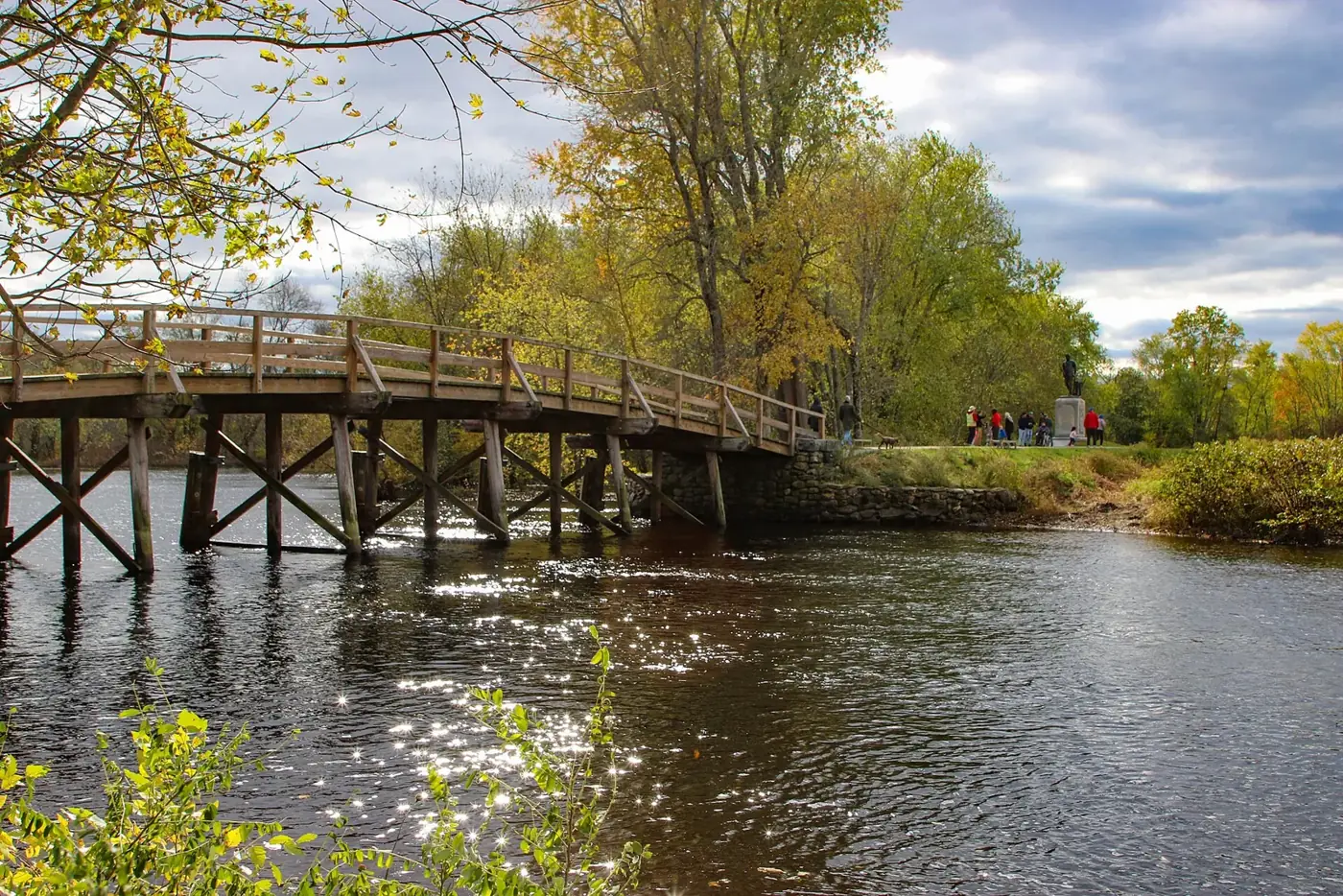
In Concord, Massachusetts, a low wooden bridge arches over a slow, quiet river. This is the Old North Bridge, and its name is forever tied to a single phrase: "the shot heard round the world," the opening shot of the American Revolution. But was that shot really fired here? Start with the short video.

 Watch the one-minute video on YouTube
A bridge 18 miles from Boston
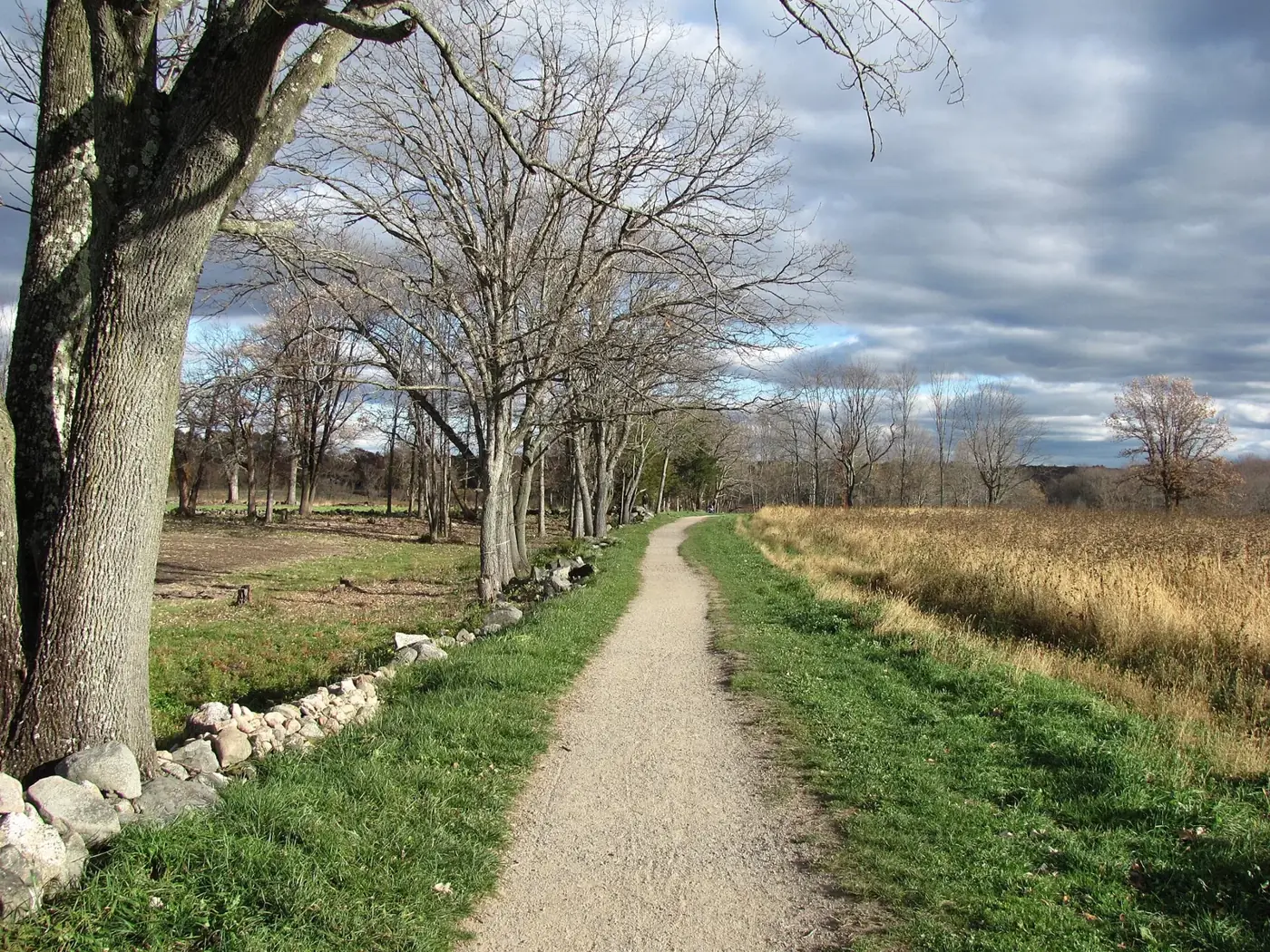
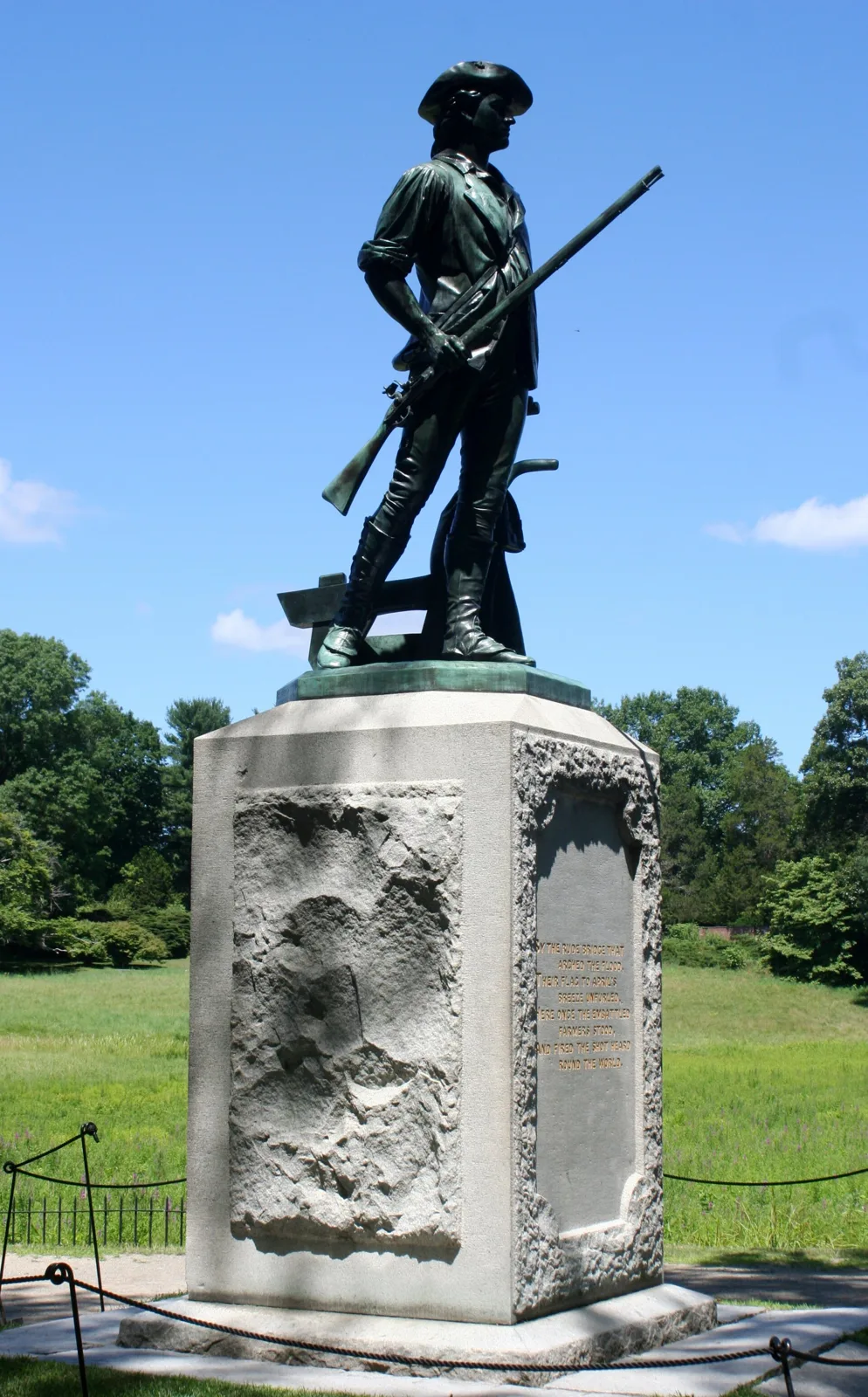
The Old North Bridge stands in Concord, about 18 miles (29 km) northwest of Boston, inside Minute Man National Historical Park. The bridge you walk across today was built in 1956 as a replica of the original. At one end rises a slender stone obelisk; across the river stands a bronze militiaman. Why the two monuments face each other across the water becomes clear later in the story.
The night of April 18, 1775
In 1775, Massachusetts was still a British colony. The royal governor, General Thomas Gage, decided to seize and destroy the arms and supplies the colonists had been stockpiling in Concord. On the night of April 18, he sent out a force of around 700 soldiers on a secret expedition.
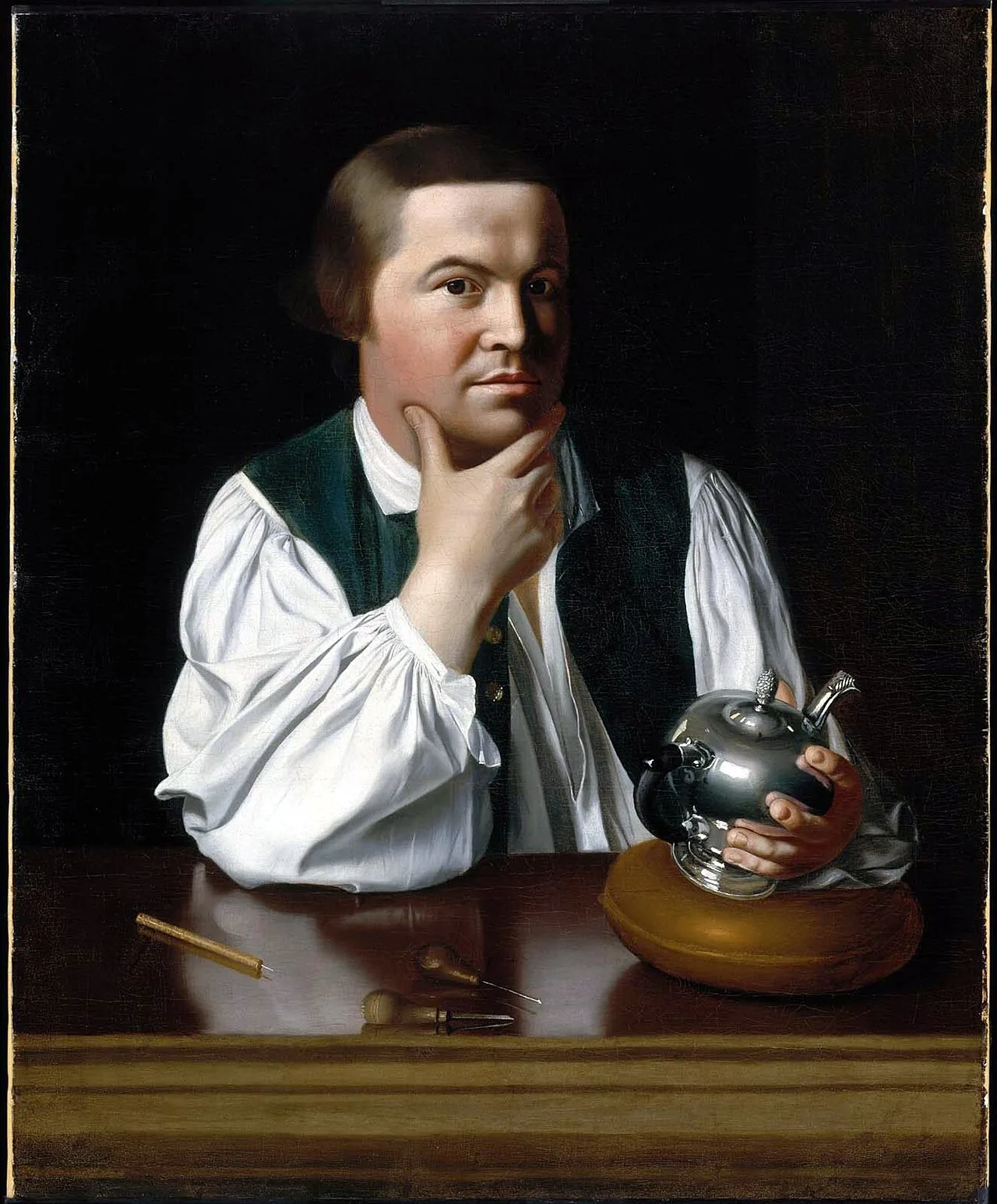
The secret didn't keep. Riders carried the alarm through the night. Paul Revere and William Dawes reached Lexington first with word that the British were coming. Revere was stopped by British officers on the road to Concord, but Samuel Prescott got away and brought the news to Concord. When the town's bell rang, the militia turned out — among them the minute men, so called because they were ready to march "at a minute's warning."

5 a.m.: the first shot, in Lexington
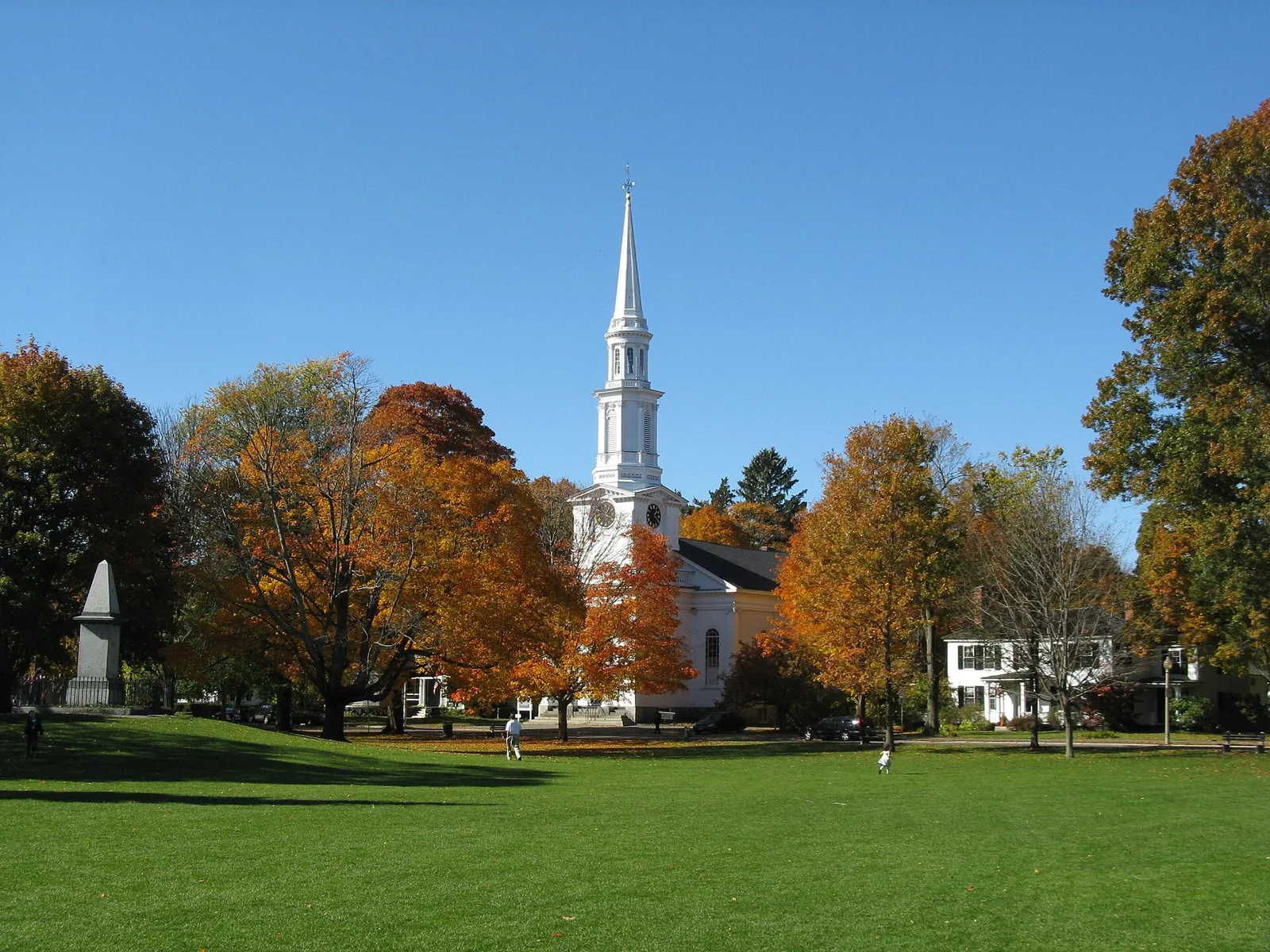
Around 5 a.m., as day was breaking, the British advance guard reached Lexington Green. Waiting there were 77 men of Captain Parker's company. Mounted British officers shouted at them to disperse, and Parker ordered his men to do just that. Then, in the confusion, a single shot rang out from somewhere.
Who fired it? The National Park Service says historians still don't know. What followed was British volleys, and in less than three minutes, eight militiamen were dead and ten wounded.

9:30 a.m.: the North Bridge
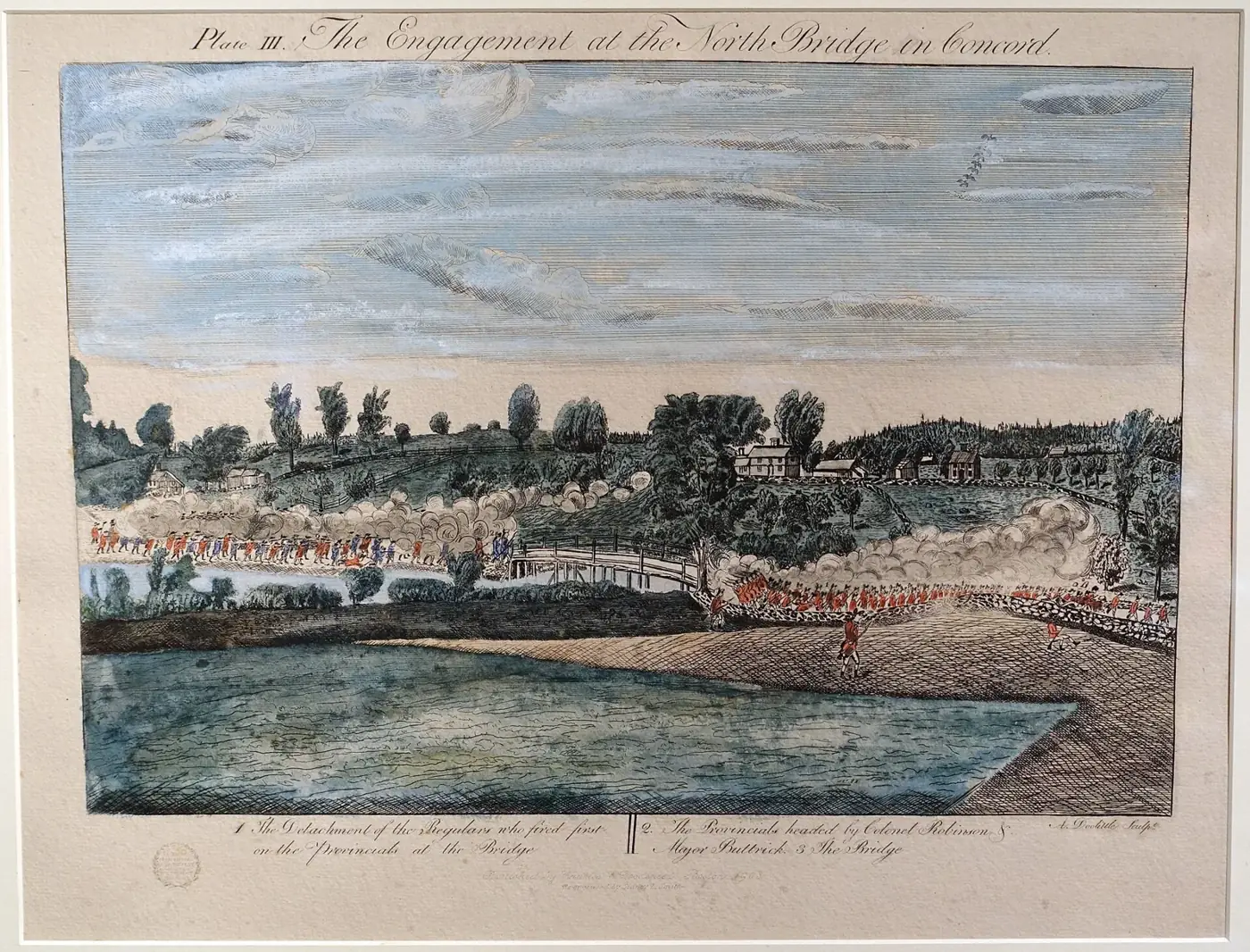
The British marched on into Concord and took control of the North Bridge. Outnumbered, the militia pulled back to high ground across the river and watched. Then a plume of smoke rose above the rooftops of the town. Believing Concord was being burned, roughly 400 militiamen marched down toward the bridge, where about 96 British soldiers stood guard.
As the militia approached, three shots rang out from the British side, all splashing harmlessly into the river. Then, without any order to fire, the rest of the British soldiers opened up. Major John Buttrick, leading the militia, shouted, "Fire, for God's sake, fire!" The Park Service calls it the moment when provincial militia leaders ordered their men to fire on their own government's soldiers for the first time.

Around noon, the British began the march back to Boston. The fighting didn't stop there: militia harried them along the road, and the battle raged over the 16 miles (about 26 km) between Concord and Boston.

Emerson's poem
The famous phrase belongs to the poet Ralph Waldo Emerson. Some sixty years after the fight, a stone obelisk was raised on the spot where the British had stood, and Emerson's "Concord Hymn" was sung at its dedication on July 4, 1837. The first stanza reads:
> By the rude bridge that arched the flood, > Their flag to April's breeze unfurled, > Here once the embattled farmers stood > And fired the shot heard round the world.
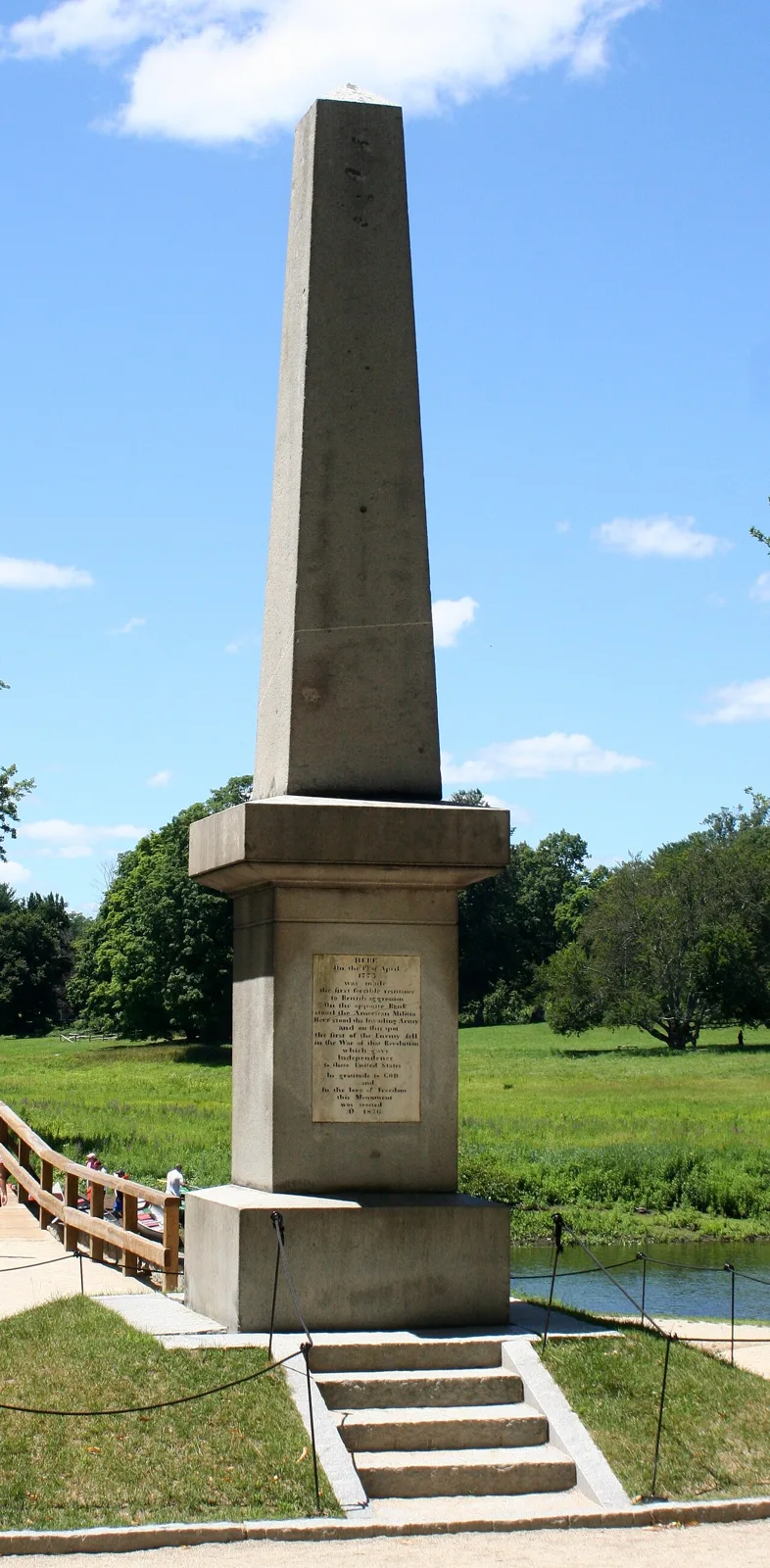

On the opposite bank, where the militia had stood, the Minute Man statue by Daniel Chester French was unveiled for the battle's centennial on April 19, 1875. The seven-foot bronze was cast from old Civil War cannons, and the first stanza of the "Concord Hymn" is carved into its pedestal. So today the two ends of the bridge face off much as the two sides did: a monument marking the British position on one bank, a tribute to the militia on the other.

So was it fired here?
The National Park Service poses exactly this question, and answers it. The bridge Emerson wrote about is indeed the North Bridge. But the first gunfire of the day came at dawn on Lexington Green. The North Bridge is where militiamen were first ordered to fire on British troops. For decades, Lexington and Concord argued fiercely over which town could claim the start of the war. The honest answer is that both have a share in it.
Find the Old North Bridge on Wooriyeojido
The first shot in Lexington, the first order to fire at this bridge: one small wooden crossing holds the opening day of the American Revolution. The Old North Bridge is pinned on the Wooriyeojido map. Look it up in the app, and if you visit, leave your photos and stories from the day right beside it.
View this place in the Wooriyeojido appVideos of nearby places
 How did a cracked bell become a national symbol? The Liberty Bell, Philadelphia
 Did one glint in a millrace change the American West? California Gold Rush, 1848
 Was the last spike really gold? The 1869 Golden Spike
Sources
- National Park Service — Minute Man National Historical Park: April 19, 1775
- National Park Service — North Bridge Musket Ball Discovery
- National Park Service — The Minute Man statue by Daniel Chester French
- National Park Service — The Militia and Minute Men of 1775
- National Park Service — Colonials and Patriots: Minute Man National Historical Park
- Ralph Waldo Emerson — Concord Hymn (1837), in Poems, Project Gutenberg #12843