The California Gold Rush: Did a Few Flakes in a Millrace Change the American West?
On January 24, 1848, James Marshall spotted gold in the tailrace of a sawmill at Coloma, California. Here is how the find set off one of history's great migrations, made California a state, and devastated the region's Native peoples, in a video and photos.
Coloma is a small town tucked into the Sierra Nevada foothills of California. In 1848, a few shiny flakes turned up at the bottom of a ditch at the local sawmill. Did they really change the American West? Start with the short video.

 Watch the one-minute video on YouTube
The beautiful valley
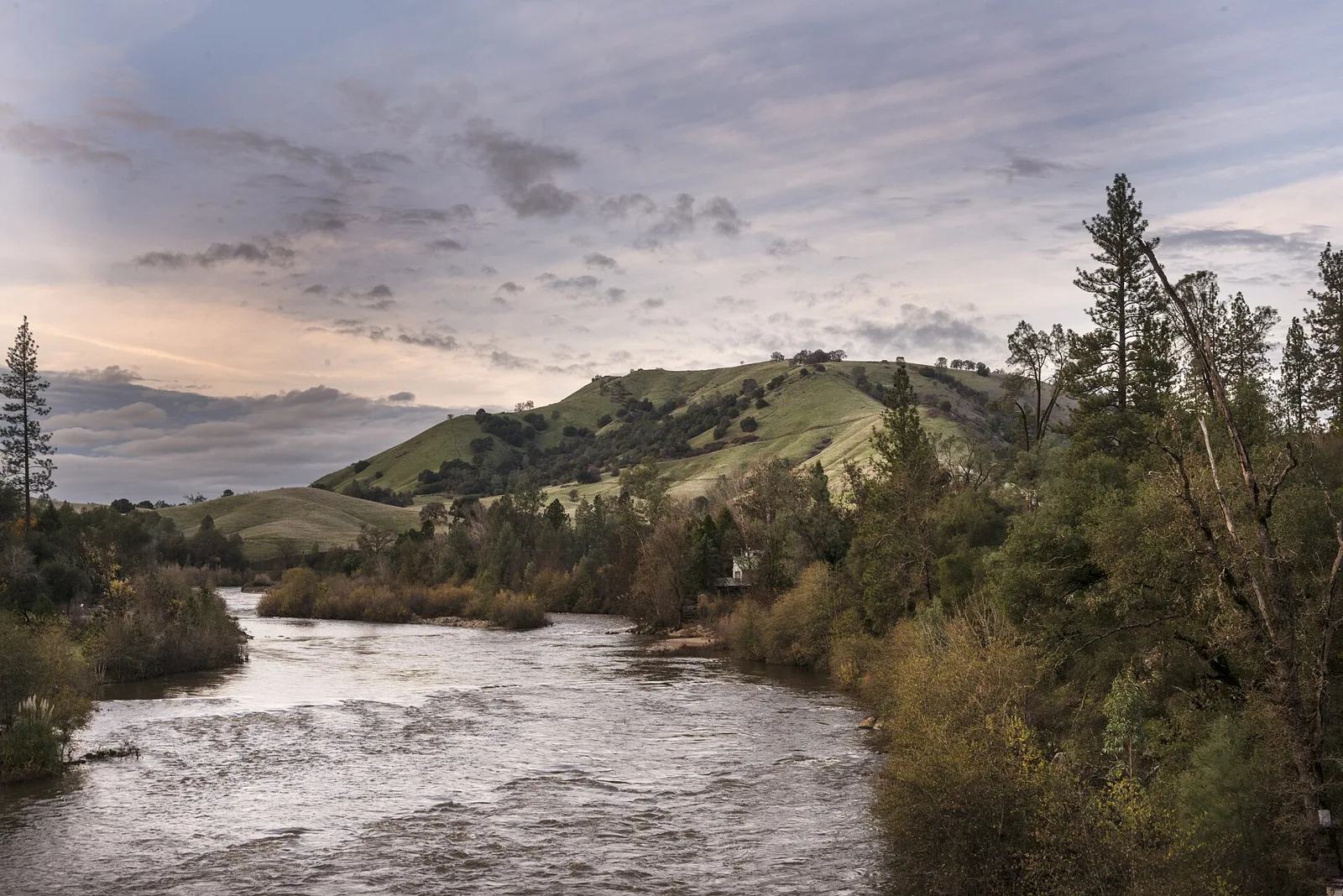
Coloma lies in El Dorado County, in the valley of the South Fork of the American River. Marshall Gold Discovery State Historic Park now covers the spot where the gold was first found.
People lived here long before anyone came looking for gold. For thousands of years, the Nisenan and foothill Miwok built their villages along these streams. The Nisenan called the valley Cullumah, "beautiful valley." They were river people, living on freshwater fish and acorns.

Flakes in the tailrace
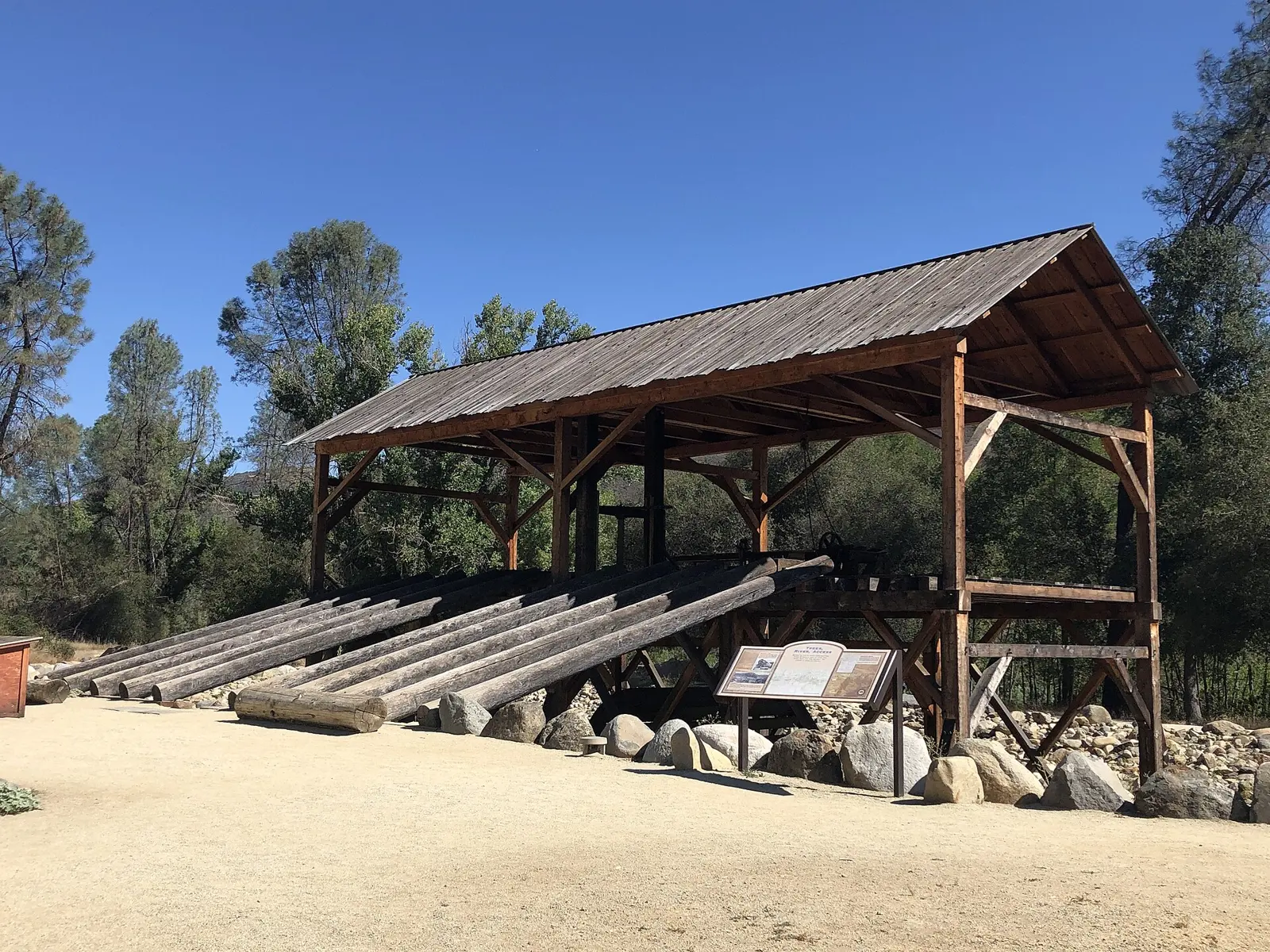
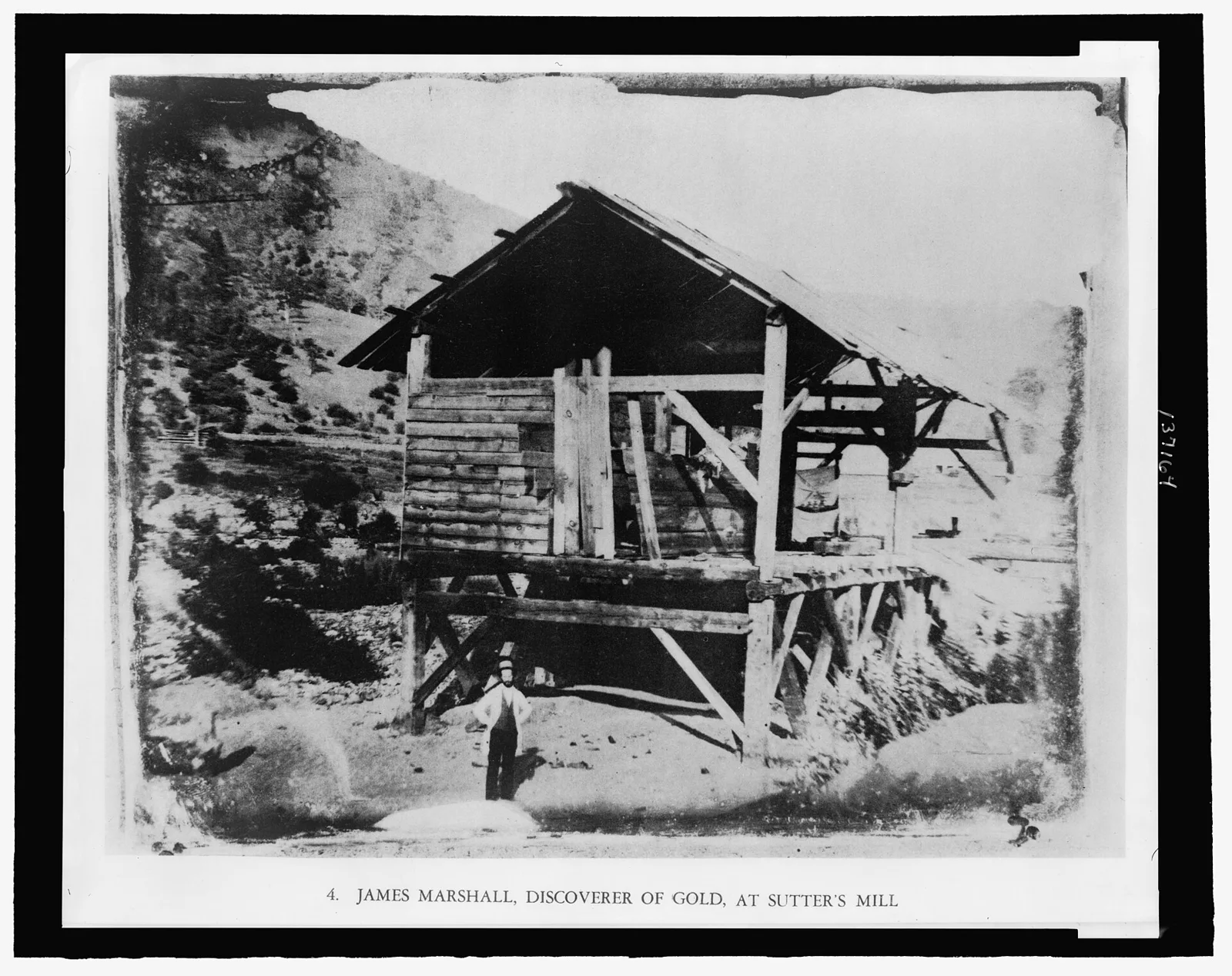
In the fall of 1847, James Marshall began building a water-powered sawmill here in partnership with John Sutter. His crew included local Native workers and veterans of the U.S. Army's Mormon Battalion.
The trouble was the tailrace, the channel that carried water away from the mill wheel. It was too shallow. So each day the Native laborers broke up the rock, and each night water was turned into the ditch to flush the loose debris away.
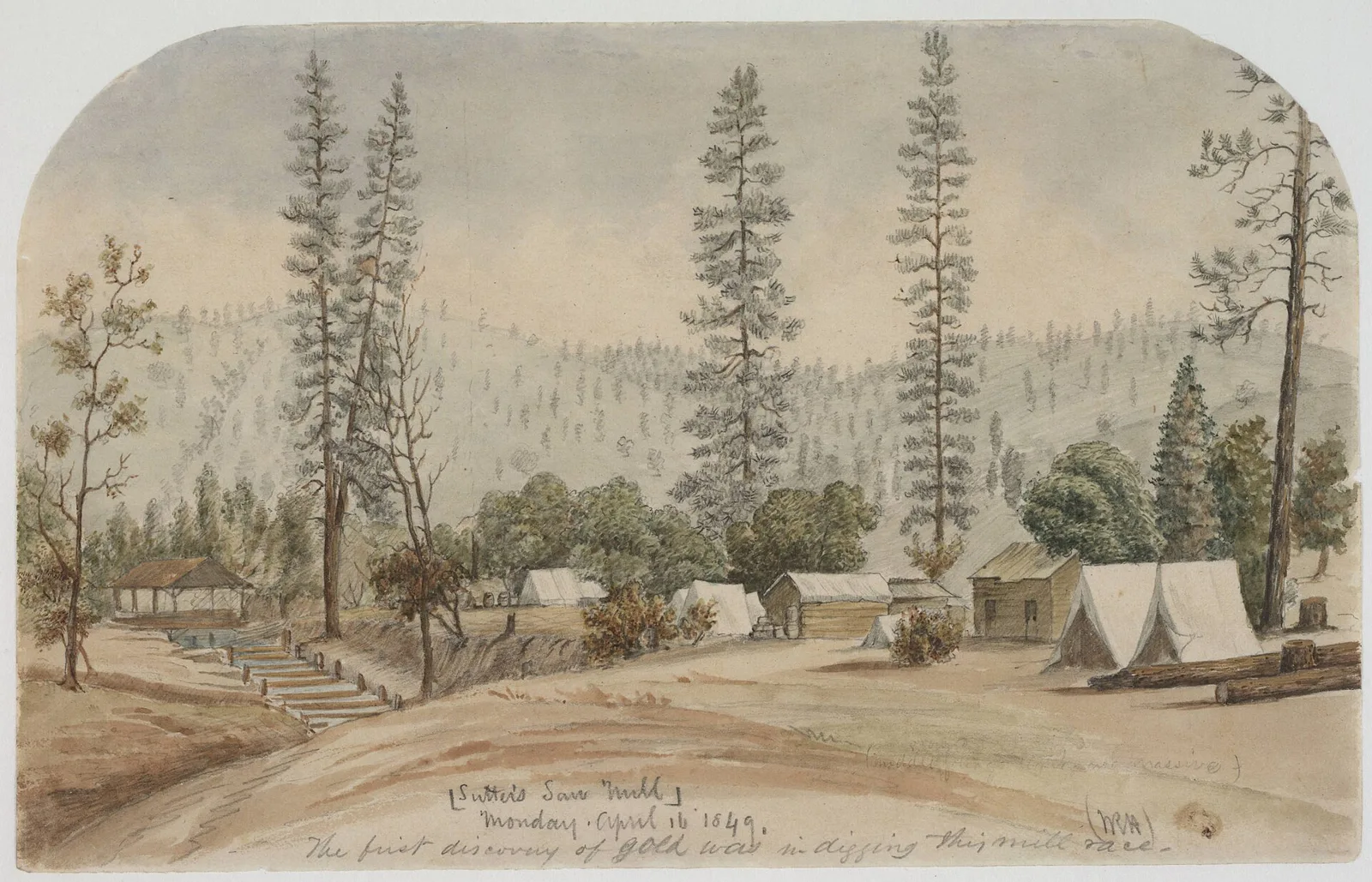

On the morning of January 24, 1848, while inspecting the channel, Marshall noticed something glinting on the bottom. The flakes bent under his fingernail and did not shatter when he pounded them with a rock. Henry Bigler, one of the mill hands, wrote in his diary that day: "some kind of mettle was found in the tail race that looks like goald."
Four days later Marshall rode to Sutter's fort. Sutter pulled out his encyclopedia, ran a series of tests, and confirmed it: gold. The two men agreed to keep it quiet.

"Gold! Gold!"
They didn't manage it for long. That May, Samuel Brannan paraded through San Francisco waving a quinine bottle full of gold and shouting, "Gold! Gold! Gold from the American River!" By the end of the month, the town was reported to be "half empty." By July, some 4,000 people had poured into the area around Coloma.
In December 1848, President James K. Polk confirmed the reports to Congress, and the following year the flood became a torrent. The newcomers of 1849 went down in history as the Forty-Niners. In China, California came to be called Gum San, "Gold Mountain."
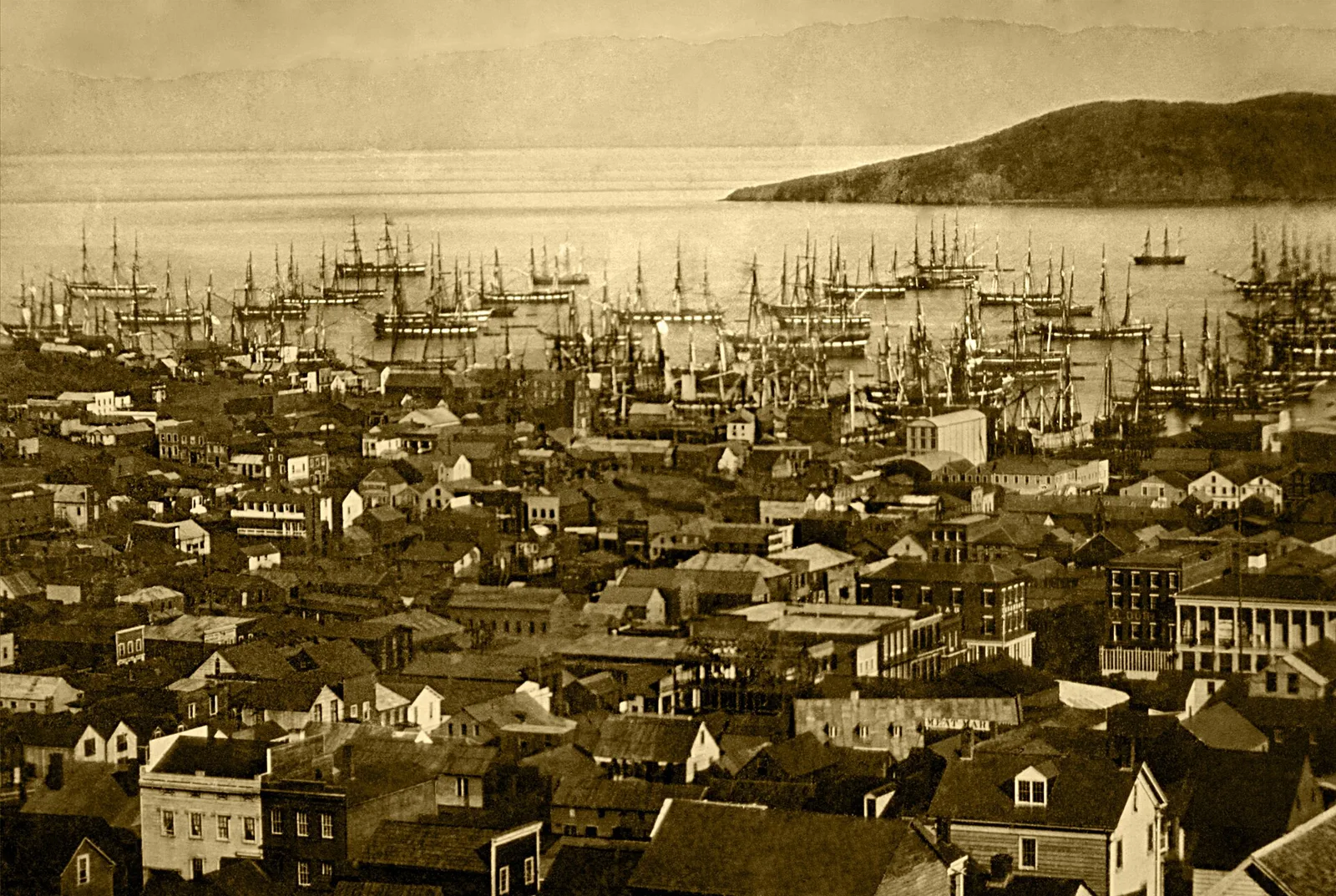

The National Park Service estimates that about 140,000 emigrants reached California over the California Trail alone between 1849 and 1854. According to the state park's brochure, California's non-Native population was about 14,000 in 1848; by 1852 the state's population had passed 200,000. The two figures aren't counted quite the same way, so it's hard to name an exact multiple, but the scale of the change in four years is unmistakable. On September 9, 1850, California joined the Union as the 31st state.
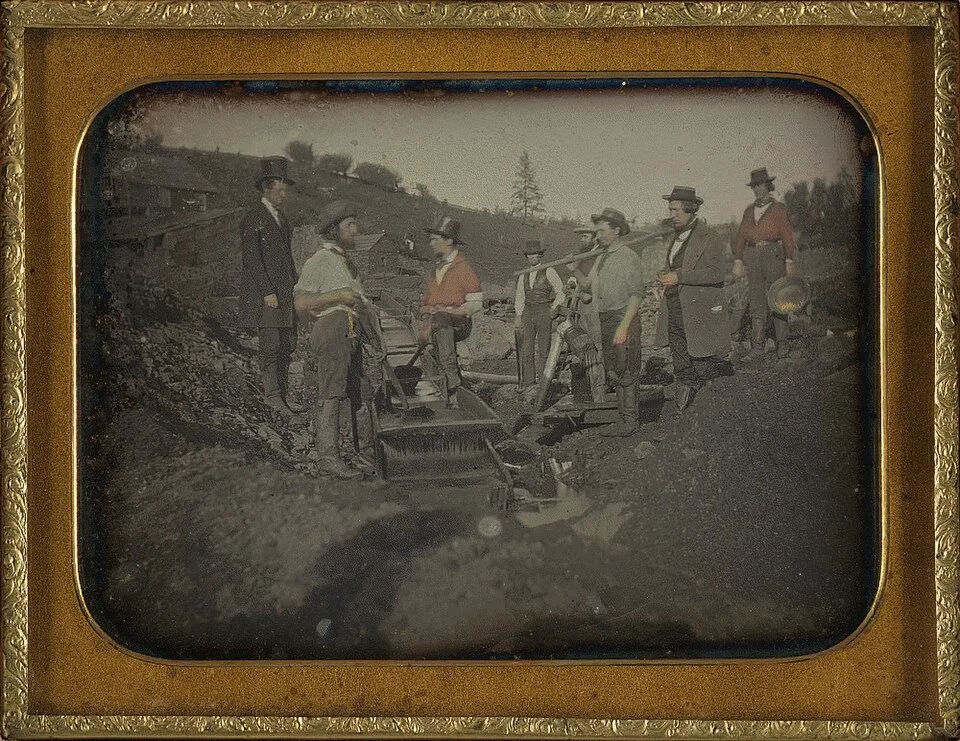

The cost
There is a darker side to this story. The gold seekers took over the fishing and gathering grounds that California's Native peoples depended on, and the diseases and violence that came with them tore through Native communities.
California's Native American Heritage Commission estimates that a Native population of around 310,000 had already fallen to about 150,000 on the eve of the American takeover, and that it dropped below 16,000 by 1900. In June 2019, California's governor formally apologized on behalf of the state to California Native American peoples for "many instances of violence, mistreatment and neglect."
The man who found it
Marshall himself never struck it rich. He spent the next few years hunting for more gold with little success and ended up stranded and penniless. He died on August 10, 1885.
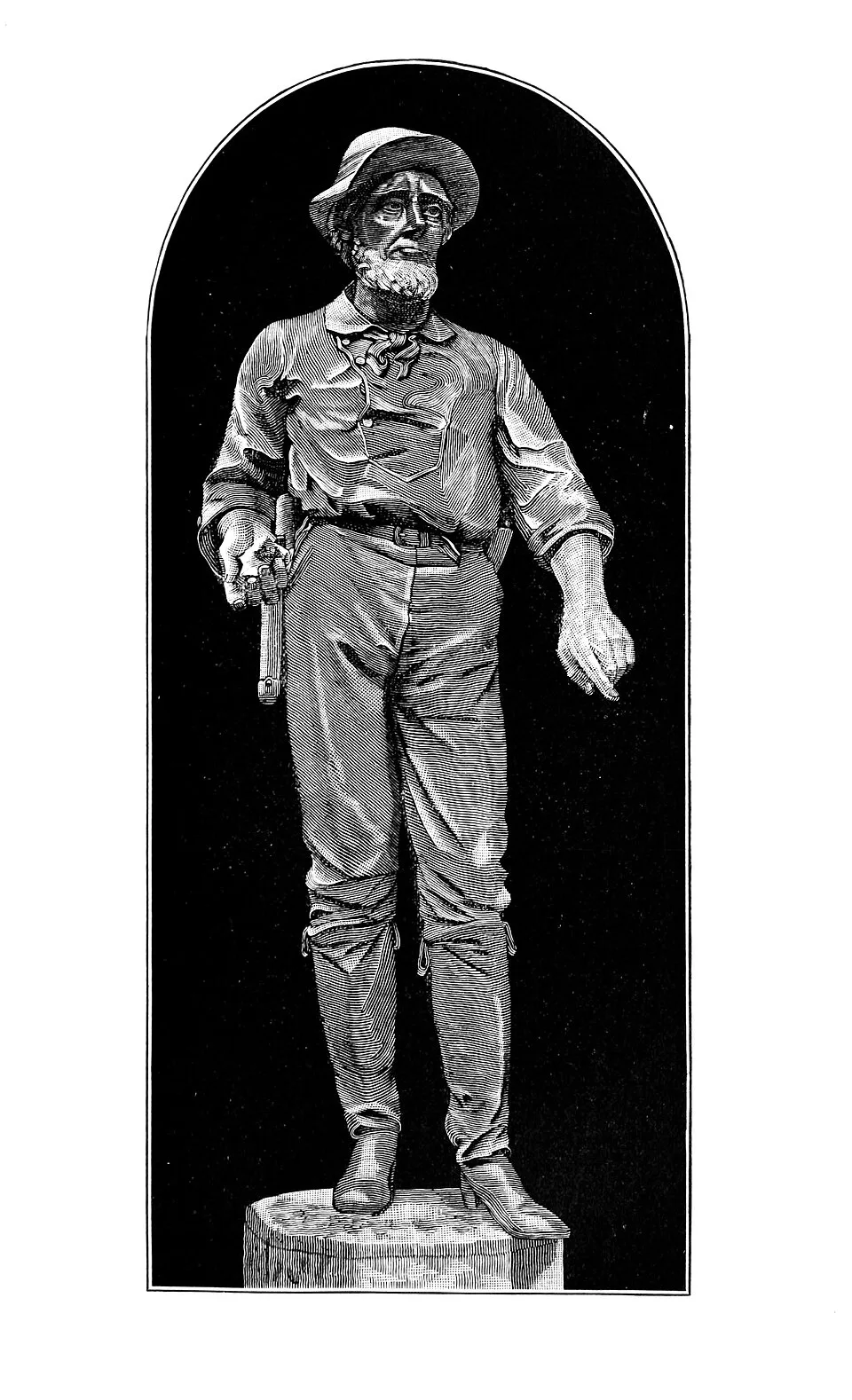
In 1890 the state raised a monumental statue of him on the hill above Coloma. It was California's first State Historic Monument, and Marshall is buried there. The bronze figure looks down on the river, pointing to the place where he found the gold.

The sawmill in the park today is a full-size replica completed in 1968. The original was abandoned after 1850, stripped for its lumber, and finally swept away in the floods of the 1850s. Its old tailrace was unearthed in 1947. Visitors can still try gold panning at the park year-round.
Find Coloma on Wooriyeojido
A few flakes in a shallow ditch drew a flood of people west, at a terrible price for those who had called this valley home. Marshall Gold Discovery State Historic Park in Coloma is pinned on the Wooriyeojido map. Look it up in the Wooriyeojido app, and if you go, leave your photos and stories from the day right beside it.
View this place in the Wooriyeojido appVideos of nearby places
 The "Shot Heard Round the World": Was It Fired at This Bridge? Old North Bridge, Concord
 A 102-Story Building in 410 Days? The Empire State Building, 1931
 The Last Spike That Joined East and West Was Gold? The Golden Spike, 1869
Sources
- California State Parks — Marshall Gold Discovery State Historic Park brochure
- California State Parks — Marshall Gold Discovery State Historic Park
- California Office of Historic Preservation — State Historical Landmark 530, Gold Discovery Site
- U.S. National Park Service — The California Gold Rush
- California Native American Heritage Commission — California Indian History
- Office of the Governor of California — Apology to Native Americans, June 18, 2019
- U.S. Senate — States in the Senate: California Timeline