Mogao Caves: What Lay Behind a Wall for Nearly 900 Years?
On a cliff outside the Silk Road oasis of Dunhuang, 492 caves are carved into the rock. How a hidden chamber was found by chance in 1900, and the tens of thousands of books, documents and paintings it held, in a video and photos.
Near Dunhuang, an oasis in the deserts of western China, a cliff is riddled with caves like a honeycomb. One of them lay hidden behind a wall for nearly 900 years until it was opened in 1900. What was inside? Start with the short video.

 Watch the one-minute video on YouTube
A thousand years of caves at a Silk Road crossroads
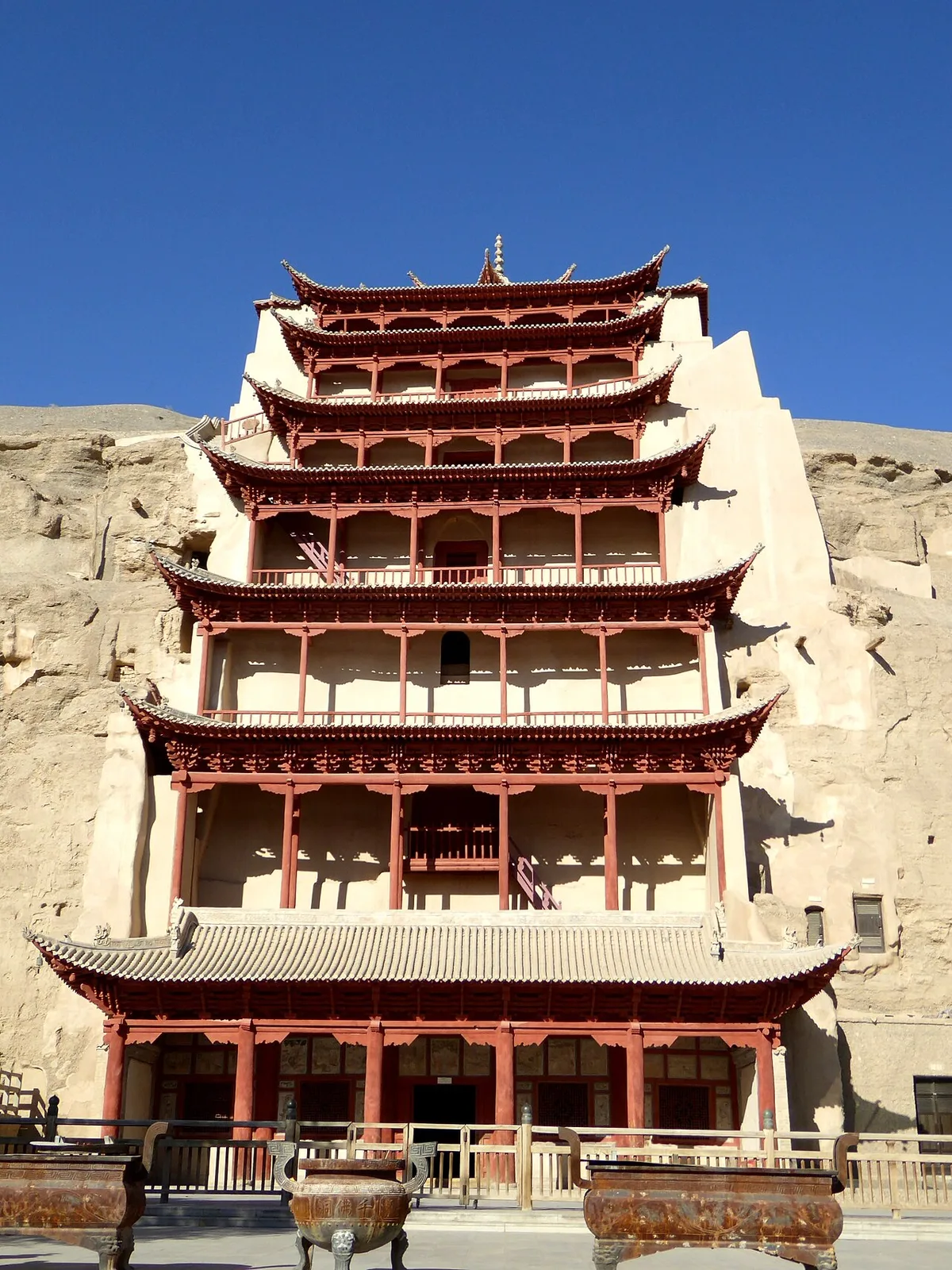
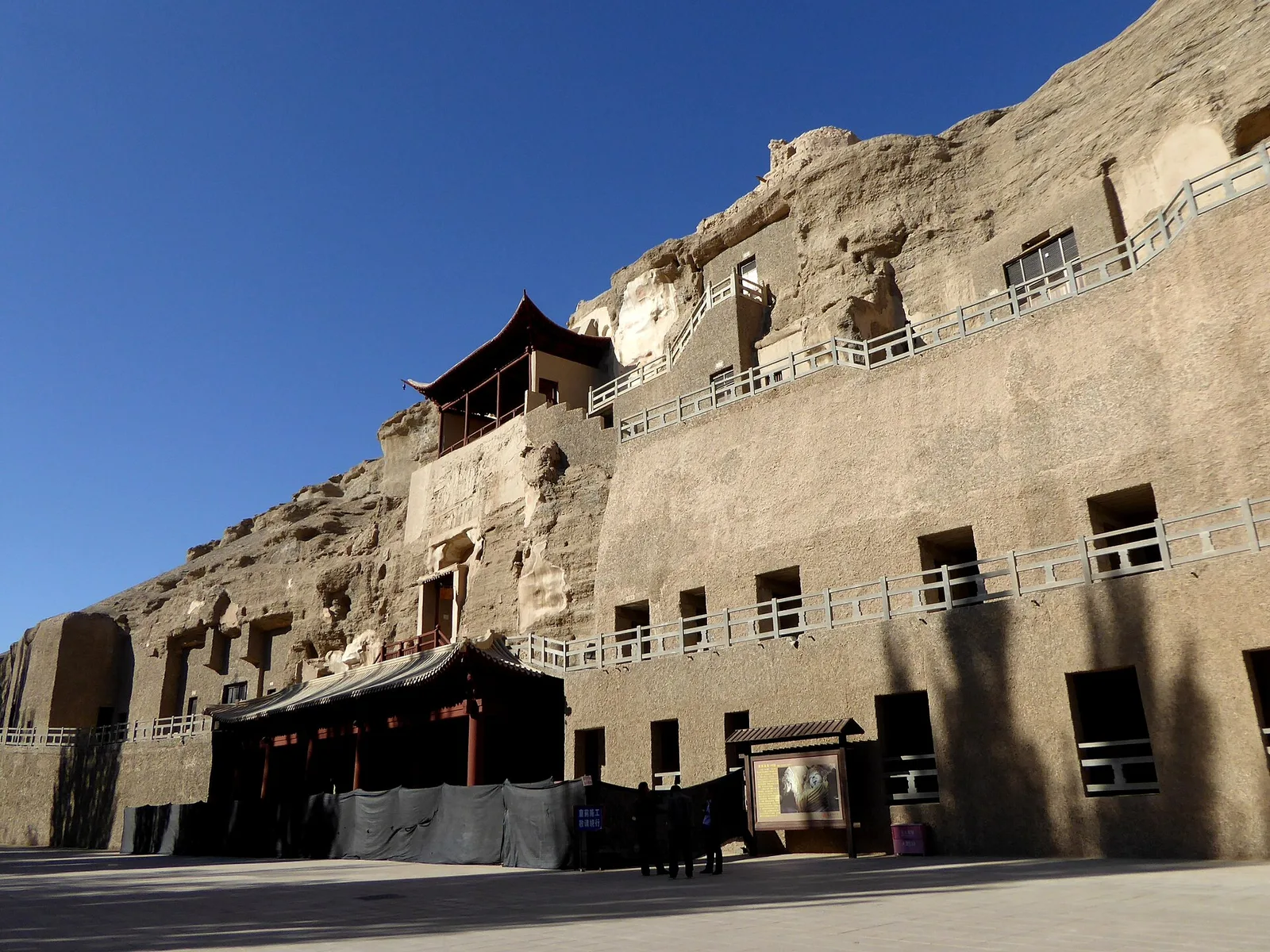
The Mogao Caves lie about 25 km southeast of Dunhuang in Gansu Province, at the eastern foot of Mount Mingsha. Dunhuang was the oasis where the Silk Road split into two branches. The first cave here was dug in AD 366, and for the next thousand years, from the 4th century to the 14th, people kept carving out caves and filling them with Buddhist paintings and sculpture.
Today 492 caves survive, holding some 45,000 square metres of murals and more than 2,000 painted sculptures. The site was inscribed on the UNESCO World Heritage List in 1987.

A chamber sealed behind a wall
Among all these caves is a small room now known as Cave 17, better known as the Library Cave. It opens off the passage leading into Cave 16.
According to the Dunhuang Academy, early in the 11th century someone packed this room with Buddhist scriptures, classic texts, everyday documents, silk paintings and other works of art. Then they bricked up the entrance and painted a mural over it, hiding the room completely. Why they did it is still a mystery. And so the chamber was forgotten.
1900: a cave opened by sweeping sand
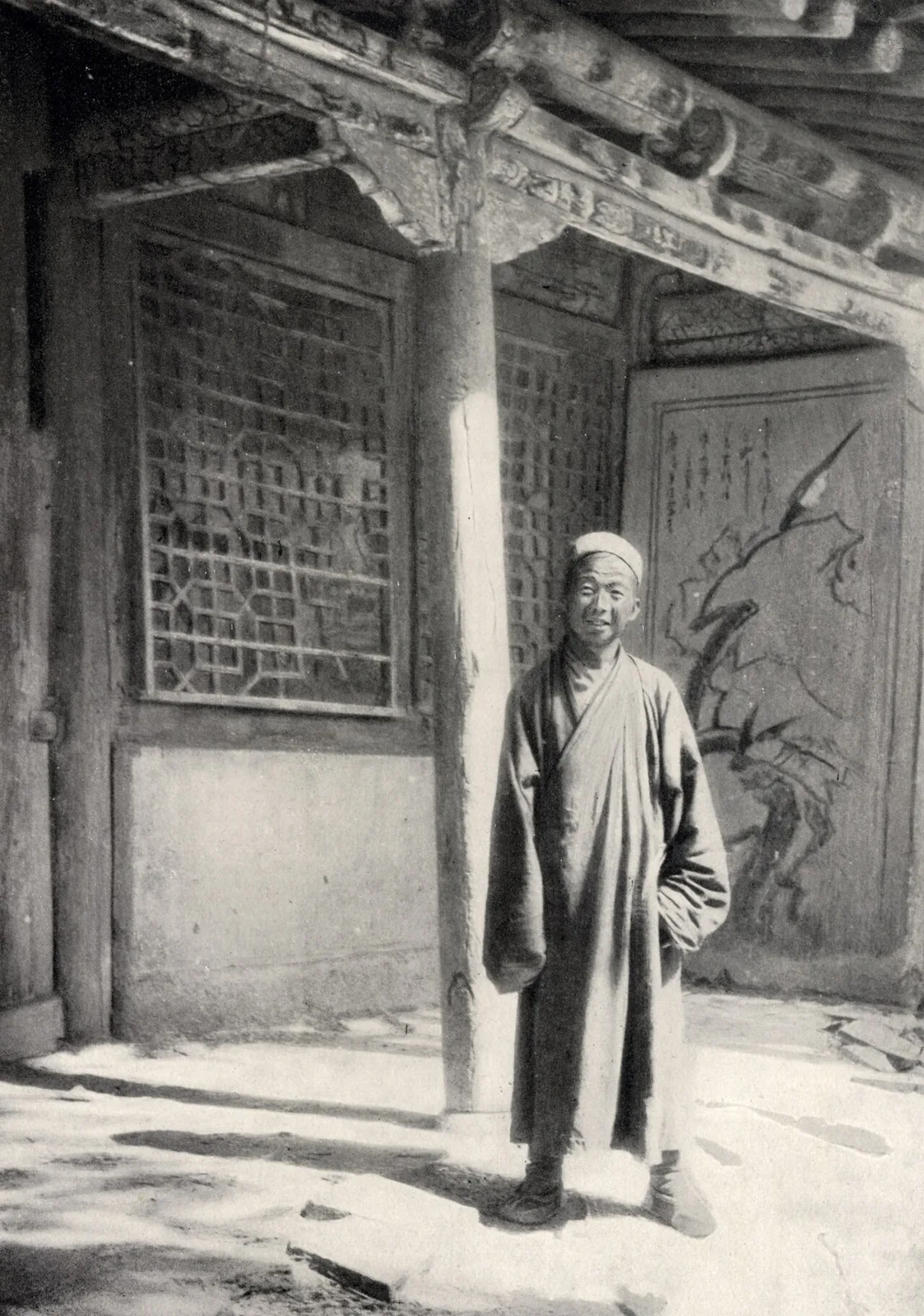
In 1900, a Taoist priest named Wang Yuanlu, who was living at Mogao, was clearing drifted sand from the caves when he stumbled on the hidden room. Inside were piles of scrolls, printed books, painted banners and small bronze Buddhas, tens of thousands of documents and artworks dating from the 4th to the 11th centuries. Sealed in the early 1000s, they had spent nearly 900 years behind that wall.

The writing in them was just as varied. Alongside Chinese there were manuscripts in Tibetan, Sogdian, Uighur and even Hebrew, a snapshot of the many peoples who travelled the Silk Road.
Scattered across the world
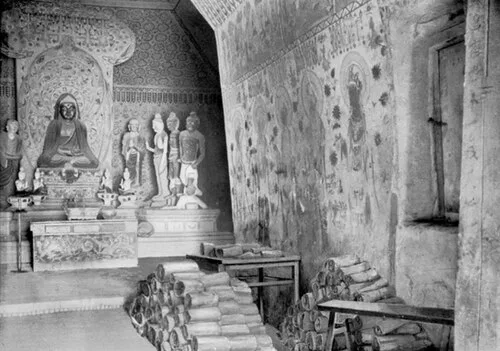
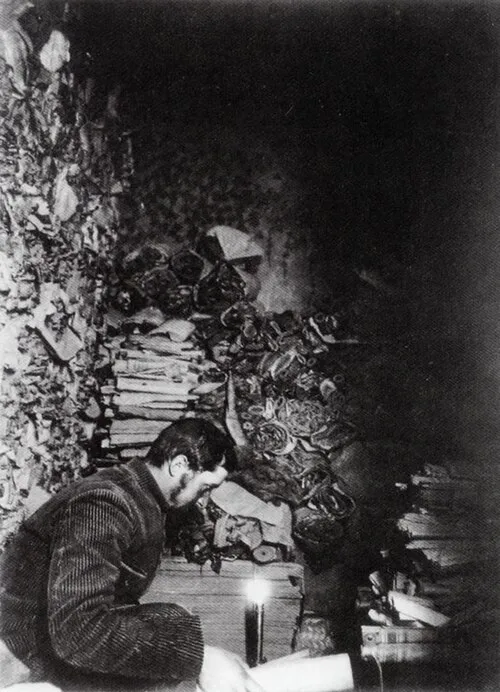
Foreign explorers soon arrived. A photograph from Aurel Stein's visit in 1907 shows bundles of manuscripts stacked up inside the caves. Wang himself picked out the items to hand over to Stein.

The next year, in 1908, the French explorer Paul Pelliot climbed into the Library Cave itself and went through the documents by candlelight. Explorers from several more countries followed, and the cave's treasures were scattered around the world. Today the largest Dunhuang collections are held by the British Library, the National Library of France, the Institute of Oriental Manuscripts of the Russian Academy of Sciences and the National Library of China.

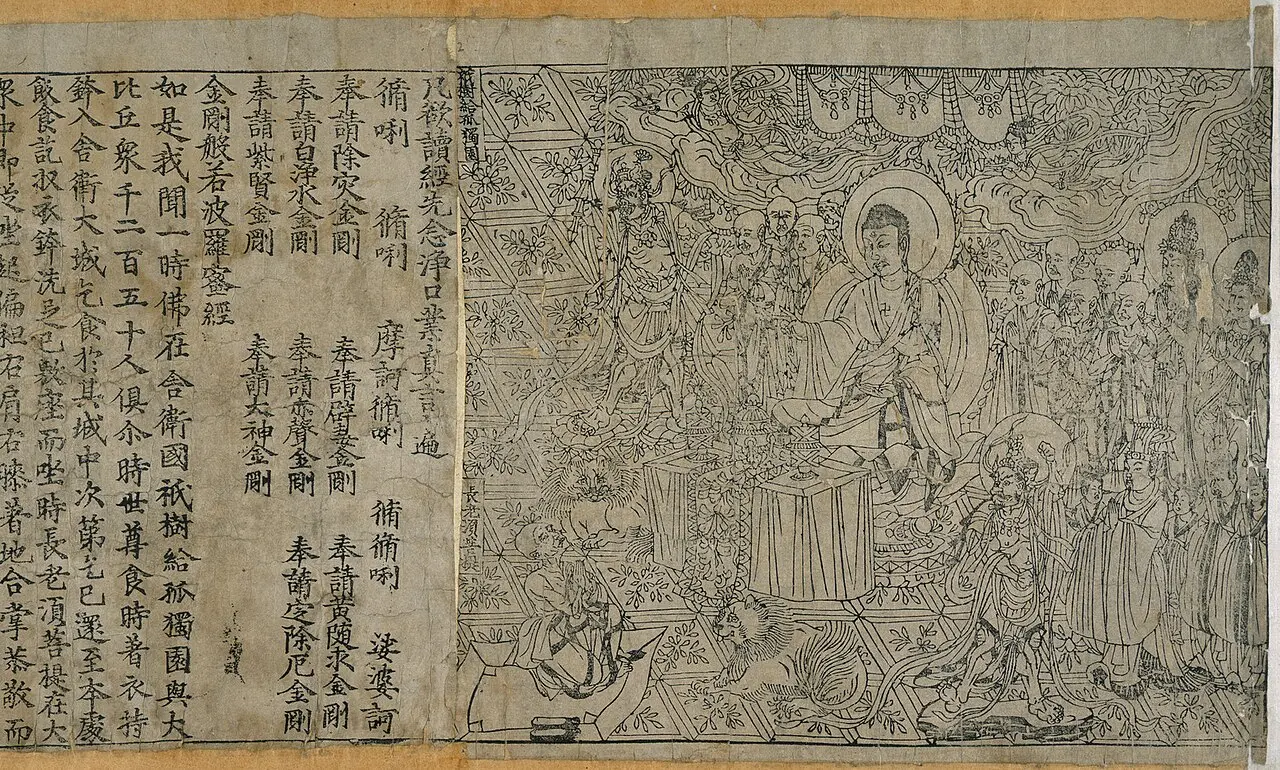
The oldest dated printed book, and a Korean monk's travels
One of the most famous finds is the Diamond Sutra now at the British Library. It carries a date, 11 May 868, which makes it the earliest dated printed book known. A note at the end reads: "Reverently made for universal free distribution by Wang Jie on behalf of his two parents."

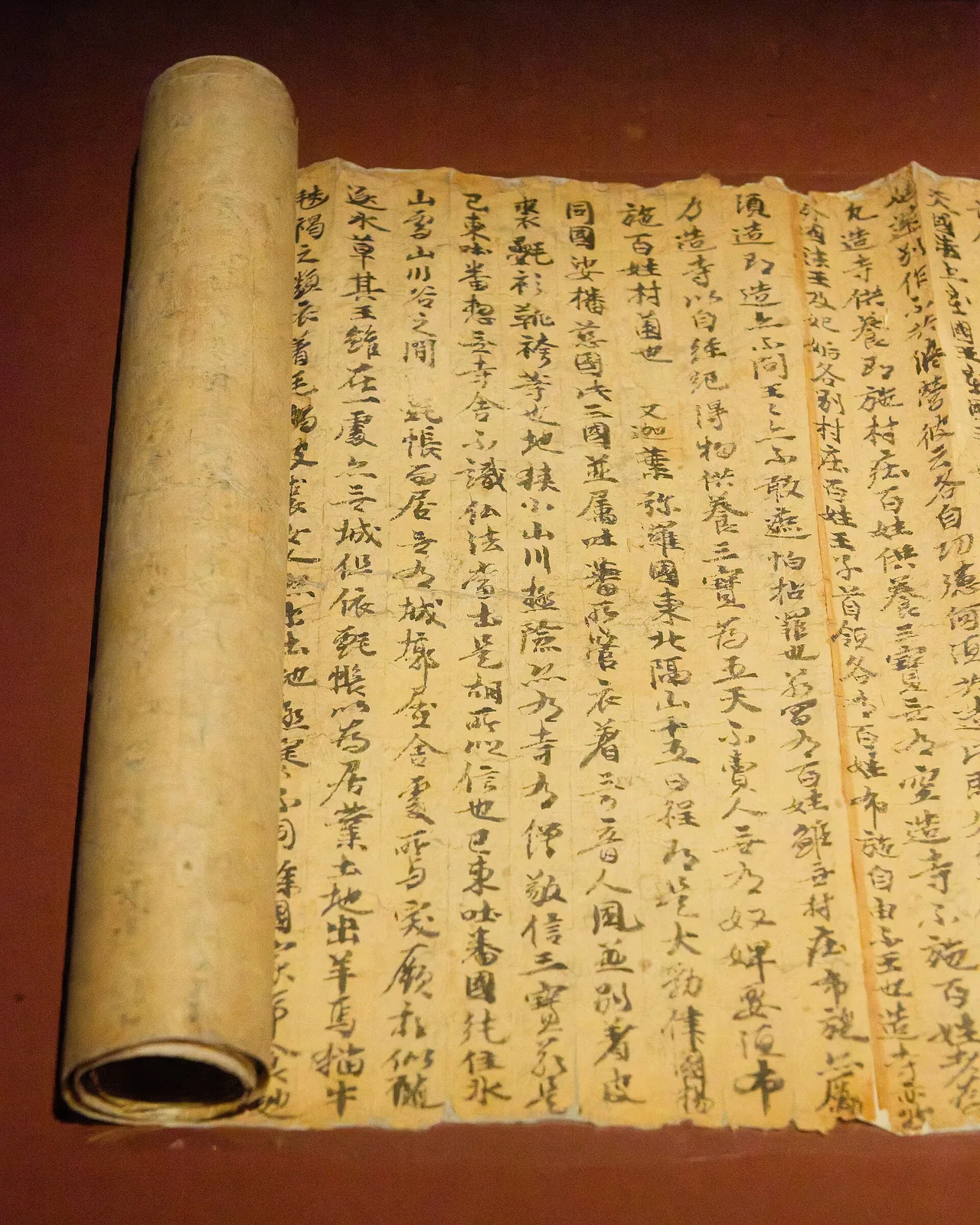
Another find links Dunhuang to Korea: the travel record of Hyecho, a monk from the Silla kingdom who journeyed to India and Central Asia, known in Korean as Wang ocheonchukguk jeon. Pelliot found it at Mogao in 1908. Hyecho's account breaks off around the year 727, so it is nearly 1,300 years old. The National Museum of Korea also holds four documents and more than ten artworks from the Library Cave.

Efforts to bring the scattered collection back together continue. In April 2023, the Dunhuang Academy launched the Digital Library Cave, which lets anyone explore the chamber online.
Find the Mogao Caves on Wooriyeojido
For nearly 900 years, a small room behind a wall kept tens of thousands of books, documents and paintings left by the people of the Silk Road. The Mogao Caves are pinned on the Wooriyeojido map. Find the Mogao Caves in the Wooriyeojido app, and if you go, leave your photos and stories from the day right beside it.
View this place in the Wooriyeojido appVideos of nearby places
 How did 80,000 wooden blocks last 750+ years without rotting? Tripitaka Koreana, Haeinsa
 Why does a 71 m Buddha sit on a riverside cliff? The Leshan Giant Buddha
 Can you really see the Great Wall from space? A wall joined from Qin Shi Huang to the Ming
Sources
- UNESCO World Heritage Centre — Mogao Caves (440)
- The Paper (澎湃新闻) — “数字藏经洞”正式上线 (2023-04-19, Dunhuang Academy announcement)
- Xinhua (新华网) — Dunhuang Academy on the Digital Library Cave (2025-06-05)
- Dunhuang Academy — Memorandum of understanding with the National Museum of Korea (2026-11-11)
- International Dunhuang Programme (British Library) — The Diamond Sutra on display: text panel 6 (2015)
- International Dunhuang Programme (British Library) — The Diamond Sutra on display (2015)
- Encyclopedia of Korean Culture — Wang ocheonchukguk jeon