Leshan Giant Buddha: Why a 71-Metre Buddha Sits Above Three Wild Rivers
A 71-metre Buddha carved out of a riverside cliff in Sichuan, China. How one monk's wish became a 90-year project, and why the statue sits exactly where it does, in a short video and photos.
In Leshan, in China's Sichuan province, a stone Buddha sits in a riverside cliff. It is 71 metres tall. Why would anyone carve something so enormous right at the water's edge? Start with the short video.
 Watch the one-minute video on YouTube
Facing the meeting of three rivers
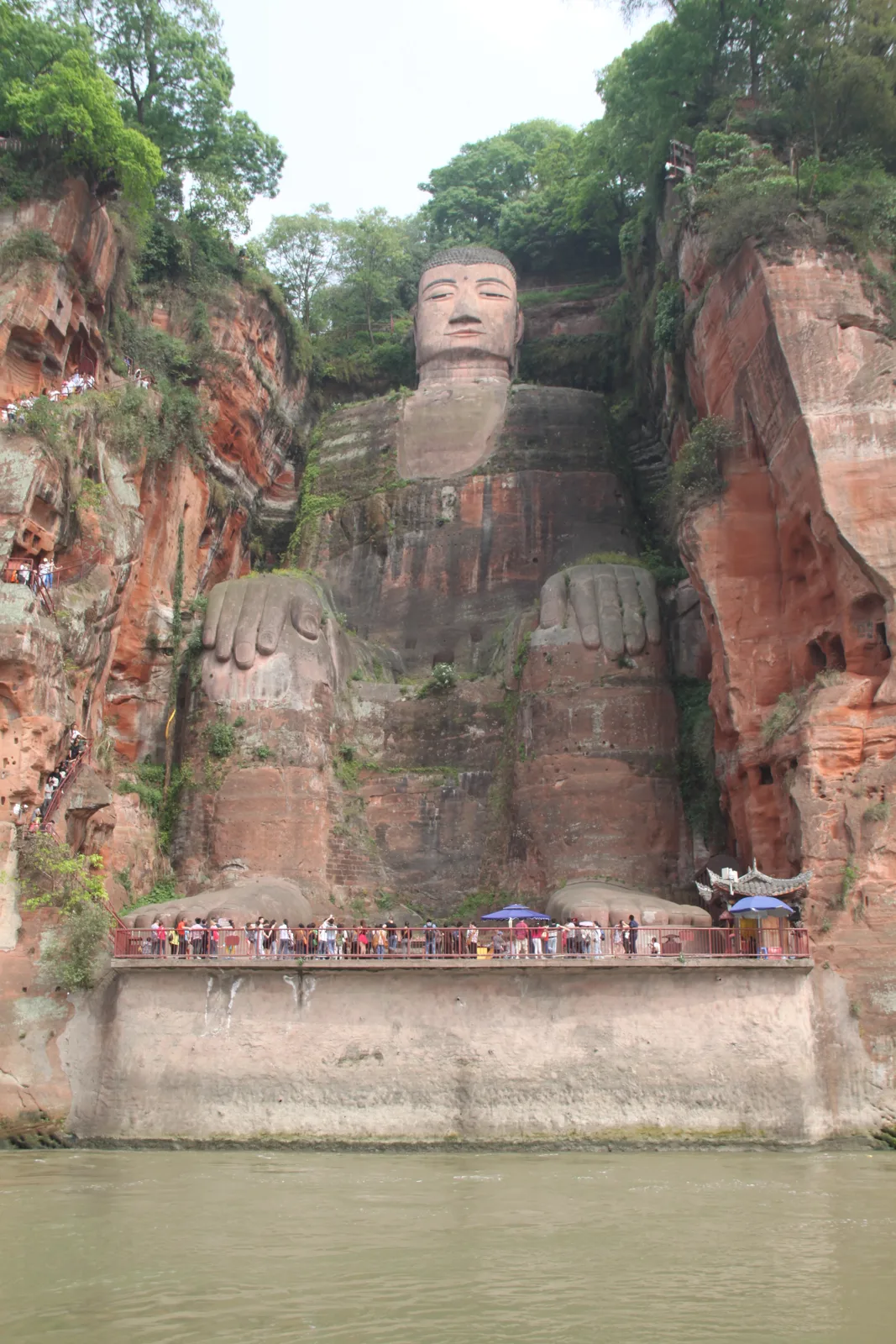
The Buddha is carved into the western cliff of Lingyun Mountain in Leshan. Just in front of it, the Min, Dadu and Qingyi rivers come together, and the Buddha sits facing that confluence head-on.
It was carved out of the hillside in the 8th century. UNESCO calls it the largest Buddha in the world, and in 1996 it was inscribed as a World Heritage Site together with nearby Mount Emei.
A single finger: 8.3 metres
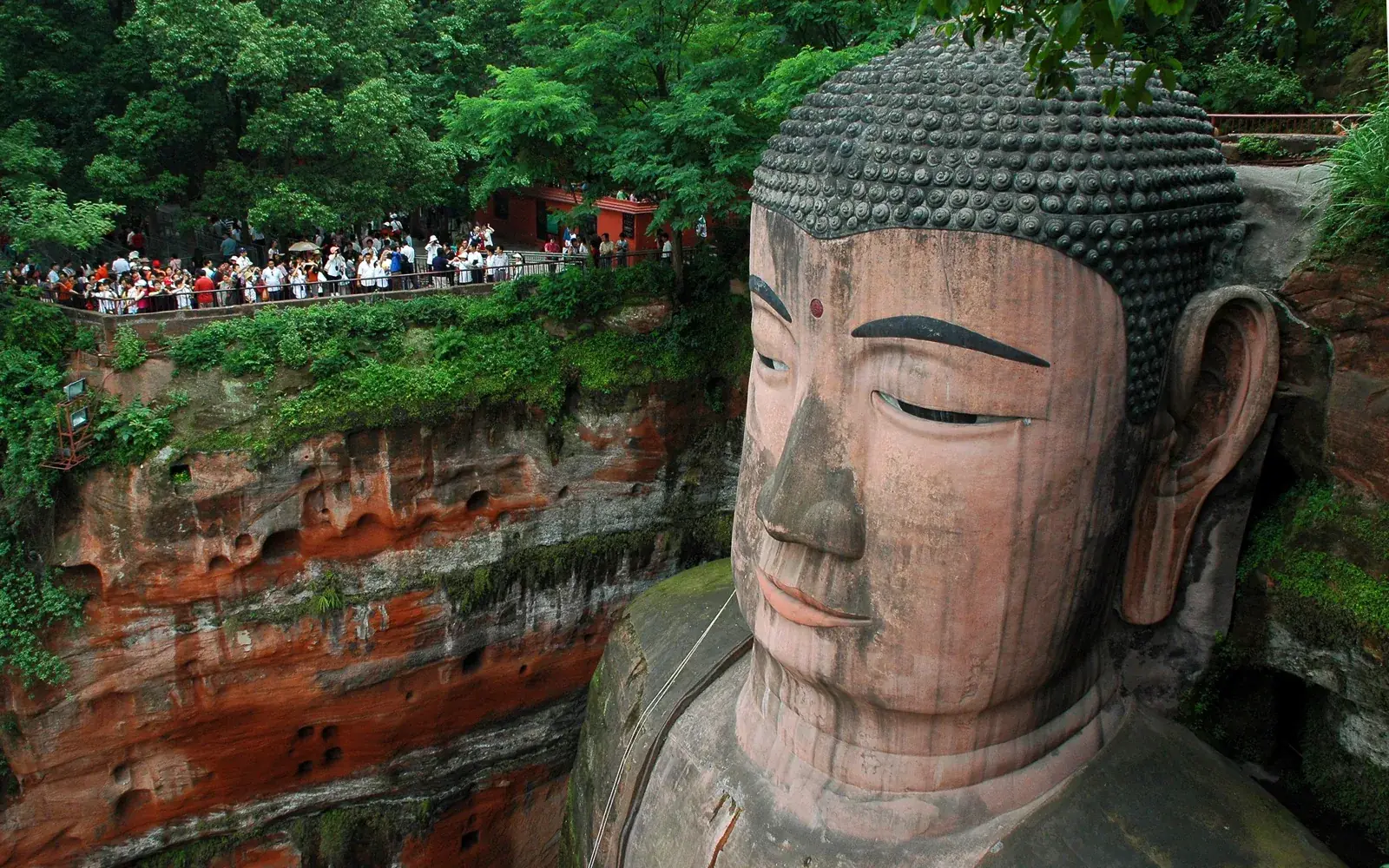
The figures published by the city of Leshan give a sense of the scale. The head is covered with 1,021 curls of hair, each coiled like a snail shell. The forehead is 10 metres wide, the nose 5.6 metres long and the shoulders 28 metres across. One finger measures 8.3 metres, and the top of each foot is 8.5 metres wide, broad enough for more than a hundred people to sit on.
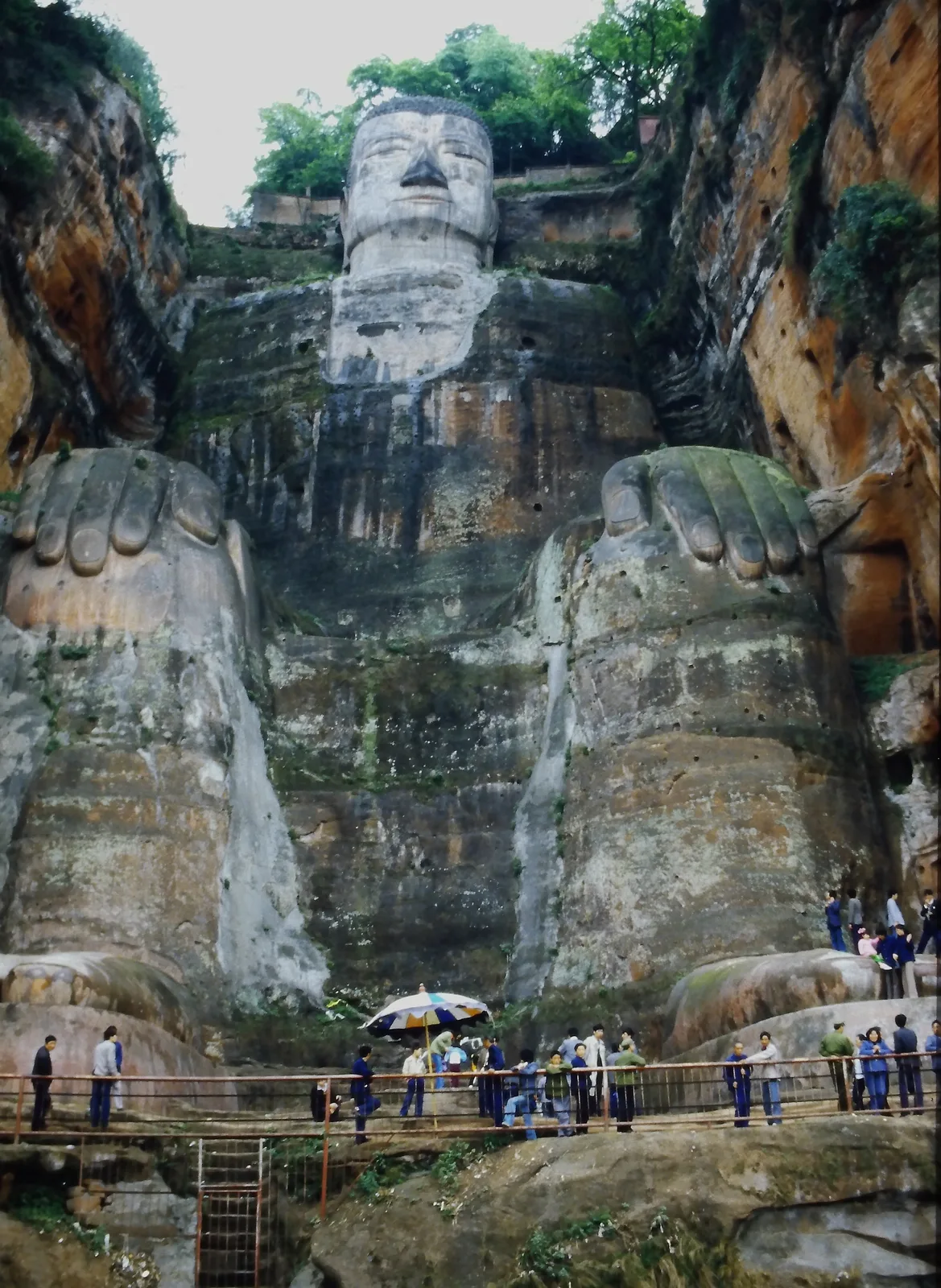
A photo taken at its feet in 1987 makes the point even better. Next to the toes, carved from red sandstone, the visitors look tiny.
Rivers that roared
These three rivers were once notoriously violent. A Tang-dynasty inscription carved when the Buddha was completed describes the water as "roaring in fury, its thunder heard for a hundred li." Boats were smashed and lives were lost, again and again.
In 713, early in the Kaiyuan era, a monk named Haitong stepped forward. His plan was to carve the entire cliff face above the river into a Maitreya Buddha, in the hope that it would calm the raging water. Britannica, too, notes that the Buddha stands at a confluence where many shipping accidents had occurred.
Ninety years and three men
The inscription says the money came from donations and the workers came of their own accord. One line survives: "Ten thousand men vied in strength, a thousand hammers struck as one." But Haitong died before the statue was finished.
Two officials took up the work in turn. The last of them, Wei Gao, finally completed the Buddha in 803, ninety years after it was begun. Wei Gao wrote an account of the work for a stone tablet, and UNESCO notes that it is thanks to this inscription that a contemporary record of the Buddha's creation survives.
So did the Buddha really tame the rivers? Britannica offers an intriguing answer: it did reduce the loss of life, if only because the rock cut away during construction filled in the riverbed. Less divine intervention, perhaps, than a building project that made the shipping lane a little safer.
A wooden hall around the Buddha
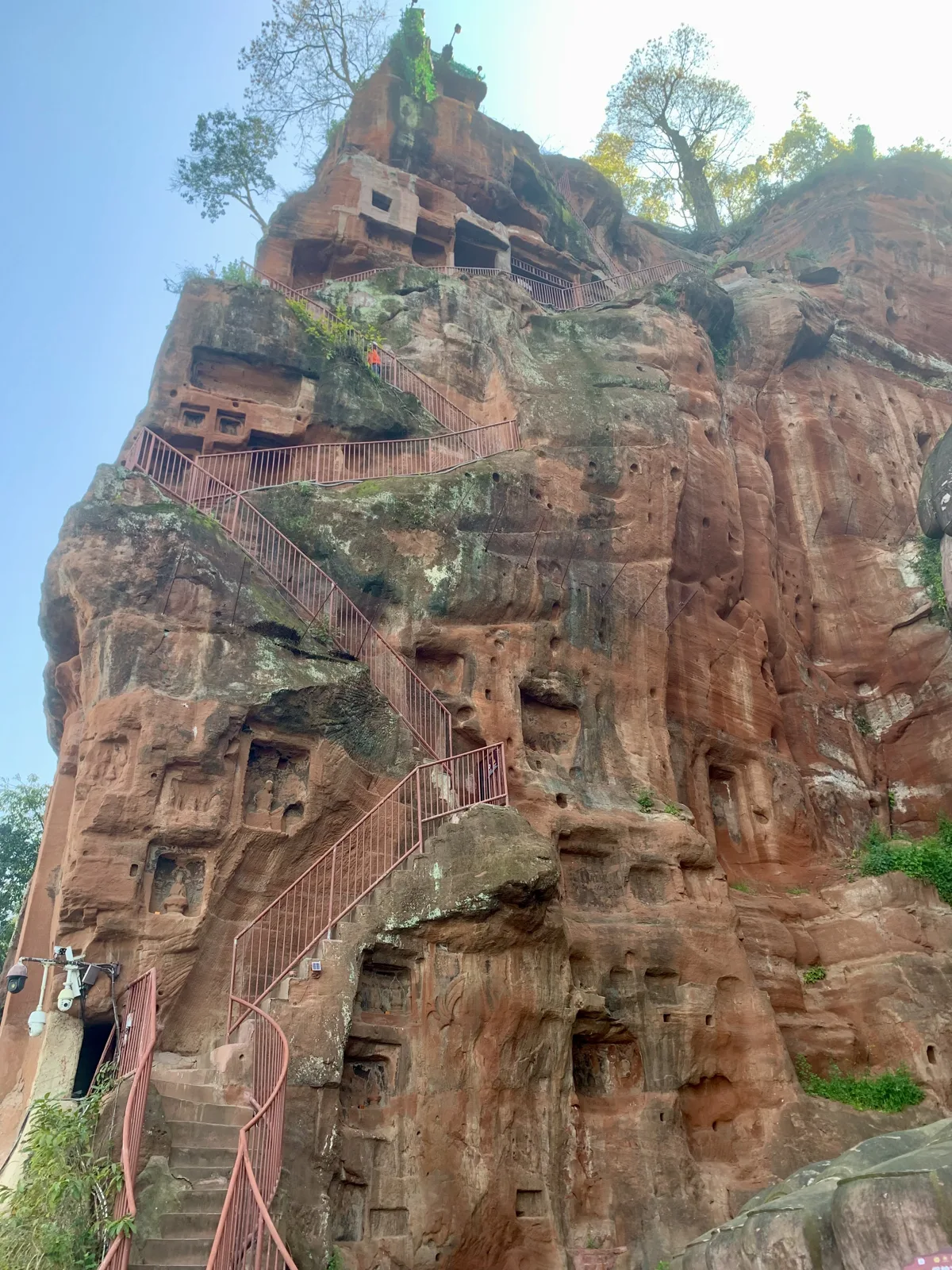
Look closely at the cliff beside the Buddha and you will see square and round holes dotted across the rock. According to the city of Leshan, they are traces of the Daxiang Pavilion, a wooden hall that once enclosed the entire statue.
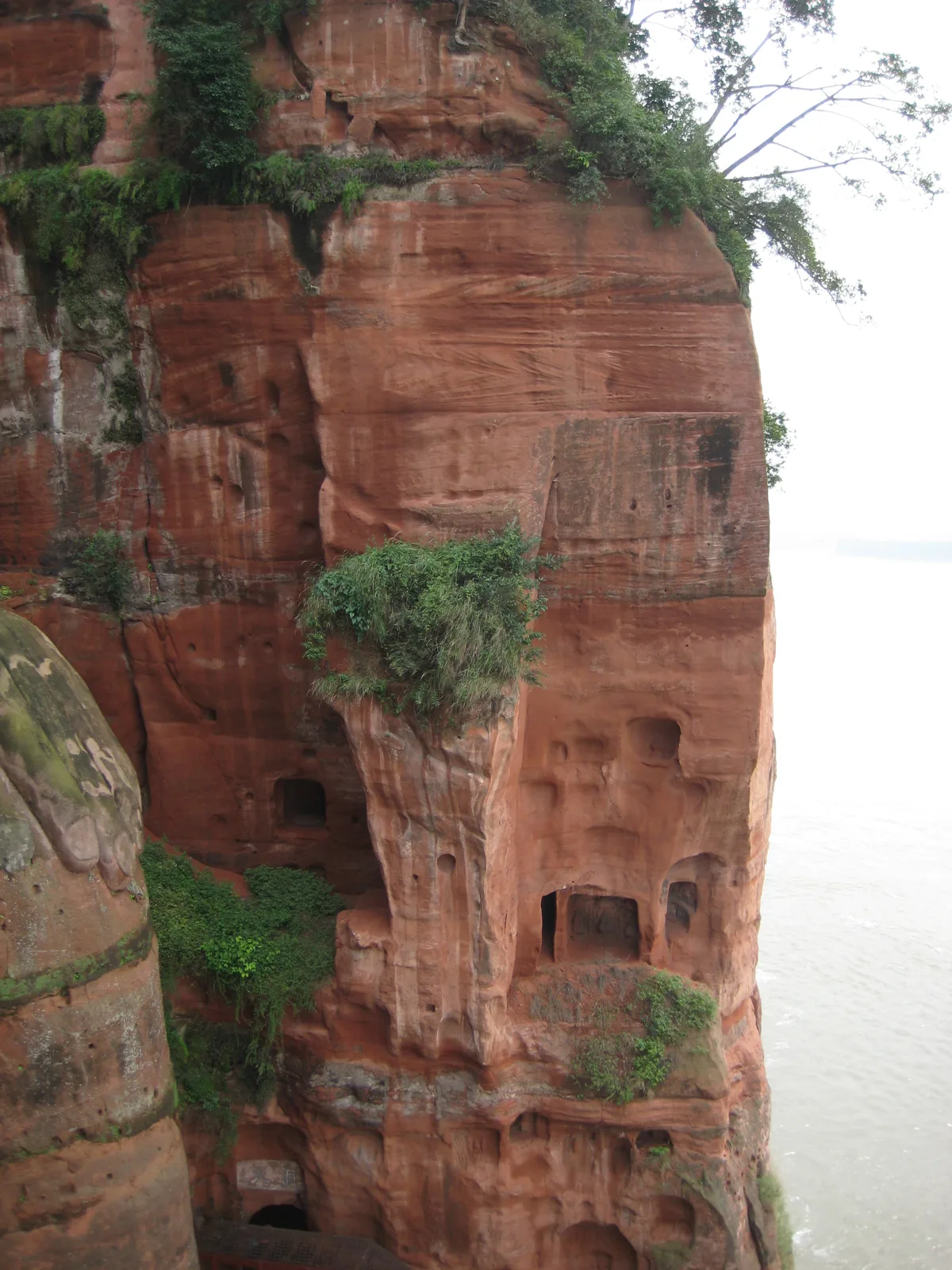
The pavilion is said to have been built by Wei Gao. It had thirteen layers of eaves and stood about 90 metres tall, enough to cover the 71-metre Buddha from head to toe. For more than 400 years it sheltered the statue from wind and rain and slowed the weathering of the red sandstone.
Sources disagree on when it was lost. The city of Leshan says it was destroyed in the wars as the Song dynasty gave way to the Yuan, while Britannica places its destruction in the Ming dynasty.
More than a thousand years of care
Without its roof, the sandstone Buddha has been slowly worn away by the weather. The city of Leshan counts twelve major restorations on record. The photo below was taken sometime between 1915 and 1925. Set it beside a modern picture and you can see the same face holding its ground across the years.
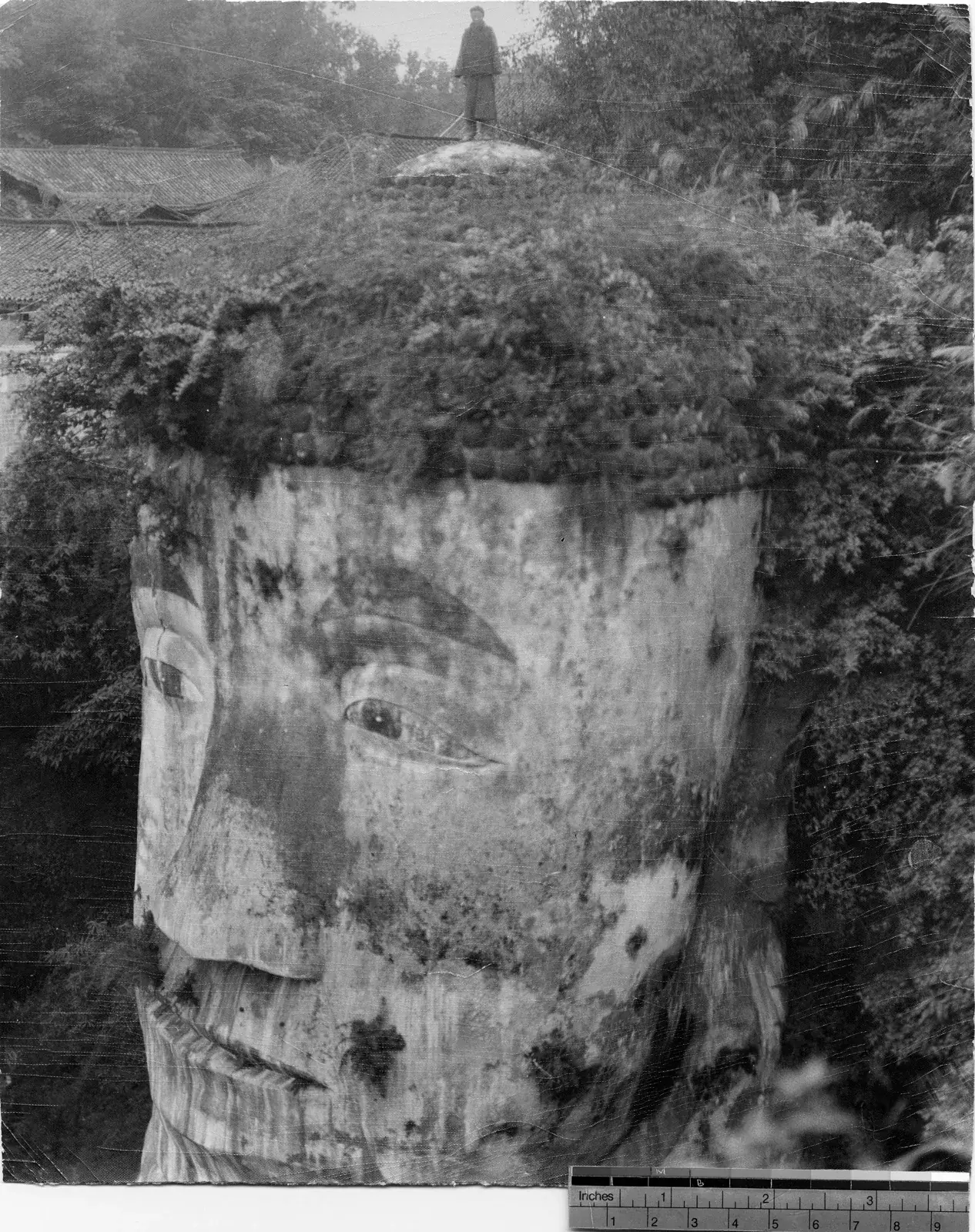
Completed in 803, the Buddha has now sat here for more than 1,200 years. One monk's wish became a 90-year construction project, and people have been looking after the statue ever since.
Find the Leshan Giant Buddha on Wooriyeojido
A stone Buddha that has watched over three wild rivers and the boats that crossed them. The Leshan Giant Buddha is pinned on the Wooriyeojido map. Look it up in the app, and if you go, leave your photos and stories from the day right beside it.
View this place in the Wooriyeojido appVideos of nearby places


Sources
- UNESCO World Heritage Centre — Mount Emei Scenic Area, including Leshan Giant Buddha Scenic Area (779)
- Encyclopaedia Britannica — Leshan Giant Buddha
- Leshan Municipal People's Government, Leshan Giant Buddha Management Committee — 海通发愿:一个人的愿望,怎样成为千年工程? (2026-10-21)
- Leshan Municipal People's Government, Leshan Giant Buddha Management Committee — 保护文化遗产 我们在行动|乐山大佛 千年石刻该如何保护
- Leshan Municipal People's Government, Leshan Giant Buddha Management Committee — 凌云故事・人文揽胜|大像阁:崖壁孔洞镌旧事,古阁曾经护大佛