Mount Tai, the mountain where China's emperors worshipped heaven
For some two thousand years, Chinese emperors climbed Mount Tai in Shandong to offer sacrifices to heaven. Why this mountain, and which parts of the story are legend and which are history? A video and photos tell the tale.
China's emperors climbed one mountain, generation after generation, to make offerings to heaven: Mount Tai, rising north of the city of Tai'an in Shandong Province. China has no shortage of mountains, so why this one? Start with the short video.
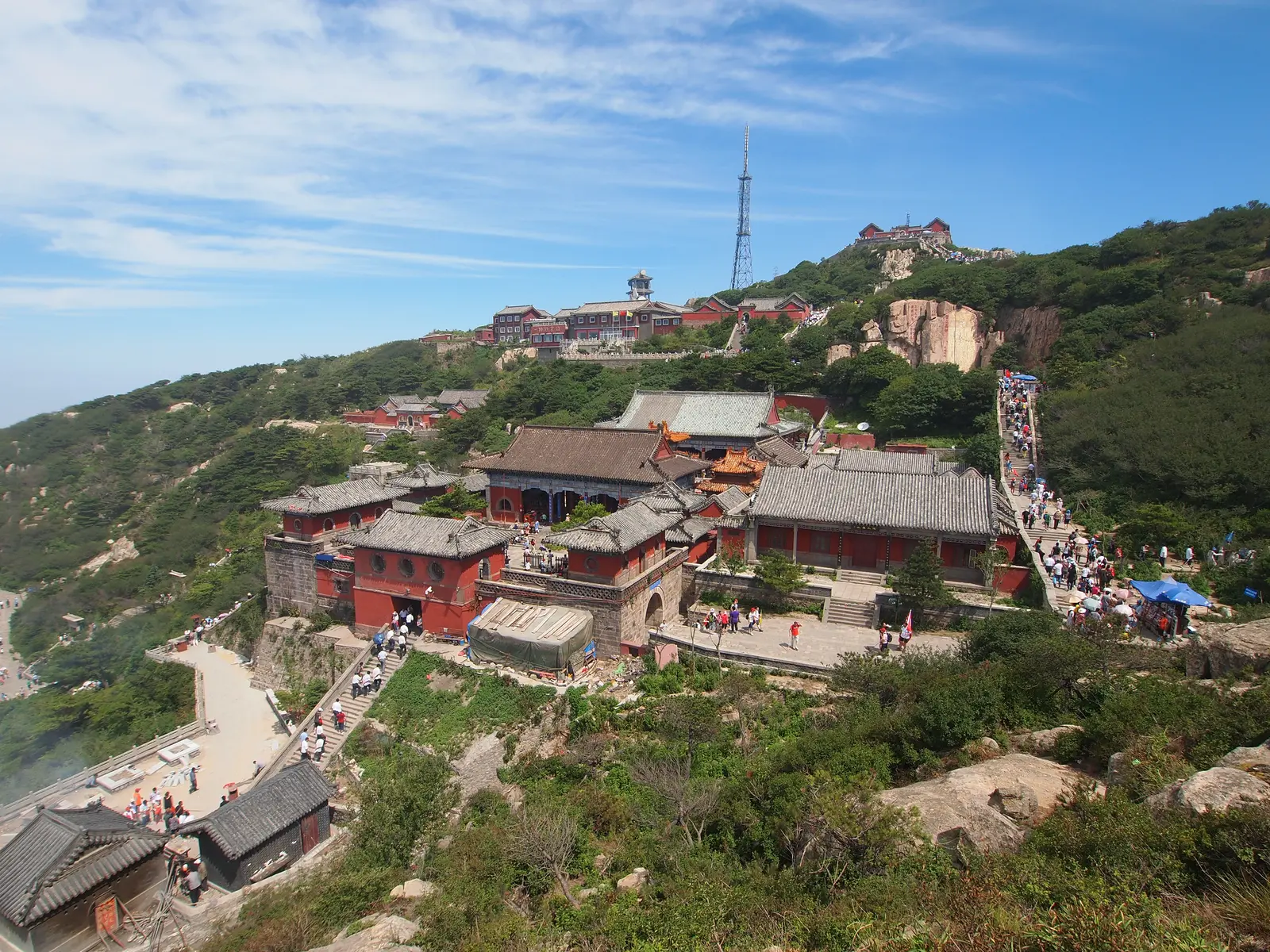
 Watch the one-minute video on YouTube
A lone peak above the plain
Mount Tai stands just north of Tai'an, rising out of the North China Plain. The mountain covers about 426 square kilometres, and its highest point, Jade Emperor Peak, is a little over 1,500 metres above sea level. Plenty of Chinese mountains are taller. But because Tai shoots up alone from a vast flat plain, it looks far bigger than its numbers suggest.
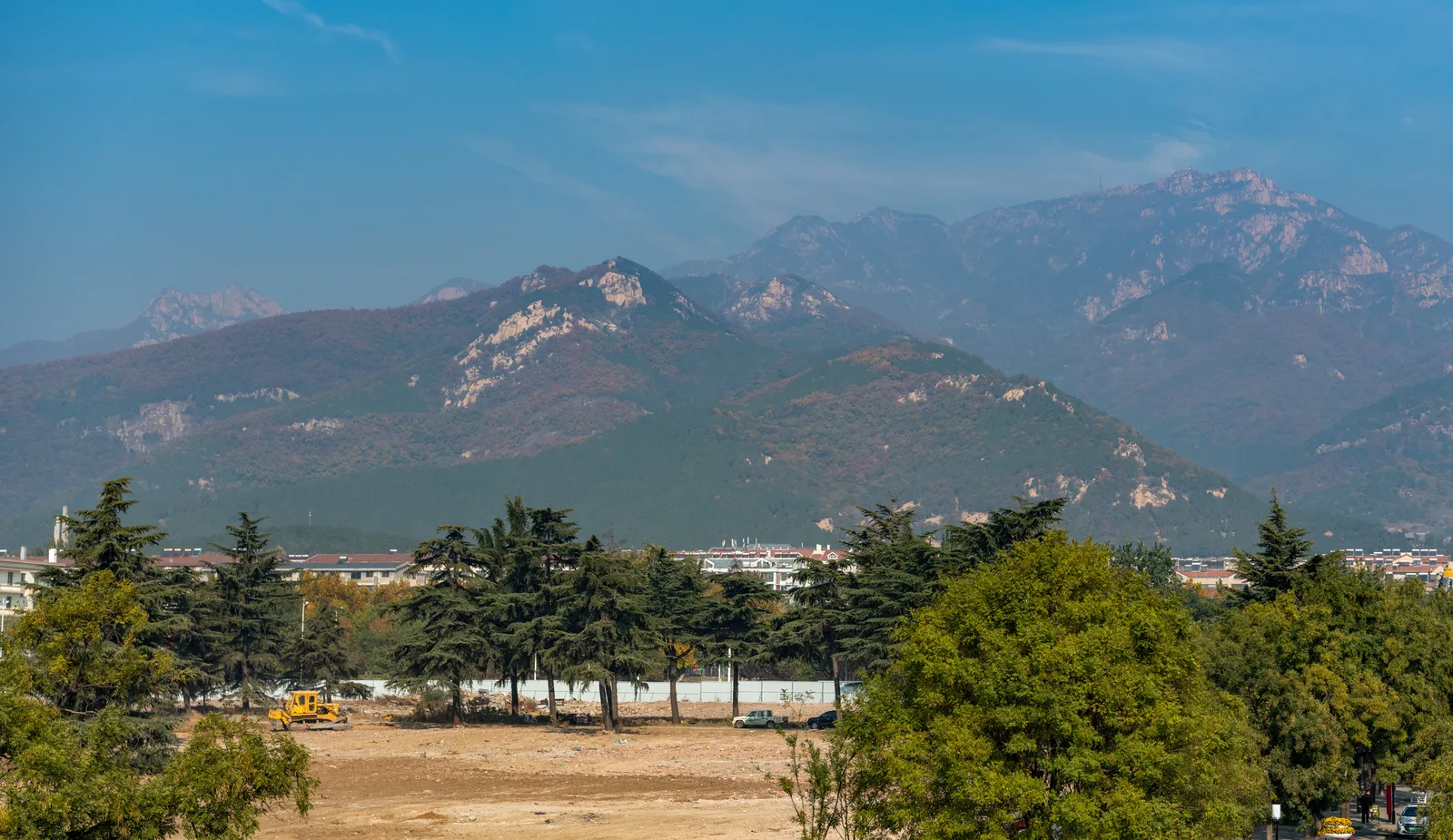
The closest point to heaven
According to the Shandong provincial government's official English portal, Mount Tai's summit was regarded as the closest point to heaven. That is why emperors of dynasty after dynasty came here for thousands of years to sacrifice to heaven.
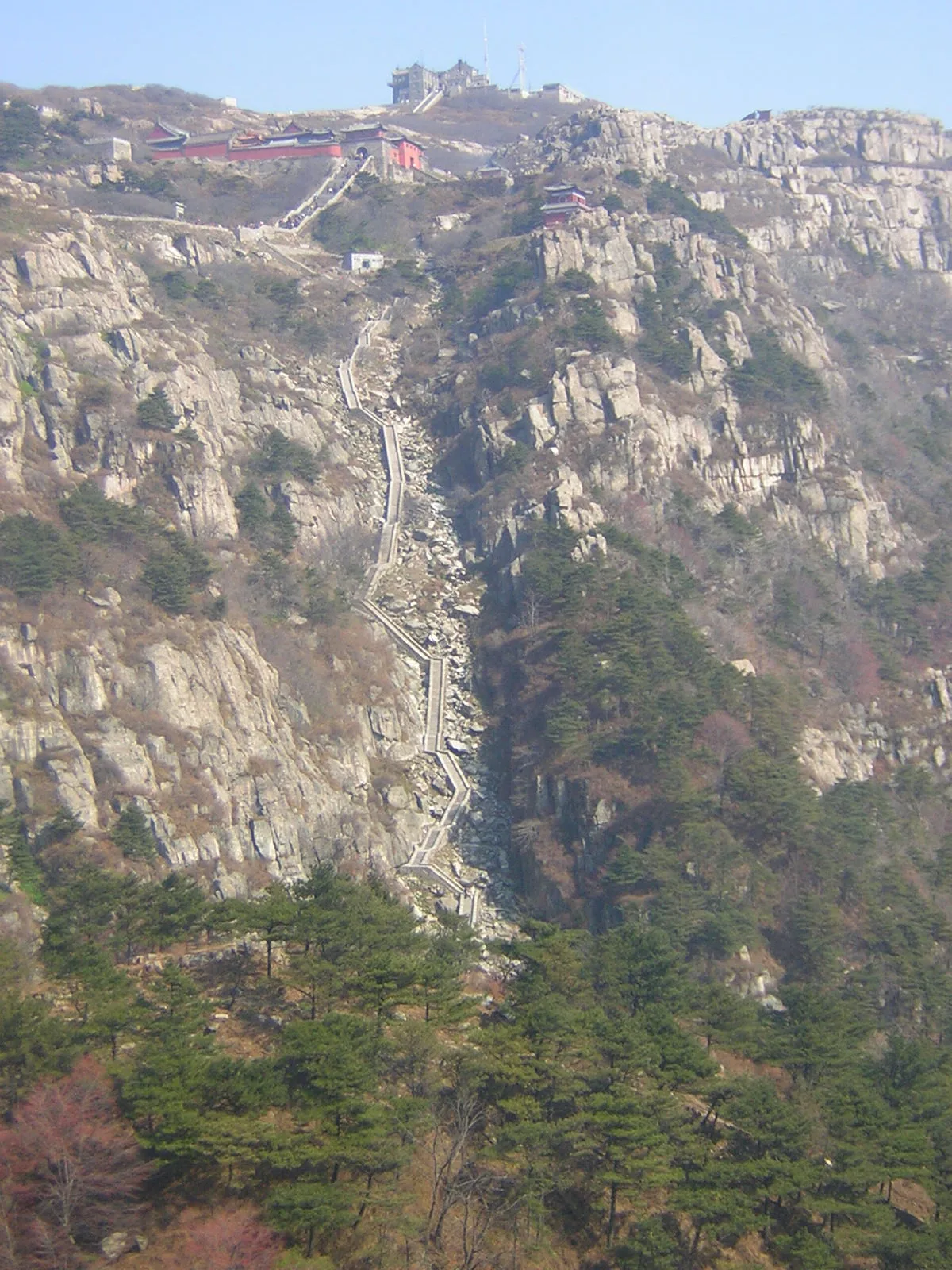
The ceremony was called fengshan, and each half of the word is a separate rite. Feng meant building an earthen altar on the summit and worshipping heaven. Shan meant clearing a patch of ground on a hill at the foot of the mountain and worshipping the earth.
Seventy-two kings of legend
In the Records of the Grand Historian, Sima Qian quotes the statesman Guan Zhong as saying that seventy-two kings of old performed fengshan at Mount Tai. Yet Guan Zhong himself could name only twelve of them. Many modern scholars accept the view that the very idea of fengshan arose in the Warring States period, which makes those earlier royal ceremonies closer to legend than history.
The First Emperor's climb
The first fengshan on firm record belongs to Qin Shi Huang, the First Emperor. The Records say that in 219 BC he climbed Mount Tai, erected a stone, and made his offering to heaven.
On the way down, a violent storm broke. The emperor sheltered beneath a tree, the Records say, and afterwards granted it an official court rank, wudafu.
Many emperors visited Mount Tai after him, but scholars count only six who actually performed fengshan: Qin Shi Huang, Emperor Wu of Han, Emperor Guangwu of the Eastern Han, Emperors Gaozong and Xuanzong of Tang, and Emperor Zhenzong of Song. High on the mountain, a cliff still carries an inscription by Xuanzong.
The Dai Temple and the Qin stone
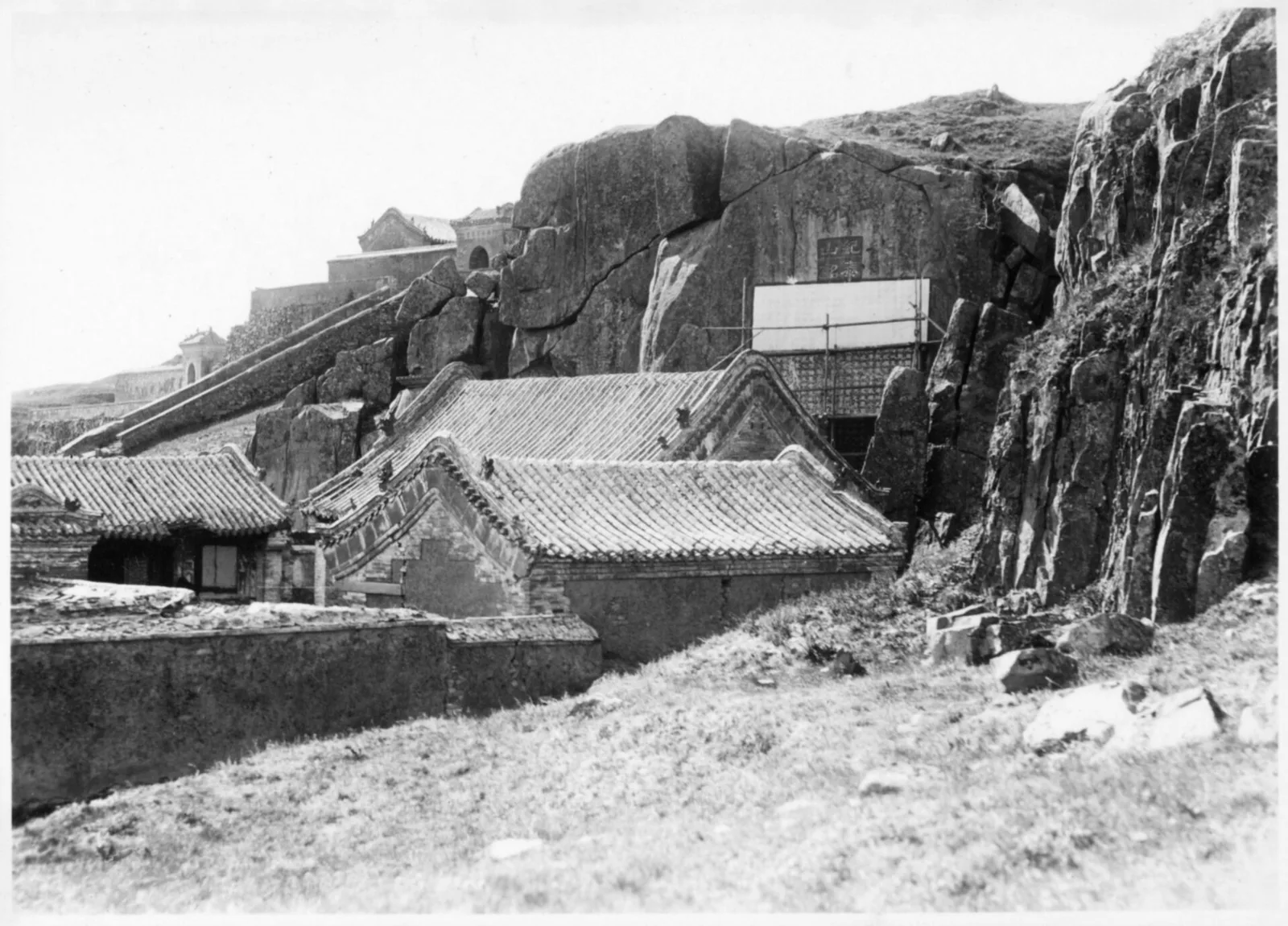
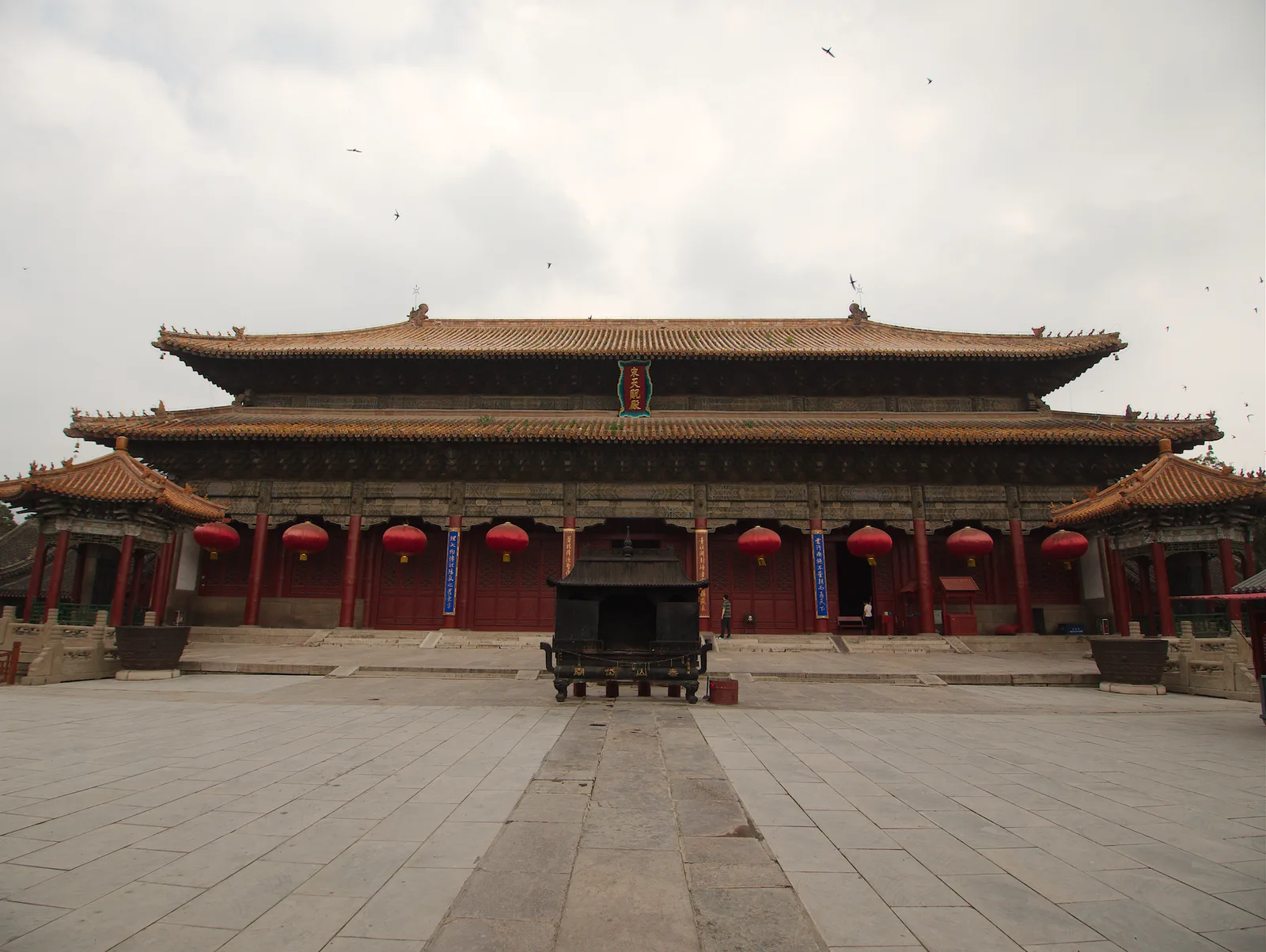
In Tai'an, at the foot of the mountain, stands the Dai Temple, a vast shrine to the god of Mount Tai. It was first built under the Han dynasty and enlarged to its present size under the Song. Tiankuang Hall, pictured here, is its main building.
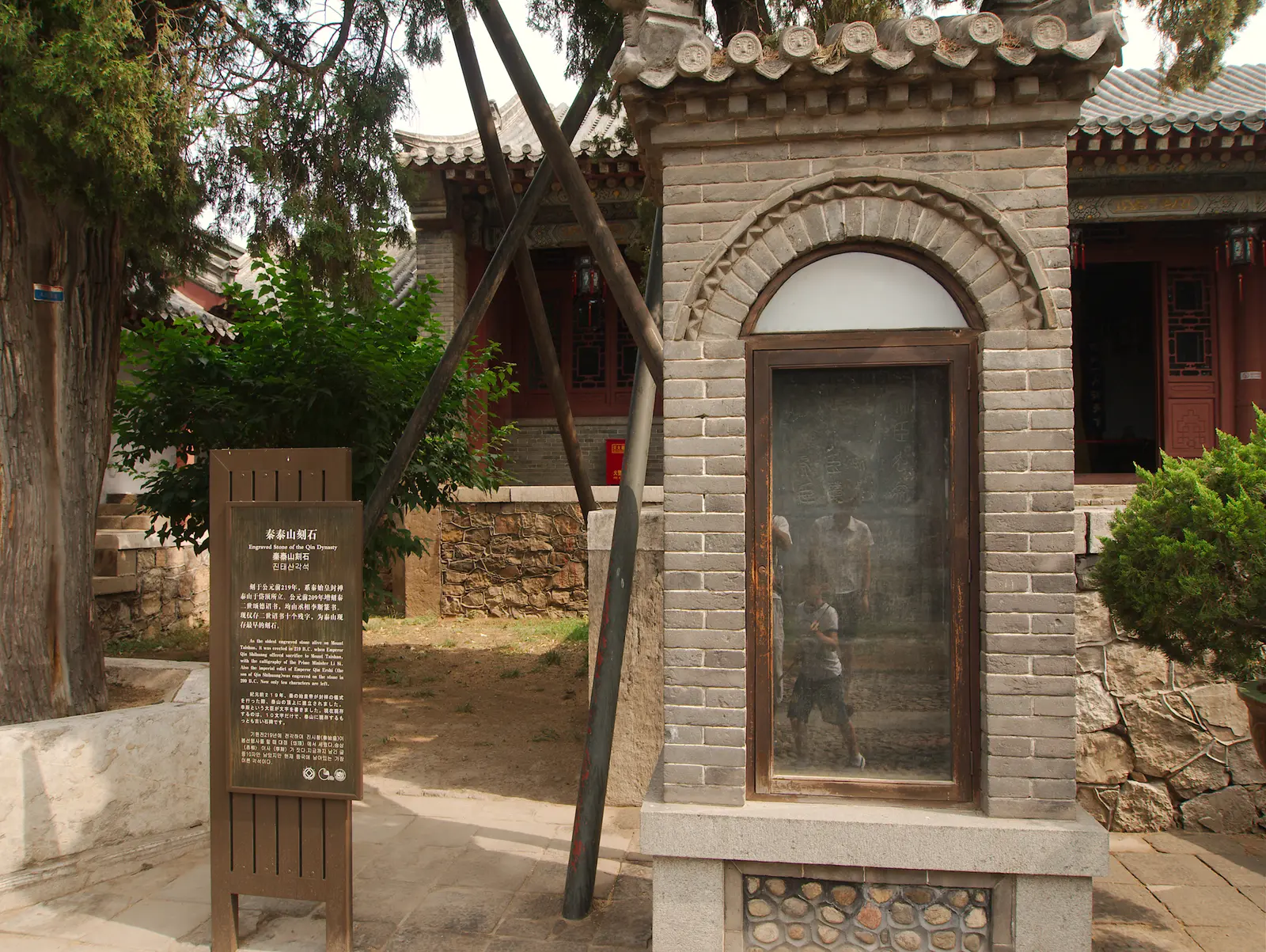
Inside the temple, a glass case holds fragments of a stone said to date from the Qin dynasty. Its inscription is in seal script attributed to Li Si, the First Emperor's chancellor, and only a handful of characters survive.
Two thousand years of worship
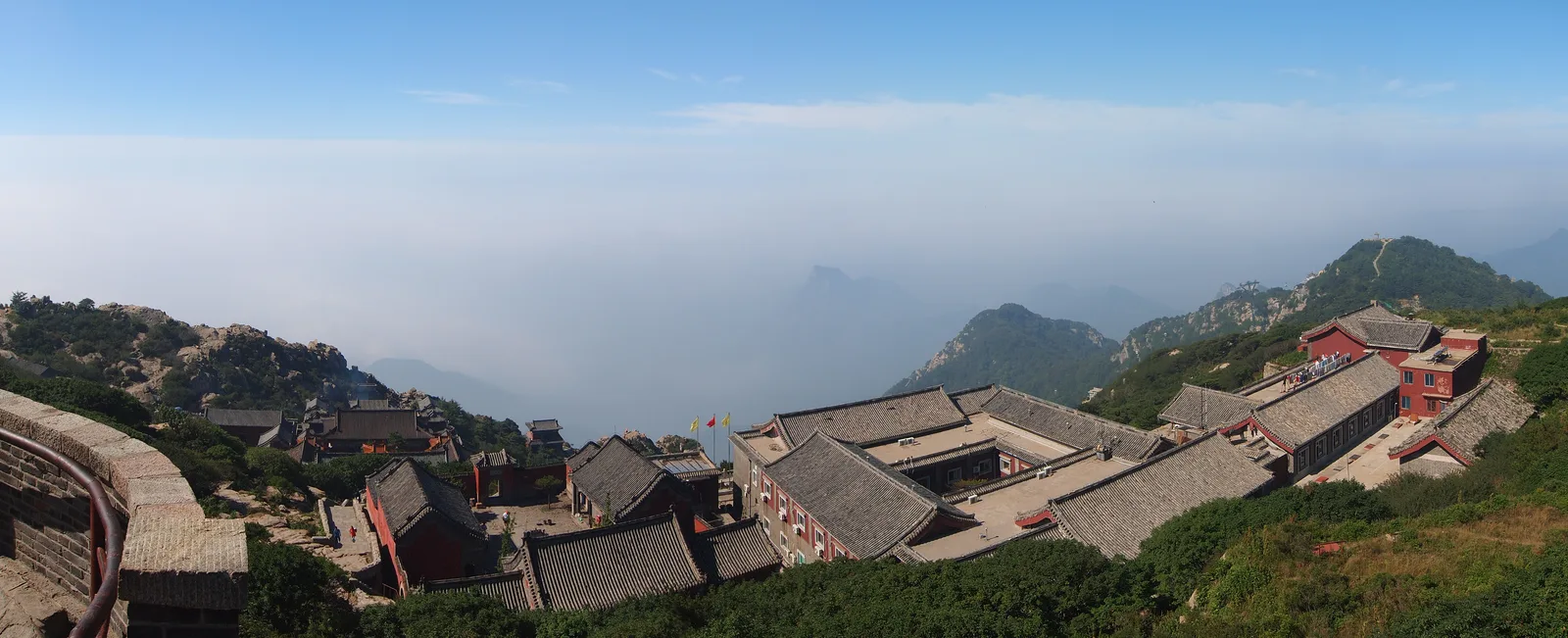
The International Union for Conservation of Nature, which advises UNESCO on natural heritage, describes Mount Tai as the object of an imperial cult for nearly 2,000 years, with twelve recorded imperial ceremonies honouring heaven and earth. In 1987 it was inscribed as a World Heritage Site for both its natural and its cultural value. Stone tablets, rock inscriptions and temples are still scattered across its slopes.
Find Mount Tai on Wooriyeojido
Emperors climbed it because they believed it stood closest to heaven. Today Mount Tai is pinned on the Wooriyeojido map. Find Mount Tai in the Wooriyeojido app, and if you go, leave your photos and stories from the day right beside it.
View this place in the Wooriyeojido appVideos of nearby places


Sources
- IUCN World Heritage Outlook — Mount Taishan
- UNESCO World Heritage Centre — Mount Taishan (437)
- Shandong Provincial People's Government Information Office — Mount Tai revered for centuries as the closest point to heaven (2019)
- Tai'an Municipal People's Government Information Office / China Daily — 'Fengshan Sacrifices' at Mount Tai (2017)
- China News Service — 牛敬飞 interview on the fengshan ceremonies (2023)
- Records of the Grand Historian (Shiji), Treatise on the Feng and Shan Sacrifices (vol. 28)
- Records of the Grand Historian (Shiji), Annals of the First Emperor of Qin (vol. 6)