Mount Sinai (Jebel Musa): is this really where Moses received the Ten Commandments?
For more than 1,600 years, pilgrims have climbed Jebel Musa in Egypt's southern Sinai as the mountain of the Ten Commandments, even though the Bible never says where that mountain is. Here is its story in video and photos.
In the south of Egypt's Sinai Peninsula, red granite mountains roll away in every direction. One of them, a 2,285-metre peak, has been honoured as the mountain of the Ten Commandments for more than 1,600 years. But is it really the one? Start with the short video.

 Watch the one-minute video on YouTube
The Mountain of Moses
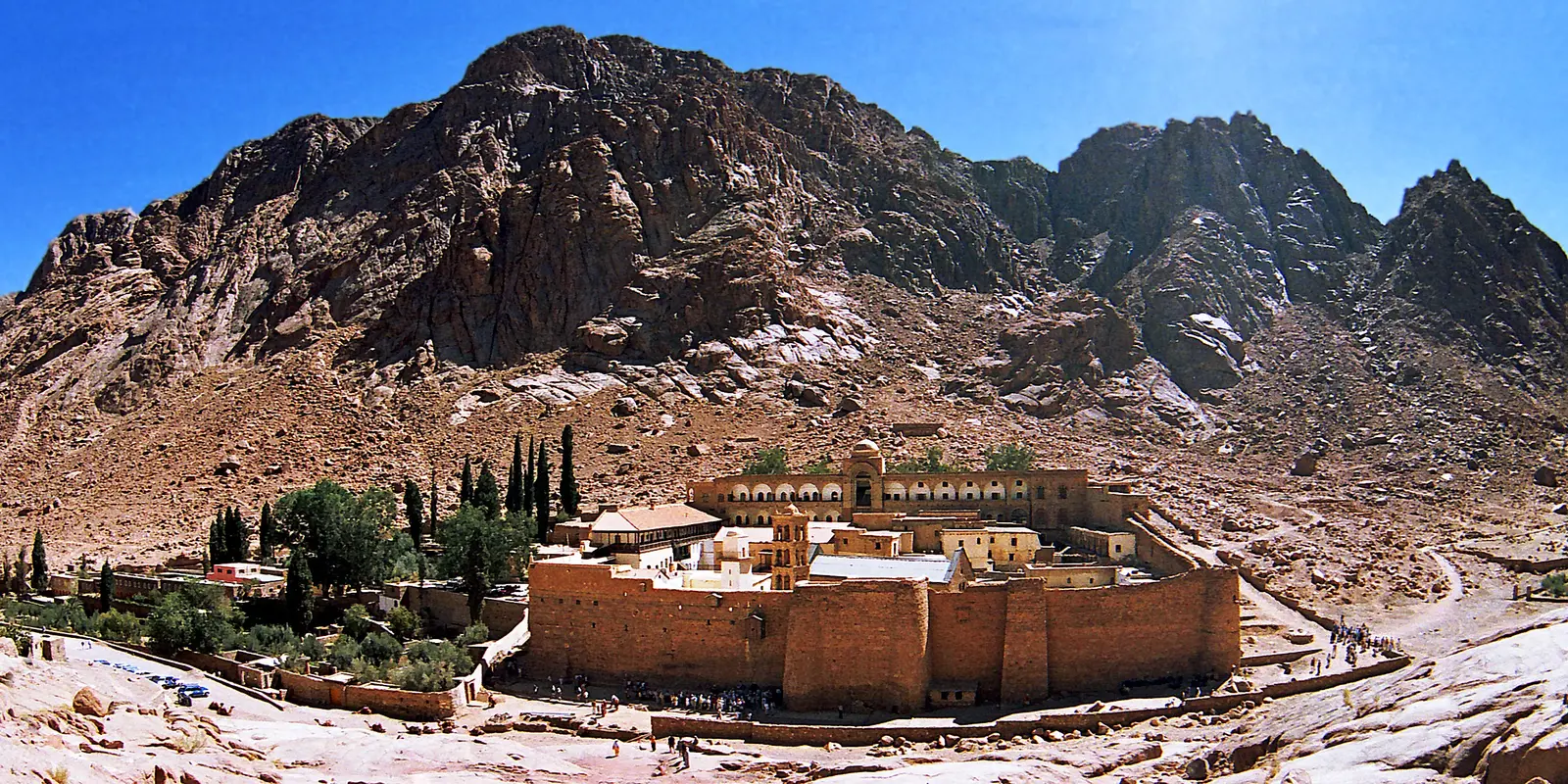
The peak rises beside the small town of St Catherine in Egypt's South Sinai Governorate, a place already 1,600 metres above sea level. In Arabic it is Jebel Musa, the Mountain of Moses. On its lower northern slope sits Saint Catherine's Monastery.
In 2002 UNESCO inscribed the surroundings as the Saint Catherine Area World Heritage Site, describing the whole landscape as sacred to three faiths: Islam, Christianity and Judaism.
A mountain the Bible never maps
The Book of Exodus says that Moses climbed Mount Sinai and received the stone tablets inscribed with the Ten Commandments. UNESCO describes the monastery as standing at the foot of Mount Horeb, where the Old Testament records that this took place, and Muslims revere the same peak as Jebel Musa.
The catch is that the Bible never says exactly where the mountain is. The Encyclopedia of the Bible calls its identification uncertain. Over the years scholars have proposed other candidates: Jebel Serbal, elsewhere in the Sinai; peaks in the northern Sinai; even north-western Arabia. The Biblical Archaeology Society has published a piece arguing that there is neither archaeological nor historical evidence for identifying Jebel Musa as Sinai.
Pilgrims since the fourth century
What this mountain does have is a very long tradition. From the fourth century, Christian pilgrims came here believing it to be Mount Sinai. According to the monastery, a chapel stood on the summit in that century, and a pilgrim named Egeria, who arrived around 380, wrote a description of it.
In the sixth century the Byzantine emperor Justinian I sent architects and masons to build a fortified monastery below the peak. Saint Catherine's is the oldest Christian monastery still serving its original purpose.
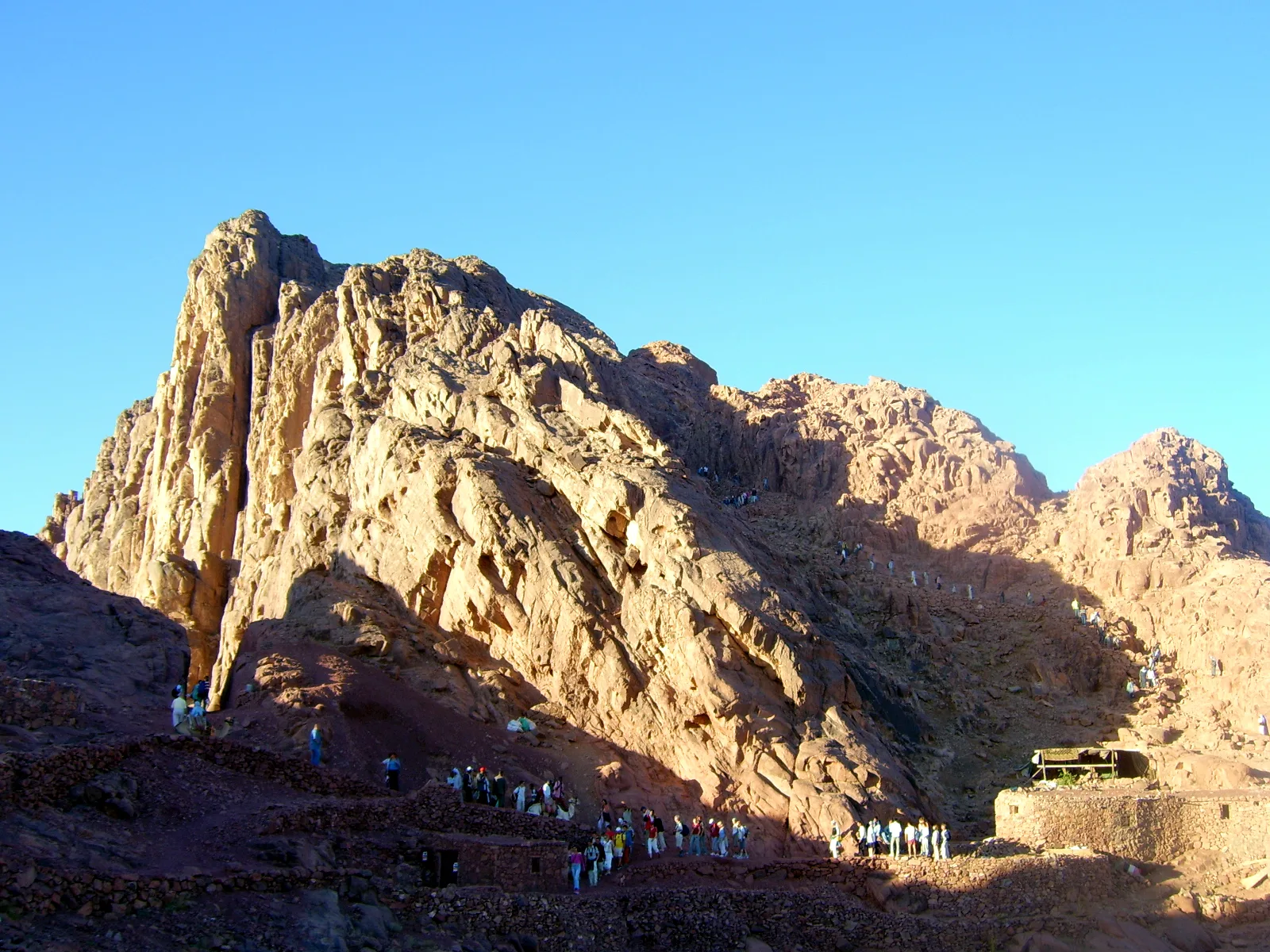

The bush in the courtyard
Inside the walls is the Chapel of the Burning Bush, named for the biblical scene in which Moses is called from a bush that burns without being consumed. The monastery considers it the oldest shrine within its walls, and pilgrims take off their shoes before entering.
Beside the chapel grows a bush said to be that very one. According to UNESCO's advisory evaluation, it was moved a few metres from its original spot to make room for the altar.
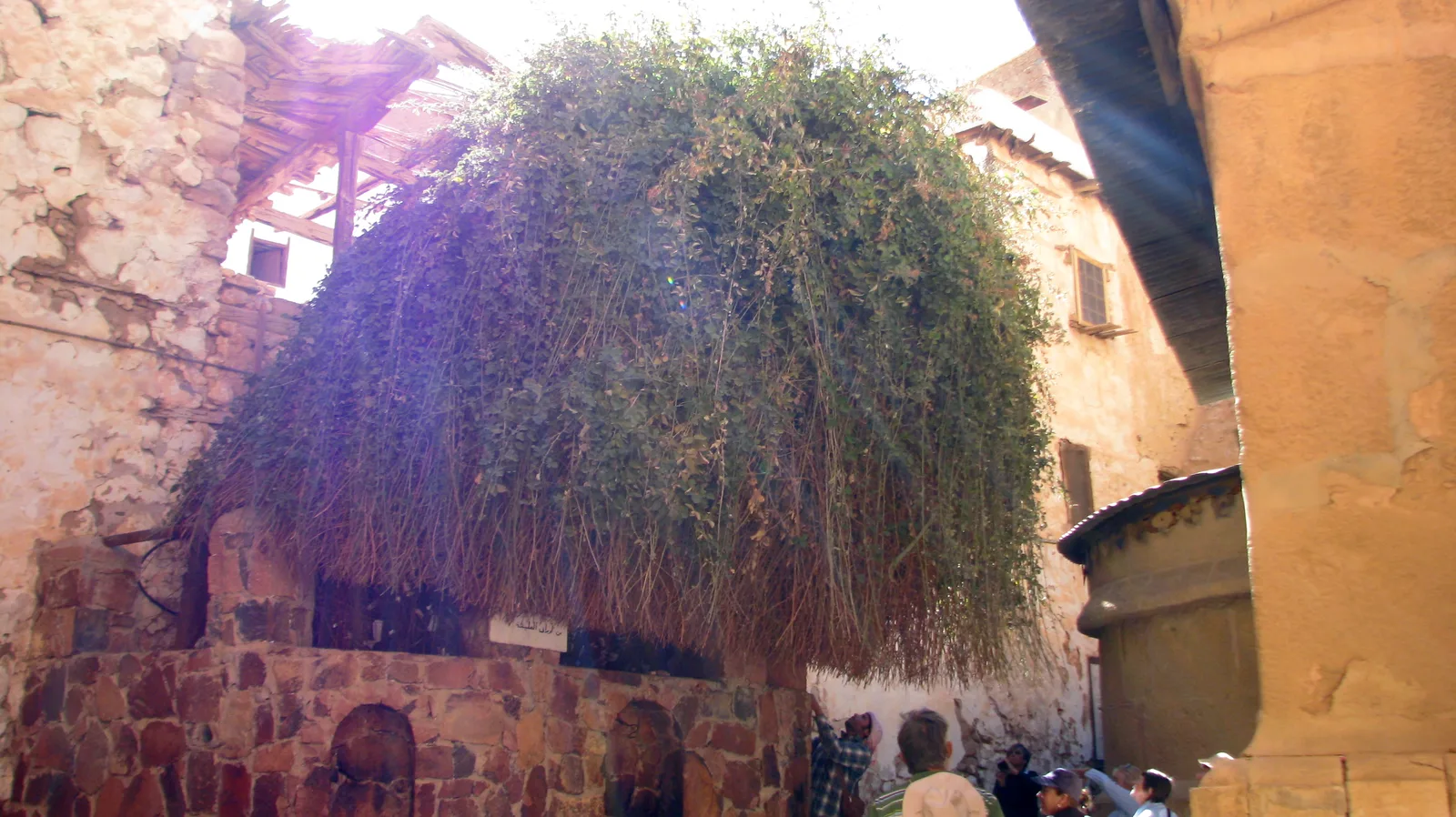

Climbing in the dark for the sunrise
Two routes lead to the top. The older is the Steps of Repentance, roughly 3,750 stone steps said to have been laid in the sixth century. The other is a gentler camel trail cut in the 19th century. The monastery advises allowing five to seven hours for the climb and, because nights and days differ sharply in temperature, bringing proper hiking clothes, water and a torch. Most people set off before dawn so they can watch the sun come up from the summit.
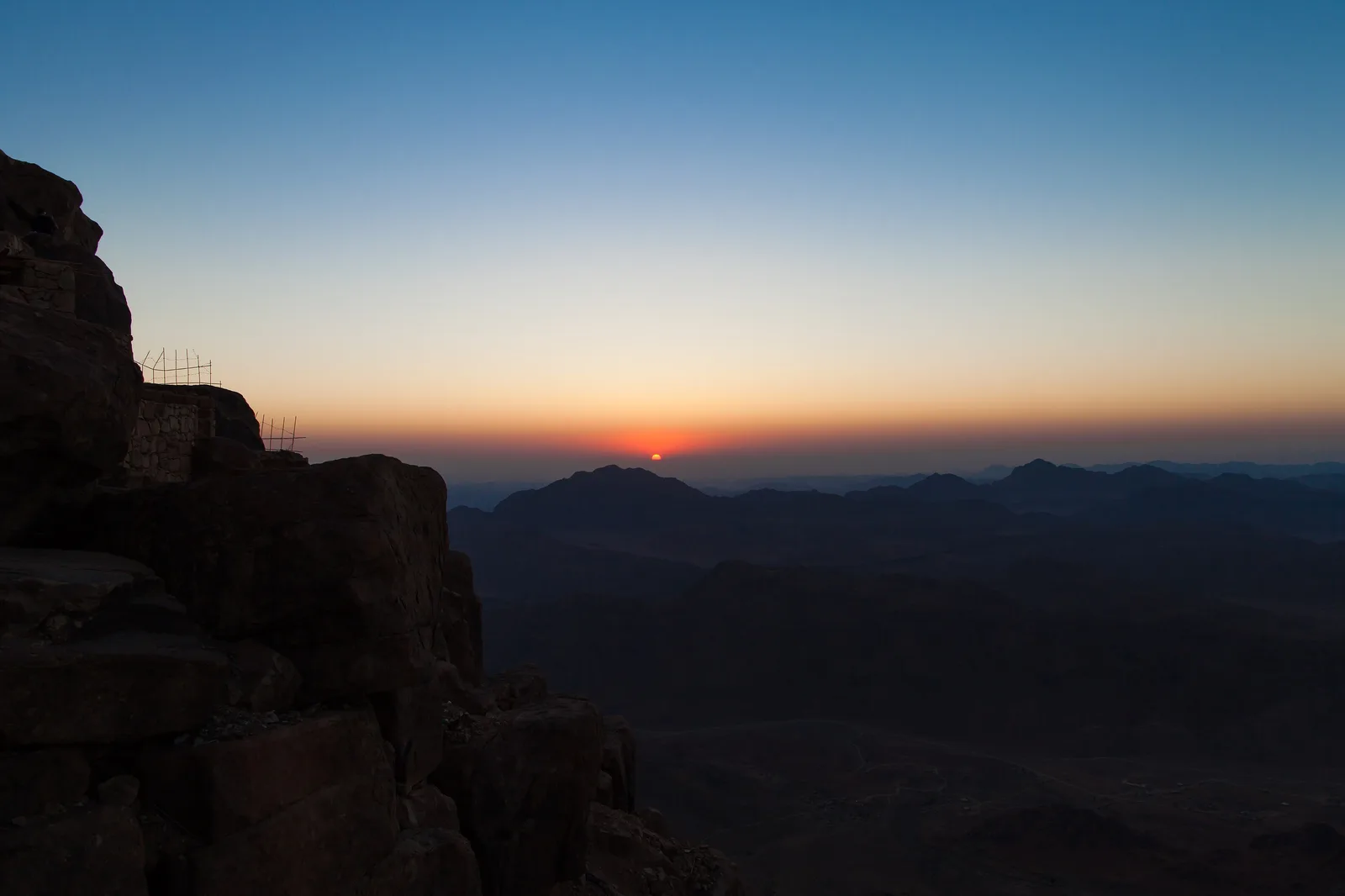

Two places of prayer on one peak
The summit holds a small stone chapel dedicated to the Holy Trinity, built in the 1930s from the stones of the chapel Justinian had raised. Right next to it stands a small mosque, so two faiths share the same mountaintop.
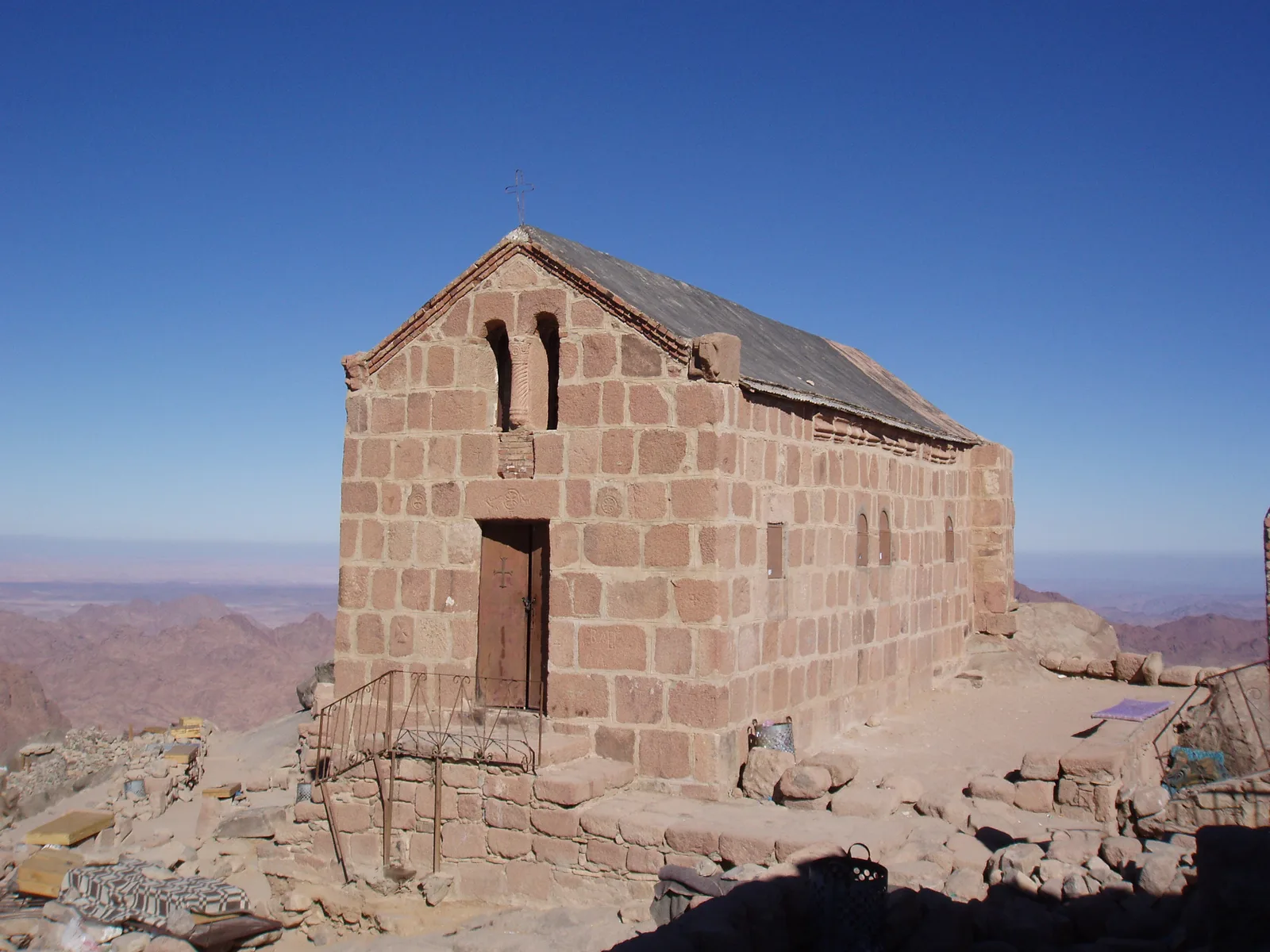

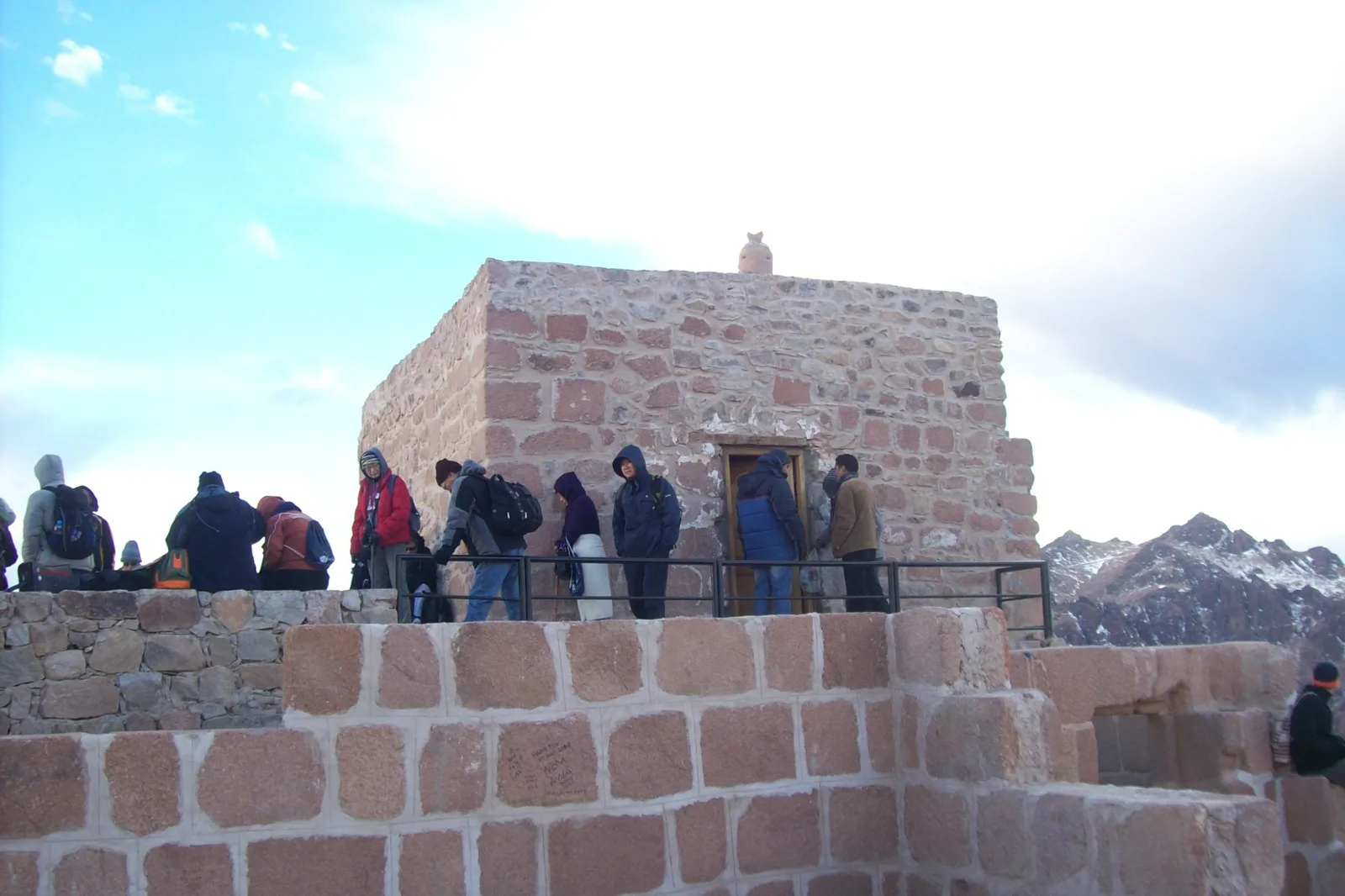

Nobody can say for certain which mountain Moses climbed. What is certain is that this one has been honoured as that mountain, and climbed by pilgrims, for more than 1,600 years, and that it remains precious to three religions at once.
Find Mount Sinai on Wooriyeojido
For centuries people have climbed this dark trail to greet the sunrise. Mount Sinai (Jebel Musa) is pinned on the Wooriyeojido map. Find Mount Sinai in the Wooriyeojido app, and if you go, leave your photos and stories from the day right beside it.
View this place in the Wooriyeojido appVideos of nearby places
 The Great Sphinx of Giza and the Dream Stele
 Why Are These 3,000-Year-Old Paintings So Vivid? The Tomb of Nefertari
 A small chapel said to hold the Ark of the Covenant? Aksum, Ethiopia
Sources
- UNESCO World Heritage Centre — Saint Catherine Area (954)
- ICOMOS — Advisory Body Evaluation, Saint Catherine Area (954, 2002)
- Holy Monastery of Sinai — Holy Summit
- Holy Monastery of Sinai — Holy Bush
- Holy Monastery of Sinai — History
- Experience Egypt — St Catherine
- Encyclopedia of the Bible — Mount Sinai
- Biblical Archaeology Society — The Case for (or Against) Jebel Musa