The Great Sphinx of Giza and the Prince Who Dreamed of a Crown
The Great Sphinx on Egypt's Giza Plateau, and the Dream Stele between its paws: the story of a sand-buried lion that promised a prince the throne, told with a short video and old photographs.
On the Giza Plateau in Egypt, a colossal stone lion with a human face lies stretched out on the sand. This is the Great Sphinx, and according to an ancient inscription, it once appeared to a young prince in a dream and made him a promise. What did it offer? Start with the short video.
 Watch the one-minute video on YouTube
A lion at the foot of the pyramids
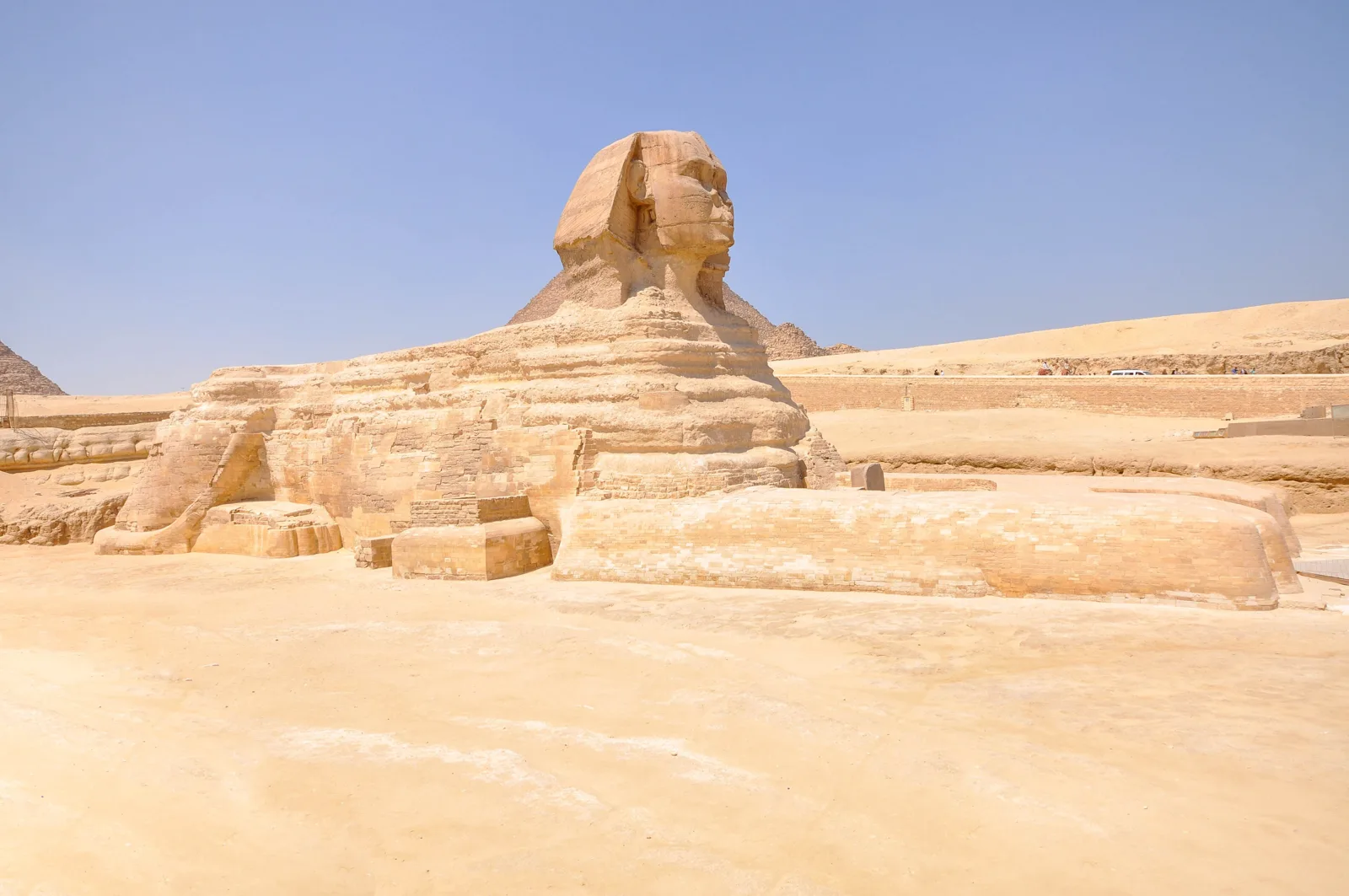
The Great Sphinx crouches below the pyramids of the Giza Plateau, in Giza Governorate just outside Cairo. The plateau belongs to Memphis and its Necropolis – the Pyramid Fields from Giza to Dahshur, inscribed as a UNESCO World Heritage Site in 1979.
It has the body of a lion and the face of a man, wearing a striped royal headcloth. Joining a king's face to a lion's body was a way of expressing royal power.
Carved out of a hill
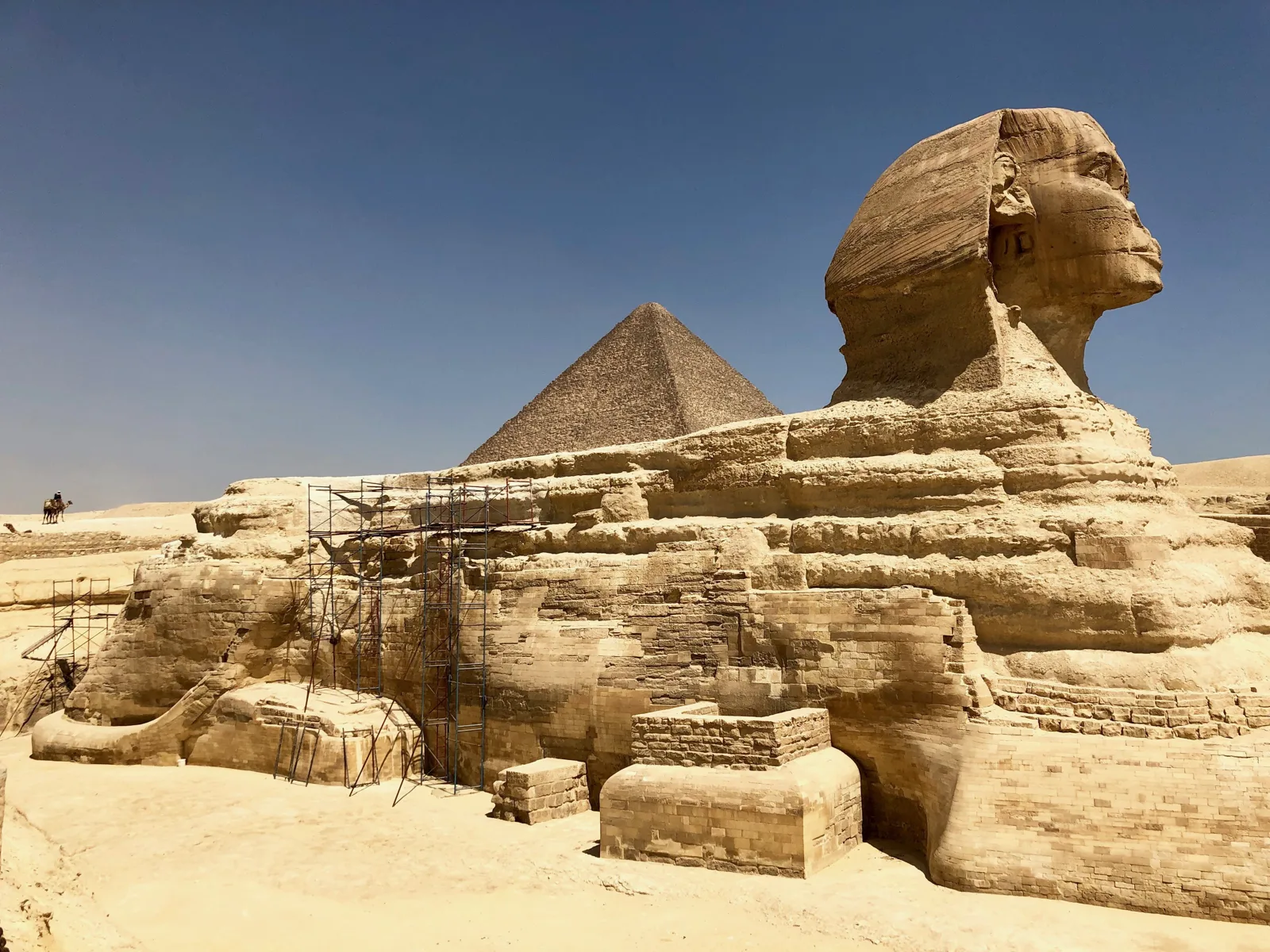
The Sphinx was not built block by block. During the 4th Dynasty, sculptors carved it straight out of a natural outcrop of bedrock. The result is about 73.5 metres (241 feet) long and 20 metres (65 feet) high.
Most scholars credit it to King Khafre, who ruled from roughly 2558 to 2532 BC, which makes the Sphinx more than 4,500 years old. The clues: it sits right beside Khafre's valley temple, and its face resembles known statues of the king.
The Dream Stele
Between the Sphinx's outstretched paws stands a large granite slab known as the Dream Stele. It was set up some eleven centuries after the Sphinx was carved, and the story inscribed on it goes like this.
A young prince named Thutmose was out hunting when he stopped to rest in the shadow of the Sphinx and drifted off to sleep. At the time, the great statue was buried in sand. In his dream, the Sphinx spoke to him: clear away the sand that covers my body, and I will make you king.
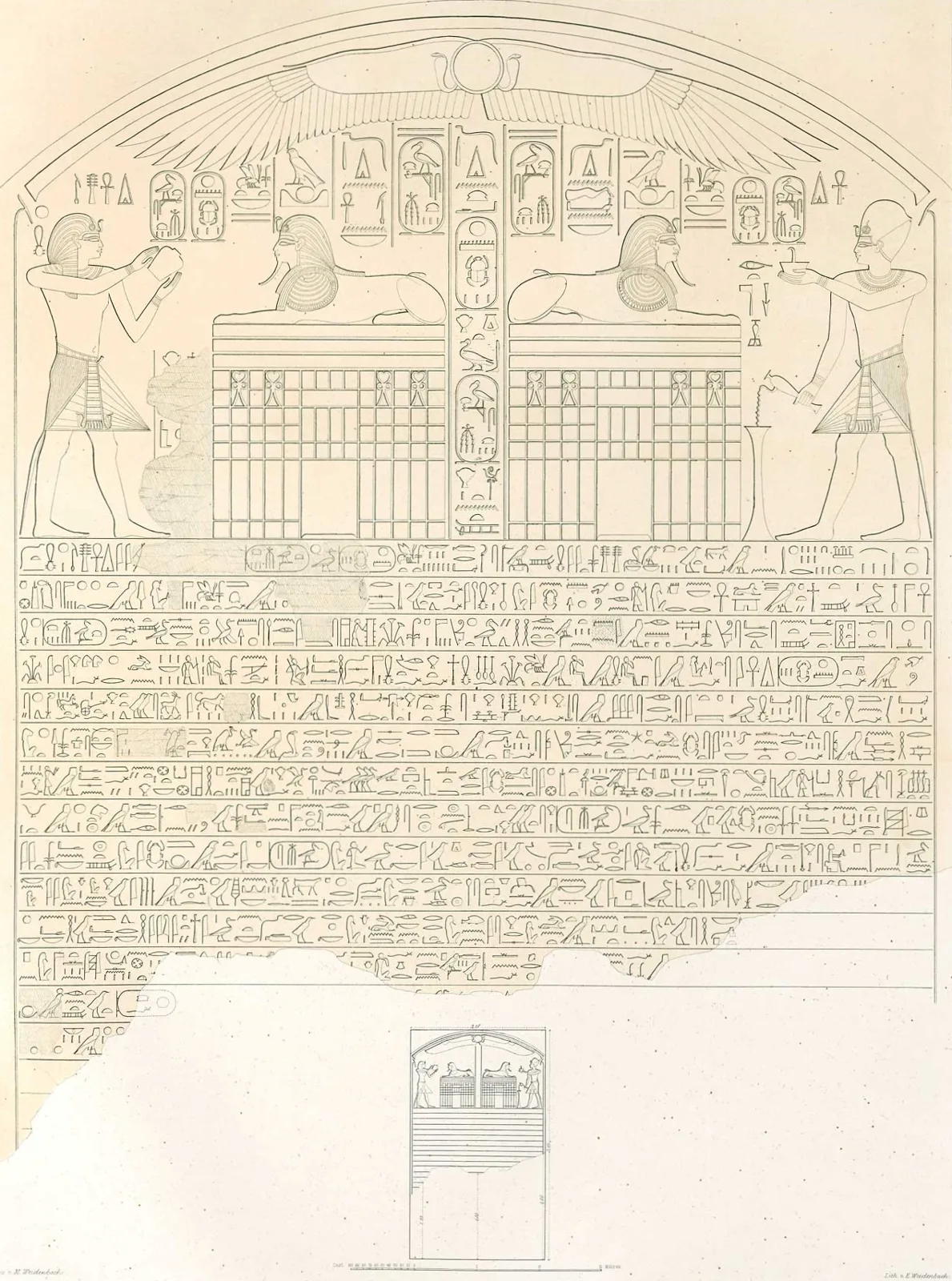
The prince did become king, as Thutmose IV. According to the stele, in the first year of his reign he had the dream carved in stone and placed between the Sphinx's paws. At the top of the slab, a king presents offerings to the Sphinx.
By then the Sphinx was worshipped as Horemakhet, "Horus of the Horizon," a form of the sun god. Amenhotep II had even built a temple beside it.
The sand that never stops
Desert sand has a way of creeping back, no matter how often it is cleared. In a photograph from 1849, only the Sphinx's head and back rise above the drifts.
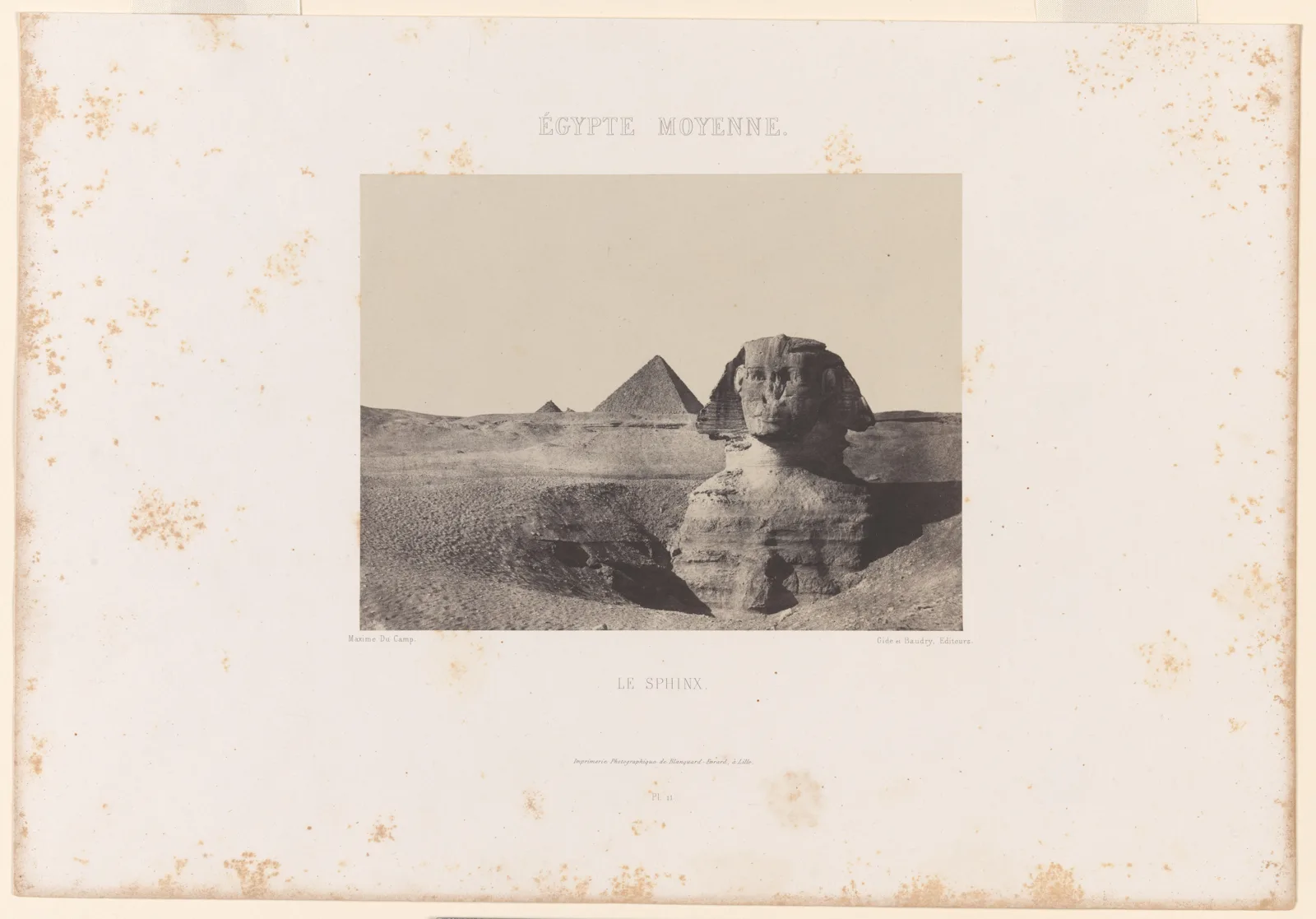
In a picture taken sometime between 1875 and 1888, much of the body is still buried.
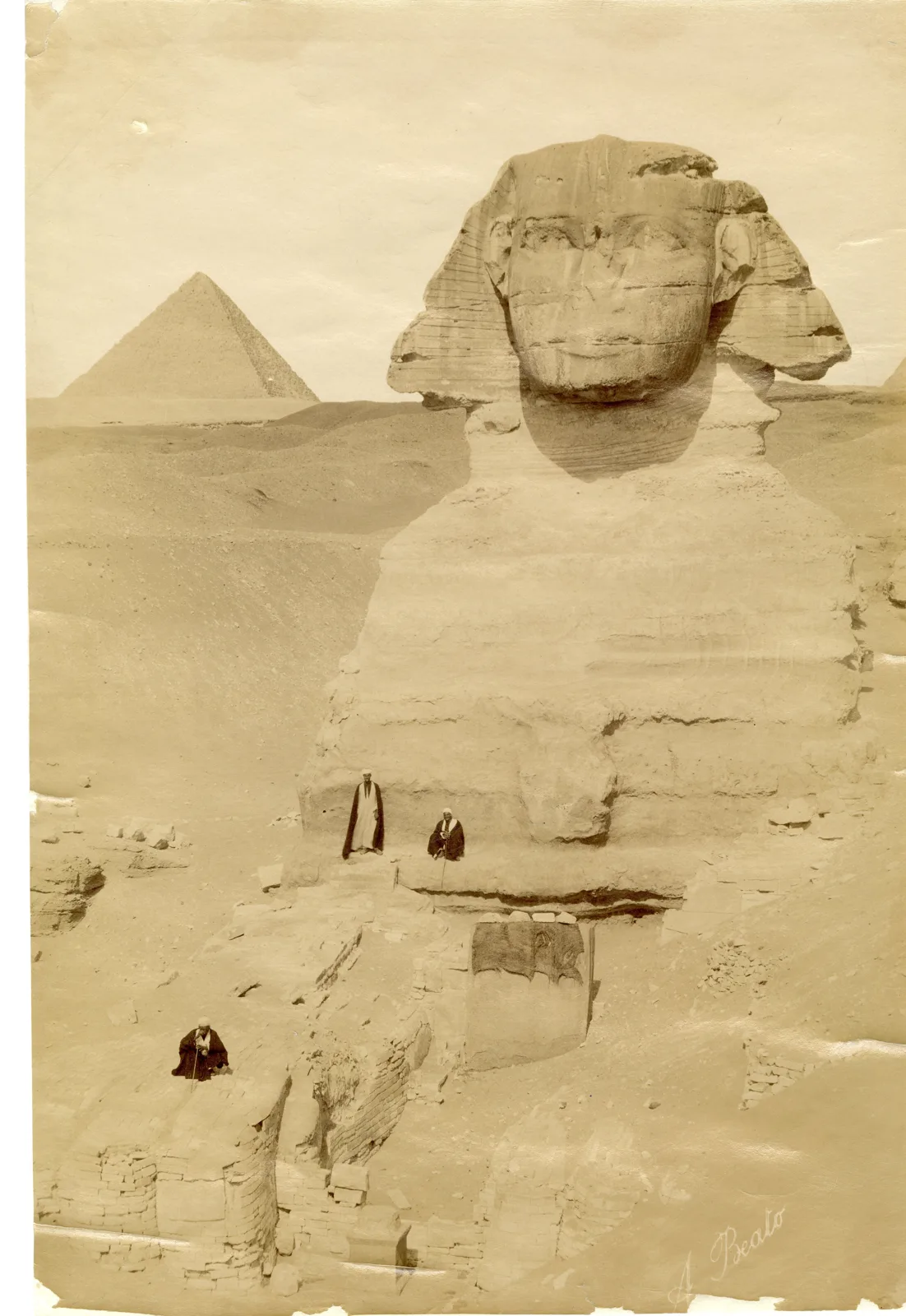
Only after repeated excavations did the paws and the Dream Stele come fully into view, as visitors see them today.
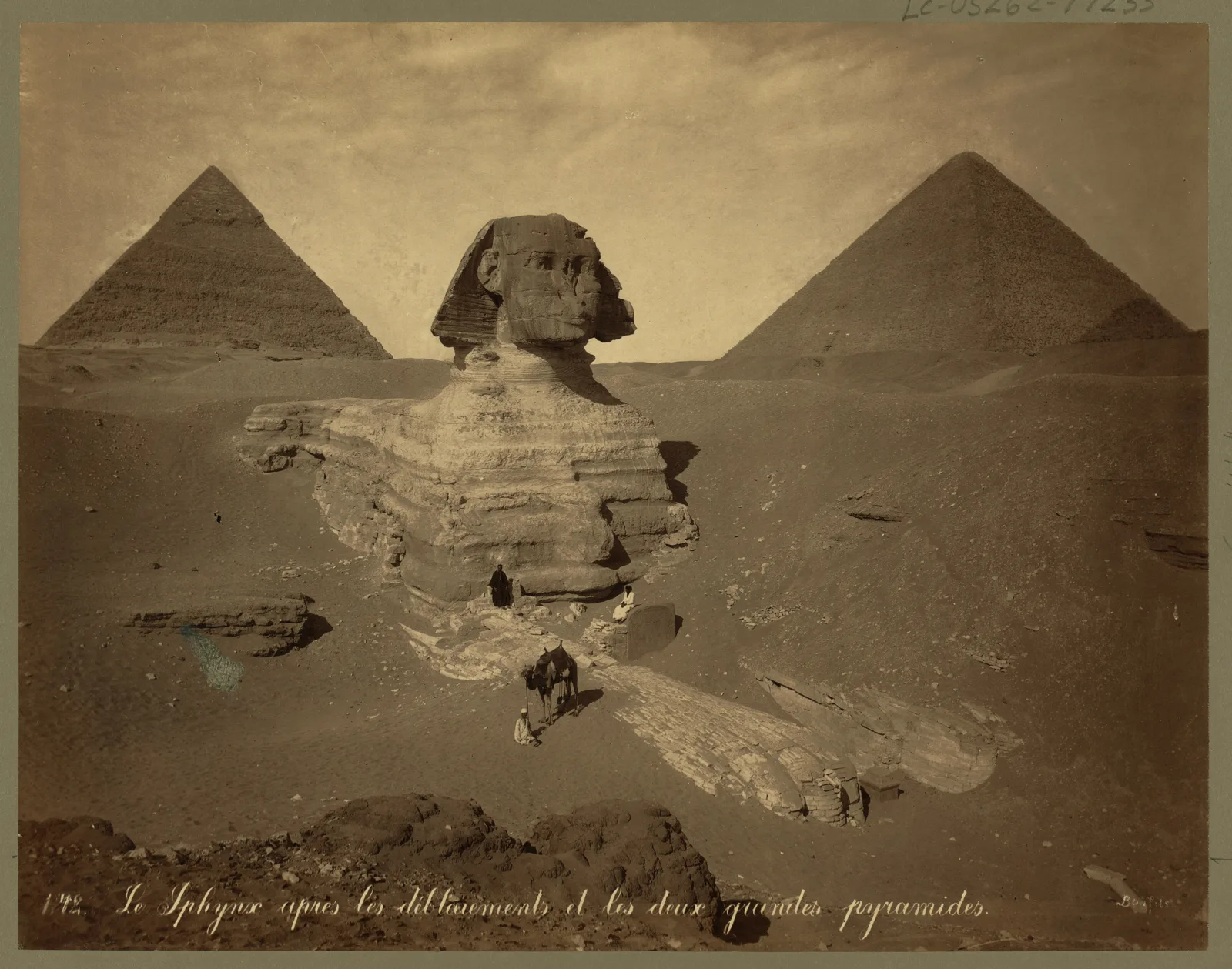
Why carve a dream in stone?
Some scholars think Thutmose IV may not have been the rightful heir to the throne. If so, the dream may have been a piece of royal messaging: proof, set in granite, that the gods themselves had chosen him.
Find the Great Sphinx of Giza on Wooriyeojido
A stone lion that promised a crown to the prince who freed it from the sand, and a slab between its paws that still tells the tale. The Great Sphinx of Giza is pinned on the Wooriyeojido map. Look it up in the Wooriyeojido app, and if you make the trip, leave your photos and stories from the day right beside it.
View this place in the Wooriyeojido appVideos of nearby places


Sources
- Egyptian Ministry of Tourism and Antiquities — The Great Sphinx
- Egyptian Ministry of Tourism and Antiquities — Memphis and its Necropolis
- UNESCO World Heritage Centre — Memphis and its Necropolis, the Pyramid Fields from Giza to Dahshur (86)
- National Museum of Egyptian Civilization — Thutmose IV (Menkheperure)
- University of Memphis, Institute of Egyptian Art and Archaeology — Giza photo tour