Abu Simbel: The Temples Egypt Cut Apart to Save from a Rising Lake
The rock temples of Ramesses II on the shore of Lake Nasser are not where they were carved. How they were sawn into more than a thousand blocks and lifted 64 metres to escape the Aswan High Dam, and the sunrise that reaches the inner sanctuary twice a year, in a video and photos.
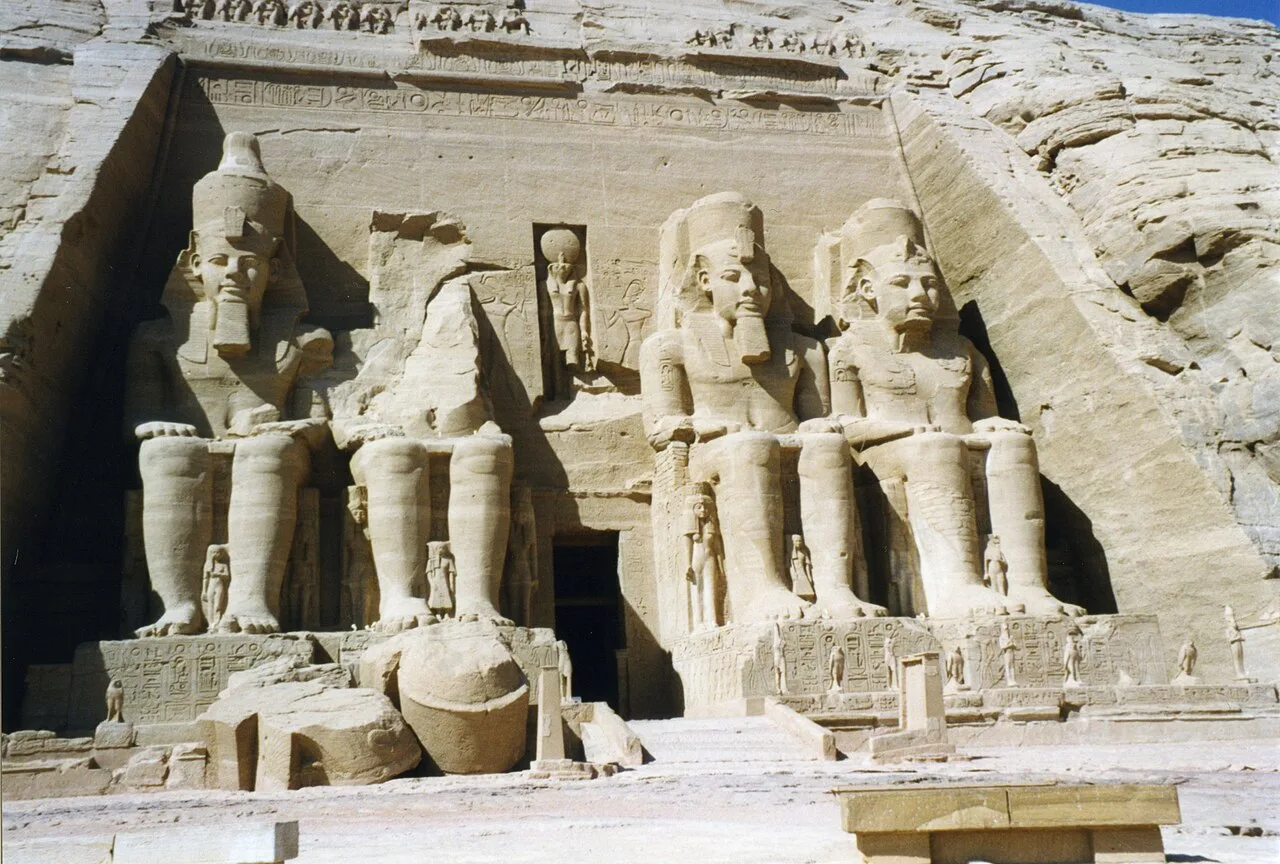
Deep in southern Egypt, where the desert meets a vast blue lake, four stone giants 21 metres tall sit side by side at the mouth of a temple. Abu Simbel has been here for more than 3,000 years, though not quite here: in the 1960s the whole thing was cut into more than a thousand pieces and rebuilt on higher ground. How do you move a temple carved into a mountain? Start with the short video.

 Watch the one-minute video on YouTube
280 kilometres beyond Aswan
Abu Simbel lies in Aswan Governorate, at Egypt's southern edge, about 280 kilometres south of the city of Aswan, according to UNESCO. On the western shore of Lake Nasser, Ramesses II had two temples carved into the cliffs: the Great Temple, fronted by four colossal seated figures, and a smaller temple beside it. In 1979 both were inscribed on the World Heritage List as part of the Nubian Monuments from Abu Simbel to Philae.
A temple dug into the rock
The Great Temple was not built so much as excavated, hollowed out of a solid escarpment. All four of the seated colossi on its facade represent Ramesses II, and UNESCO puts their height at 21 metres.
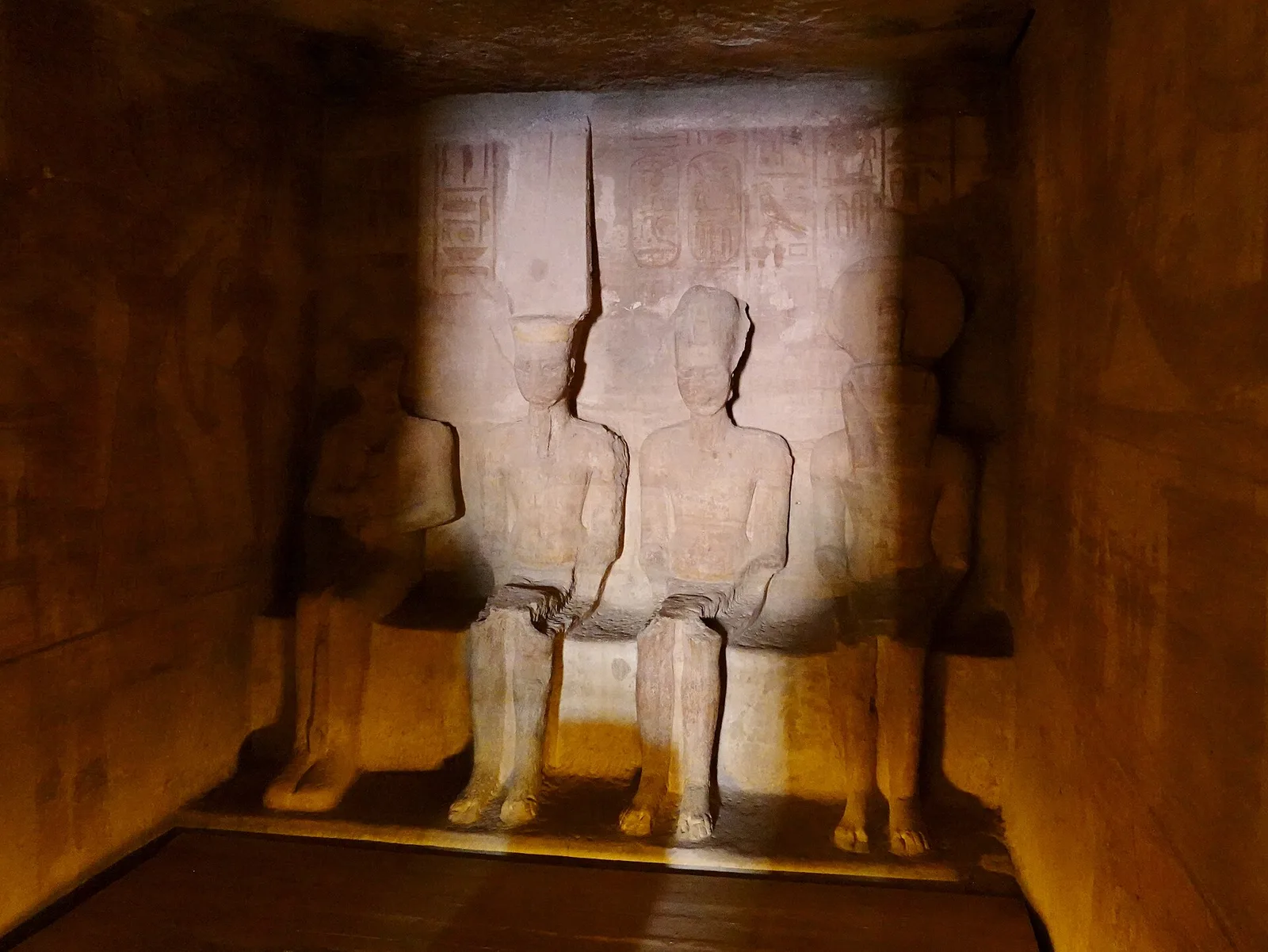
At the far end, in the innermost sanctuary, four deities sit in a row: Amun-Ra, Ra-Horakhty, Ptah, and Ramesses II himself, raised to the rank of a god.
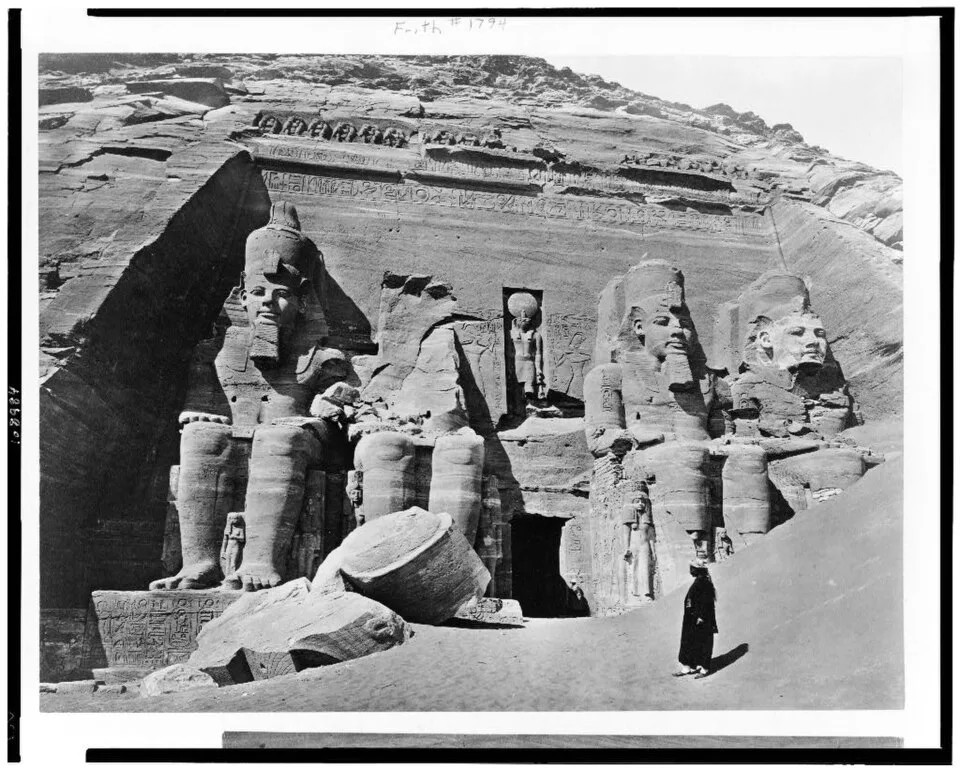
Early photographs show one of the colossi missing its upper half, the broken pieces lying at its feet. This picture from the 1850s captures it exactly that way.

Facing 50 metres of water
The temple had survived three millennia when, in 1959, it suddenly faced oblivion. Egypt was building the Aswan High Dam on the Nile to expand its farmland and its power supply. The reservoir behind the dam, Lake Nasser, would leave Abu Simbel under roughly 50 metres of water.
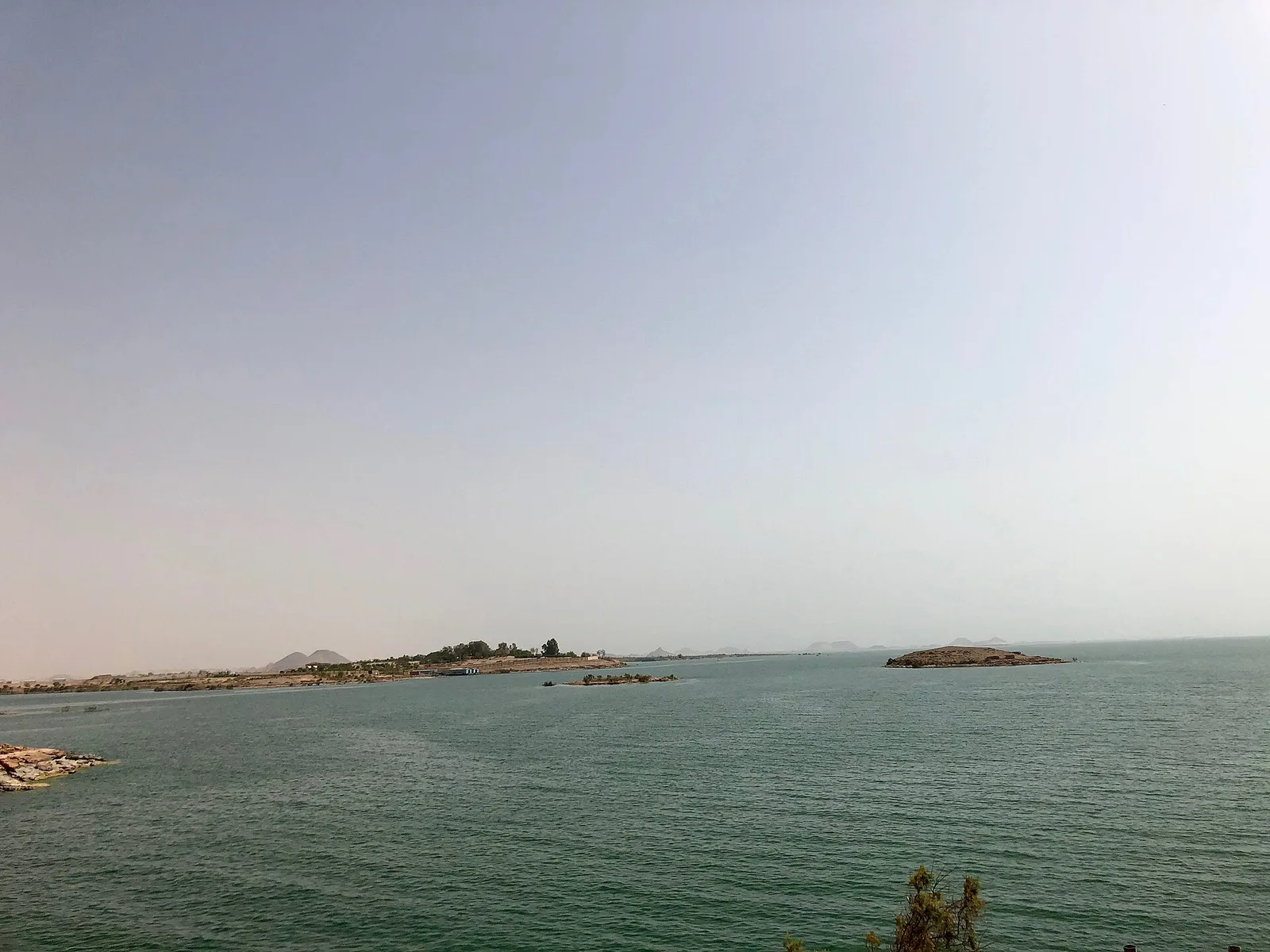

On 8 March 1960, UNESCO launched an international appeal to save the monuments of Nubia. It was the height of the Cold War, yet some 50 countries put their differences aside. Forty technical missions from five continents went on to rescue 22 monuments and complexes. The campaign cost US$80 million in total, and about half of that was donated by those countries.
Sawn into more than a thousand blocks
In 1963 the Egyptian government settled on a plan to cut the two temples out of the rock and move them. Work began in April 1964, and by that autumn the waters behind the dam had started to rise. There was no time to spare.
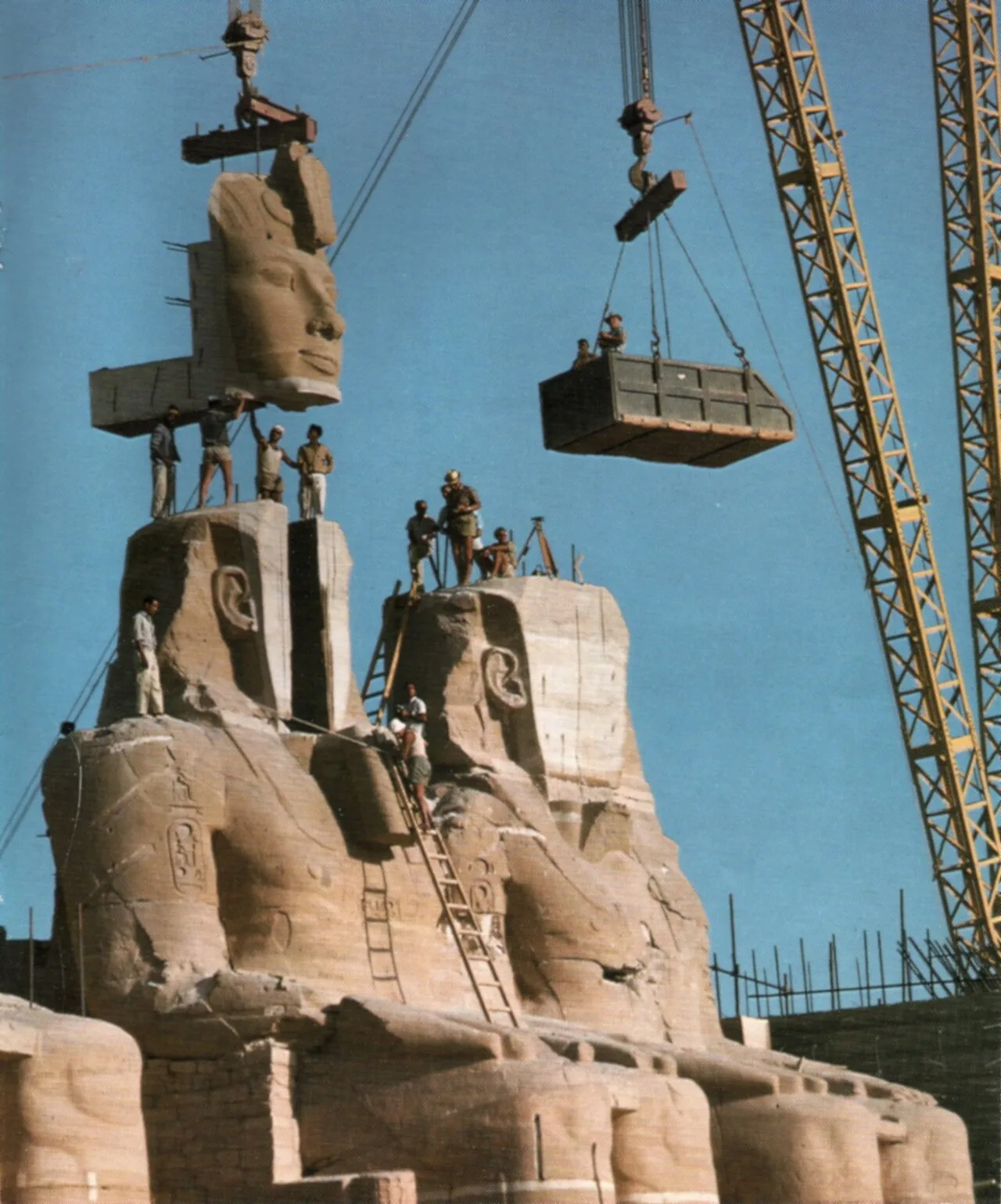
The temples were sawn into more than a thousand blocks, each weighing around 30 tons. Every block was numbered, moved into storage and then fitted back together at the new site. A photograph from 1967 shows the face of one colossus dangling from a crane as it is guided back into position.

The temples now stand 64 metres higher than before and 180 metres further inland. Because they had originally been cut into a cliff, they needed a cliff behind them again, and so the hill you see at their back is artificial, built specially for the purpose.
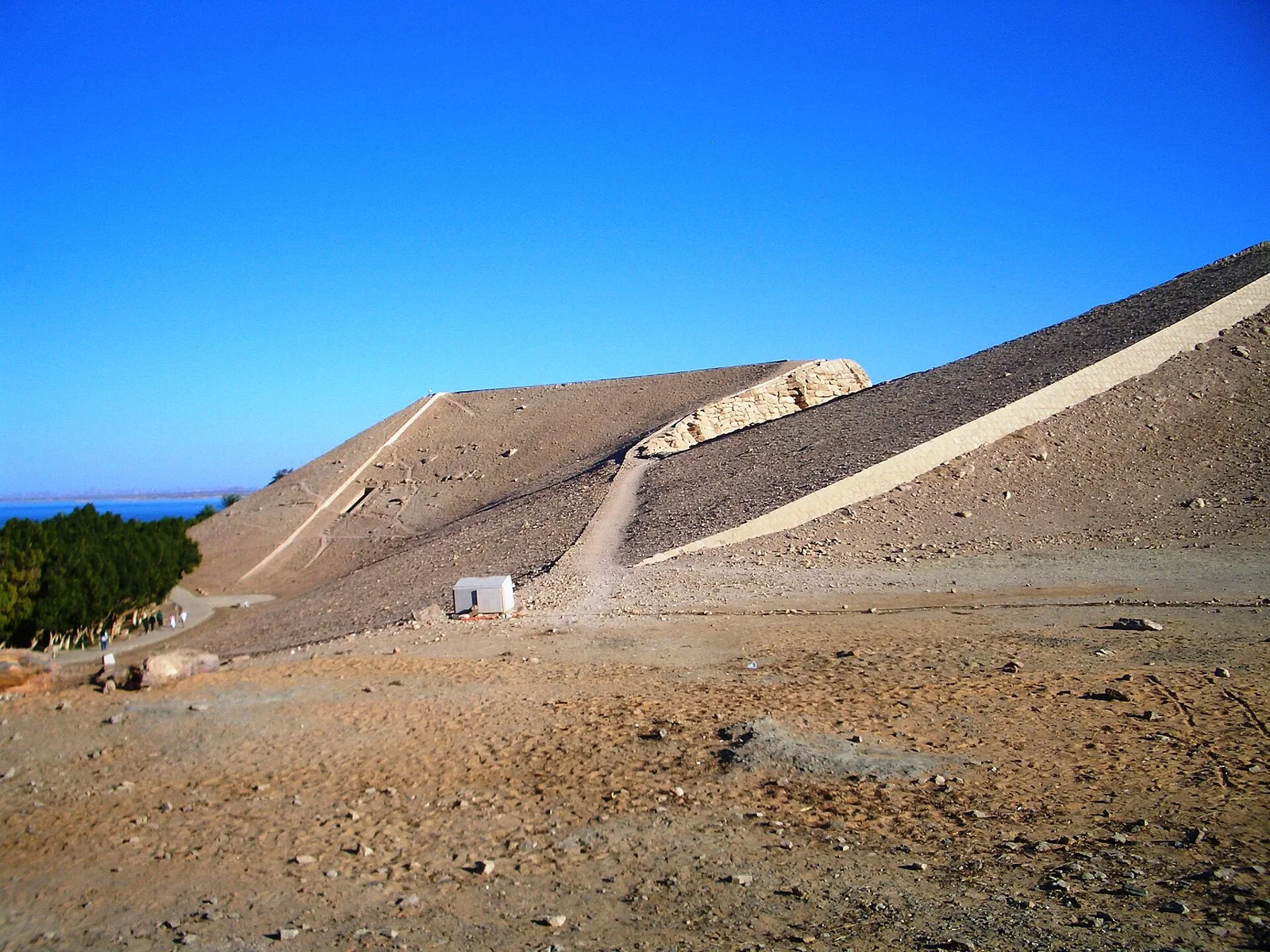

Work at Abu Simbel was completed on 22 September 1968. The wider UNESCO campaign to save Nubia's monuments carried on for years afterwards, finally closing on 10 March 1980.
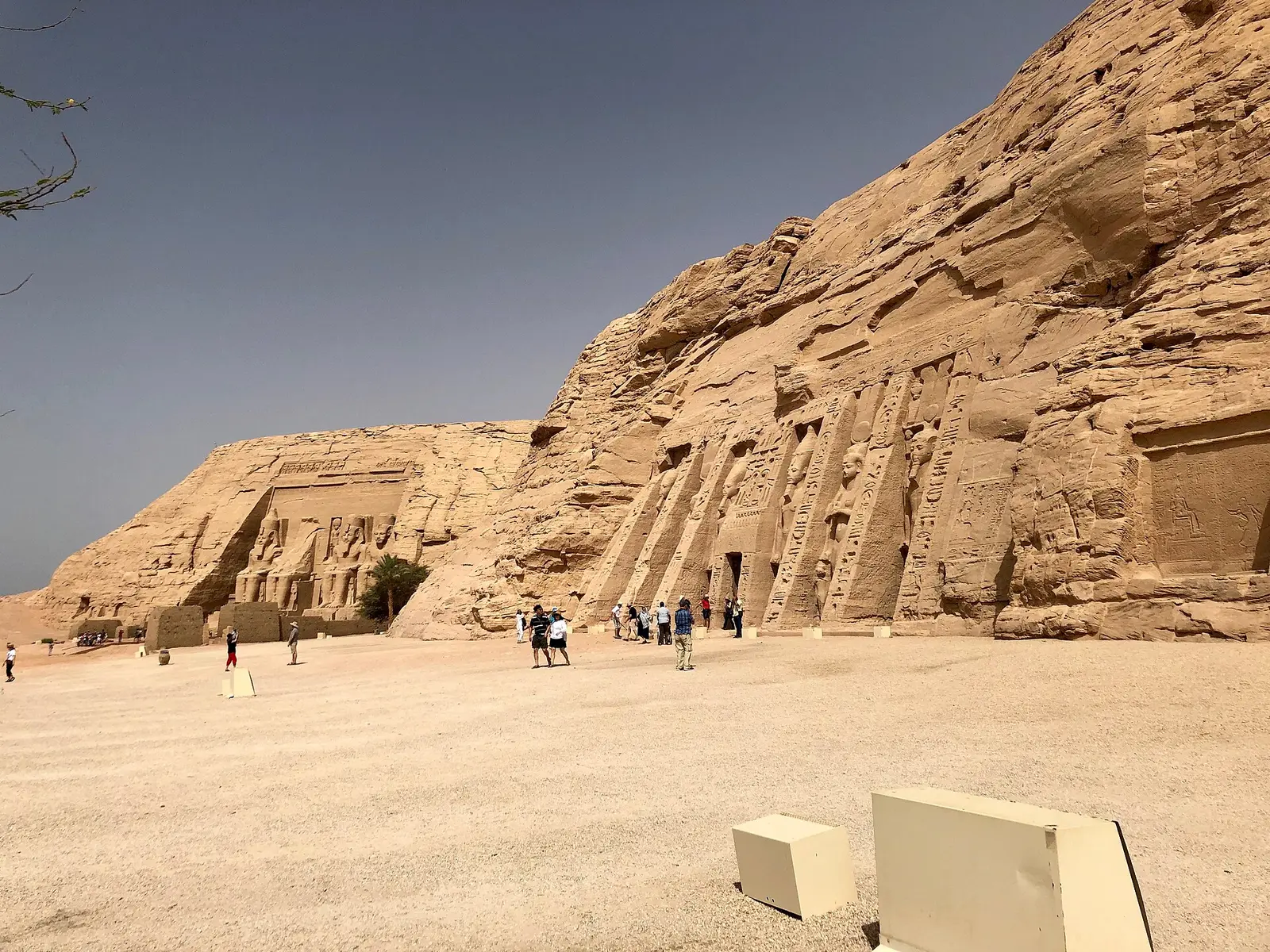

The sunrise that reaches the sanctuary
According to Egypt's Ministry of Tourism and Antiquities, on two mornings a year, 22 February and 22 October, the rising sun shines straight through the entrance, across the great hall and onto the statues in the sanctuary. Three of the four are lit: Ramesses II, Amun-Ra and Ra-Horakhty. Ptah, a god linked with the underworld, stays in the dark. Press reports say that before the move the alignment fell a day earlier, on 21 February and 21 October, though official sources do not mention it.

Find Abu Simbel on Wooriyeojido
Taking apart a temple carved into a cliff and putting it back together on higher ground was something no single country did alone. Abu Simbel is pinned on the Wooriyeojido map. Look it up in the Wooriyeojido app, and if you make the trip, leave your photos and stories from the day right beside it.
View this place in the Wooriyeojido appVideos of nearby places
 Why Are These 3,000-Year-Old Paintings So Vivid? The Tomb of Nefertari
 How were about 2.3 million stones stacked? The Great Pyramid of Giza
 The Great Sphinx of Giza and the Dream Stele
Sources
- UNESCO World Heritage Centre — Nubian Monuments from Abu Simbel to Philae (88)
- UNESCO World Heritage Centre — International Campaign to Save the Monuments of Nubia
- UNESCO World Heritage Centre — The Rescue of Nubian Monuments and Sites
- UNESCO World Heritage Centre — Working Together: Abu Simbel
- UNESCO World Heritage Centre — Timeline: Salvage of the Monuments of Nubia
- Egyptian Ministry of Tourism and Antiquities — Abu Simbel
- Egyptian Ministry of Tourism and Antiquities — The unique biannual solar alignment phenomenon at the temple of Ramses II in Abu Simbel