Hamelin: Where Did the Pied Piper Take the Children?
For more than 700 years, the German town of Hamelin has told of children who followed a piper and never came back. An inscription on the Rat-Catcher's House, a lane where no music plays, and what historians think really happened, in a short video and photos.
Where did the children go? It is a question that has followed the small German town of Hamelin for more than 700 years. The story is a legend, and no one can say for sure that it ever happened. Yet its traces are written all over the old town. Start with the short video.

 Watch the one-minute video on YouTube
A town on the Weser
Hamelin (Hameln in German) sits on the River Weser in Lower Saxony, in northern Germany. Its name travelled the world thanks to one story: the Pied Piper of Hamelin.
The tale the Grimms wrote down
The legend survives in several forms. The one the town itself calls the best known was recorded by the Brothers Grimm in 1816.
In 1284, a stranger in a coat of many colours turned up in Hamelin and offered, for a fee, to rid the town of its rats. He played his pipe, the rats poured out after him, and he led them into the Weser, where they drowned. Then the townspeople refused to pay. On 26 June the piper returned and played again. This time it was the children who followed. One hundred and thirty of them trailed after him into a mountain and were never seen again.
A date carved in stone
The Rat-Catcher's House (Rattenfängerhaus) on Osterstraße wears the story more openly than any other building in town. Town councillor Hermann Arendes built it in 1602–03 in the Weser Renaissance style, and the town has owned it since 1917. Today it houses a restaurant.
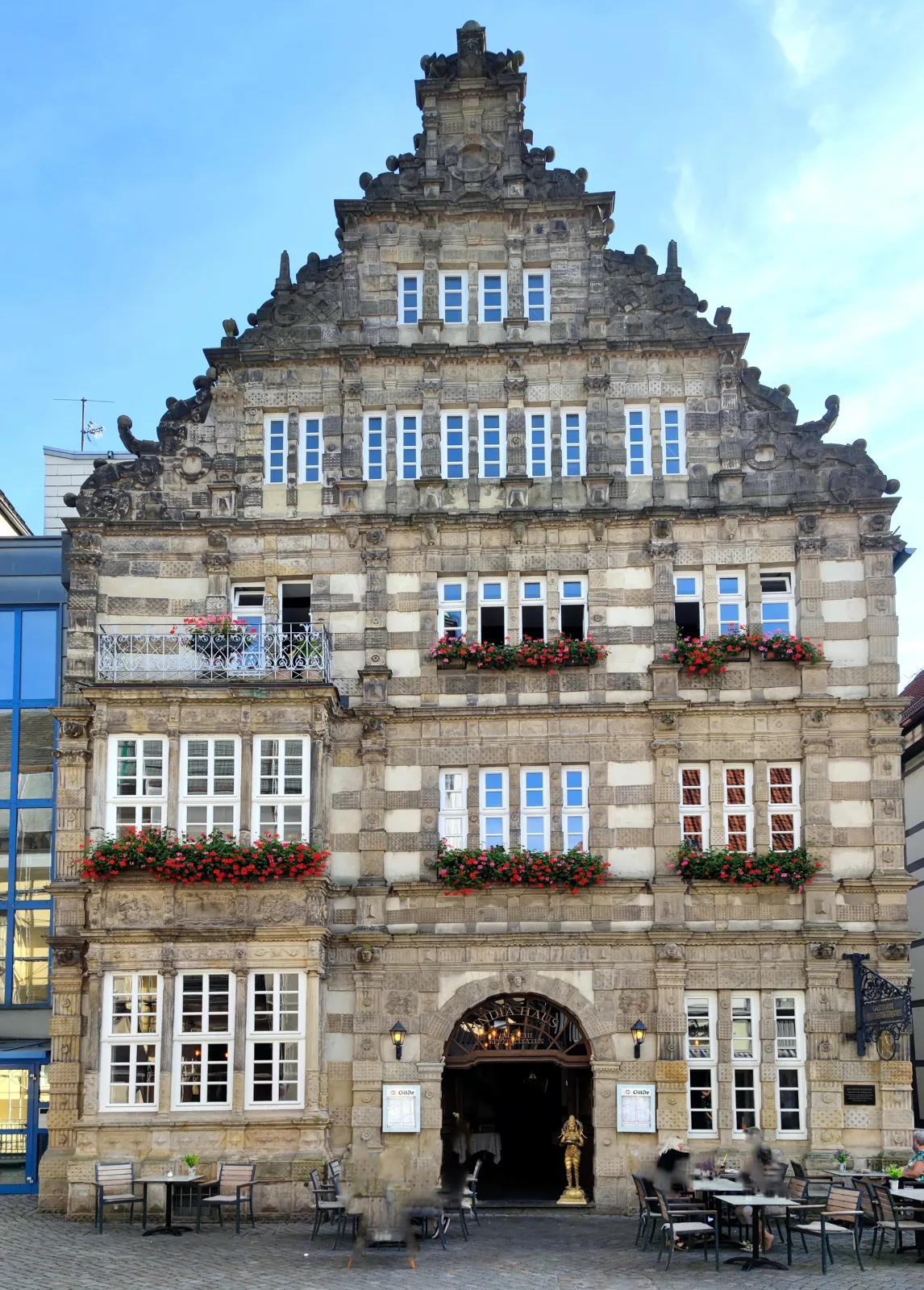

The house takes its name from an inscription on the wall facing the side lane. In modern English it says, roughly: "In the year 1284, on the day of Saints John and Paul, 26 June, 130 children born in Hamelin were led away by a piper dressed in many colours, and lost at Calvary near the Koppen." Even the Hamelin Museum cannot say whether the words were on the wall before Arendes rebuilt the house.


The lane where no music plays
A narrow cobbled lane runs beside the house. In the 1890s photograph below, the alley on the right leads toward Bungelosenstraße.
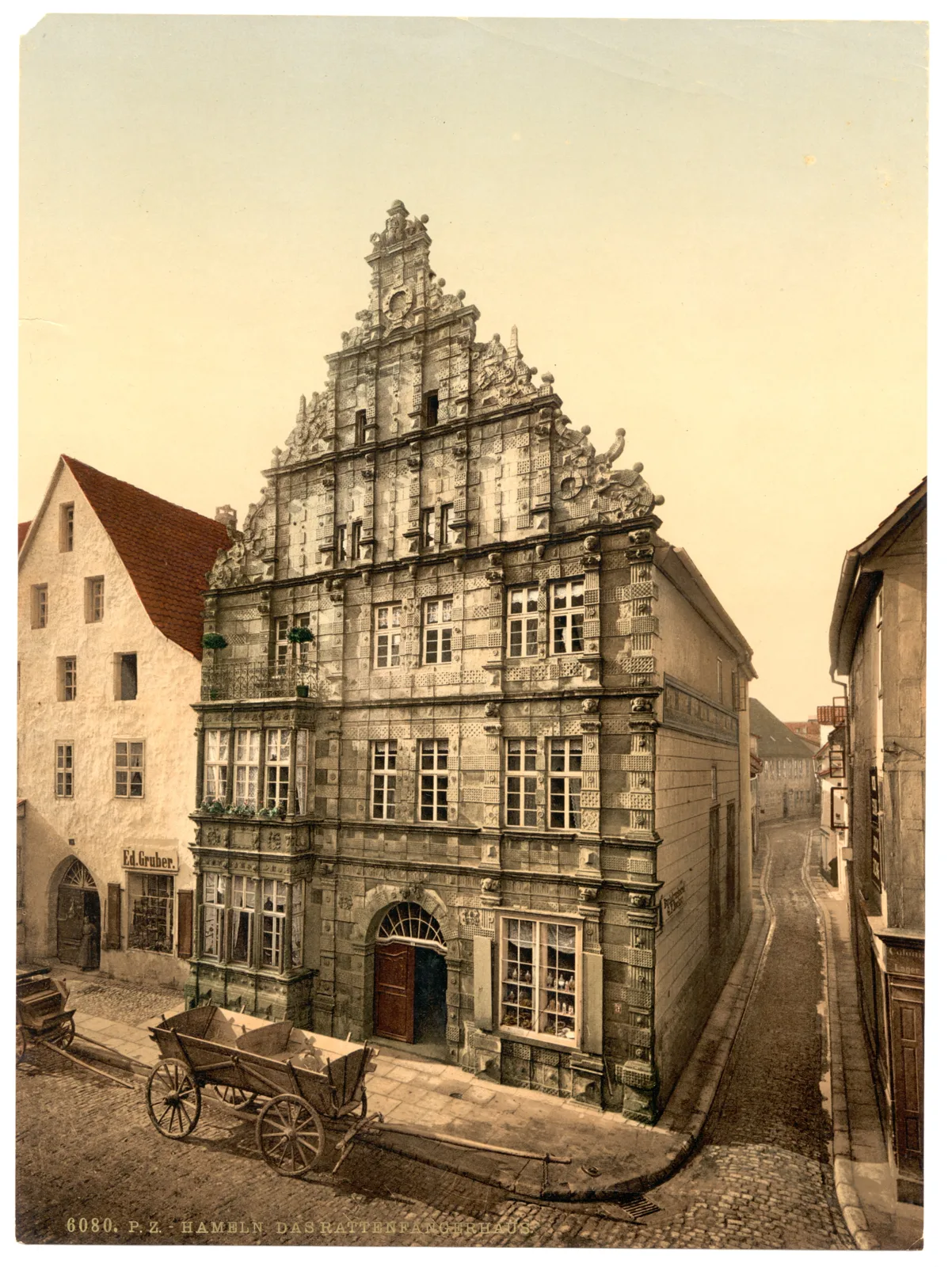

Tradition holds that this is the street the children took out of town. Its name is said to mean "without drums", or silent, and the Grimms' version notes that dancing and music were still forbidden here in the 18th century. According to the town and the German Commission for UNESCO, no music is played on the street even today, in memory of the lost children.
The oldest clue is a vanished window
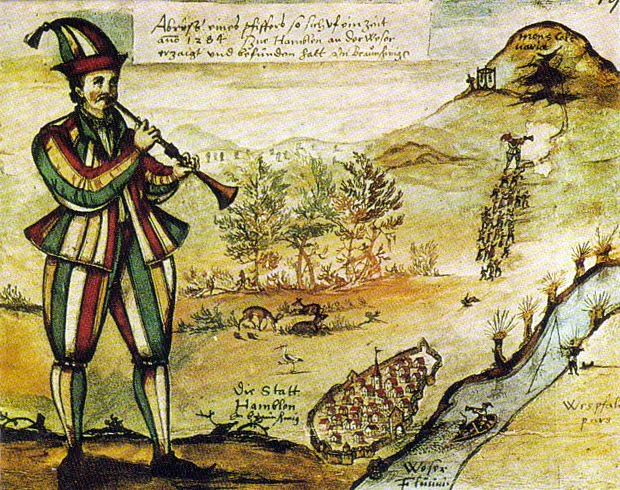
The Hamelin Museum believes the earliest evidence may have been a Gothic stained-glass window in the Market Church, made around 1300. The window was lost in 1660, but not without a record. In 1592, Augustin von Moersperg, a baron and Knight of the Order of St John, saw it and copied it in watercolour. His painting, shown at the top of this page, is the oldest surviving image of the Pied Piper. For the legend's 700th anniversary in 1984, the church received a new window.
Curiously, the rats were not part of the story at first. The German Commission for UNESCO says the departure of the children was only tied to the rat-catcher tale in the 16th century, and the museum thinks a late medieval story about a pest catcher cheated of his wages was folded in.
So what happened to the children?
The honest answer is that nobody knows. The town says even experts cannot explain whether events unfolded as the legend tells or where the children went. Theories range from emigration to the Black Death to a children's crusade.
The one the town considers most plausible is migration east. In that period, noble lords recruited townspeople to settle new lands in places like Moravia, East Prussia and Pomerania, and a town's inhabitants could all be called its "children". The rats, on this reading, came later, drawn from the real plague of vermin in a milling town like Hamelin and from the trade of the professional rat-catcher.
Meeting the legend in Hamelin today
The Wedding House (Hochzeitshaus) is a long sandstone building with a row of gables. Its glockenspiel sets the figures turning every day at 1:05, 3:35 and 5:35 pm.
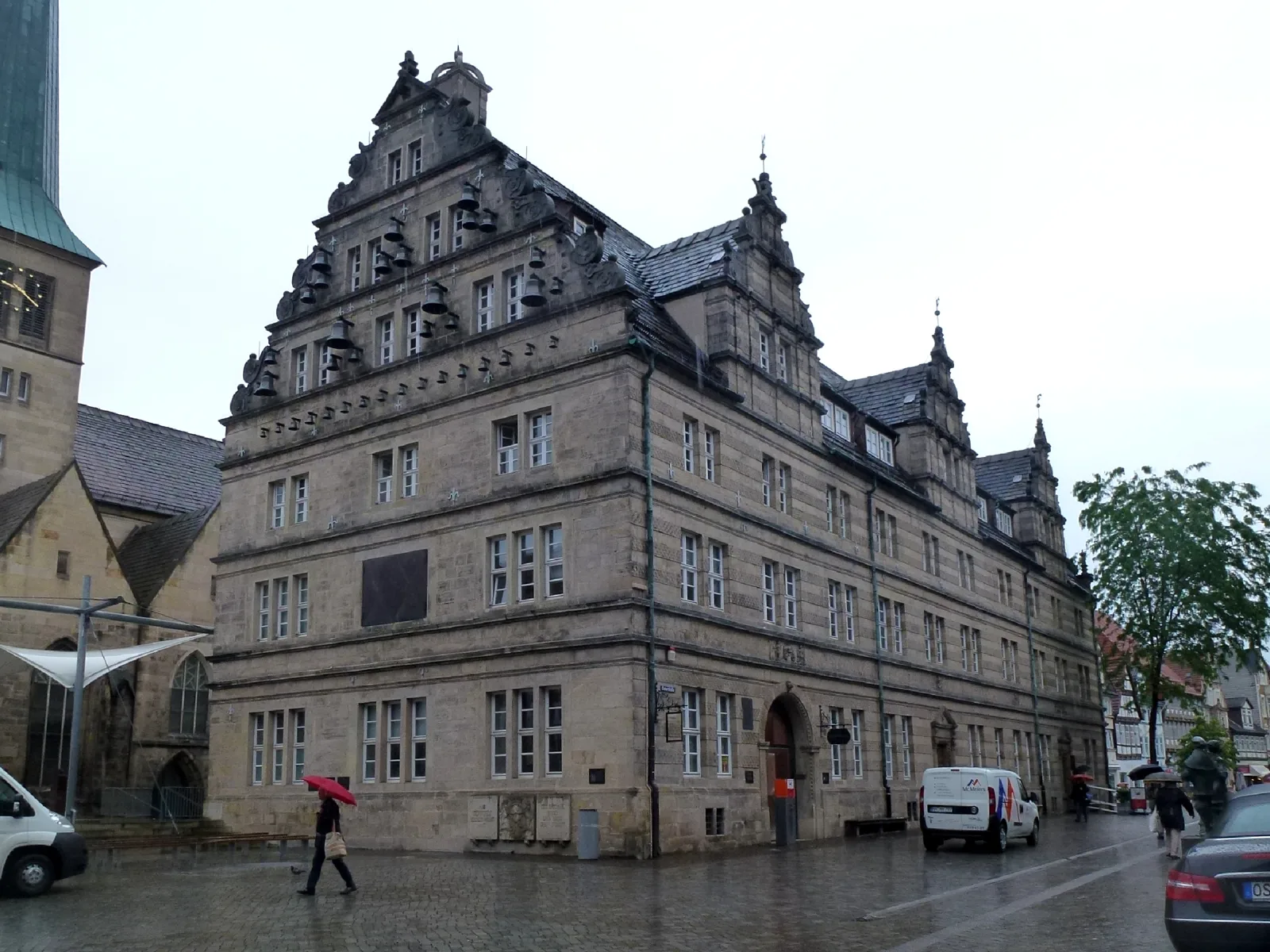

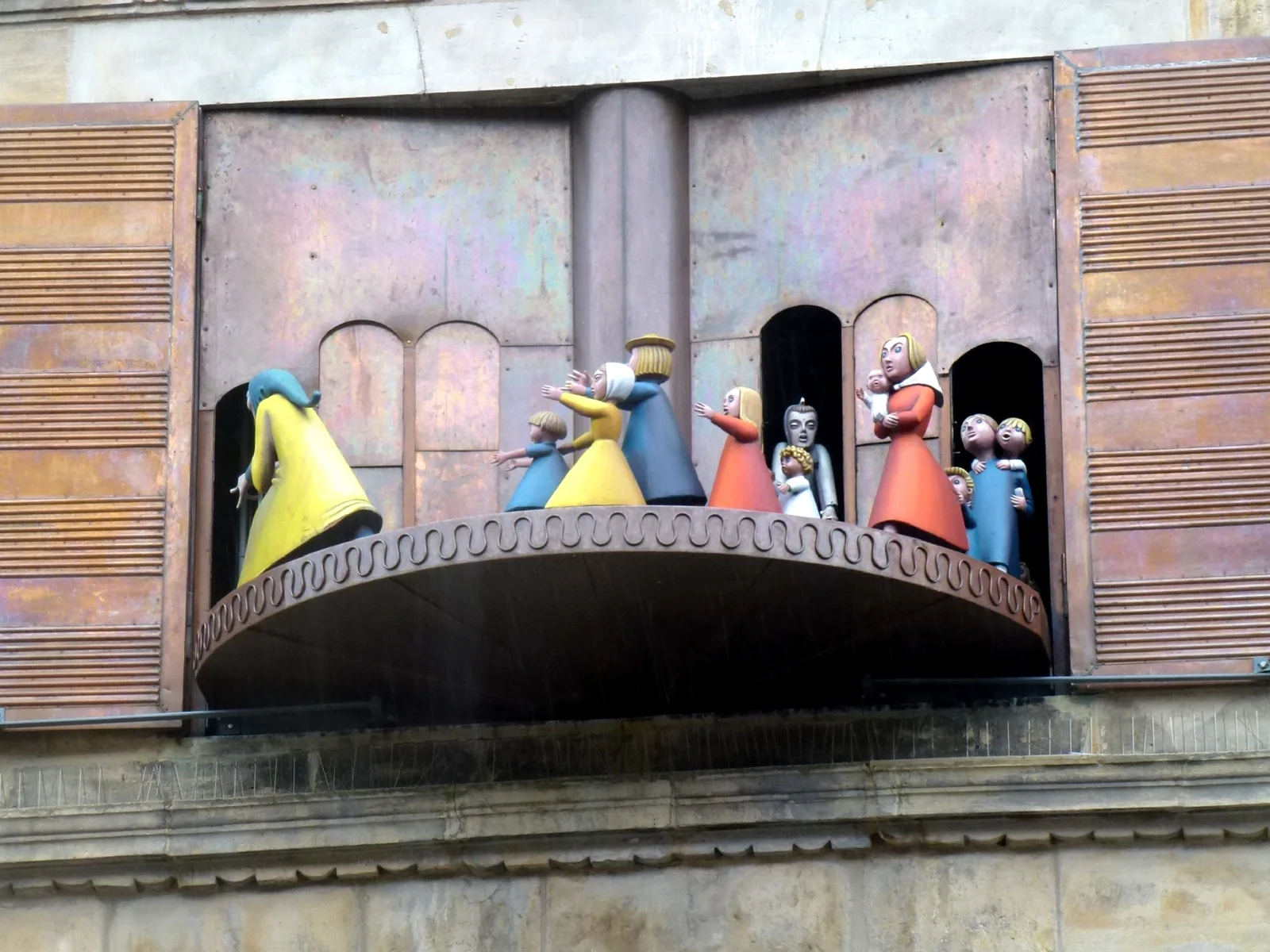

From mid-May to mid-September, a free half-hour open-air play about the Pied Piper takes place on the Wedding House terrace at noon on Sundays. According to the German Commission for UNESCO, it has been staged every summer since 1956, and an amateur company has now kept it going for 70 years. In 2014, Hamelin's living tradition around the legend was added to Germany's national inventory of intangible cultural heritage. Keep an eye on the pavement as you walk, too: you may spot little bronze rats set into the street.
Find Hamelin on Wooriyeojido
An inscription in stone, a lane that has fallen silent, a single copy of a lost window: Hamelin has lived with one unanswered question for seven centuries. The town is pinned on the Wooriyeojido map. Look it up in the Wooriyeojido app, and if you visit, leave your photos and stories from the day right beside it.
View this place in the Wooriyeojido appVideos of nearby places
 A sow lifted the siege? The legend of Dame Carcas and the name of Carcassonne
 Whose castle is the one called Dracula's? Bran Castle, Romania
 Lured by a song, ships were lost? The Lorelei rock on the Rhine, Germany
Sources
- Stadt Hameln — Die Sage nach den Brüdern Grimm
- Stadt Hameln — Deutungsansätze zur Sage
- Stadt Hameln — Der Rattenfänger von Hameln – rätselhaft und legendär
- Stadt Hameln — Spuren der Kindesentführung
- Stadt Hameln — Rattenfänger-Freilichtspiel · Story und Termine
- Deutsche UNESCO-Kommission — Auseinandersetzung mit dem Rattenfänger von Hameln
- Museum Hameln — Rattenfänger