Carcassonne: The Walled City Saved by a Pig, According to Legend
Carcassonne, in southern France, is a hilltop city wrapped in a double ring of walls. Here is the legend of Dame Carcas, who is said to have ended Charlemagne's five-year siege with a single wheat-stuffed pig, and the true story of how the crumbling fortress was brought back, in a video and photos.
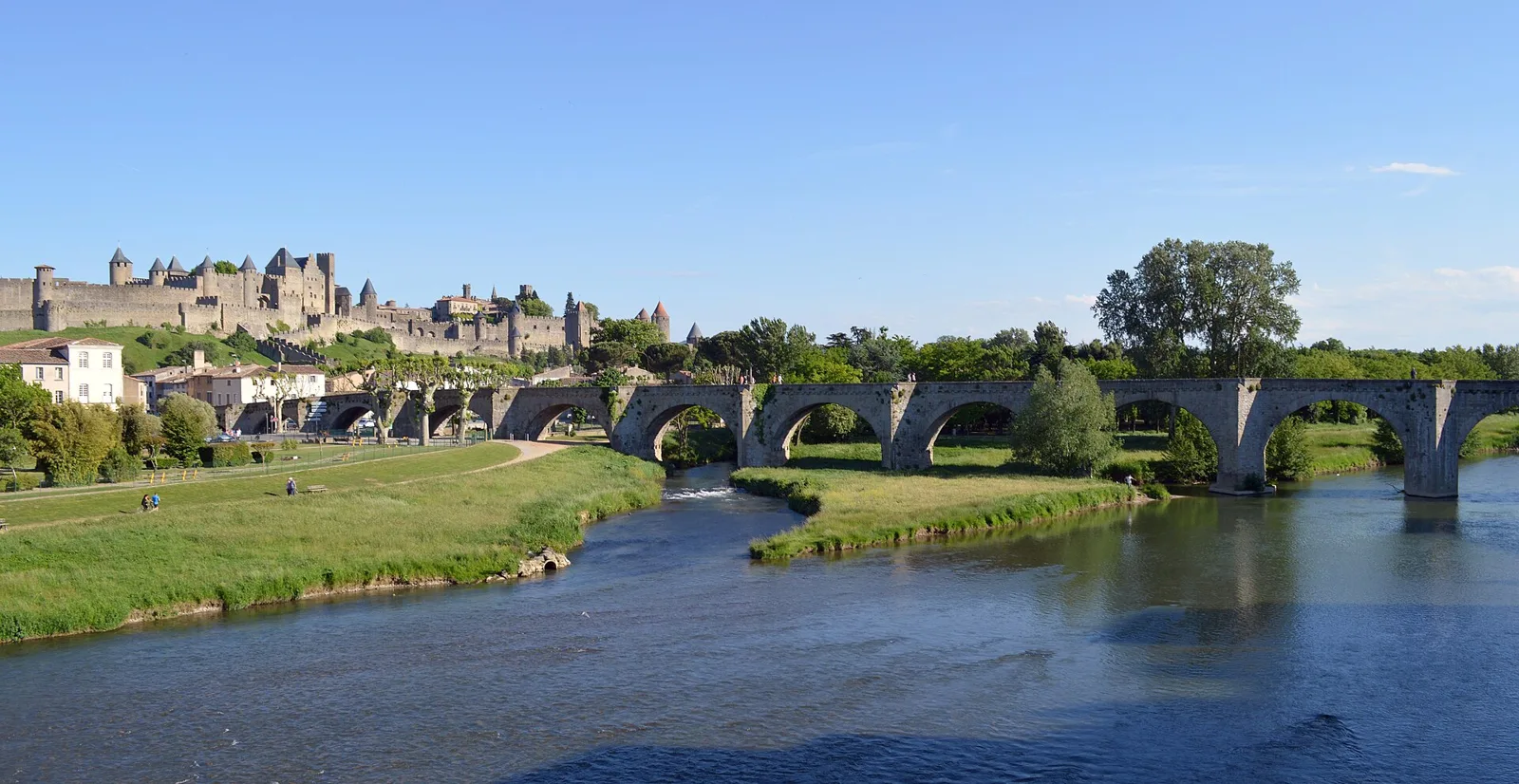
On a hill above the River Aude in southern France, two rings of stone walls wrap around an entire city. This is Carcassonne, and it comes with a wonderful legend about its own name: a siege that dragged on for five years, ended by a single pig. Here is the version told by the Carcassonne tourist office. Start with the short video.

 Watch the one-minute video on YouTube
La Cité
Carcassonne sits in the Aude department of Occitanie. The fortified old town on the right bank of the river is known simply as La Cité. Its inner and outer walls together run about three kilometres. It was added to the UNESCO World Heritage List in 1997, and close to four million people visit every year.
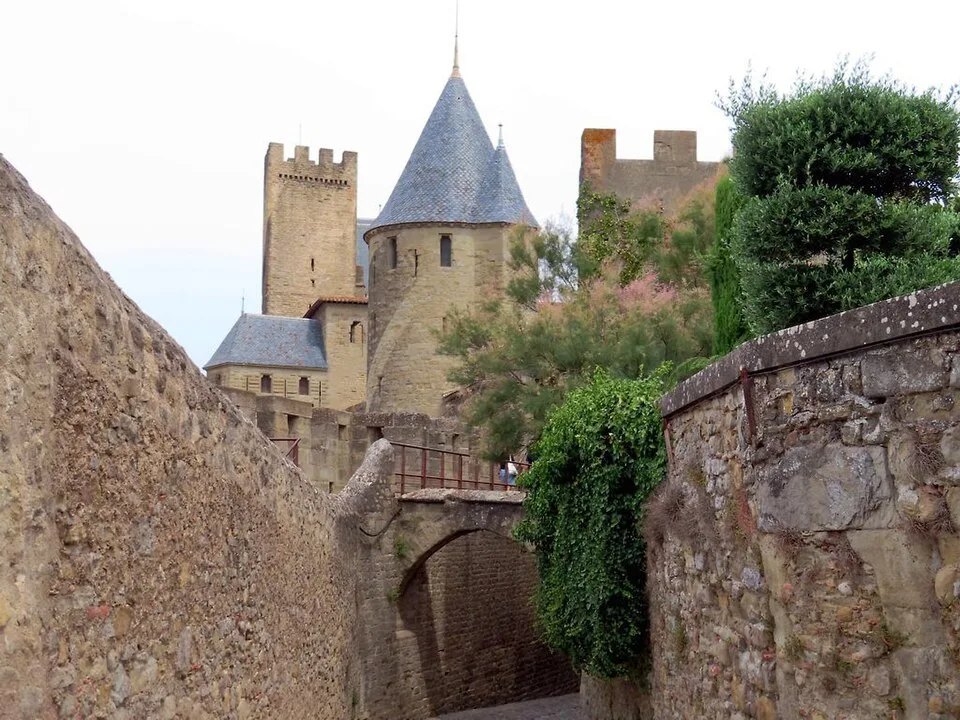

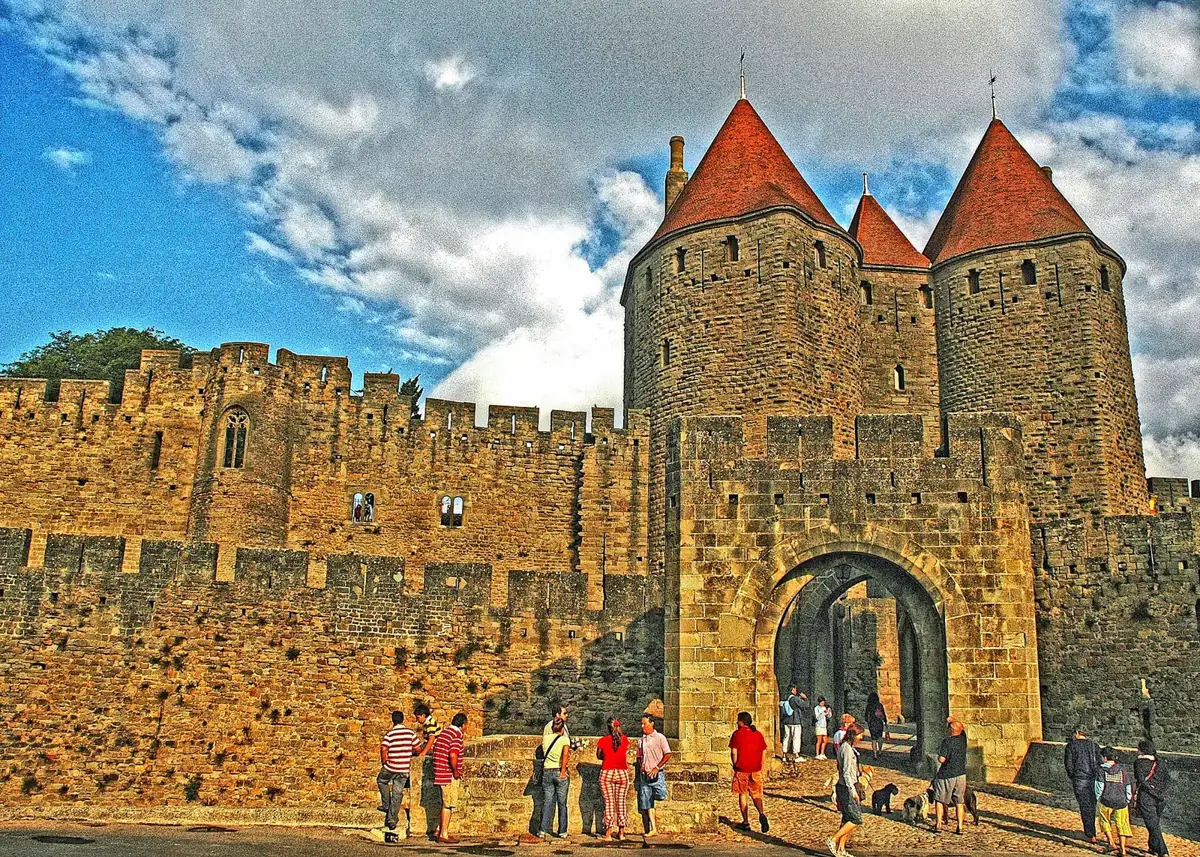
The main way in is the Narbonnaise Gate, built around 1280 and guarded by two towers some 30 metres tall. The heroine of this story still waits there to greet visitors.
A pig, a measure of wheat
According to the legend, Charlemagne laid siege to Carcassonne while the town was in Saracen hands. When the Saracen king, Ballak, was killed, it fell to his widow, Dame Carcas, to save her people.
The siege went on for five years, until the last defenders were dying of hunger. Dame Carcas propped straw dummies along the walls and loosed crossbow bolts at the enemy to make the garrison look bigger than it was. But all that was left to eat in the city was one small pig and a measure of wheat.
So she played her last card. She had the pig force-fed every remaining grain and then thrown over the ramparts. It burst when it hit the ground, and a flood of fine wheat poured out of its belly. Charlemagne drew the obvious conclusion: a town with enough grain to feed its pigs could never be starved into surrender. He lifted a siege that was serving no purpose.
"Carcas sonne"
Before the great army marched off, Dame Carcas called Charlemagne back to make peace and ordered the trumpets sounded. In French, "Carcas sonne": Carcas is ringing out. And that, the story goes, is how Dame Carcas saved her people and how the town got its name.
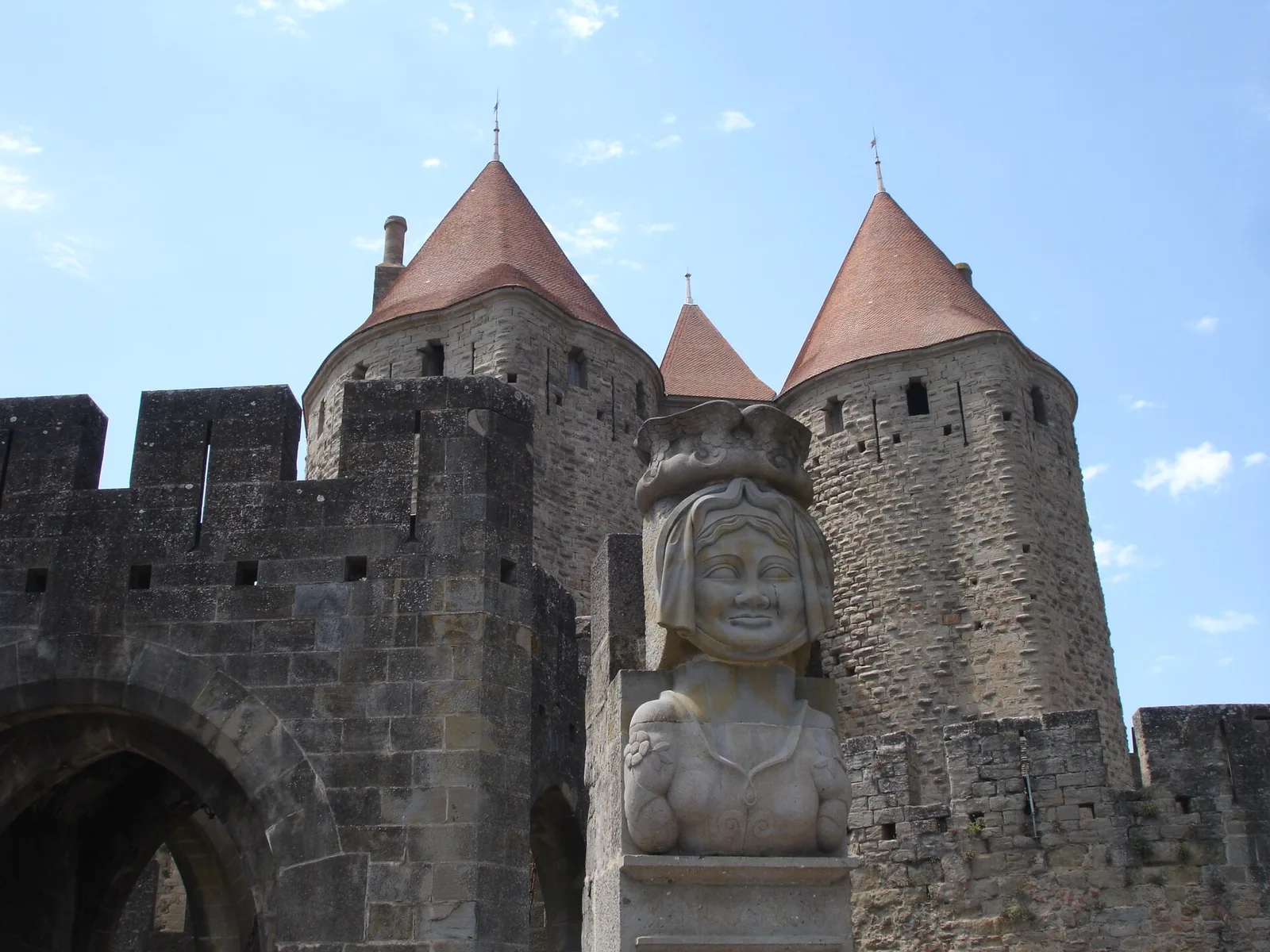

A bust of Dame Carcas stands in front of the Narbonnaise Gate today, and the tourist office encourages visitors to stop and say hello.
An older name than the legend
It's a good story, but it is folk etymology. The real history goes back much further. According to France's Centre des monuments nationaux, traces of a settlement dating to around 800 BC have been found about two kilometres southwest of the city. By around 550 BC that first village had grown into a fortified hilltop town called Carcaso, and the Romans took it in 122 BC.
In other words, the name was in use many centuries before Charlemagne. The city was attacked by the Umayyads in 725 and by the Franks in 759, and it was that Frankish attack, the Centre says, that inspired the legend of Dame Carcas.
From ruin to restoration
The fortress that was once considered impregnable eventually fell into ruin. In 1804 Napoleon had it struck off the list of military strongholds. Its abandoned walls became a stone quarry for local masons, and squalid houses crowded the ground between the two rings of ramparts.
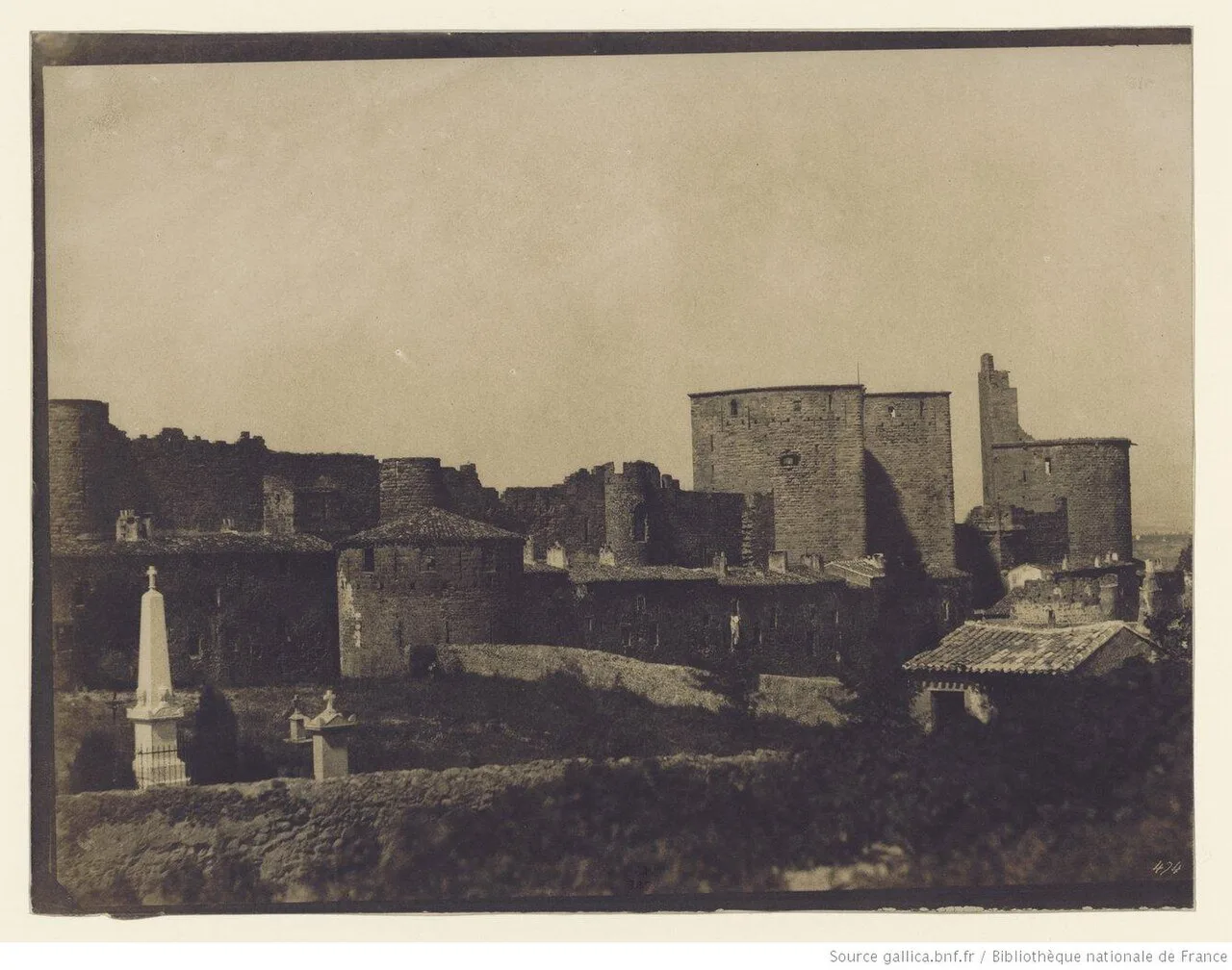

In 1849 the whole medieval city was listed as a historic monument. Restoration began three years later, in 1852, under the architect Eugène Viollet-le-Duc. It was the biggest restoration project in Europe at the time.
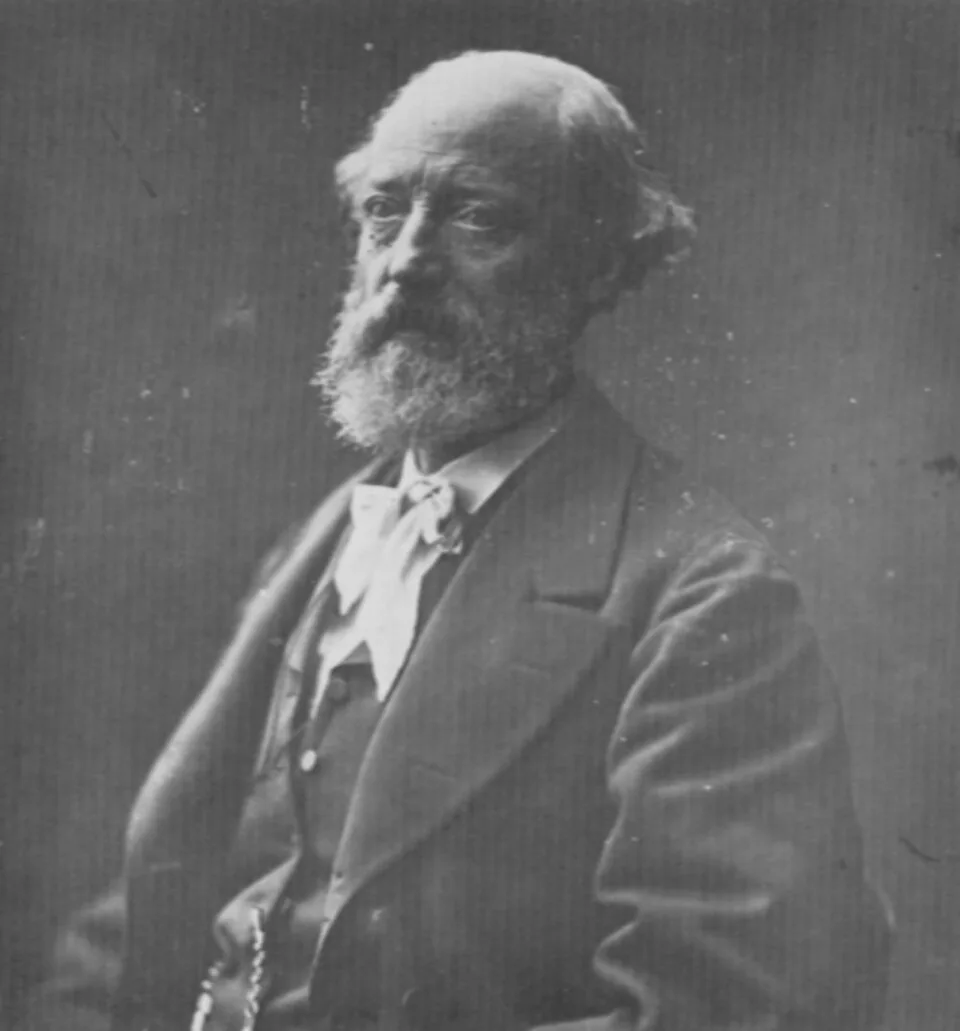

His most controversial choice was the roofs. Viollet-le-Duc capped the towers with pointed slate instead of the flat tiles typical of the region, and critics such as the historian Hippolyte Taine cried scandal. The complaints continued into the 1960s. Today, those witch's-hat roofs are what most people picture when they think of Carcassonne.

Walk the walls
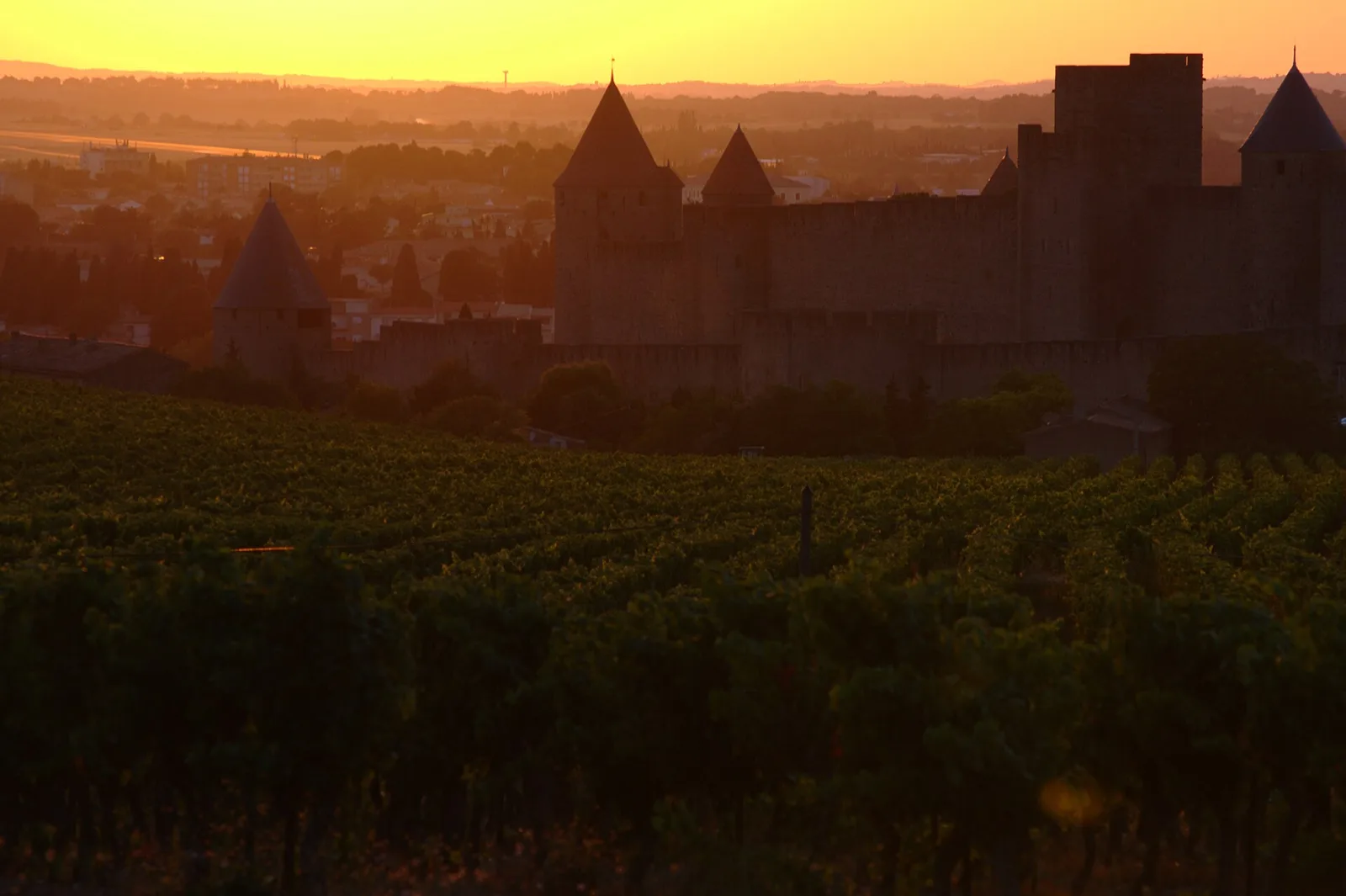
Climb up to the wall walk and the whole city and the countryside around it spread out below. Around sunset, step outside the walls and watch the long silhouette of the fortress take shape above the vineyards.

Find Carcassonne on Wooriyeojido
A siege broken by a pig, a name more than 2,500 years old, and rooftops that went from scandal to icon. Carcassonne is pinned on the Wooriyeojido map. Look it up in the Wooriyeojido app, and if you go, leave your photos and stories from the day right beside it.
View this place in the Wooriyeojido appVideos of nearby places
 How the Eiffel Tower, once called an eyesore, survived
 Bran Castle in Romania, the 'Dracula castle' and its real owners
 Stonehenge, the stones a wizard supposedly carried across the sea
Sources
- Office de Tourisme de Carcassonne — The Medieval City of Carcassonne
- Centre des monuments nationaux — Histoire du monument (Cité de Carcassonne)
- Centre des monuments nationaux — La restauration de Viollet-le-Duc
- Centre des monuments nationaux — Une silhouette iconique
- UNESCO World Heritage Centre — Historic Fortified City of Carcassonne (345)