The Battle of the Pyramids: why 167 scholars sailed with Napoleon's army
When Napoleon invaded Egypt in 1798, his ships carried scholars as well as soldiers. The real site of the Battle of the Pyramids at Imbaba, the Description de l'Égypte, and the Rosetta Stone.
When Napoleon Bonaparte sailed for Egypt with a French army in 1798, his ships carried more than soldiers. On board were 167 scholars: engineers, architects, artists and more. What they recorded, and a stone found while they were there, would change the study of ancient Egypt for good. Start with the short video.

 Watch the one-minute video on YouTube
Not quite at the pyramids
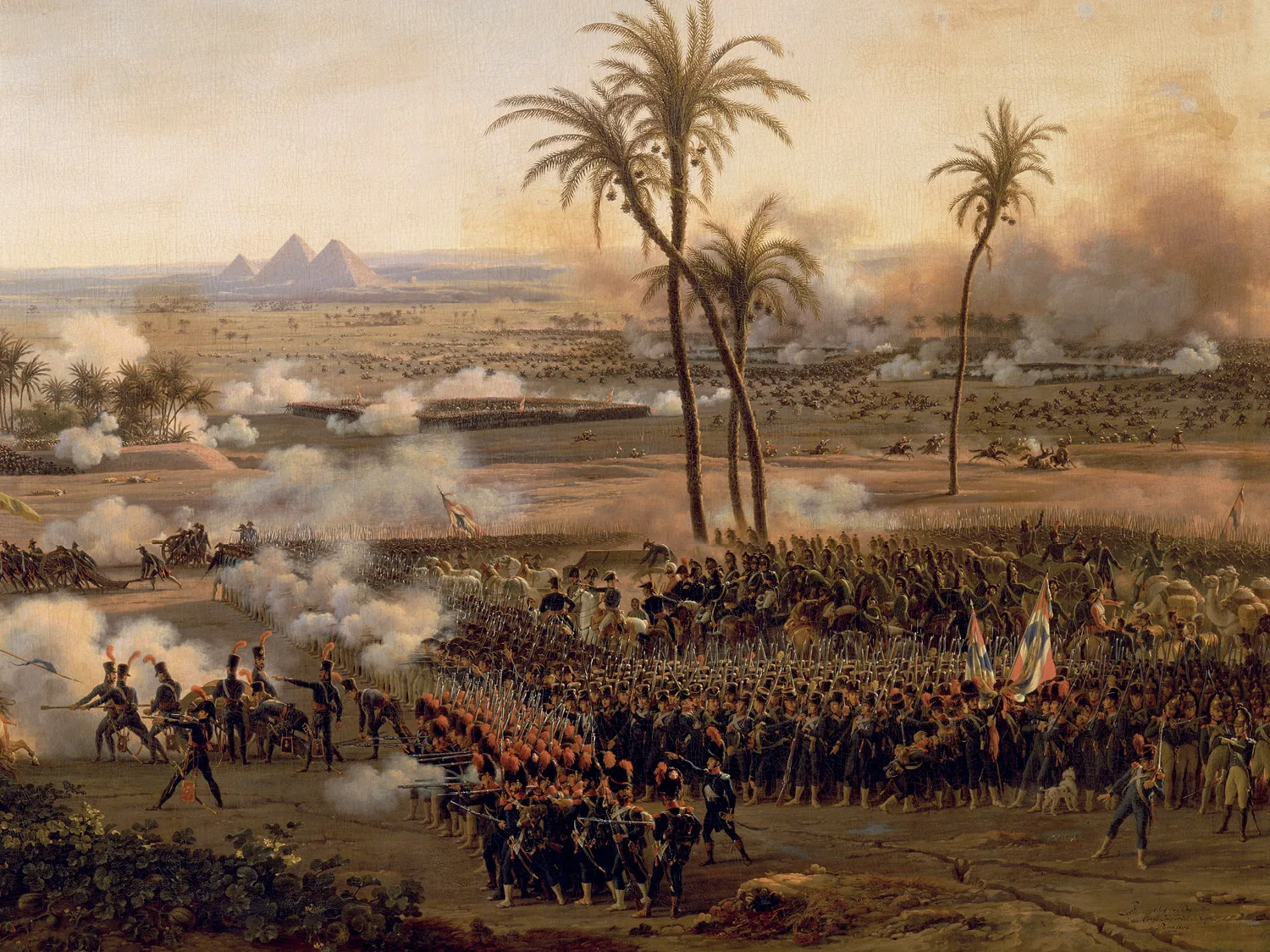
Despite its name, the Battle of the Pyramids wasn't fought at the foot of the pyramids. It took place near the village of Imbaba (Embabeh), on the west bank of the Nile. In Louis-François Lejeune's painting the pyramids are just small shapes on the horizon.


On 21 July 1798, some 10,000 Mamluk cavalry charged the French lines. The French formed their infantry into squares with artillery at the corners, and held. They took Imbaba, and two days later Napoleon entered Cairo.
Napoleon is supposed to have told his troops, "Soldiers, from the top of these pyramids, forty centuries look down upon you." Whether he ever said it quite like that is uncertain.


The savants
According to France's national library, the Bibliothèque nationale de France, 167 *savants* boarded the ships alongside the soldiers. Among them were engineers fresh out of the École polytechnique, as well as architects, sculptors, musicians, printers, draughtsmen and painters, all grouped into a Commission of Sciences and Arts attached to the Army of the Orient. The Fondation Napoléon puts the total at 169, of whom 167 set foot in Egypt. Either way, close to 170 scholars followed the army.
In August 1798 Bonaparte founded the Institute of Egypt in Cairo. The scholars met there, and travelled the length of the country, following the Nile as far south as Aswan, measuring and drawing everything they found.
Twenty-three volumes
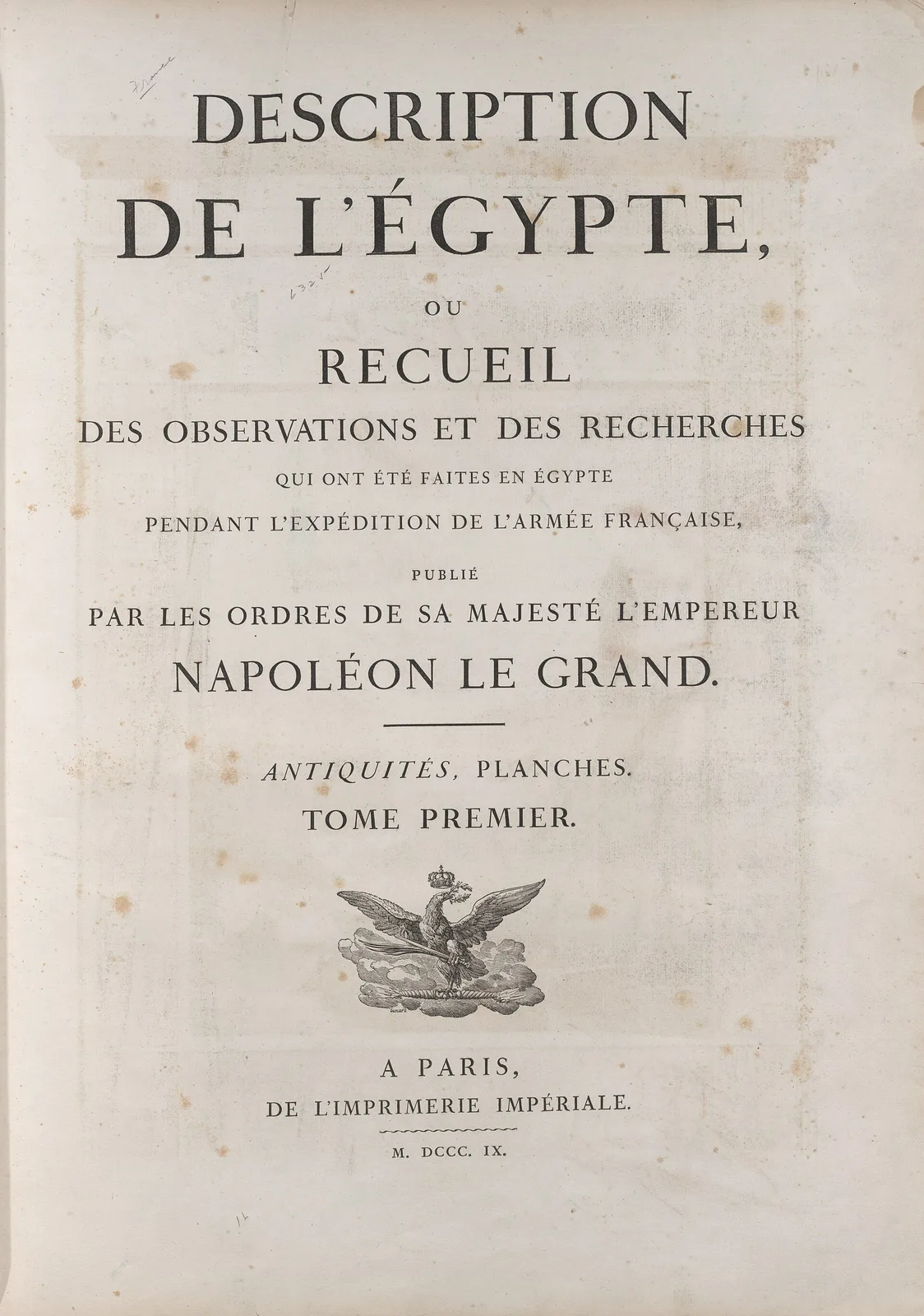
Those drawings and notes became the *Description de l'Égypte*, a vast work published at state expense between 1809 and 1830. It ran to 23 volumes.
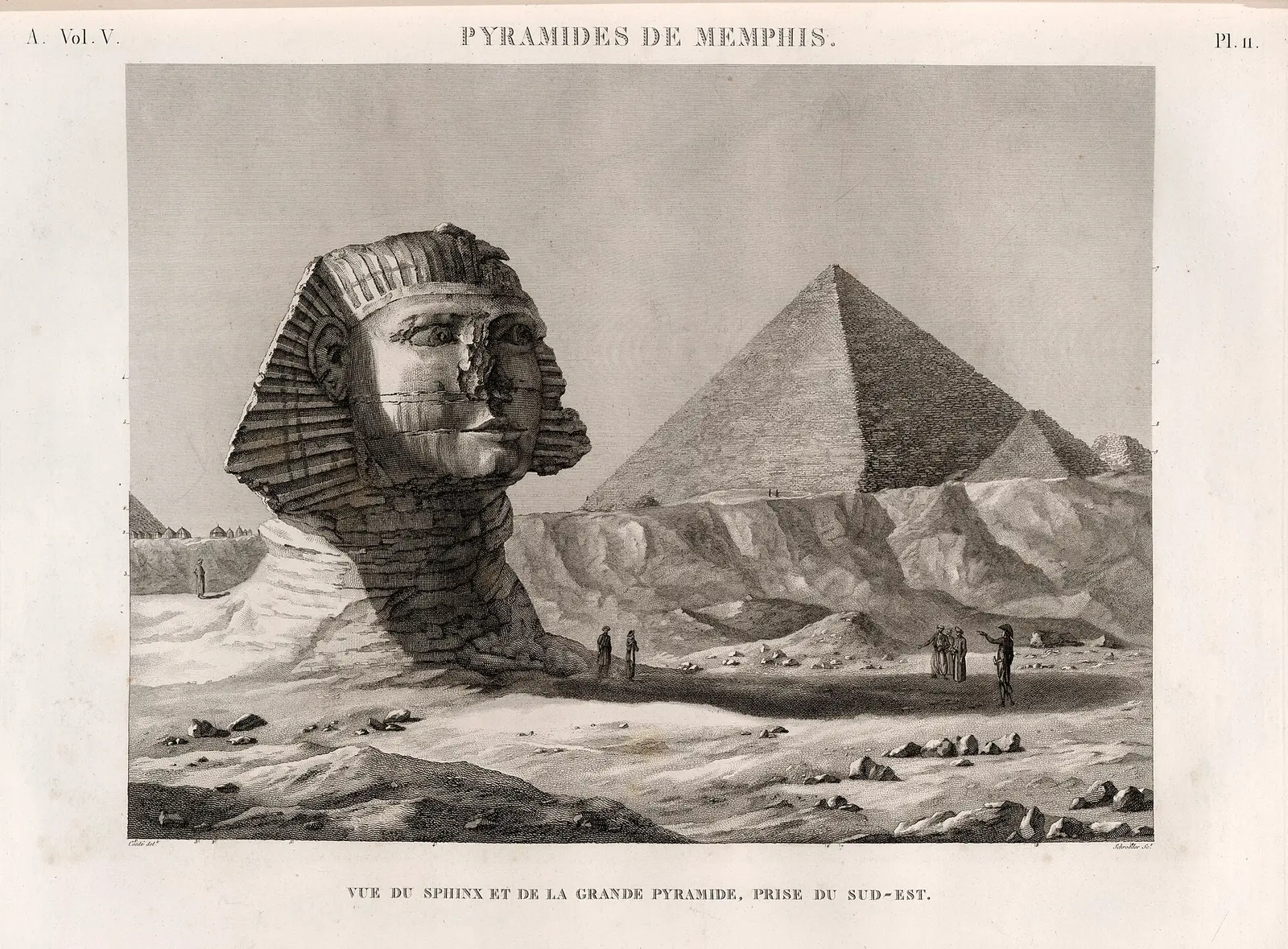

The tiny figures standing beside the Sphinx give a sense of the scale they were dealing with.

A stone in three scripts
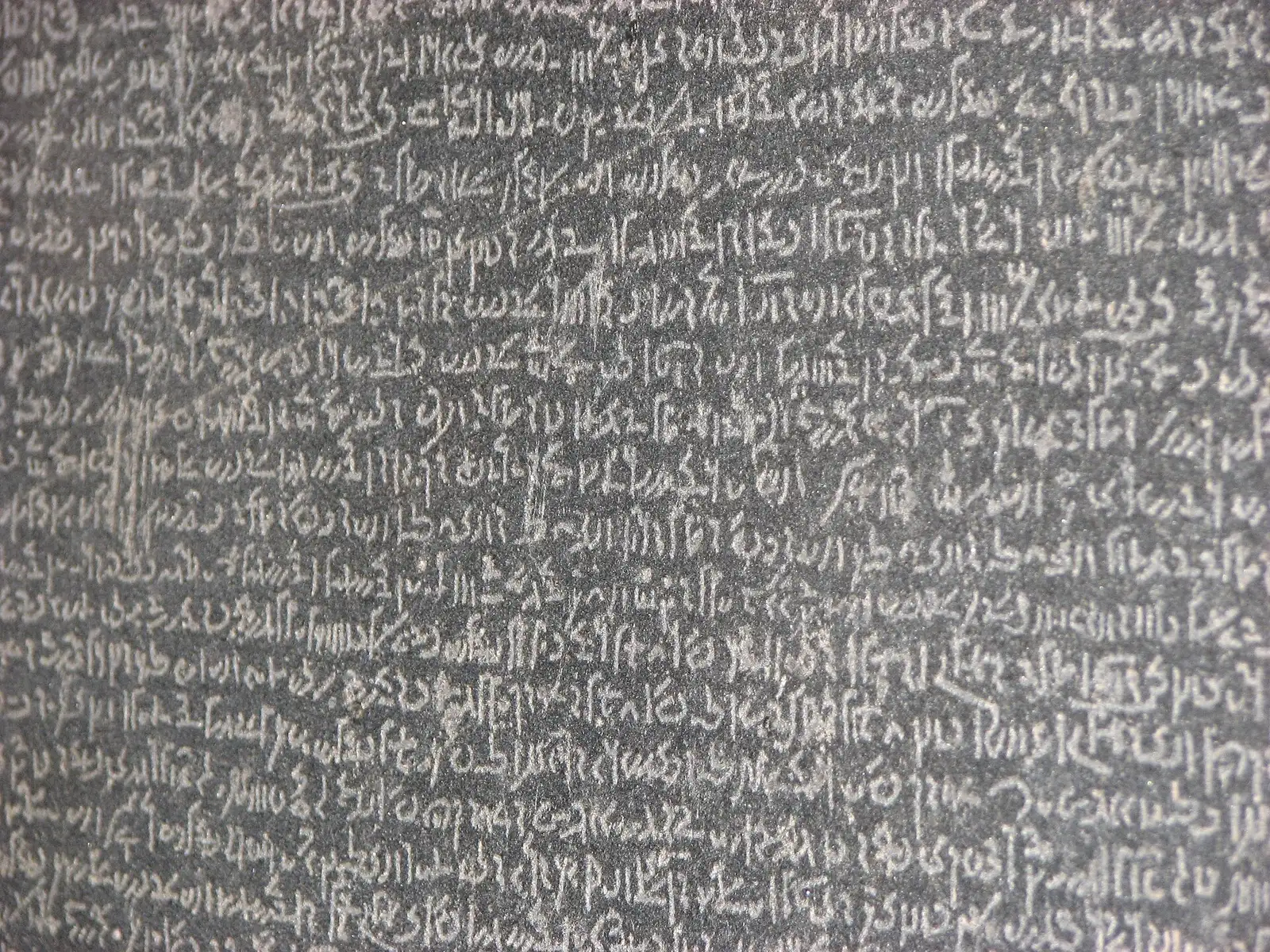
On 19 July 1799, Lieutenant Pierre-François Bouchard came across a stone at an old fort near Rashid (Rosetta), on the left bank of the Nile. Carved on it was a single decree written three times: in hieroglyphs, in Demotic, and in Greek. This was the Rosetta Stone.
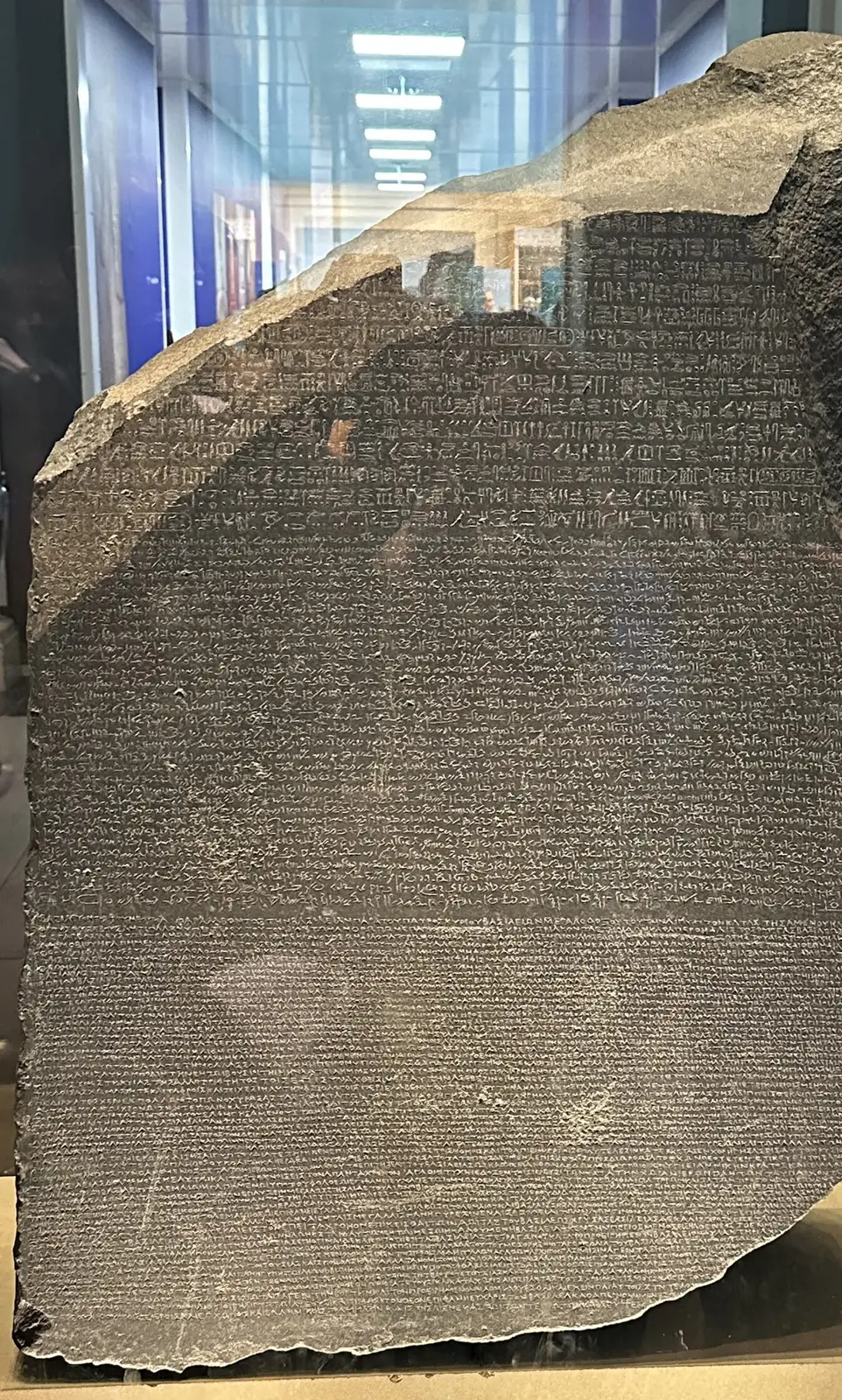

It never reached France. After allied forces including the British landed at Alexandria in March 1801, the stone passed into British hands. It arrived in Portsmouth in February 1802 and has been in the British Museum ever since. The first full translation came from a French scholar, Jean-François Champollion, in 1822.

One day of battle, two centuries of scholarship
The battle was over in a day. The scholars' work is still being read more than 200 years later. The Fondation Napoléon credits them with laying the foundations of modern Egyptology and opening the way for Champollion to decipher the hieroglyphs.
Find the Battle of the Pyramids on Wooriyeojido
A battle that history remembers less than the scholars who came with it. Imbaba, where the Battle of the Pyramids was fought, is pinned on the Wooriyeojido map. Find the Battle of the Pyramids in the Wooriyeojido app, and if you go, leave your photos and stories from the day right beside it.
View this place in the Wooriyeojido appVideos of nearby places
 How were about 2.3 million stones stacked? The Great Pyramid of Giza
 Napoleon's last battle: how many hours did it take? Waterloo, 1815, and the Lion's Mound
 The Great Sphinx of Giza and the Dream Stele
Sources
- Bibliothèque nationale de France — Dessiner l'Égypte. Artistes et savants dans l'Orient de Bonaparte
- Fondation Napoléon — Les savants de Bonaparte en Égypte. 1798-1801
- Fondation Napoléon — The Rosetta Stone: A Journey from Alexandria to London
- Larousse — bataille des Pyramides (21 juillet 1798)
- Britannica — Battle of the Pyramids