The Wade Cup: An 800-Year-Old Persian Cup Where Letters Come Alive
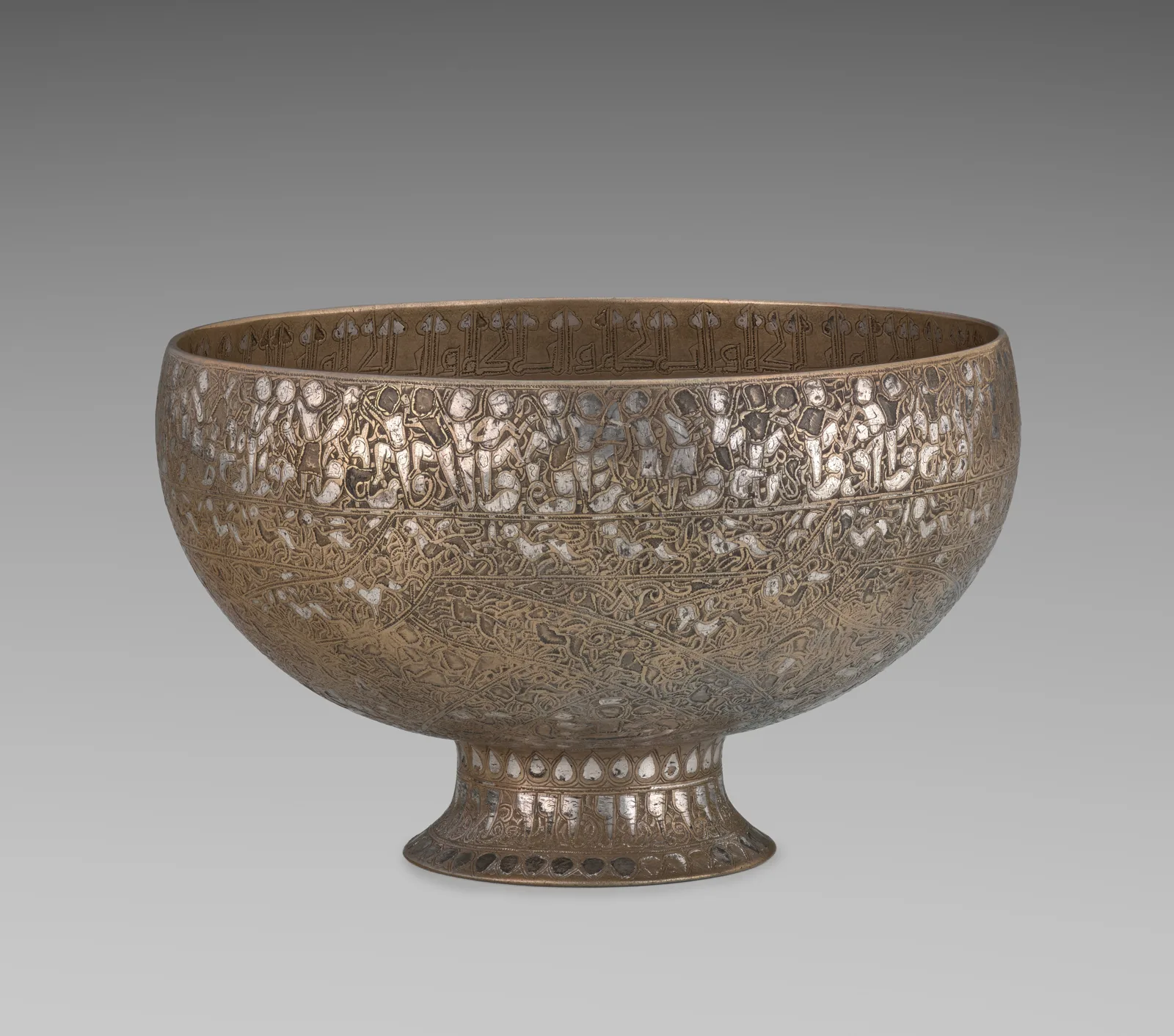
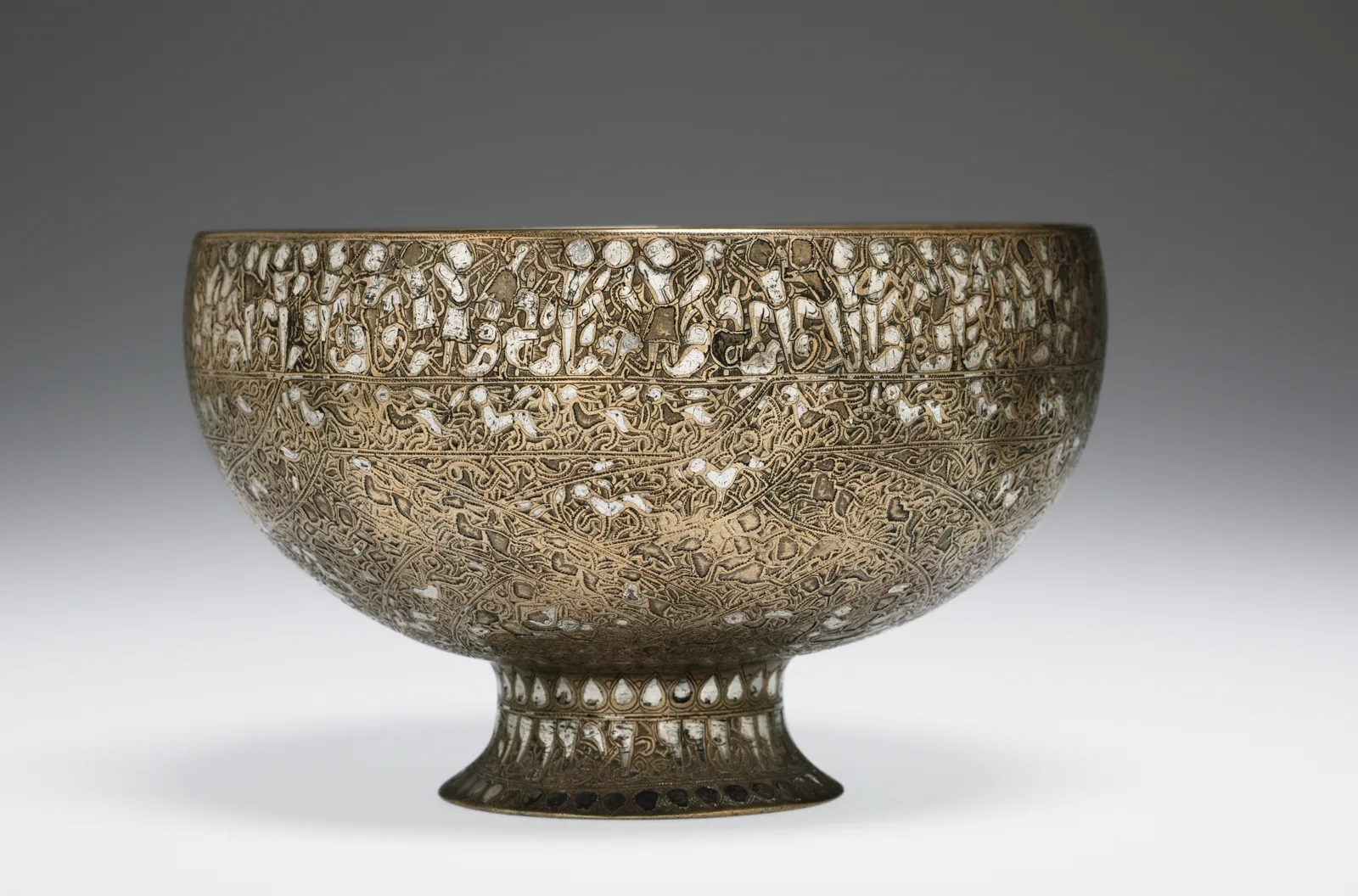
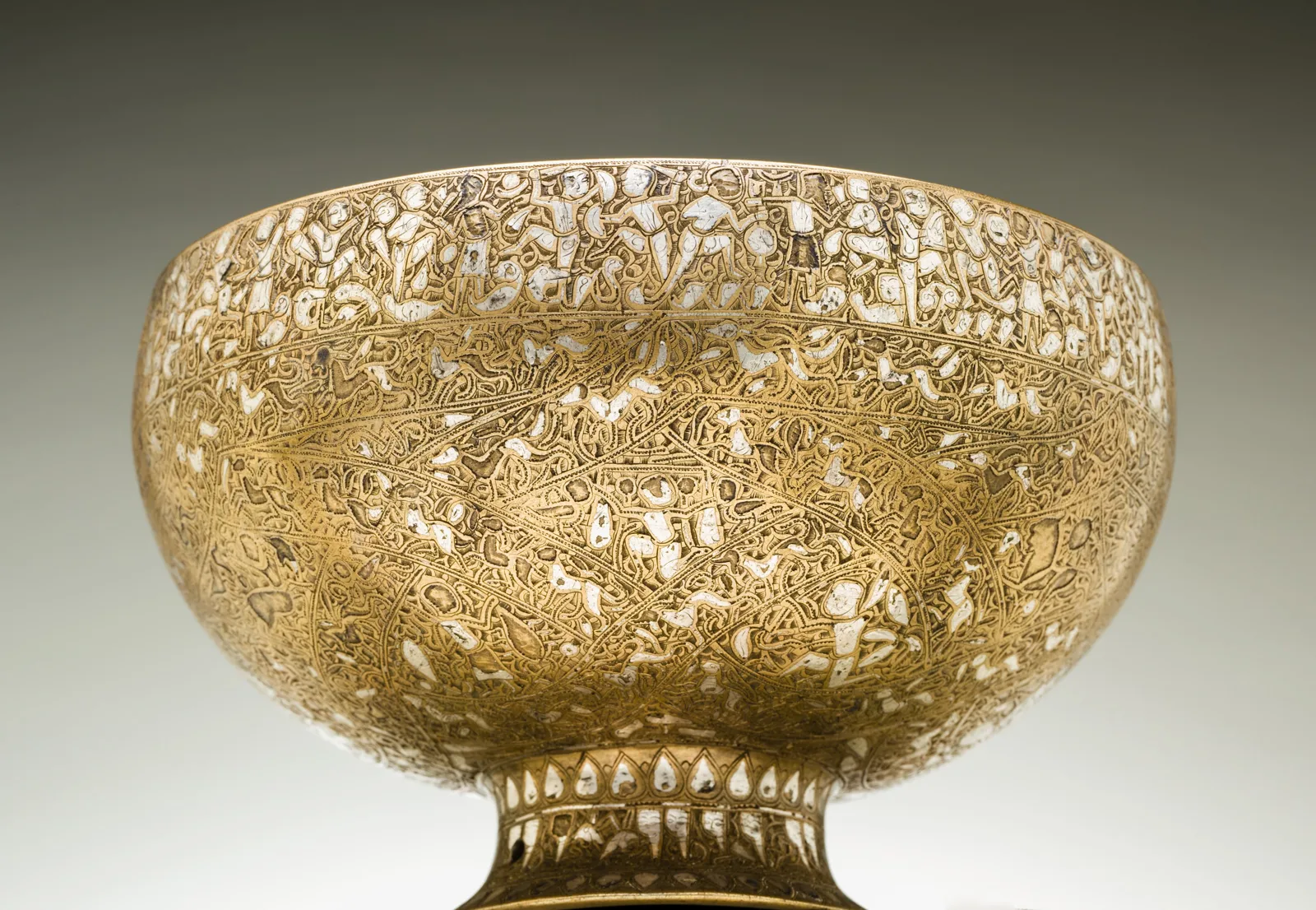
At the Cleveland Museum of Art sits a small brass cup made in Iran around 1200 to 1221. Look closely at the Arabic inscription around its rim and the letters turn into people, animals and birds, while the zodiac circles its body.
At the Cleveland Museum of Art there is a cup whose writing seems to be alive. Lean in close to the Arabic inscription that runs around its rim, and you'll see that each letter is built from the bodies of people, animals and birds. The cup itself is small, a brass vessel just 11.5 centimetres tall. How did letters turn into people? Start with the short video.
 Watch the one-minute video on YouTube
In Cleveland's Islamic gallery
The cup is on view in the Islamic gallery of the Cleveland Museum of Art in Ohio, under accession number 1944.485. It came to the museum in 1944 by way of the Heeramaneck Galleries in New York, and made its public debut in the exhibition "Islamic Art," which ran from 3 November 1944 to 2 February 1945.
The name comes from a person. The cup was bought with money from a fund left by J. H. Wade, so it has been known ever since as the Wade Cup.
Brass inlaid with silver
According to the museum's records, the cup was made in Iran between about 1200 and 1221. It measures 11.5 centimetres high and 16.1 centimetres across. It is made of brass, inlaid with silver to pick out the designs.
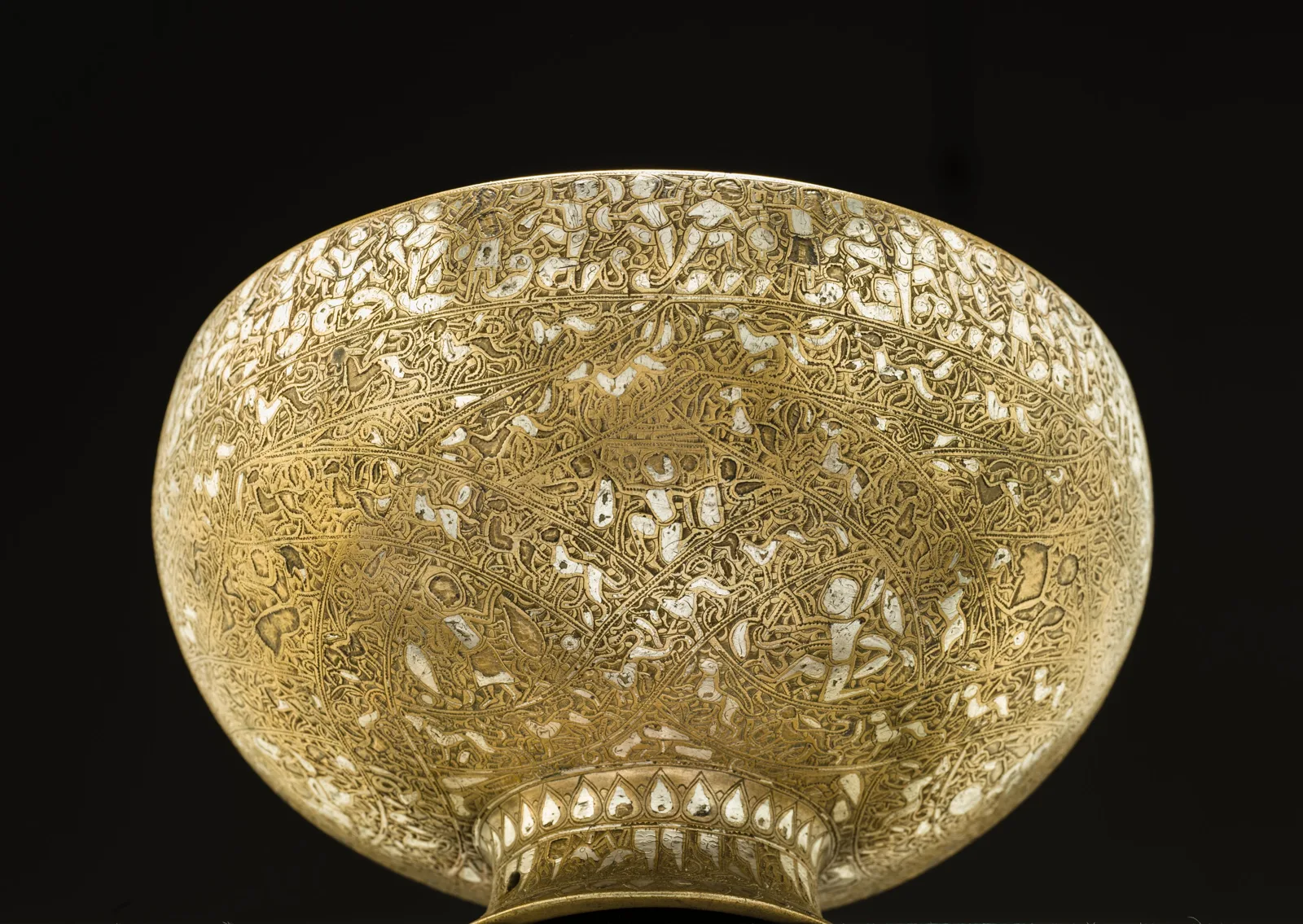
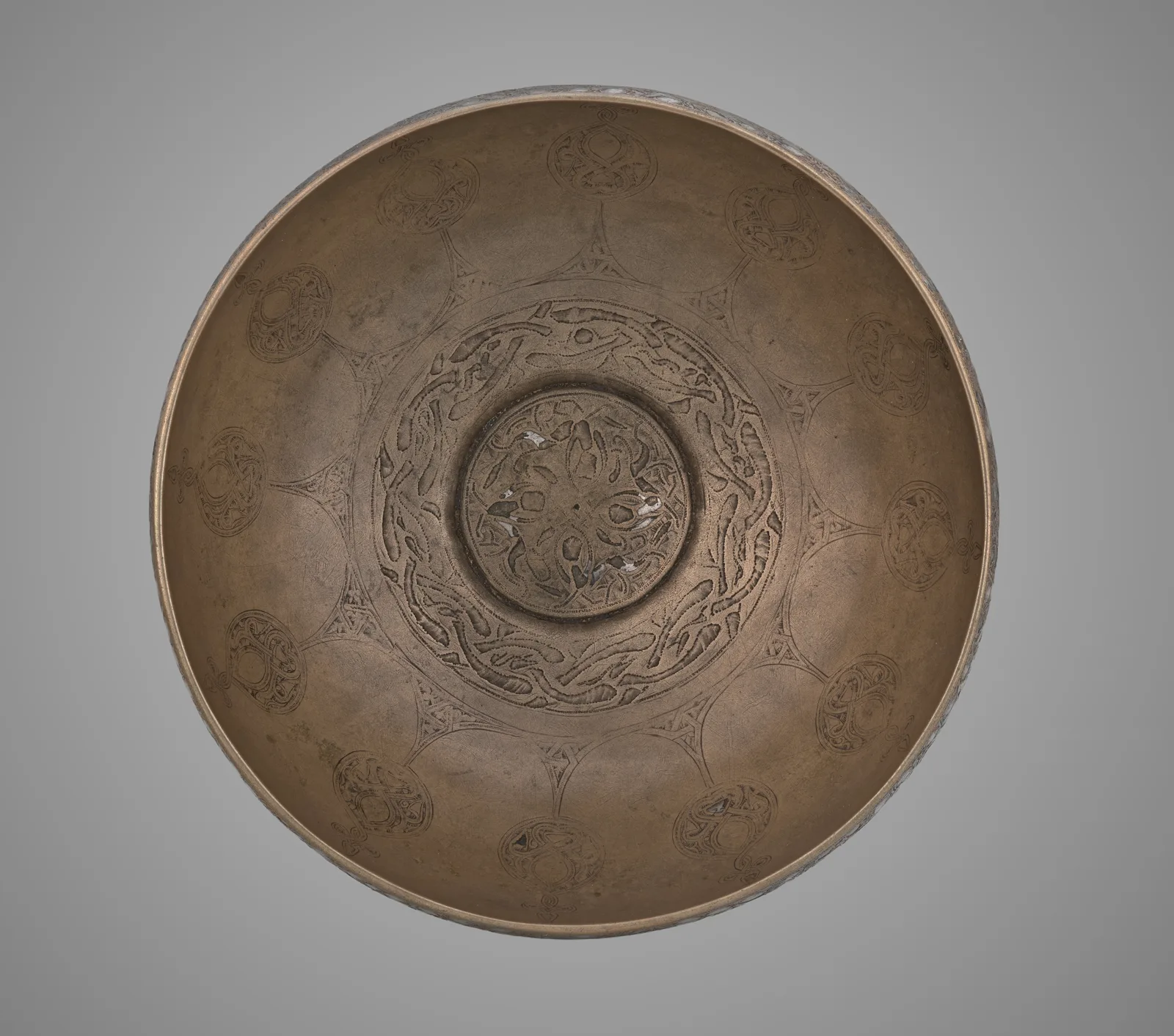
Decoration covers every surface, from the rim down across the body, and there is even a round design on the inside of the base.
Letters made of people
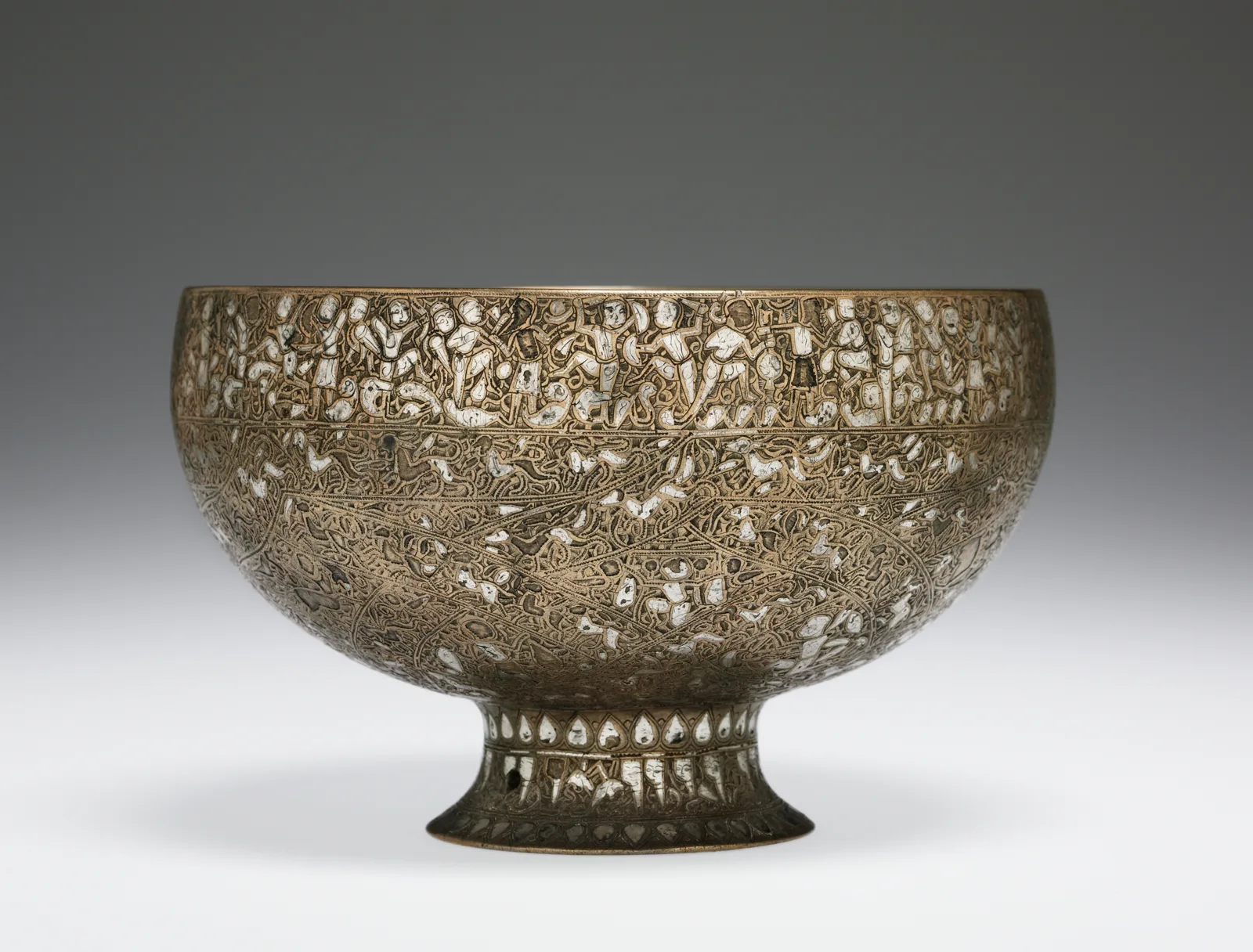
The star of the show is the band of writing around the rim. It is Arabic, read from right to left, but its letters are made up of human figures, animals and birds. This style is known as animated script.
The museum explains that animated script developed in northeast Iran or Afghanistan in the mid-1100s and spread westward from there. With full human figures forming its letters, the inscription on the Wade Cup is, in the museum's words, the pinnacle of the form.
A string of good wishes
So what does it say? The inscription is a series of good wishes for the cup's owner. In the museum's English translation, it runs: "Glory, and success, and government, and bliss, and soundness, and peace of mind, and mercy, and well-being, and good health, and duration, and increase, and satisfaction, and care, and continuance to its owner."
The zodiac around the body
Below the inscription, interlacing bands divide the body into compartments, each holding tiny figures of humans and animals. Together they represent the twelve signs of the zodiac. As the museum notes, astrology began in Mesopotamia, was taken up by the Greeks, and then found its way into medieval Islamic culture through translations of Greek texts. The records don't say which compartment shows which sign, so working that out is up to you.
Find the Cleveland Museum of Art on Wooriyeojido
The Cleveland Museum of Art, home of the Wade Cup and its living letters, is pinned on the Wooriyeojido map. Look it up in the Wooriyeojido app, and if you visit, leave your photos and stories from the day right beside it.
View this place in the Wooriyeojido appVideos of nearby places


Sources
- The Cleveland Museum of Art — The Wade Cup with Animated Script (1944.485)
- The Cleveland Museum of Art — Open Access API record, 1944.485
- Richard Ettinghausen, The Wade Cup in the Cleveland Museum of Art, Its Origin and Decorations, Ars Orientalis 2 (1957)
- The Cleveland Museum of Art — Wade Cup (3D model, CC0)