The Cleveland Table Fountain: A Gilded Gothic Marvel from 14th-Century Paris
The Table Fountain at the Cleveland Museum of Art was made in Paris around 1320–40. Did it really splash away on a dinner table? What the museum says, in a short video and photos.
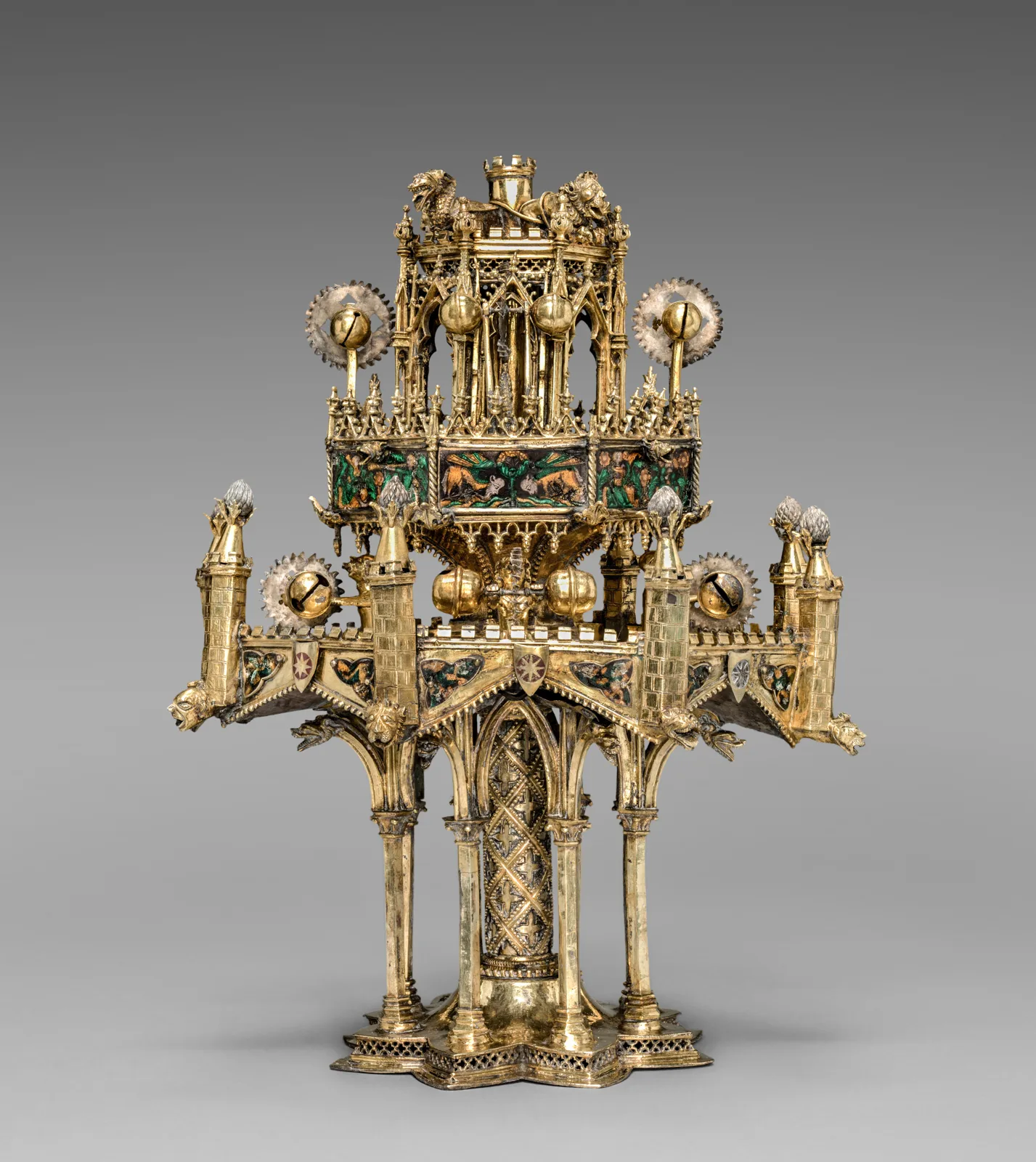
The Cleveland Museum of Art in Ohio owns an object with an intriguing name: the Table Fountain. It is a gilded fountain a little over 30 centimetres tall. Did it really sit on a dining table, splashing water as people ate? Start with the short video.
 Watch the one-minute video on YouTube
In Cleveland's Gothic gallery
The fountain stands in Gallery 109 of the Cleveland Museum of Art, devoted to Gothic painting and sculpture, under accession number 1924.859. The museum acquired it in 1924 from the Paris dealers M. and R. Stora, and its credit line reads "Gift of J. H. Wade." The museum counts it among the highlights of its collection.
Paris goldsmiths' work, 700 years old
According to the museum's records, it was made in Paris around 1320–40, which makes it close to 700 years old. It is made of gilt silver and translucent enamels, coloured glass fused onto metal so that light shines through it.
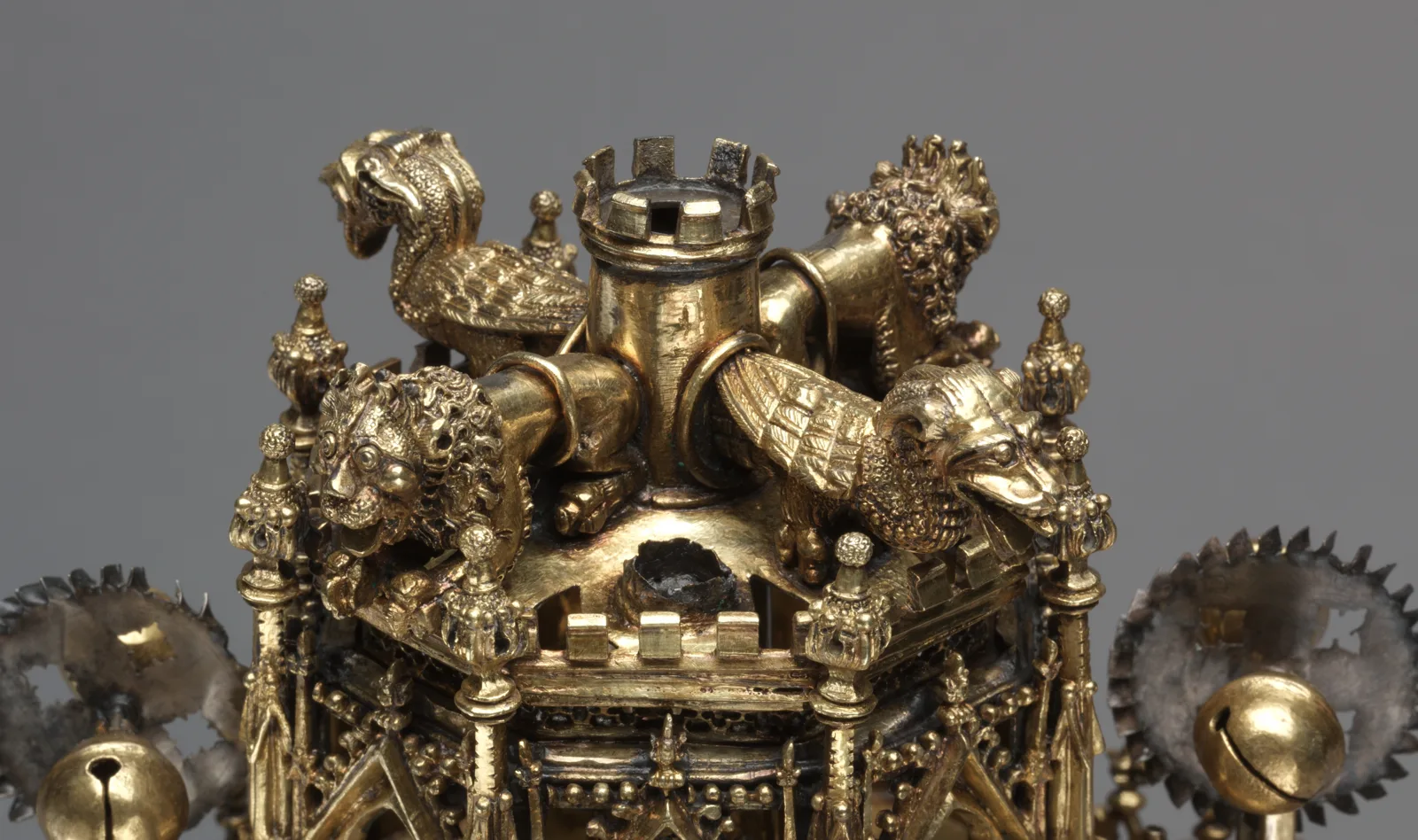
It looks less like a fountain than a tiny cathedral. Vaults, pinnacles, columns and traceried arches turn it into a piece of Gothic architecture in miniature. No one knows who made it, but the museum says the maker was unquestionably inspired by the great Gothic buildings of his day.
Built for motion and sound
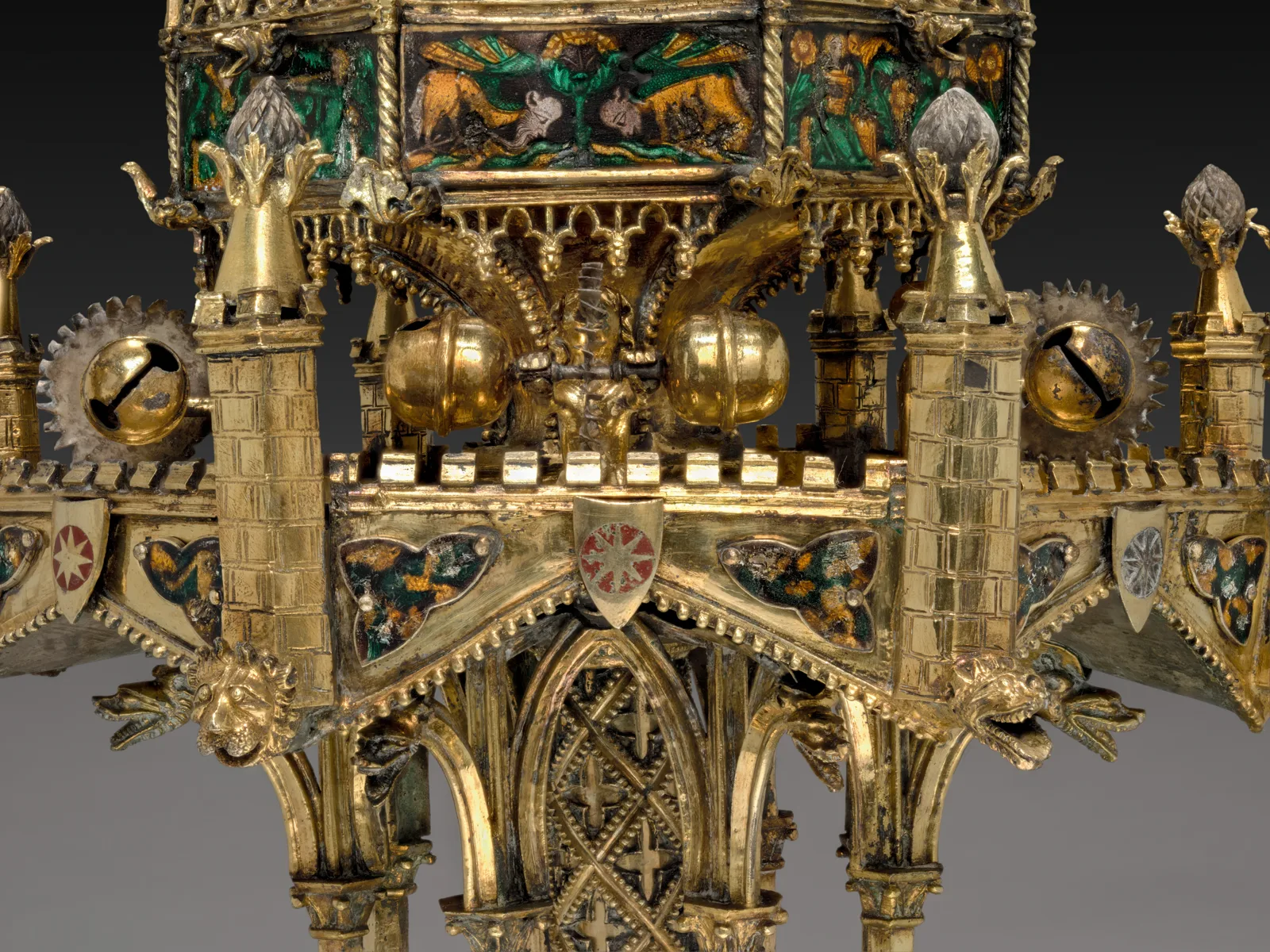
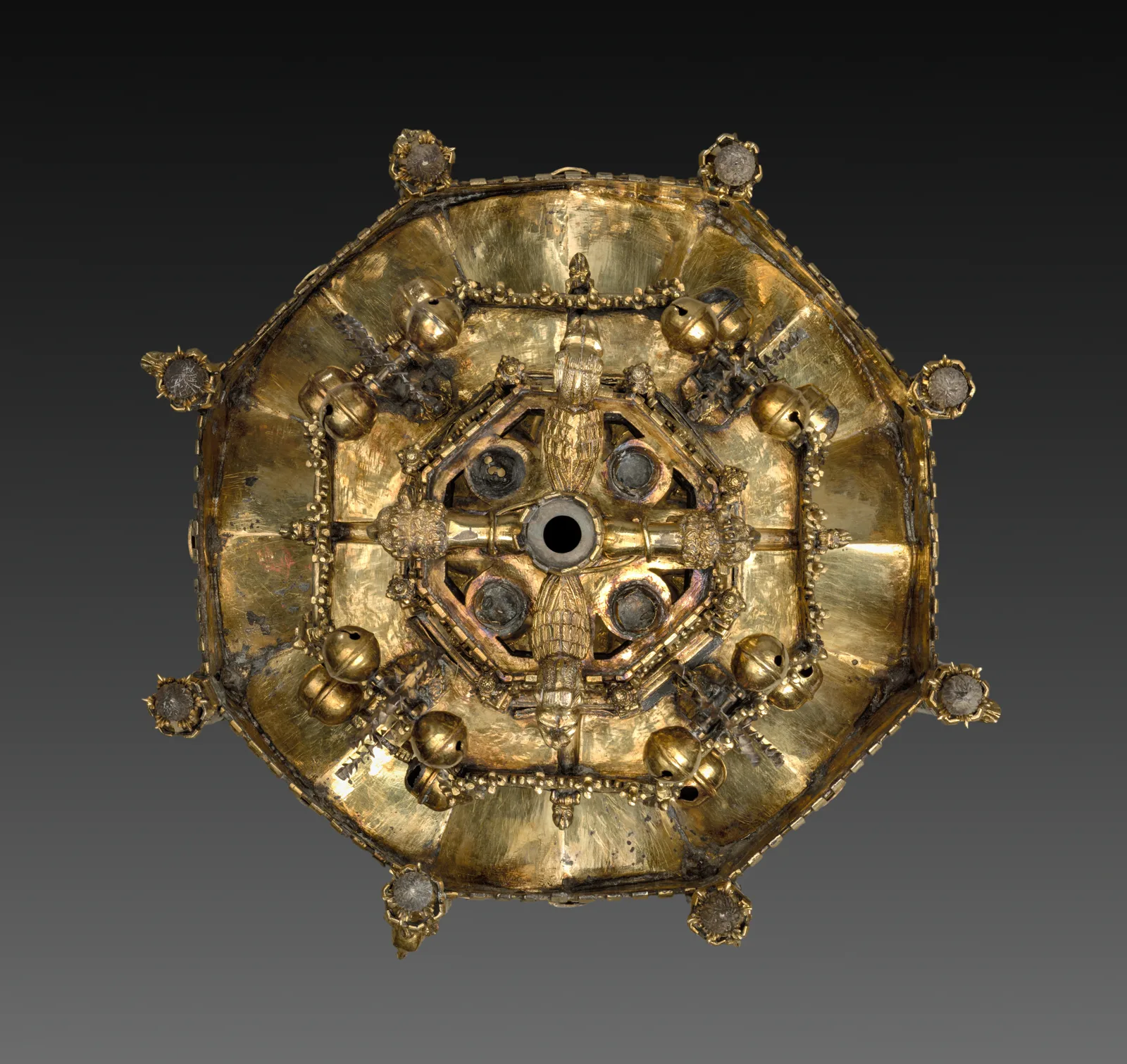
The fountain is assembled in three tiers. Water wheels and bells were added, the museum explains, to capture motion and sound, and it invites visitors to imagine hearing the tiny bells ringing while the fountain was in use.
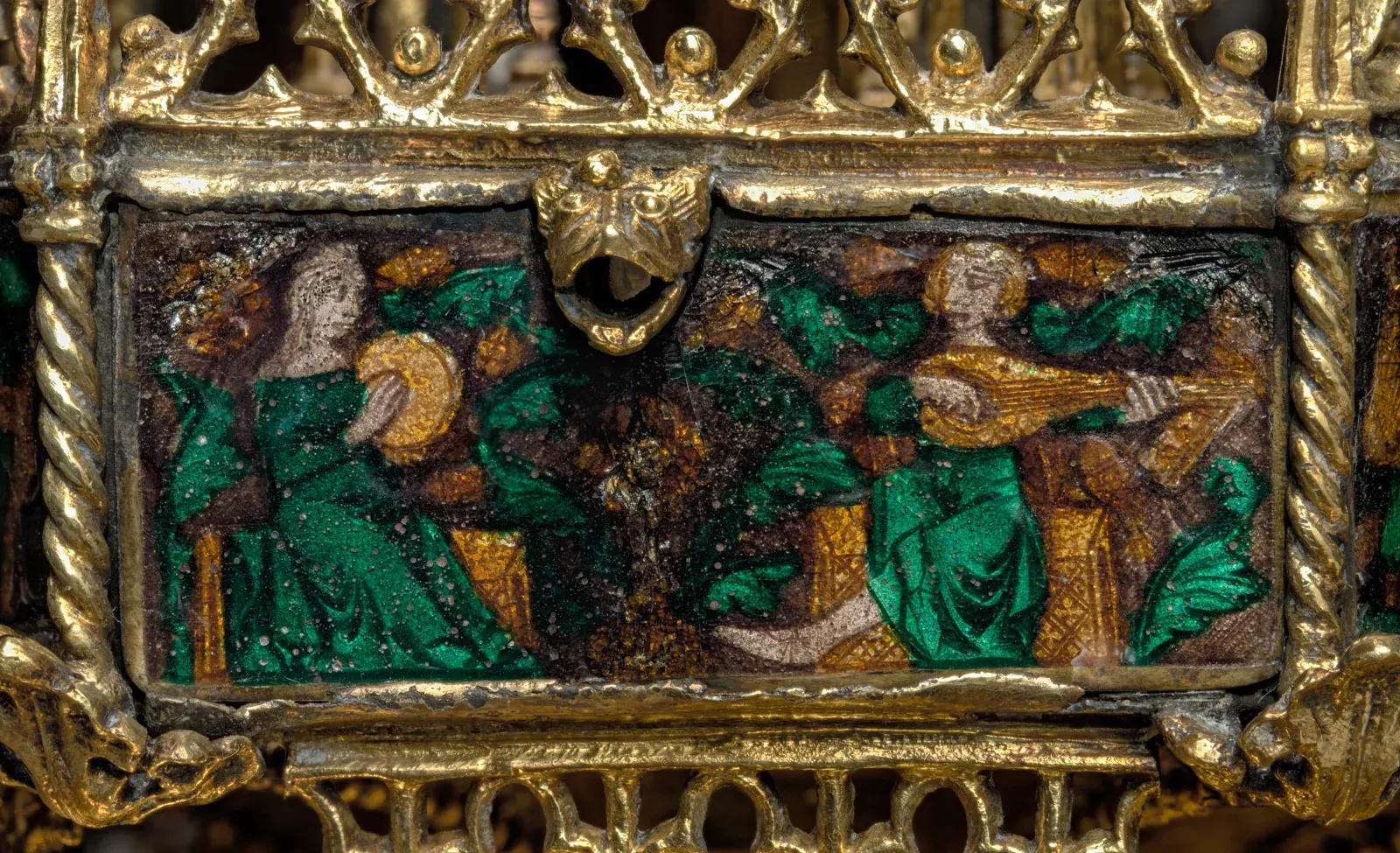
Get close and the enamel plaques reward a look. They show grotesque figures, and some of them are playing musical instruments.
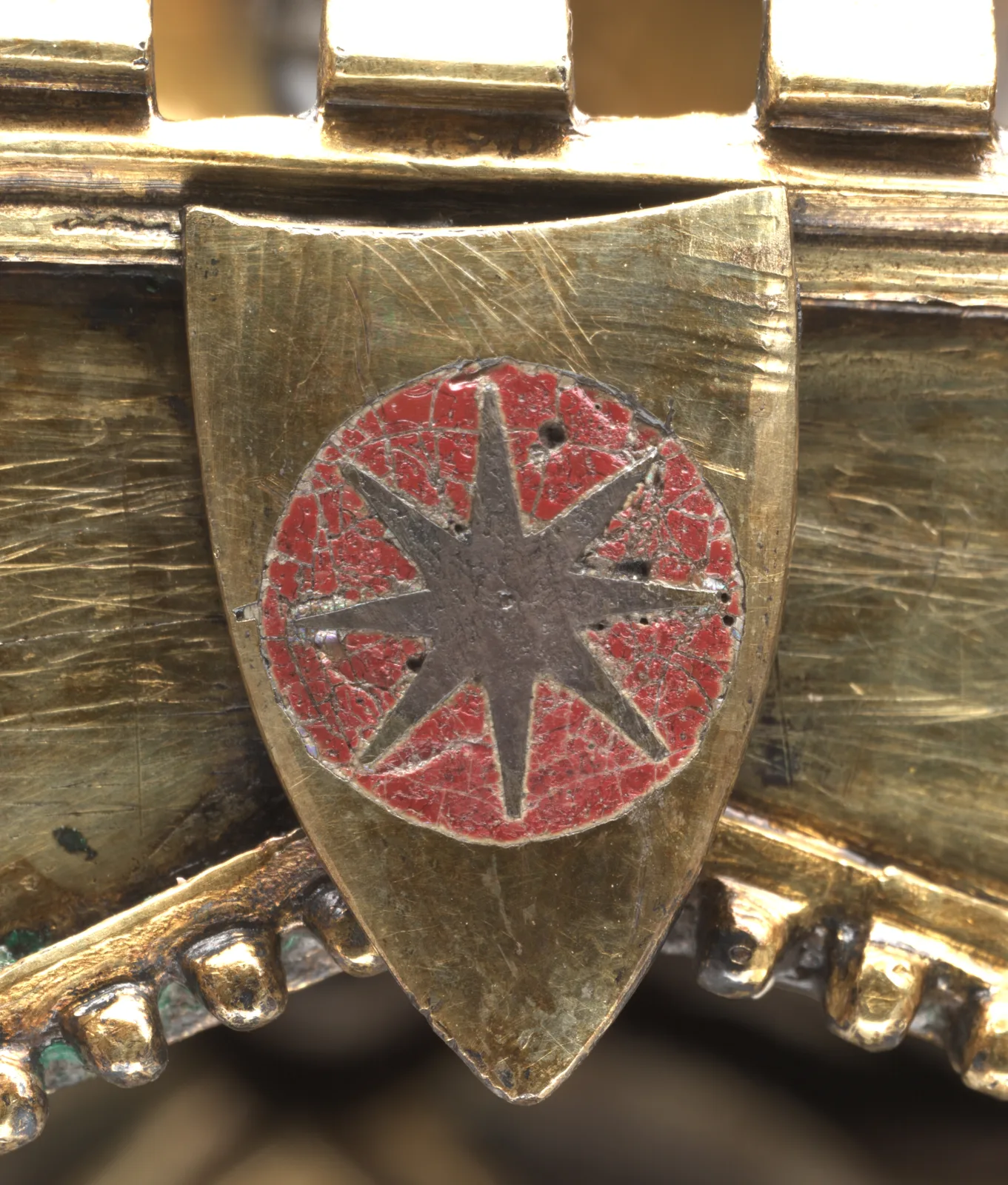
Even a small shield-shaped ornament carries a star set into red enamel. No detail was too small for the goldsmith's attention.
Did it really sit on a table?
So did it spout water at banquets? The museum's 2016 exhibition on the fountain explains that such pieces were once thought to grace banqueting tables. Today they are thought more likely to have stood on pedestals in prominent spots in palaces, where their owners showed them off as feats of ingenuity to delight their guests. These mechanical fountains are known mainly from inventories, which describe them spouting water, sometimes perfumed. Wine is not mentioned anywhere in the museum's records.
It was expensive to make, and its first owner, someone of high status, would have treasured it. It was an object of spectacle, a way to display wealth and refinement to visiting guests.
Where did all the others go?
Medieval inventories show that small fountains like this one existed in large numbers in the 14th and 15th centuries. But because they were always made of precious metals, they were probably sent back to the goldsmith's shop once they broke or went out of fashion, to be melted down into vessels or coins. That is why they are so rare today. The museum describes this one as the most complete example of its type known to survive from the Middle Ages.
Find the Cleveland Table Fountain on Wooriyeojido
Long imagined splashing away on a banquet table, it was more likely a 700-year-old showpiece meant to dazzle palace guests. The Cleveland Museum of Art, home of the Table Fountain, is pinned on the Wooriyeojido map. Look it up in the Wooriyeojido app, and if you go, leave your photos and stories from the day right beside it.
View this place in the Wooriyeojido appVideos of nearby places


Sources
- The Cleveland Museum of Art — Table Fountain (1924.859)
- The Cleveland Museum of Art Open Access API — Table Fountain, 1924.859 record
- The Cleveland Museum of Art — Myth and Mystique: Cleveland's Gothic Table Fountain (exhibition, 2016–2017)
- The Cleveland Museum of Art — 1924.859 Table Fountain (3D model, CC0)