One Mouth Open, One Shut: The Niō Guardians of the Cleveland Museum of Art
A pair of 13th-century temple guardians from Japan now stands in the Cleveland Museum of Art. Here's why one roars and one keeps silent, how they were built, and how they ended up in Ohio.
Walk up to the gate of a Japanese Buddhist temple and you'll often be met by two glowering giants, one on each side. They're the Niō, the temple's guardian kings. Look closely and you'll notice something odd: one is roaring with his mouth wide open, while the other has his lips pressed firmly shut. Why? A pair of Niō at the Cleveland Museum of Art, carved in Japan some eight centuries ago, holds the answer. Start with the short video.
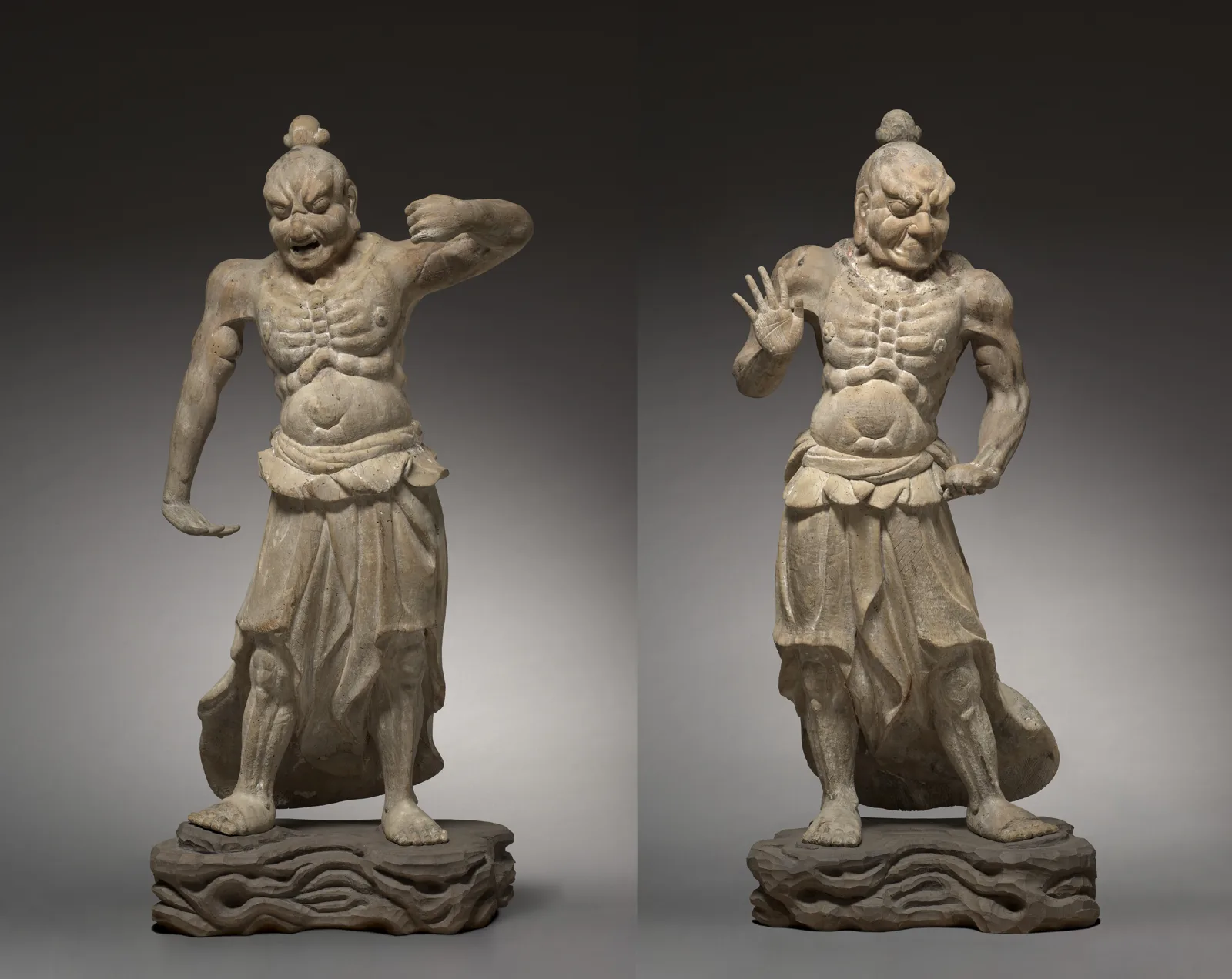
 Watch the one-minute video on YouTube
Eight-century-old gatekeepers in Ohio
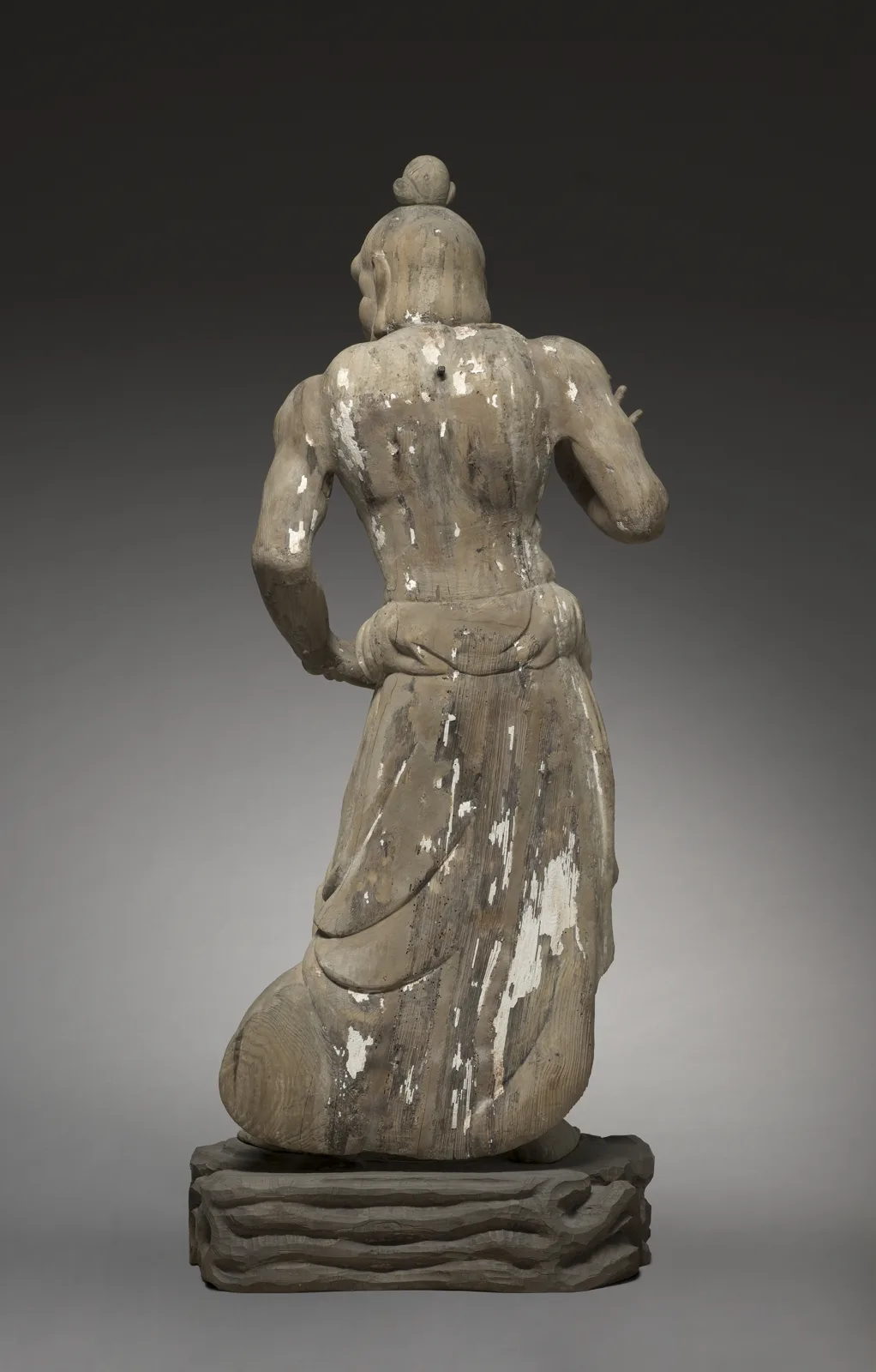
The pair belongs to the Cleveland Museum of Art in Ohio. According to the museum's records, they were made in the 1200s, during Japan's Kamakura period (1185–1333), and carved from chestnut and cypress wood. They stand 167.9 cm (about 5 ft 6 in) tall. The museum acquired them on December 5, 1972.
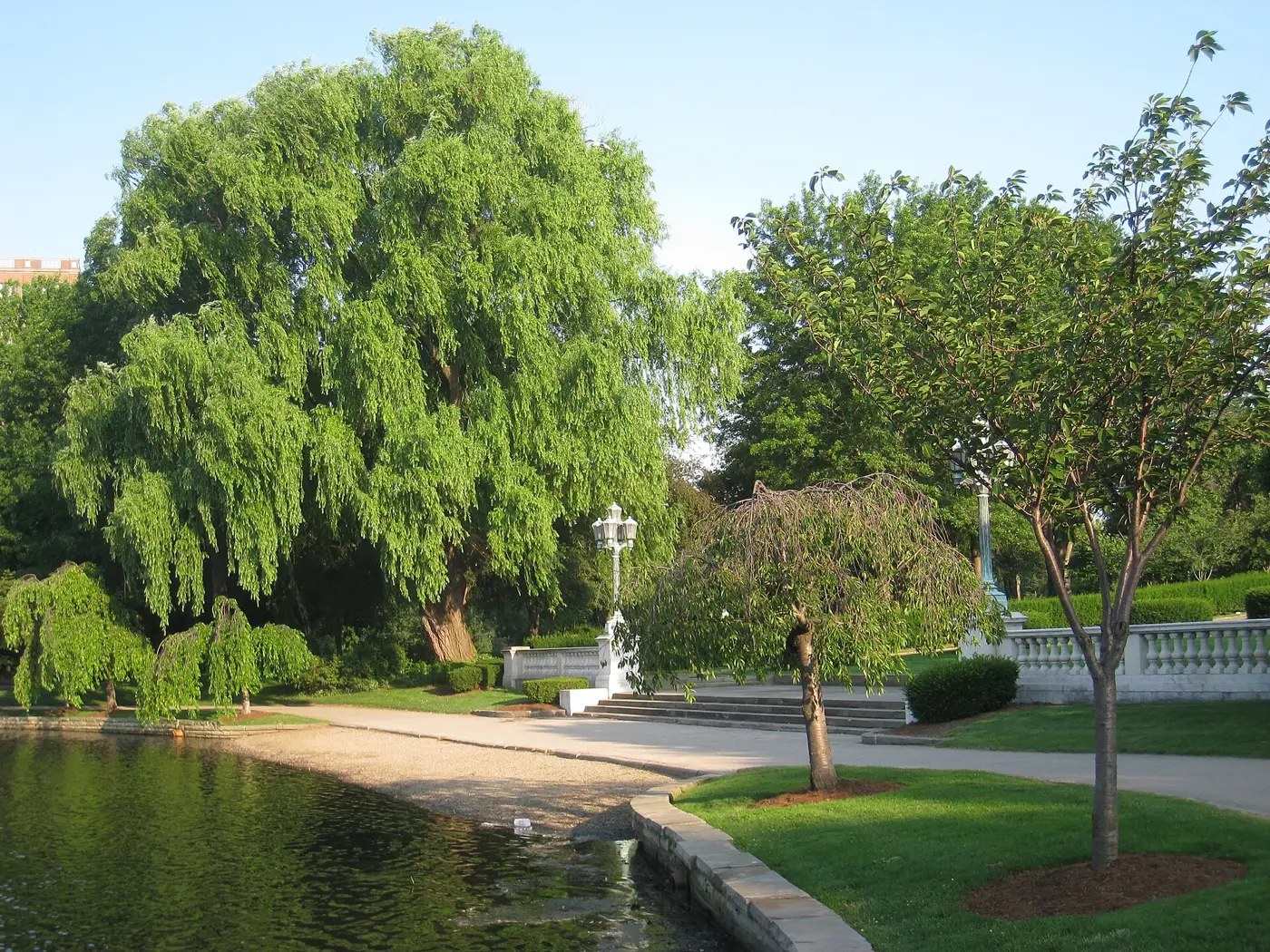
The museum has put the pair's records and high-resolution photographs online, along with 3D scans it made itself, so you can turn the figures around on your screen before you ever see them in person. Just outside the museum lies Wade Lagoon, a pleasant place for a stroll before or after a visit.
Who are the Niō?
The name Niō literally means "two kings" or "benevolent kings." JAANUS, a reference dictionary of Japanese architecture and art, describes them as a pair of guardians who stand on either side of a temple gate. Their glaring eyes, bulging muscles and menacing poses are meant to drive evil spirits away. The Cleveland Museum of Art calls them wrathful protectors of Buddhism that would once have flanked the main entrance gate of a temple.
"Ah" and "un": the beginning and the end
The open-mouthed figure is intoning the sound "ah," the closed-mouthed one the sound "un." In the museum's words, "ah" symbolizes the beginning, or life, and "un" the end, or death.
Why those two sounds? According to JAANUS, "a" is the first letter of the Sanskrit alphabet and is spoken with the mouth open, while "un" is the last and is spoken with the mouth closed. Together they stand for the beginning and end of all things, and they're also read as breathing in and breathing out.
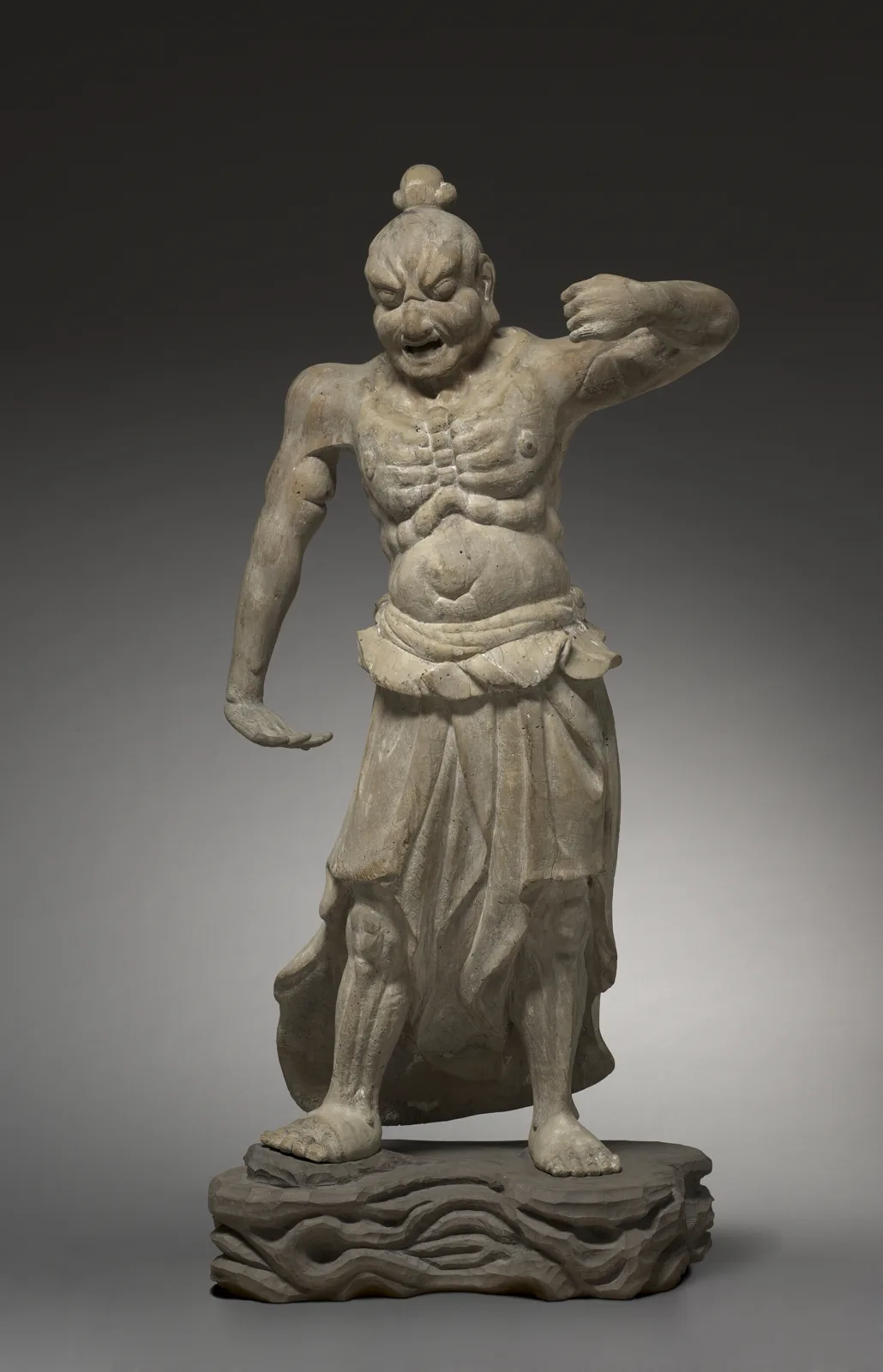
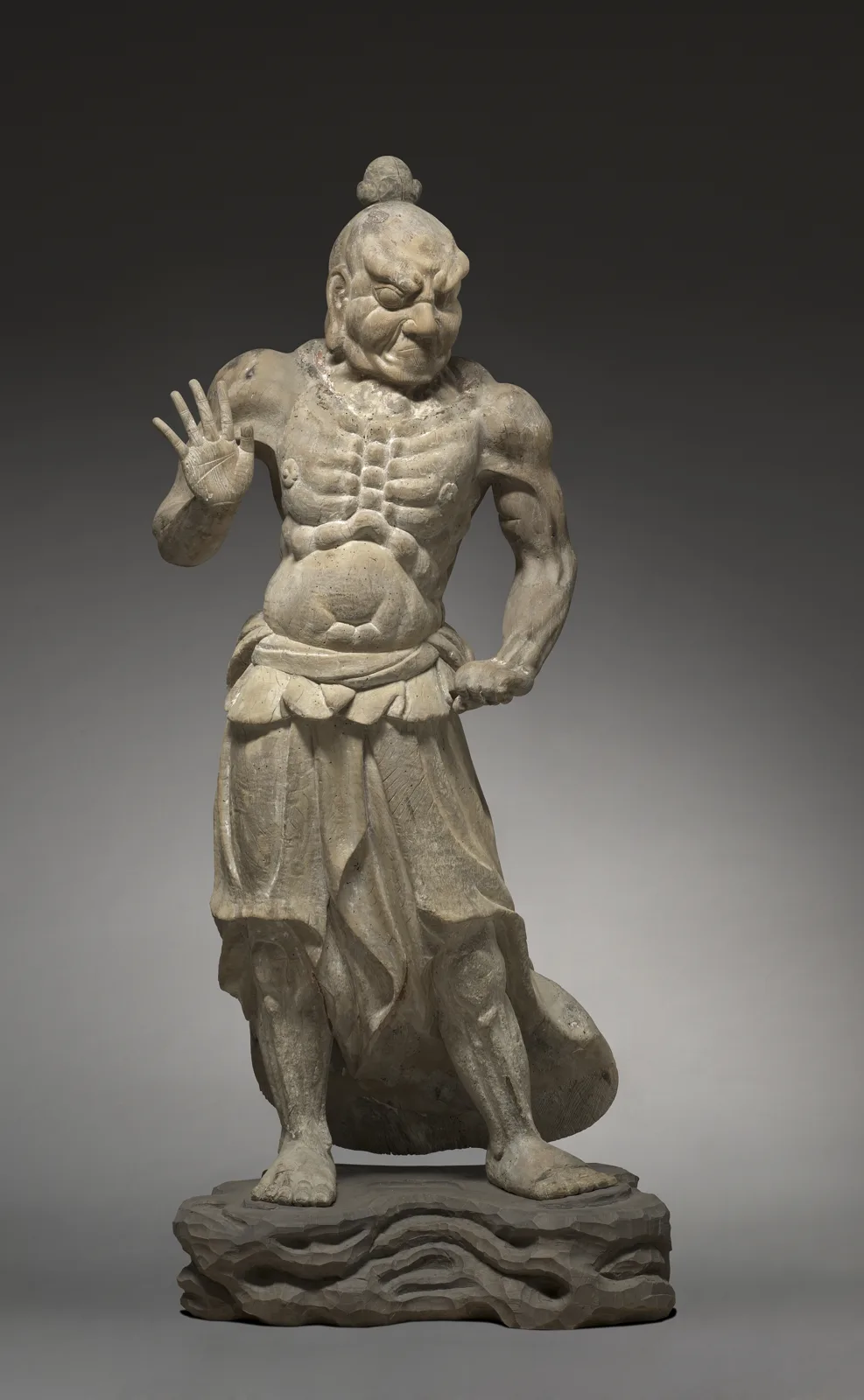
Their gestures form a pair, too. The museum explains that, traditionally, the closed-mouthed guardian holds up one hand as if to signal the power he's holding in reserve, while the open-mouthed one unleashes his full force against evil spirits. One holds back; the other lets loose.
Built from many pieces of wood
Neither figure was carved from a single log. The museum's records say each was assembled from several pieces of wood carefully joined together and sculpted in an expressive, dynamic style. Both were once painted, but most of the color has weathered away.
That's no accident. Niō usually stood outdoors at the temple gate, often with nothing but the gate's roof to shelter them, which left them especially exposed to the elements. The carved wooden bases the pair stands on today are modern replacements.
From a temple in Shiga to Cleveland
The museum's provenance record traces the pair to a Buddhist temple in Shiga Prefecture, Japan. From there they passed through the Yanagi Fine Art Shop in Kyoto before entering the Cleveland Museum of Art in 1972. The record doesn't name the temple.
The giants of Tōdai-ji
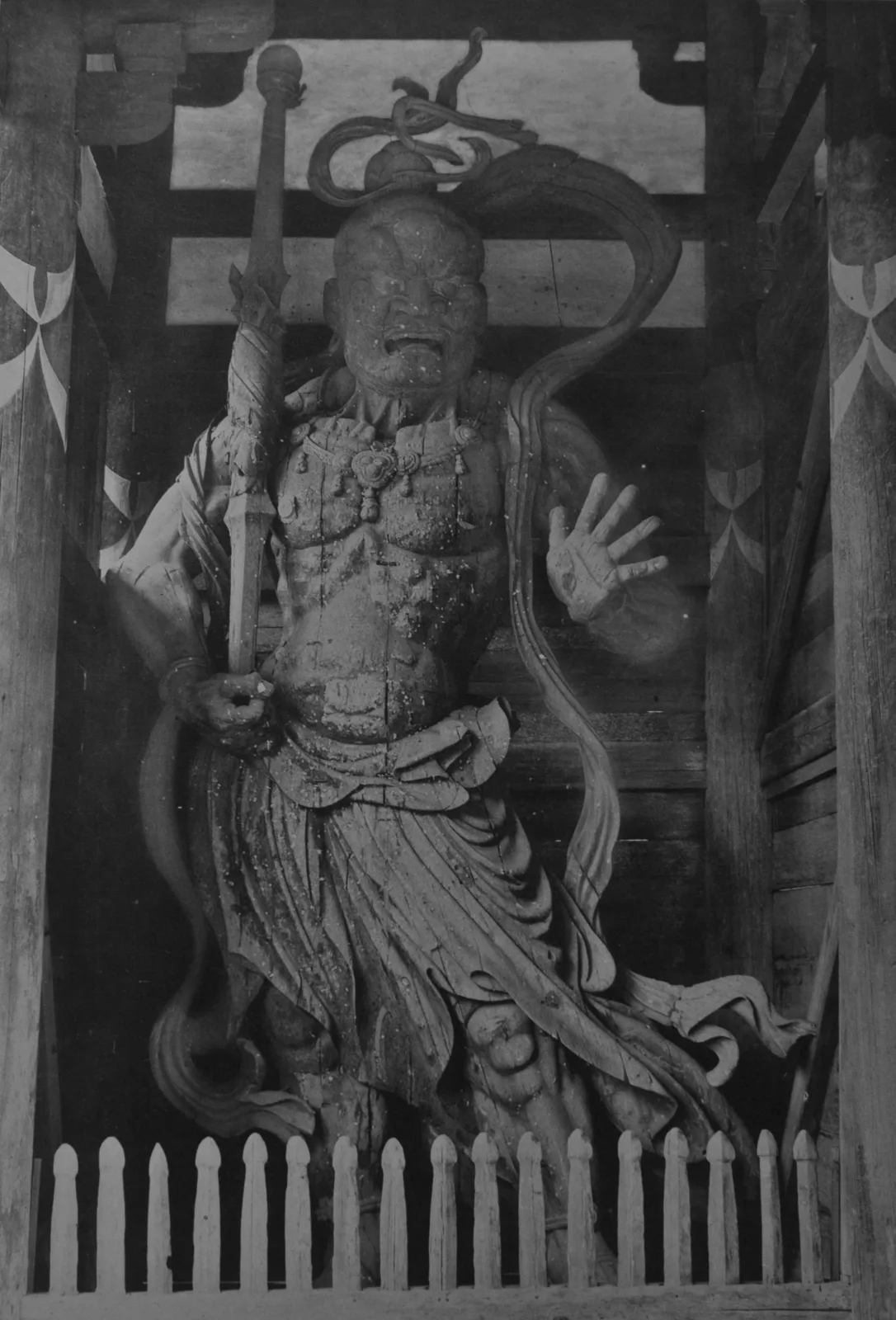
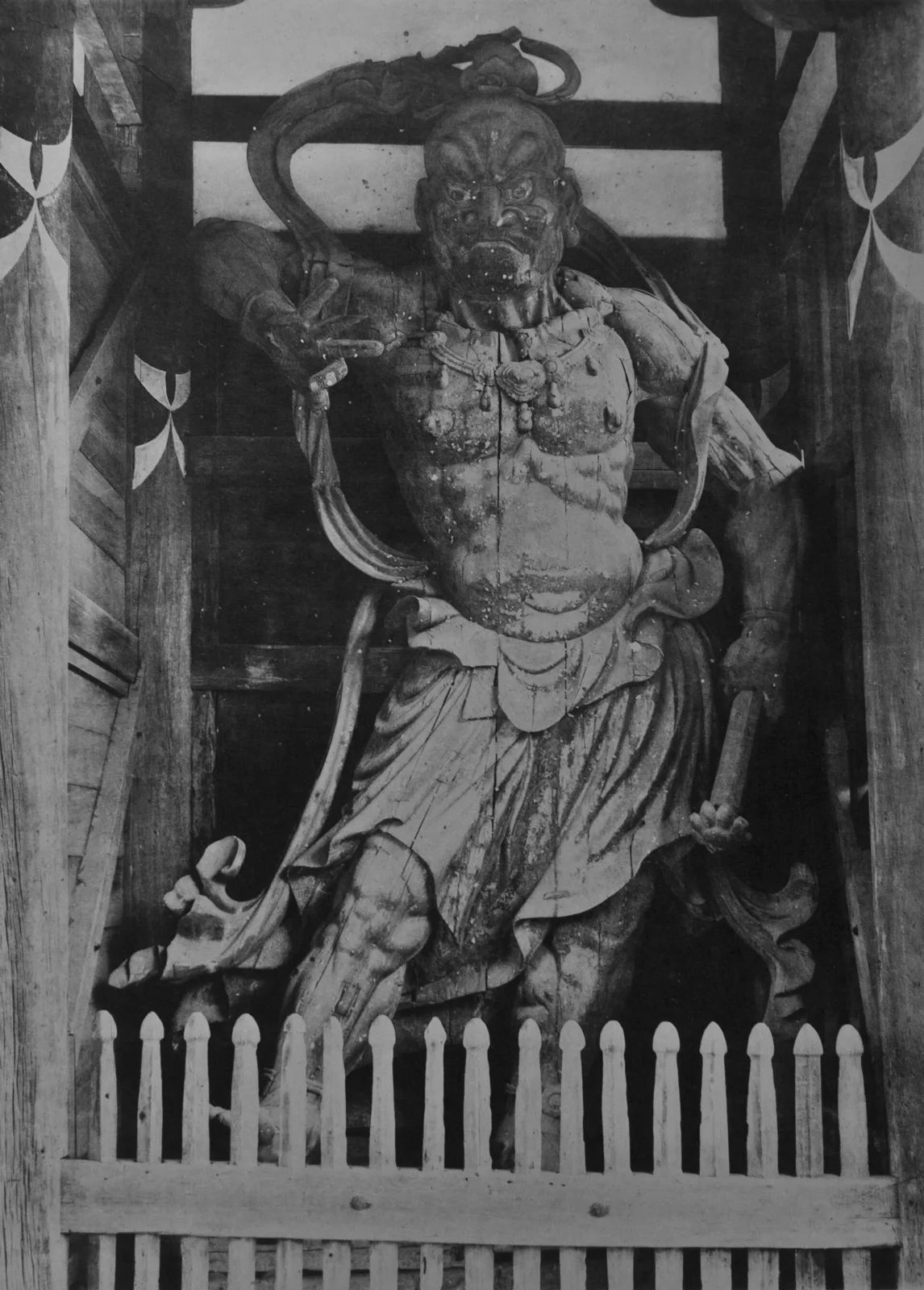
For many people, the first Niō that come to mind are the ones at the Great South Gate (Nandaimon) of Tōdai-ji in Nara. According to the temple's official website, the two statues stand just over 8.4 meters (about 27.5 feet) tall, and work on them began in 1203 under the sculptors Unkei and Kaikei — the same Kamakura period that produced the Cleveland pair. These photographs of the Nandaimon guardians were taken in 1915.
Find the Cleveland Museum of Art Niō on Wooriyeojido
The open mouth is the beginning, the closed mouth the end. Two guardians who once watched over a temple gate somewhere in Japan now stand together in Cleveland. The Cleveland Museum of Art is pinned on the Wooriyeojido map. Look it up in the app, and if you visit, leave your photos and stories from the day right beside it.
View this place in the Wooriyeojido app


