The Cheonmachong Gold Crown: Was Silla's Largest Crown Really Worn?
Found in 1973 in the Cheonmachong tomb in Gyeongju, this 32.5-centimeter gold crown is the largest and heaviest of the six known Silla crowns. Here is what it is made of, how the tomb got its name, and where the crown was lying when archaeologists found it, in a video and photos.
In the Gyeongju National Museum in South Korea sits the largest and heaviest of the six Silla gold crowns found so far. It was made roughly 1,500 years ago and pulled from a tomb called Cheonmachong in 1973. It drips with curved jade. But did anyone actually wear it? Start with the short video.
 Watch the one-minute video on YouTube
Tomb No. 155
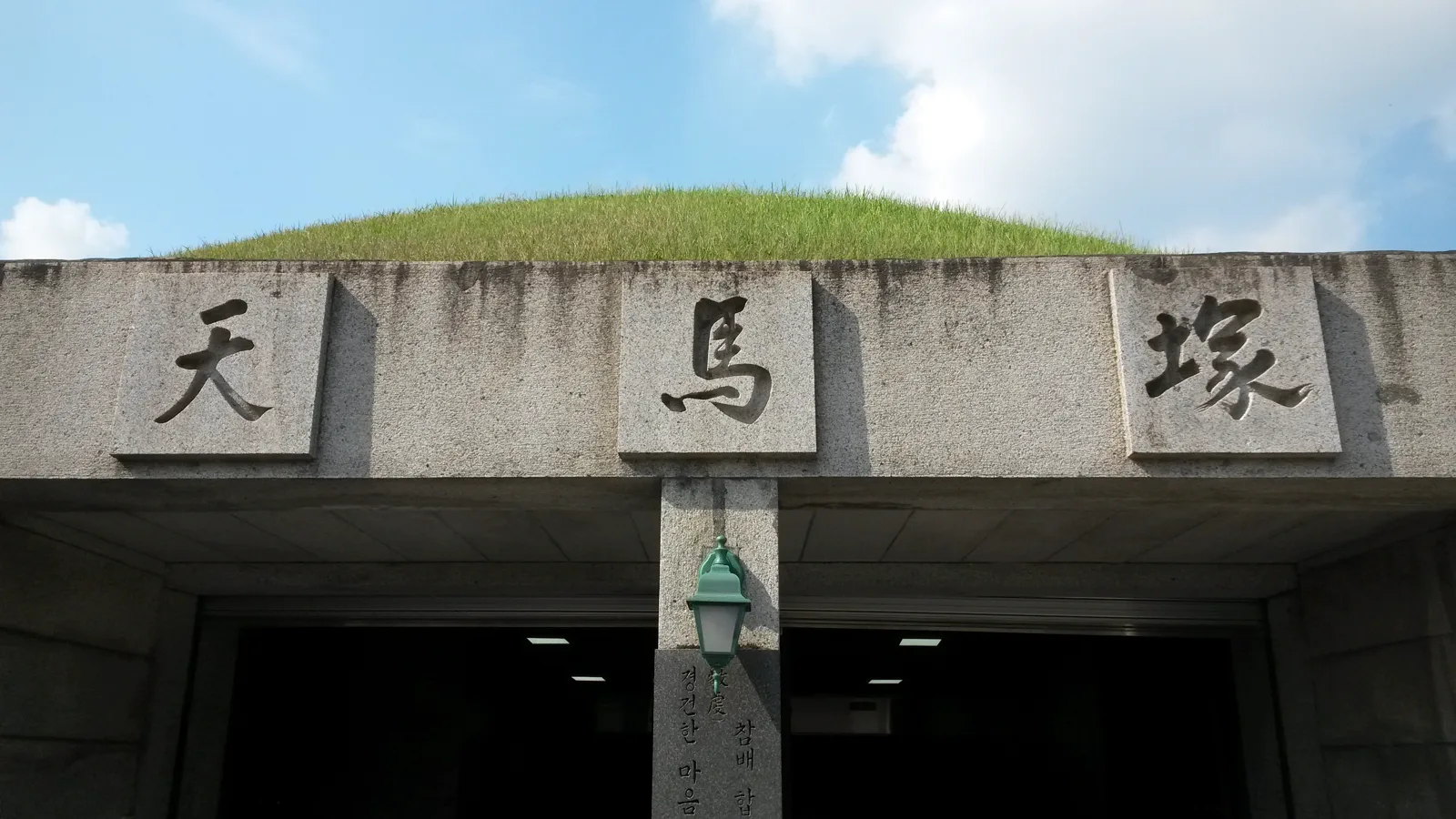
Cheonmachong is a Silla-era burial mound in Gyeongju, the old capital of the Silla kingdom. It didn't always have a name. For a long time it was simply Gyeongju Tomb No. 155.
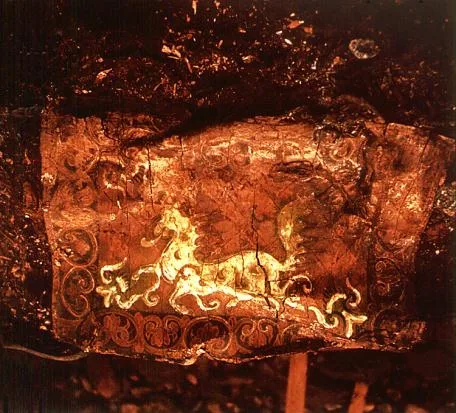
When archaeologists excavated it in 1973, they found the gold crown, bracelets and a wealth of other objects. Among them was a painting of a winged horse, the Cheonmado. The find gave the tomb its name: Cheonmachong, the Tomb of the Heavenly Horse.
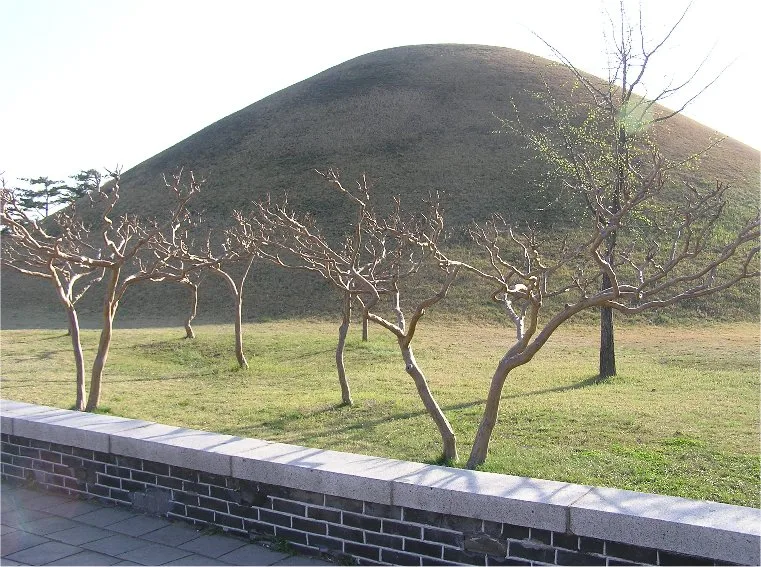
Gyeongju's ancient tombs are huge earthen mounds covered in grass, and they rise from the city like a cluster of rounded green hills. Cheonmachong is one of them.
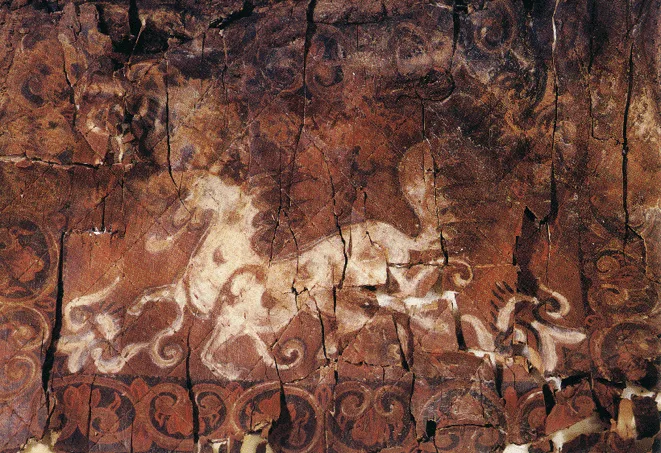
The Heavenly Horse
The Cheonmado is painted on a saddle flap made of birch bark, one of the panels that hung down on either side of a horse's saddle. On it, a winged horse races across the sky.
A closer look at the crown
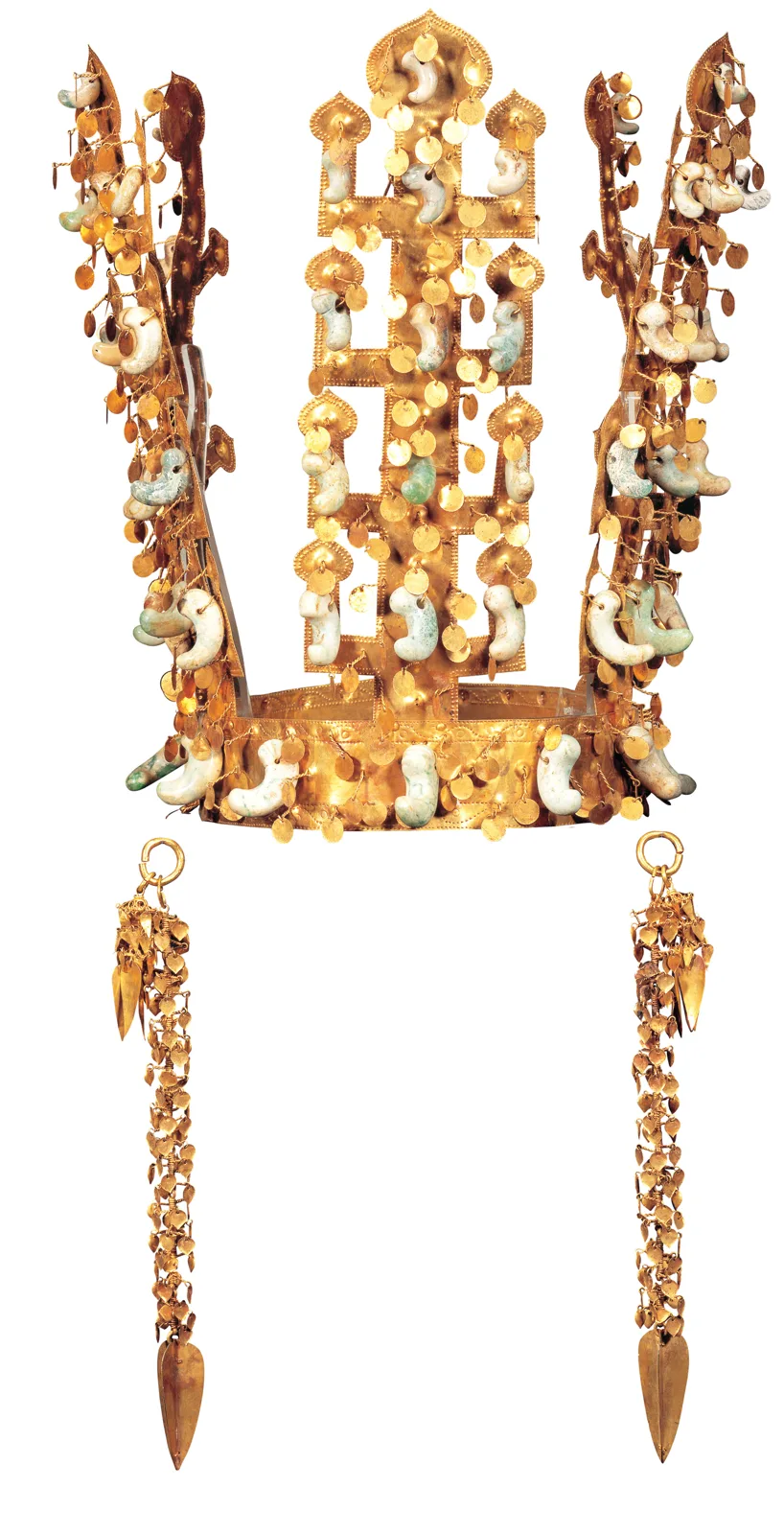
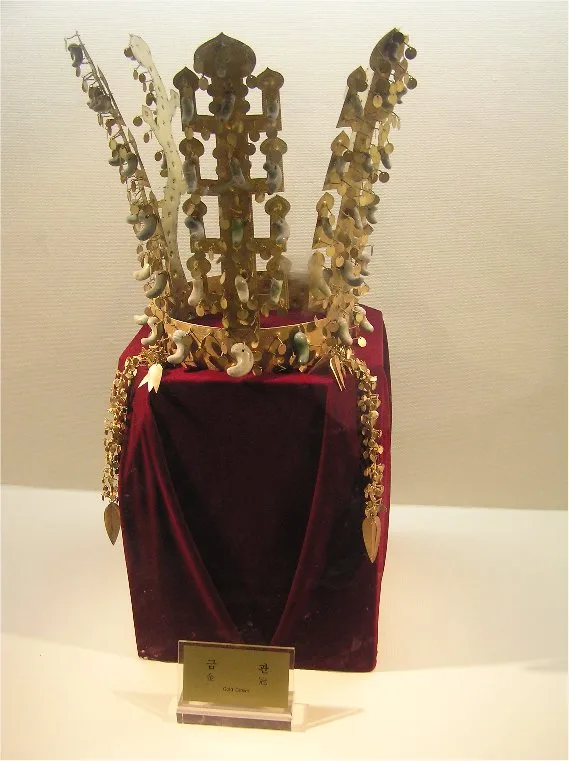
The Cheonmachong crown stands 32.5 centimeters tall and is a textbook example of a Silla gold crown. It is built on a broad band that circled the head. Rising from the front are three uprights shaped like the Chinese character 山, "mountain"; at the back are two shaped like antlers. The Gyeongju National Museum describes the front three as tree-shaped.
The 山-shaped uprights climb in four tiers, and every tip ends in a bud. Round gold discs and curved jades hang all over the crown, some on twisted gold wire, with gold ornaments linked tightly together. From either side of the band hang two long pendants ending in leaf shapes.
According to the museum, this is not only the largest and heaviest of the six Silla gold crowns but also the most lavishly decorated, with an unparalleled 58 curved jade pendants. The museum dates it to the sixth century, roughly 1,500 years ago.
The crown was designated a National Treasure of Korea on December 7, 1978, and is on view at the Gyeongju National Museum.
Found on the head of the dead
So was it really worn? According to the Korea Heritage Service, the crown was found on the head of the person buried in the tomb. For nearly 1,500 years it had rested right where it was placed.
There's a twist, though. The inner cap that would have sat beneath the crown, along with the other items needed to wear it, were all found outside the coffin with the rest of the grave goods. So exactly how the crown was worn is still debated. Whether it was used in life or made for the burial is a question no one can settle for certain.
Find the Cheonmachong Gold Crown on Wooriyeojido
A crown from a tomb once known only by a number, buried alongside a painted heavenly horse, and left on its owner's head for some 1,500 years. Cheonmachong is pinned on the Wooriyeojido map. Look it up in the Wooriyeojido app, and if you go, leave your photos and stories from the day right beside it.
View this place in the Wooriyeojido app


