Sungnyemun: How Seoul's Great South Gate Rose Again After the Fire
Sungnyemun, also known as Namdaemun, was built in 1398 as the main gate of Joseon-era Seoul. Watch the video and see photos of how its burned-out pavilion was rebuilt over five years and two months, and why it is no longer called National Treasure No. 1.
Walk from Seoul Station toward Namdaemun Market and, between the office towers, a gate more than 600 years old comes into view. In February 2008 its upper pavilion burned and collapsed. Yet today Sungnyemun stands whole again. How was the gate brought back? Start with the short video.

 Watch the one-minute video on YouTube
The south gate of old Seoul
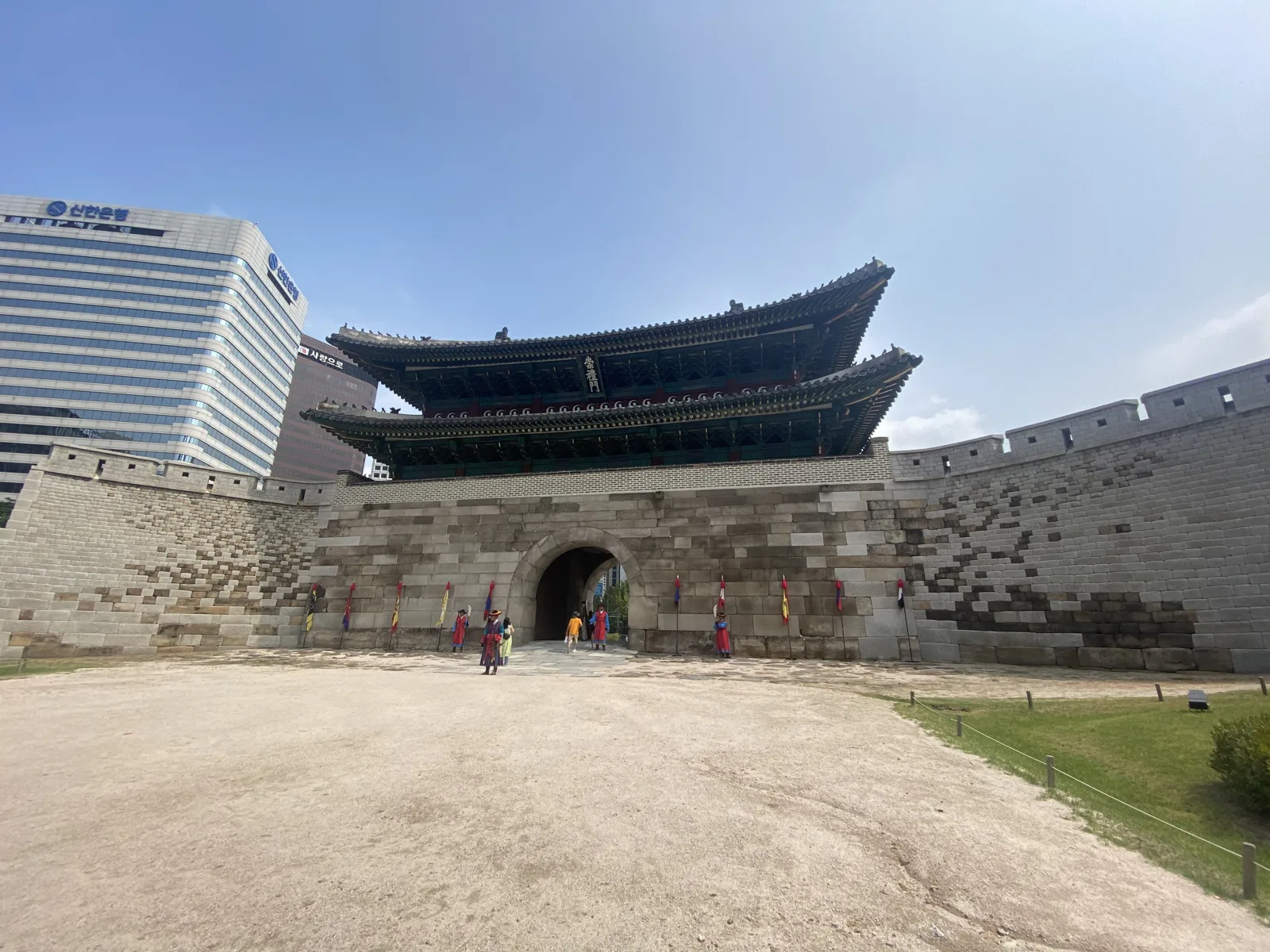
Sungnyemun stands at 40 Sejong-daero in Seoul's Jung District. It was the main gate of Hanyang, the walled capital of the Joseon dynasty, and because it faced south it was also called Namdaemun, the Great South Gate. Work began in 1396, the fifth year of King Taejo's reign, and finished in 1398. Korea's national heritage agency describes it as the oldest surviving wooden building in Seoul.
A two-storey timber pavilion, five bays wide and two bays deep, sits on a tall base of dressed stone, under a hipped roof that slopes down on all four sides. Through the middle of the base runs a rounded arch called a hongyemun, or rainbow gate.
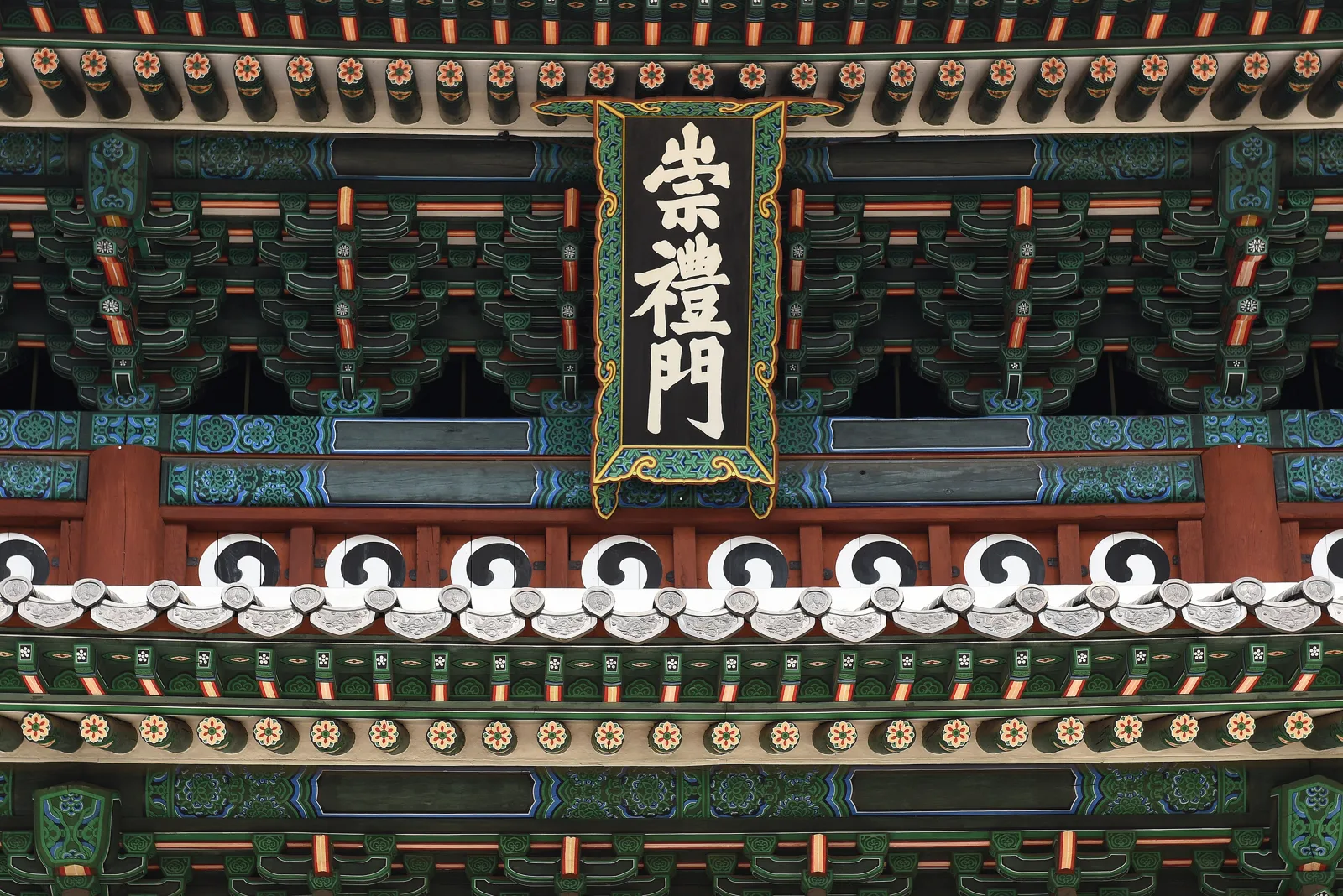
Beneath the upper eaves hangs a board bearing the gate's name. According to the Joseon-era book Jibong yuseol, the calligraphy was written by Grand Prince Yangnyeong.

The walls come down
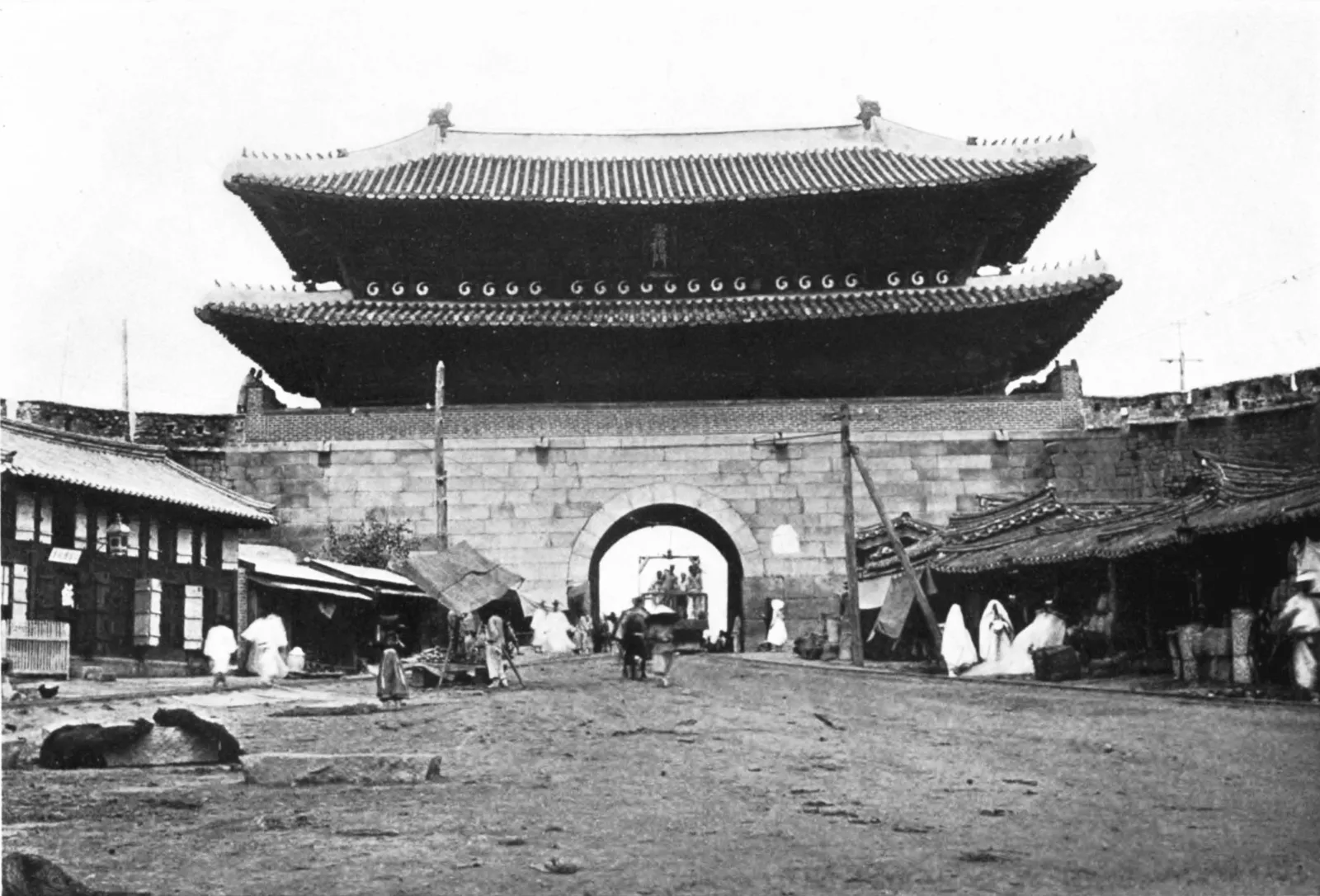
Sungnyemun was never meant to stand alone. The city wall once ran out from both sides of it. According to Korea's National Archives, demolition of the walls began in 1907, and by 1909 the sections on either side of the gate were gone.

Why it is no longer "National Treasure No. 1"
On 20 December 1962 Sungnyemun was designated a National Treasure and given the number 1, and for decades Koreans knew it as National Treasure No. 1. But the numbers simply reflected the order of designation, and people kept reading them as a ranking. So from 19 November 2021, Korea stopped using designation numbers in heritage names. Its official name today is simply "National Treasure Sungnyemun Gate, Seoul."
The night of 10 February 2008
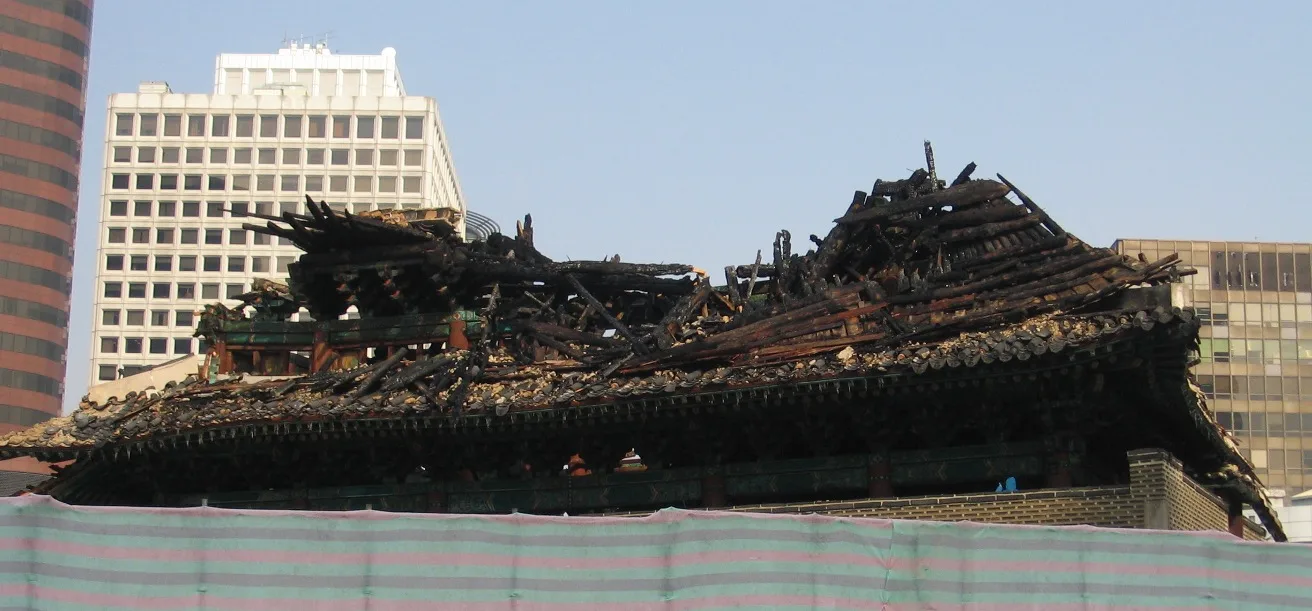
At around 8:40 p.m. on 10 February 2008, someone deliberately set Sungnyemun on fire. Four hours later, at about 12:40 a.m. the next day the roof of the upper pavilion caved in. Part of the lower roof burned too. Only the stone base came through unscathed; the timber structure above it was badly destroyed.

Rebuilt the old way
The restoration took five years and two months. According to an article by a member of the restoration advisory panel, published on the Korean government's policy news site, the builders followed Joseon-era methods wherever they could. A forge was set up on site, and ironwork was hammered out by hand with bellows. Timber was shaped and joined by hand rather than by machine, and the dancheong, the colourful painted decoration, was redone with natural pigments in place of most chemical ones.
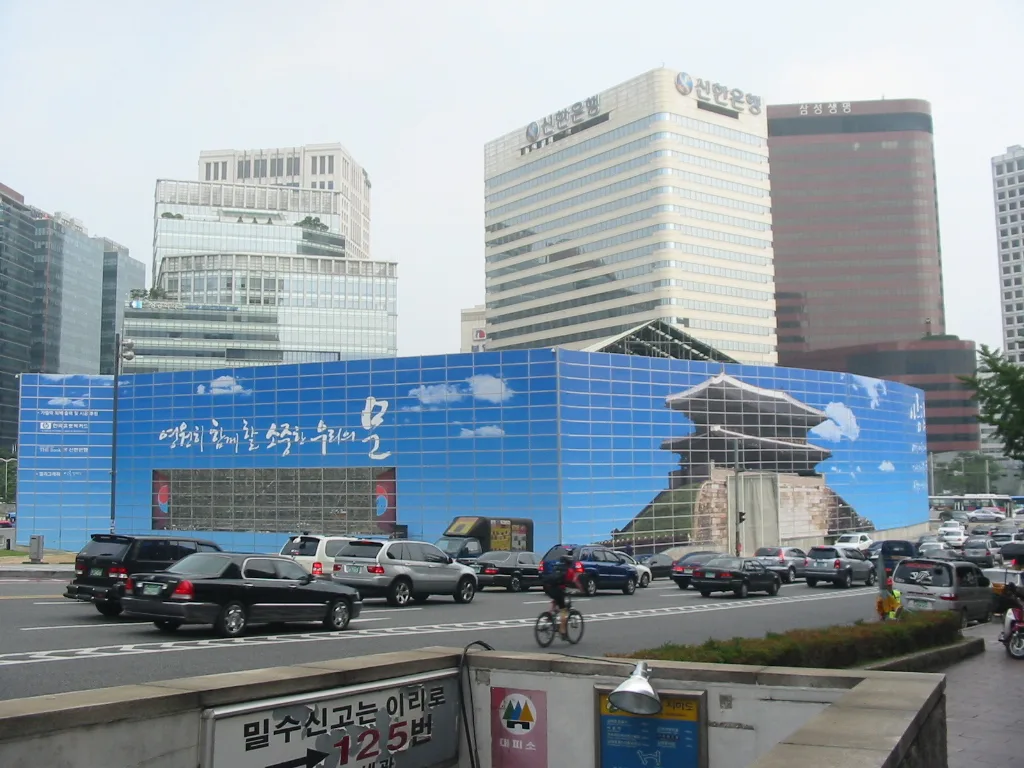

Old records proved invaluable. The gate had been fully dismantled and repaired between 1961 and 1963, and the builders worked from the repair drawings and detailed survey plans made at that time. The master carpenter, Shin Eung-su, had himself worked on the 1963 repair.
The restorers also rebuilt short sections of the city wall on either side, which had not been there before the fire. After about a hundred years, a little of the wall torn down in the early 1900s had returned. Sungnyemun reopened on 4 May 2013.
Back where it began
The restored gate still stands on the very spot where it was first raised in 1398, more than six centuries ago. Walk through the arch and look up: the ceiling of the passage is painted with dancheong designs.
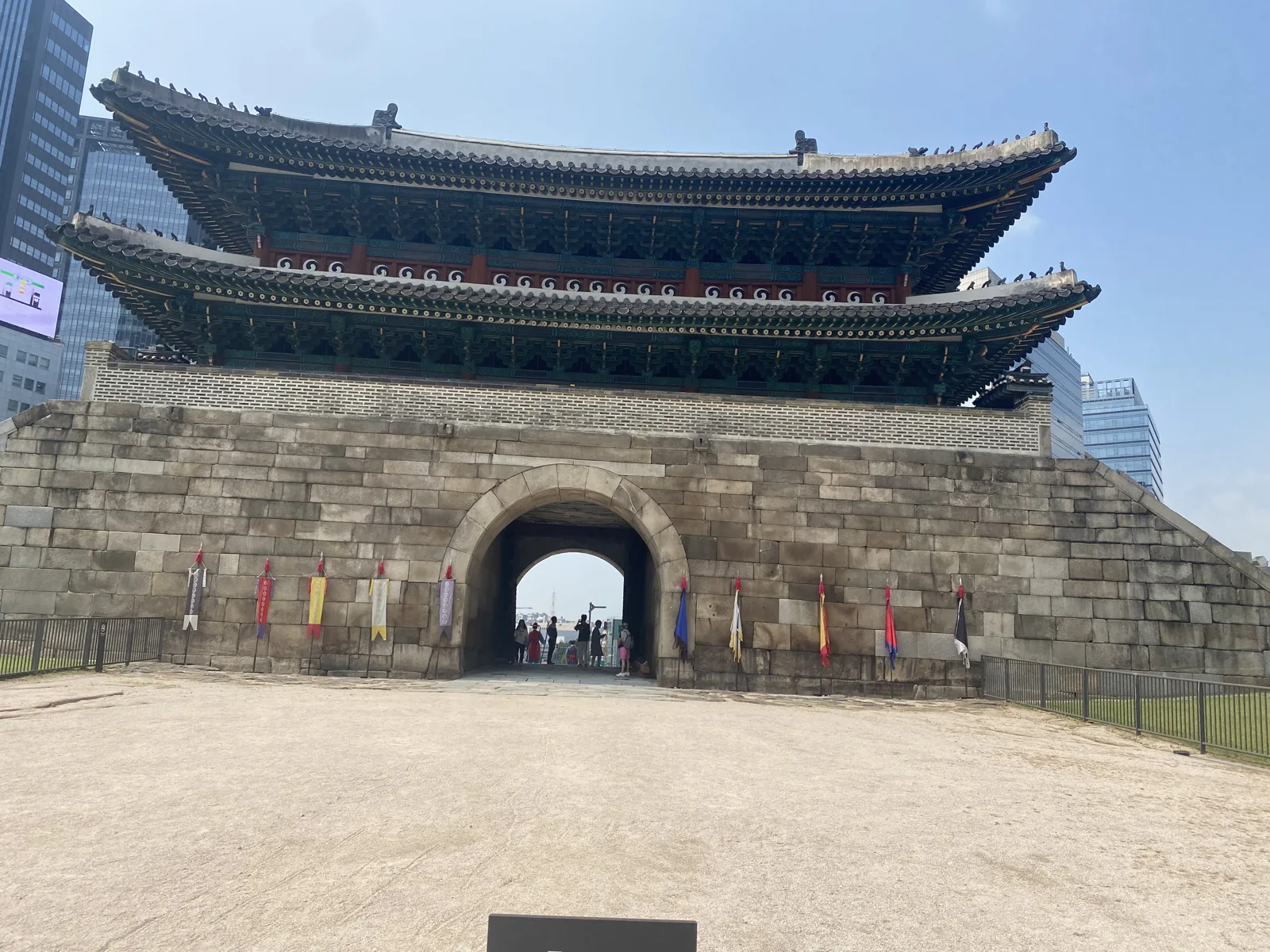

Find Sungnyemun on Wooriyeojido
For more than 600 years the south gate of old Seoul has stood here, and after the fire it rose again through traditional craftsmanship. Sungnyemun is pinned on the Wooriyeojido map. Find Sungnyemun in the Wooriyeojido app, and if you go, leave your photos and stories from the day right beside it.
View this place in the Wooriyeojido appVideos of nearby places
 The floating stone of Buseoksa: what is the secret of the temple's hovering rock?
 Jagyeongnu: the water clock whose puppets rang the bell
 Gwangseongbo on Ganghwa Island: the Joseon fort that faced American warships in 1871
Sources
- Korea Heritage Service — National Treasure Seoul Sungnyemun (Heritage Portal)
- Korea Heritage Service — Open API detail, National Treasure Seoul Sungnyemun
- National Archives of Korea — Korea Through Records: Sungnyemun
- Korea Policy Briefing — Restoring Sungnyemun (2013-05-01)
- Incheon Metropolitan City — Cultural property designation numbers abolished (2021-11-19)