Buseoksa: the Korean temple named after a floating rock
Halfway up Bonghwangsan in Yeongju, South Korea, Buseoksa keeps a boulder said to have once floated in the air. The legend of Uisang and Seonmyo, and the 14th-century hall that stands in front of the rock.
At a mountain temple in Yeongju, in South Korea's North Gyeongsang Province, there is a boulder that is said to have once hung in the air. The temple is even named after it. How did a rock come to float? Start with the short video.
 Watch the one-minute video on YouTube
A temple founded in 676
Buseoksa sits halfway up Bonghwangsan, a mountain in Buseok-myeon, Yeongju. It was founded in 676, in the 16th year of King Munmu of Silla, by the monk Uisang, who built it on royal orders to teach the Hwaeom (Flower Garland) school of Buddhism. In 2018 it became a UNESCO World Heritage Site as one of the temples in "Sansa, Buddhist Mountain Monasteries in Korea."
A dragon, a rock and a band of thieves
The temple's legend goes like this. When Uisang sailed home after studying in Tang China, a woman named Seonmyo, who was deeply devoted to him, turned into a dragon and followed his ship to keep it safe.
Back in Silla, Uisang set out to build a temple on Bonghwangsan, but a gang of thieves stood in his way. Seonmyo, now a dragon, transformed into a huge boulder, rose into the air and drove the thieves off. The rock came down behind what is now Muryangsujeon Hall, and that, the story says, is how the temple got its name: Buseoksa, "the temple of the floating stone."
The details vary with the source. Korea's Heritage Service traces the tale to the *Song Biographies of Eminent Monks*, while the *Encyclopedia of Korean Culture* cites the *Samguk yusa*. They also differ slightly on whether it was Seonmyo herself or the dragon she became that turned into the rock.
The rock is still there
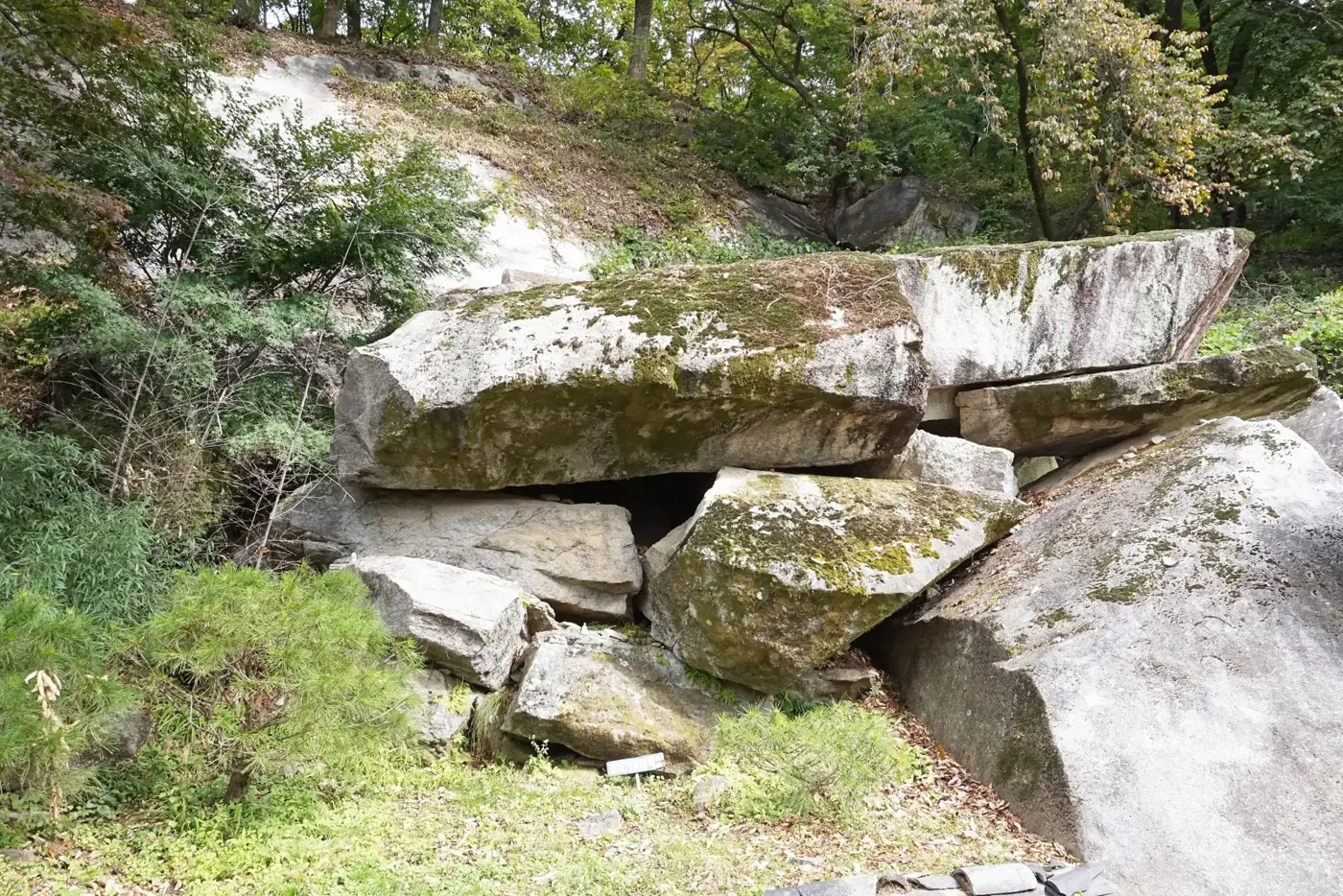
According to the Heritage Service, a rock behind Muryangsujeon is carved with two characters: 浮石, "floating stone." Large mossy slabs are stacked on top of one another, with a dark gap between the upper and lower stones. Tradition holds that this is the very rock from the legend.
Muryangsujeon, rebuilt in 1376
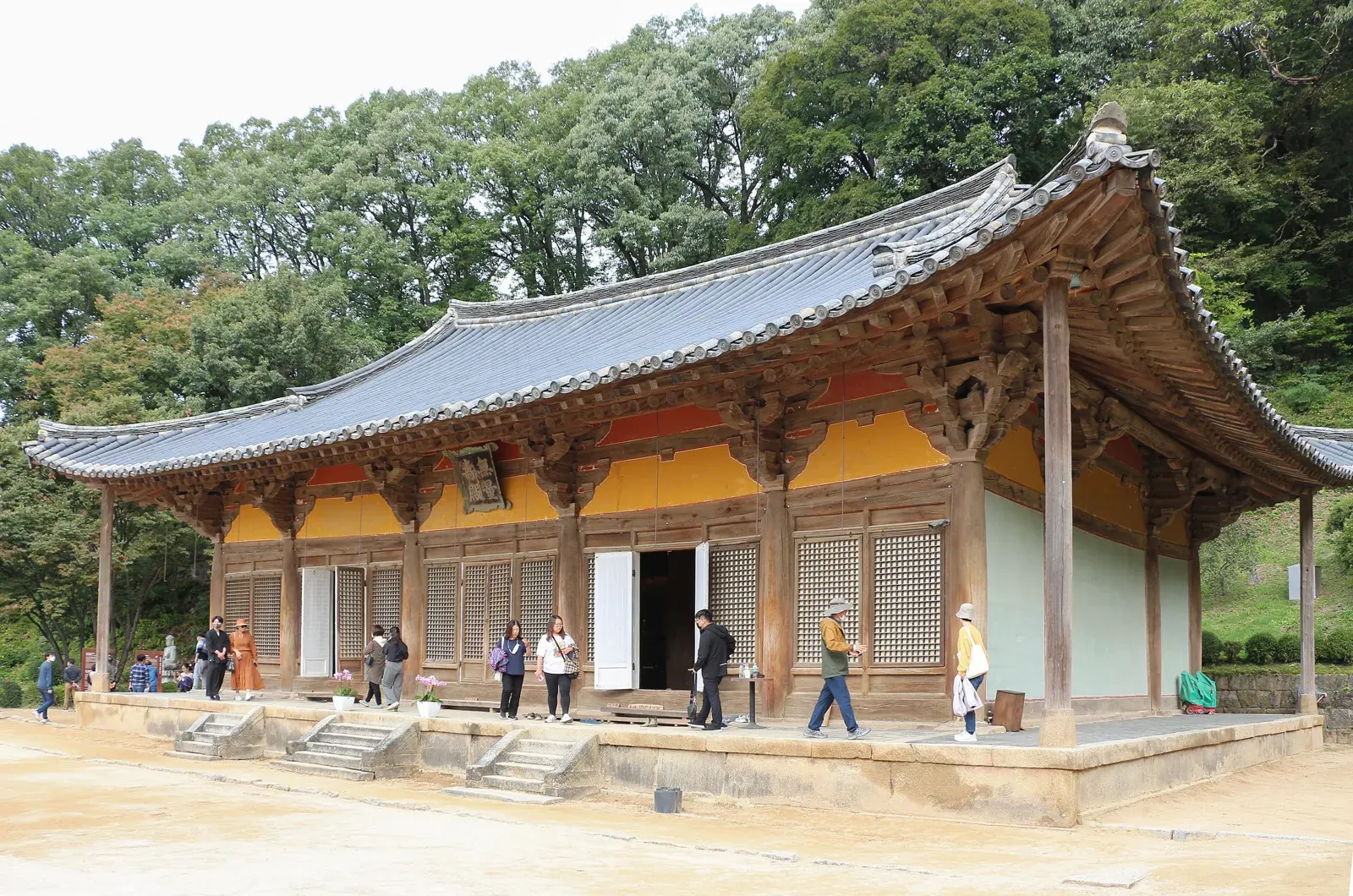
The hall in front of the rock, Muryangsujeon, is a National Treasure. It burned in 1358 and was rebuilt in 1376, during the reign of King U of Goryeo, which makes it, along with the Geungnakjeon at Bongjeongsa, one of Korea's oldest surviving wooden buildings. The name board above the central doorway was written by King Gongmin of Goryeo.
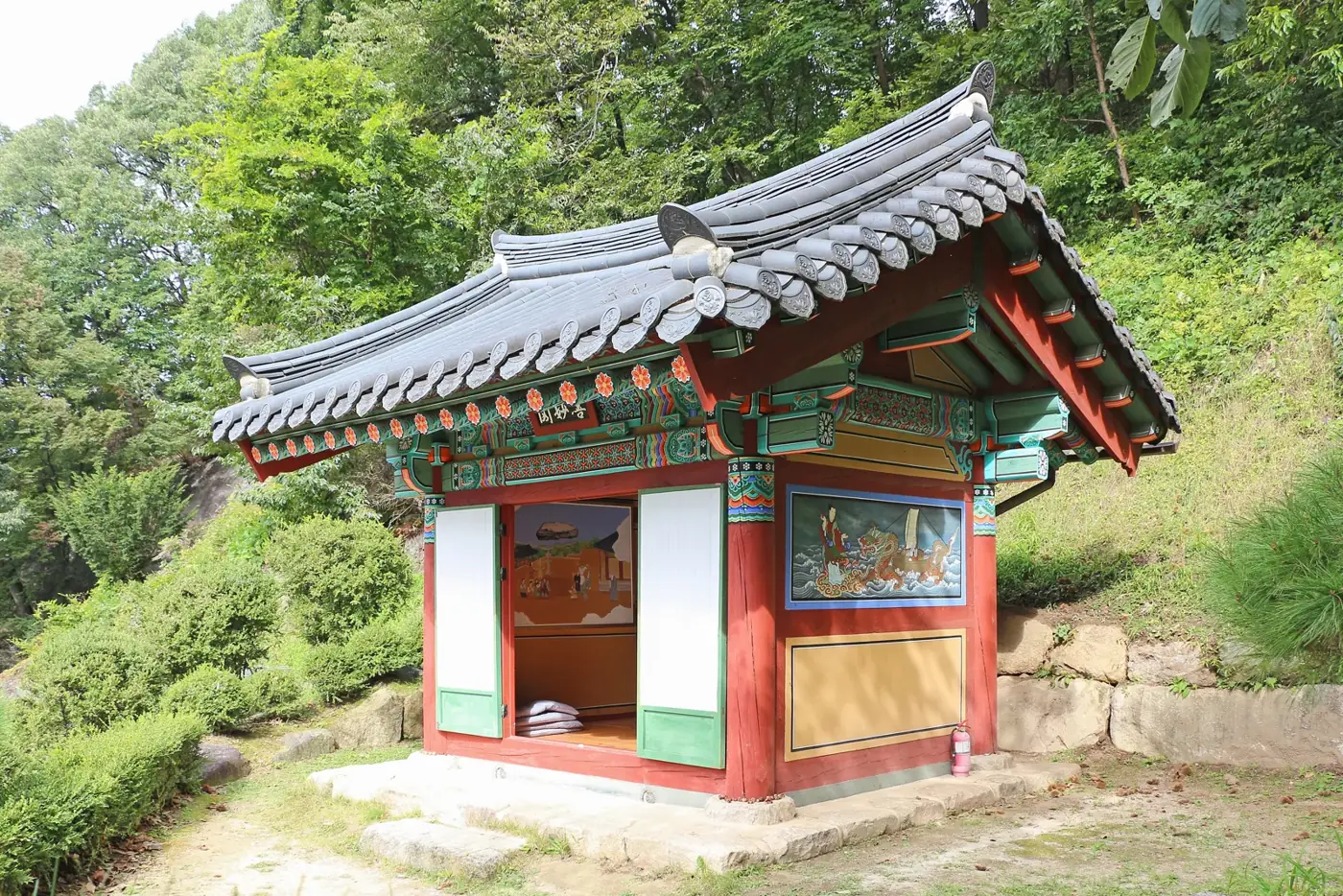
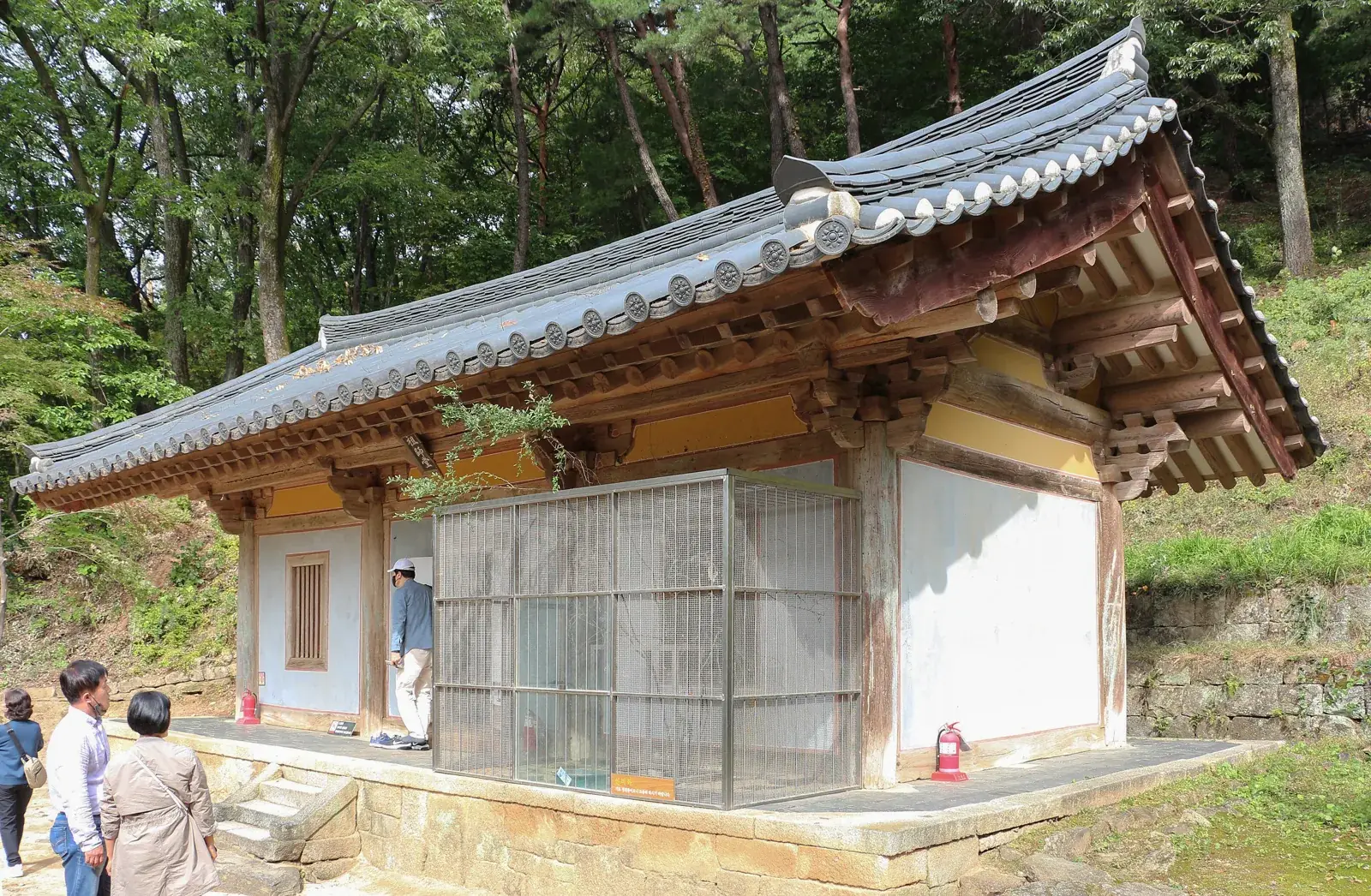
At the hall's northwest corner is Seonmyogak, a tiny shrine dedicated to Seonmyo. Inside hangs a portrait of her painted in 1975.
A stone dragon under the floor?
The *Encyclopedia of Korean Culture* records another story. A stone dragon is said to lie buried beneath Muryangsujeon, its head directly under the statue of Amitabha Buddha and its tail beneath the stone lantern outside. When the temple was repaired during the Japanese colonial period, part of it was reportedly uncovered, showing something like a dragon's scales. Like the floating rock, it is a story handed down, not a proven fact.
Anyangnu and Josadang
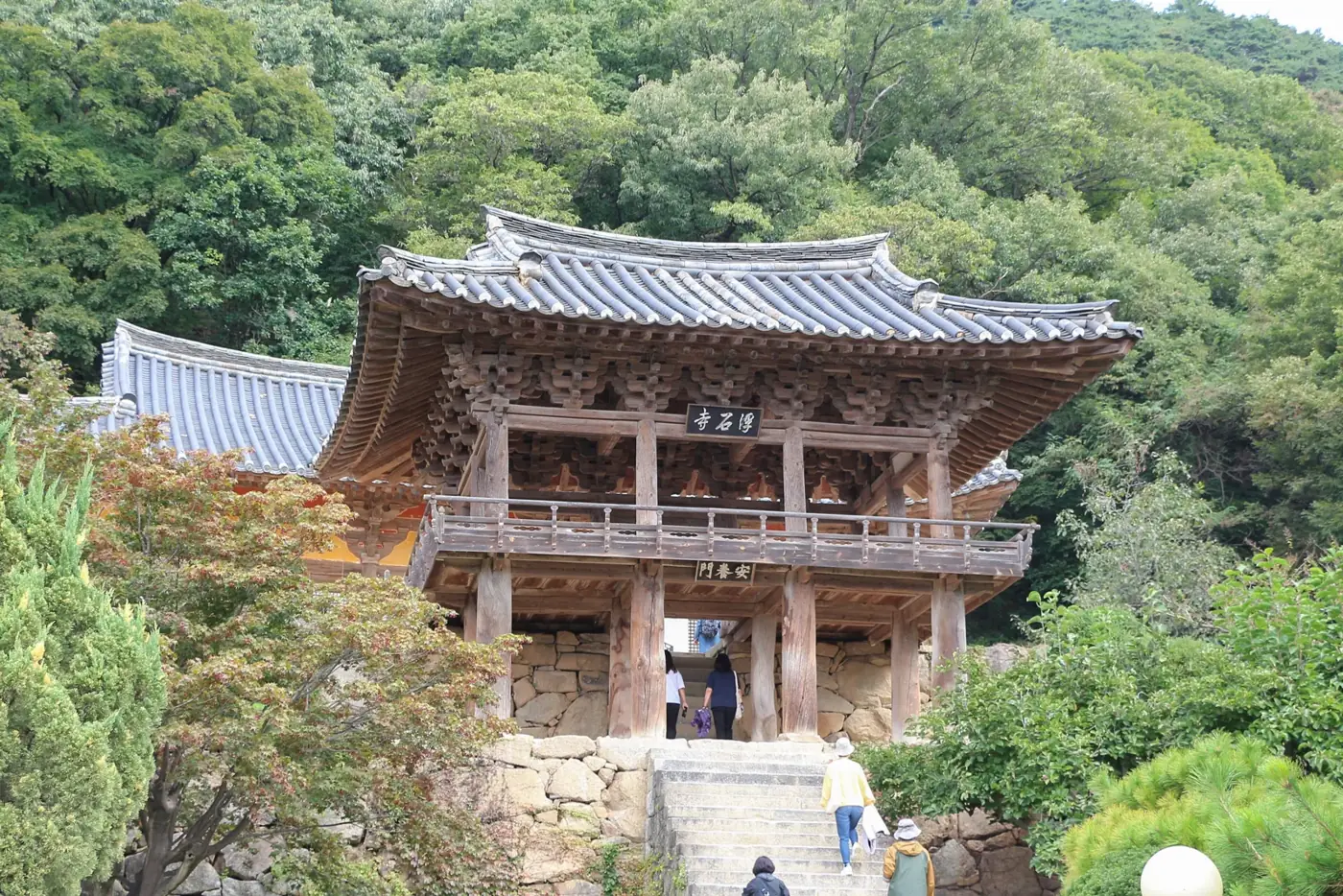
Anyangnu Pavilion, designated a Treasure, stands high above a flight of stone steps.
Josadang, the founders' hall, is also a National Treasure. It was built in 1377, the year after Muryangsujeon was rebuilt.
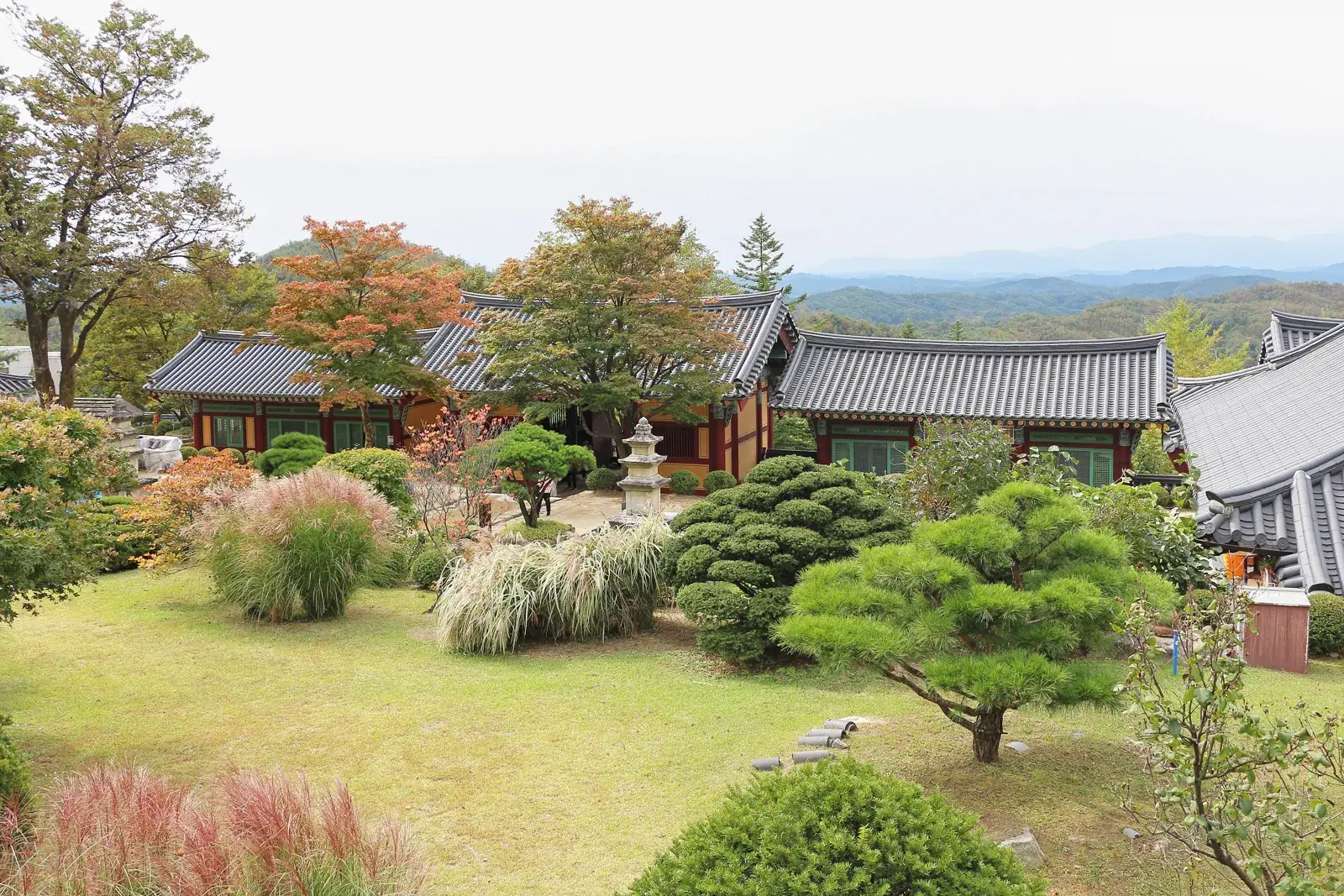
In autumn the grounds turn red and gold, and beyond the lawn the mountains fold away into the distance.
Find Buseoksa on Wooriyeojido
A rock that is said to have flown still sits behind the main hall. Buseoksa in Yeongju is pinned on the Wooriyeojido map. Find Buseoksa in the Wooriyeojido app, and if you go, leave your photos and stories from the day right beside it.
View this place in the Wooriyeojido appVideos of nearby places


Sources
- Korea Heritage Service search — Muryangsujeon Hall, Buseoksa Temple, Yeongju (National Treasure)
- Korea Heritage Service, Heritage Portal — Muryangsujeon Hall, Buseoksa Temple, Yeongju
- Korea Heritage Service search — Josadang Hall, Buseoksa Temple, Yeongju (National Treasure)
- Korea Heritage Service search — Anyangnu Pavilion, Buseoksa Temple, Yeongju (Treasure)
- Encyclopedia of Korean Culture — Buseoksa Temple, Mount Bonghwangsan
- Buseoksa Temple — History of Buseoksa
- Buseoksa Temple — Architectural heritage: Muryangsujeon
- Buseoksa Temple — Architectural heritage: Seonmyogak