Samseonghyeol, Jeju: Where Three Founding Ancestors Rose From the Earth
Samseonghyeol sits in an old grove in the middle of Jeju City. The legend of three demigods who emerged from holes in the ground here, and the rites held for them since 1526, told through a short video and photos.
Founding myths around the world often have their first ancestors descending from the sky or hatching from eggs. On Jeju Island, the story goes differently: the first people rose out of the ground. And the spot where it happened is still there, right in the middle of Jeju City. Start with the short video.

 Watch the one-minute video on YouTube
An old grove in the middle of the city
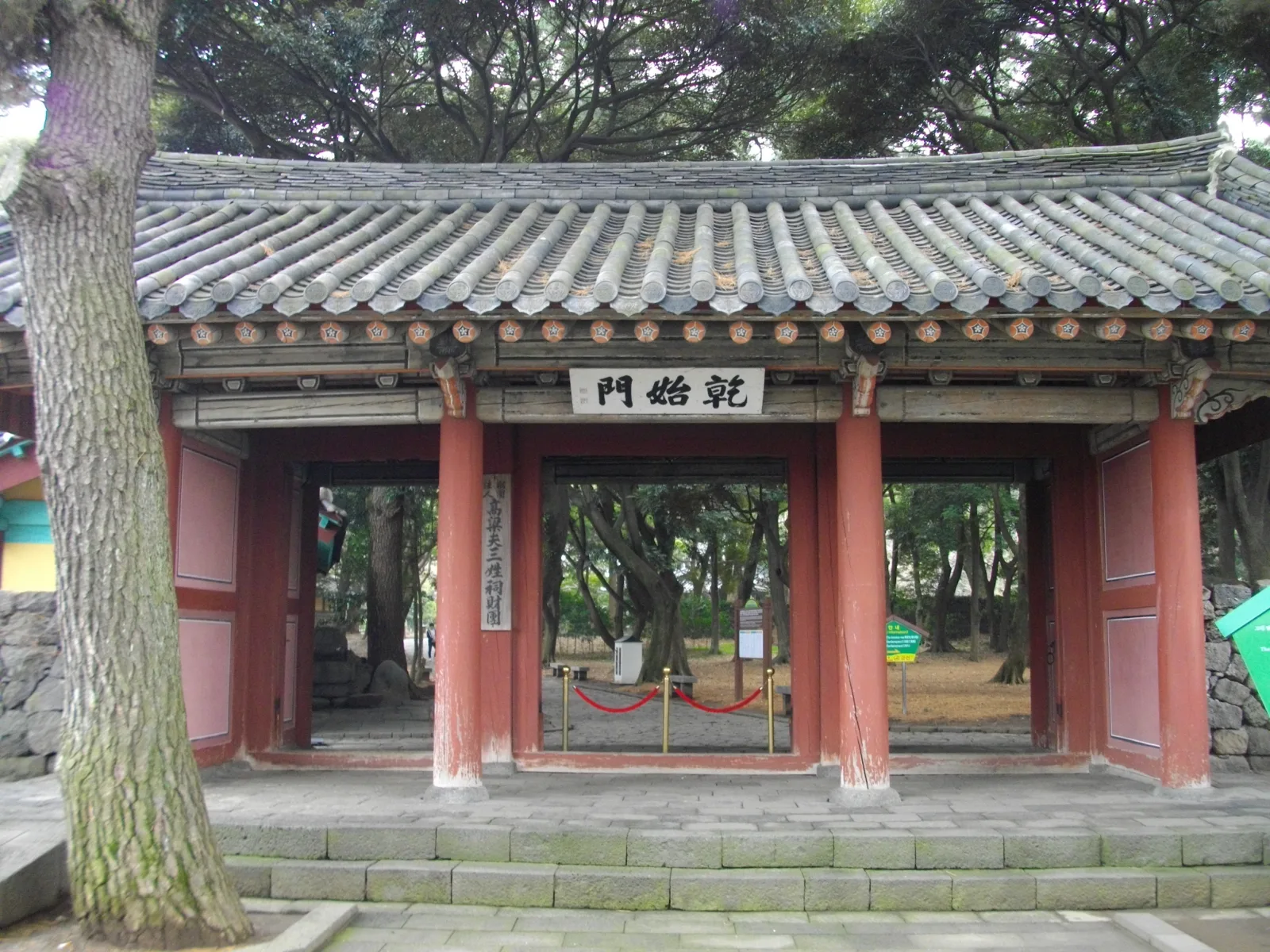
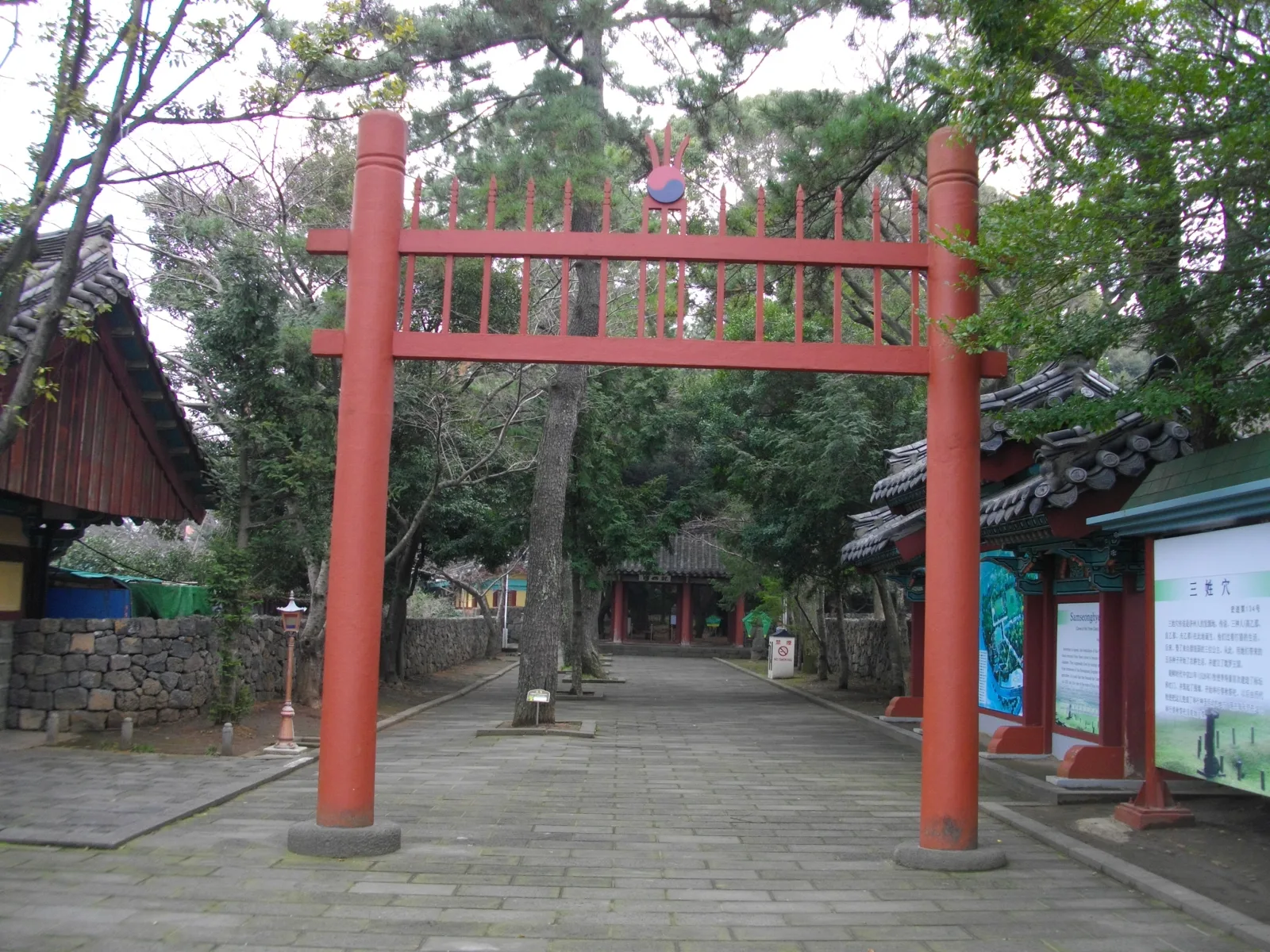
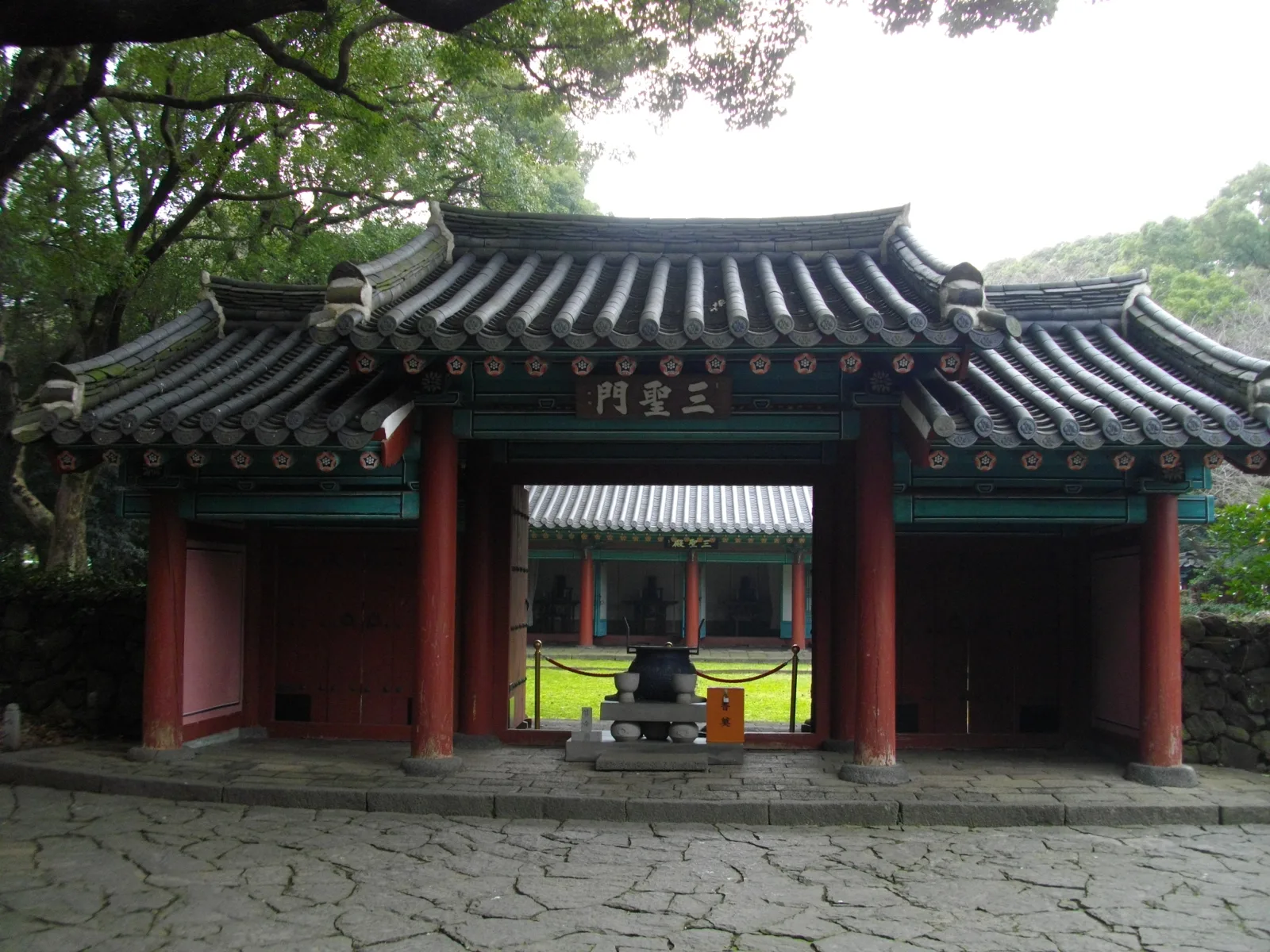
Samseonghyeol is at 22 Samseong-ro in Ido-il-dong, in central Jeju City. It sits in the heart of town, yet step through the gate and you are in a grove of trees several centuries old. It was designated a national Historic Site of Korea in 1964. Jeju's Go, Yang and Bu clans honour it as the birthplace of their founders, and a foundation run by the three clans looks after it to this day.

Three demigods from the earth
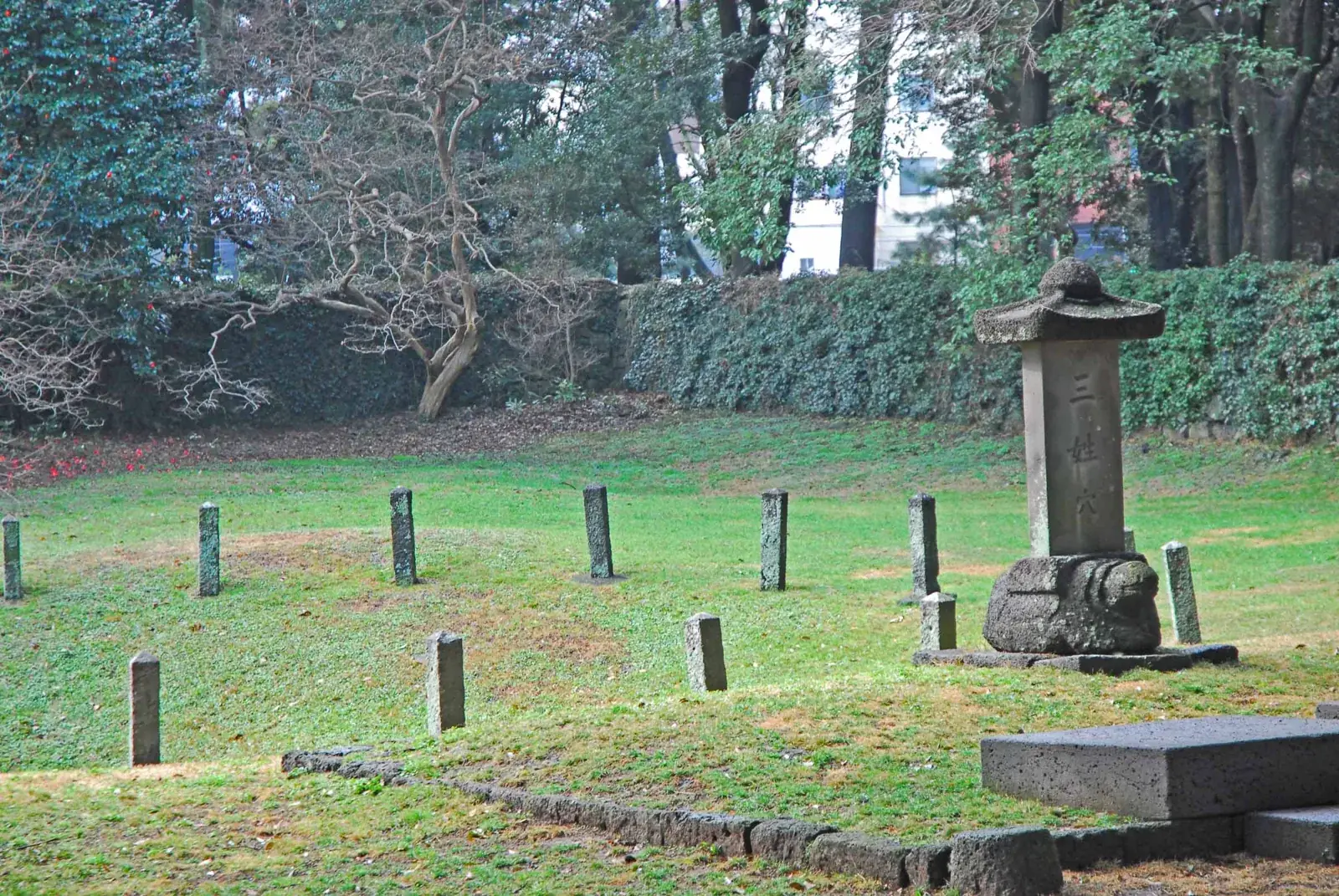
Here is the story as it is told on Jeju. Long ago, the island kingdom of Tamna had no people at all. Then, at the northern foot of Hallasan, three demigods emerged at the same moment from holes in this very ground. Their names were Go Eulla, Yang Eulla and Bu Eulla.
There are three holes, arranged like the Chinese character 品, a triangle of three squares. Go Eulla is said to have come from the top hole, Yang Eulla from the left and Bu Eulla from the right. That is where the name comes from: Samseonghyeol means "the holes of the three clans." Local lore adds that however hard it rains or snows, water never pools in the holes and snow never settles there.

A box from the eastern sea
The three lived as hunters, dressed in animal skins. One day, looking out over the eastern sea from Hallasan, they spotted a wooden box sealed with purple clay drifting toward the shore.
They opened it on the beach at what is now Onpyeong-ri, in Seongsan-eup on Jeju's east coast. Inside were three princesses from Byeongnang, a kingdom across the eastern sea, along with calves, foals and the seeds of five grains.

Arrows to divide the land
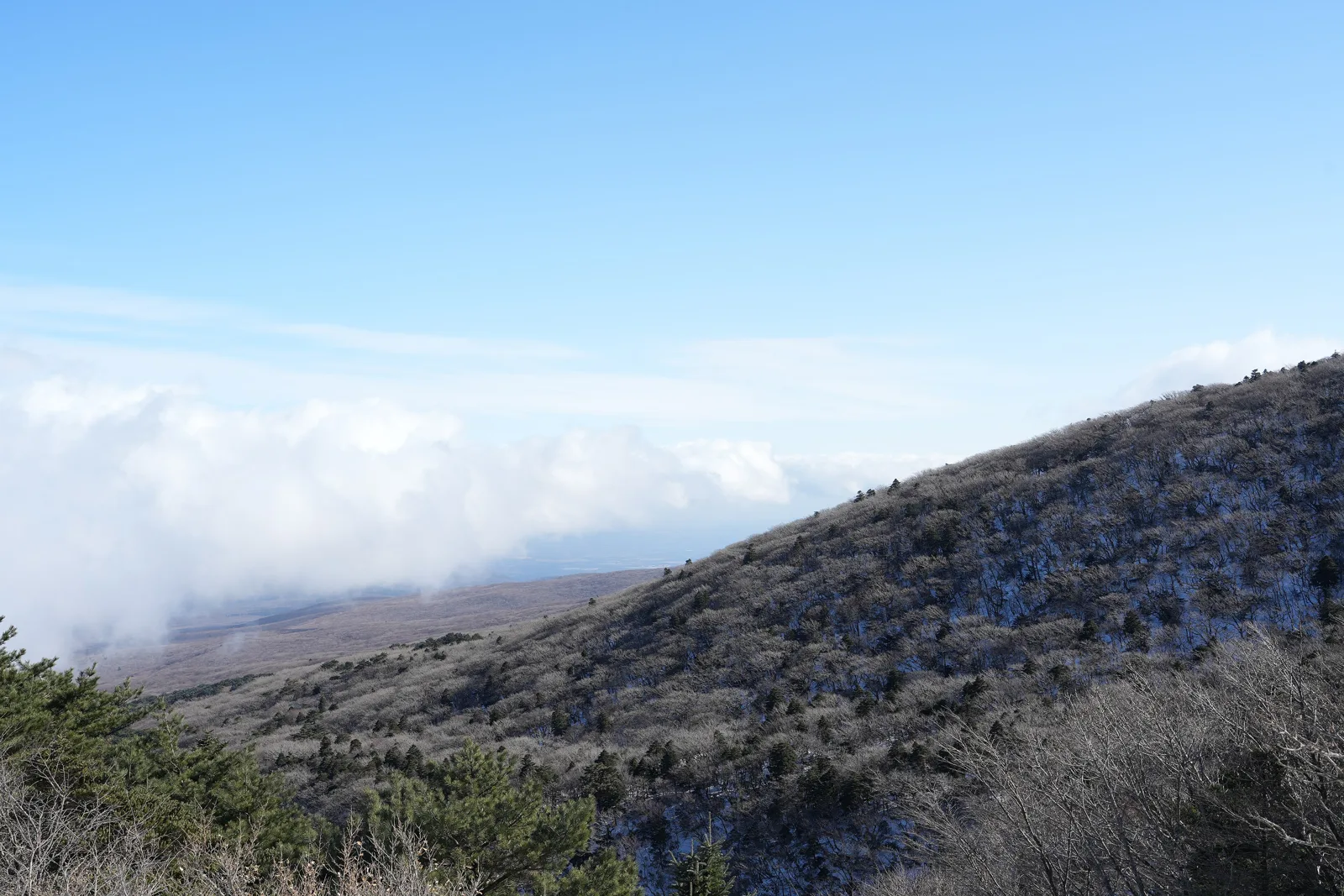
The three demigods married the three princesses. Then, from the slopes of Hallasan, each shot an arrow to decide where he would settle. On that land they planted grain and raised cattle and horses, and hunting gave way to farming. That, the legend says, was the beginning of Tamna.
The tale appears in old Korean texts such as the Goryeosa and the Yeongju-ji, and the versions differ in places; some say the princesses came from Japan rather than Byeongnang. The version told here follows the one Samseonghyeol and Jeju Province present.

Five hundred years of rites
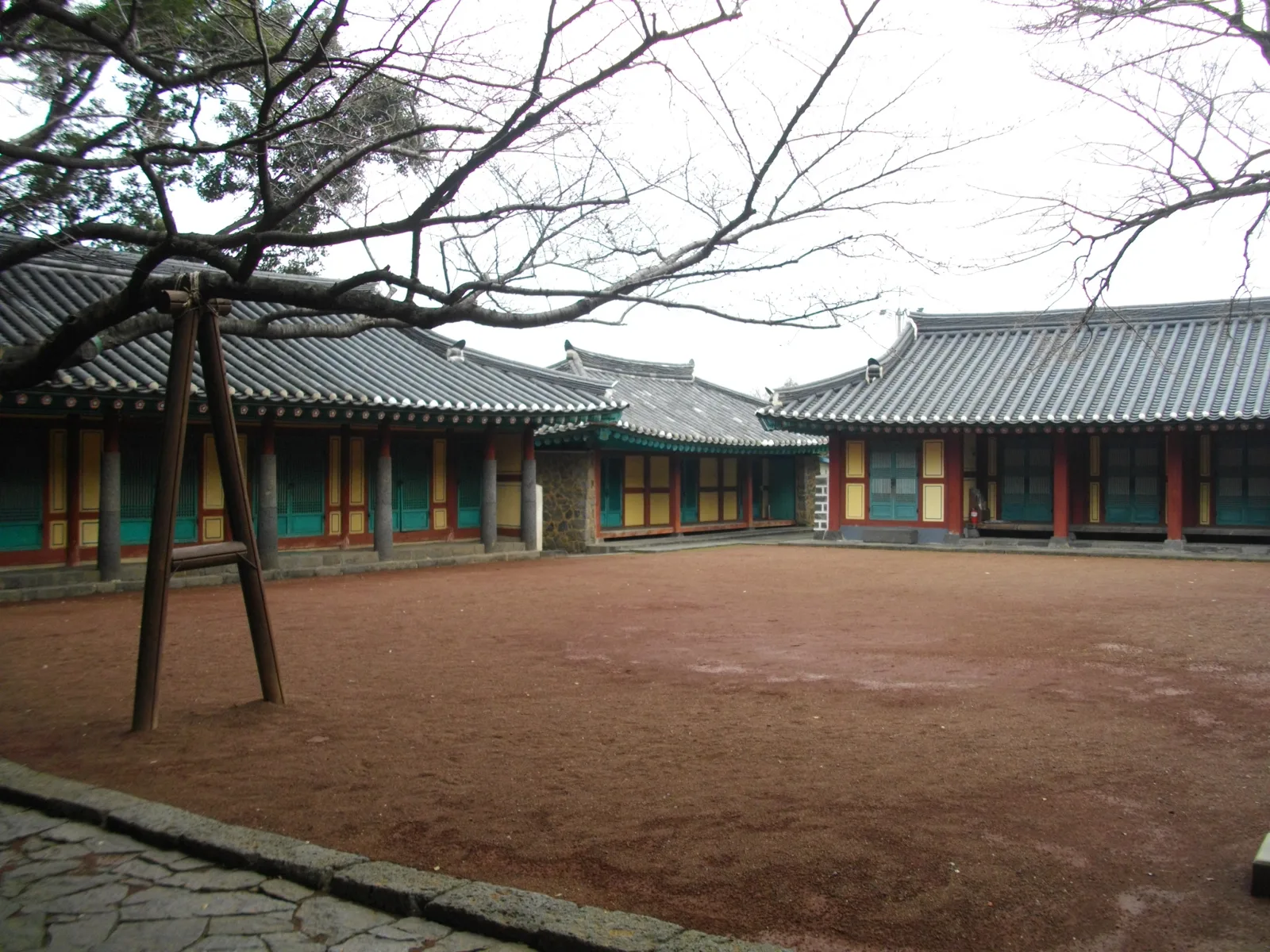
The story is a legend, but the honouring of this place is a matter of record. In 1526, during the Joseon dynasty, Jeju's magistrate Yi Su-dong built the first altar and a red hongsalmun gate, walled the site, and began holding rites here every spring and autumn.
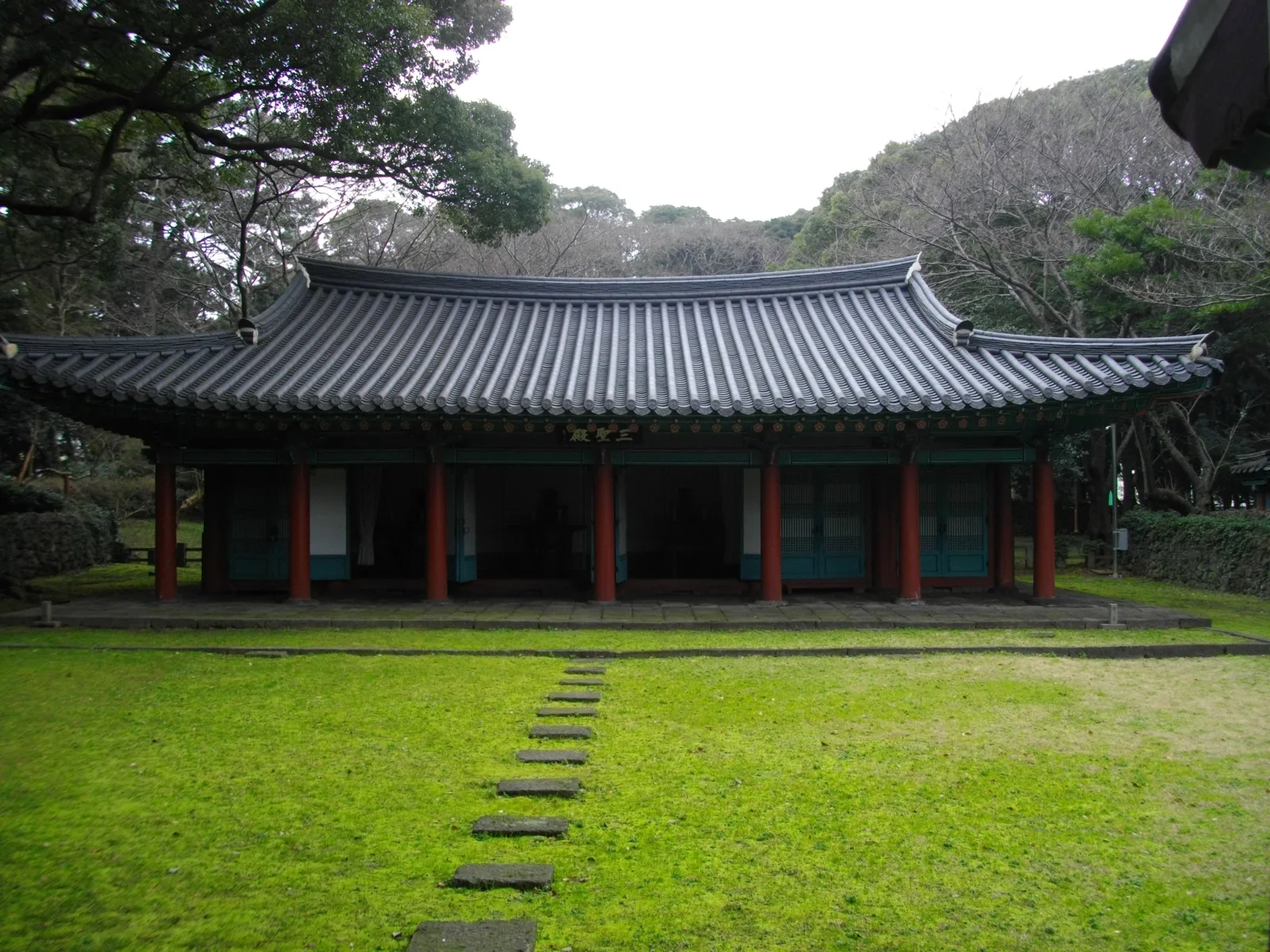

The rites continue today, every year on 10 April and 10 October. On 10 December comes the Geonsi Daeje, a ceremony for all the people of Jeju, at which the governor of Jeju Special Self-Governing Province makes the first offering. Counting from 1526, the site has been honoured for five hundred years.

Following the story across Jeju
The legend doesn't stay inside these walls. The beach at Onpyeong-ri where the princesses were greeted is called Yeonhonpo. The pond where the three couples are said to have married, Honinji, is a protected Jeju monument. And Samsaseok, a stone marking the story of the three arrows, stands in Hwabuk-dong in Jeju City. After Samseonghyeol, it's worth tracing the story from one site to the next.
Find Samseonghyeol on Wooriyeojido
Samseonghyeol, where Jeju's first ancestors are said to have risen from the earth, is pinned on the Wooriyeojido map. Look it up in the Wooriyeojido app, and if you visit, leave your photos and stories from the day right beside it.
View this place in the Wooriyeojido appVideos of nearby places
 Najeong in Gyeongju: the well where the egg-born king appeared
 Seolmundae Halmang: the giant grandmother who made Hallasan
 Dodamsambong: the peaks that floated downriver and sparked a tax dispute
Sources
- Samseonghyeol official site — About Samseonghyeol (Korean)
- Samseonghyeol official site — The Samseong myth (Korean)
- Samseonghyeol official site — Related sites (Korean)
- Korea Heritage Service, Heritage Portal — Samseonghyeol, Jeju (Historic Site)
- Encyclopedia of Korean Culture — Samseonghyeol (Korean)
- Encyclopedia of Korean Culture — The Samseong myth (Korean)
- Jeju Special Self-Governing Province — Founding myth (Korean)