Swayambhunath: The Kathmandu Hill Said to Have Risen From a Lake
Swayambhunath is a Buddhist shrine on a hill west of Kathmandu, Nepal. Legend says it grew from a lotus that bloomed in a vast lake; geologists have confirmed that the Kathmandu Valley really was a lake. Explore both stories in video and photos.
In Kathmandu, people tell of a time when the whole valley was a great lake. When the water drained away, a hill rose where a lotus had bloomed, and the stupa on that hill is Swayambhunath. Was there ever really a lake here? Let's take the legend and the science one at a time. Start with the short video.

 Watch the one-minute video on YouTube
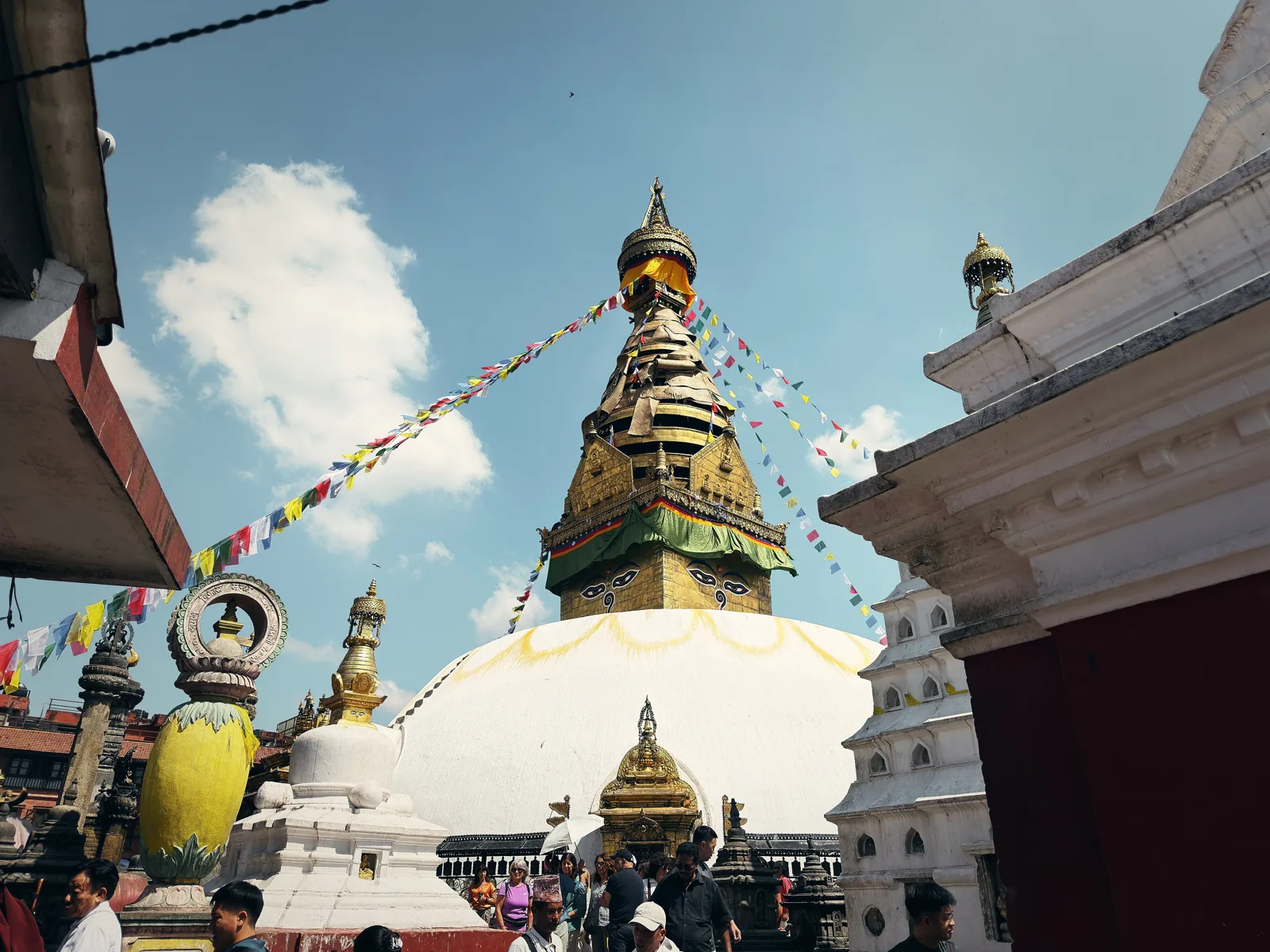
A white stupa on a hill west of Kathmandu
Swayambhunath sits on a small hill about 3 kilometres west of central Kathmandu. A great white dome crowns the wooded summit, surrounded by a cluster of shrines.
In 1979 UNESCO inscribed seven monument zones of the Kathmandu Valley as a single World Heritage Site, and Swayambhu is one of them. According to UNESCO, its stupa is the oldest Buddhist monument in the valley. Nepal's tourism board says it is believed to date to around 460 AD, when it was built by King Manadeva.
Even the name tells a story. Swayambhu means "self-existent one": something that came into being by itself, made by no one.
Eyes that see everything
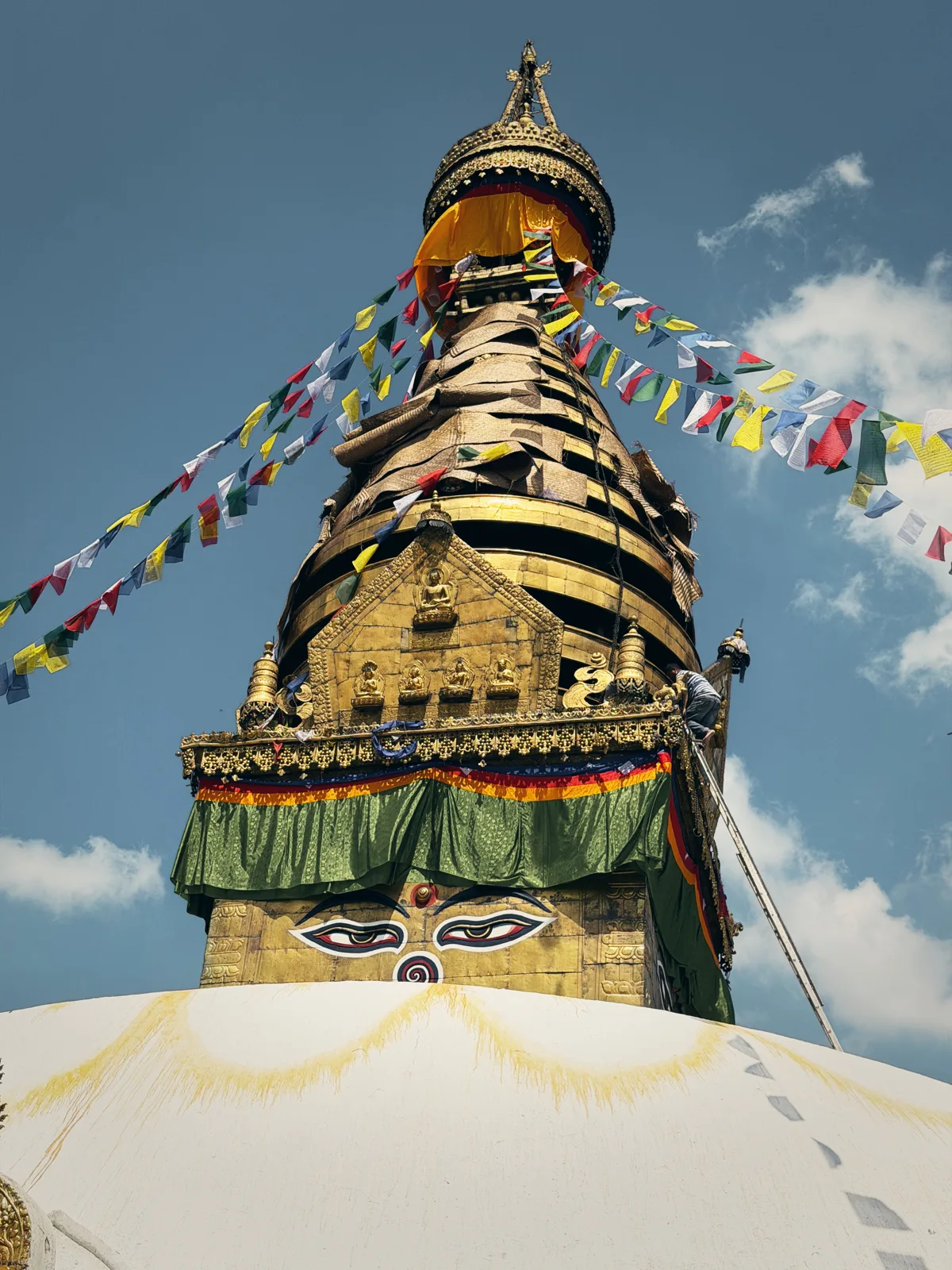
As you approach the stupa, it seems to look right back at you. On each of the four sides of the gilded tower above the white dome is a pair of large painted eyes, which UNESCO describes as the all-seeing eternal Buddha eyes. From the top of the spire, prayer flags stream out in every direction and snap in the wind.

A lotus in the middle of the lake
Here is how Nepal's tourism board tells it: long ago the Kathmandu Valley was a vast lake ringed by mountains, and a single lotus bloomed at its centre. The lotus gave off a dazzling light, and people called that light Swayambhu, the self-existent.
The bodhisattva Manjushri enters the story next. According to the municipality of Kirtipur, home to the Chobhar Gorge, Manjushri came from Mount Wutai in China and cut through the hills at Chobhar on the valley's southern edge, draining the lake and leaving land where people could live. In the tradition that runs through the 15th-century Swayambhu Purana, once the water had gone, the lotus became the hill and its light became the stupa. It is a belief people here have held for more than a thousand years.

The lake was real
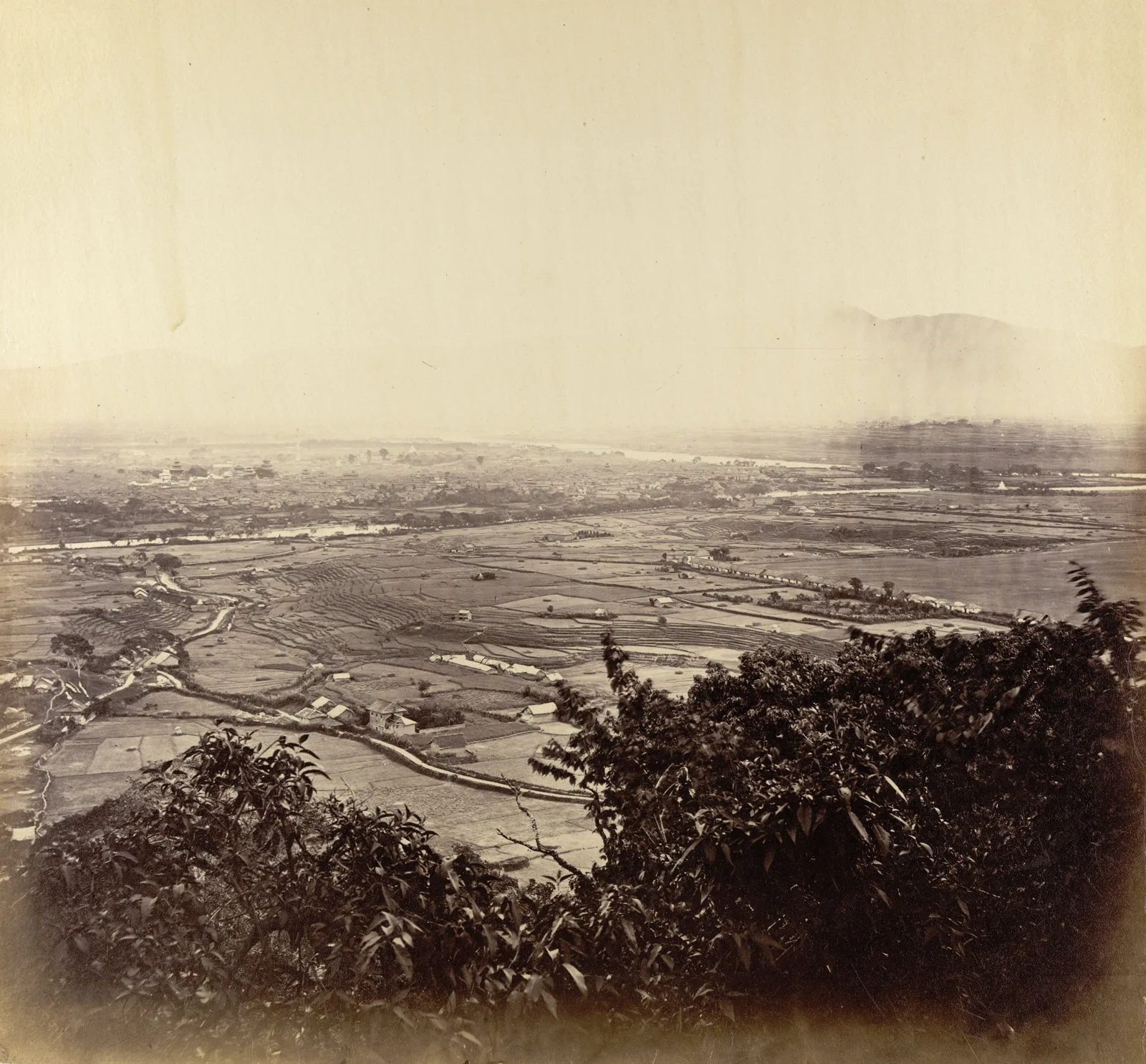
Remarkably, one part of the legend holds up: the valley really was a lake. Kirtipur's own heritage page notes that geological studies have proved it.
A study published in 2016 examined the old lakebed sediments buried beneath the valley. It found that the water of the ancient Kathmandu lake dropped sharply twice, around 48,000 and 38,000 years ago, and that the first drop may have been linked to a large earthquake. By about 12,000 years ago, even the water left in the middle of the valley had drained away. Modern Kathmandu stands on that former lakebed.
What the research shows, though, stops at the lake. A hill growing from a lotus remains the stuff of legend.

Steep steps and circling pilgrims
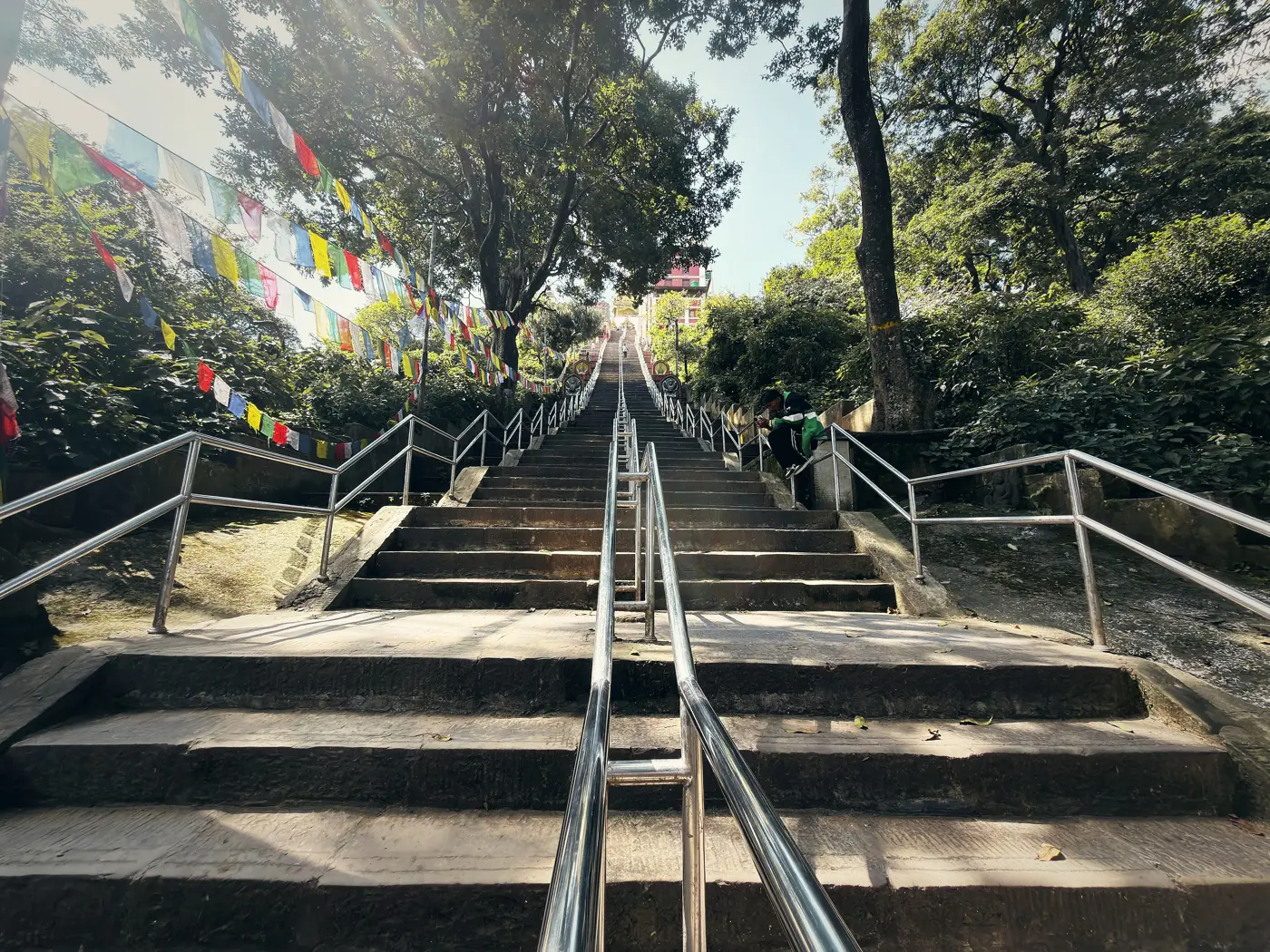
Reaching the stupa means climbing an exceedingly steep stone stairway, lined with strings of prayer flags. Buddhists and Hindus alike come here to worship, and at any hour of the day you will see devotees walking around the stupa in prayer.

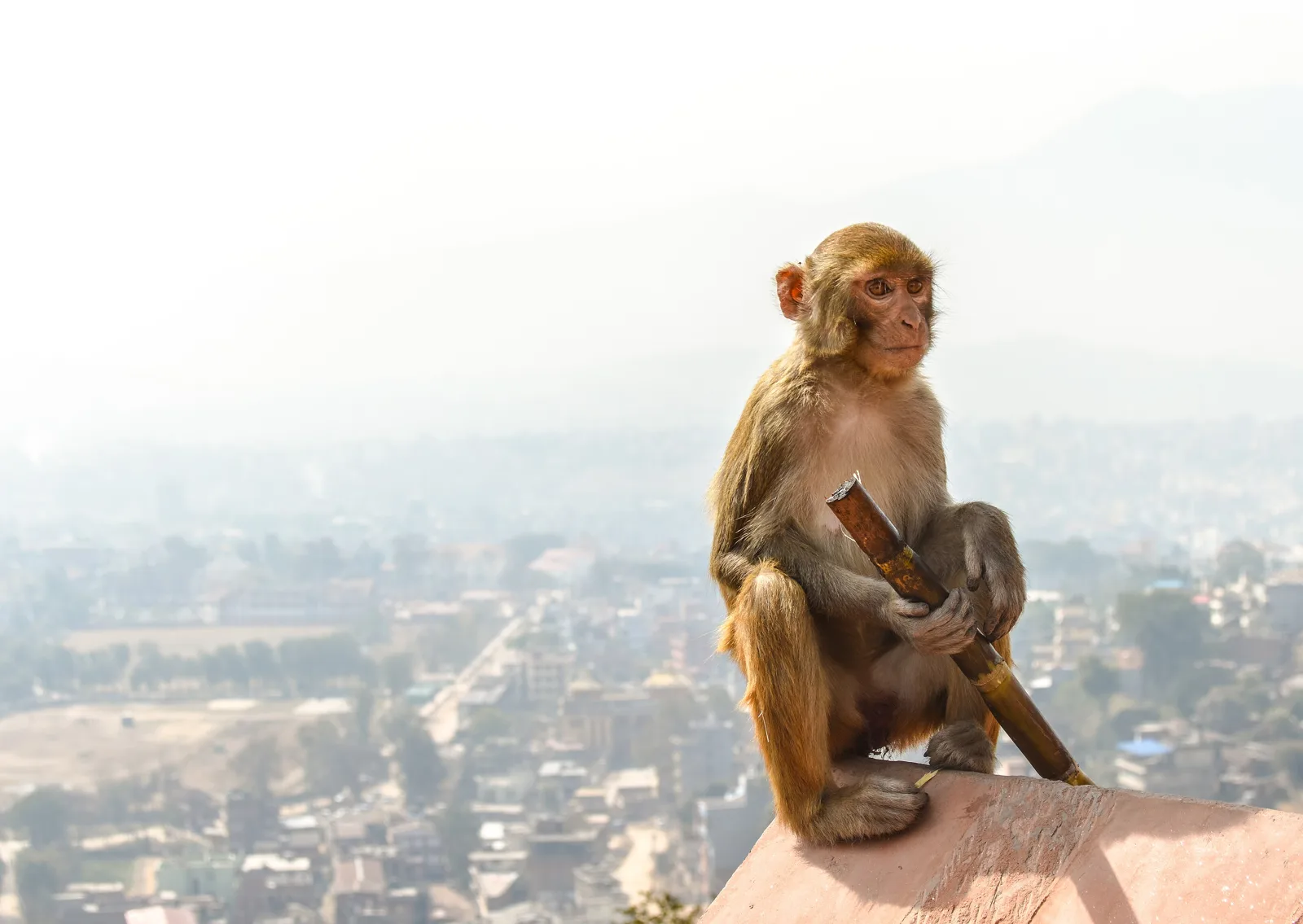
The Monkey Temple
Plenty of monkeys live on the hill as well. According to Nepal's tourism board, visitors who found the name a tongue twister started calling it the Monkey Temple in the 1970s.

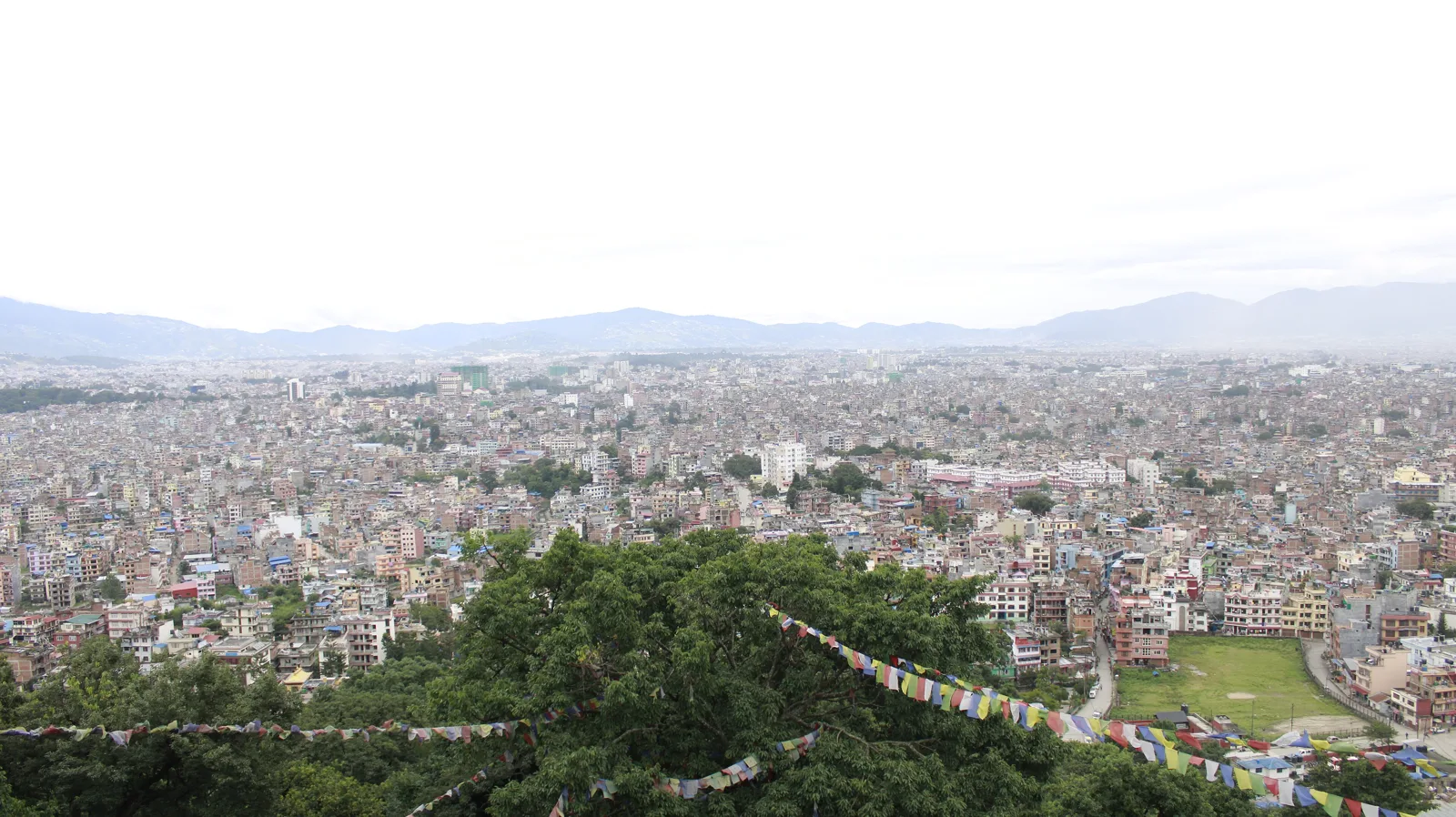
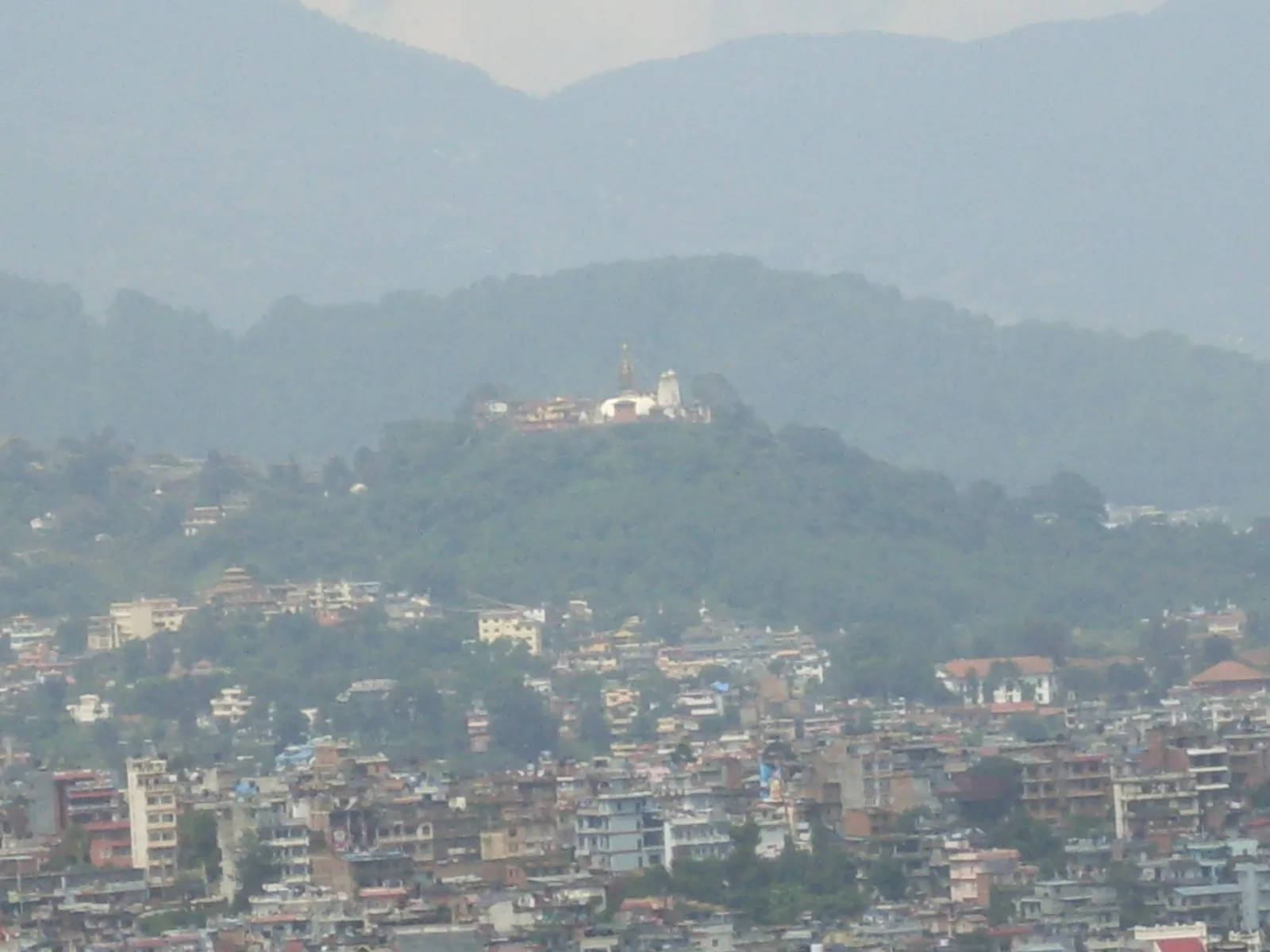
Seen from a distance, the white stupa perches on a wooded hump rising out of the city, looking for all the world like an island in a sea of rooftops.

Find Swayambhunath on Wooriyeojido
The hill born from a lotus is legend, but the lake that once filled this valley is scientific fact. Swayambhunath is pinned on the Wooriyeojido map. Find Swayambhunath in the Wooriyeojido app, and if you go, leave your photos and stories from the day right beside it.
View this place in the Wooriyeojido appVideos of nearby places
 Where is the Deer Park where the Buddha first taught? Sarnath, Dhamek Stupa
 Where is the garden where the Buddha was born? Lumbini, Nepal and the Ashoka pillar
 Called the oldest city in the world? Varanasi on the Ganges, India
Sources
- UNESCO World Heritage Centre — Kathmandu Valley (121)
- UNESCO World Heritage Centre — Kathmandu Valley, map
- Nepal Tourism Board — Swayambhunath
- Department of Archaeology, Nepal — World Heritage sites
- Kirtipur Municipality — Jal Binayak (heritage page)
- Sakai et al., Earth, Planets and Space 68:31 (2016) — Two times lowering of lake water at around 48 and 38 ka, recorded in the Paleo-Kathmandu lake