Sarnath: The Deer Park Where the Buddha Is Said to Have First Taught
On the edge of Varanasi, Sarnath is where Buddhist tradition places the Buddha's first sermon. Meet Ashoka's lion pillar, the massive Dhamekh Stupa and the ancient site that became a World Heritage Site in 2026.
A short ride from Varanasi, in northern India, lies a quiet park of ruins called Sarnath. Buddhist scripture says that after his awakening, the Buddha gave his very first teaching in a "deer park." The story is more than 2,500 years old, so where is that deer park now? Start with the short video.

 Watch the one-minute video on YouTube
Next door to Varanasi, and newly on the World Heritage List
Sarnath sits right beside Varanasi in the state of Uttar Pradesh. UNESCO describes it as the place the Buddha is believed to have visited in the 6th century BCE, and Buddhist tradition holds that he himself named it one of the four key sites of pilgrimage.
In July 2026, meeting in Busan, South Korea, the World Heritage Committee inscribed the Ancient Buddhist Site of Sarnath, making it India's 45th World Heritage property. Beneath the lawns lie layers of settlement and monastic life spanning some sixteen centuries, from the 5th or 4th century BCE to the 12th century CE.
A first sermon for five companions
According to the Dhammacakkappavattana Sutta, the Buddha was staying at the deer park near Benares, as Varanasi was then known, when he addressed five ascetics. He spoke of a middle path that avoids both indulgence and self-mortification, and of four noble truths about suffering. Buddhists call this moment the first turning of the Wheel of the Dharma.
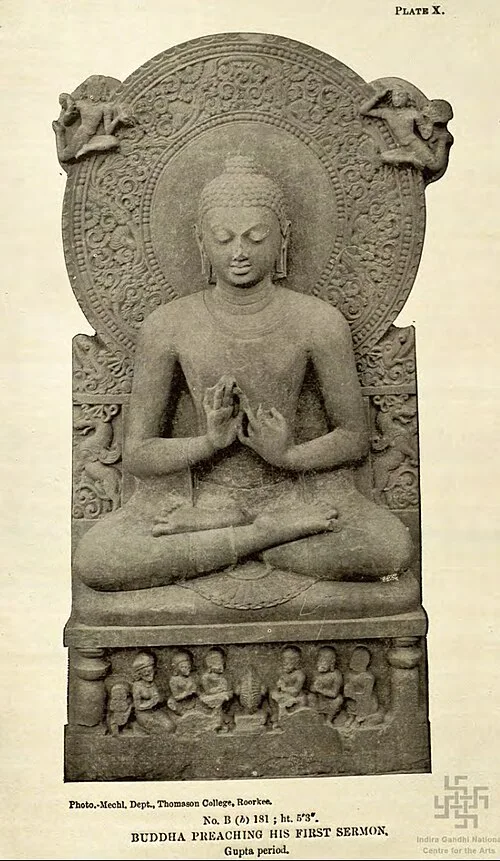

This statue, unearthed at Sarnath, dates from the Gupta period. Its hands form the gesture of teaching, which is why it is known as the First Sermon Buddha.
Ashoka's pillar and its four lions
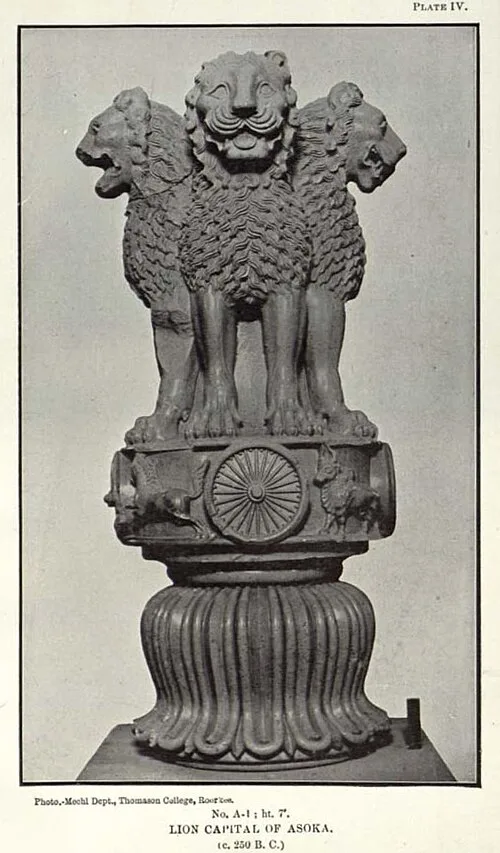
In the 3rd century BCE, the Mauryan emperor Ashoka (reigned c. 273–236 BCE) raised an inscribed stone pillar here. Its edict warns that no one is to divide the community of monks and nuns. On top sat four lions, back to back. The lion capital came out of the ground during the excavations of 1905.
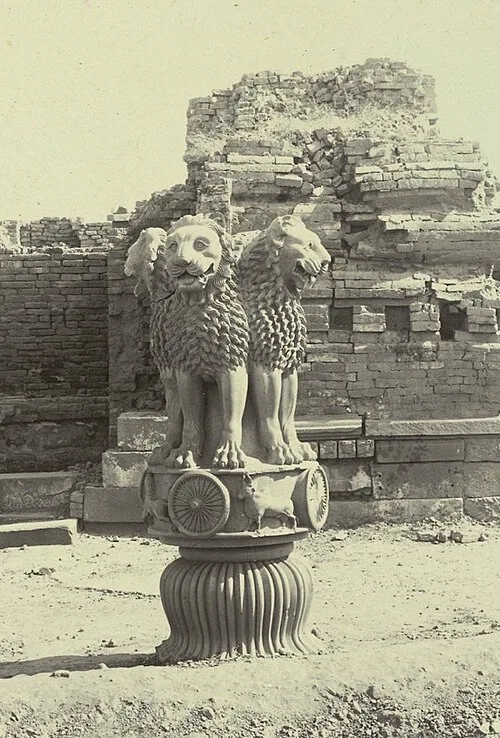

The capital now stands in the Sarnath museum, India's earliest site museum. Those same four lions later became the National Emblem of India.

The Dhamekh Stupa
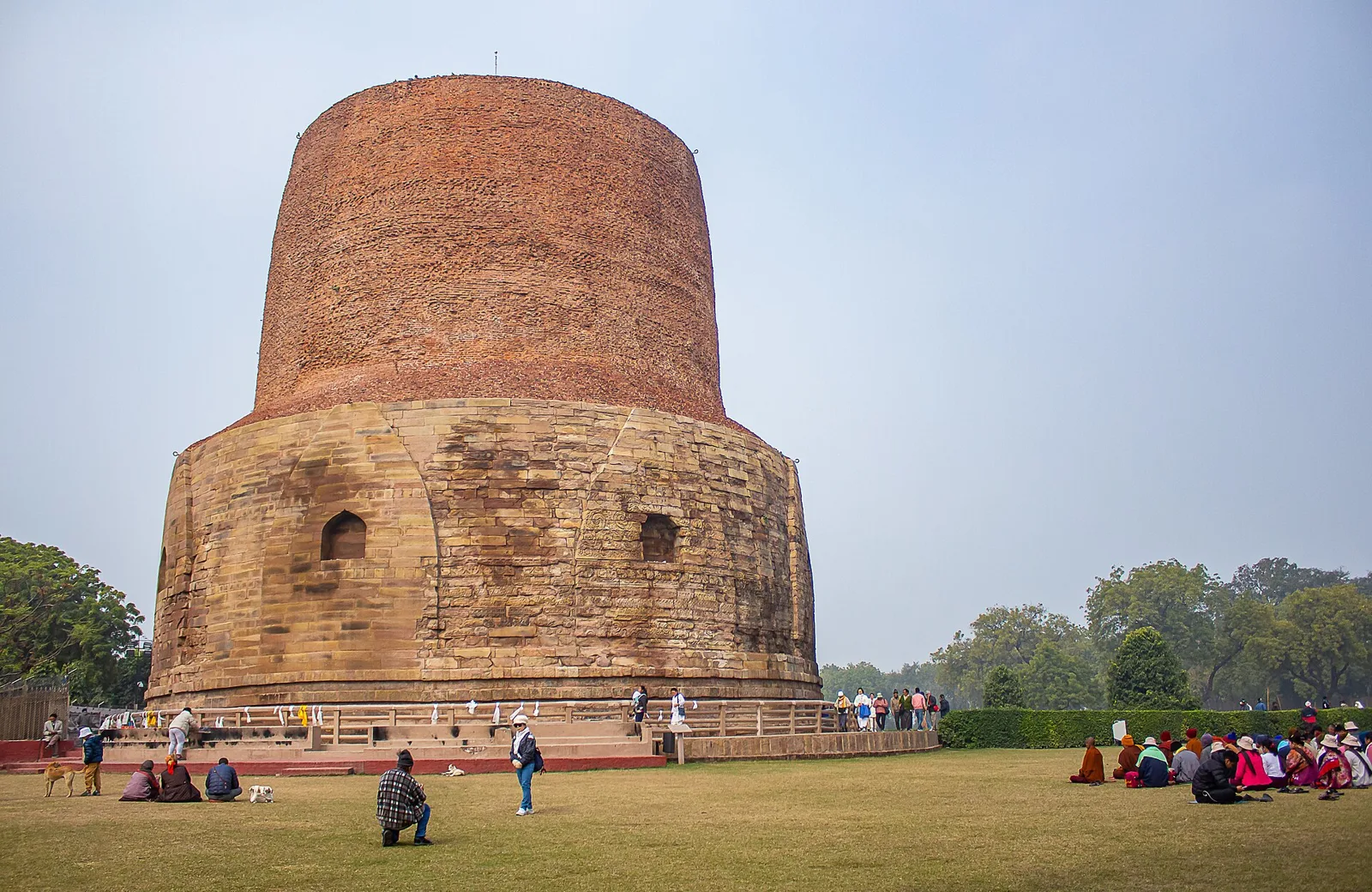
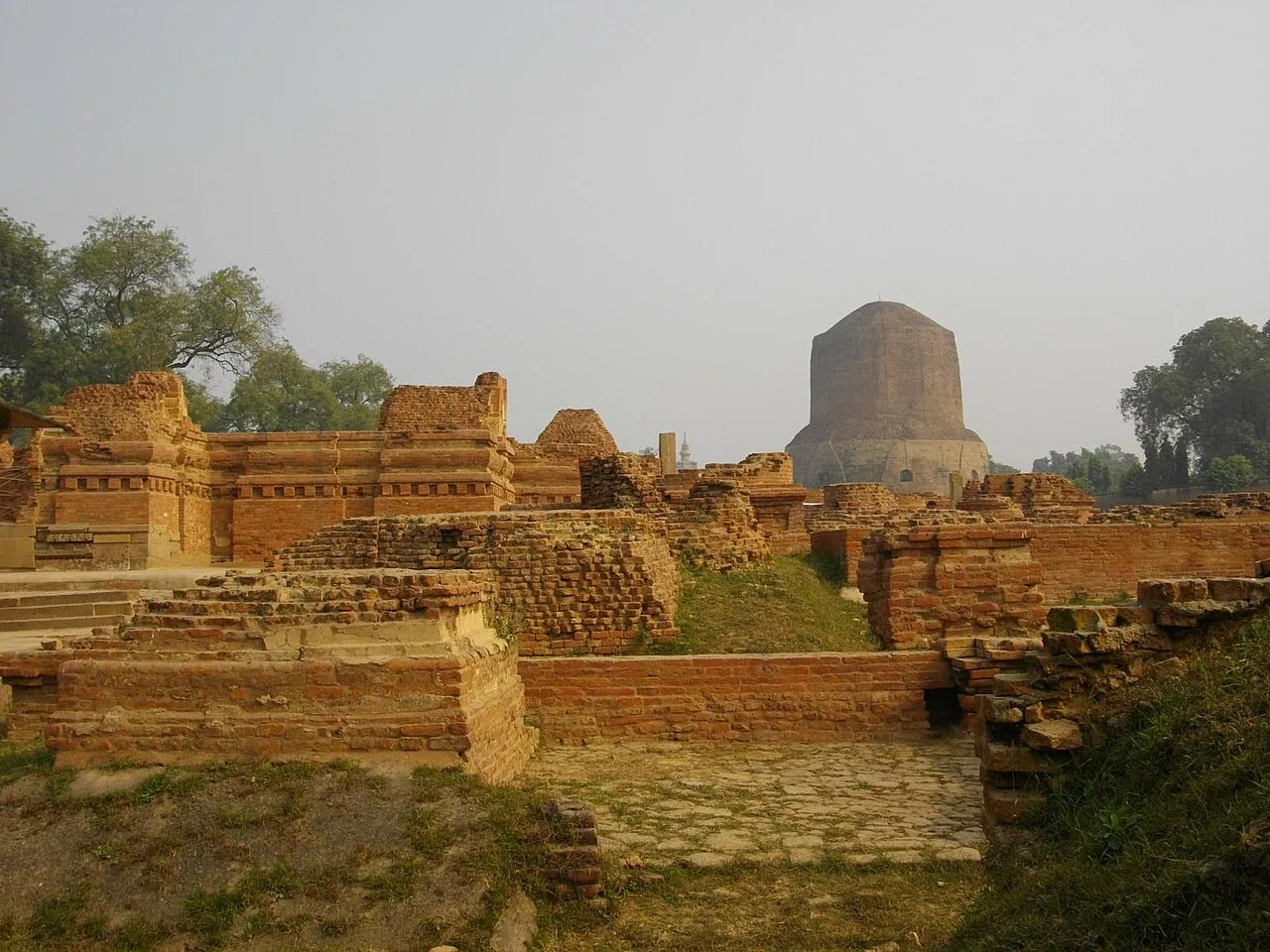
The monument that dominates Sarnath is the Dhamekh Stupa, a solid cylinder of masonry. Up to about 11 metres (36 feet) it is built of stone, and above that of brick; the drum measures roughly 28 metres (93 feet) across. Eight projections ring the drum, each with a niche meant to hold an image, and the stone is carved in relief with geometric and floral bands in classic Gupta style.
From the Mauryan age through the Kushan and Gupta periods, kings, monks and ordinary believers kept adding stupas and monasteries to the site. Then, in the 12th century, Sarnath went into decline and slipped out of memory until it was rediscovered in the 18th century. A watercolour from 1814 shows the Dhamekh Stupa crumbling. In 1835 the British archaeologist Cunningham sank three shafts into it, hunting for a relic casket.
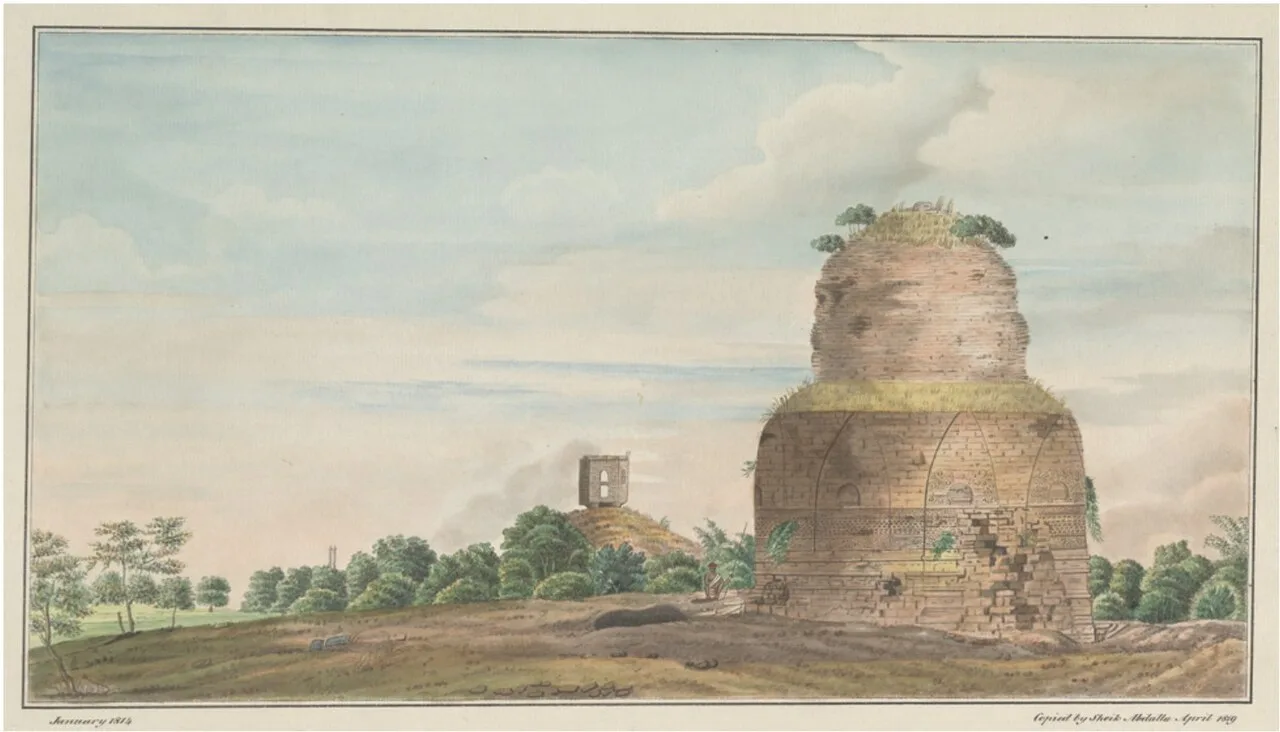

Does the stupa mark the exact spot of the first sermon? Nobody can say for sure. The Archaeological Survey of India notes that the monument has to be examined from multiple angles. It is safest to think of it as one of many monuments built on the memory of the deer park.

The second site: Chaukhandi Stupa
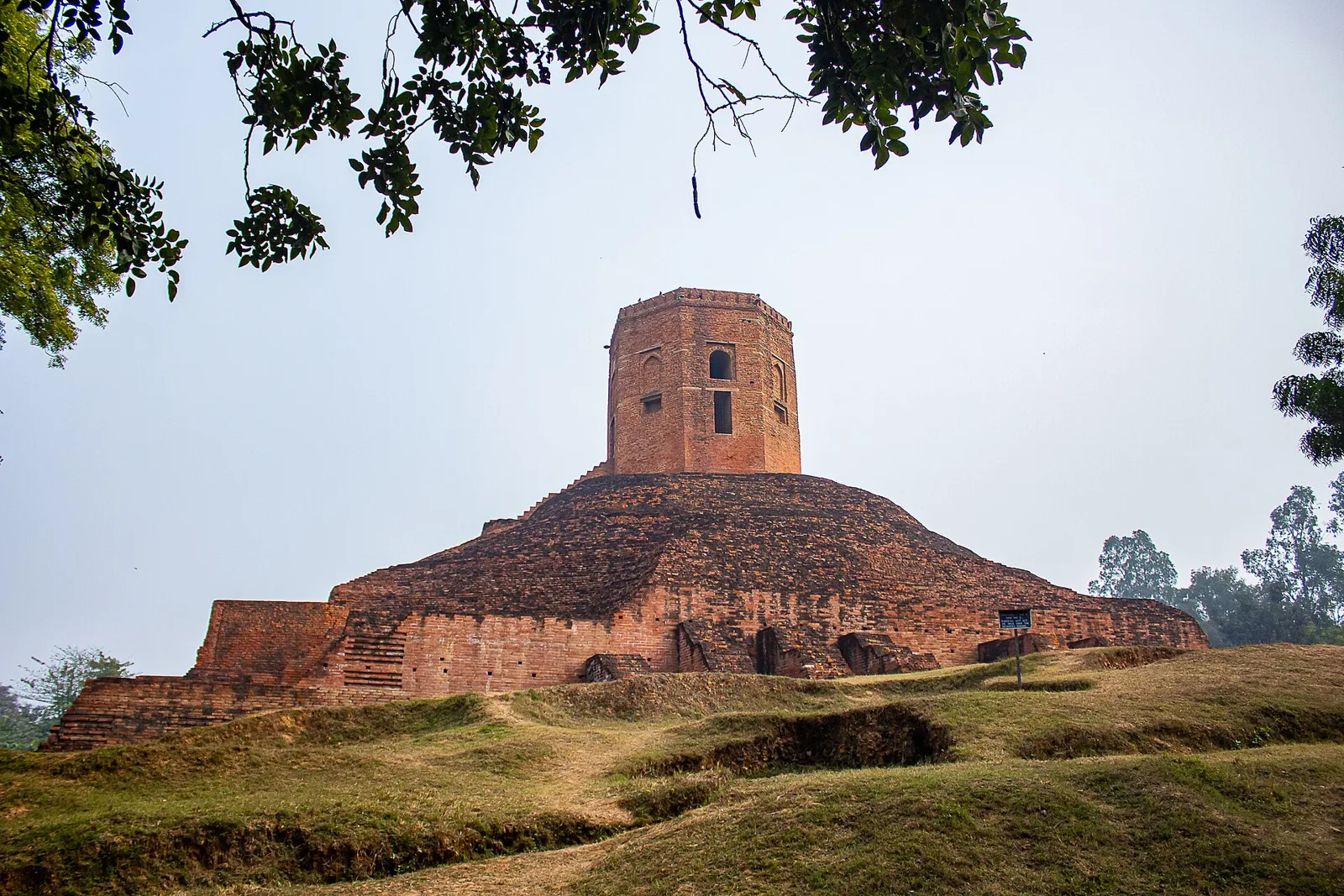
The World Heritage listing has two parts: the archaeological remains of Sarnath, home to the Dhamekh Stupa and Ashoka's pillar, and the brick-built Chaukhandi Stupa.

Find Sarnath on Wooriyeojido
A first sermon for five companions, a pillar crowned with lions, a stupa forgotten for centuries and found again: Sarnath is pinned on the Wooriyeojido map. Look it up in the Wooriyeojido app, and if you go, leave your photos and stories from the day right beside it.
View this place in the Wooriyeojido appVideos of nearby places
 Where is the garden where the Buddha was born? Lumbini, Nepal and the Ashoka pillar
 The lake dried up and a hill appeared? Swayambhunath
 Called the oldest city in the world? Varanasi on the Ganges, India
Sources
- UNESCO World Heritage Committee — Decision 48 COM 8B.17: Ancient Buddhist Site of Sarnath (India)
- UNESCO World Heritage Centre — New Inscribed Properties
- Press Information Bureau, Government of India (Ministry of Culture), 25 July 2026 — Ancient Buddhist Site of Sarnath inscribed in the UNESCO World Heritage List
- Archaeological Survey of India, Sarnath Circle — Ashokan Pillar
- Archaeological Survey of India, Sarnath Circle — Dhamekh Stupa
- Dhamma-Kakka-Ppavattana Sutta, tr. T. W. Rhys Davids, Sacred Books of the East vol. 11 (1881)