Saluting Protective Spirit: A 3,000-Year-Old Assyrian Palace Relief in Cleveland
A winged protective spirit that once lined the palace of the Assyrian king Ashurnasirpal II. Why it raises its right hand, what is written across its body, and how it ended up at the Cleveland Museum of Art, told through a short video and photos.
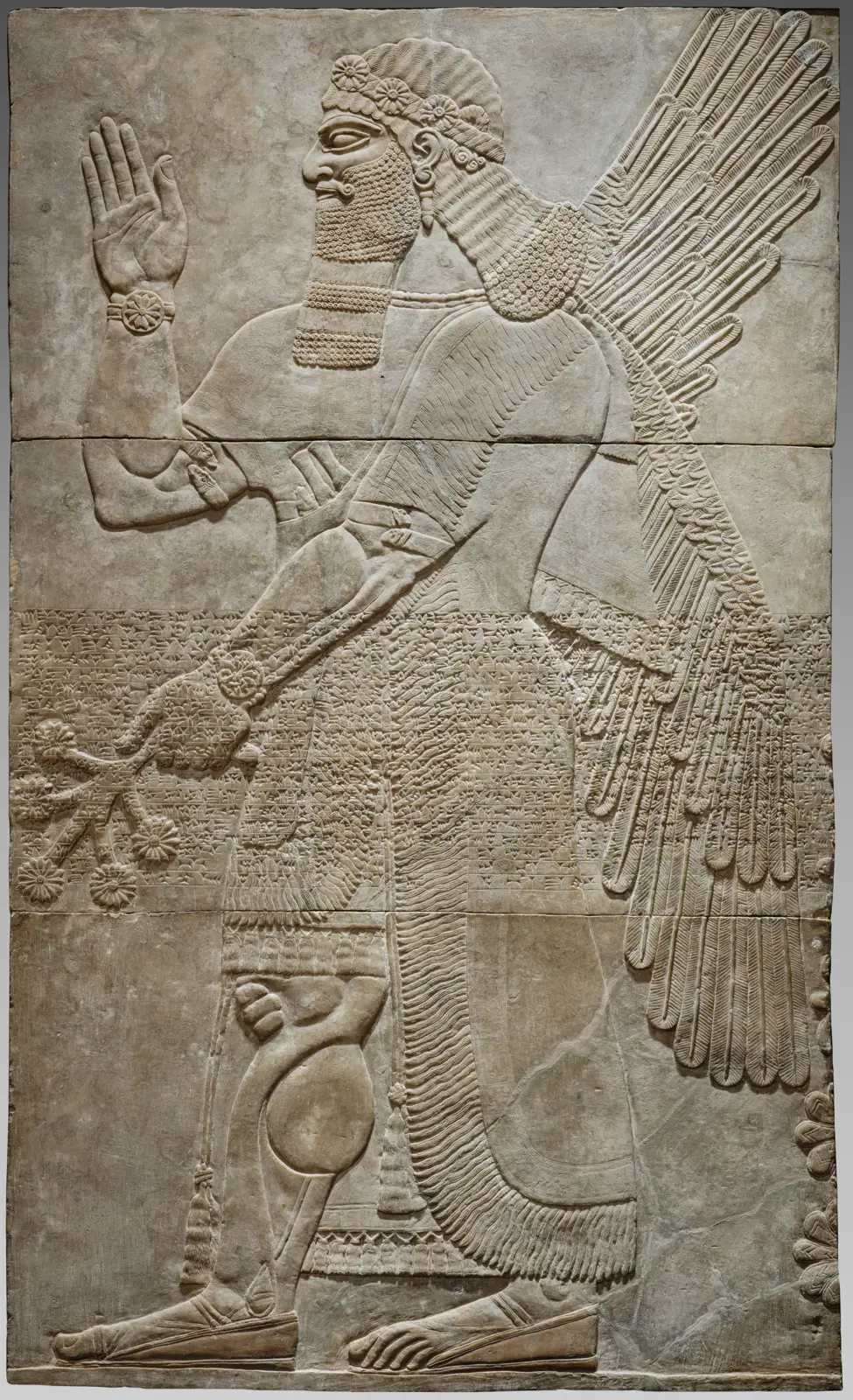
At the Cleveland Museum of Art in Ohio, a winged spirit strides across a slab of stone with its right hand raised. The relief stands well over two metres tall and comes from what is now Iraq. It was carved nearly 3,000 years ago. So why is the spirit raising its hand? Start with the short video.
 Watch the one-minute video on YouTube
In Cleveland's Ancient Near East gallery
Saluting Protective Spirit hangs in the museum's Ancient Near East gallery. According to the museum, it was made between 883 and 859 BCE, during the reign of the Assyrian king Ashurnasirpal II. It comes from his Northwest Palace at Nimrud, in modern Iraq, a city the Assyrians called Kalhu.
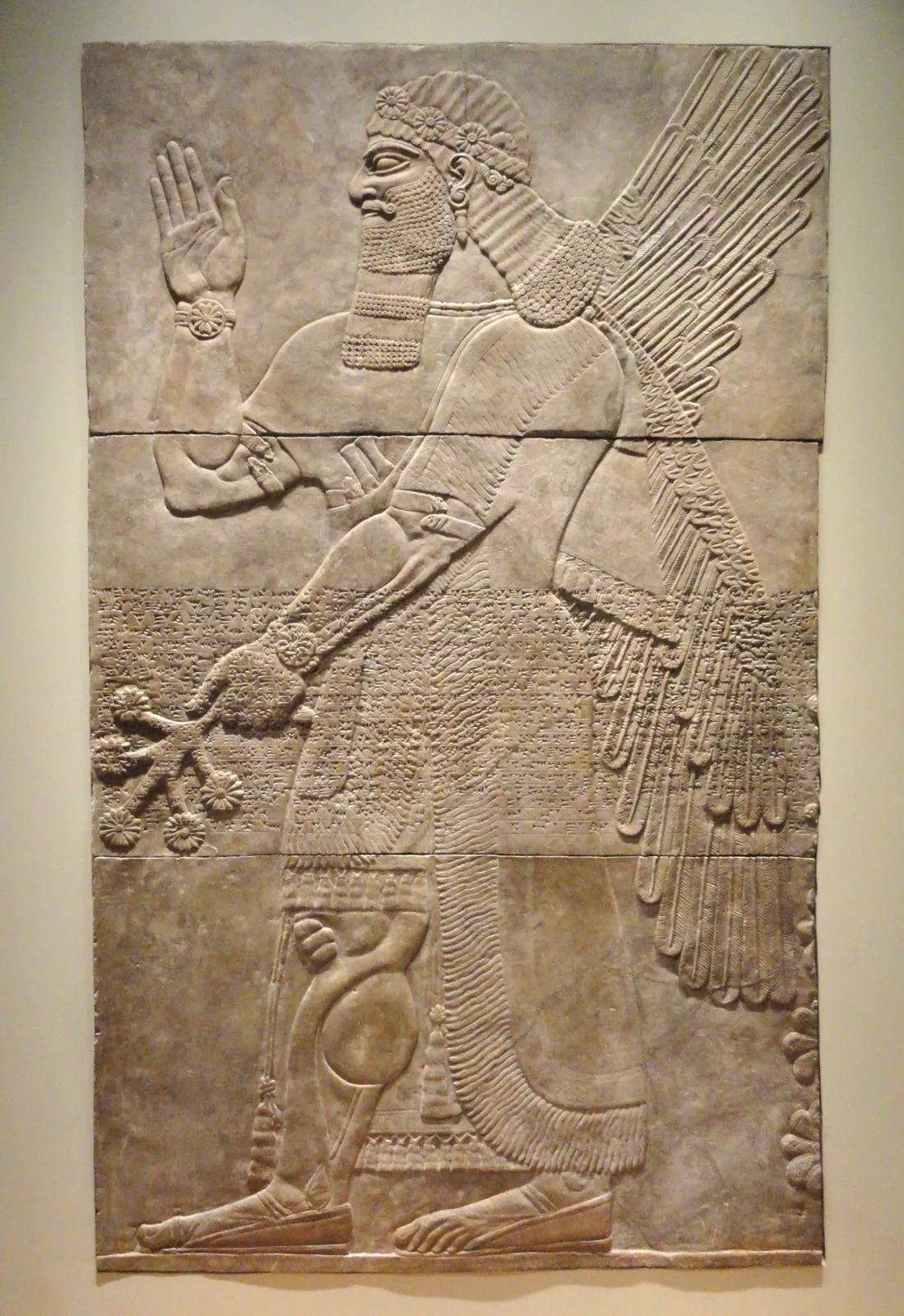
A raised hand in greeting
The slab is carved from gypsum and measures 229.9 by 137 centimetres, almost seven and a half feet tall. The museum describes the winged deity as striding forward, all muscular arms and legs, and offering a gesture of salutation. The raised right hand is that salute. The figure also carries symbols of agricultural bounty.
Hence the name. The museum calls the figure a spirit offering fierce protection and invites visitors to look closely at the raised hand, the wings and the powerful muscles.
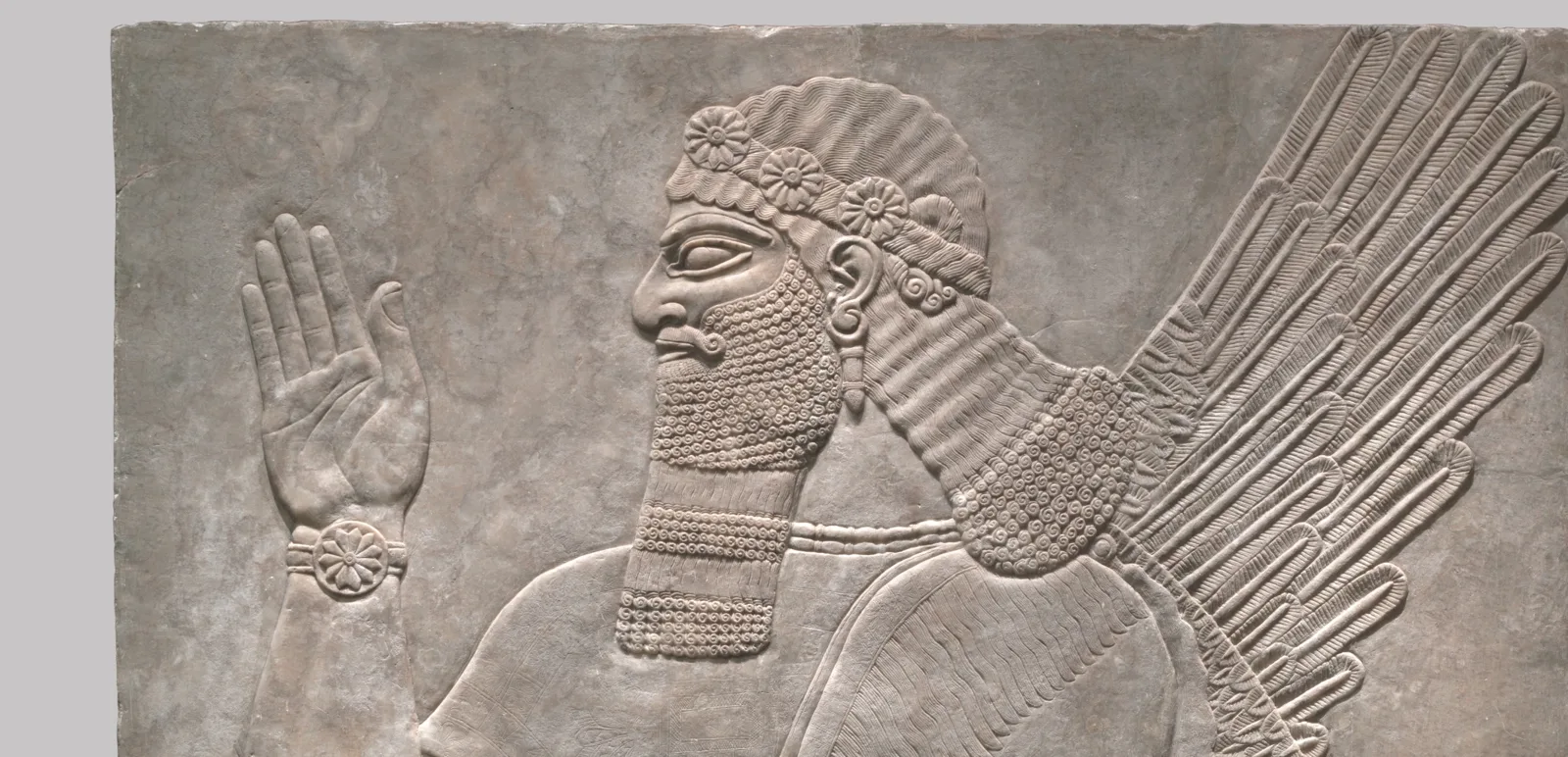
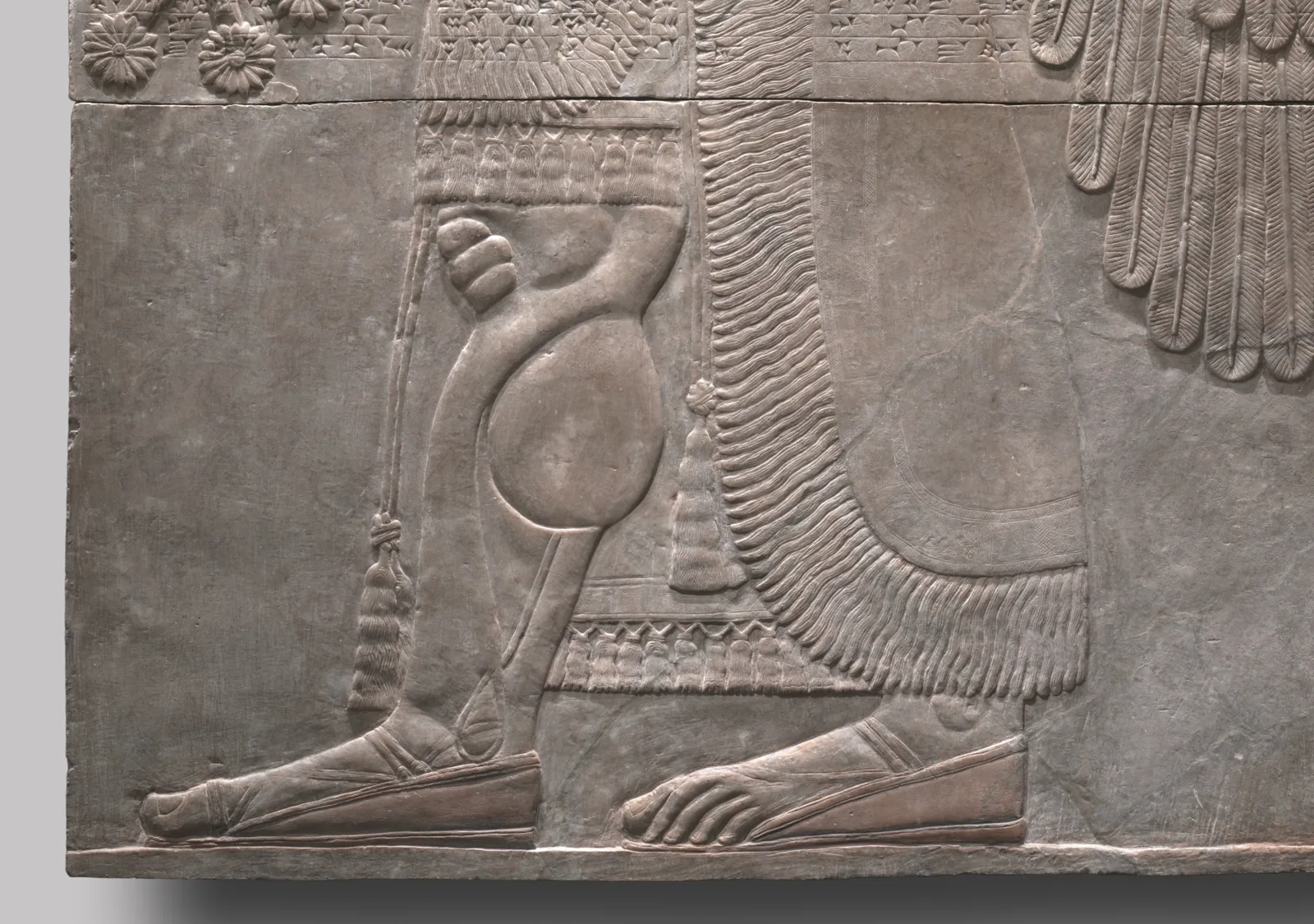
The clothing is rendered with painstaking care. Over a short kilt and an under-tunic, the spirit wears a long fringed cloak with tassels.
Words carved across the body
Step closer and you'll see rows of tiny marks running straight across the figure. This is cuneiform. The text is Ashurnasirpal II's Standard Inscription, an account of the king's military conquests and victories. It is too long to fit on one slab, so it continues onto others.
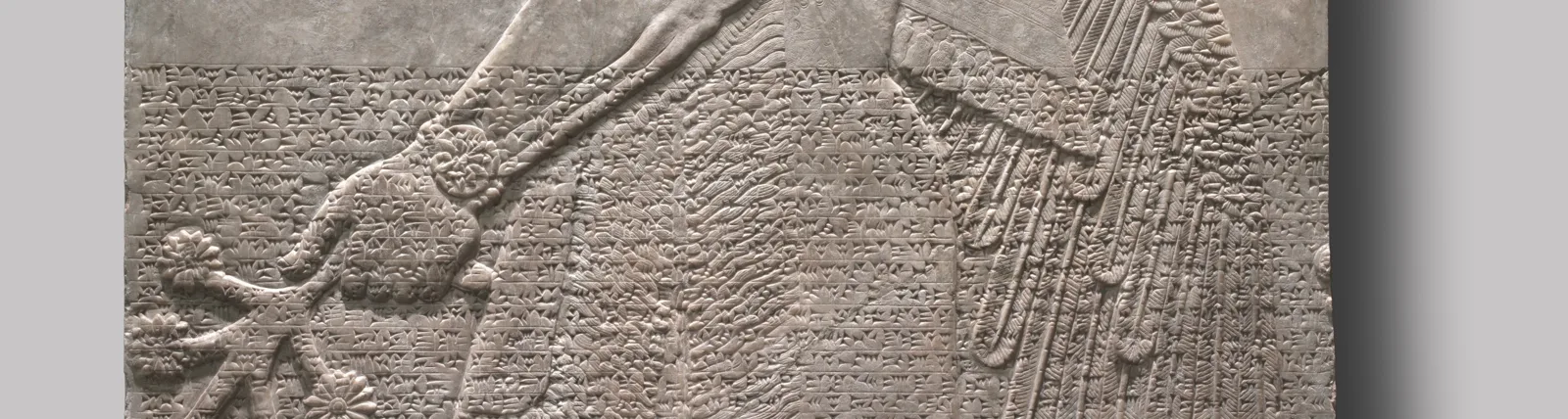
In the full translation published by the museum, the king says that the ancient city of Kalhu had fallen into ruin and that he rebuilt it. He founded a palace of cedar, cypress and other fine woods, and carved beasts of the mountains and seas in white limestone to stand guard at its doors.
One of hundreds
This relief was never meant to stand alone. It once lined the palace walls alongside hundreds of similar slabs. Today it is a single stone colour, but the museum notes that long ago it was brightly painted.
From palace wall to museum wall
The relief left the palace in 1847, when Austen Henry Layard excavated it at Nimrud. Dr. Henry John Lobdell later gave it to Amherst College in Massachusetts. In 1942 Amherst traded it to the Joseph Brummer Gallery in New York in exchange for a group of other objects, and in 1943 the Cleveland Museum of Art bought it from the gallery.
It no longer stands in a palace, but nearly 3,000 years after it was carved, the spirit is still raising its hand in greeting.
Find the Saluting Protective Spirit on Wooriyeojido
After crossing nearly three millennia, this spirit now greets visitors from a museum wall. The Saluting Protective Spirit at the Cleveland Museum of Art is pinned on the Wooriyeojido map. Look it up in the Wooriyeojido app, and if you visit, leave your photos and stories from the day right beside it.
View this place in the Wooriyeojido app