Venus de Milo: What Was the Armless Goddess Holding?
One of the three most famous women in the Louvre has no arms. Follow the Venus de Milo from a field on a Greek island in 1820 to Paris, and weigh the clues to what her missing hands once held: an apple, or a shield?
She has no arms, and yet she is one of the most famous sculptures in the Louvre. She is the Venus de Milo. But what was she doing with those arms in the first place? Start with the short video.
 Watch the one-minute video on YouTube
The star of the red marble room
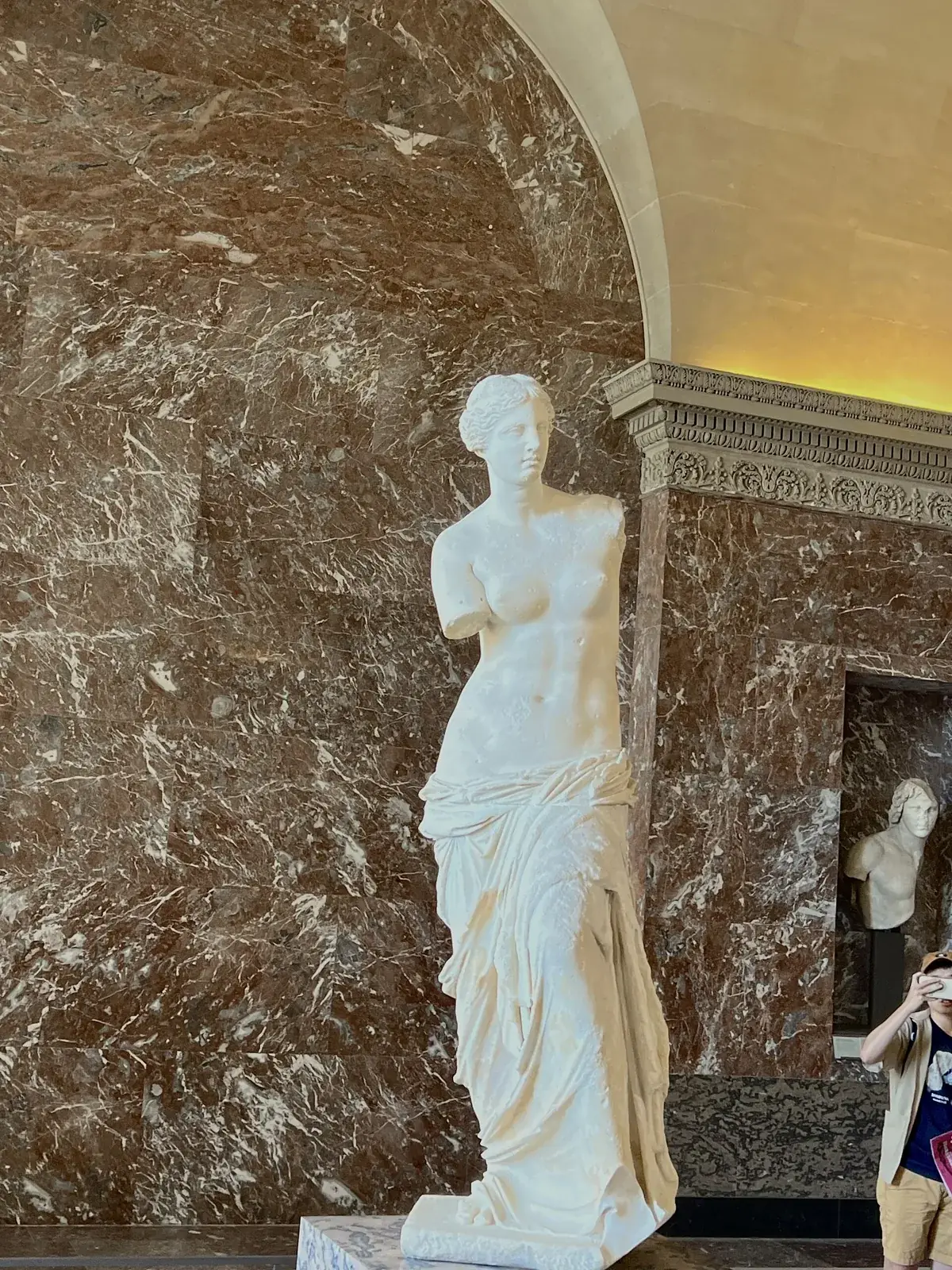
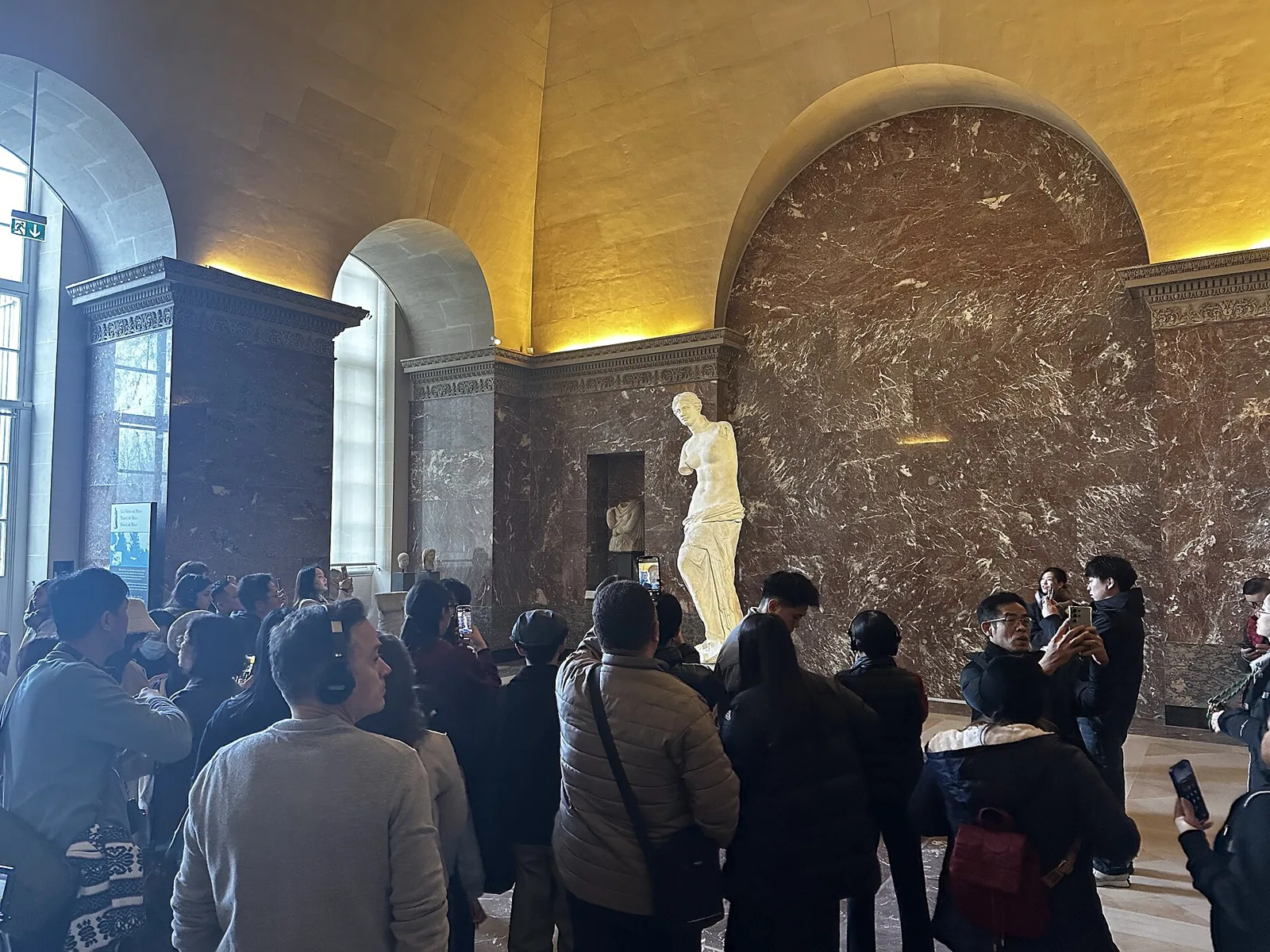
The Venus de Milo stands in Room 345 of the Louvre's Sully wing in Paris, almost alone in a gallery lined with red marble. The museum counts her among the three most famous female figures in its collection, alongside the Mona Lisa and the Winged Victory of Samothrace.
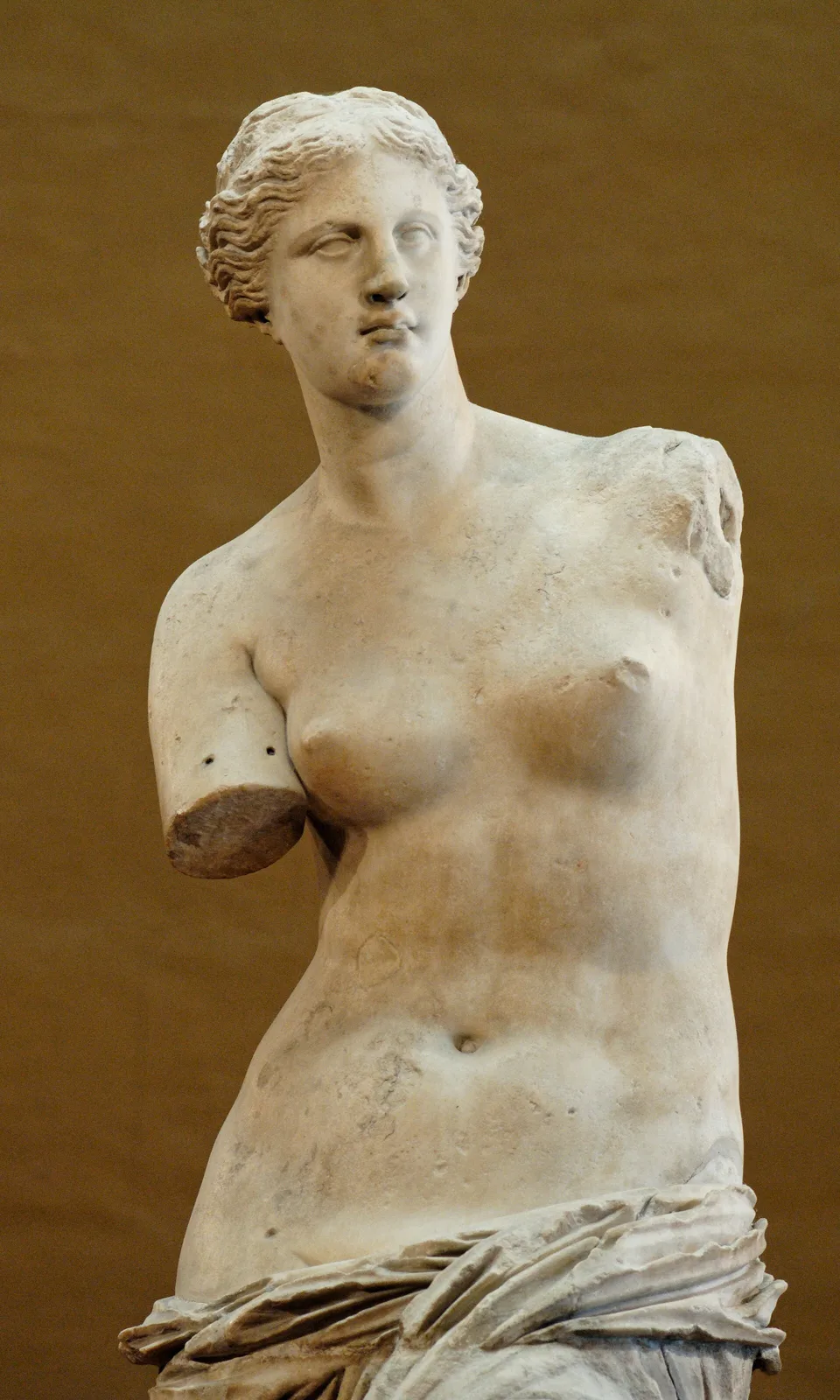
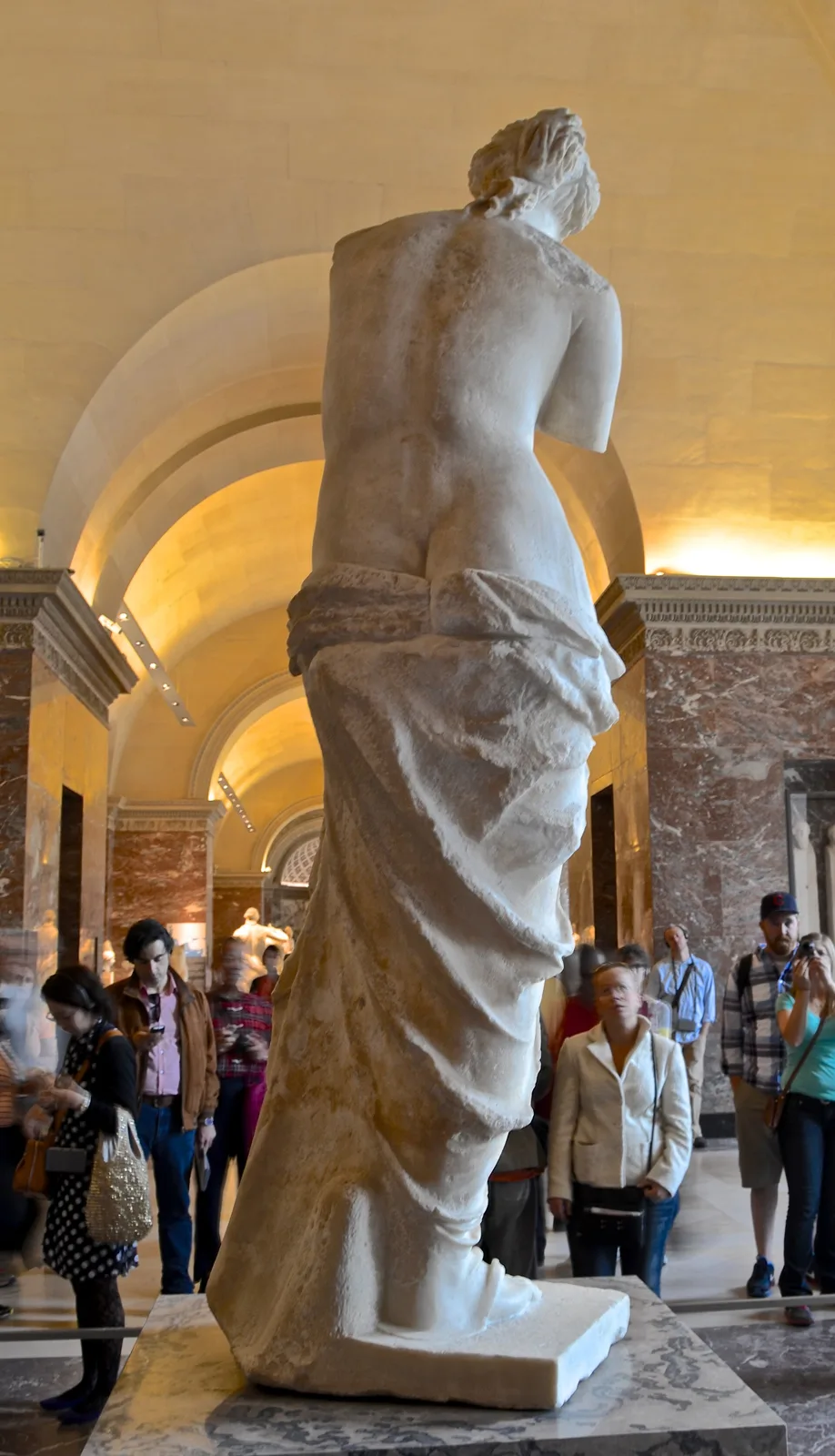
She stands just over two metres tall. According to the Louvre's catalogue, she was carved in the Hellenistic period, around 150 to 125 BC, from marble quarried on the Greek island of Paros. The statue is made of two main blocks joined near the hips, and the left arm was carved separately and fitted on. Scholars have debated who she represents, but most now see her as Aphrodite, goddess of love and beauty, known to the Romans as Venus.
Unearthed by chance in 1820
In April 1820, a farmer on the Greek island of Milos, also called Melos, stumbled on the statue buried in the ground. The French ambassador, the Marquis de Rivière, acquired it and presented it to King Louis XVIII, who gave it to the Louvre in 1821.
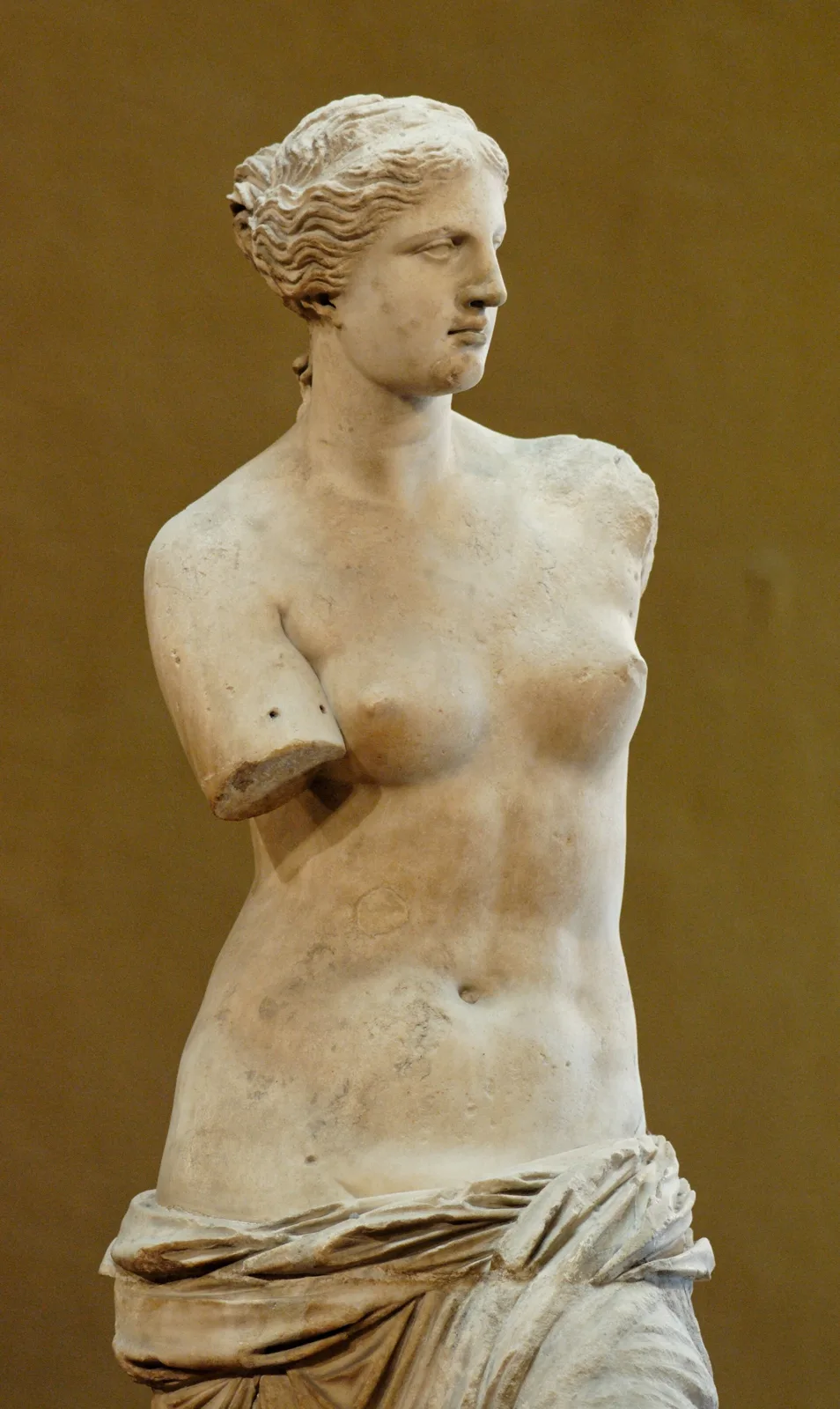
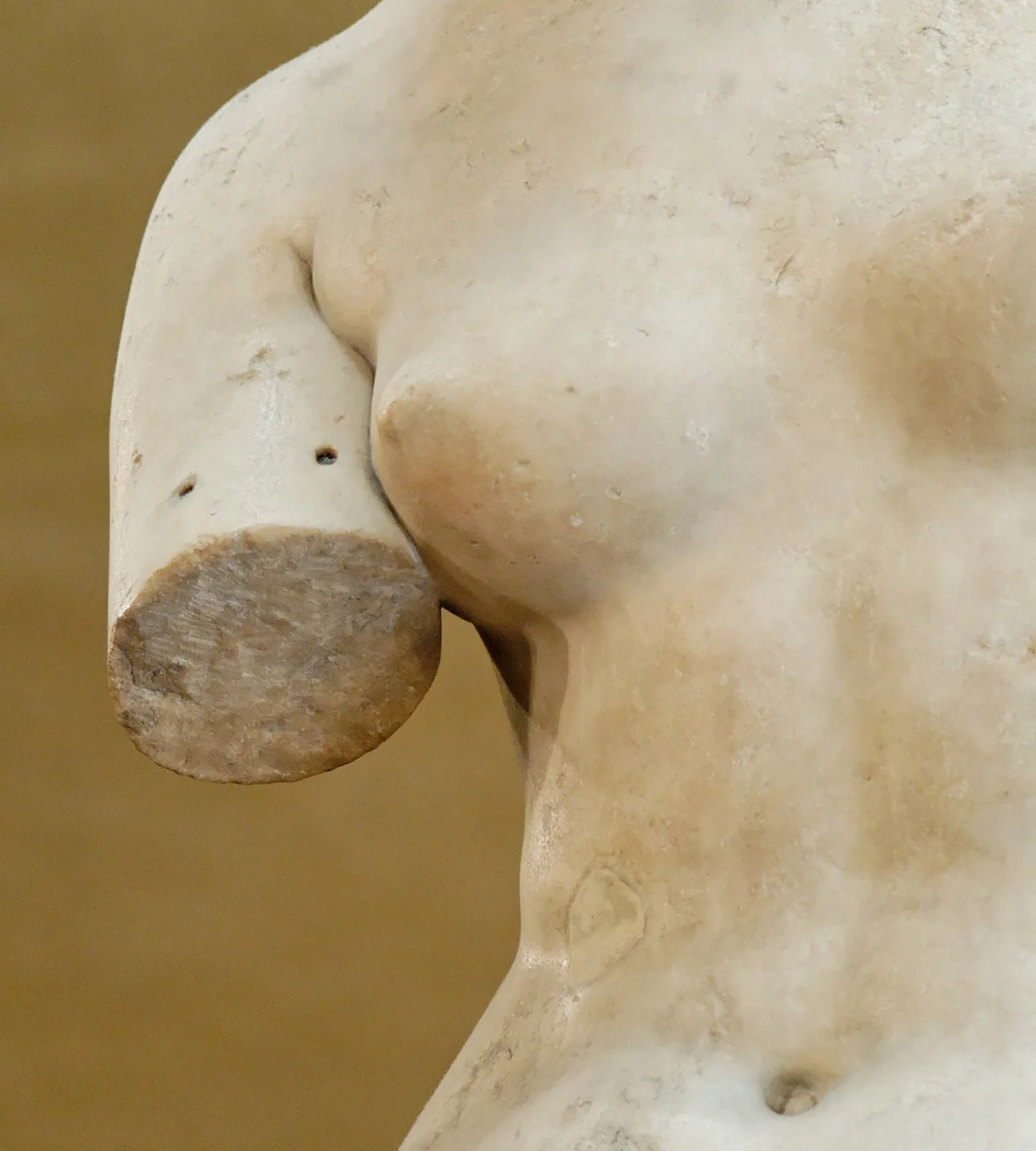
When she came out of the ground, her arms, her left foot and part of her base were already missing, and they have never been found. The Louvre's teaching notes say she was probably once painted, though no trace of color survives. Small holes suggest she was also decked out in metal jewellery: a headband, earrings and a bracelet.
Perfect timing
How did she become so famous? According to the Louvre, it was largely a matter of timing. After Napoleon's defeat at Waterloo, France had to return some 5,000 artworks his troops had seized. The museum's galleries were suddenly bare, so when the Venus arrived, she was welcomed with open arms and hailed as a masterpiece. She has been copied countless times ever since.
There was talk of restoring her missing arms, but the idea was eventually dropped for fear of changing the nature of the work. Only tiny details were repaired, such as the tip of her nose, her lower lip and her right big toe, so what you see today is very close to how she was found.
An apple or a shield?
Even the Louvre admits that her original pose remains something of a mystery. Her body offers some clues. Judging by the shoulders, her right arm reached down toward the drapery wrapped around her hips, while her left arm was raised high and held slightly away from her body.
A hand holding an apple was found near the statue, carved from the same Parian marble. The apple was a symbol of Aphrodite, so the hand may once have been hers. But the carving is of noticeably lower quality, which leads some to think it belonged to a different statue. Meanwhile, the position of her left leg suggests she might have held a shield, as Aphrodite does in many other works.
Apple or shield? No one knows for sure. The hand with the apple is on display in a case in the same room, so look for it when you visit.
Find the Louvre Museum on Wooriyeojido
The Louvre, home of the armless goddess who still stops visitors in their tracks, is pinned on the Wooriyeojido map. Look it up in the Wooriyeojido app, and if you visit, leave your photos and stories from the day right beside it.
View this place in the Wooriyeojido app


