Thermopylae: Was It Really Just 300 Spartans Who Held the Pass?
The ancient pass of Thermopylae in central Greece, where a Greek army held back the Persians for three days in the summer of 480 BC. Who actually fought there, and how many came against them? The ancient account and modern estimates, in a video and photos.
In central Greece there was once a pass squeezed so tightly between mountains and sea that it could barely take a cart. This is Thermopylae. In the summer of 480 BC, a Greek army held it for three days against a far larger Persian force. The battle is remembered as the stand of the 300 Spartans. But were there really only 300? Start with the short video.
 Watch the one-minute video on YouTube
The "Hot Gates"
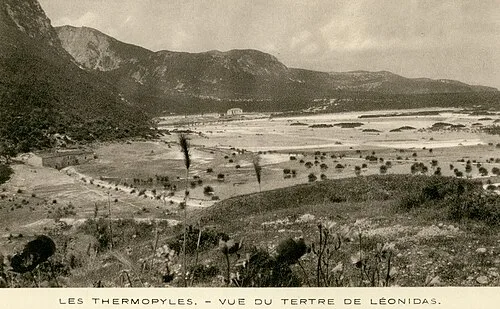
Thermopylae lies about 136 kilometers northwest of Athens, between Mount Kallidromo and the Malian Gulf. According to Greece's Ministry of Culture, the ancient route through the pass was about nine kilometers long and no more than 20 meters wide.
The name means "hot gates," after the hot sulfur springs that rise here. Herodotus, the Greek historian whose account of the battle is our main source, mentioned the springs too.
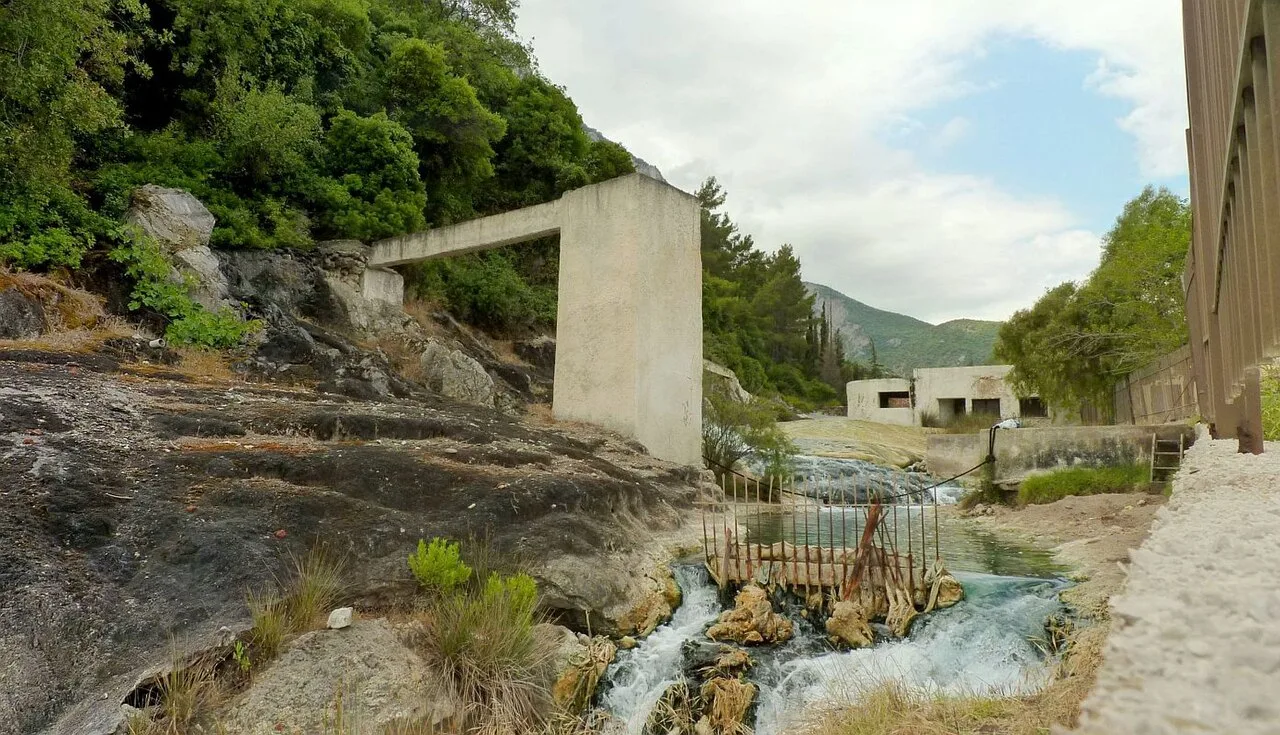
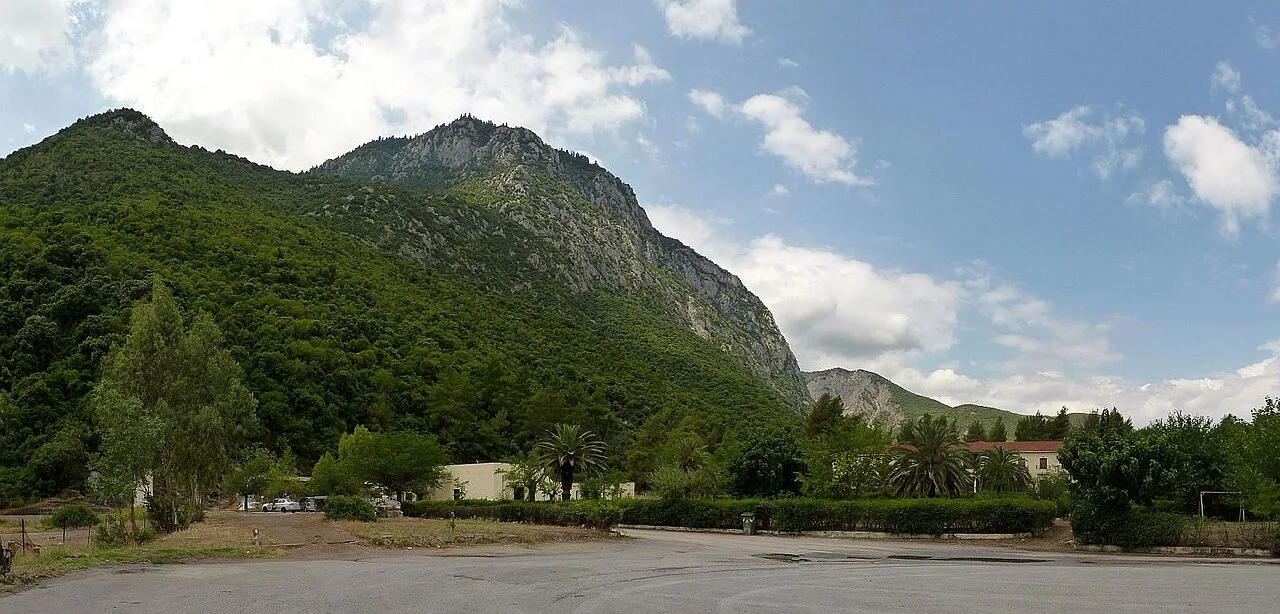
Visit today and it is hard to picture a narrow pass. In antiquity the cliffs came right down to the sea, but over the centuries rivers carried in so much silt that the shoreline has moved far away.
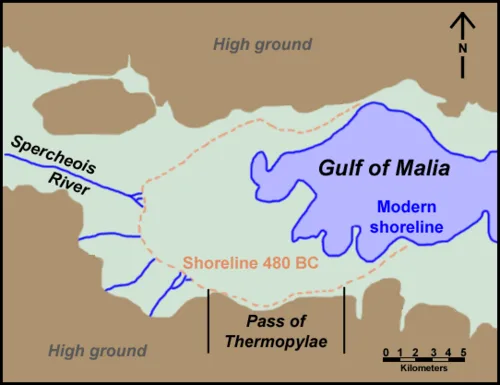
Herodotus says that at its narrowest the road was wide enough for a single cart. To the west rose a steep, impassable mountain; to the east lay the sea and marshy pools. It was the gateway into southern Greece, and in a gap that tight an invader could make use of neither his numbers nor his cavalry. That is why the Greeks chose to make their stand here.
How big was the Persian army?
In the summer of 480 BC, the Persian king Xerxes invaded Greece with an enormous army. Exactly how enormous depends on whom you ask. Herodotus put the land army alone at 1.7 million men. Modern historians estimate somewhere between 70,000 and 300,000, and the Greek Ministry of Culture notes that "it is not clear in the sources." Either way, the Persians vastly outnumbered the Greeks.
Not 300, but 7,000
The Greeks were led by Leonidas, king of Sparta, and the Spartans he brought with him were the famous 300. But they were far from alone. Soldiers came from Tegea, Mantinea, Corinth, Thespiae, Thebes and other cities, about 7,000 men in all.
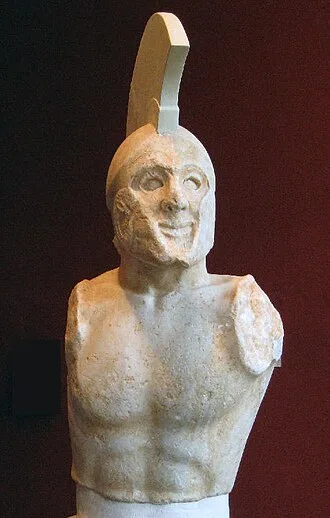
This statue of a hoplite was found in Sparta. Some have suggested it might be Leonidas himself, though nobody can say for sure. Greek soldiers like these were heavy infantry, fighting in bronze helmets and carrying shields.
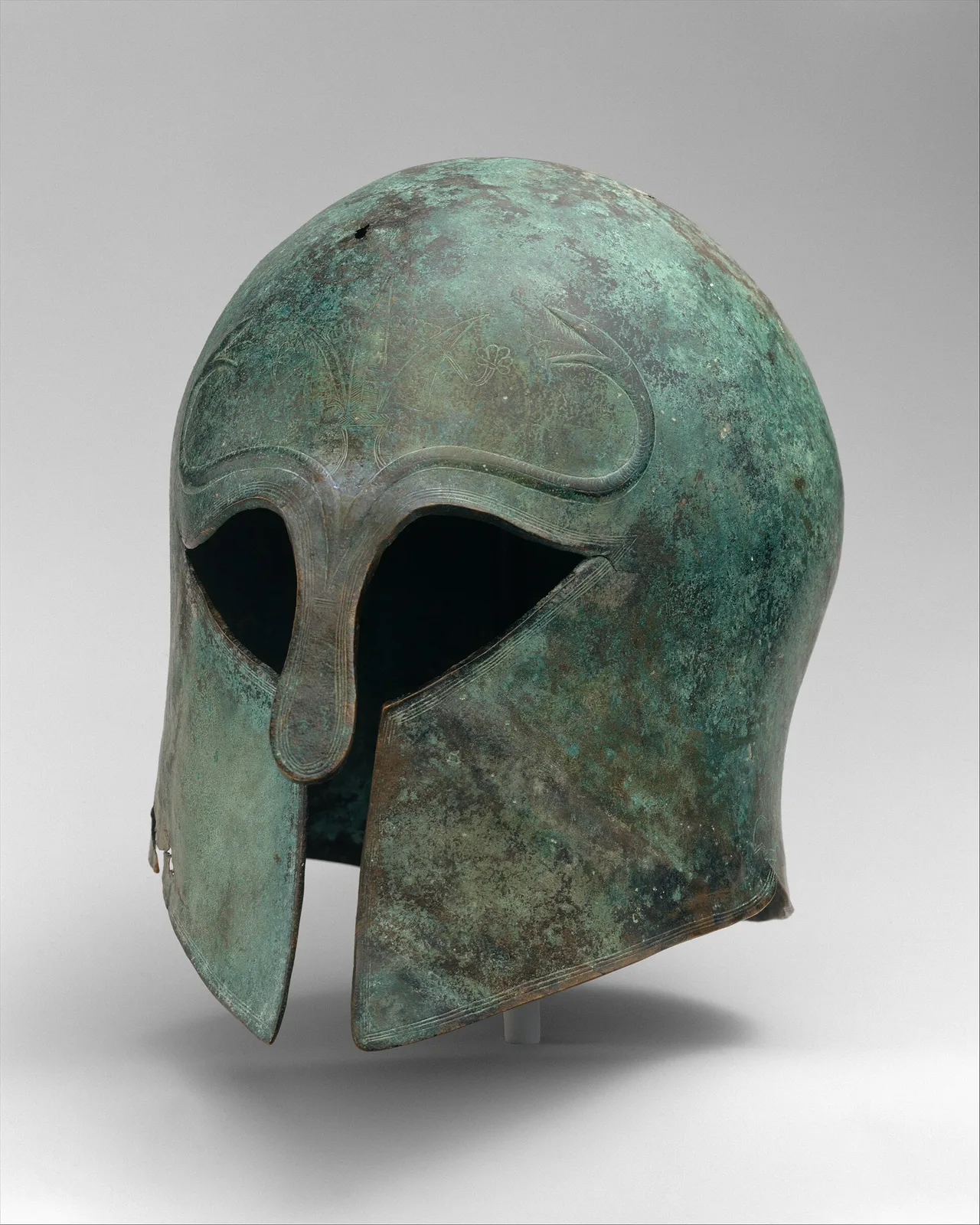
According to Herodotus, Xerxes waited four days and attacked on the fifth. In such a narrow space his huge army could not bring its weight to bear all at once. For two days the Persians attacked again and again, and the Greeks held the pass without major losses.
The path over the mountain
What turned the battle was a local man named Ephialtes, who told Xerxes about a path over the mountain that led around behind the Greek lines. On the third day, realizing he was about to be surrounded, Leonidas sent most of the army away. Those who stayed were the 300 Spartans, 700 Thespians and 400 Thebans.
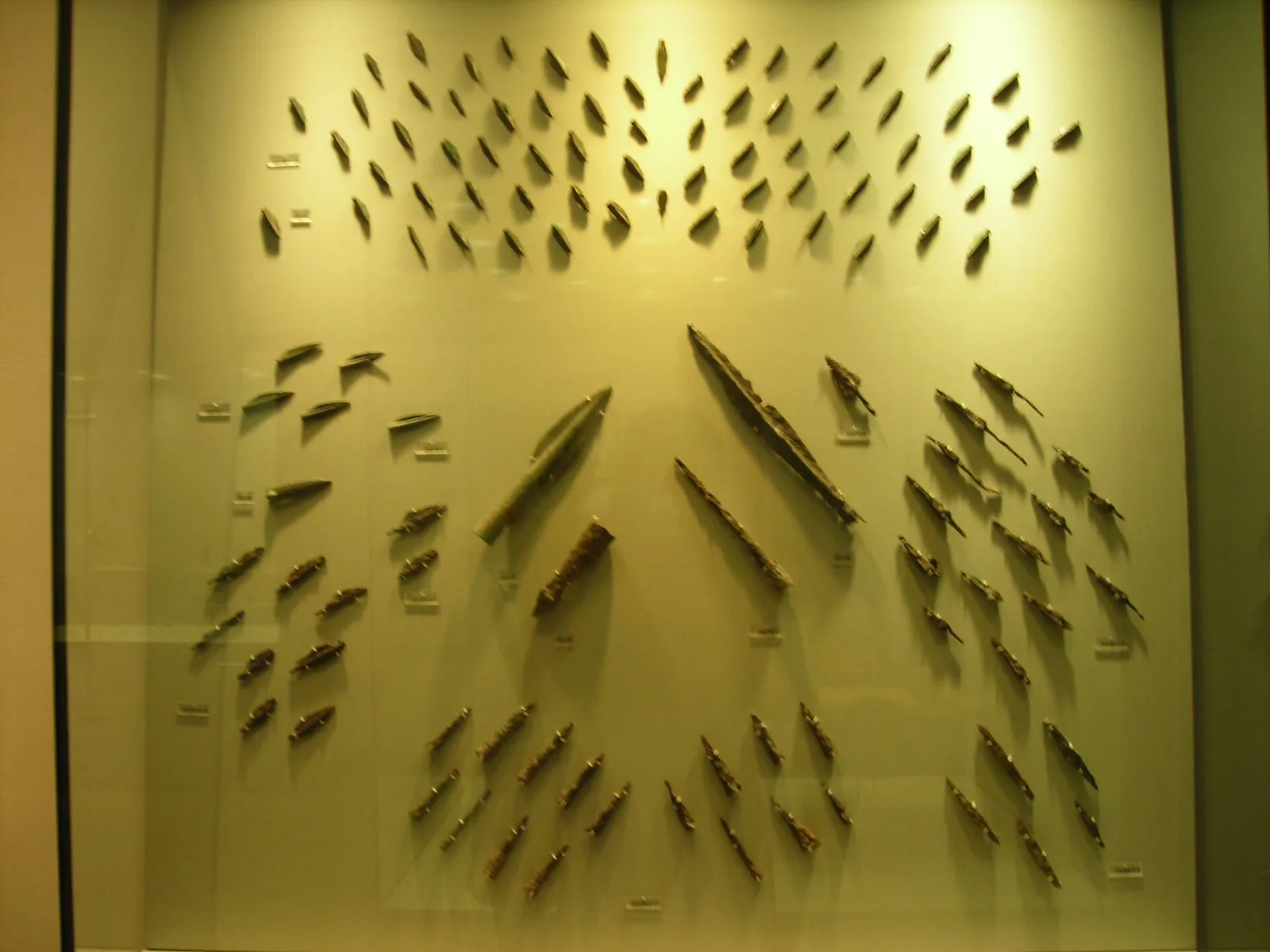
The Spartans and Thespians fought until they fell; the Thebans surrendered. Kolonos Hill is believed to be where the last stand took place and where the dead were buried. Arrowheads and spearheads have been found on the hill.
Two lines on a hilltop
On top of Kolonos Hill stands a stone carved with an epitaph preserved by Herodotus. In its most familiar English form: "Go tell the Spartans, stranger passing by, that here, obedient to their laws, we lie." Across from the hill is a bronze statue of Leonidas, made by the sculptor Vasos Falireas in 1955.
So the army that held Thermopylae for three days was not just 300 Spartans but an alliance of Greek cities under Leonidas. And what made those three days possible was a pass so narrow that only a single cart could squeeze through.
Find Thermopylae on Wooriyeojido
Thermopylae, the narrow pass where a small army held off a vast one, is pinned on the Wooriyeojido map. Look it up in the app, and if you go, leave your photos and the story of your day right beside it.
View this place in the Wooriyeojido appVideos of nearby places


Sources
- Hellenic Ministry of Culture — 2500 years since Thermopylae and Salamis: The Battle of Thermopylae
- Visit Greece — Thermopylae: where Leonidas and the 300 became legend
- City of Lamia, Culture — The statue of Leonidas in Thermopylae
- Herodotus, Histories, Book 7 (G. C. Macaulay translation, Project Gutenberg)
- Herodotus, Histories, Book 7 (Perseus Digital Library)
- Encyclopaedia Britannica — Thermopylae
- The Open University — OpenLearn: Battle of Thermopylae