The Fall of Constantinople: When Ships Sailed Over a Hill in 1453
In the spring of 1453, an Ottoman army besieged Constantinople, capital of the Byzantine Empire. Here is the story of its triple walls, the great chain across the harbour, and the ships dragged overland to get around it, over 53 days.
In the spring of 1453, an Ottoman army laid siege to a great city. A massive chain barred the way in by sea. Then one day, the story goes, Ottoman ships left the water altogether and crossed a hill on dry land. How did that happen? Start with the short video.

 Watch the one-minute video on YouTube
Capital of a thousand-year empire
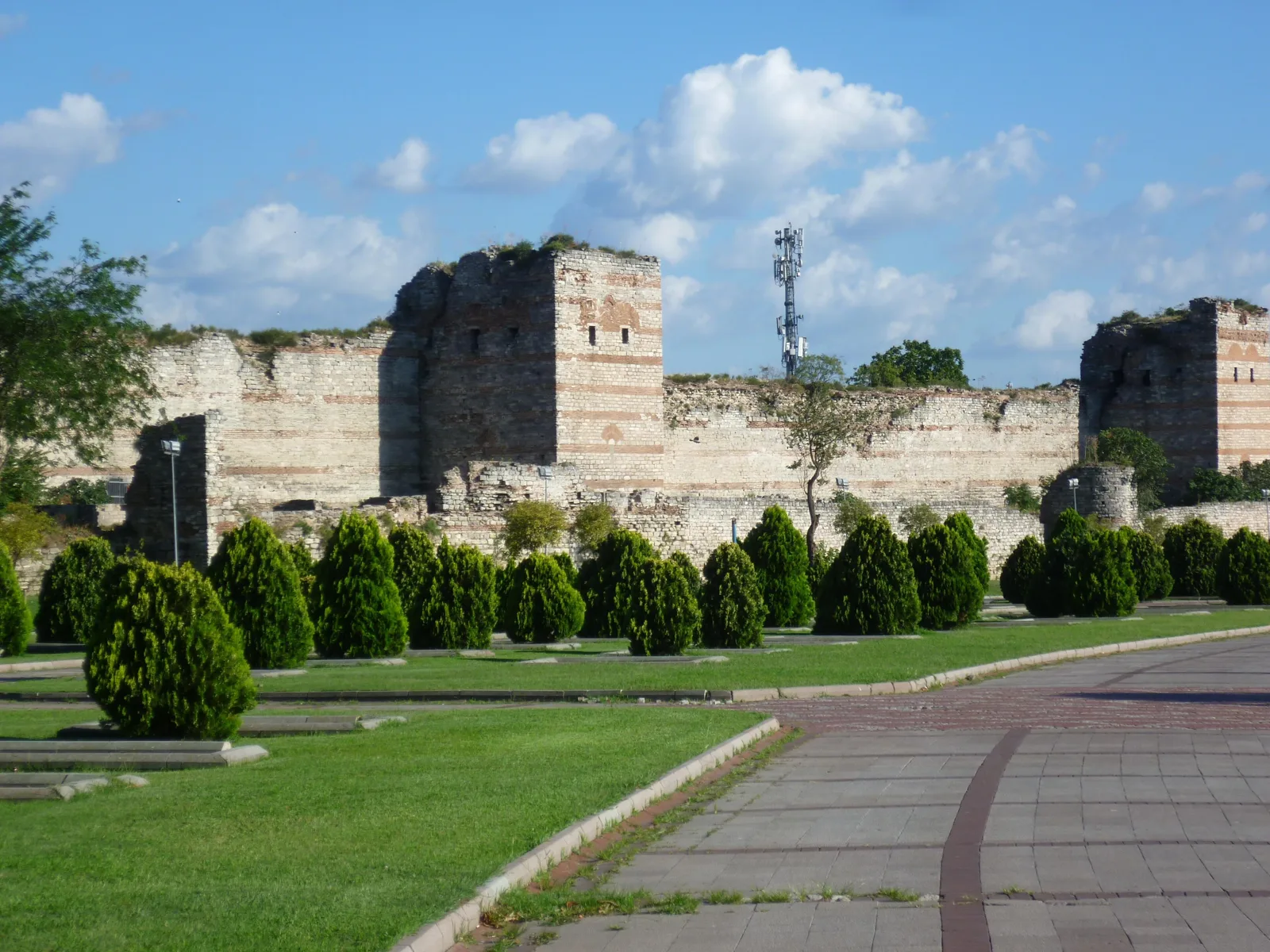
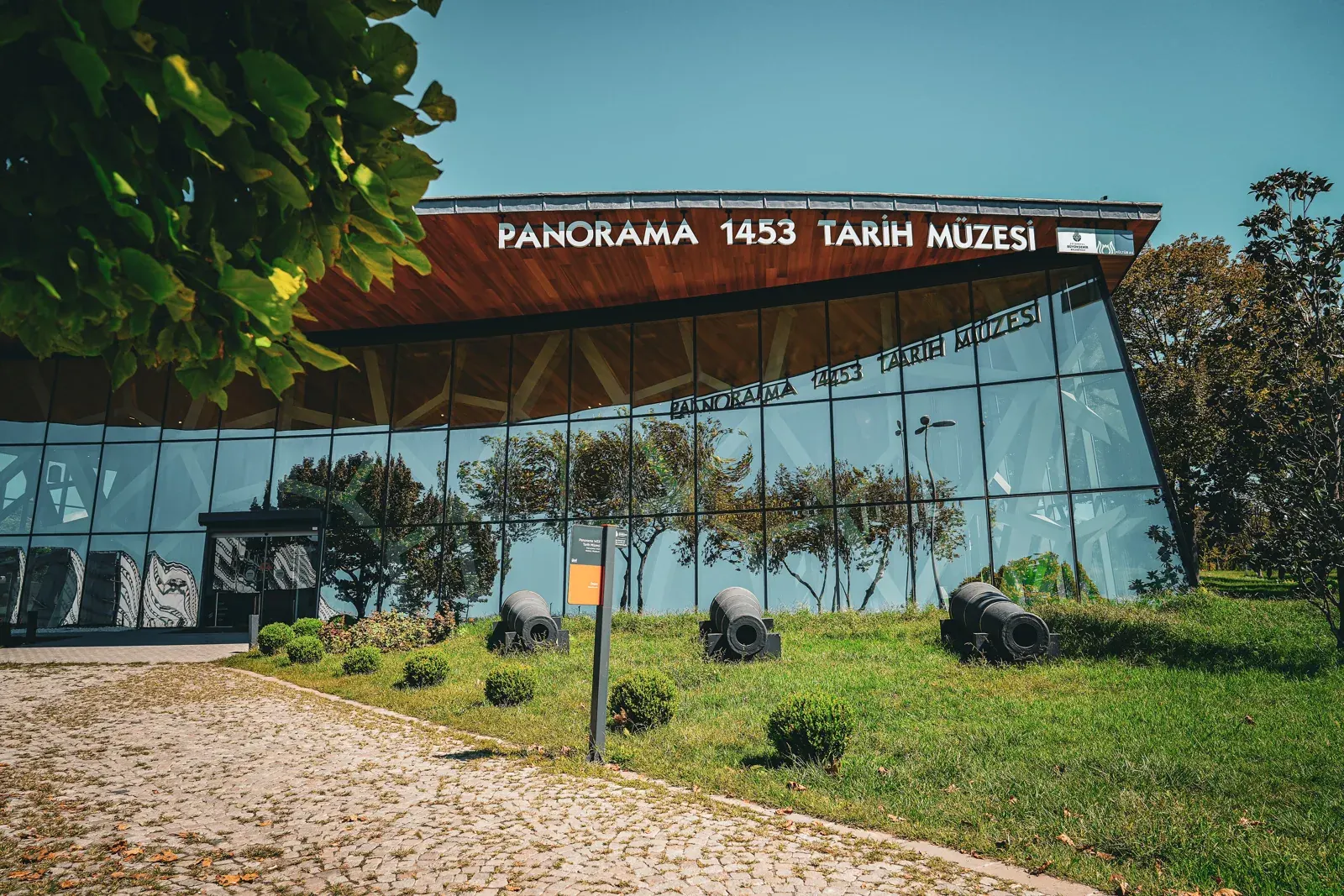
The city was Constantinople, capital of the Byzantine Empire. Today it is Istanbul, in Türkiye. The land walls at the centre of this story still stand in front of Topkapı Cultural Park, and right beside them is the Panorama 1453 History Museum, which brings that day back to life in one enormous painting.
Three layers of defence
The walls were built in the 5th century under Theodosius II. They cut across the land for 6 to 7 kilometres, from the Sea of Marmara in the south to the Golden Horn in the north.
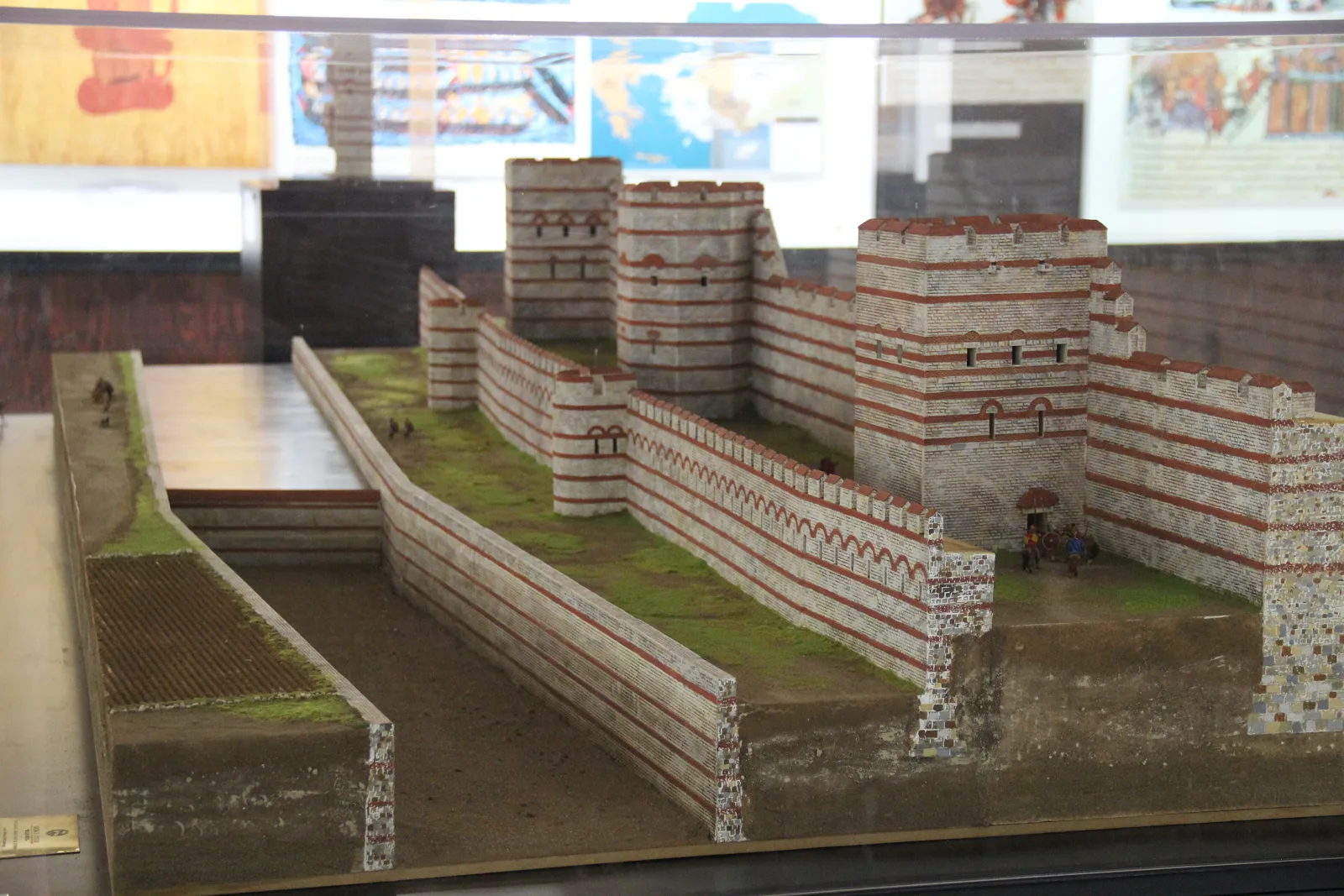
Their design was thorough. The inner wall was 3 to 4 metres thick and 13 metres high. Fifteen metres in front of it stood a second, outer wall, 2 metres thick and 10 metres high, and in front of that lay a moat. Two walls and a moat gave the city three layers of protection. More than 1,600 years after they went up, stretches of the walls are still standing.

A 21-year-old sultan
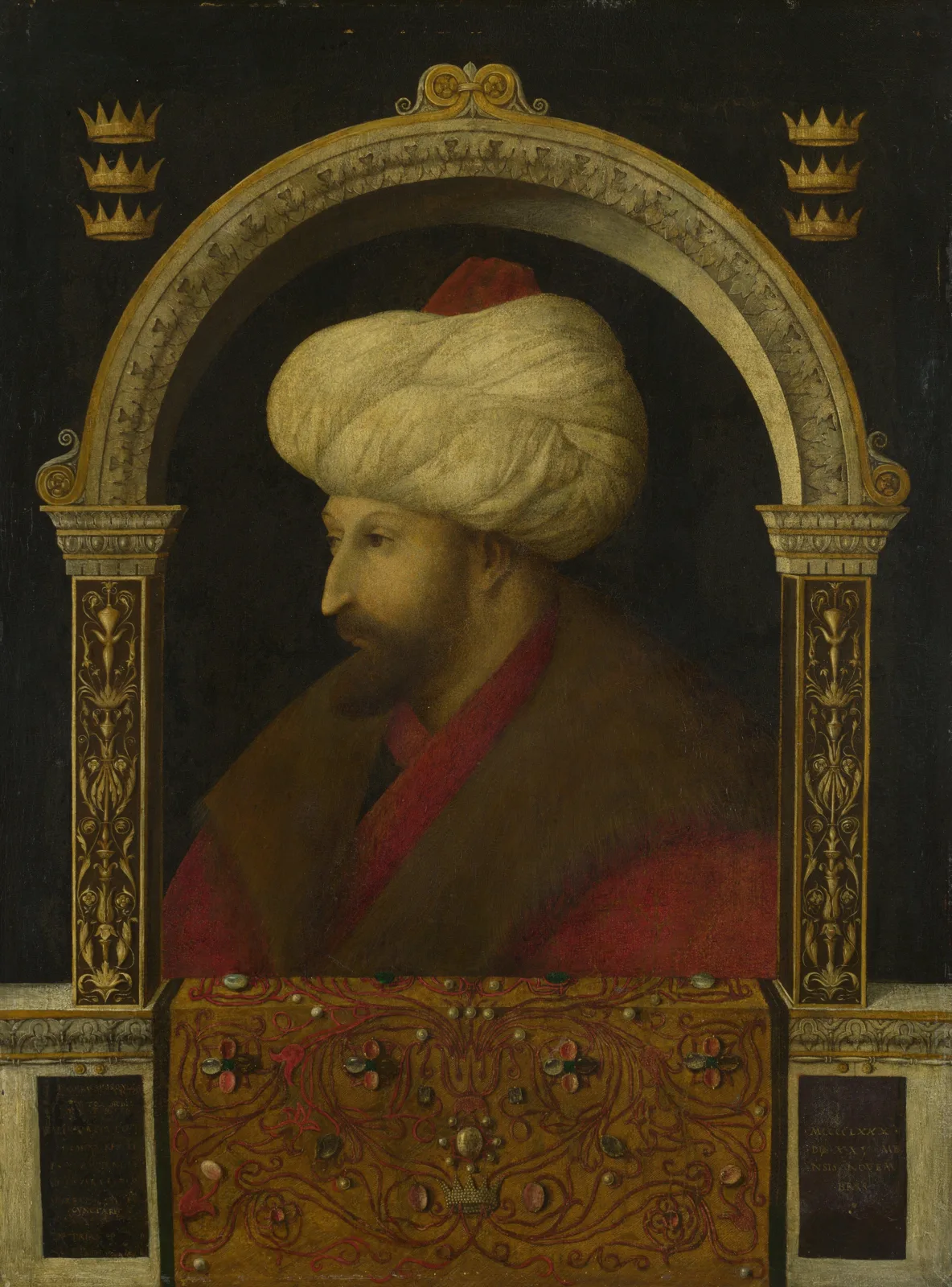
On 5 April 1453, the Ottoman sultan Mehmed II set up camp outside the walls with a large army. Born in 1432, he was only about 21. The next day, 6 April, his great cannon opened fire on the walls.

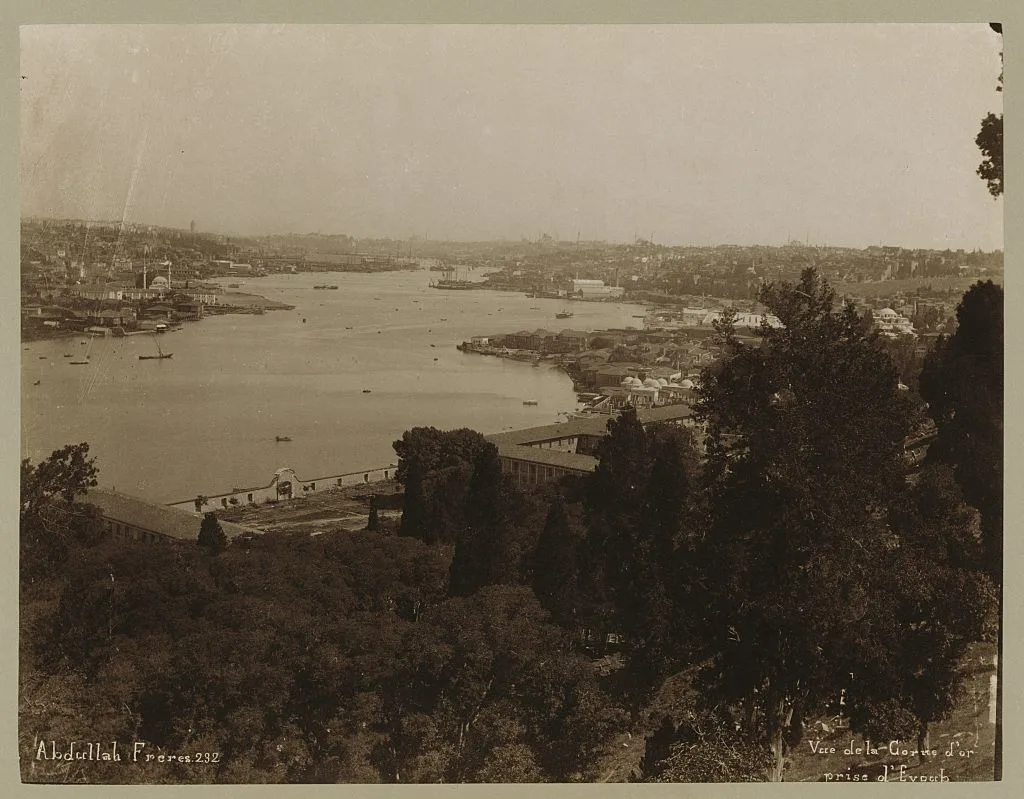
The defenders had prepared too. On 2 April they had stretched a huge chain across the mouth of the Golden Horn, the long inlet of sea that runs along the city's northern side. With the chain in place, Ottoman ships could not get in. On 20 April, ships sent to help the city even managed to slip inside the Golden Horn.
If the sea is closed, go by land
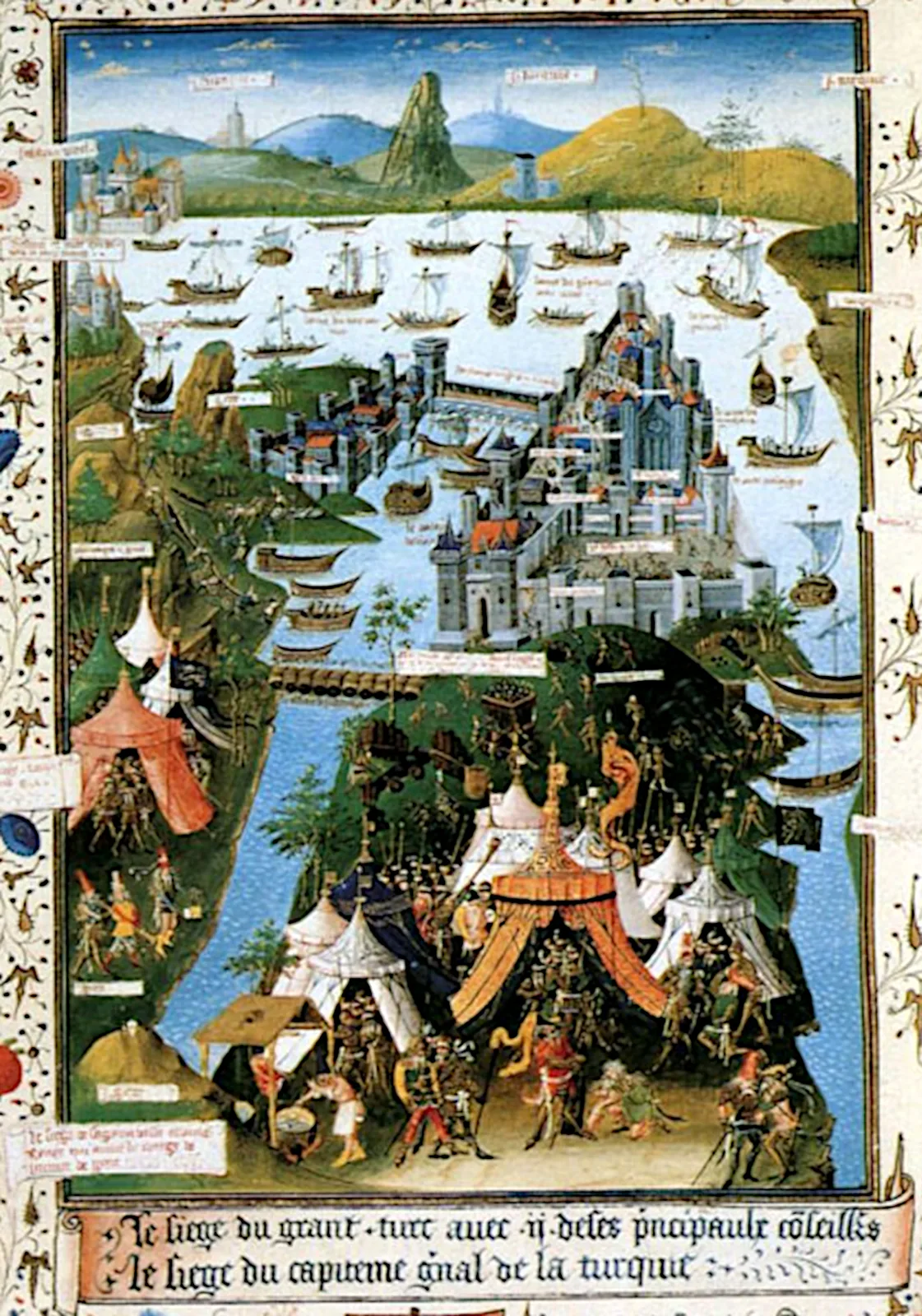
The solution was to take the ships over land. It happened on 21–22 April. Ottoman, Byzantine and Latin sources all agree on the date: Ottoman ships were hauled across dry land and launched into the Golden Horn.
Here is how it is thought to have worked. Round logs were laid along the ground and greased to make them slippery, and the ships were hauled over them by sheer manpower, using ropes and pulleys. Historians estimate that roughly 50 to 60 ships were moved this way, though the sources give different numbers. The usual account has them crossing a hill from Tophane on the Bosphorus to Kasımpaşa on the Golden Horn, but some researchers propose other routes.
And so, having slipped around the chain, the Ottoman fleet appeared inside the Golden Horn.

Just two years after the city fell, in 1455, Jean Le Tavernier painted a miniature that captures the scene. On one side soldiers aim cannon at the walls; on the other, they haul ships toward the Golden Horn.

Dawn on the 53rd day
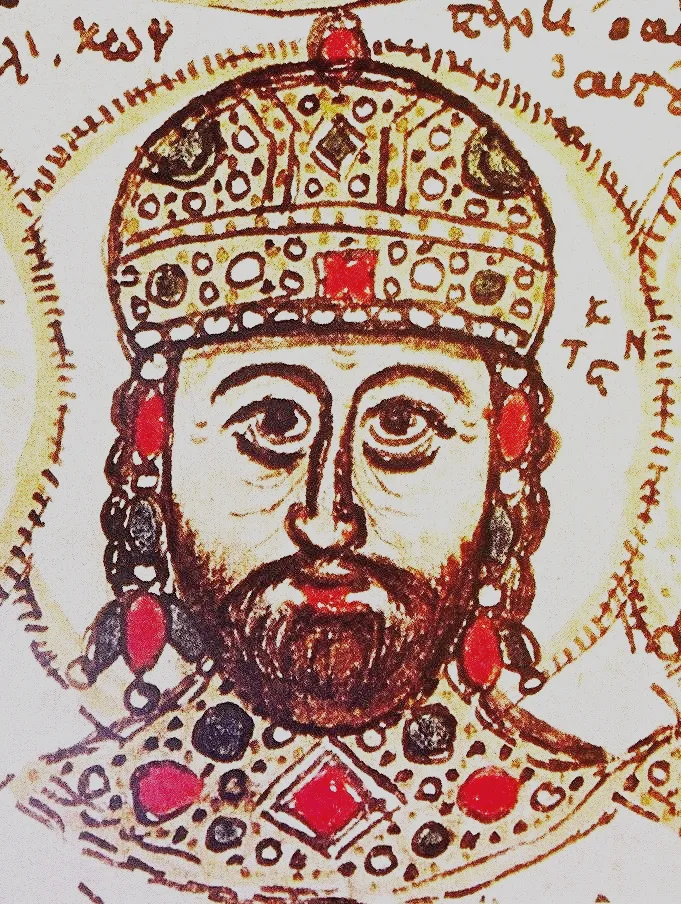
In the early hours of 29 May, the Ottomans launched their final assault. Counting from the first bombardment on 6 April, it was the 53rd day. Constantine XI, the last Byzantine emperor, is said to have died fighting on the walls that day. The city passed into Ottoman hands, and the Byzantine Empire, after more than a thousand years, came to an end.

That day, in the round
The Panorama 1453 History Museum beside the walls opened in 2009. Inside a hemisphere 38 metres across, a painting wraps all the way around the visitor, showing the dawn of 29 May 1453 as the army pours into the city. It contains around 10,000 figures.

Find the Walls of Constantinople on Wooriyeojido
Triple walls, a chain across the sea and ships that crossed a hill: the Walls of Constantinople, the stage for those 53 days, are pinned on the Wooriyeojido map. Find the Walls of Constantinople in the Wooriyeojido app, and if you go, leave your photos and stories from the day right beside it.
View this place in the Wooriyeojido appVideos of nearby places
 Hagia Sophia: how has a dome that once collapsed lasted so long?
 Was legendary Troy real? Schliemann's dig and its nine layers
 Thermopylae: who held a narrow pass for three days?
Sources
- Republic of Türkiye Ministry of Culture and Tourism — Istanbul City Walls
- Panorama 1453 History Museum — About
- Turan and Altınkaynak, The Background of Hauling Ships Overland in the Conquest of Istanbul, Gazi Türkiyat 32 (2023, Turkish)
- EBSCO Research Starters — Siege of Constantinople (1453)
- Encyclopaedia Britannica — Fall of Constantinople
- Encyclopaedia Britannica — Constantine XI Palaeologus