Troy: Was the City of Legend Really on This Hill?
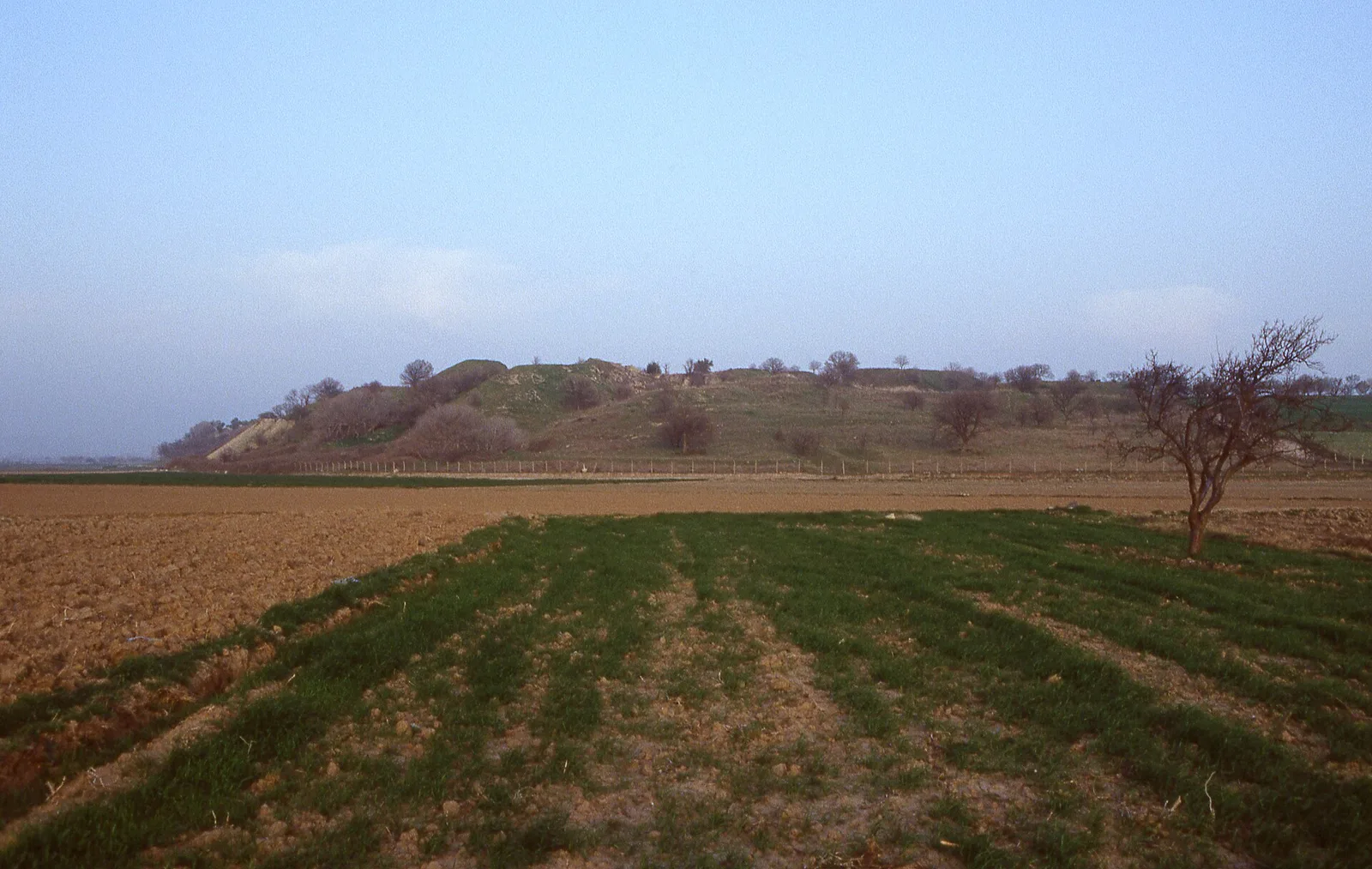
The mound of Hisarlik near Çanakkale, Türkiye, holds nine cities stacked one on top of another. Discover what Schliemann found, how old the "Treasure of Priam" really is, and why scholars still argue over Homer's Troy.
In the farmland of northwest Türkiye, a few miles from the Dardanelles, rises a low and unremarkable hill. It is said to be the site of the city Homer sang about: Troy. But did the Troy of legend really stand here? Start with the short video.
 Watch the one-minute video on YouTube
A horse at the gate
The ruins of Troy sit on the mound of Hisarlik in Çanakkale Province, about 4.8 kilometres from the southern mouth of the Dardanelles. The area became a historical national park in 1996, and UNESCO added it to the World Heritage List in 1998.
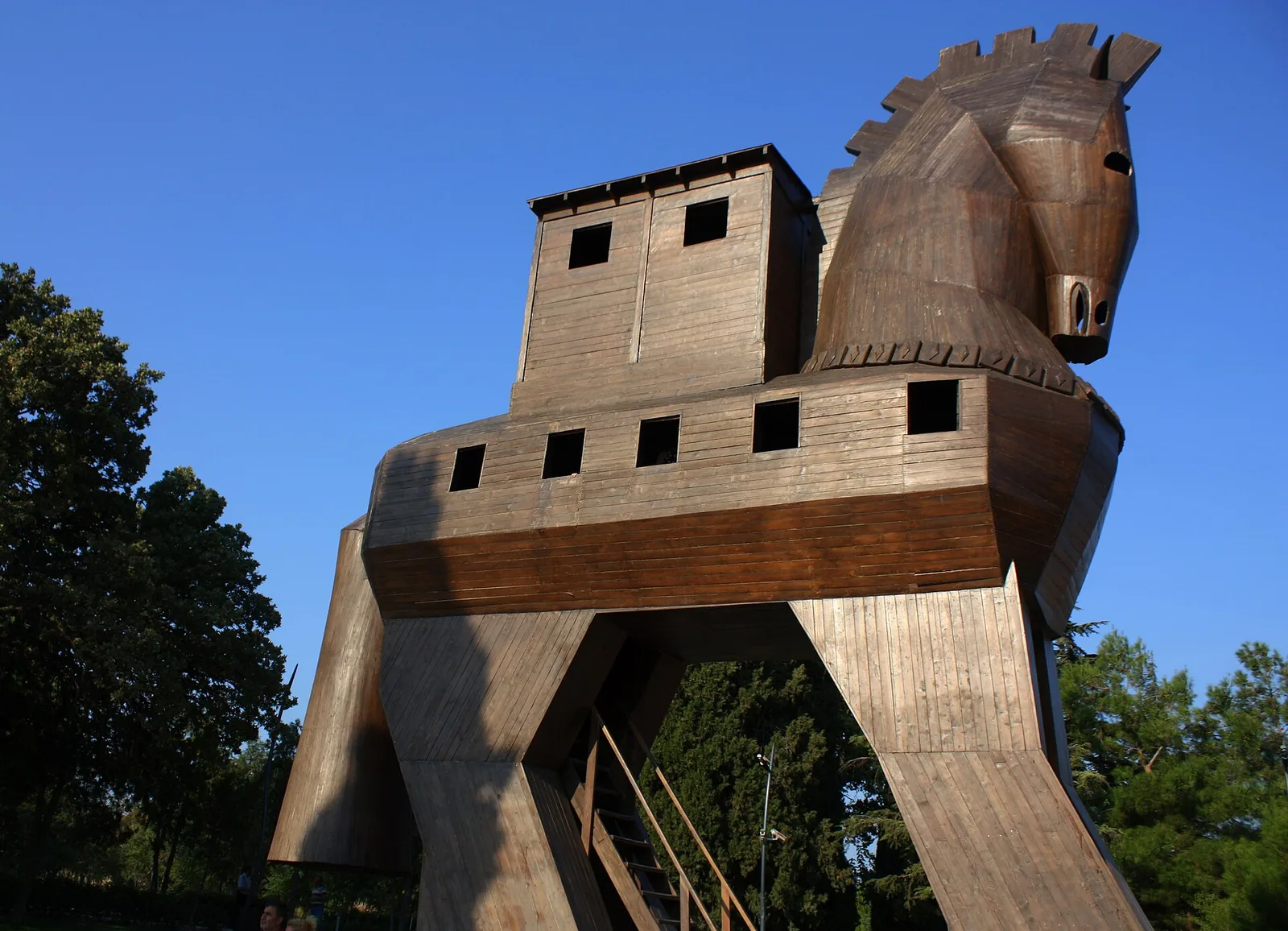
At the entrance, visitors are greeted by a wooden horse 12.5 metres tall. The Turkish artist İzzet Senemoğlu built it in 1975 from pine trees hauled down from the Kaz Mountains, as a tribute to the Trojan Horse of legend. Film buffs take note: the horse from the 2004 movie Troy stands not here but in the centre of Çanakkale town.
The man who dug for a lost city
Homer's Iliad tells of a Greek army that laid siege to Troy for ten years. Yet the city itself slipped out of memory, and for centuries no one could say for sure where it had been.
Heinrich Schliemann, a German, first visited Hisarlik in 1868 and began digging in 1870. UNESCO regards his excavations as the starting point of modern archaeology.
Nine cities deep
What Schliemann found was not one city but many, piled on top of each other. People lived here from around 3000 BC to about AD 500. Türkiye's Ministry of Culture and Tourism counts ten city layers; archaeologists usually speak of nine, from Troy I to Troy IX. Houses were built of mud brick, and whenever they collapsed, new ones went up on the rubble, so the mound slowly grew taller. The upper layers belong to Greek and Roman towns.
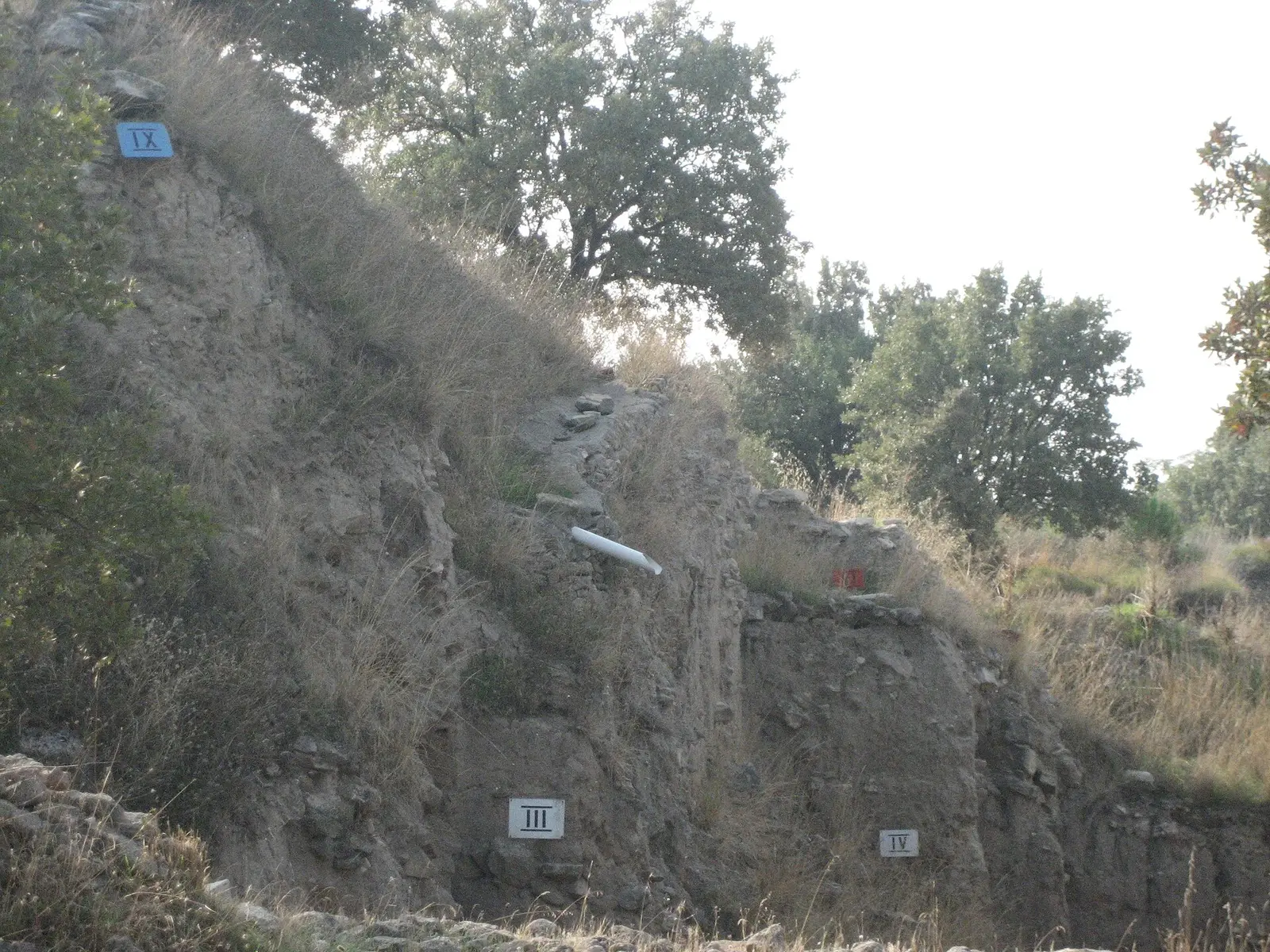
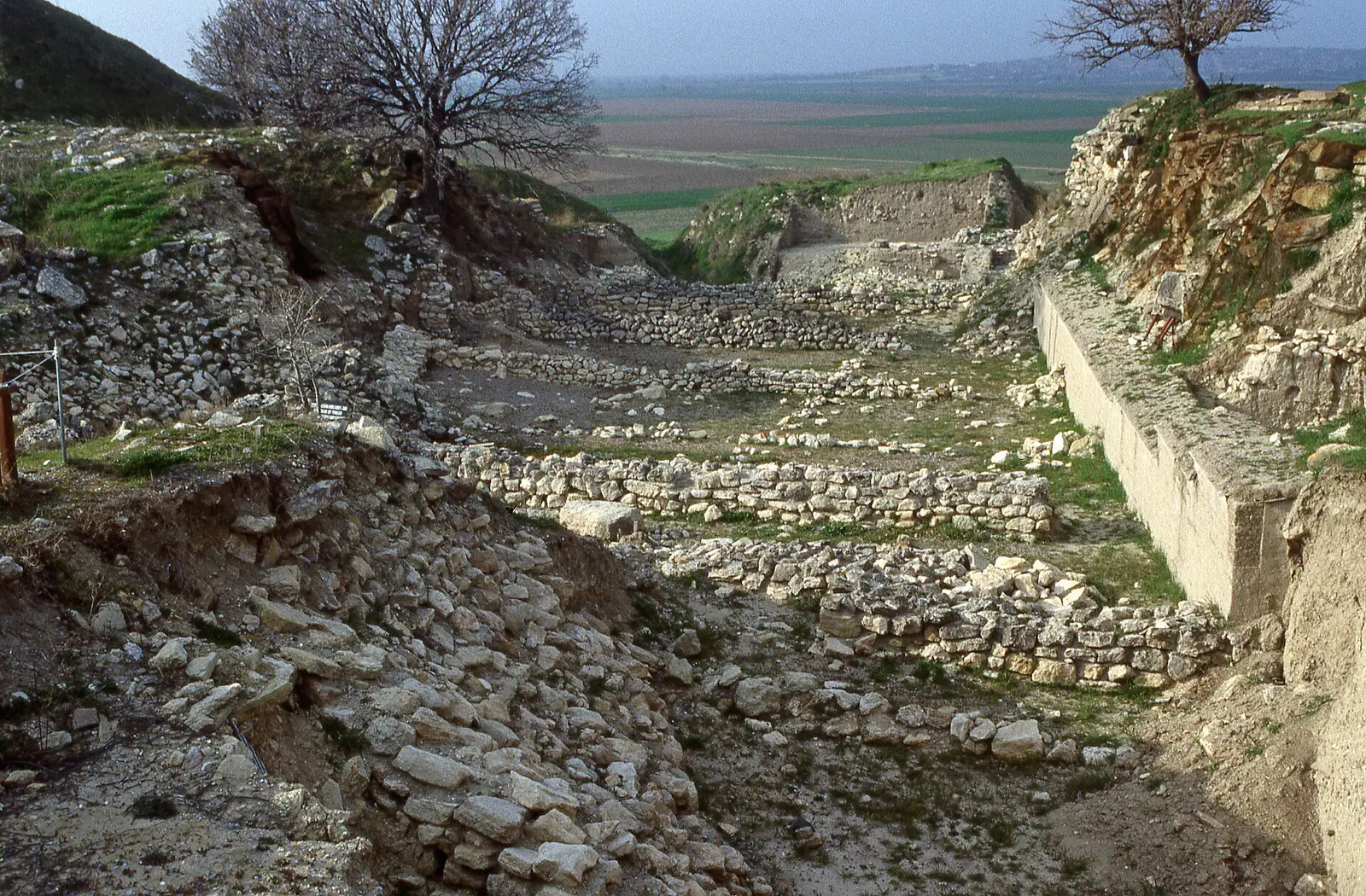
Hunting for the citadel of King Priam, Schliemann drove a deep trench straight through the heart of the mound. It is still known as the Schliemann Trench. The evaluation prepared for UNESCO by ICOMOS notes that his methods look crude to modern archaeologists, but credits him with awakening public interest in the site. It took Carl Blegen's excavations of 1932 to 1938 to finally untangle the mound's complicated layers.
How old is the "Treasure of Priam"?
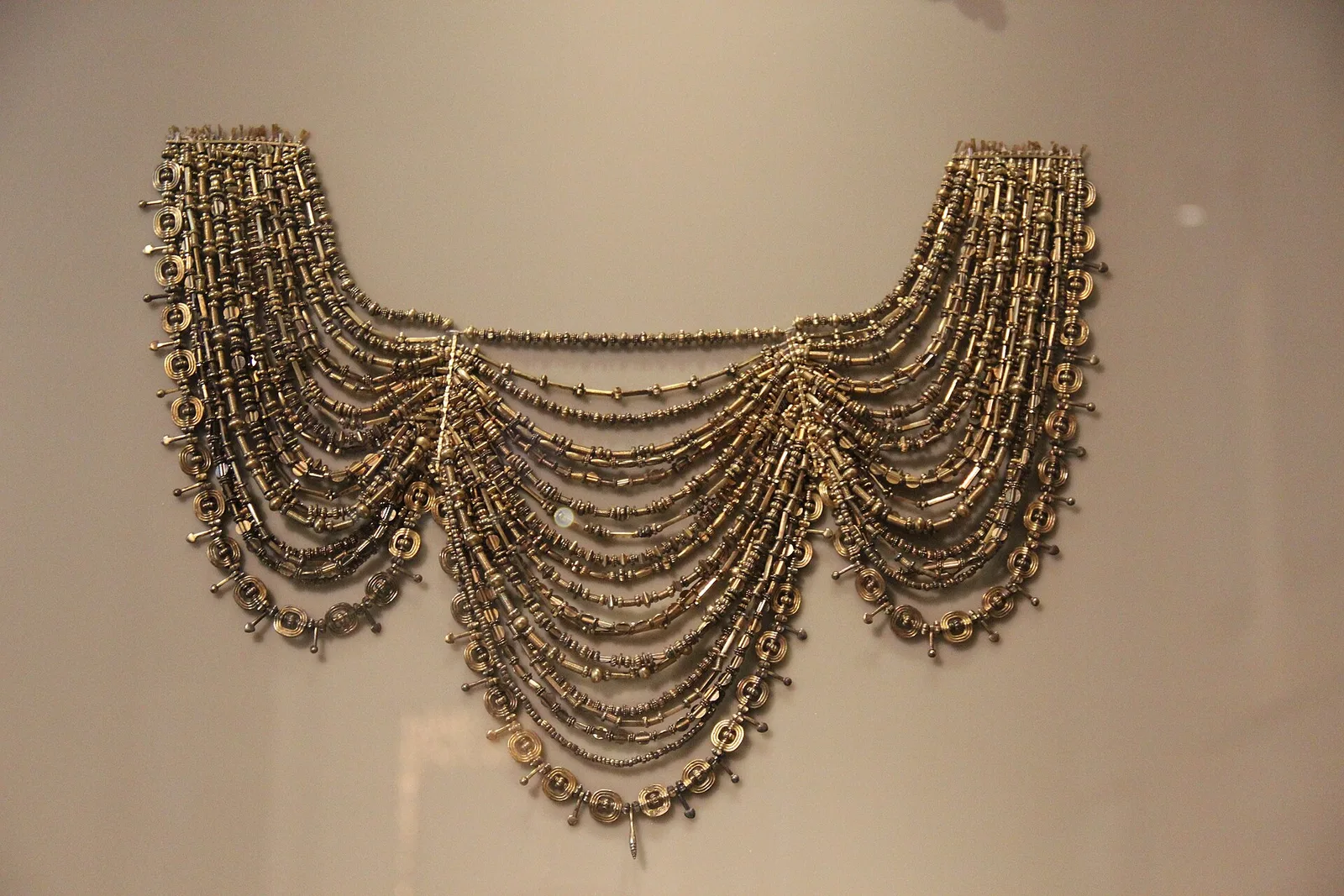
On 31 May 1873, Schliemann made the find of his life: a cache of gold and silver vessels, ornate diadems and precious jewellery. He named it the "Treasure of Priam," after the king of Troy in the Iliad. The photograph below shows his wife, Sophia, wearing some of the pieces.
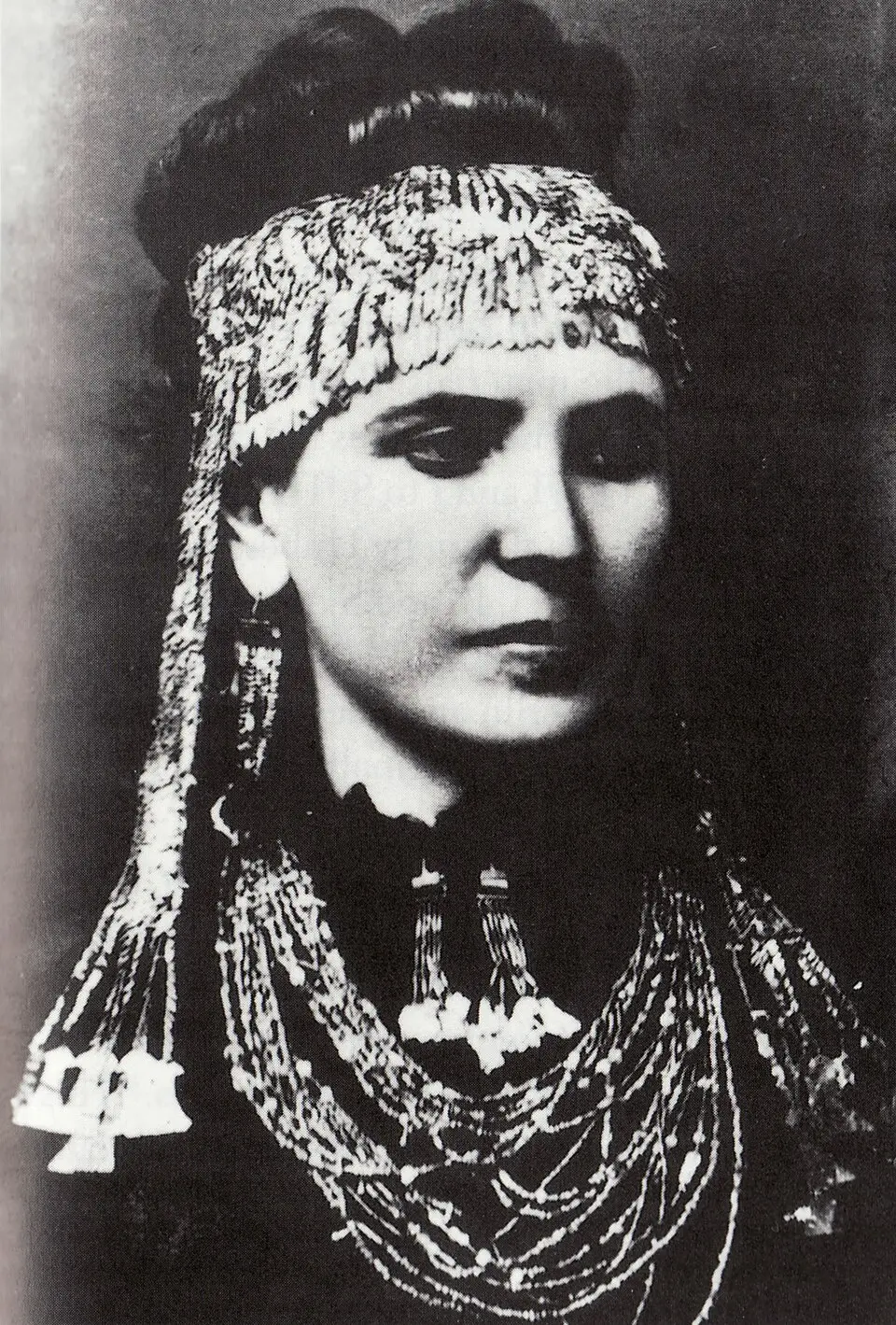
The name turned out to be wrong. The hoard came from Troy II, around 2300 BC, more than a thousand years before the war Homer describes.
Its later history was just as tangled. To avoid splitting the finds with the Ottoman authorities, as his excavation permit required, Schliemann smuggled the treasure to Greece, and the Ottoman Empire took him to court in Athens. After World War II, the Red Army carried the treasure off to the Soviet Union. The gold pieces are now on display at the Pushkin Museum in Moscow, while Berlin's Neues Museum shows replicas.
Which layer was Homer's Troy?
Scholars are split between two candidates. One is Troy VI, whose east wall still survives and once stood 6 metres high and more than 4 metres thick. An earthquake around 1350 BC badly damaged this city.
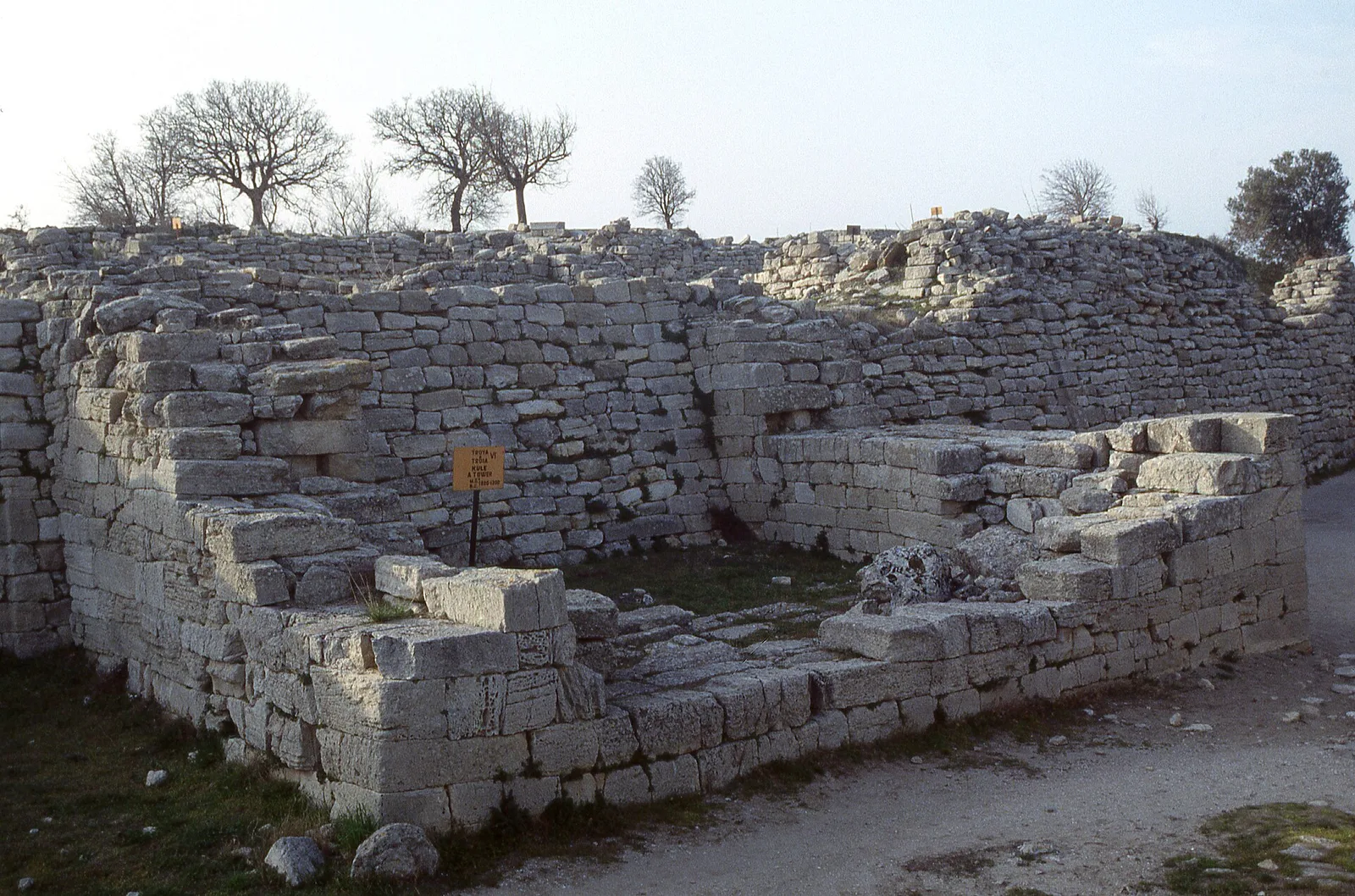
The other is the phase that followed, Troy VIIa, which ended around 1250 BC amid widespread fire and slaughter. ICOMOS and a Dartmouth College lecture on Aegean prehistory both name VIIa as the likeliest match, while noting that a vocal minority has always backed Troy VI.
Between legend and evidence
No one can say for certain that the Trojan War really happened. What excavation has made clear is that a large city ringed by strong walls stood on this hill in the Bronze Age. The Troy Museum, opened at the entrance to the site in 2019, tells the story of the city and its excavation through the objects found here.
Find Troy on Wooriyeojido
Four thousand years of cities, and a legend still unsolved. Troy is pinned on the Wooriyeojido map. Look it up in the Wooriyeojido app, and if you visit, leave your photos and stories from the day right beside it.
View this place in the Wooriyeojido appVideos of nearby places


Sources
- UNESCO World Heritage Centre — Archaeological Site of Troy (849)
- ICOMOS — Evaluation of Archaeological Site of Troy (1998)
- Turkish Ministry of Culture and Tourism museum portal — Çanakkale Archaeological Site of Troy
- Turkish Ministry of Culture and Tourism — Troya Ruins
- Staatliche Museen zu Berlin — 150 Years Since Heinrich Schliemann Uncovered the "Treasure of Priamos" in Troy (2023)
- Dartmouth College — Aegean Prehistory, Lecture 27: Troy VII and the Historicity of the Trojan War