Sardis: The Lydian Capital Where the World's First Coins Were Made
The ancient city of Sardis lies beside the village of Sart in western Türkiye. How the Lydians struck coins from electrum, a natural blend of gold and silver, more than 2,600 years ago, and the temple of Artemis they never finished, told through a short video and photos.
Where were the world's first coins made? The British Museum points to Lydia, an ancient kingdom in what is now Türkiye. Its capital was Sardis. Start with the short video.
 Watch the one-minute video on YouTube
Home of "the strongest place in the world"
Sardis lies in Salihli, in Türkiye's western province of Manisa, at the edge of the fertile Hermus plain and the foot of the Tmolus mountains. The ancient name lives on in the neighbouring village of Sart.
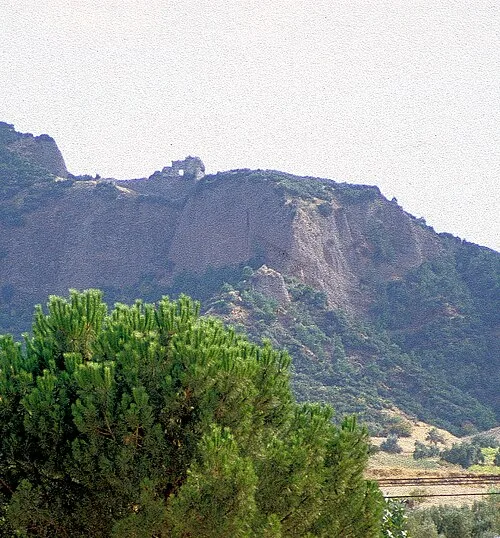
In the seventh and sixth centuries BC, Sardis was the capital of the Lydian empire. A line of kings from Gyges to Croesus conquered western Anatolia, and among the Greeks they were legendary for their wealth. The citadel that towers behind the city was famous throughout history as "the strongest place in the world."
Little lumps of gold and silver
Lydia's first coins were made of electrum, a naturally occurring mixture of gold and silver. They looked less like neat discs than small lumps of metal, stamped with a design on one side and marked with simple punches on the other.
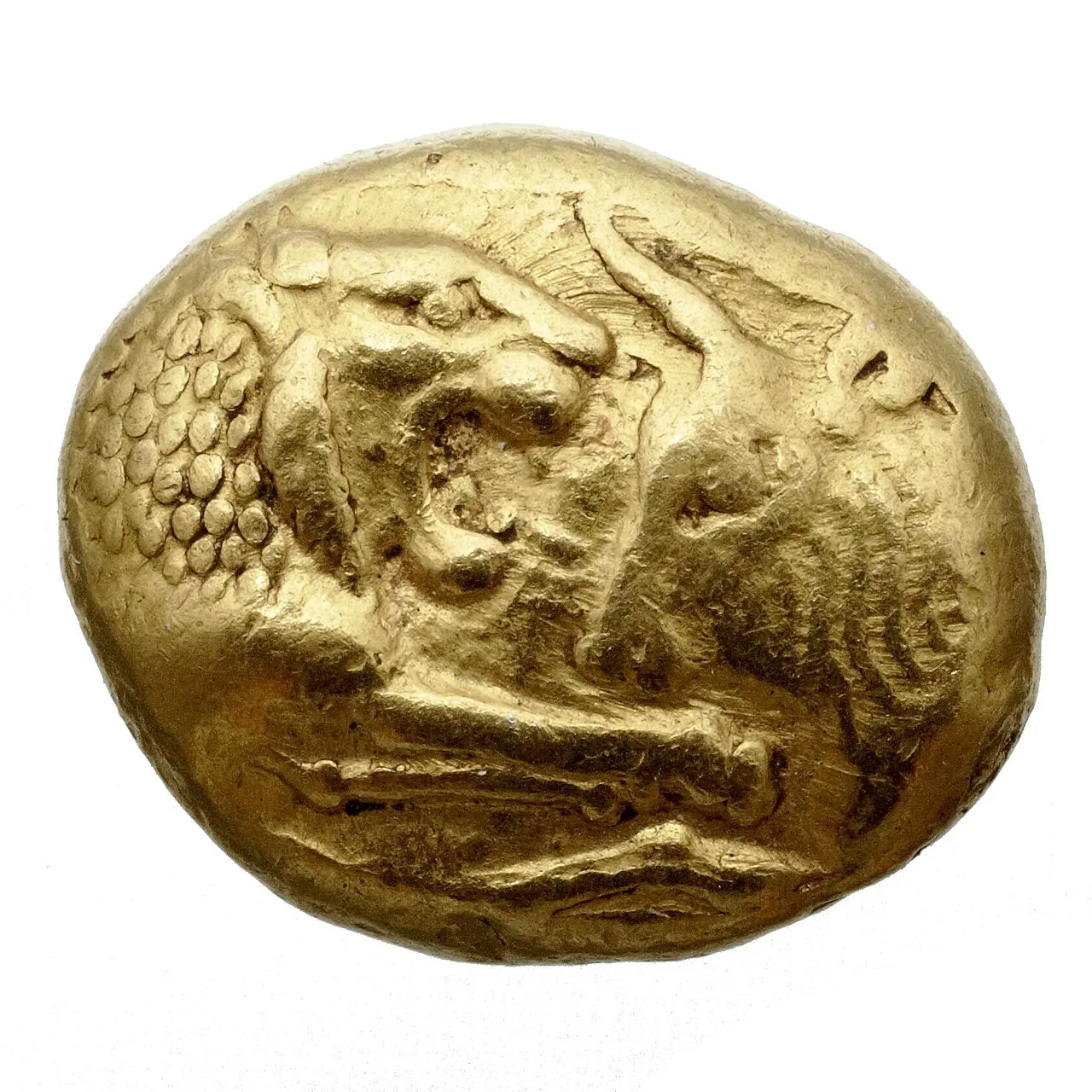
The design was often a lion's head. The British Museum believes the lion was a royal symbol, which suggests the coins were authorised by the kings of Lydia. The coins varied in size and shape, but their weight followed a strict standard. Dating to around 650 BC, they are among the earliest coins in the world.
From river gold to pure gold
The Pactolus River runs past Sardis, and the Lydians collected alluvial gold from it. In 1968, the Harvard-Cornell expedition at Sardis uncovered the place where that gold was refined.
The refinery dates to the first half of the sixth century BC, the era of King Croesus, and its furnaces and equipment were used to separate electrum into pure gold and pure silver. The method was patient work. Thin sheets of electrum were layered in a ceramic pot with a mixture of salt and brick dust, then baked at low temperatures until only pure gold was left.
A lion facing a bull
Lydia was also the first place to mint separate coins in gold and in silver. These coins show the forepart of a lion facing the forepart of a bull. They are often credited to Croesus, the king whose name became a byword for riches, but the British Museum notes they were probably made both before and after his reign.
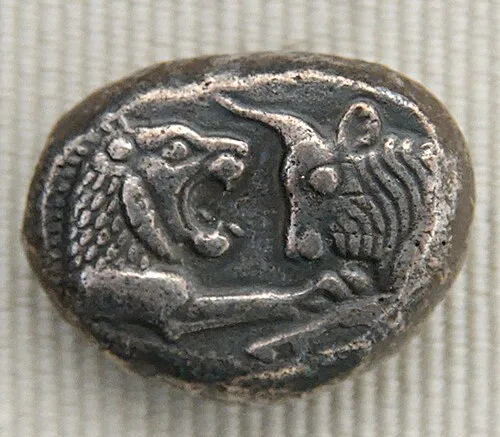
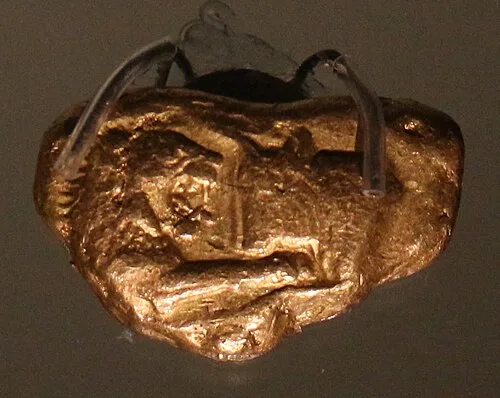
In 547 BC, the Persian king Cyrus the Great conquered Lydia. The Persians took over the royal mint at Sardis and went on striking the lion-and-bull coins in both gold and silver. From there, the idea of separate gold and silver coinage spread rapidly.
An unfinished temple and a Roman bath
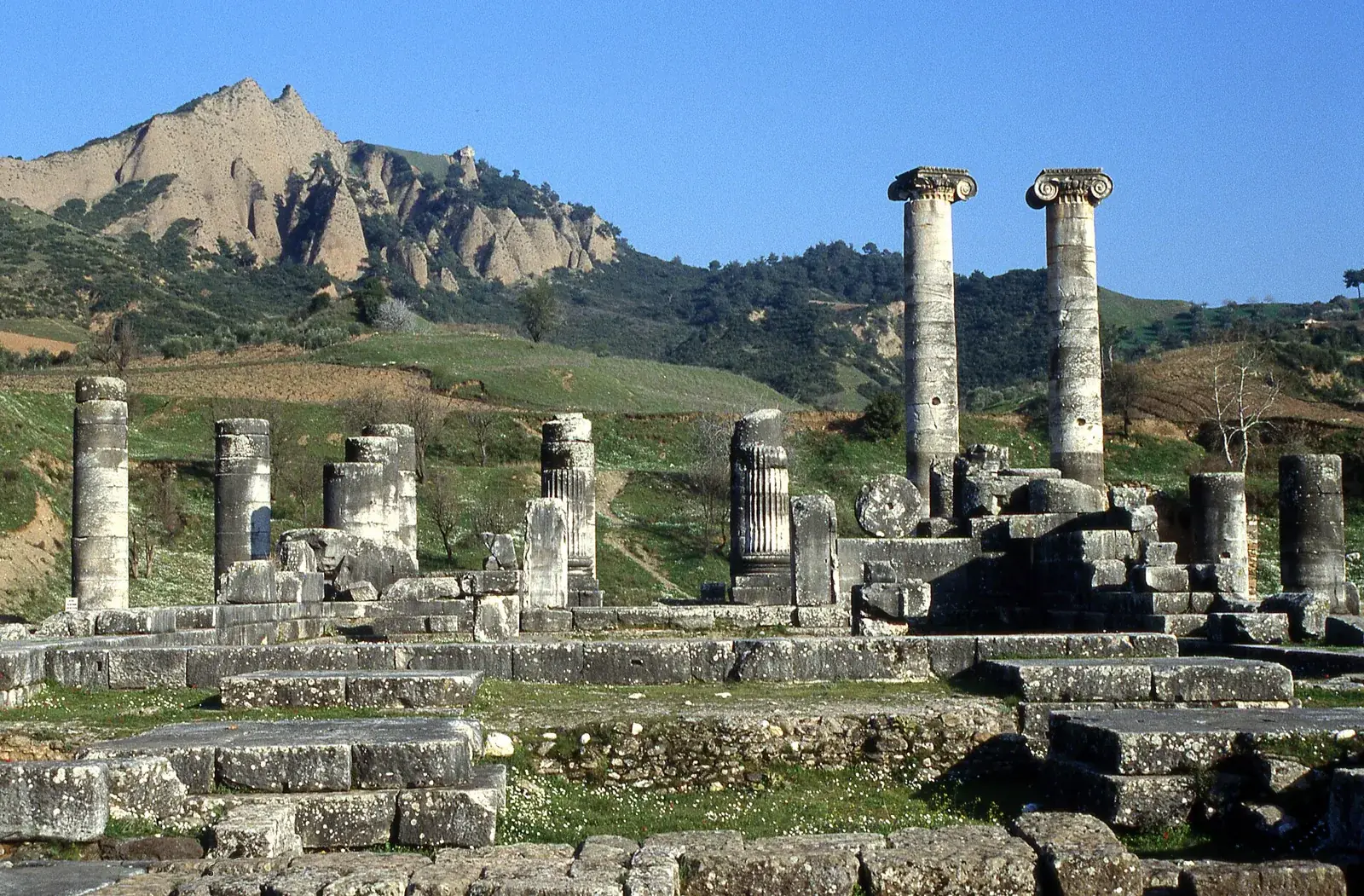
The most striking sight at Sardis today is the Temple of Artemis. Begun in the third century BC, long after the first coins, it was one of the largest temples in the world, yet it was never completed. Its two complete columns have stood intact since antiquity and have never been restored.
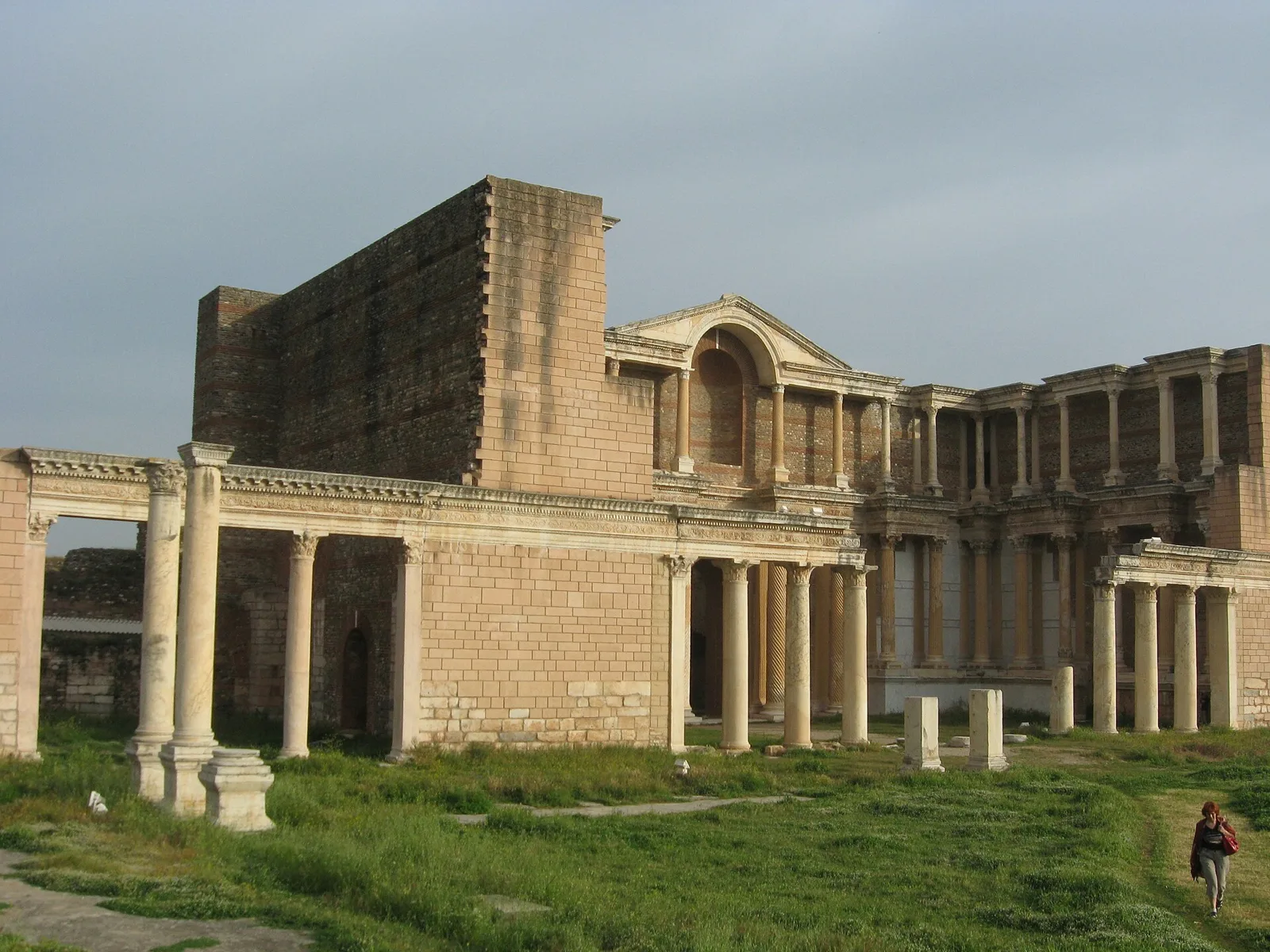
In Roman times the city gained a vast bath-and-gymnasium complex. Its two-storey colonnaded Marble Court was reconstructed between 1964 and 1973.
Were they really the first?
Scholars don't all agree on where coinage began, and the British Museum itself says only that the first coins were "probably" made in Lydia. At around the same time, people in China were using bronze money cast in the shape of tools. Still, many experts credit Lydia with inventing coinage as we know it, and it is widely recognised as the first kingdom to issue separate gold and silver coins.
Find Sardis on Wooriyeojido
More than 2,600 years ago, small lumps of electrum struck here set off the story of coins. Sardis is pinned on the Wooriyeojido map. Look it up in the Wooriyeojido app, and if you visit, leave your photos and stories from the day right beside it.
View this place in the Wooriyeojido appVideos of nearby places


Sources
- The British Museum — Money Gallery (Room 68) large print guide, Case 1 The beginnings of coinage (2020)
- Archaeological Exploration of Sardis (Harvard) — Sardis
- Archaeological Exploration of Sardis — Pactolus North (Lydian Gold Refinery)
- Archaeological Exploration of Sardis — The Temple of Artemis
- Archaeological Exploration of Sardis — The Bath-Gymnasium Complex
- Cornell Chronicle — Archaeologist Andrew Ramage strikes gold again with new book (2000-05-11)
- T.C. Kültür ve Turizm Bakanlığı — Sardes