The Hormizd Plate: A 4th-Century King on a Much Later Dish
A gilded silver dish around 1,500 years old shows a Persian king hunting lions. Drawing on the Cleveland Museum of Art's own records, a short video and photos explore how his crown gives away his name, and why the dish may have been made long after he died.
On a silver dish in Ohio, a king on horseback draws his bow at a lion. His crown alone is enough to tell us who he is. And yet the dish itself seems to have been made long after he died. How can that be? Start with the short video.
 Watch the one-minute video on YouTube
A Persian dish in Cleveland
The dish belongs to the Cleveland Museum of Art in Ohio, which bought it in 1962; its accession number is 1962.150. General admission to the museum is always free. The collection record lists its location as Gallery 116, the Islamic gallery, so it is worth checking before you go.
A hunt in 20 centimetres
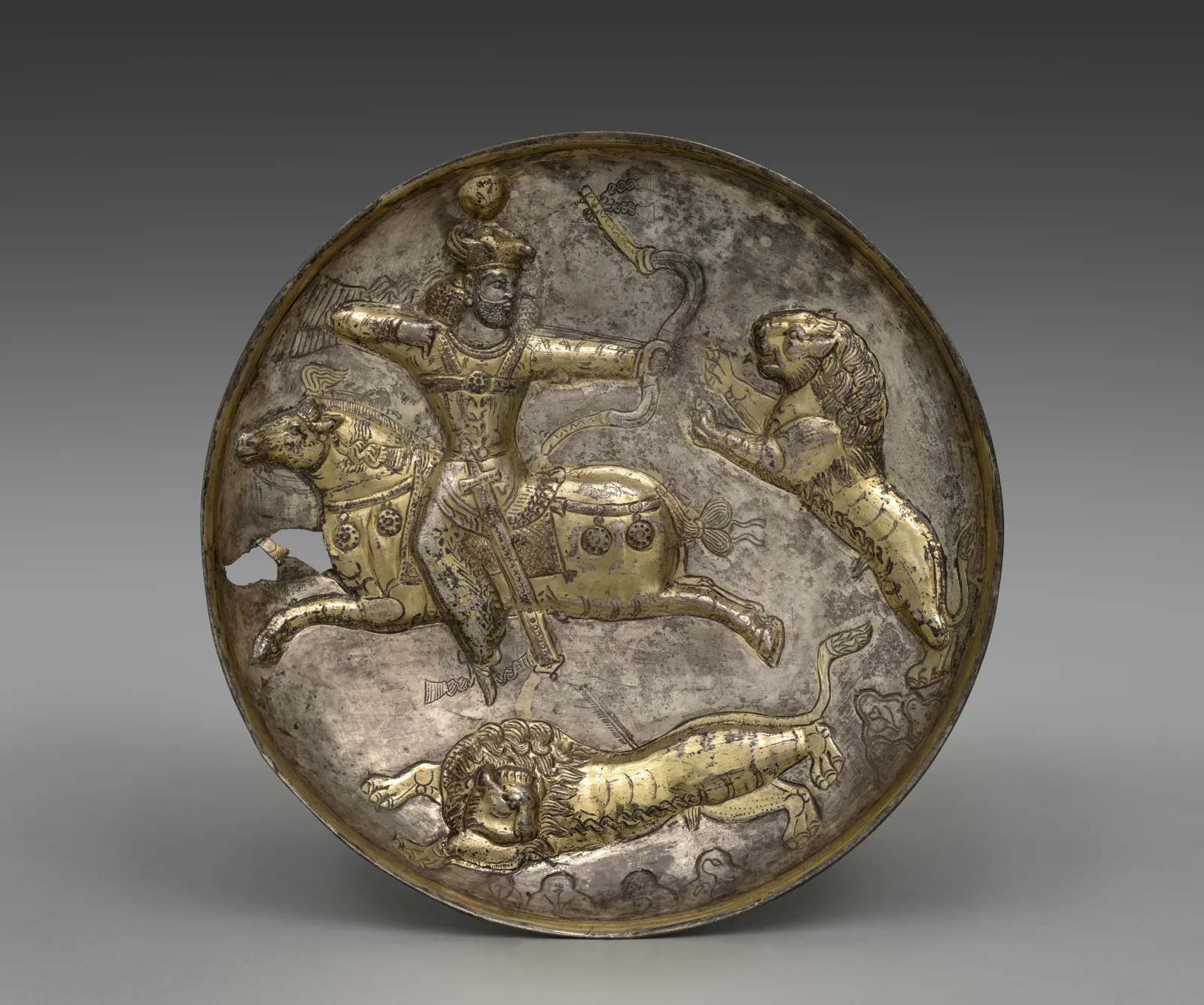
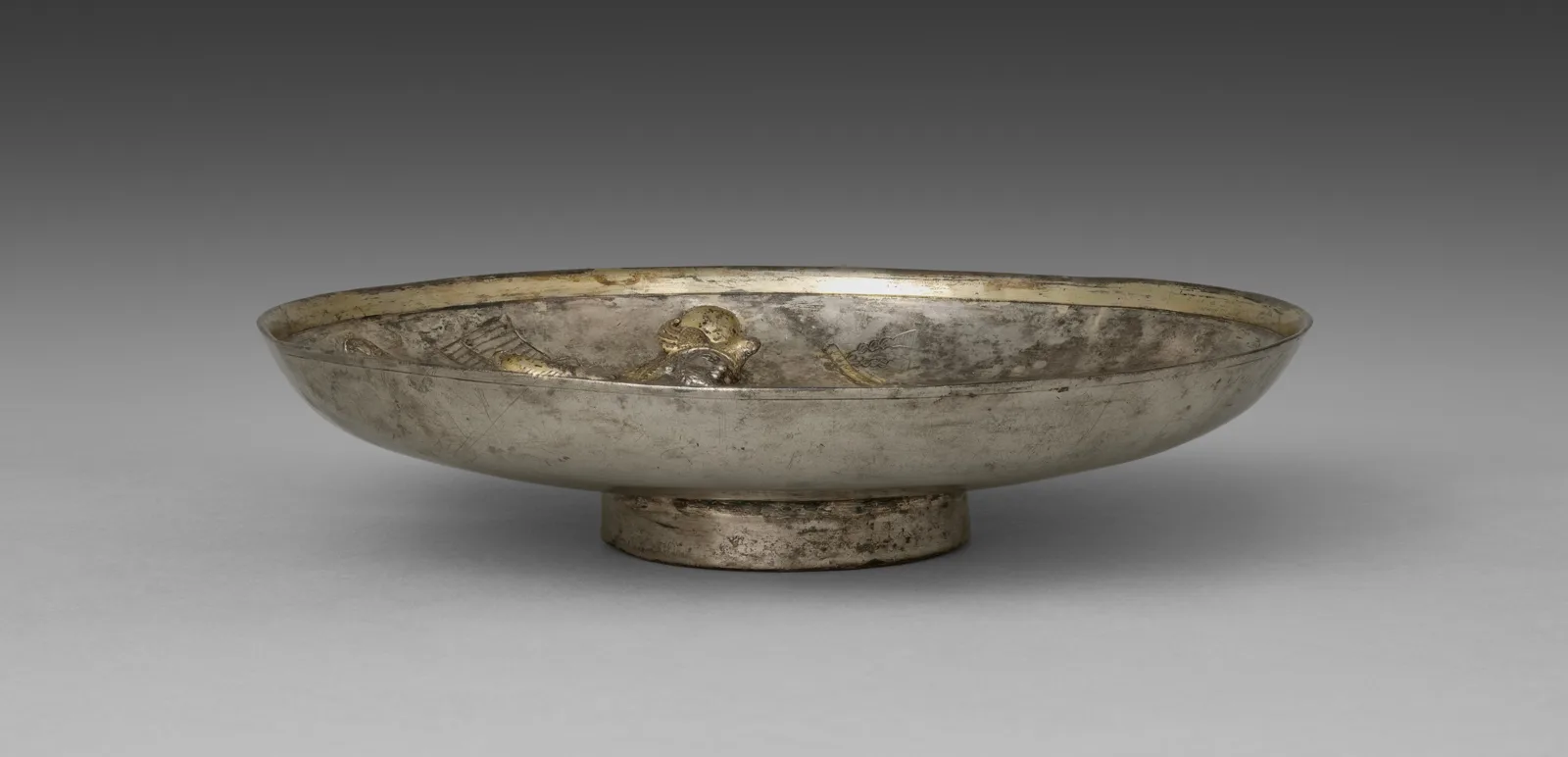
The dish comes from the Sasanian Empire (224–651 CE), which ruled from what is now Iran. It is made of gilded silver, and the museum dates it to 400–600 CE, making it roughly 1,500 years old. It measures 20.8 centimetres across and 4.6 centimetres high, and weighs 546 grams.
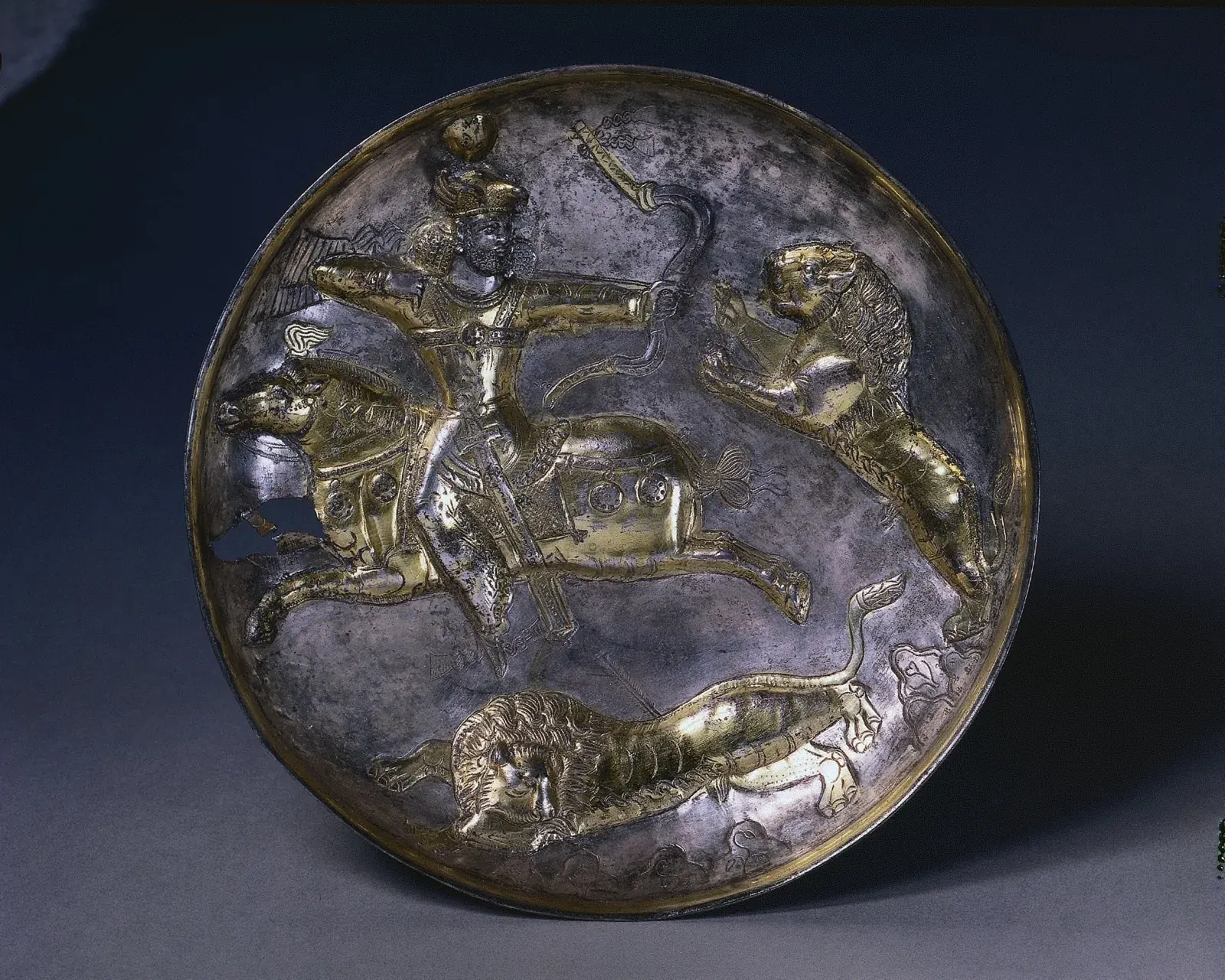
Look inside. A king wearing a large crown topped with a sphere rides a horse and draws his bow. From the right, a lion leaps at him, while a second lion lies defeated below. The gilded figures stand out against the dark silver ground, with mountain-like motifs in the background.
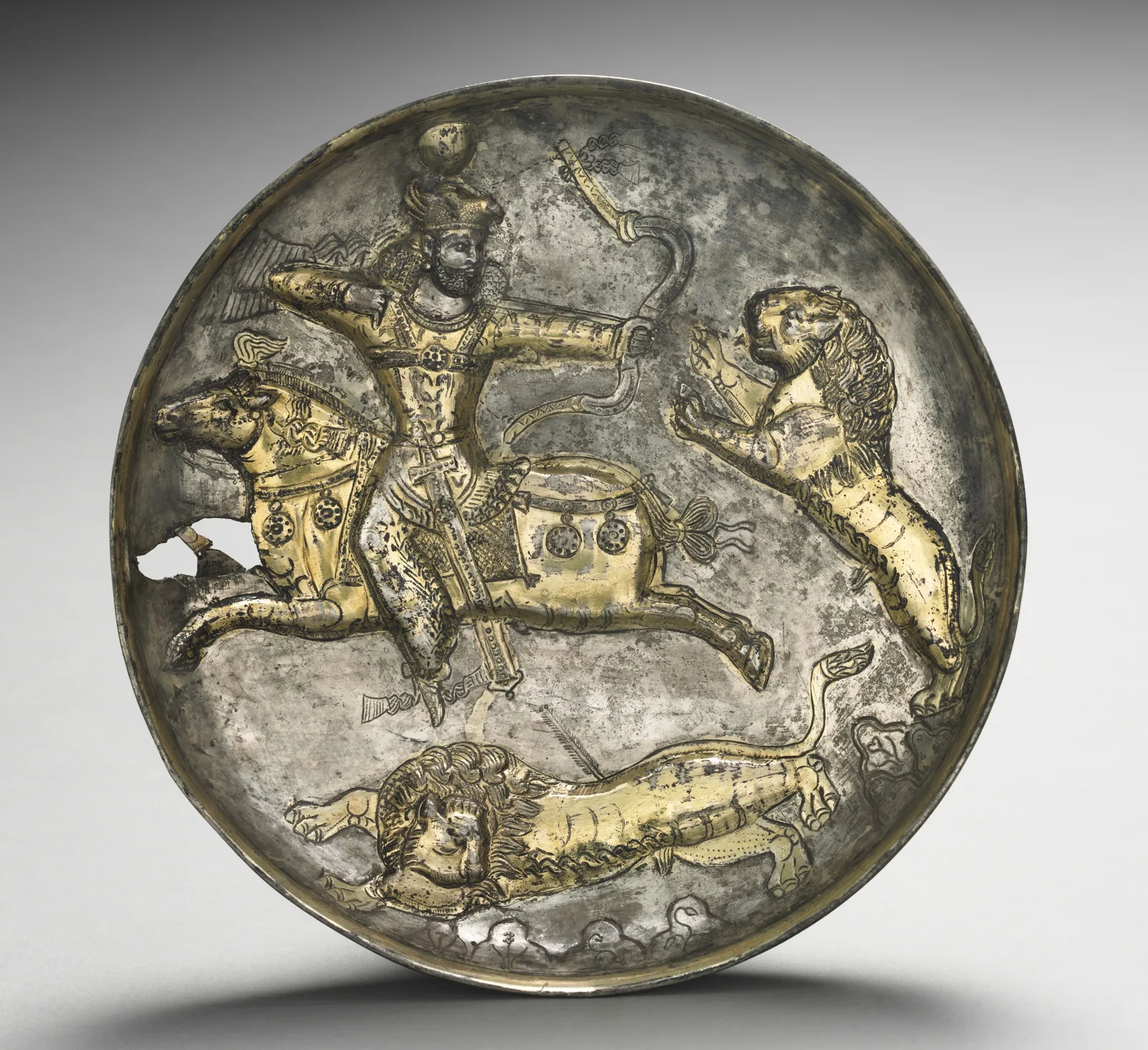
Lion hunting was a traditional royal sport in the ancient Near East, and it often appeared in art, such as the palace reliefs of Assyria (about 912–612 BCE). The museum notes that scenes of the royal hunt form a thread linking the worlds before and after Islam.
A crown that names its wearer
The king can be identified as the Sasanian ruler Hormizd II, who reigned from 303 to 309 CE. The clue is his distinctive crown, shaped like an eagle and topped with a korymbos: a fine, jewelled fabric that wrapped the hair on top of the head into a globe. That round shape above his head is the korymbos.
The gap between king and dish
Here is the puzzle. Hormizd II reigned from 303 to 309, but the museum dates the dish to 400–600. According to the museum, the style of the king's and the horse's equipment suggests the dish was made long after he died, perhaps as a commemorative work made by a much later successor, Hormizd III, who reigned from 457 to 459.
That is why its official title is Dish with King Hormizd II or Hormizd III Hunting Lions. Rather than choose, the museum keeps both possibilities in the name. Both the date and the idea that Hormizd III had it made are the museum's informed suggestions, not settled fact.
What's on the back
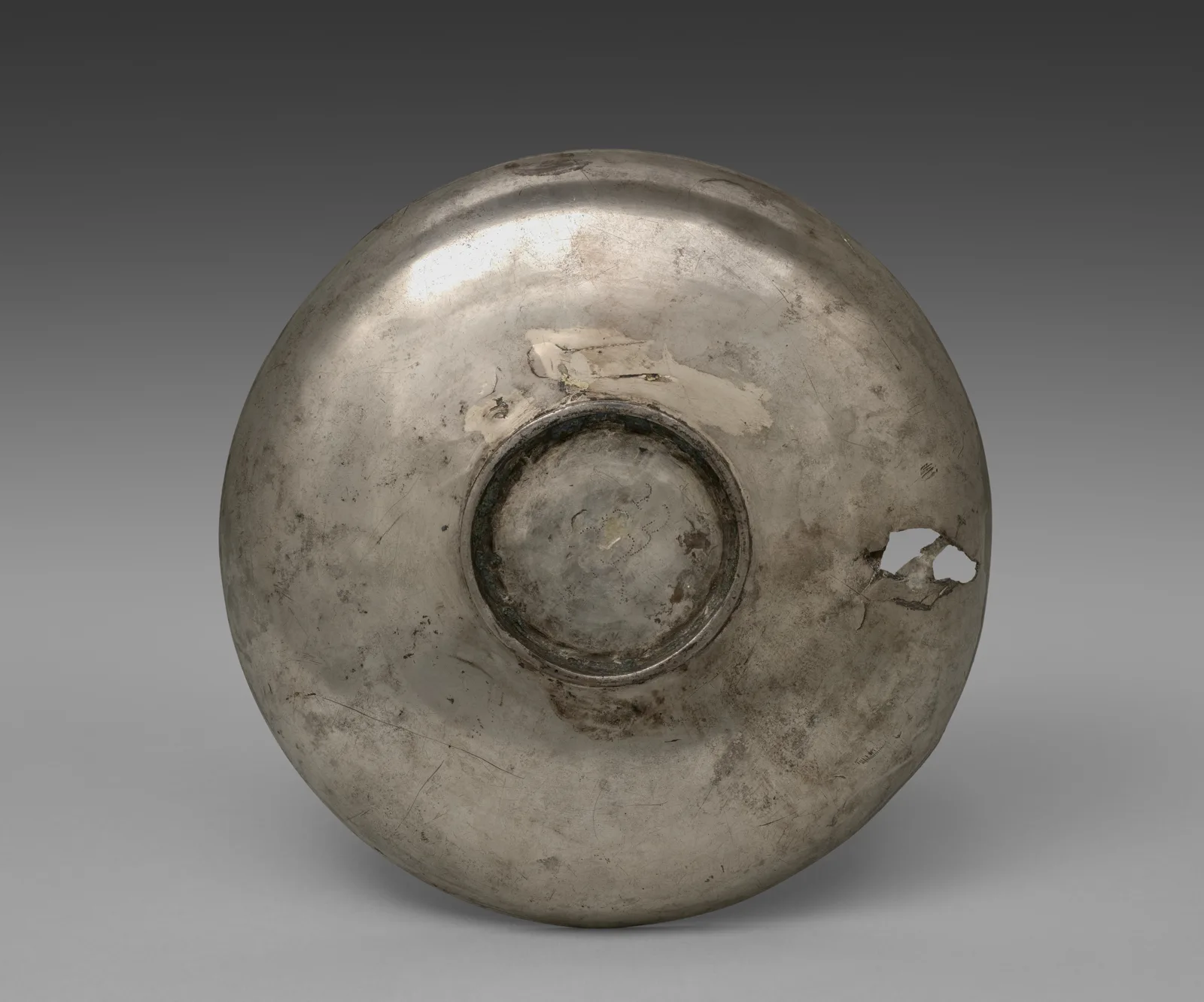
Turn the dish over and you find a round foot. Inside it is an inscription in Pahlavi, which, according to the museum's records, Dr. Frye of Harvard University read as "Gozac, one pound (fifty) one drachms." A small hole also pierces the rim on one side.
Find the Cleveland Museum of Art on Wooriyeojido
A crown that gives away a king's name, and a date that still carries a question mark: the Cleveland Museum of Art, home to this dish, is pinned on the Wooriyeojido map. Look it up in the Wooriyeojido app, and if you visit, leave your photos and stories from the day right beside it.
View this place in the Wooriyeojido app

