Newgrange: the 5,000-year-old tomb that catches the midwinter sunrise
Newgrange, a passage tomb built around 3200 BC in a bend of Ireland's River Boyne, lets the winter solstice sunrise into its inner chamber. Here is how it works, and the old tale that called it the home of a god, in video and photos.
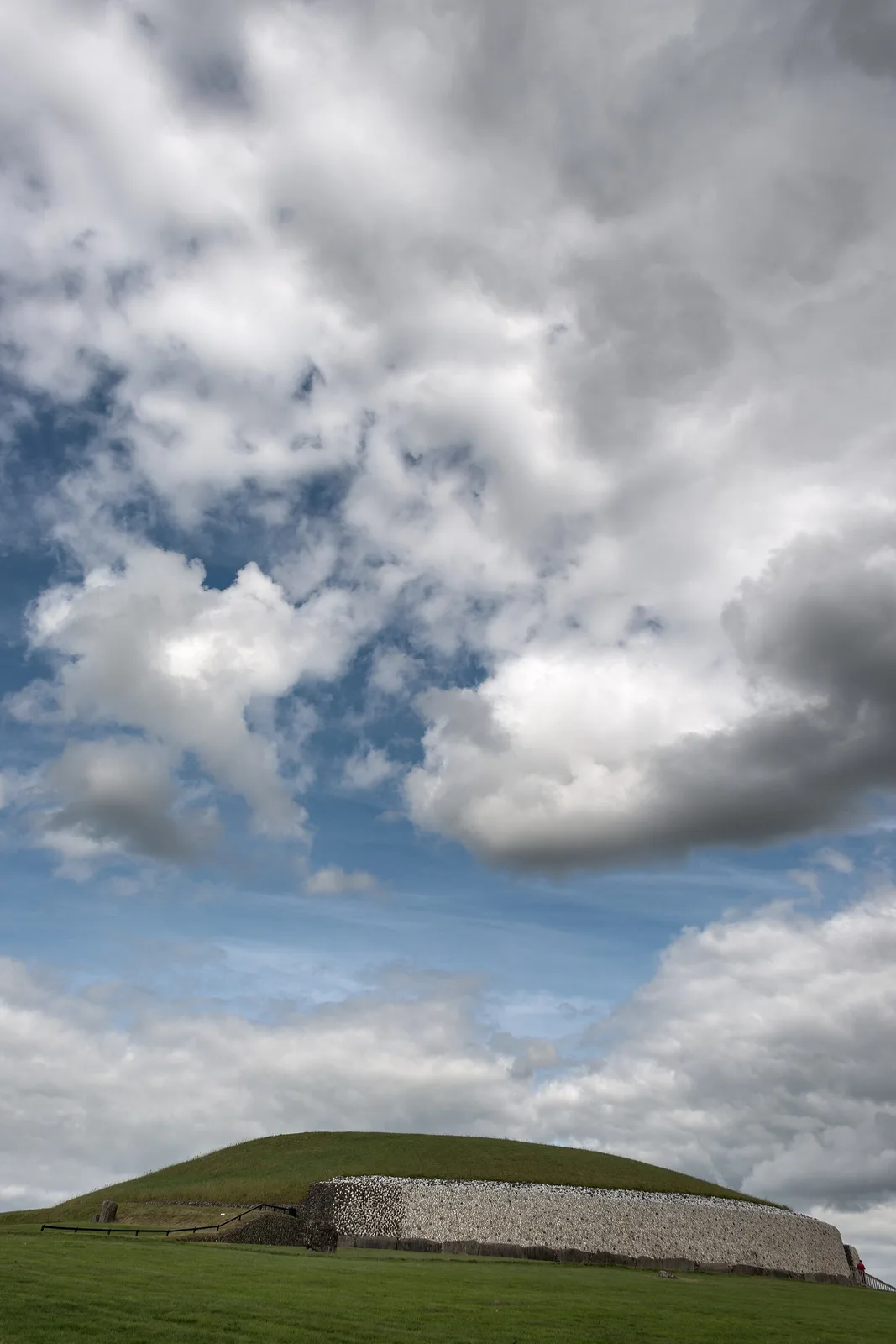
A round, grassy mound fronted by a gleaming wall of white stone: this is Newgrange, in Ireland. From outside it looks like nothing more than a big burial mound. But on the mornings around the winter solstice, the shortest days of the year, sunlight travels down a narrow passage and into a chamber deep inside. Whose home did the old stories say this was? Start with the short video.

 Watch the one-minute video on YouTube
A bend in the Boyne
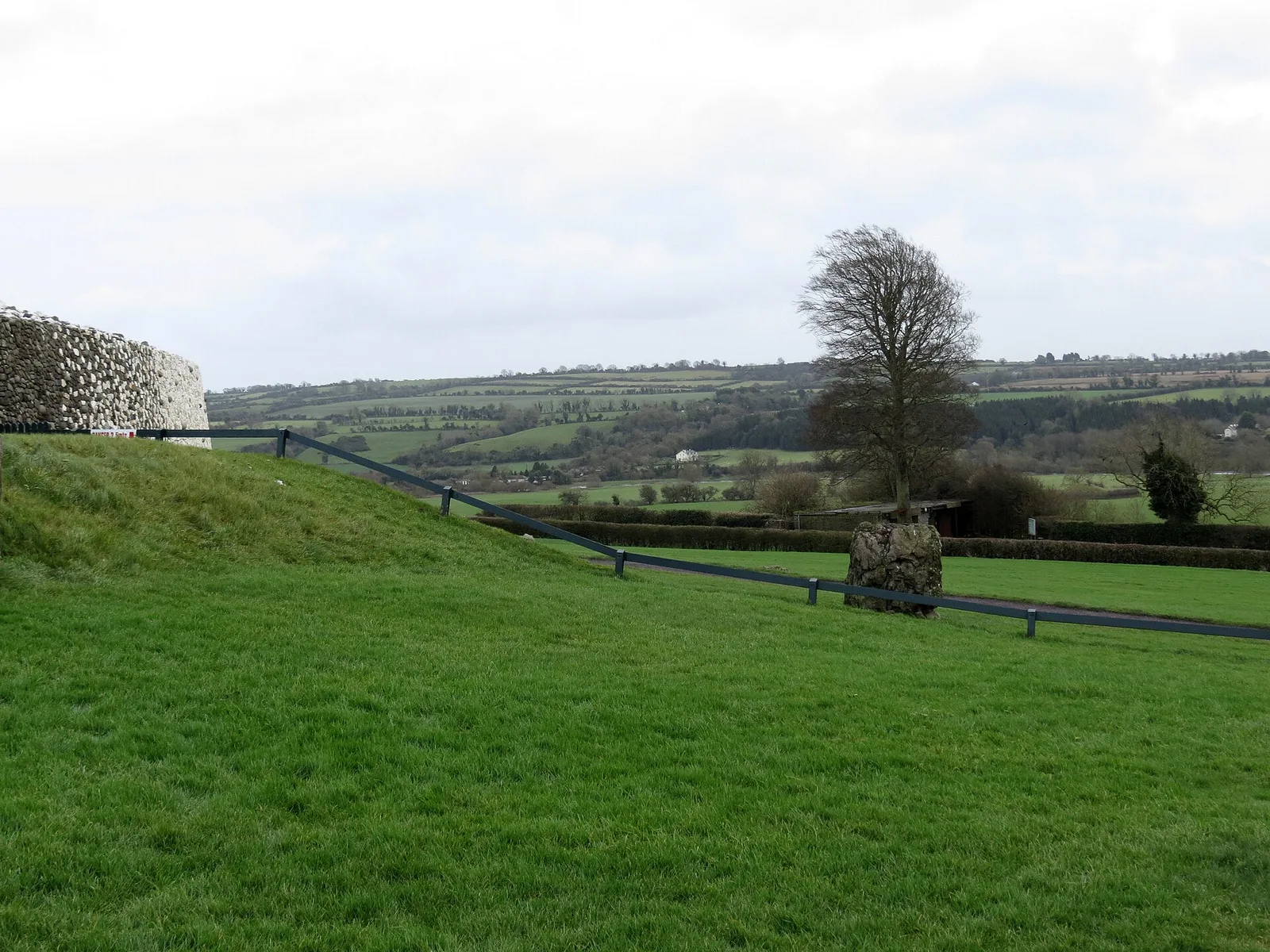
Newgrange stands in County Meath, in Brú na Bóinne, the valley enclosed by a great bend in the River Boyne. Three large tombs, Newgrange, Knowth and Dowth, sit here together with about 40 smaller passage tombs. UNESCO calls it Europe's largest and most important concentration of prehistoric megalithic art, and listed it as a World Heritage Site in 1993.

Older than the pyramids
According to Ireland's Office of Public Works, which looks after the site, Newgrange was built around 3200 BC. Fáilte Ireland, the national tourism authority, points out that this makes it older than Stonehenge in England and the pyramids of Giza in Egypt. The mound has watched over this valley for more than 5,000 years.
Spirals at the door
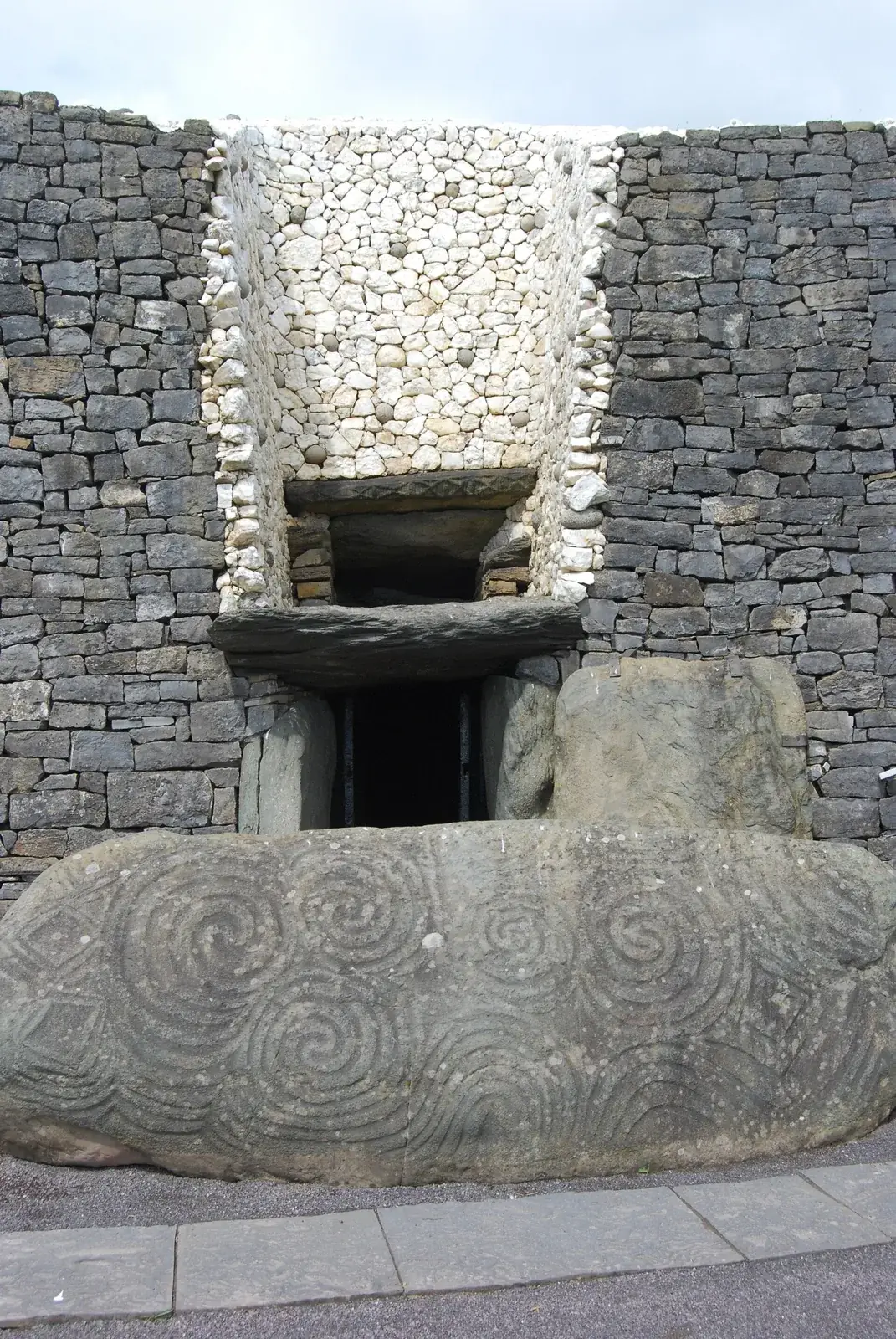
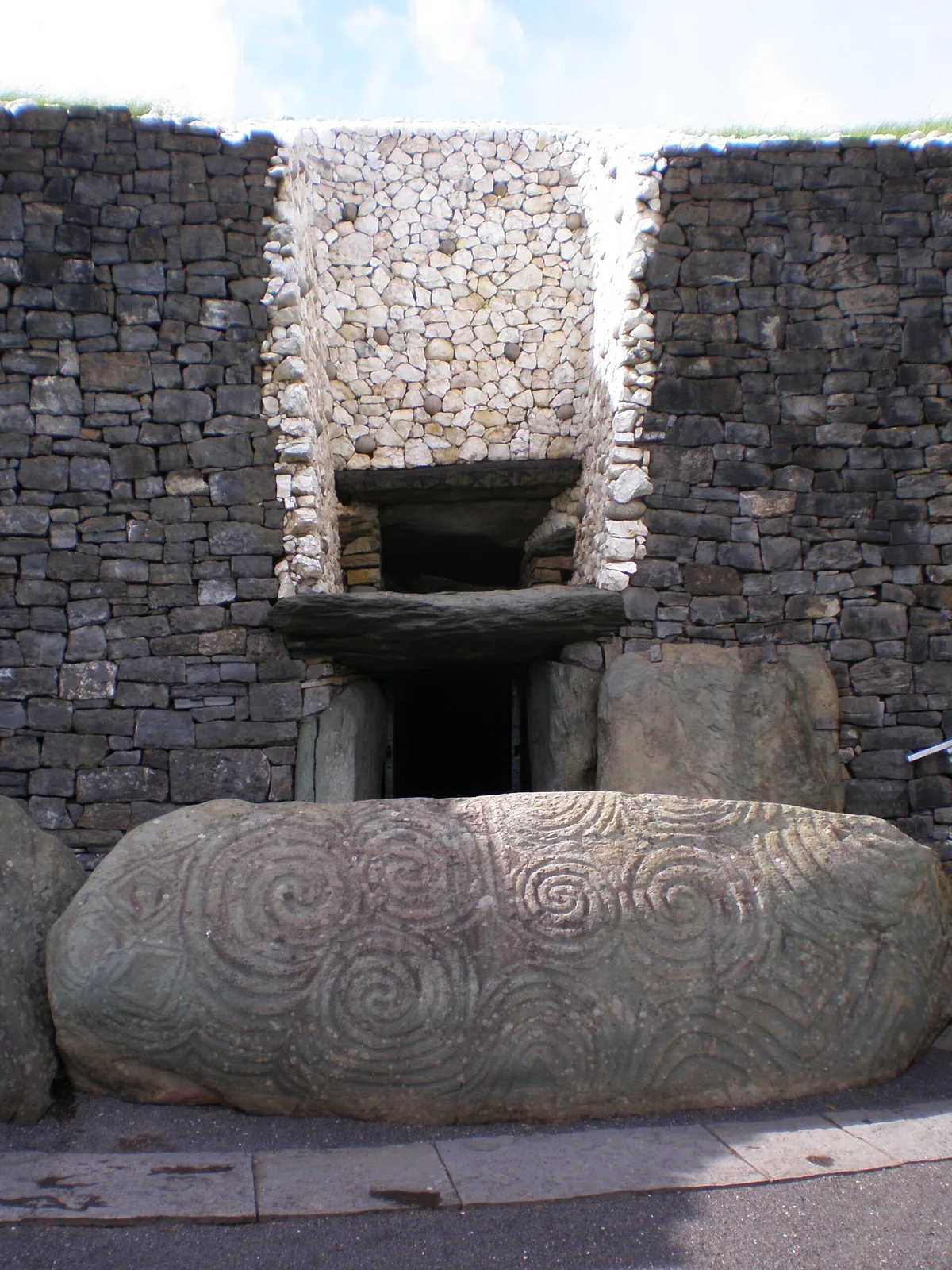
In front of the entrance lies a huge stone on its side. Its left half is carved with a large triple spiral and double loops, and another triple spiral appears on a stone inside the passage.


A window for the winter sun
Look above the doorway and you will see a small, window-like slot known as the roof box. The passage and chamber are aligned to the south-east, facing the sunrise at the winter solstice. For several days around 21 December, light from the rising sun pours through the roof box, runs down the passage and floods the chamber. Depending on the weather, the effect can last up to 17 minutes.
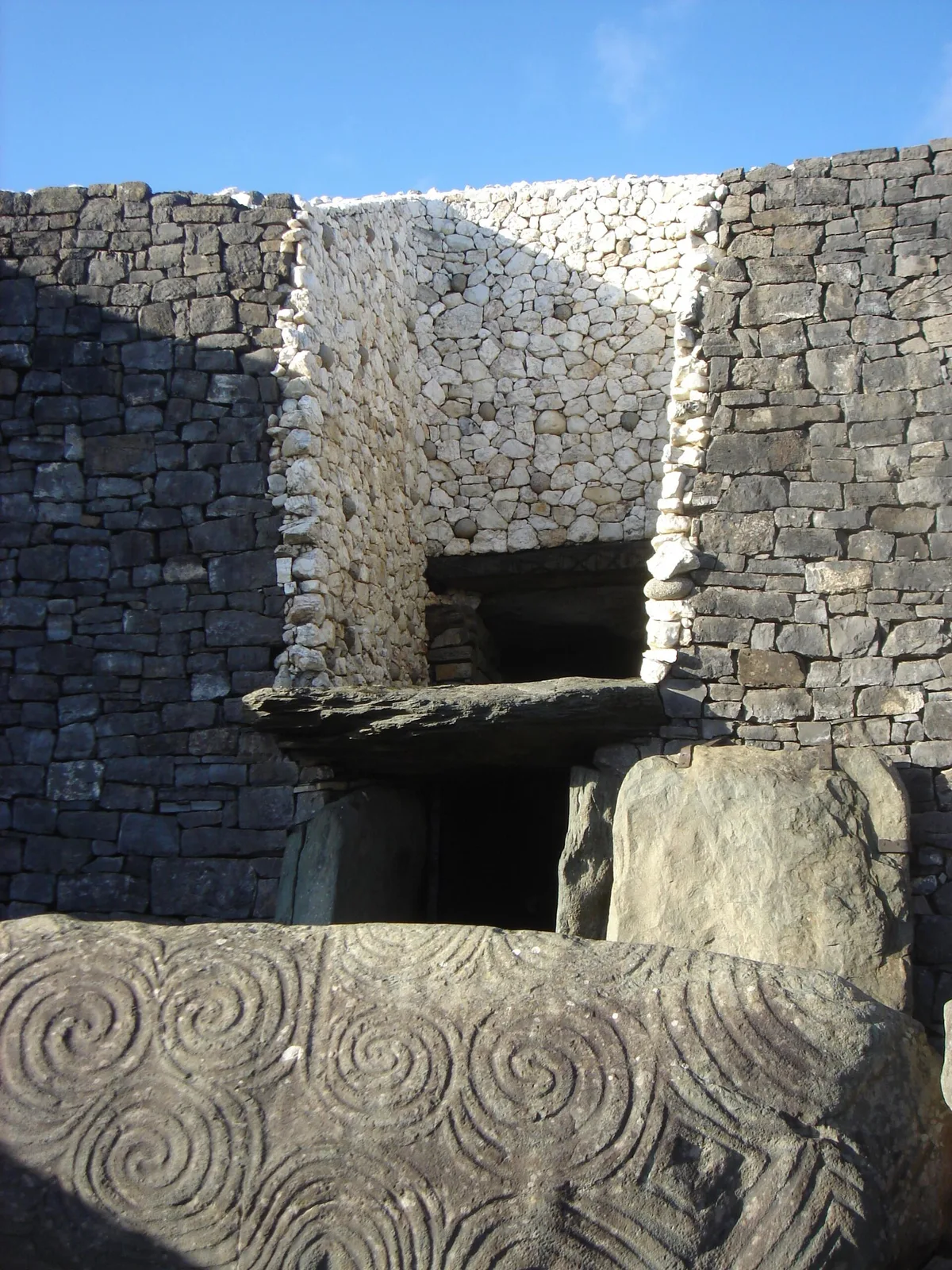

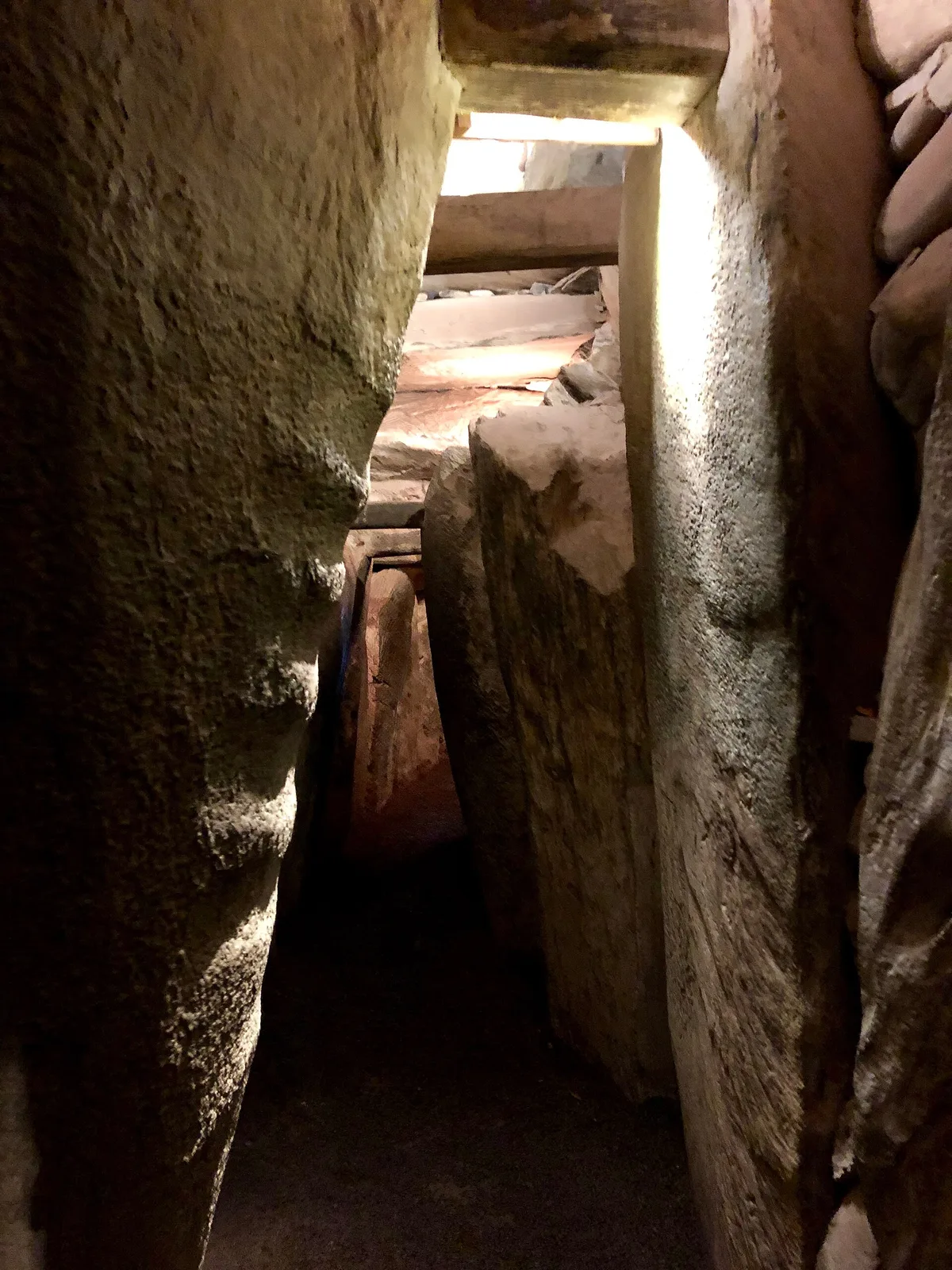

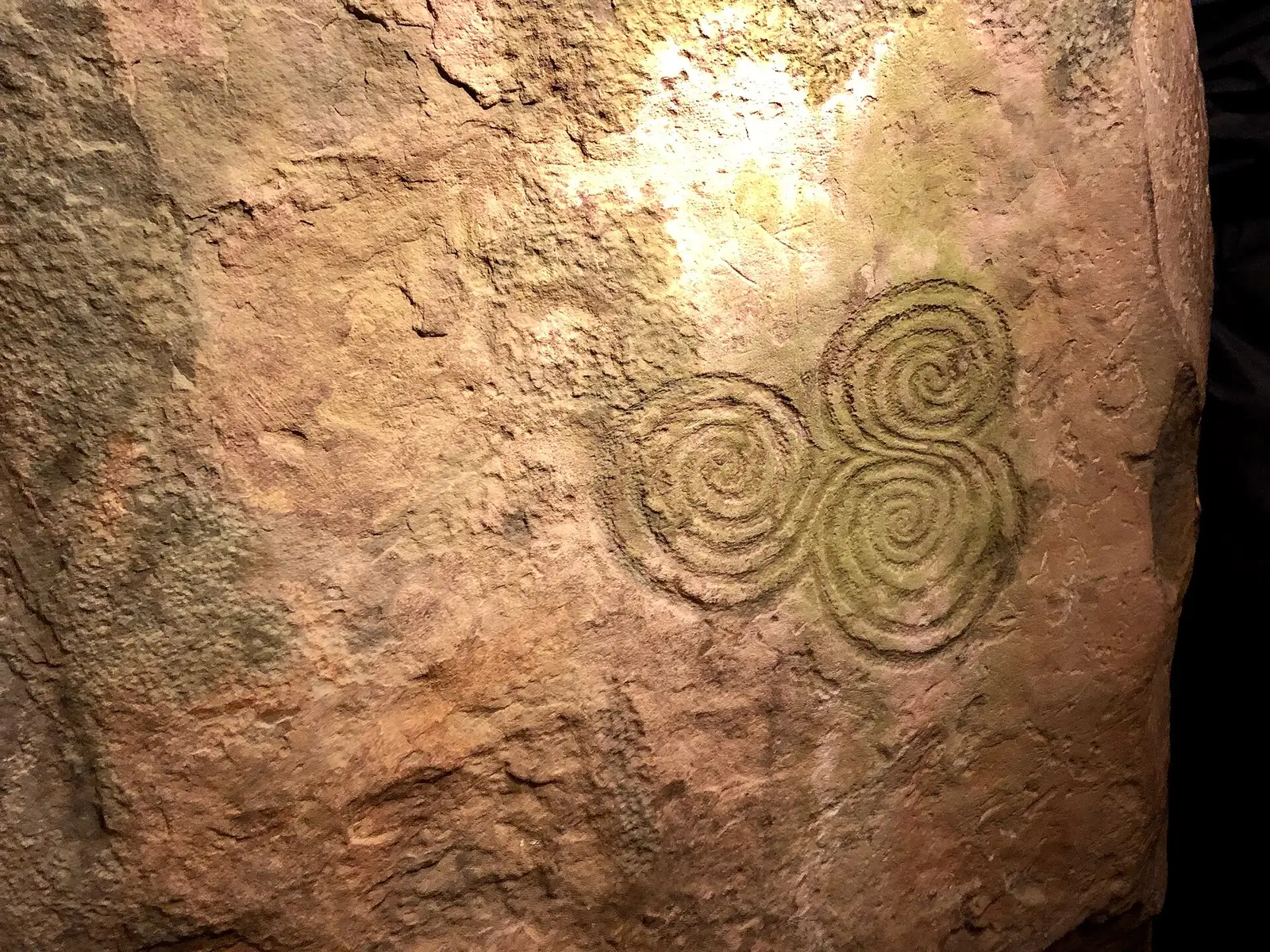

You can't simply wander in. Visits are by guided tour only, starting from the Brú na Bóinne Visitor Centre on the south side of the river, and photography is not allowed inside the passage and chamber.
How a god lost his house
The Boyne Valley has an old story about this mound. In the version that Boyne Valley Tourism presents as local lore, Newgrange was the home of the Dagda, one of the gods of ancient Ireland, and his son Aengus Óg.
The Dagda made the sun stand still for nine months, so Aengus was conceived and born all in a single day, which is why he was called Aengus Óg, "Aengus the Young." When Aengus learned he would inherit nothing from his father, he turned to cunning. He asked the Dagda if he might live in the house for a day and a night, and the Dagda agreed.
The next day, Aengus explained that "a day and a night" means all the days and all the nights. The Dagda had been outwitted, and Newgrange became Aengus's home. Boyne Valley Tourism traces the tale to place-lore preserved in the 12th-century Book of Leinster. A medieval text, The Wooing of Étaín, tells another version in which the house belongs to a figure named Elcmar.
Find Newgrange on Wooriyeojido
For more than 5,000 years this mound has stood in the same valley, and on the shortest mornings of the year the sun still finds its way inside. Newgrange is pinned on the Wooriyeojido map. Find Newgrange in the Wooriyeojido app, and if you go, leave your photos and stories from the day right beside it.
View this place in the Wooriyeojido appVideos of nearby places
 Giant's Causeway: where does the giant's stone road lead?
 When did the story of a monster in the loch begin? Loch Ness
 Stones moved across the sea by a wizard? Stonehenge
Sources
- UNESCO World Heritage Centre — Brú na Bóinne - Archaeological Ensemble of the Bend of the Boyne (659)
- ICOMOS — Advisory Body Evaluation 659 (Brú na Bóinne)
- OPW Heritage Ireland — Brú na Bóinne Visitor Centre: Newgrange, Knowth and Dowth
- OPW Heritage Ireland — Winter Solstice at Newgrange
- Discover Ireland (Fáilte Ireland) — Brú na Bóinne Visitor Centre, Newgrange and Knowth
- Boyne Valley Tourism — Brú na Bóinne, the legends behind the tombs
- CELT (University College Cork) — Tochmarc Étaíne