Naksansa and Hongnyeonam: who did a monk meet in a sea cave?
Naksansa is a temple on the East Sea coast at Yangyang, South Korea, with a tiny hermitage perched over a sea cave. Here is the legend of the monk Uisang from the Samguk Yusa, and how the temple rose again after the 2005 wildfire, in video and photos.
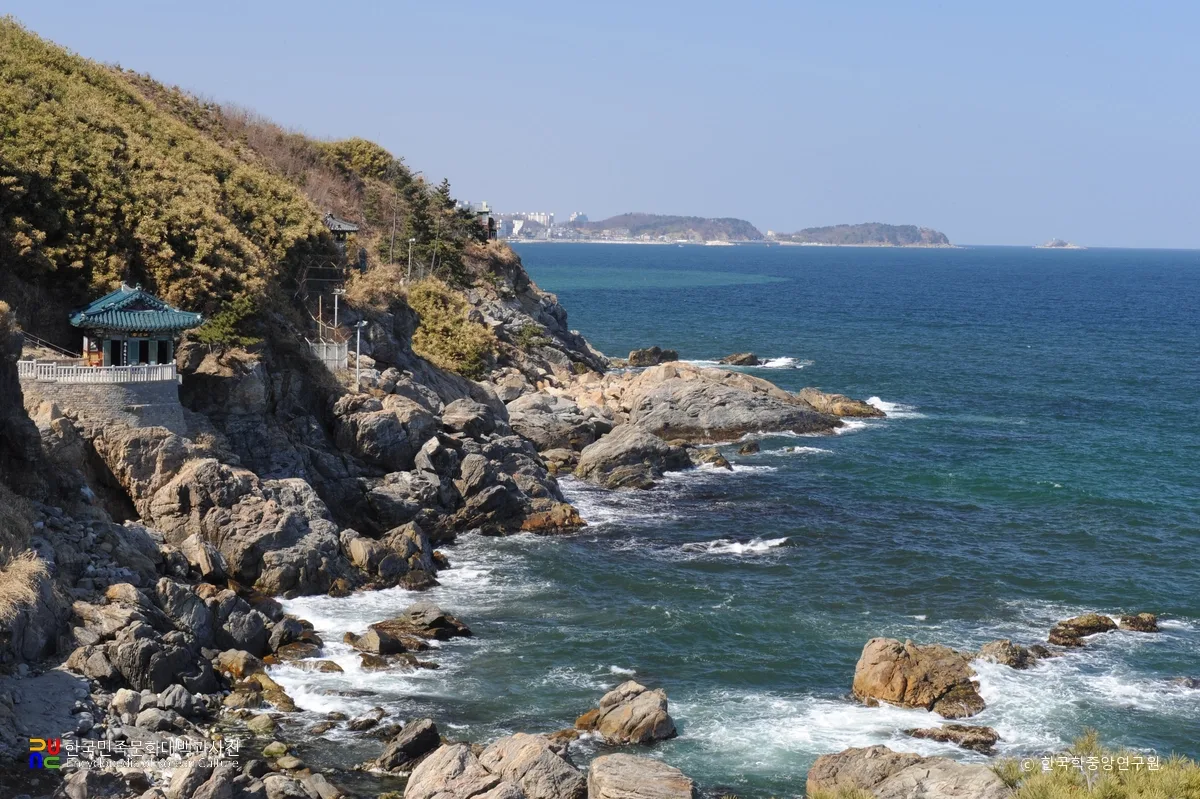
On a rocky point above the East Sea, a tiny Buddhist hall sits right on top of a cave that the waves rush in and out of. This is Hongnyeonam, part of Naksansa temple in Yangyang, on Korea's east coast. An old chronicle says a monk once met someone inside that cave. Who was it? Start with the short video.
 Watch the one-minute video on YouTube
A temple above the East Sea
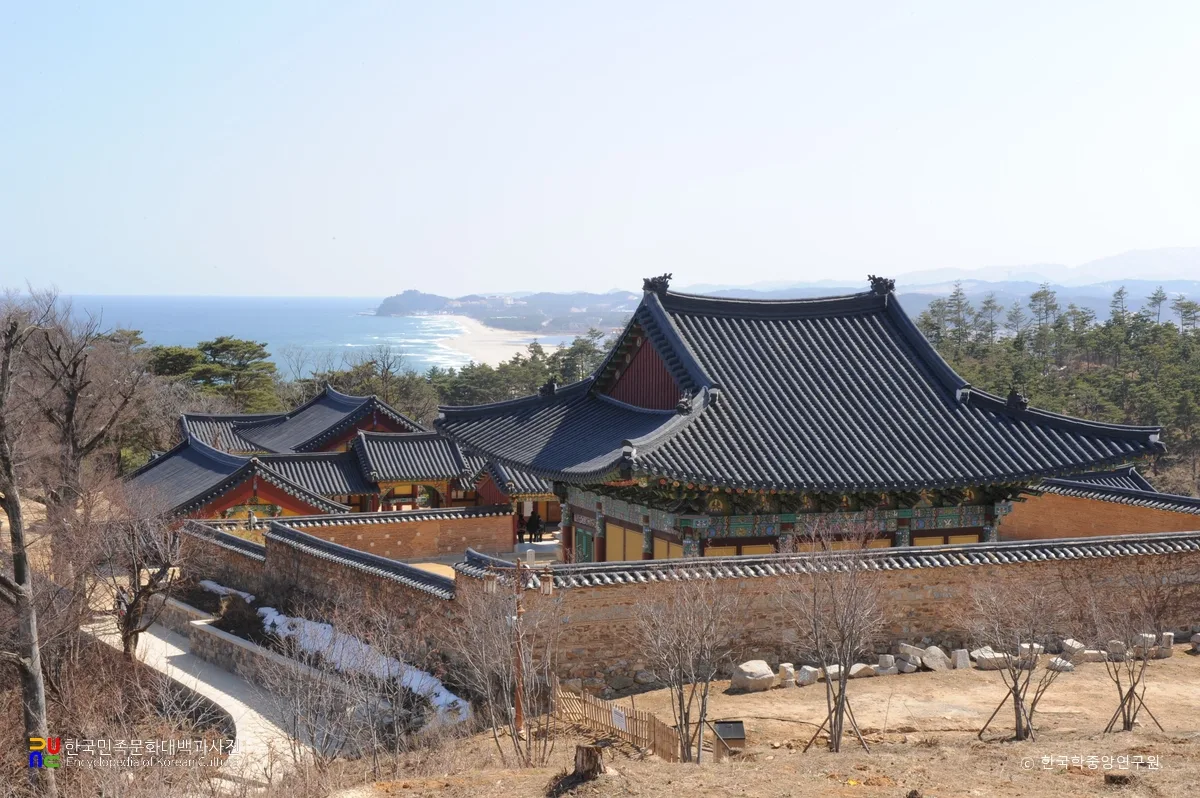
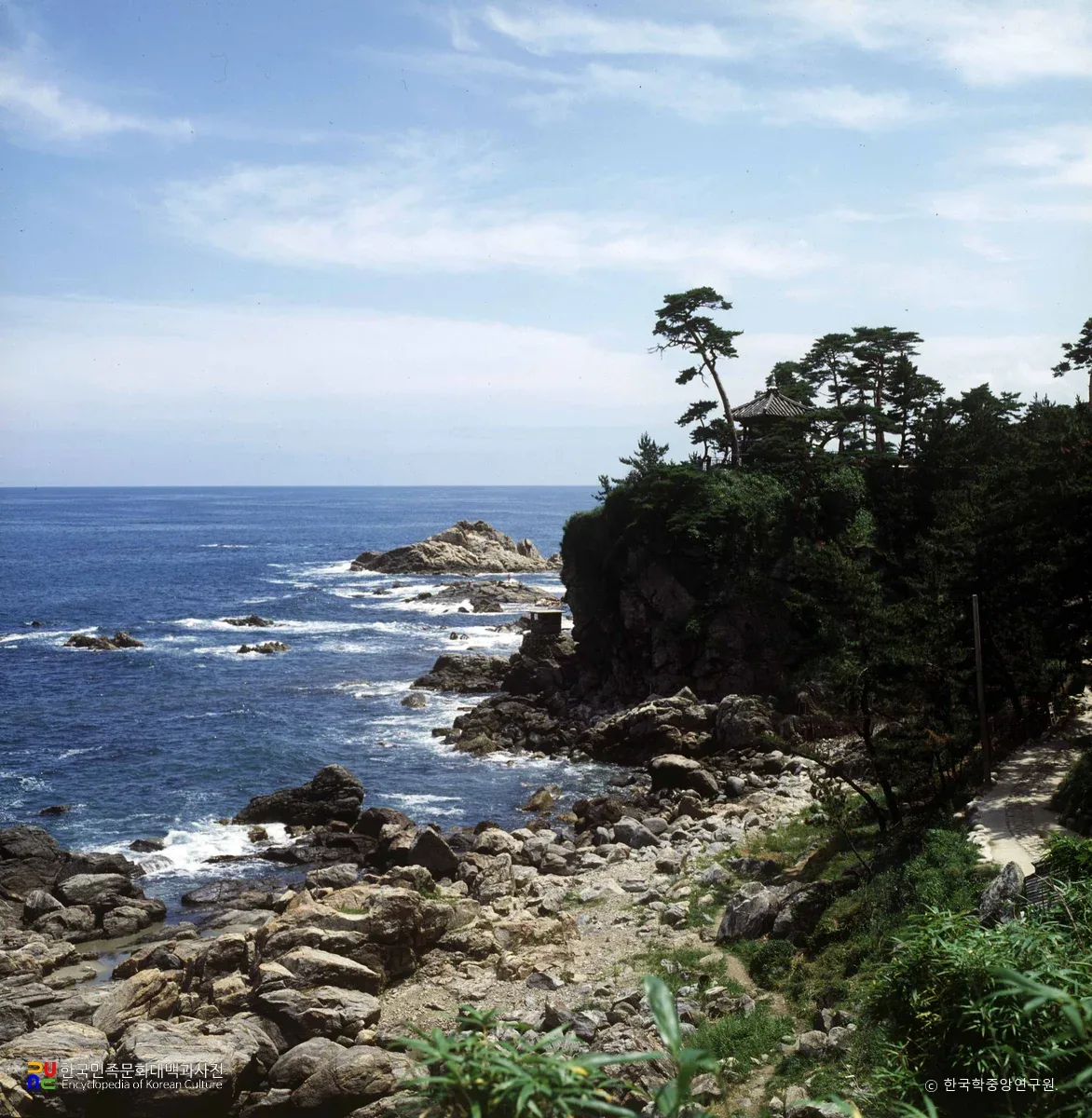
Naksansa stands on a seaside hill in Ganghyeon-myeon, Yangyang County, in Gangwon Province. According to the Samguk Yusa, the Memorabilia of the Three Kingdoms, it was founded in 671, during the reign of King Munmu of Silla, by the monk Uisang. The temple grounds were made a Historic Site in 2008, and the stretch of coast from the Uisangdae pavilion to Hongnyeonam was designated a Scenic Site in 2007. It is also counted among the Eight Scenic Views of Gwandong, and is a well-loved place to watch the sun rise.
Fourteen days at the mouth of a cave
Several stories are told about the cave. This one comes from the Samguk Yusa. Newly returned to Silla from Tang China, Uisang heard that Gwaneum, the bodhisattva of compassion known in China as Guanyin, dwelt in bodily form in a cave on this shore. Even the name Naksan, the story says, comes from Potalaka, the mountain in the western lands where Gwaneum was said to live.
Uisang purified himself and prayed for seven days, then at dawn set his sitting mat afloat on the water. Guardians of the Buddhist teaching appeared and led him into the cave. When he bowed toward the empty air, he was given a string of crystal prayer beads, and the dragon of the East Sea offered him a wish-granting jewel.
Yet Gwaneum had still not appeared. Uisang prayed for another seven days, and at last saw the bodhisattva's true form. "On the peak above where you sit, a pair of bamboo stalks will spring up," Gwaneum told him. "Build a hall on that ground." When he came out of the cave, bamboo had indeed sprouted from the earth. Uisang built a golden hall there and enshrined an image of Gwaneum, and the bamboo vanished again. That temple, the story goes, is Naksansa.
A floor with the sea beneath it
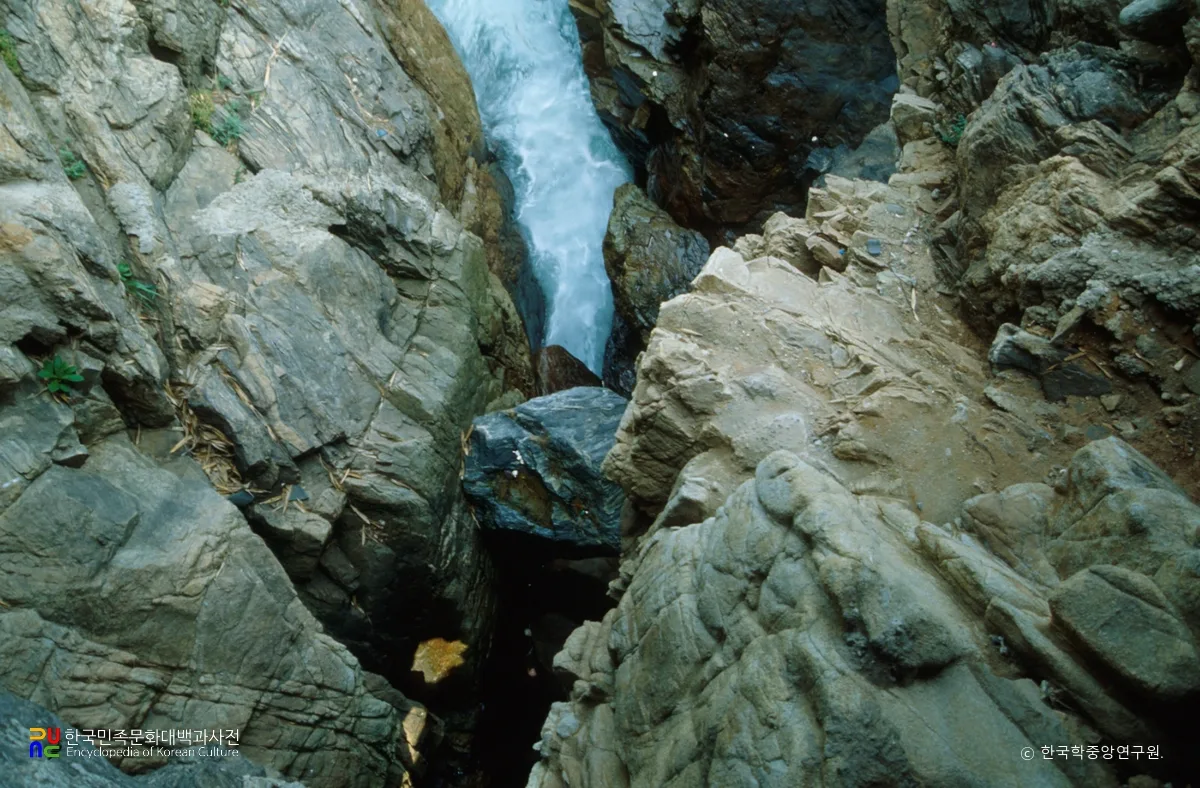
Hongnyeonam is a small hermitage about 300 metres north of Uisangdae, built on top of a rock cave by the shore. The cave below, known as Gwaneum Cave, is a sea cave carved by the waves. The hall was built so that worshippers can see the sea heaving beneath its floor. Tradition says it was designed that way so the dragon who gave Uisang the jewel could hear the Buddha's teaching too.
A statue watching the sea
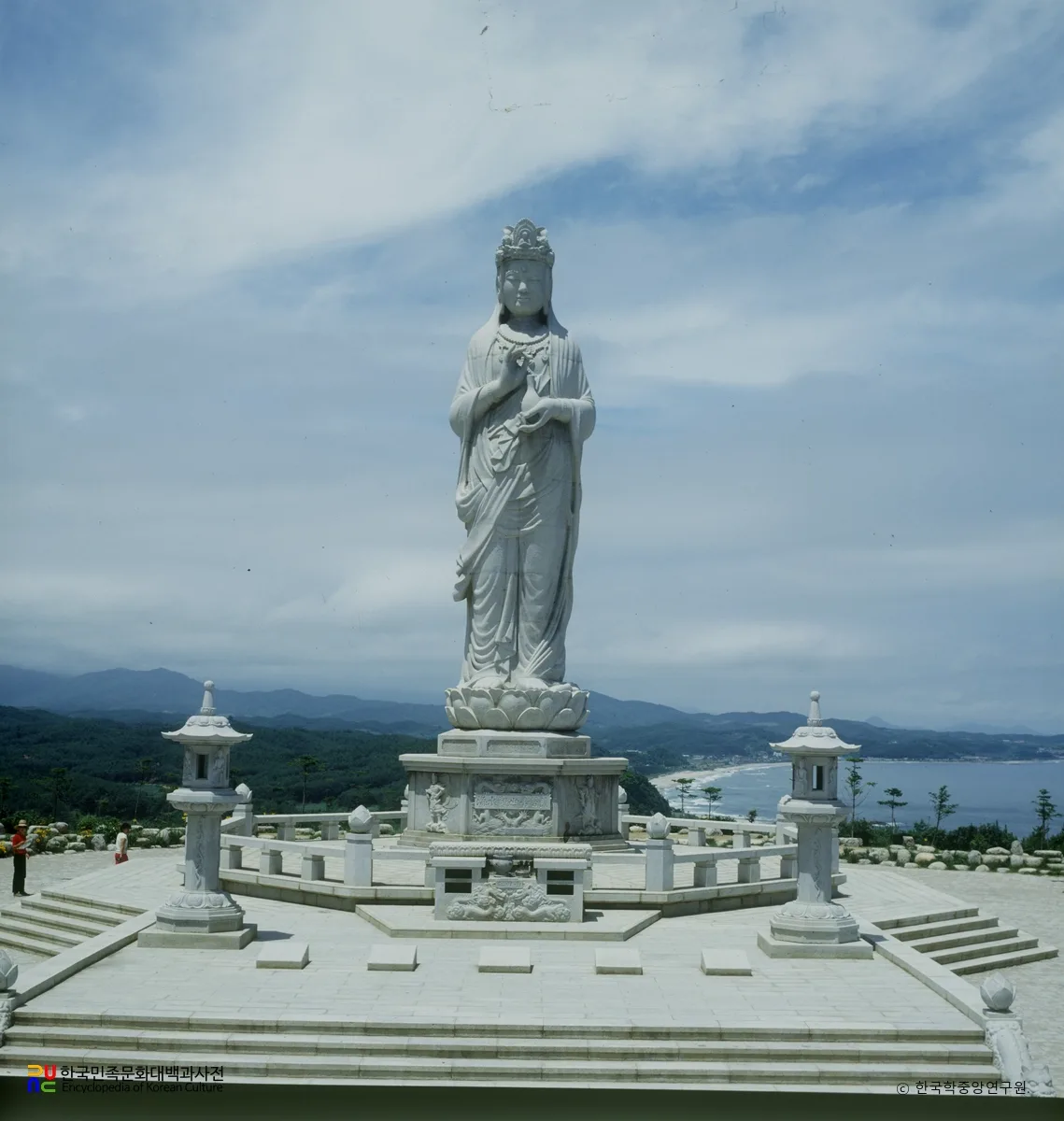
Higher on the temple's hill stands the Haesu Gwaneum, a 16-metre statue of the bodhisattva. Work began in 1972, and the eye-opening ceremony that consecrated it was held in November 1977. Carved from white granite, it has become the temple's best-known image.
Rising from the ashes
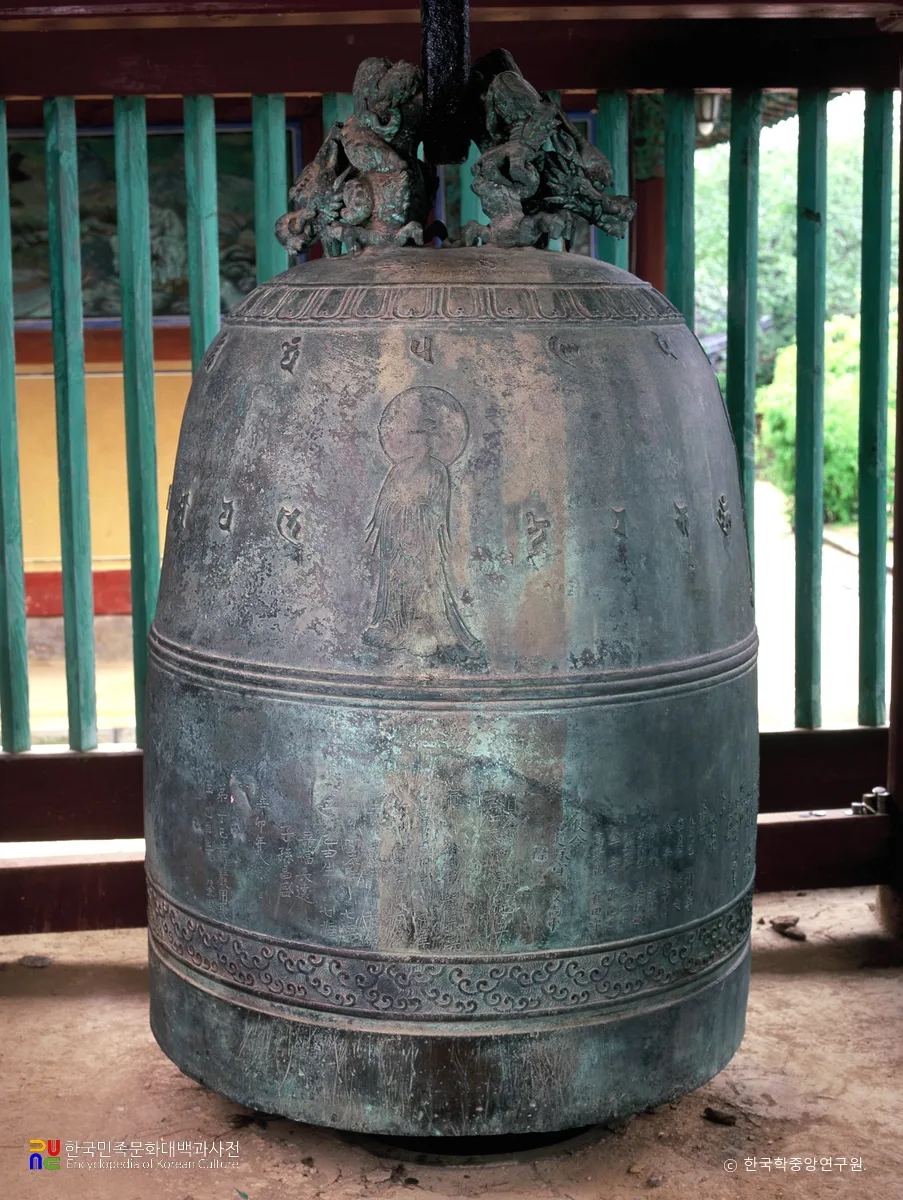
Naksansa has its scars. On 5 April 2005 a huge wildfire, driven by fierce winds, swept over the temple. Many buildings burned, and the Naksansa bronze bell, designated a national Treasure in 1968, was destroyed, so its Treasure status was withdrawn.
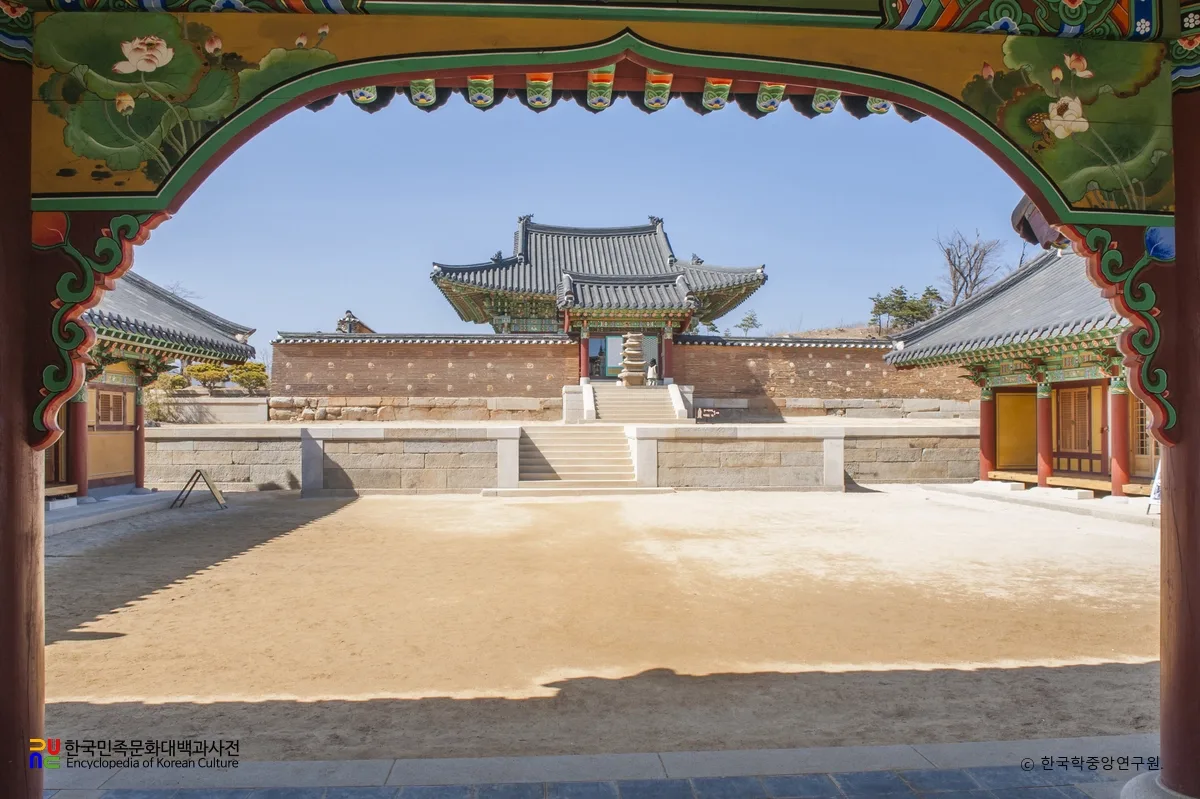
After the fire, Korea's Cultural Heritage Administration spent about a year and a half excavating the grounds, and Wontongbojeon and other halls were built anew. By around 2015 the temple had been restored to its former look, and the surrounding forest is still slowly growing back.
Find Naksansa and Hongnyeonam on Wooriyeojido
The little hall still sits above the cave where Uisang is said to have met Gwaneum, with the waves rolling in beneath it. Naksansa and Hongnyeonam are pinned on the Wooriyeojido map. Find Naksansa in the Wooriyeojido app, and if you go, leave your photos and stories from the day right beside it.
View this place in the Wooriyeojido appVideos of nearby places
 Buseoksa Temple and its floating stone
 Samseonghyeol on Jeju: people who believed they were born from the earth
 The legend of Ulsanbawi Rock in Seoraksan
Sources
- Samguk Yusa, vol. 3, 'Naksan's Two Saints' — National Institute of Korean History (Korean History Database)
- Encyclopedia of Korean Culture — Naksan Idaeseong tale
- Encyclopedia of Korean Culture — Naksansa Temple on Obongsan
- Encyclopedia of Korean Culture — Naksansa Temple Site, Yangyang
- Encyclopedia of Korean Culture — Hongnyeonam of Naksan
- Korea Heritage Service — Historic Site: Naksansa Temple Area, Yangyang
- Korea Heritage Service — Scenic Site: Uisangdae and Hongnyeonam, Naksansa
- Yangyang County Tourism — Naksansa Uisangdae