Iguazu Falls: The Serpent God Who Split the River
A vast half-circle of waterfalls on the border of Brazil and Argentina, and an old legend of an angry serpent god who tore open the earth. The story, the basalt cliffs and the Devil's Throat, in a short video and photos.
Where Brazil meets Argentina, a whole river throws itself off a cliff. This is Iguazu Falls, and the people who lived here told an old story about how it came to be: a river that split, and a land torn open. Who tore it? Start with the short video.

 Watch the one-minute video on YouTube
Falls shared by two countries
Iguazu Falls lies on the Iguazu River, between the Brazilian state of Paraná and the Argentine province of Misiones. A national park sits on each side. Brazil's Iguaçu National Park was established on 10 January 1939, and the two parks were inscribed as UNESCO World Heritage Sites in 1984 (Argentina) and 1986 (Brazil).
The name comes from an Indigenous word meaning "great water". One look at the falls explains it.
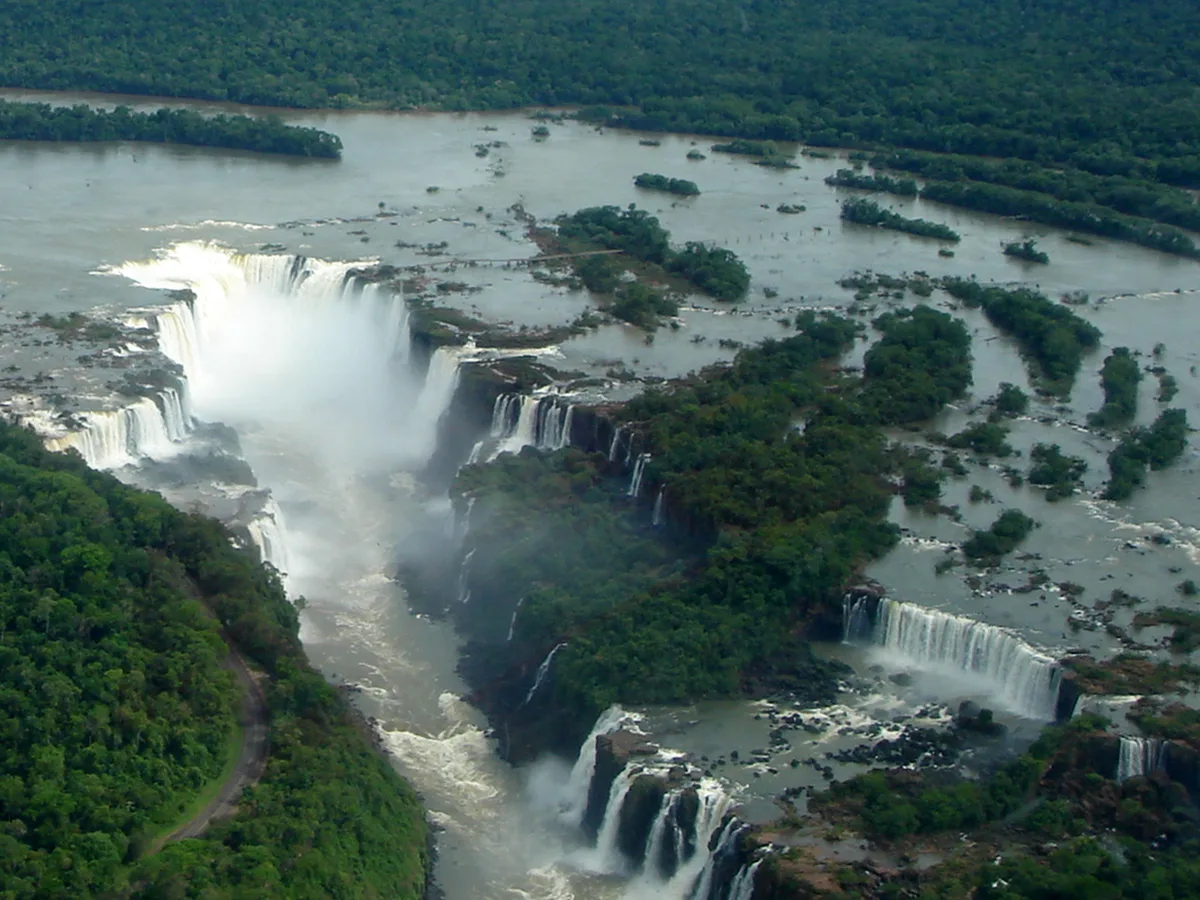

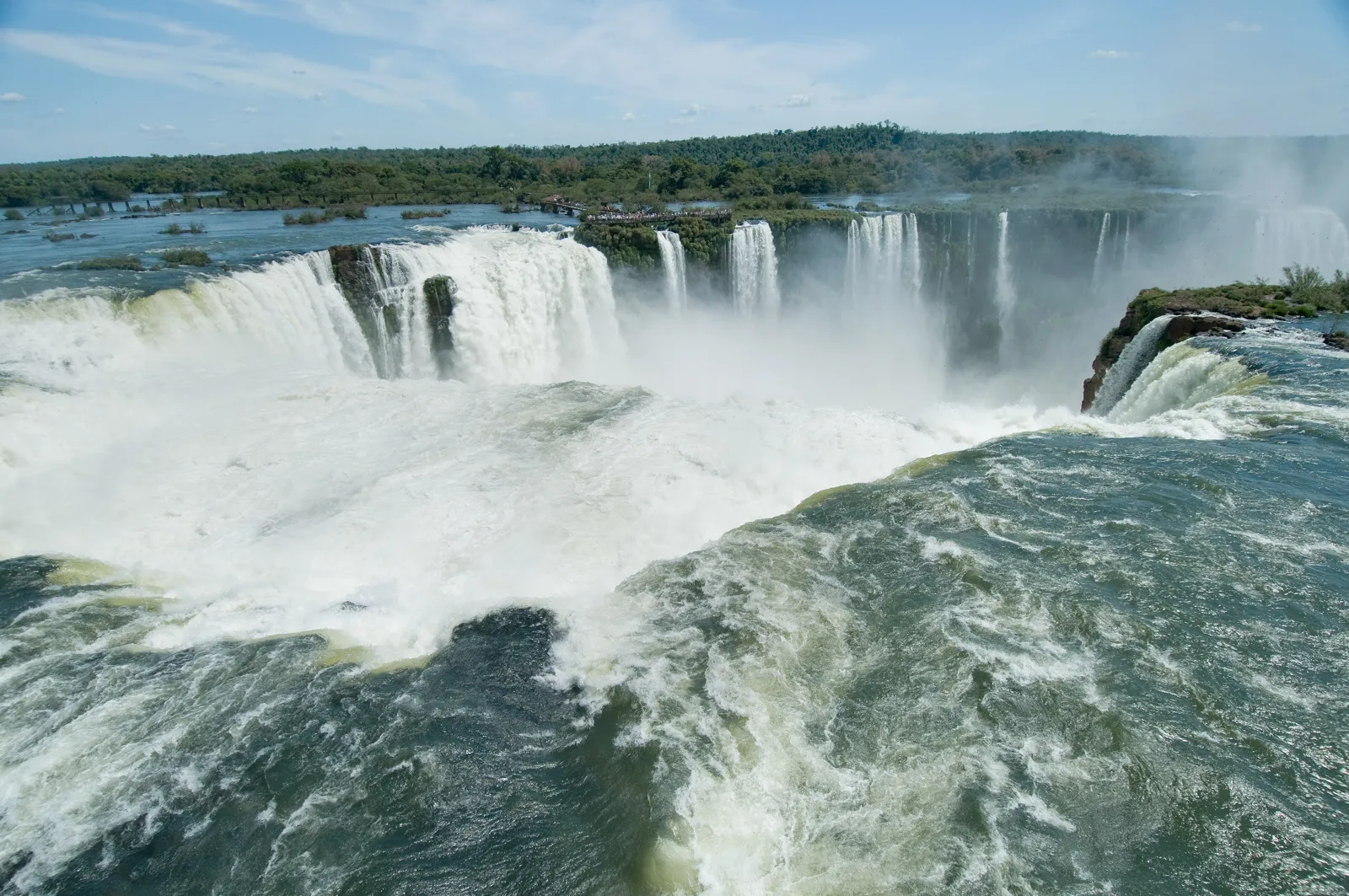
A half-circle of water
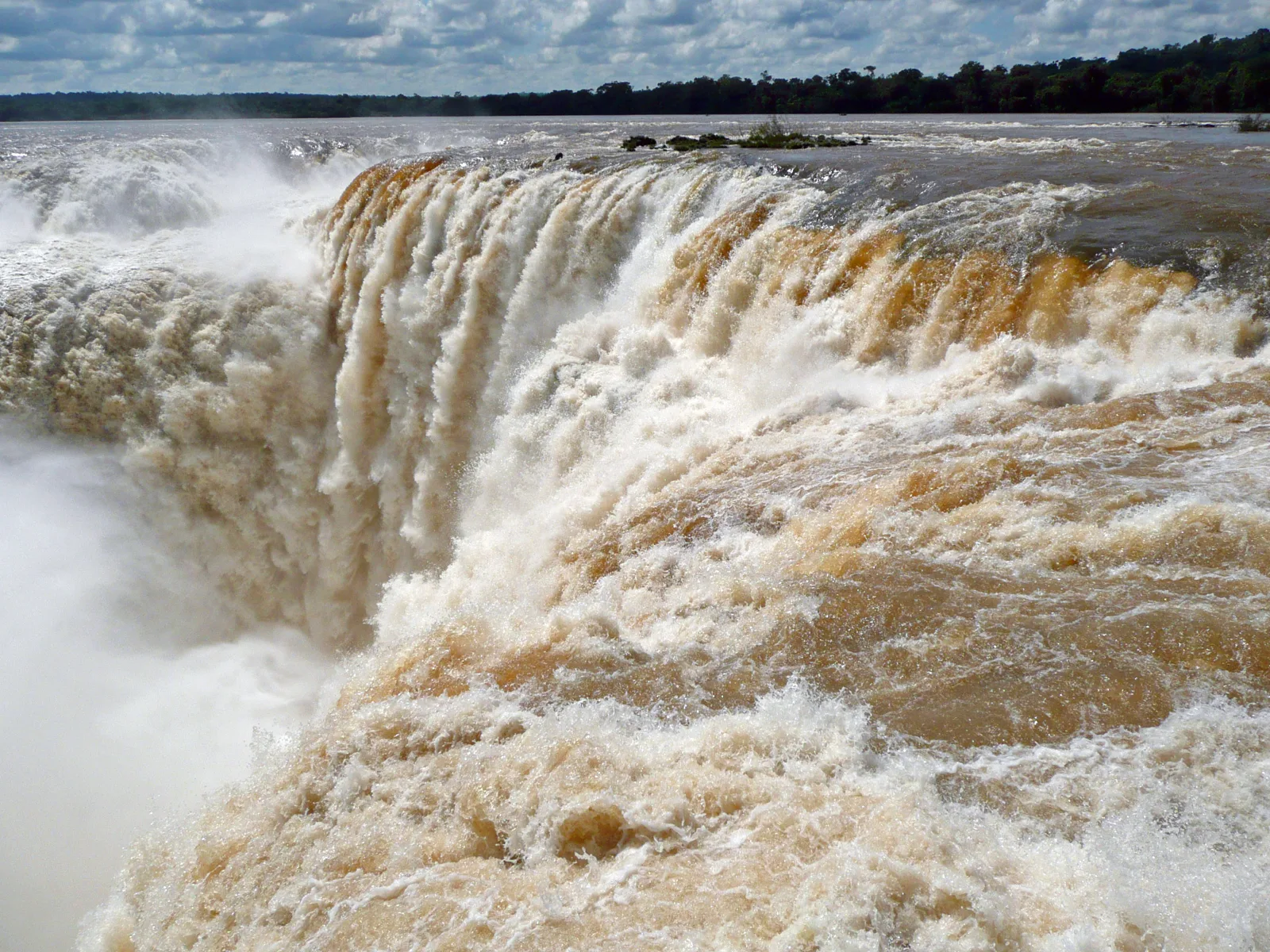
UNESCO describes Iguazu as a semicircular waterfall about 80 metres high and 2,700 metres in diameter, set on a basaltic line that straddles the border. The falls stretch for nearly three kilometres. According to the Misiones tourism ministry, there are some 275 separate falls, the highest of them the roughly 80-metre Devil's Throat (Garganta del Diablo). Spray from the falls rises into clouds that constantly drench the wooded river islands and banks.
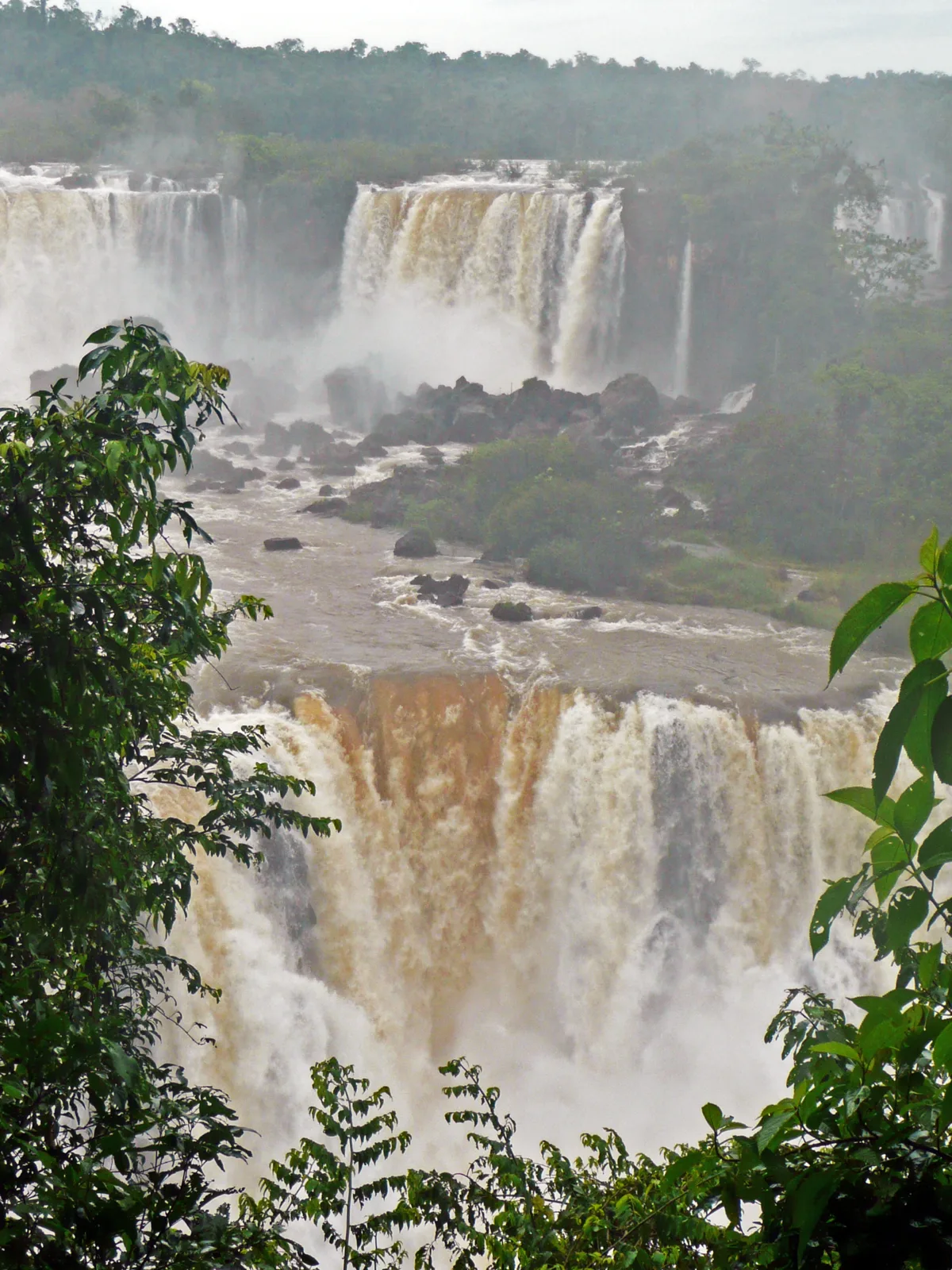

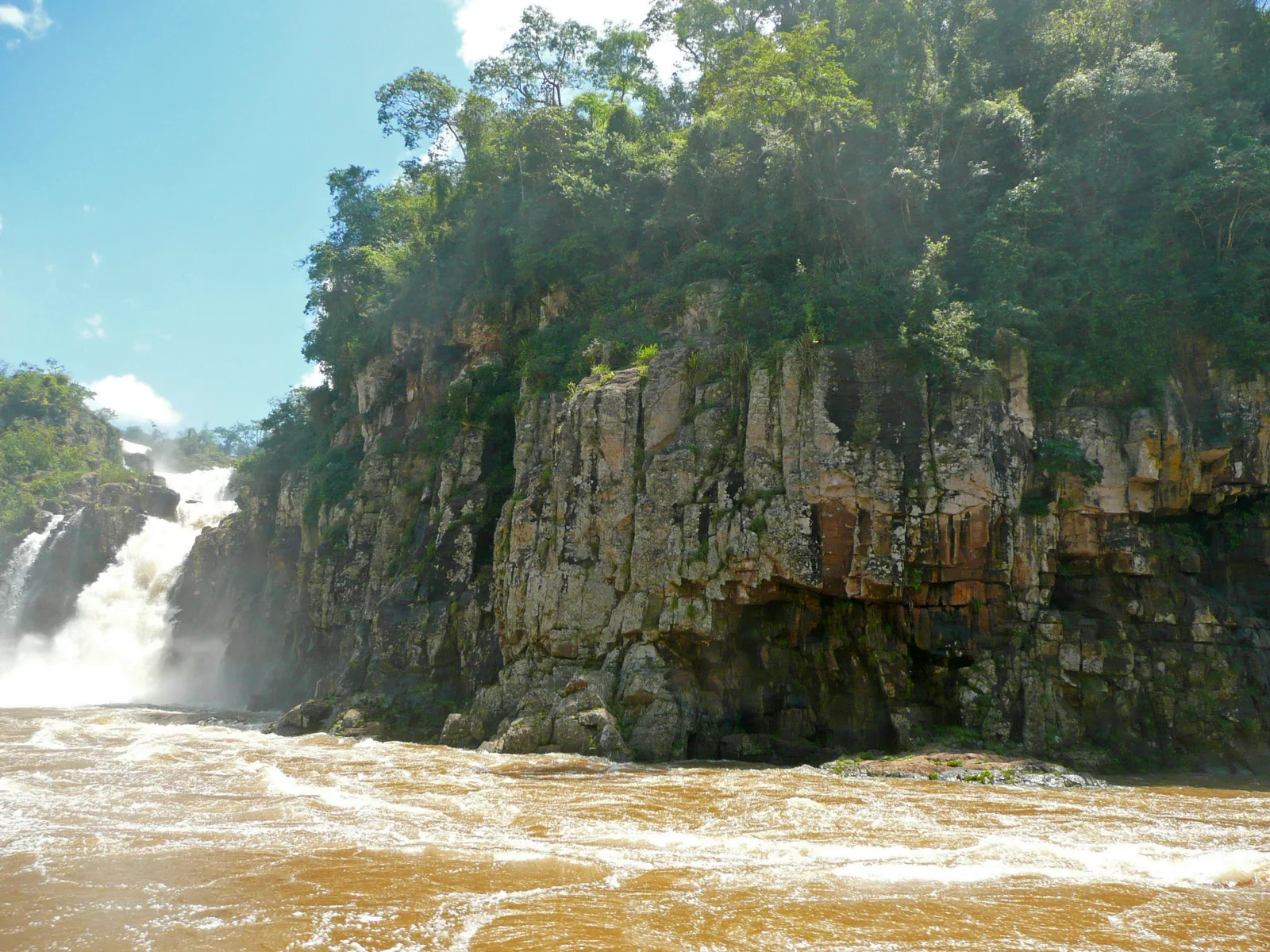
A river falling off the edge of basalt
This landscape was shaped by volcanic activity. The bedrock is basalt, a rock formed from cooled lava, and in this region it can be seen split into tall columns, like the cliff below. When the Iguazu River reaches the edge of this hard rock shelf, it simply drops.

M'Boy, the serpent god
The people who lived along the river had a different explanation. Brazil's Iguaçu National Park tells "the legend of the falls" as a belief of the Indigenous people of the Iguazu's banks, and the Paraná state government's culture website attributes it to the Kaingang.
They believed the world was ruled by M'Boy, a god in the form of a serpent. Naipi, whose father was the chief Igobi, was so beautiful that when she leaned over the river to see her reflection, the water stopped flowing. Naipi was consecrated to M'Boy, to live in his service alone. But a young warrior named Tarobá loved her. On the day of the festival at which she was to be given to the god, Tarobá carried Naipi off in a canoe and fled down the river.
M'Boy was furious. He burrowed into the earth and twisted his body, and the ground split open into a great chasm. The river poured into it, and a mighty waterfall was born. The canoe and the two lovers plunged over the edge and vanished. Naipi became a rock in the middle of the falls, and Tarobá a palm tree leaning out over the gorge from the cliff's edge. From a cave beneath the Devil's Throat, they say, M'Boy keeps watch over them still.

Legend and landscape
The real falls were made by a river tumbling off the end of a basalt plateau. Yet stand in front of the endless spray, watching water pour into a crack in the earth, and it is easy to see why people once imagined an angry god at work here.
Find Iguazu Falls on Wooriyeojido
The "great water" on the border of two countries, and the story of a serpent god and two runaway lovers: Iguazu Falls is pinned on the Wooriyeojido map. Look it up in the Wooriyeojido app, and if you go, leave your photos and stories from the day right beside it.
View this place in the Wooriyeojido appVideos of nearby places
 The Nazca Lines: who drew pictures that only the sky can see?
 Machu Picchu: how a mountaintop city was forgotten for almost 400 years
 Panama Canal: how ships cross the mountains at the Miraflores Locks
Sources
- UNESCO World Heritage Centre — Iguazu National Park (303)
- UNESCO World Heritage Centre — Iguaçu National Park (355)
- ICMBio — Parque Nacional do Iguaçu, A lenda das Cataratas (web archive, 2024-10-15)
- Governo do Paraná — Paraná Cultura, A Lenda das Cataratas
- Parque Nacional do Iguaçu — O Parque
- Misiones Turismo — Iguazú