How Ships Climb Over Mountains: The Miraflores Locks of the Panama Canal
On the Panama Canal, ships are lifted to a lake 26 meters above sea level and lowered again on the other side. At the Miraflores Locks on the Pacific end, see how the locks work and how the canal came to open in 1914.
Sail from the Atlantic to the Pacific through Panama and your ship passes between mountain ridges. Halfway across, the waterway runs through a lake that sits 26 meters (85 feet) above the sea. So how does a huge ship get up there, and back down again? Start with the short video.
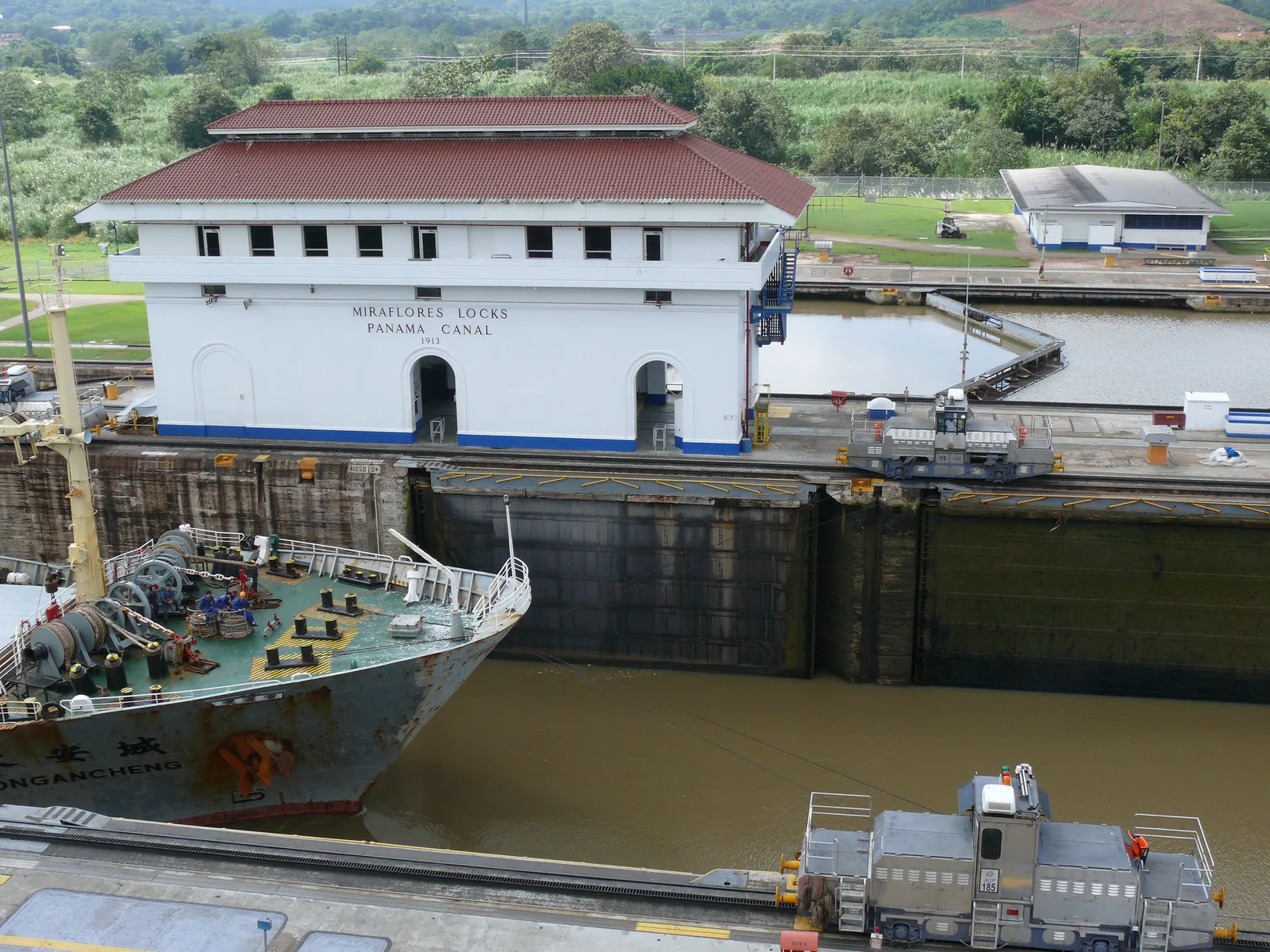

 Watch the one-minute video on YouTube
Fifty miles between two oceans
The Panama Canal is a waterway roughly 80 kilometers (50 miles) long linking the Atlantic and Pacific oceans. The Miraflores Locks sit at its Pacific end, near Panama City. The visitor center beside them has an observation platform and seating where you can watch ships pass through the locks up close. Transit times vary from day to day, though, so it pays to check the schedule.
France's sea-level dream
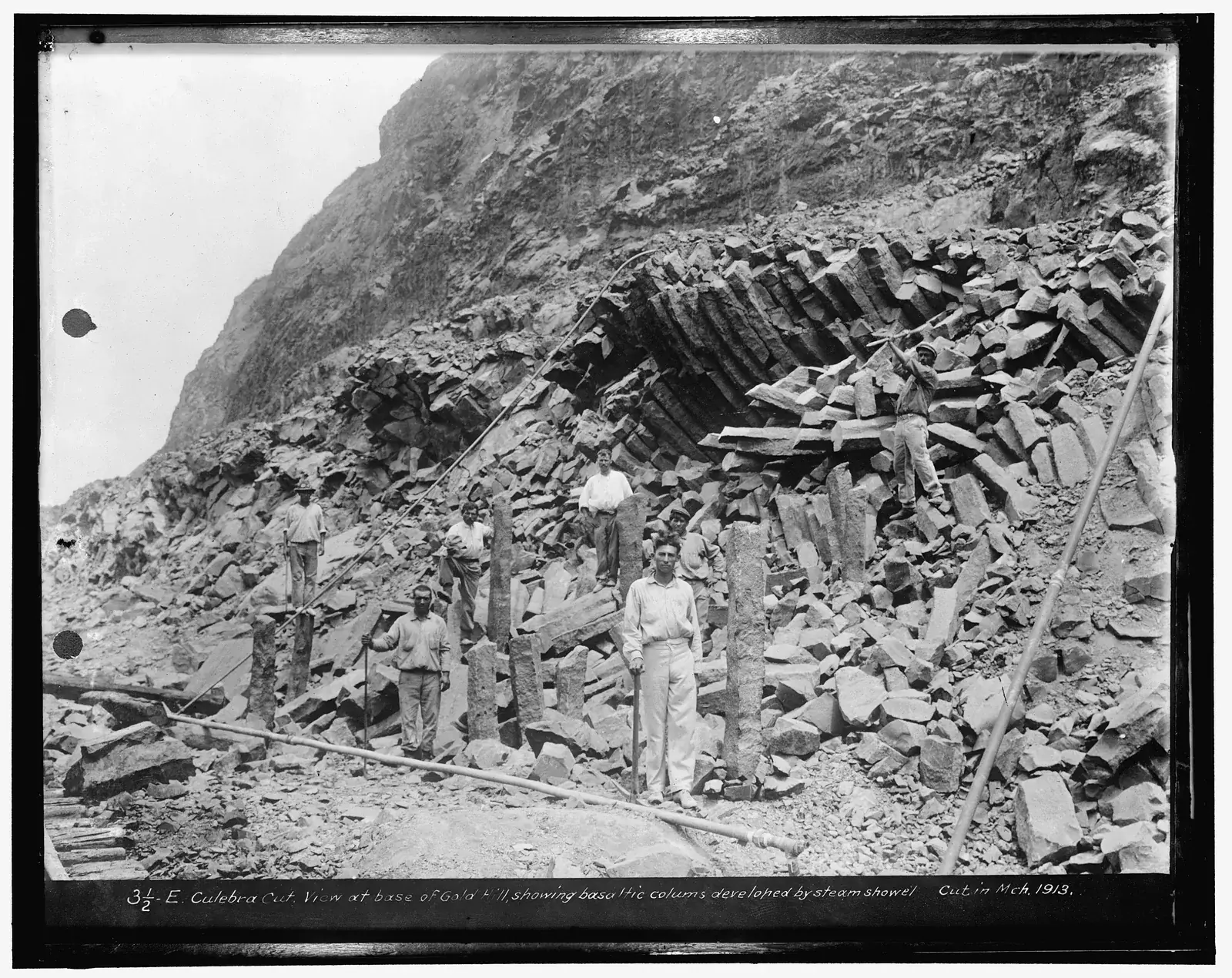
France was first to dig. Work began in 1881, and the French insisted on a sea-level canal, cut straight through at ocean level with no locks at all. But landslides kept burying the excavations, yellow fever swept through the workforce, and eventually the money ran out. By May 15, 1889, all work on the isthmus had stopped.

Lift the ships instead of leveling the mountains
The United States took over the project on May 4, 1904. In 1906 the U.S. Senate voted 36 to 31 for a lock canal, and the House agreed on June 27. Rather than carving the mountains all the way down to sea level, the plan was to lift ships with water and float them across a high lake between the ridges. That lake is Gatun Lake, created by damming the Chagres River.

A staircase made of water
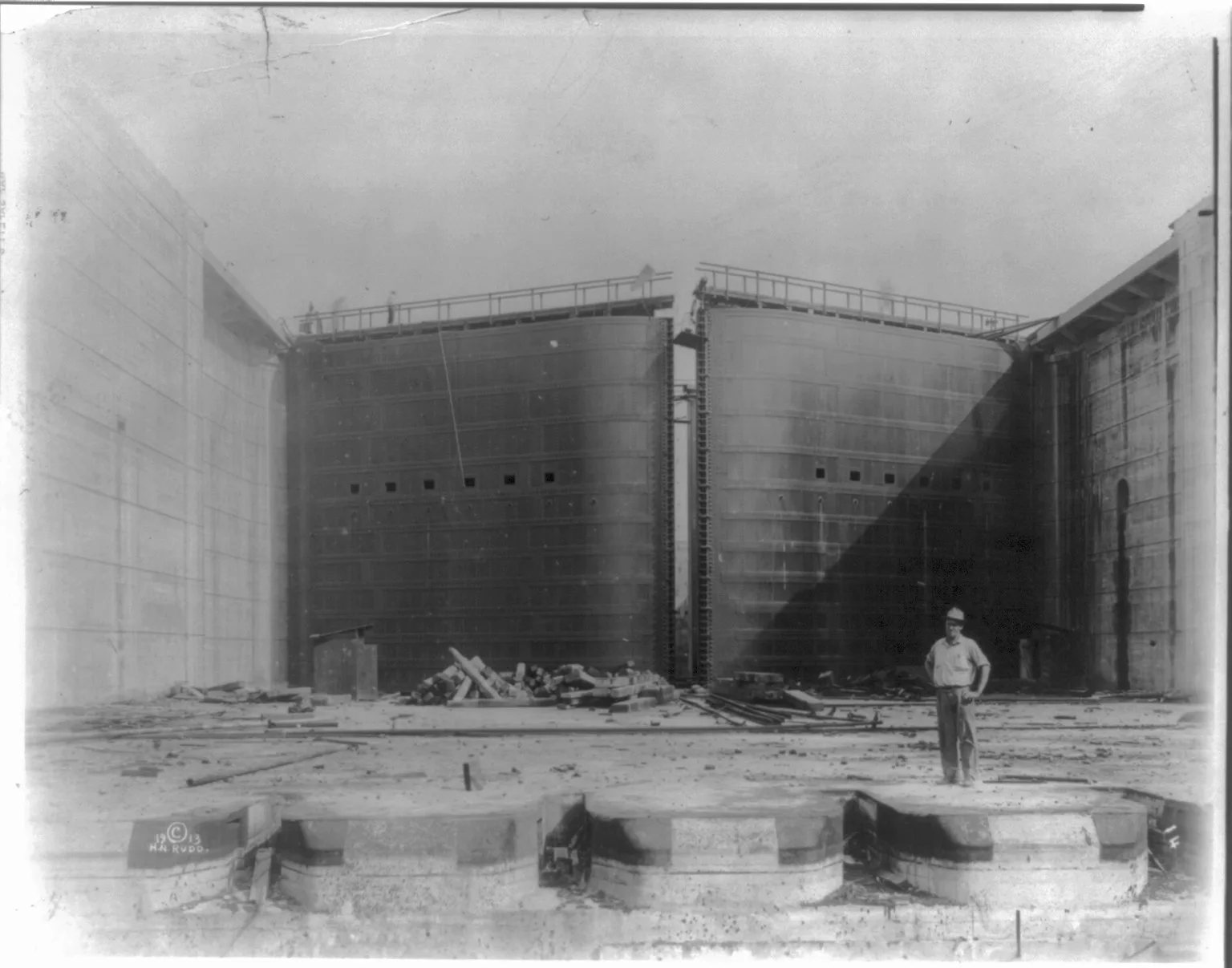
A lock is a giant chamber with gates at each end, and the chambers are linked like the steps of a staircase. A ship enters, the gate behind it closes, and water pours in, floating the ship upward. Step by step, it climbs from sea level to Gatun Lake. After crossing the lake, it goes down the same way on the other side as the water is let out. Each chamber is 33.53 meters wide and 304.8 meters long (110 by 1,000 feet).
The number of steps varies. On the Pacific side there are two at Miraflores and one at Pedro Miguel; on the Atlantic side, three at Gatun. Because every lock has two lanes side by side, that makes 12 chambers in all.
The most remarkable part is what moves the water: nothing but gravity. There isn't a single pump in the system. Water flows down from Gatun Lake through enormous culverts, 18 feet across, that run lengthwise inside the lock walls. In each chamber, 20 cross culverts and 100 openings in the floor let the water rise evenly.
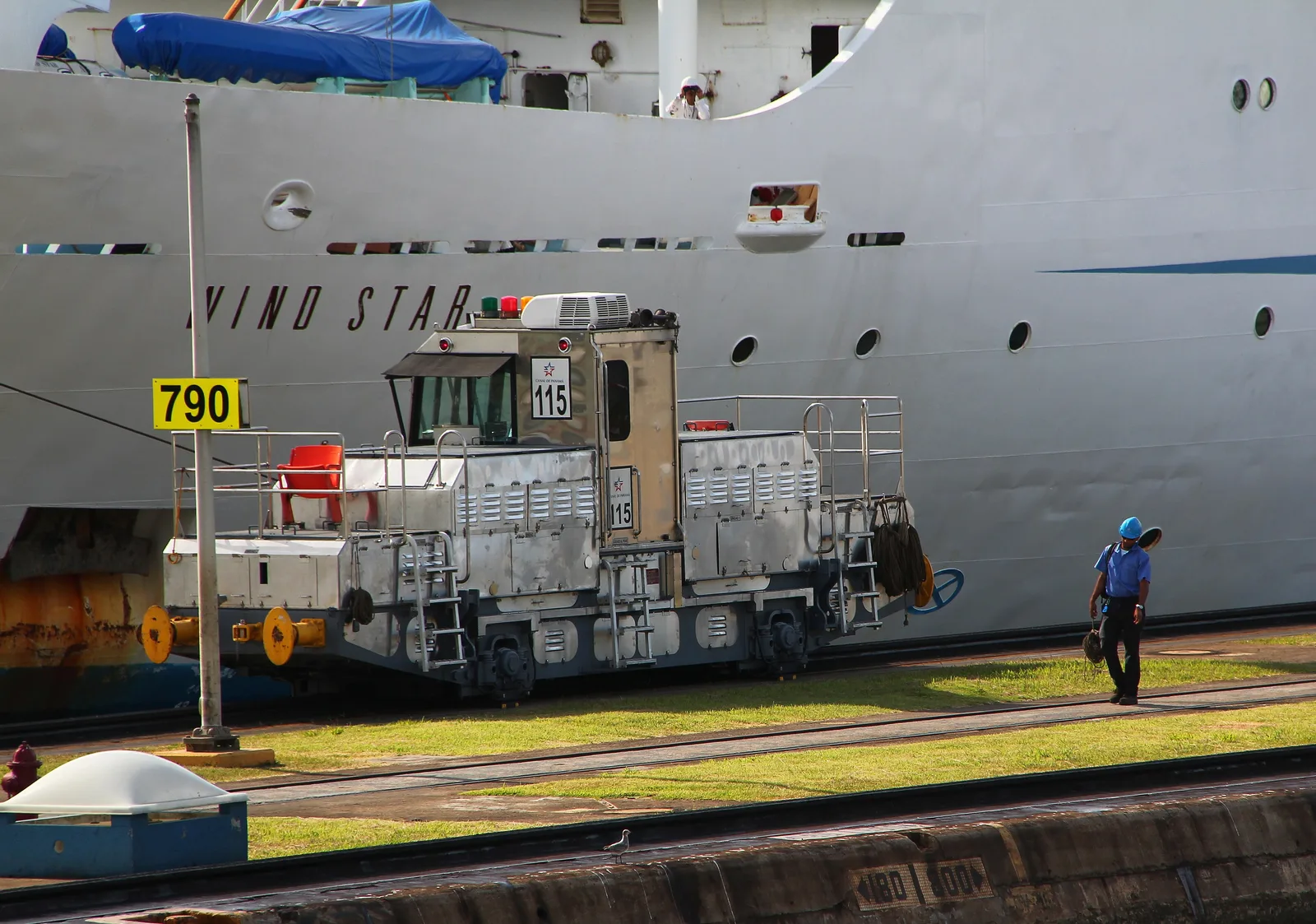

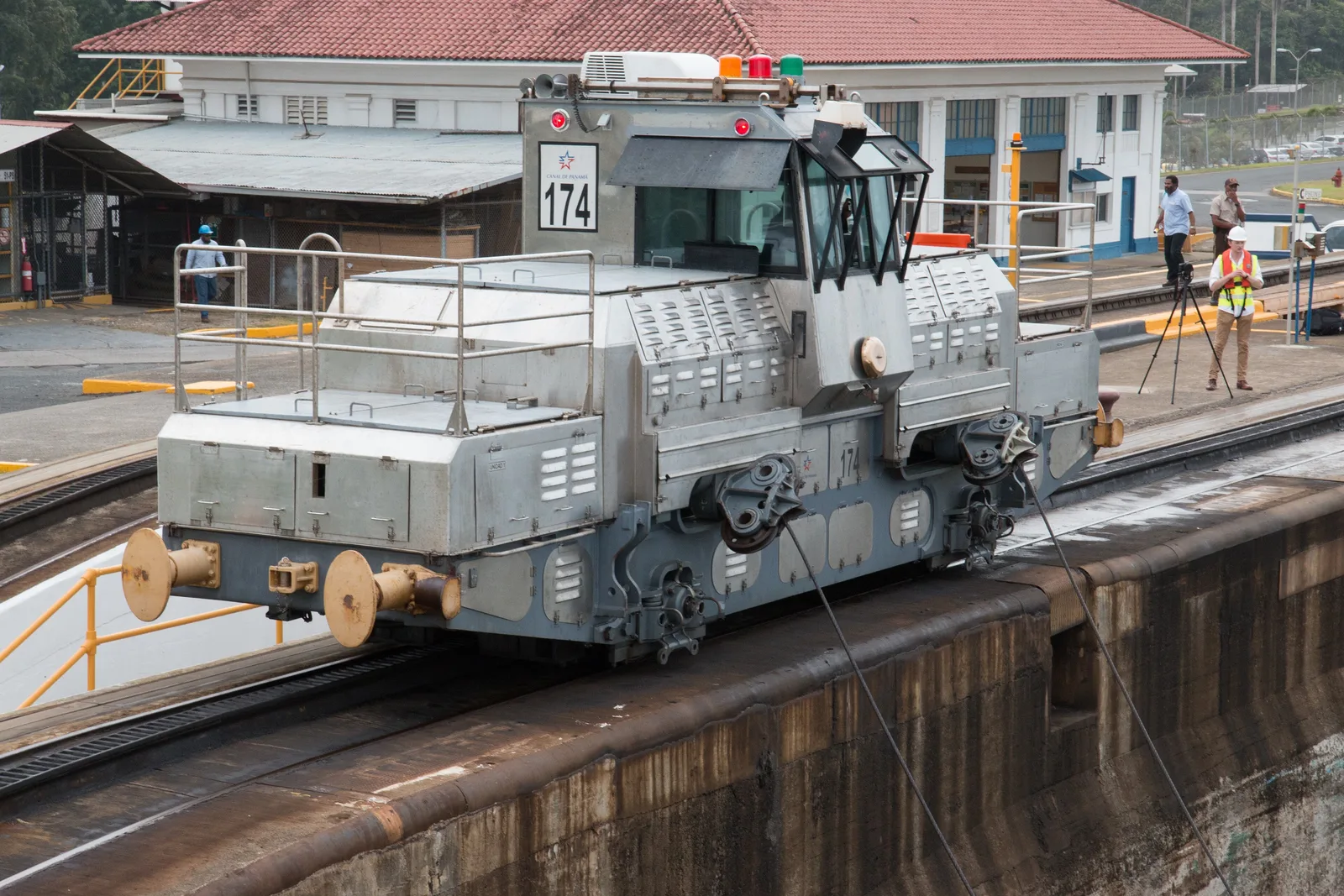
Inside the locks, ships are guided by electric towing locomotives that run on tracks built along the tops of the lock walls.

A quiet opening on August 15, 1914
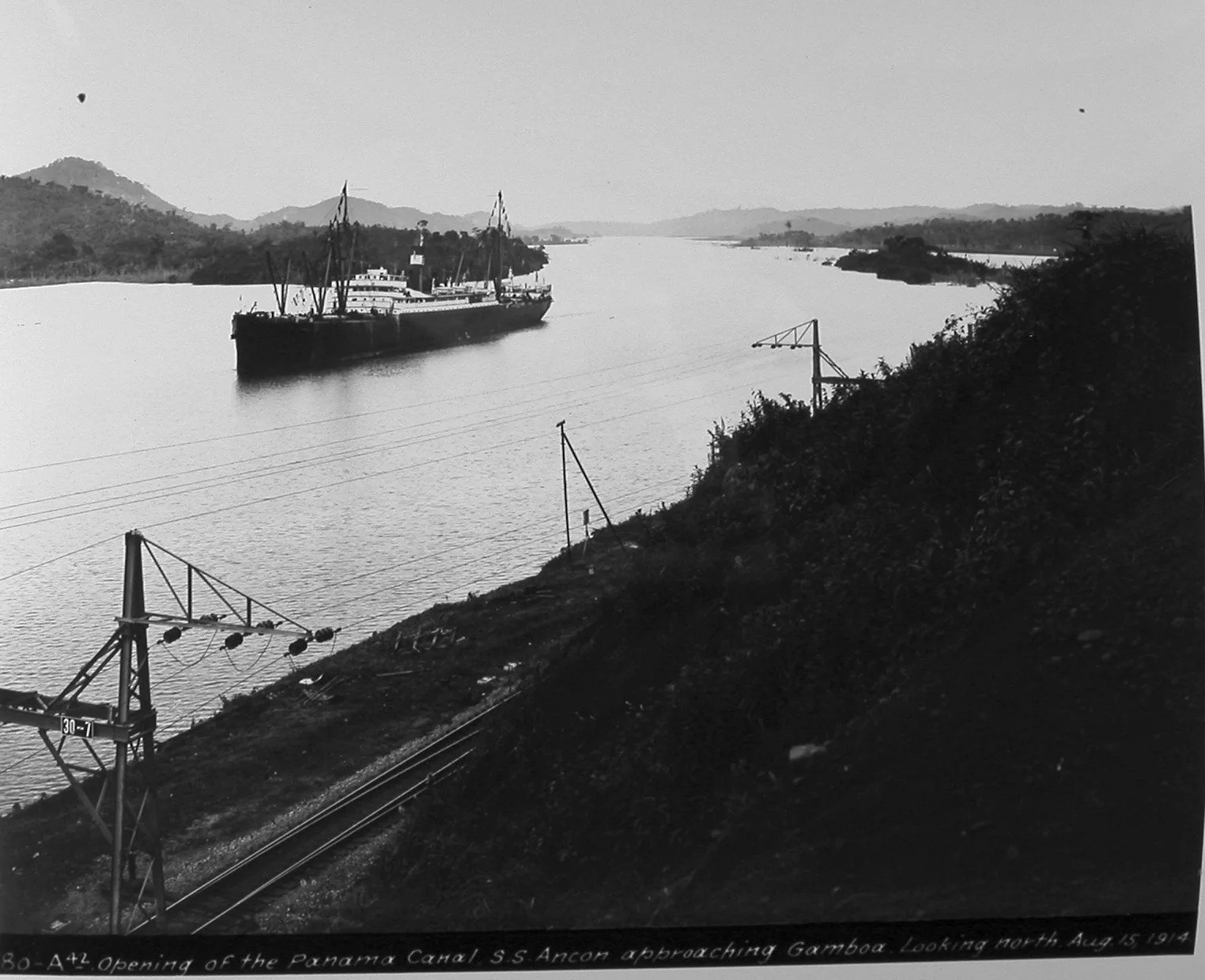
The canal officially opened on August 15, 1914, when the canal's own cement boat, the Ancon, made the passage. World War I had just broken out, and the planned festivities were canceled, so the grand opening turned out to be a modest affair.

The canal came at a heavy cost. According to hospital records, 5,609 people died of disease and accidents during the American construction era alone. Today, between 13,000 and 14,000 ships use the canal each year, and it operates 24 hours a day, 365 days a year.
Find the Miraflores Locks on Wooriyeojido
Lifting ships instead of leveling mountains is what finally joined two oceans, and watching a giant vessel rise slowly on the water is something you have to see in person. The Miraflores Locks are pinned on the Wooriyeojido map. Look them up in the app, and if you visit, leave your photos and stories from the day right beside them.
View this place in the Wooriyeojido appVideos of nearby places
 The Suez Canal: a sea road through the desert, opened in 1869
 The Golden Spike: the last nail joining two railroads, 1869
 A 102-storey skyscraper in 410 days? The Empire State Building, 1931
Sources
- Autoridad del Canal de Panamá — History of the Panama Canal
- Autoridad del Canal de Panamá — Design of the Locks
- Autoridad del Canal de Panamá — The French Canal Construction
- Autoridad del Canal de Panamá — American Canal Construction
- Autoridad del Canal de Panamá — End of the Construction
- Panama Canal Tourism — Miraflores Visitor Center