The Forbidden City and the Myth of 9,999 and a Half Rooms
At the heart of Beijing, the palace that housed Ming and Qing emperors for more than 500 years. A video and photos, and the truth behind the famous tale of 9,999 and a half rooms.
In the middle of Beijing, a sea of golden roofs stretches behind high red walls. This is the Forbidden City, home to the emperors of the Ming and Qing dynasties and today the Palace Museum. For generations people have said it holds more than 9,000 rooms. Is that true? Start with the short video.
 Watch the one-minute video on YouTube
Where is it?
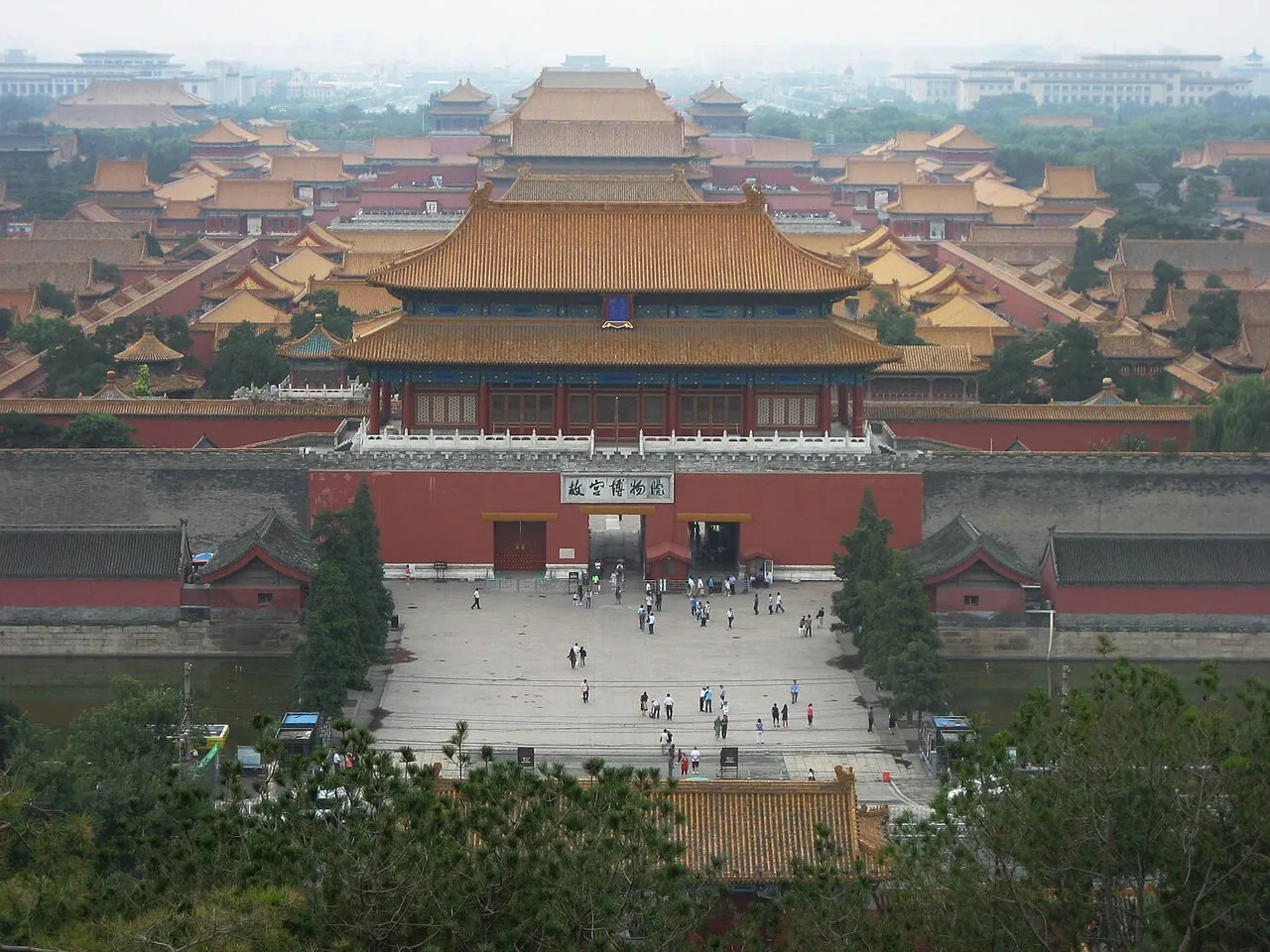
The Forbidden City sits right in the center of Beijing. Climb Jingshan, the hill just to the north, and the whole roofscape spreads out below you. Its walls enclose a long rectangle measuring 961 m from north to south and 753 m from east to west. The grounds cover 720,000 m², with more than 70 palace buildings, large and small. It became the Palace Museum in 1925 and was added to the UNESCO World Heritage List in 1987.
A palace fourteen years in the making
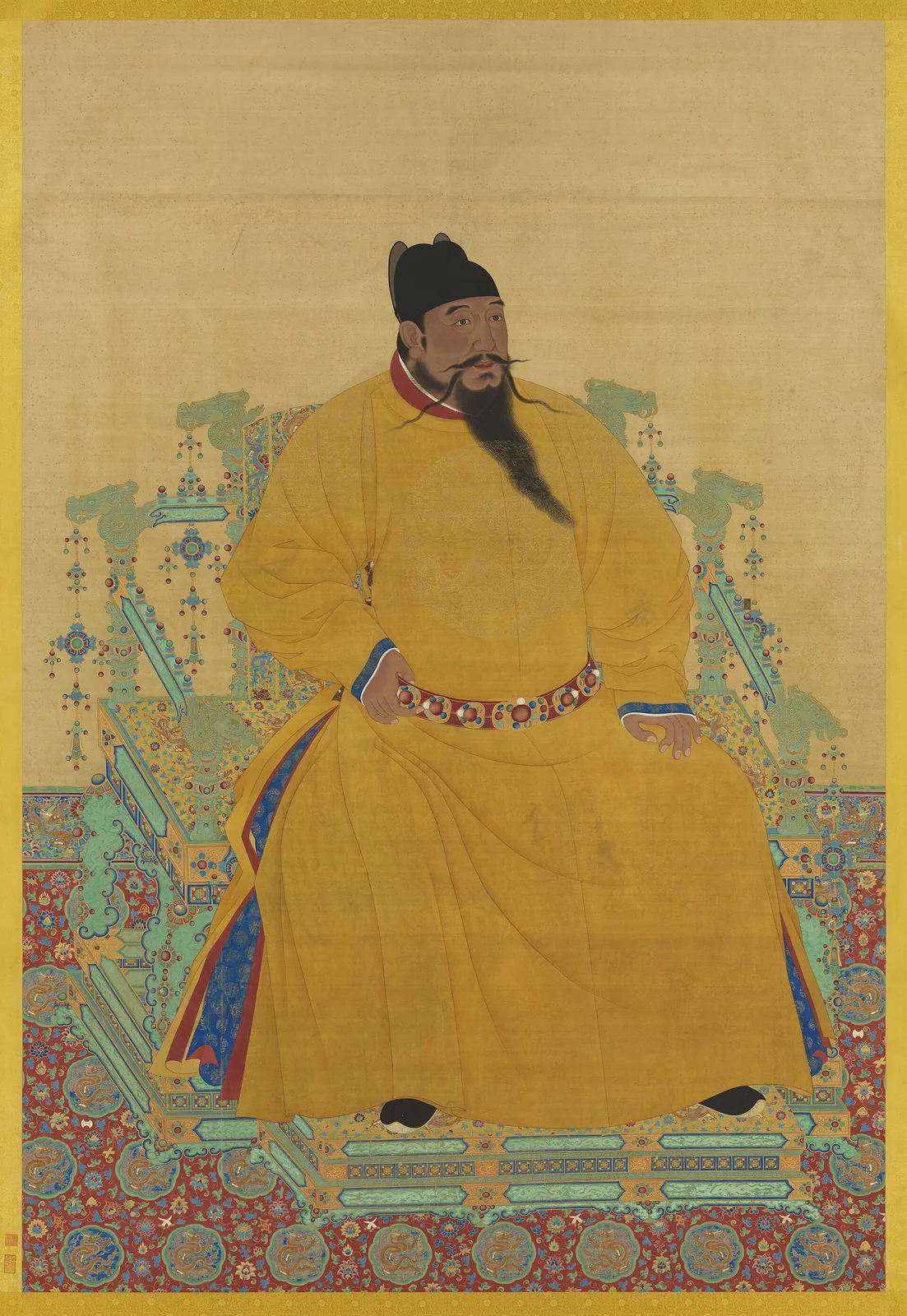
The Forbidden City was built by the Ming emperor Yongle, born Zhu Di. Work began in 1406 and was finished in 1420. Over the next 505 years, 14 Ming emperors and 10 Qing emperors took the throne here.
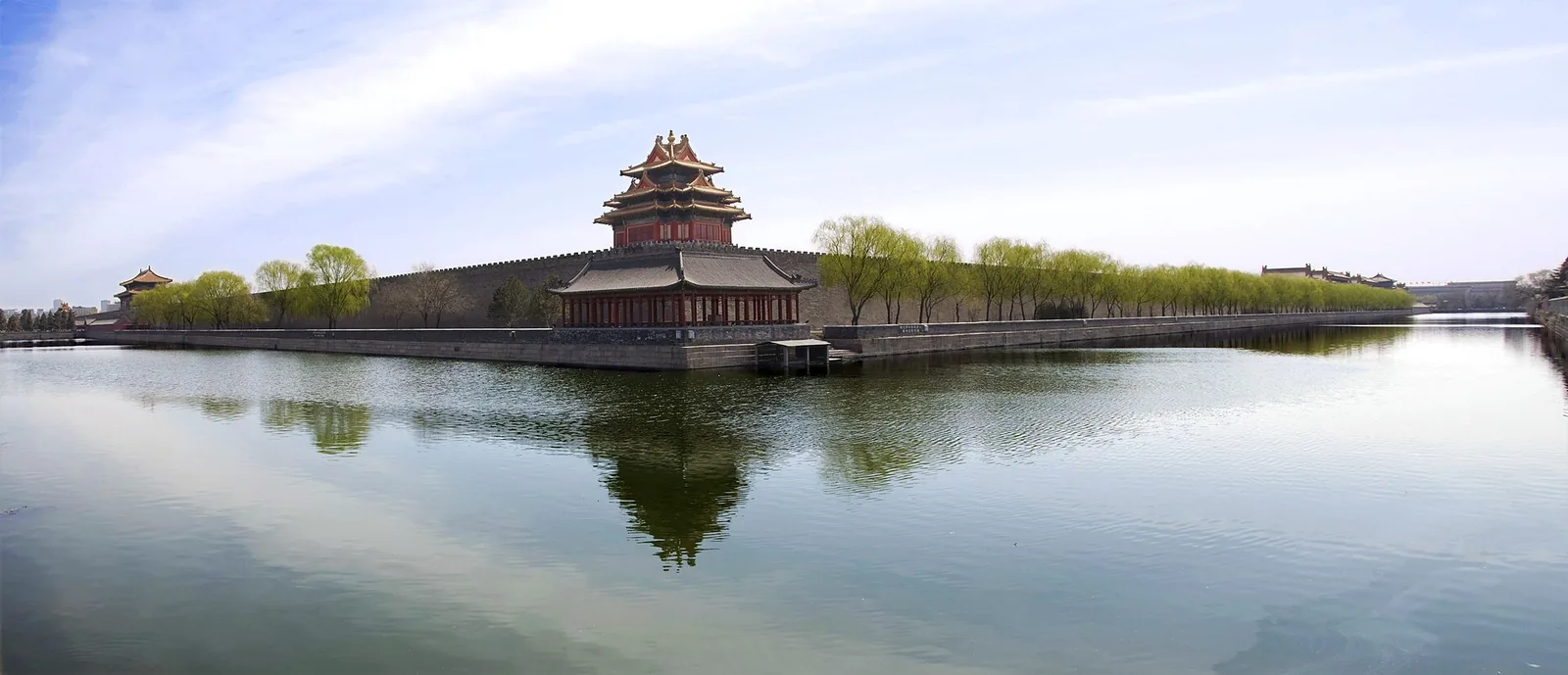
The palace wall rises about 10 m and runs 3,428 m all the way around. A tower with layered roofs stands at each of its four corners, and beyond the wall lies a moat 52 m wide.
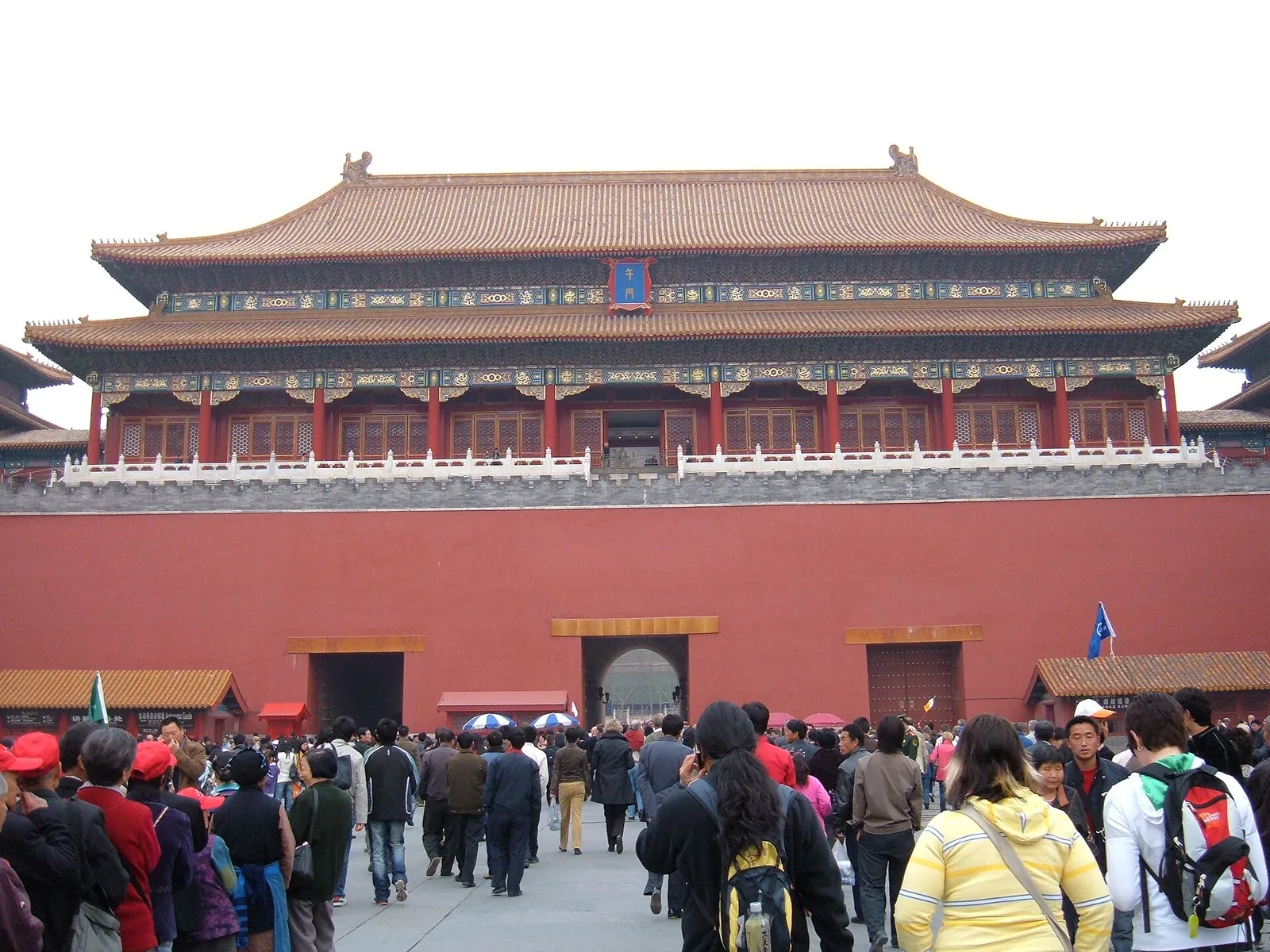
The Meridian Gate and the Hall of Supreme Harmony
A straight north–south axis runs through the middle of the palace, and on it, facing south, stands the main entrance: the Meridian Gate. It too was completed in 1420, and the gate tower perched on top of its red wall is nine bays wide. Keep that word, bay, in mind. It matters later.
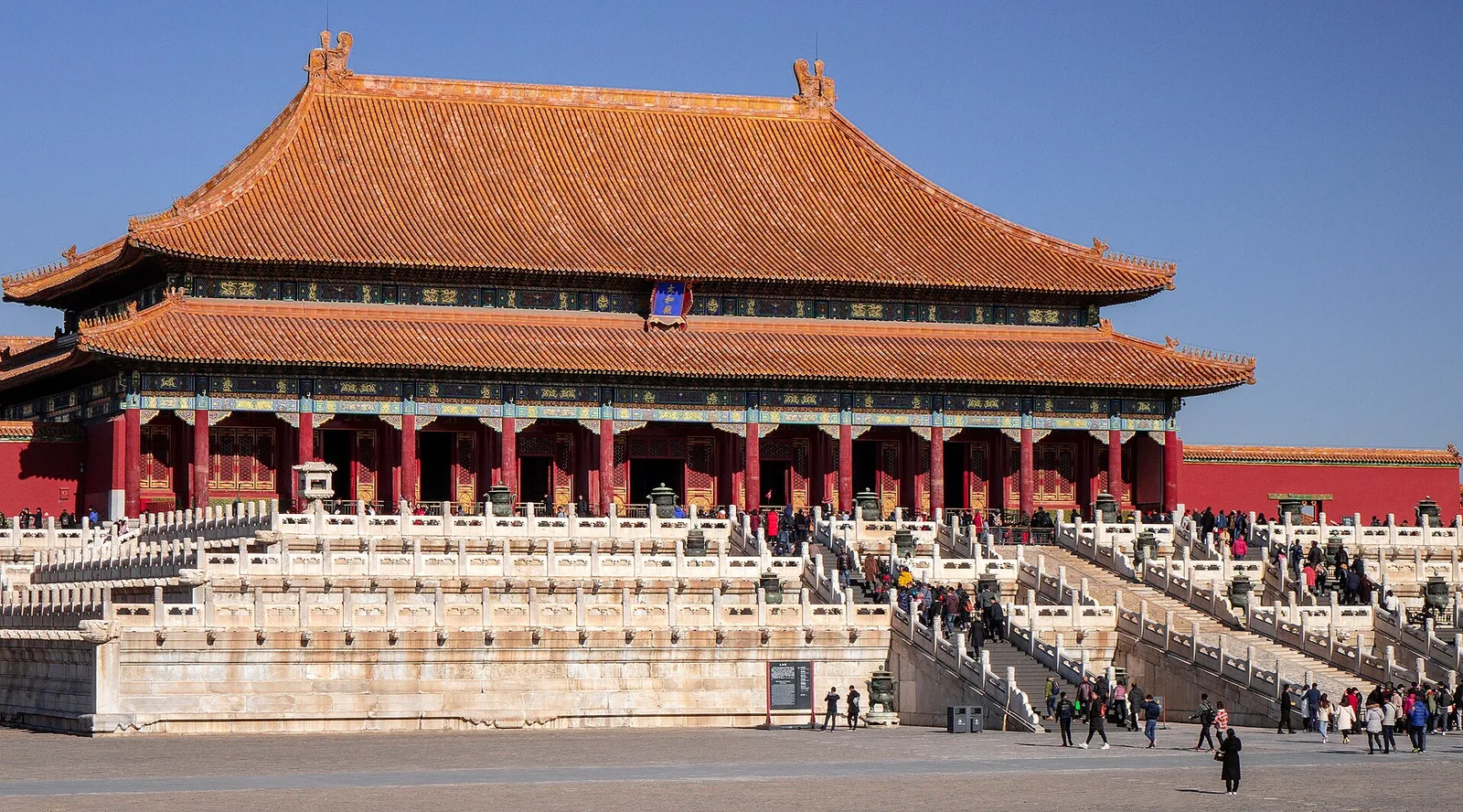
Follow the same axis toward the heart of the palace and you reach its largest building, the Hall of Supreme Harmony. First built in 1420 under the name Fengtian Hall, it burned down and was rebuilt several times; what you see today dates from a rebuilding in 1695, under the Qing emperor Kangxi. It covers 2,377 m² and stands about 27 m tall, and more than 35 m including its white marble terrace. Twenty-four Ming and Qing emperors held their grandest ceremonies here, from enthronements to imperial weddings.
The truth about 9,999 and a half
A popular story says the Forbidden City has exactly 9,999 and a half rooms, just half a room short of 10,000. But the unit being counted here is not a room in the modern sense. In traditional Chinese architecture, a jian, or bay, is the space between two neighbouring columns. A single large hall can contain many of them. The Hall of Supreme Harmony alone is 11 bays across and 5 bays deep.
So how many bays does the whole palace have? Zhou Qian, a researcher at the Palace Museum, went back through the historical records and found that the number has changed over time. Under Yongle there were about 8,350 bays. A count in the late 20th century came to 8,707. In 2012, after Shan Jixiang became director of the Palace Museum, a fresh count put the total at 9,371. Measured in bays, "more than 9,000" turns out to be right.
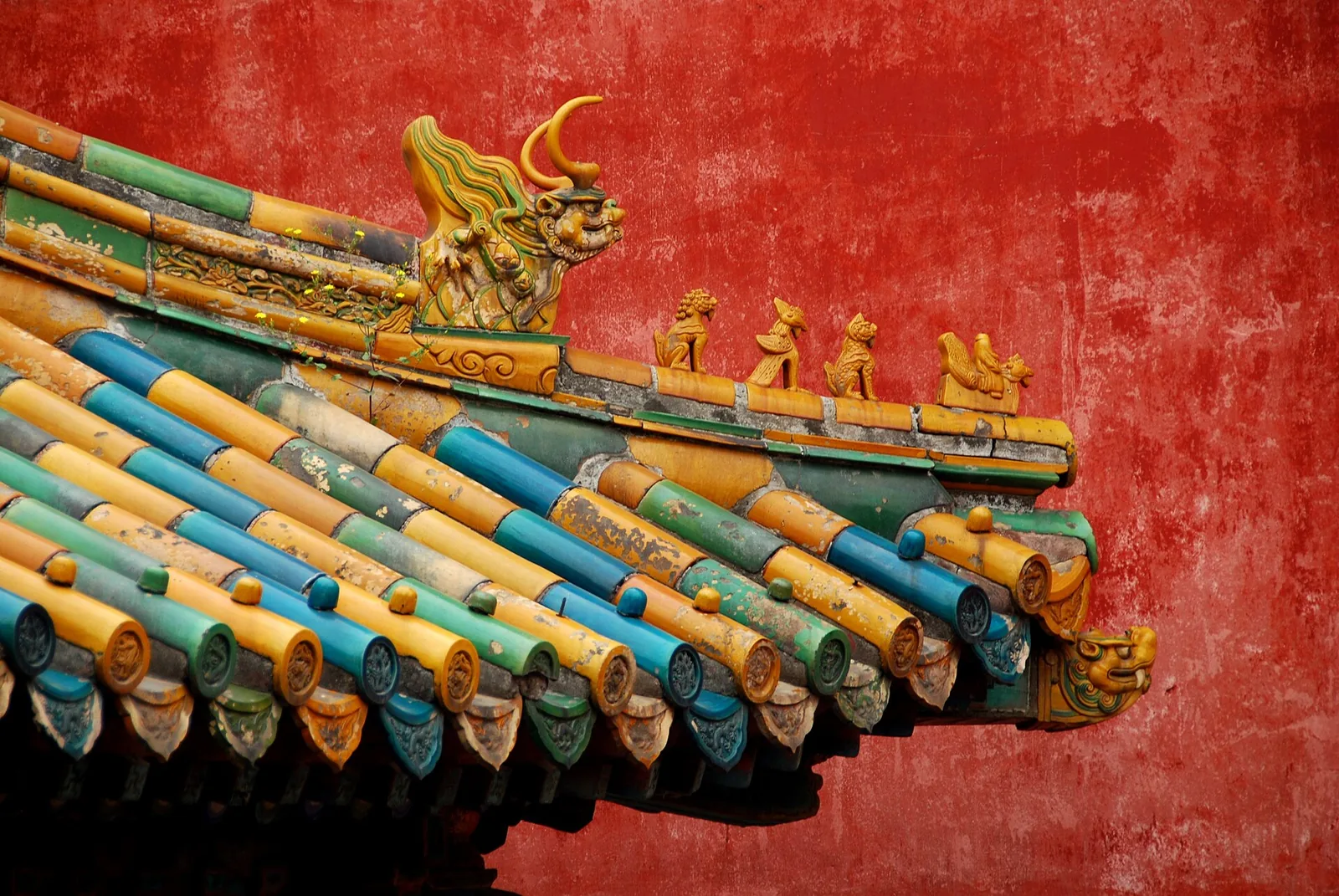
And the half? According to Zhou Qian, there is no such thing as half a bay in traditional architecture. The 9,999 and a half is a story, not a statistic.
A museum of 1.86 million treasures
The palace opened as the Palace Museum in 1925. Today its collection numbers 1,863,404 objects, more than 1.86 million in all. The museum describes the Forbidden City as the largest and best-preserved complex of wooden palace buildings in the world.
Find the Forbidden City on Wooriyeojido
The 9,000-plus were never rooms, but bays, each one the gap between two columns. If you ever walk through the Forbidden City, try counting the spaces between the red pillars. The Forbidden City is pinned on the Wooriyeojido map. Find it in the Wooriyeojido app, and if you go, leave your photos and stories from the day right beside it.
View this place in the Wooriyeojido app


