Wieliczka Salt Mine: The Princess's Ring Found in a Lump of Salt
Just outside Kraków, the Wieliczka Salt Mine reaches 327 m underground. Video and photos tell the legend of the Hungarian princess Kinga and her ring, and the story of the chapel three miners carved from solid salt.
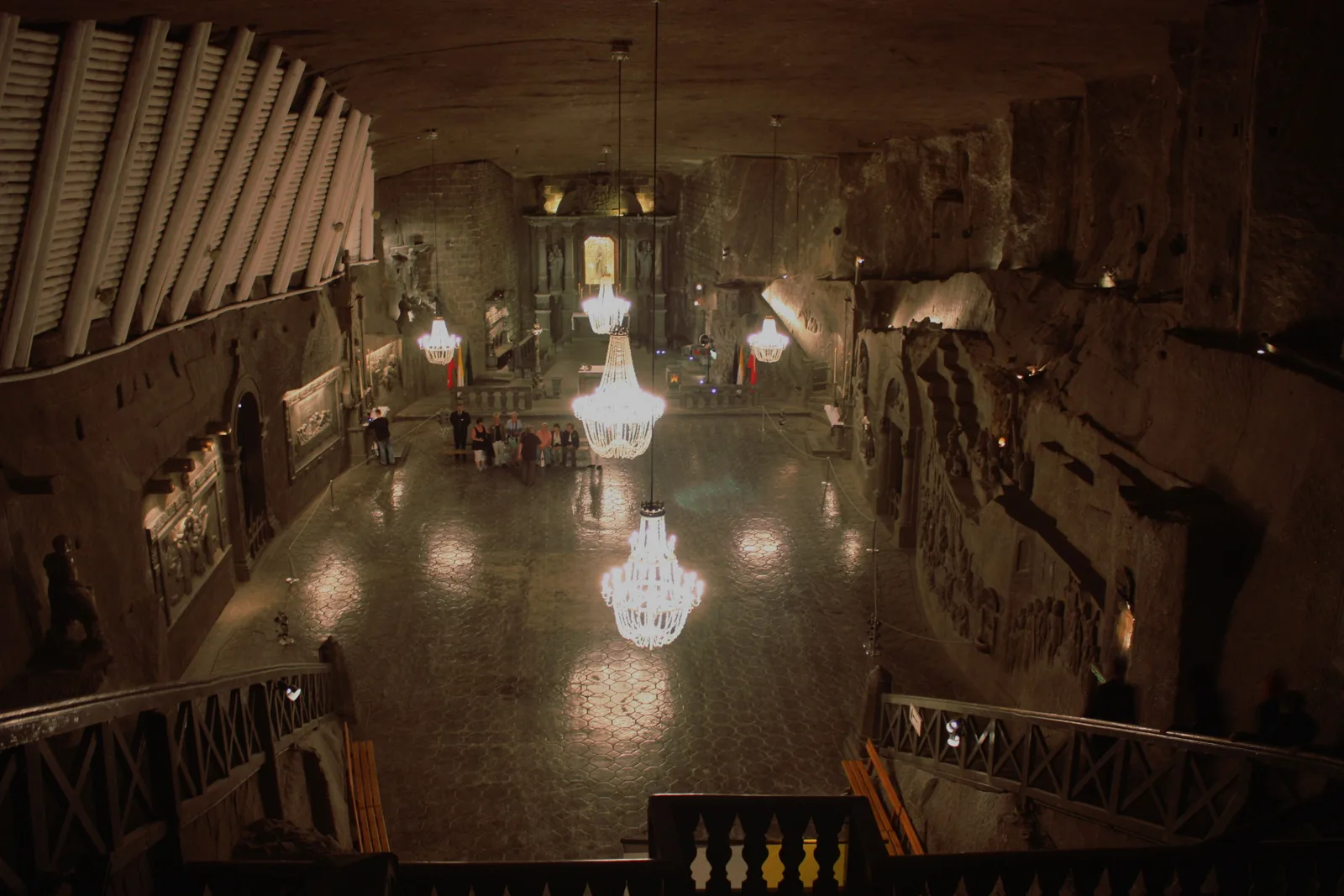
More than 100 m beneath southern Poland is a chapel carved out of salt. The walls are salt, the floor is salt, and so are the chandeliers hanging from the ceiling. The place comes with an old story, too: a Hungarian princess threw her ring into a mine, and it turned up far away in Poland, inside a freshly dug lump of salt. Start with the short video.

 Watch the one-minute video on YouTube
A mine 327 meters deep
The Wieliczka Salt Mine lies just southeast of Kraków, the historic city in southern Poland. By the 13th century it was already known as the country's biggest source of salt, and in 1978 it made the very first UNESCO World Heritage List.
The numbers are staggering. According to the mine's official website, its deepest point is 327 m underground, spread over nine levels, with 245 km of passages and more than 2,000 chambers. Visitors see a small slice of it: the tourist route runs for 3.5 km and descends to 135 m, in air that stays at around 17 to 18°C.
Princess Kinga's ring
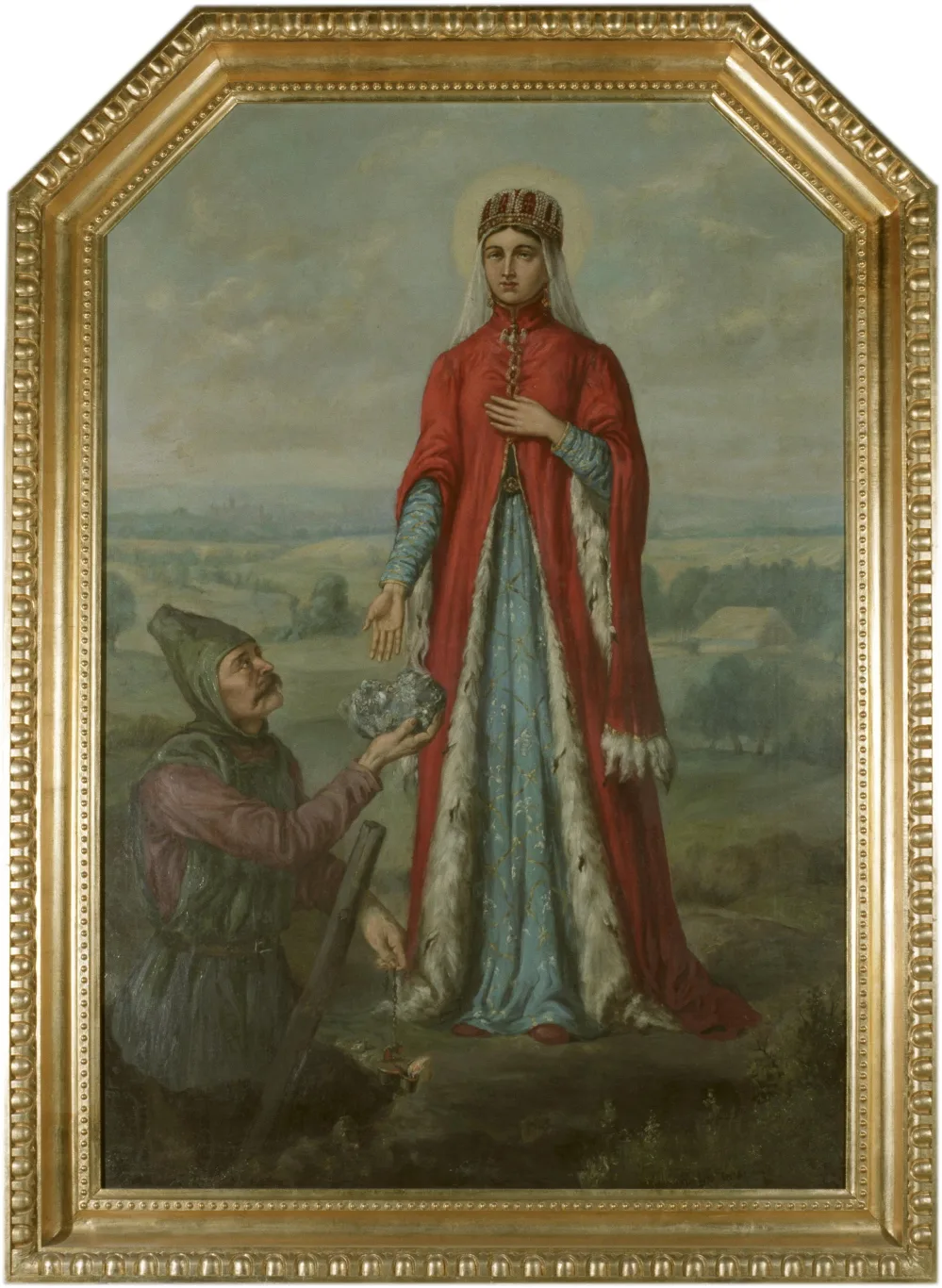
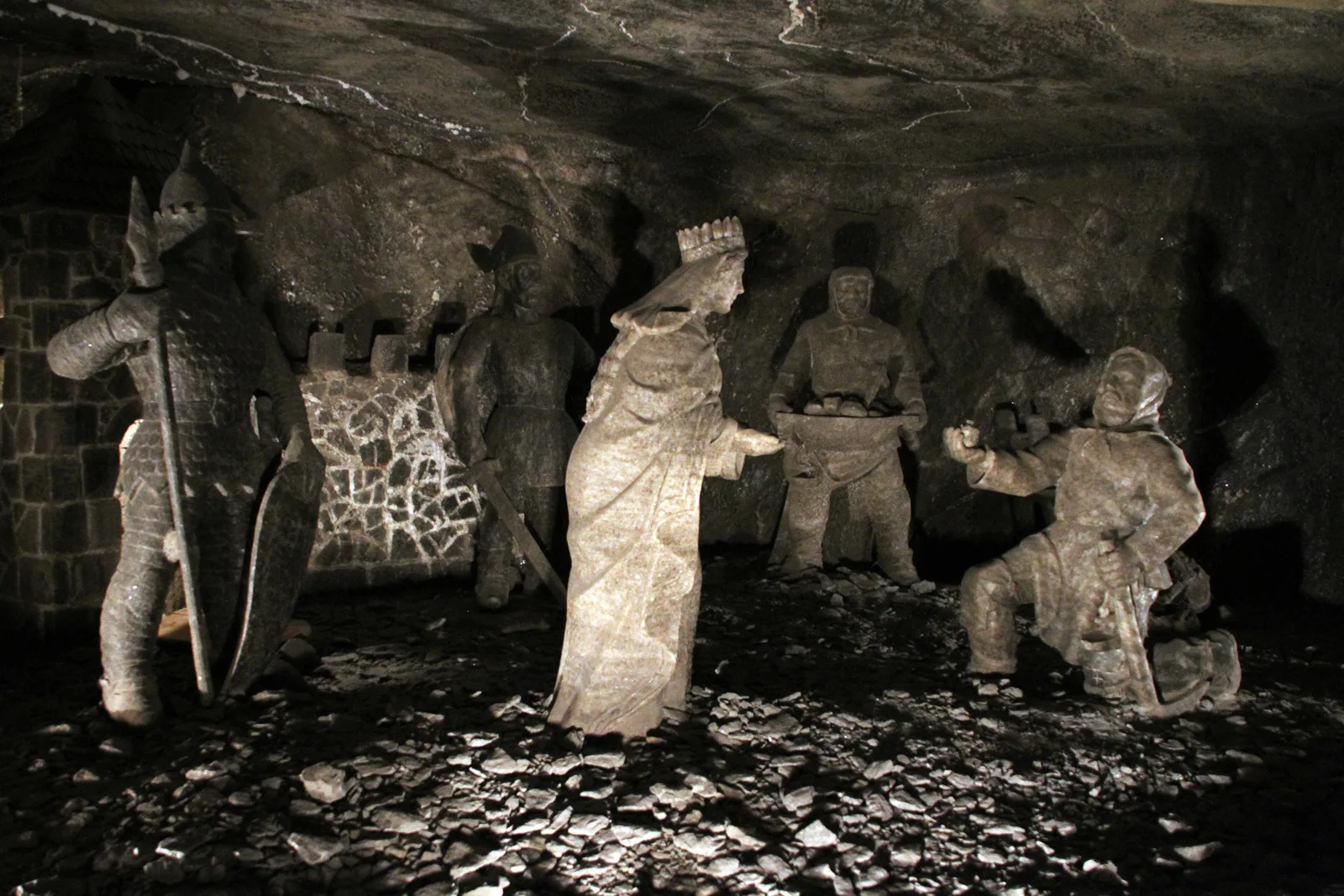
From here on, this is legend. Long ago, a Hungarian princess named Kinga was promised in marriage to Bolesław of Poland. Before she left home, the story goes, she threw her engagement ring down the shaft of a Hungarian salt mine. She then brought Hungarian miners with her to Poland and set them digging at Wieliczka. When they split open the very first lump of salt, there was her ring.
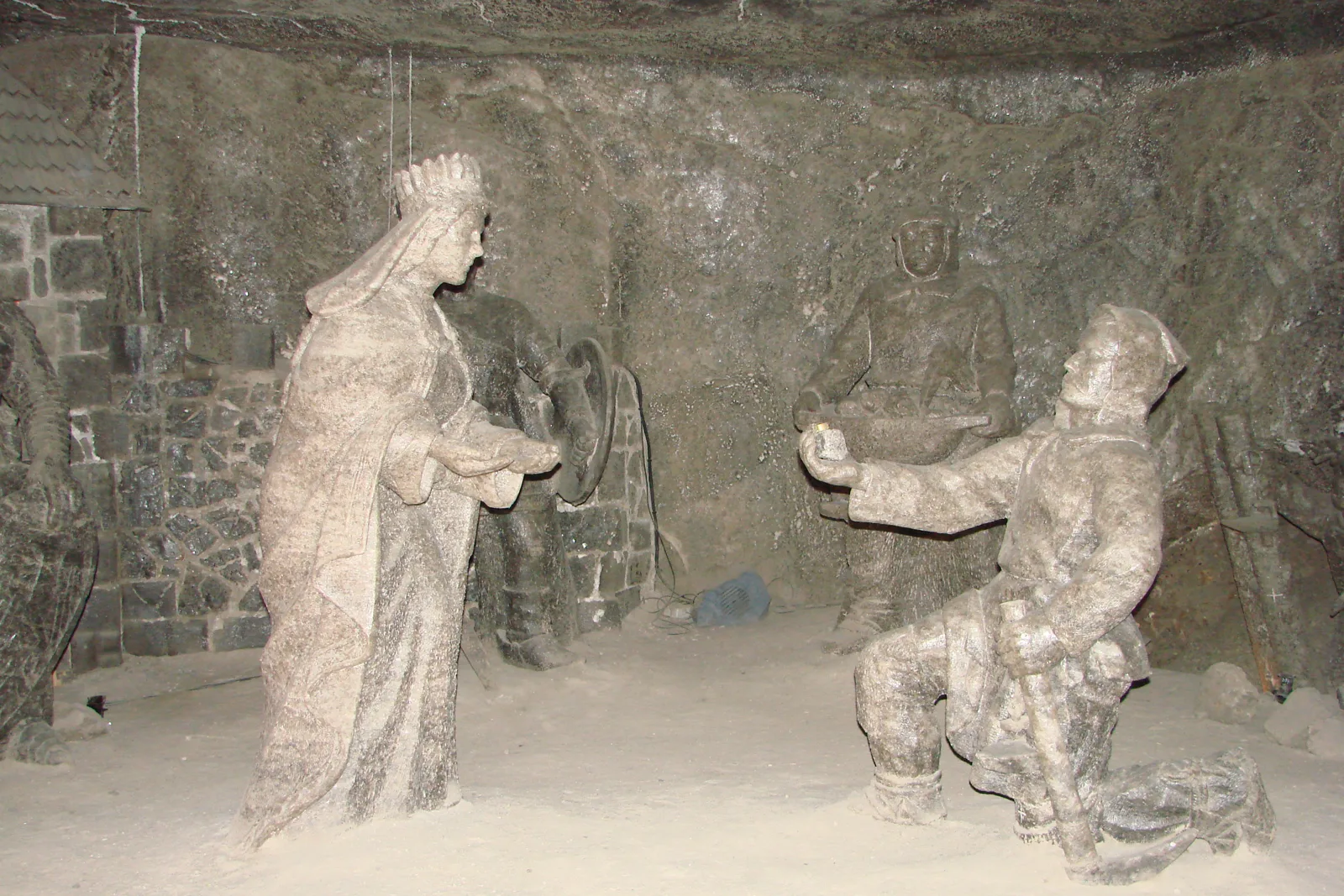

In the mine's Janowice Chamber, the scene is carved in salt. The Polish Tourism Organisation describes the sculptures as depicting the legend of St. Kinga's ring, found in the first lump of salt. The neighboring salt mine at Bochnia tells the same tale.
It is, of course, a legend. A Polish scholarly study of the story makes clear that the ring miracle cannot be taken as evidence that Hungarian miners founded Polish salt mining. Still, Kinga matters deeply here. Pope John Paul II declared her a saint in 1999, and she is honored today as the patron saint of salt miners.

A chapel carved by three miners
The chapel dedicated to her, St. Kinga's Chapel, lies 101 m underground. It is a vast hall, roughly 54 m long, 18 m wide and 12 m high. The walls, floor and sculptures are all carved from salt, and the chandeliers are made of halite, or rock salt, crystals.
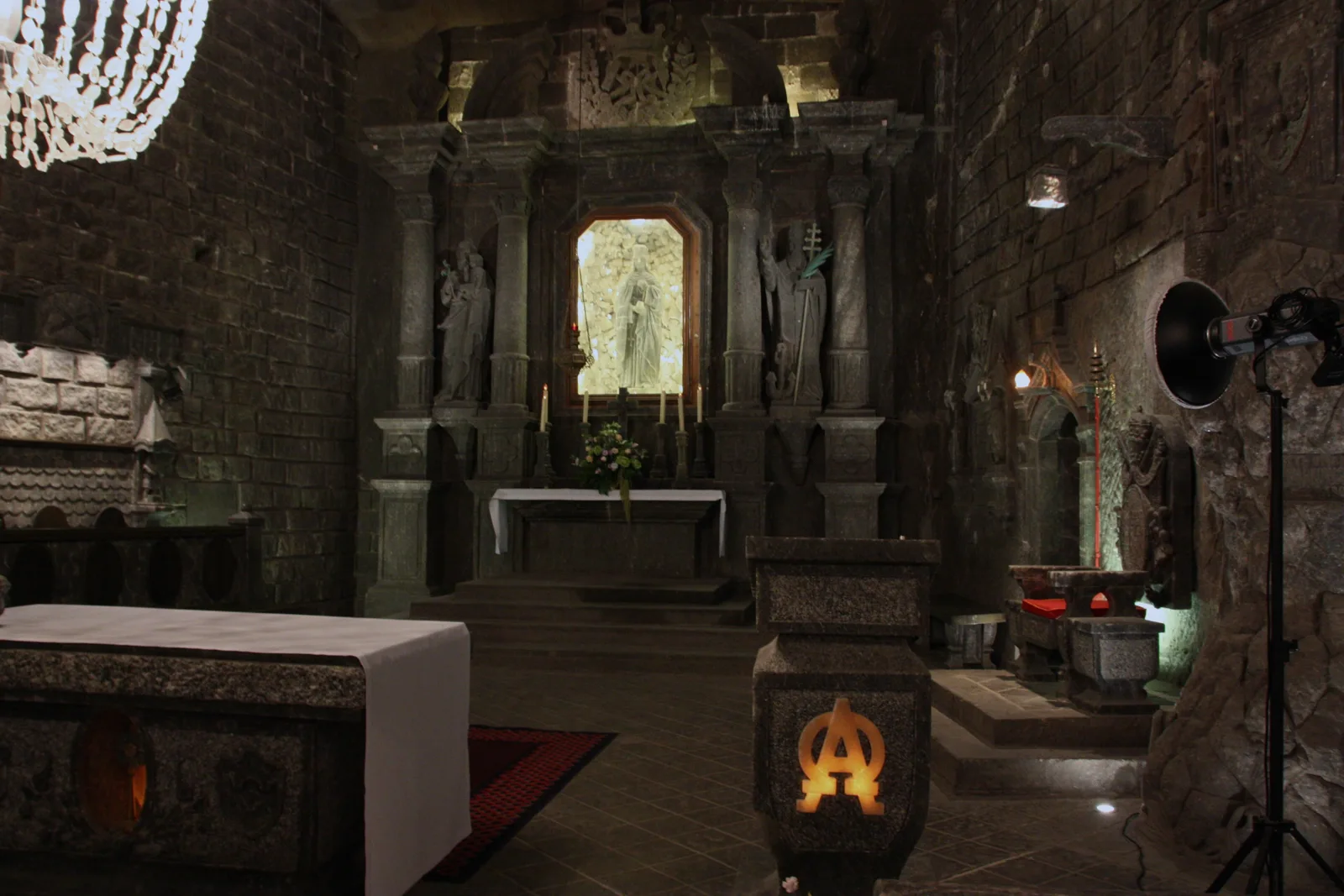

It was not carved by trained sculptors but by miners: the brothers Józef and Tomasz Markowski, and Antoni Wyrodek, all three self-taught. Work began in the late 19th century, and the decoration continued into the 1960s.
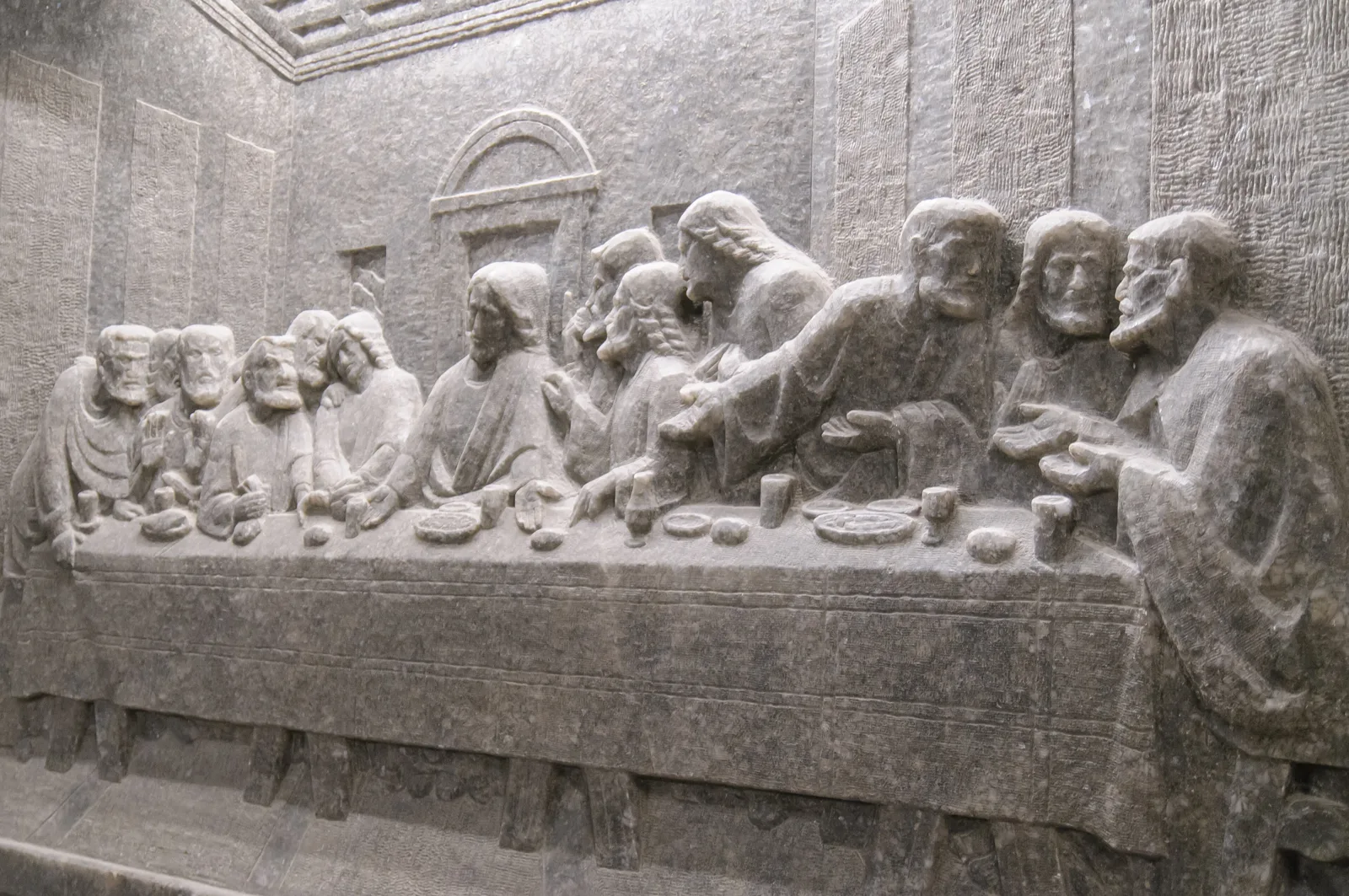
The reliefs and sculptures trace the life, death and resurrection of Jesus. Among them is a Last Supper cut into the salt wall.

The tower above ground
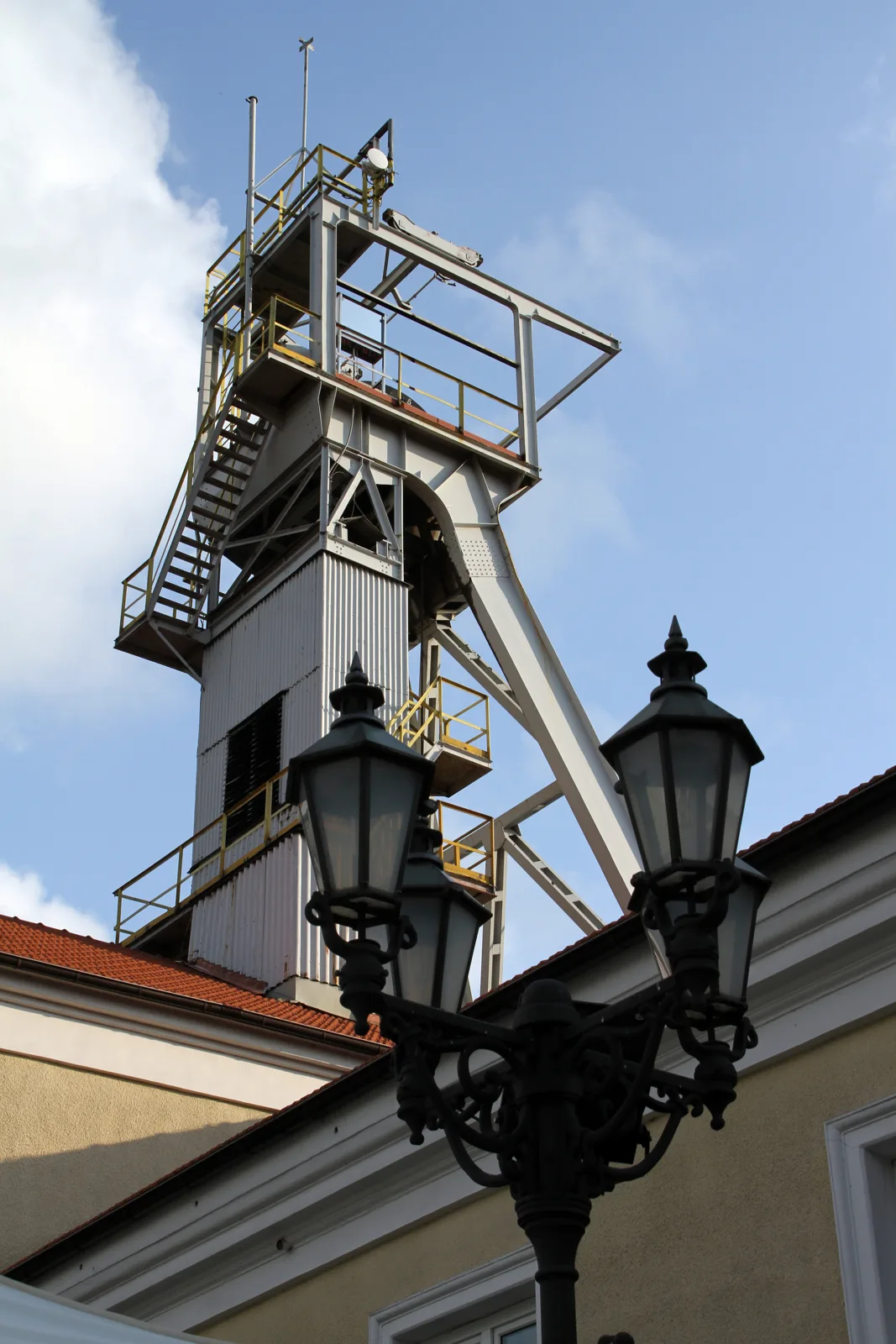
Back on the surface, a steel headframe rises among the mine buildings. Given the miles of tunnels and chambers below, what you see up here is only the smallest part of the mine.

Between legend and fact
So here is where things stand. The princess's ring in the lump of salt is a story passed down for centuries. The miners who worked this ground for hundreds of years, and the chapel they carved by hand, are entirely real and still here. Even the legend, carved in salt, is the miners' handiwork.

Find the Wieliczka Salt Mine on Wooriyeojido
The ring may be legend, but the salt chapel 101 m down is real, and you can walk right into it. The Wieliczka Salt Mine is pinned on the Wooriyeojido map. Look it up in the app, and if you go, leave your photos and stories from the day right beside the pin.
View this place in the Wooriyeojido appVideos of nearby places
 [Carcassonne] Did one pig end the siege? Dame Carcas and the name of the city
 Where did the children who followed the pipe go? The Pied Piper of Hamelin, Germany
 Who really owns the castle called "Dracula's Castle"? Bran Castle, Romania
Sources
- Wieliczka Salt Mine — About the Mine (official)
- Wieliczka Salt Mine — Tourist Route (official)
- Wieliczka Salt Mine — About salt carving (official document)
- Polish Tourism Organisation — Wieliczka and Bochnia Royal Salt Mines
- UNESCO World Heritage Centre — Wieliczka and Bochnia Royal Salt Mines (32)
- National Geographic Polska — Święta Kinga to patronka górników
- Folia Historica Cracoviensia — Analiza źródłoznawcza legendy o pierścieniu księżnej Kingi