The Vendel I Helmet: Older Than the Vikings, With Bird Heads on Its Crest
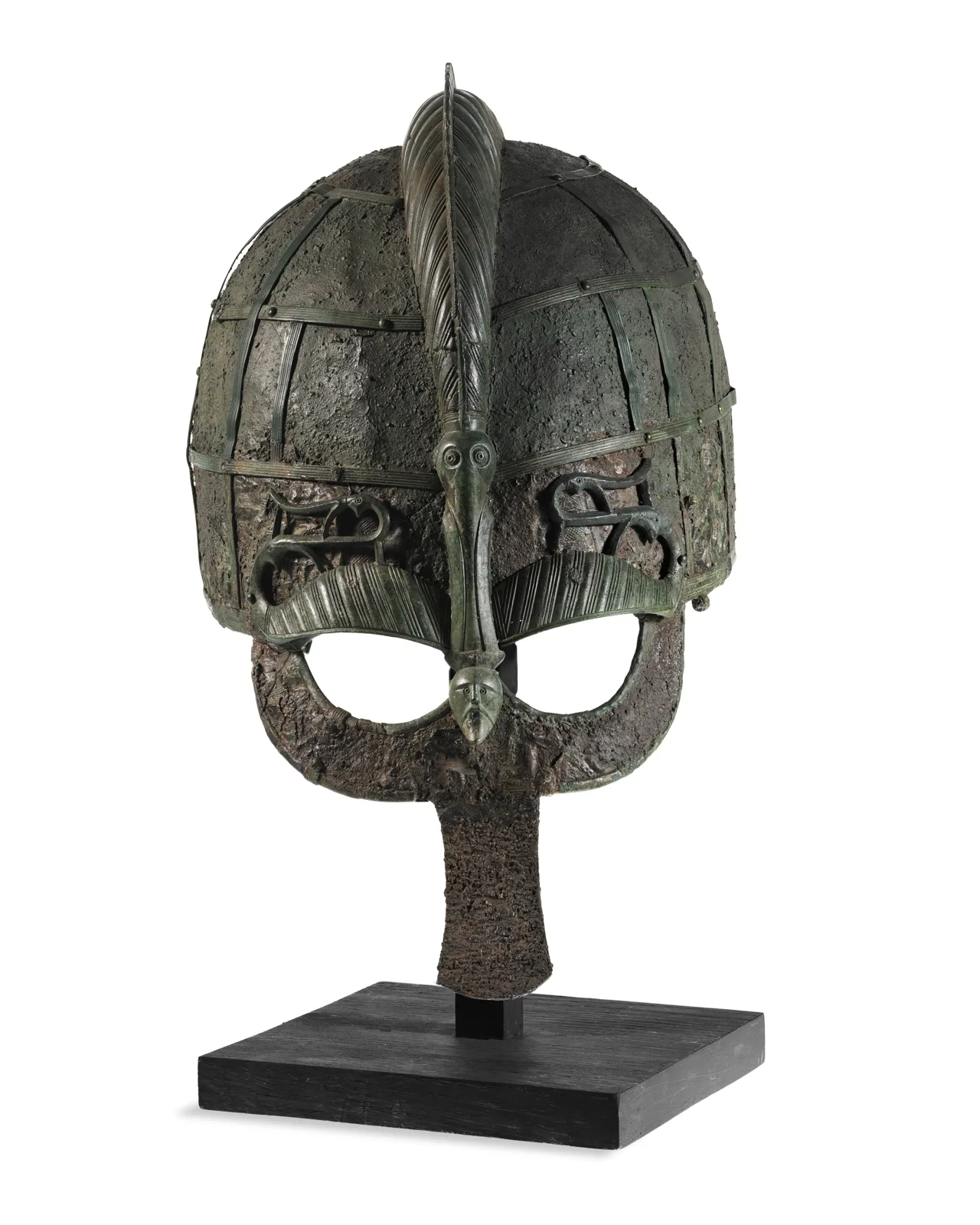
In the Gold Room of the Swedish History Museum sits a helmet more than 1,300 years old. Learn why this Vendel Period helmet is so often mistaken for a Viking one, and look for the bird heads hidden at the ends of its crest.
In a museum in Stockholm sits an old helmet of rusted iron and bronze. At first glance you might take it for a Viking helmet, but it is more than a century older than the Viking Age. And at each end of the crest running over its crown, a bird's head lies hidden. So why isn't this a Viking helmet? Start with the short video.
 Watch the one-minute video on YouTube
In the Gold Room
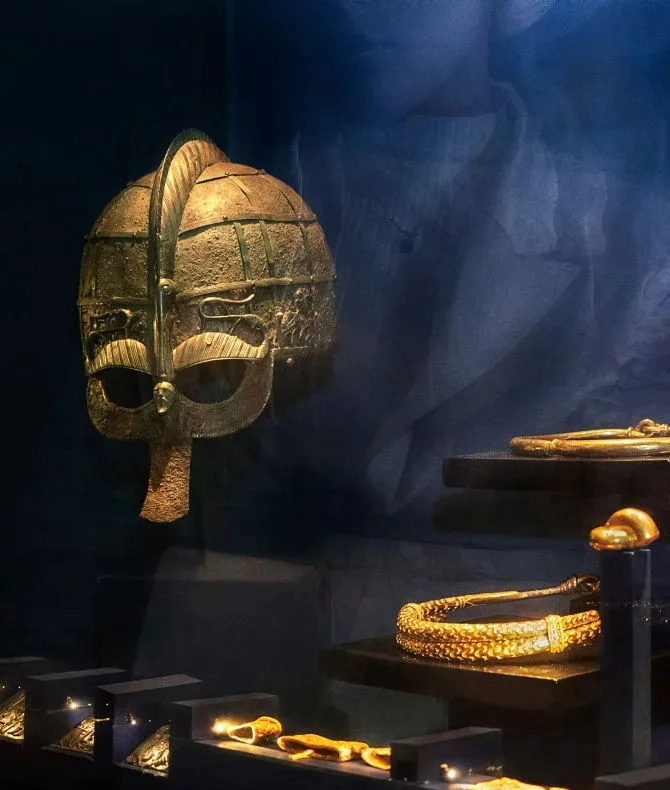
The Vendel I helmet belongs to the Swedish History Museum (Historiska museet) in Stockholm, where it is on view in the Gold Room, or Guldrummet, an exhibition that opened in 1994. Admission is 180 Swedish kronor, and free for anyone aged 18 or under.
Boat graves in a churchyard
The helmet was found in the churchyard of Vendel Church in Uppland, central Sweden. Between 1881 and 1893, excavations there uncovered a whole cemetery of boat burials, graves in which the dead were laid to rest in boats. The finds were so remarkable that the period from 550 to 750 AD is now named after the village: the Vendel Period.
Many of the Vendel graves had been robbed in antiquity, but graves I, XII and XIV were found untouched, and the helmets from them were made in Scandinavia. The Vendel I helmet, as its name suggests, came from grave I. The excavation was led by Hjalmar Stolpe, and the helmet entered the museum's collection in 1883.
A century before the Vikings
According to the museum's records, the helmet was made of iron with bronze decoration between about 675 and 700. The Viking Age ran from 800 to 1100, so the helmet predates it by more than a hundred years.
The museum itself points out that Vendel helmets are often confused with Viking ones. In fact, apart from the helmet from Gjermundbu in Norway, not a single complete Viking Age helmet has survived.
Bird heads on the crest
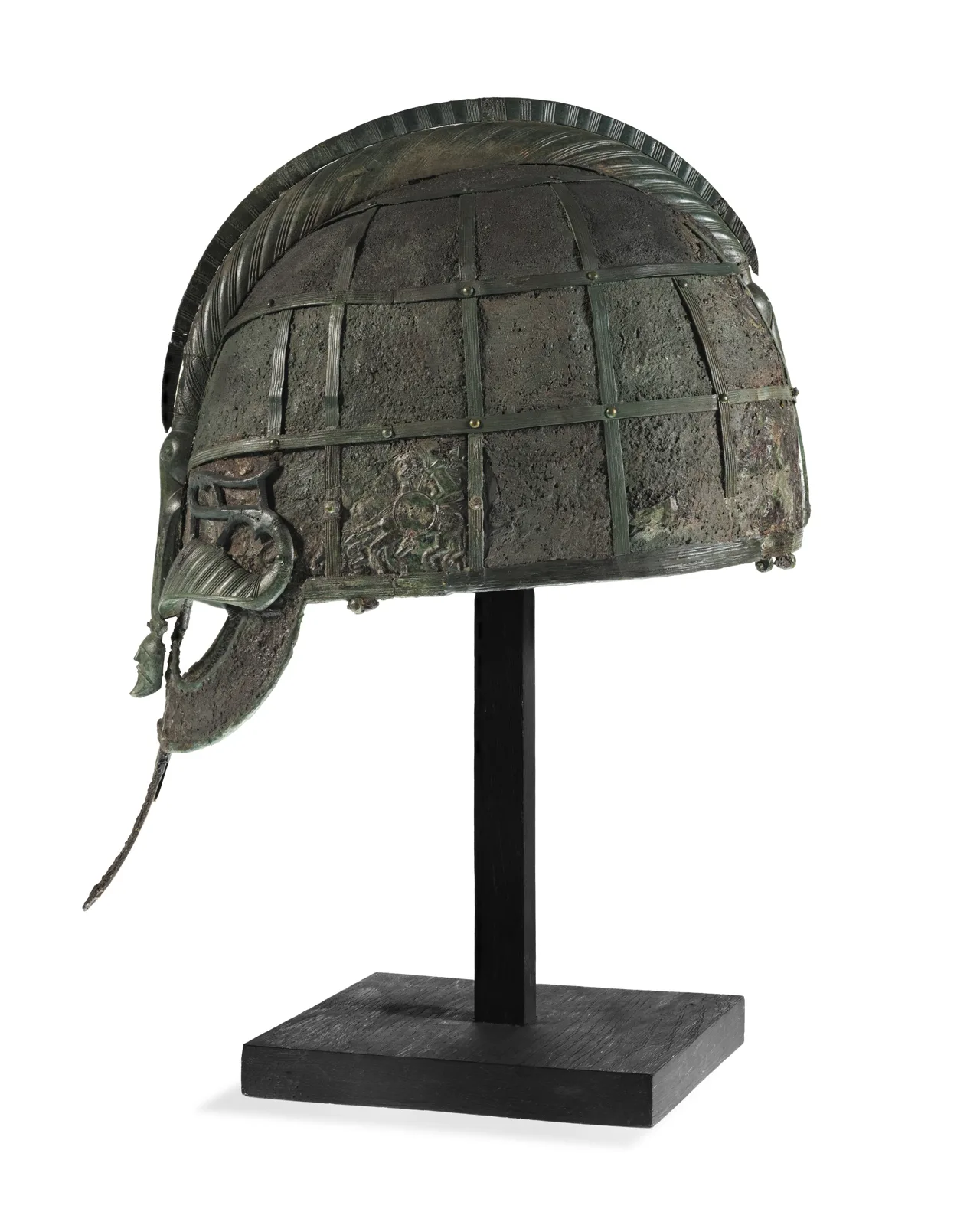
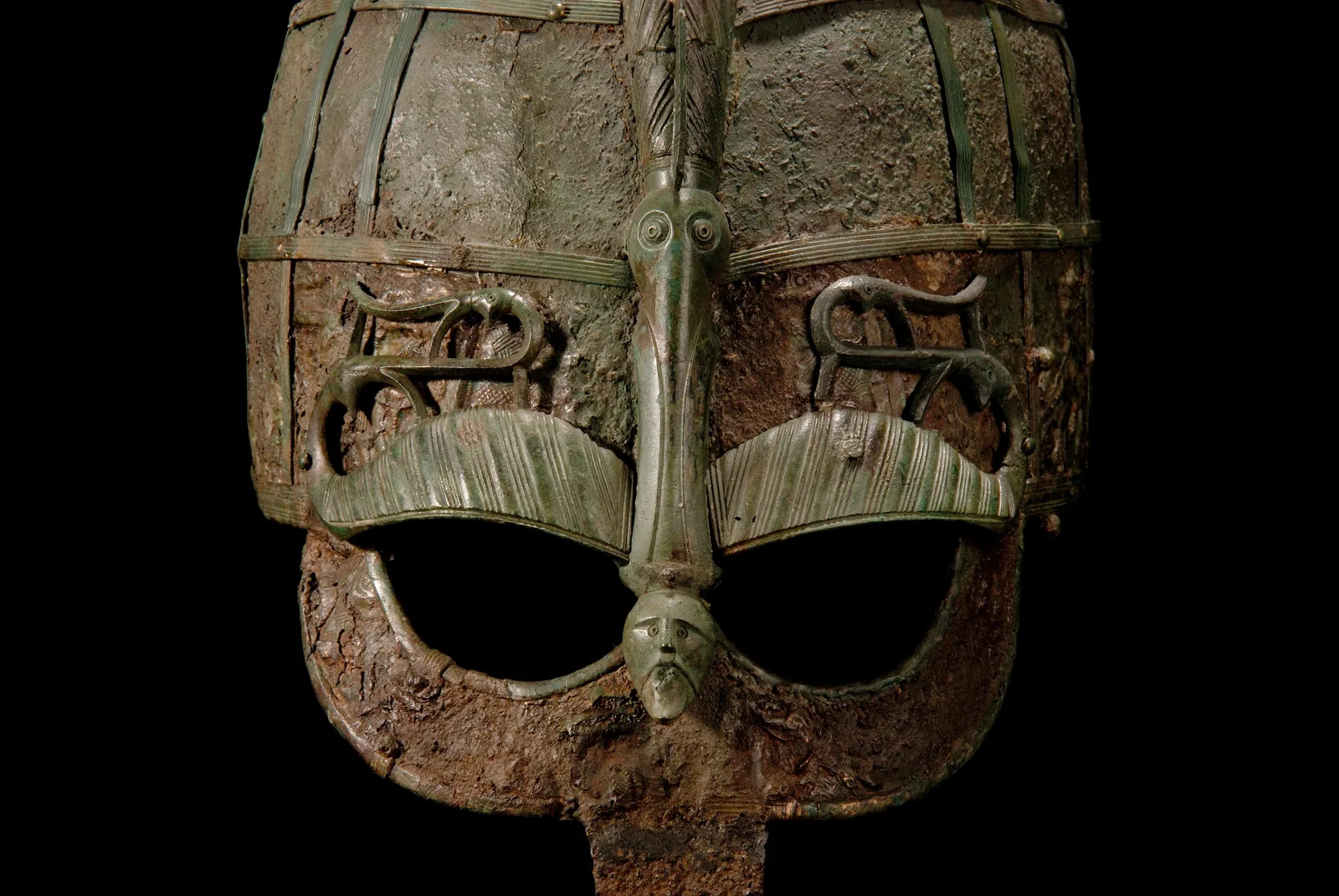
Running from front to back across the top of the helmet is a crest of cast bronze. The museum's catalogue entry notes that it ends at both sides in a bird's head.
Helmets with crests like this form a group known as Nordic crested helmets. Examples have also turned up in the West Mound at Gamla Uppsala, and the famous Anglo-Saxon helmet from Sutton Hoo in England belongs to the same group.
A face guard like a pair of glasses
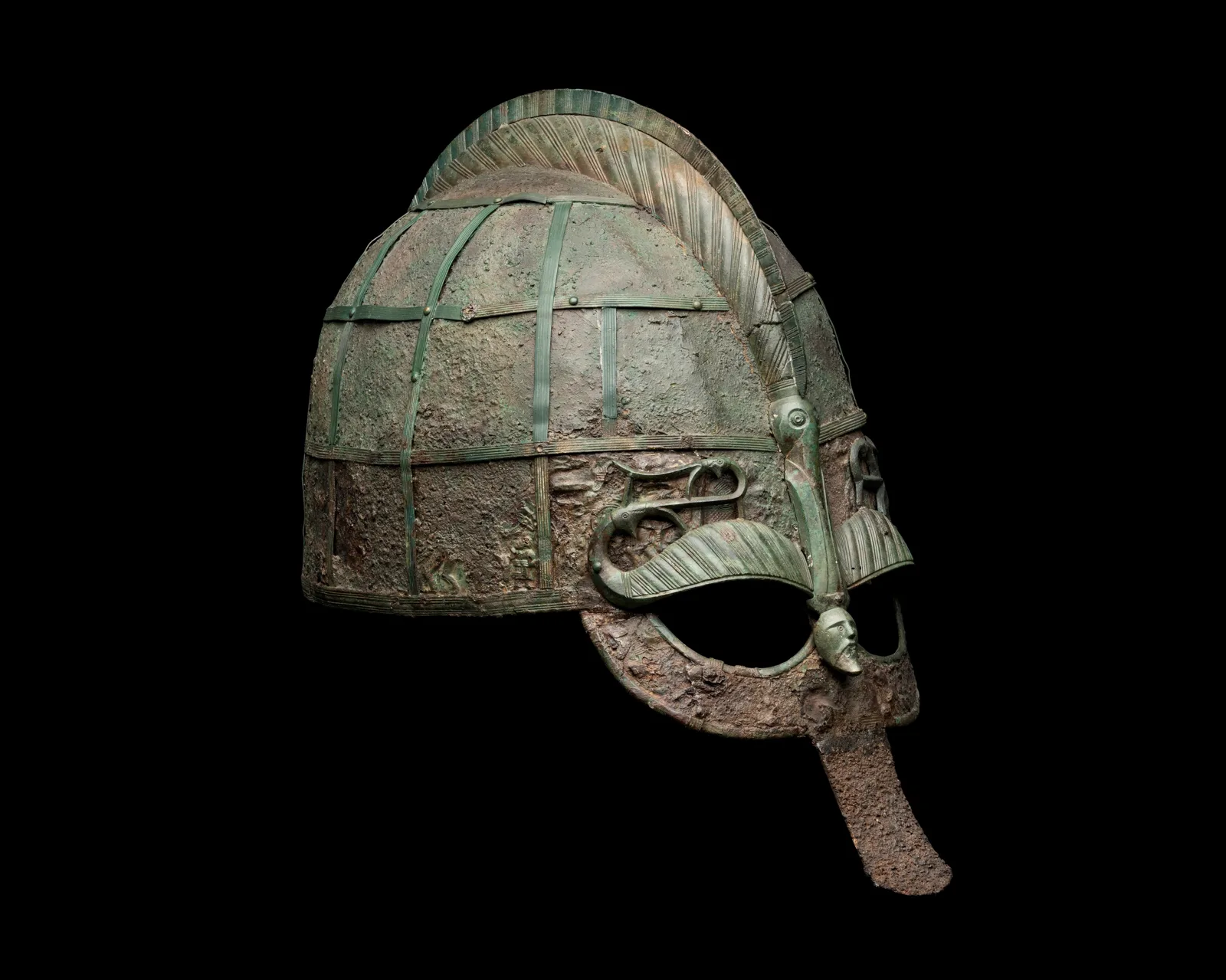
Just above the eye openings, a bronze brow piece is fixed to the brow band. A nose guard runs down from it, with cheekbone guards attached, so that from the front the helmet looks as if it is wearing spectacles. That is why helmets of this type are called "spectacle helmets." The back of the neck was protected by a curtain of iron chain mail.
Pictures pressed into bronze
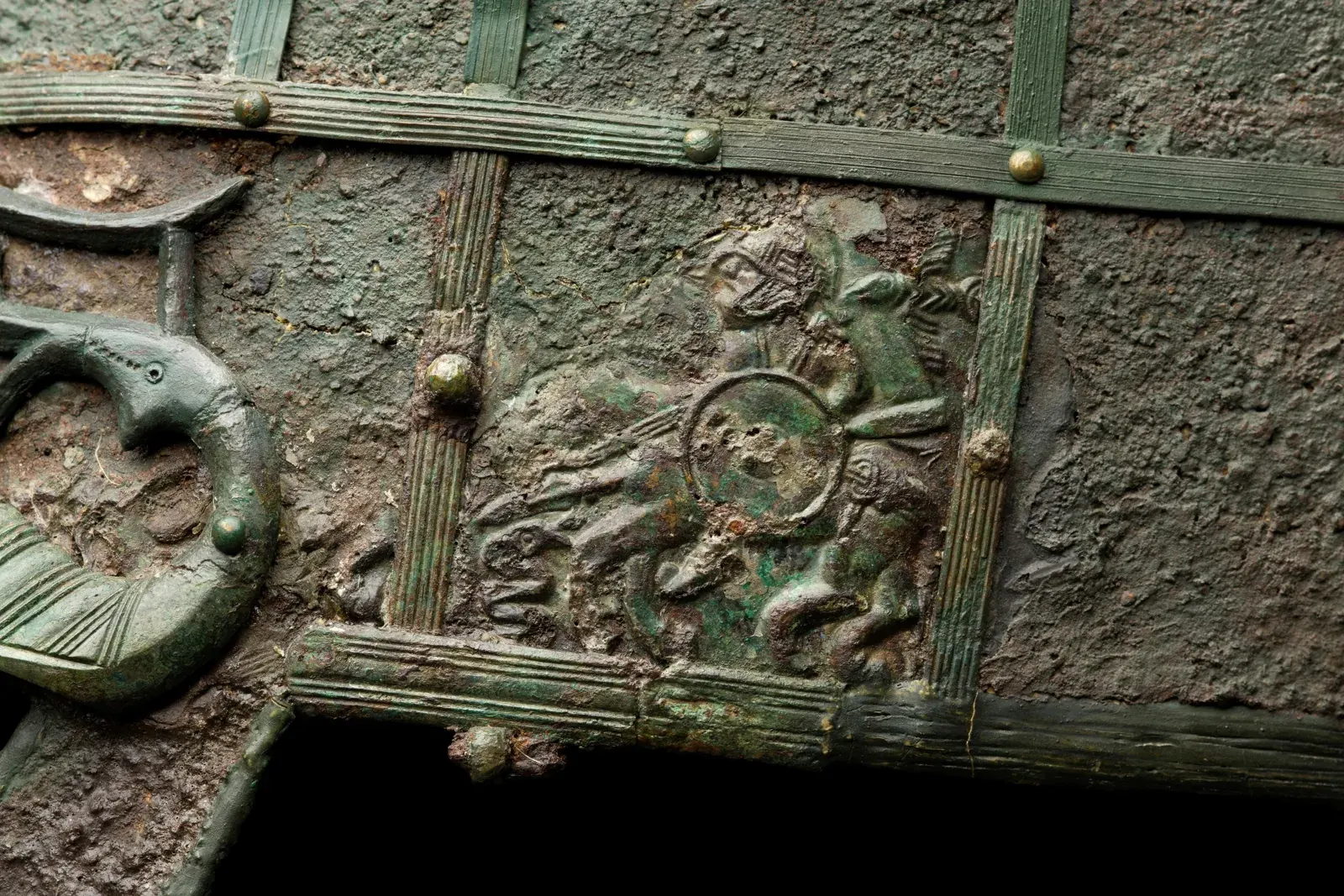
The surface of the helmet is covered with thin bronze plates stamped with designs. The museum interprets the imagery as the Norse god Odin with ravens, along with a so-called "creation beast." Look closely and you can also make out a rider on horseback, carrying weapons.
Find the Swedish History Museum on Wooriyeojido
The Swedish History Museum, home of the Vendel I helmet and its bird-headed crest, is pinned on the Wooriyeojido map. Look it up in the Wooriyeojido app, and if you visit, leave your photos and stories from the day right beside it.
View this place in the Wooriyeojido app

