Tongdosa: Where Did the Nine Dragons of the Pond Go?
Legend says Tongdosa, a temple on the slopes of Yeongchuksan in Yangsan, South Korea, was built over a great pond where nine dragons lived. Where the dragons went, the tiny pond one of them is said to guard, and a main hall with no Buddha statue, in a video and photos.
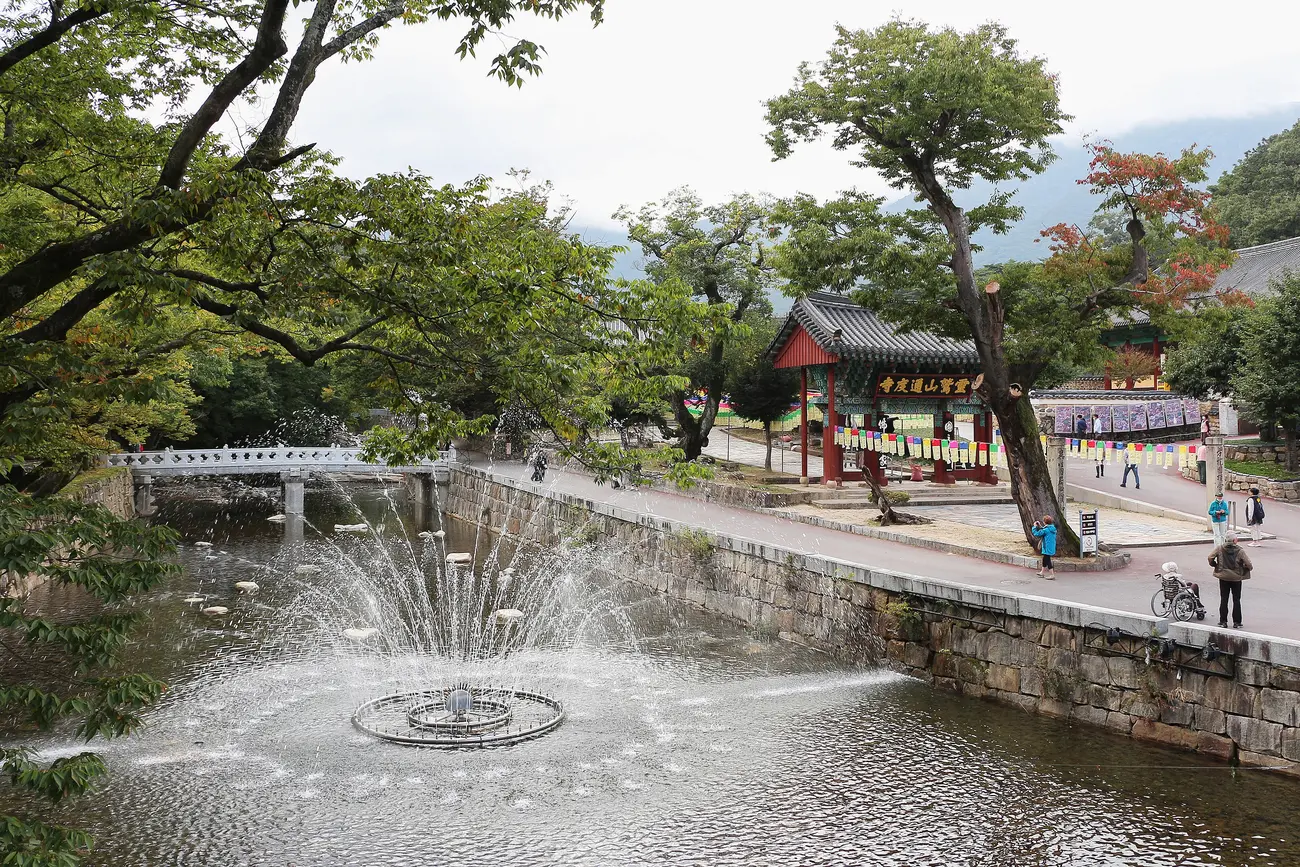
Long ago, before there was any temple here, there was a great pond, and nine dragons lived in it. Or so the story goes. Where did those dragons go? Start with the short video and the legend told at Tongdosa, a temple on the slopes of Yeongchuksan in southeastern South Korea.
 Watch the one-minute video on YouTube
The temple of the Buddha's relics
Tongdosa stands in Habuk-myeon, Yangsan, in South Gyeongsang Province, at the foot of Yeongchuksan. It was founded in 646, during the reign of Queen Seondeok of Silla, by the monk Jajang. Three years earlier, in 643, Jajang had returned from Tang China carrying relics of the Buddha, a monk's robe, and more than 400 cases of Buddhist scriptures. Because it enshrines those relics, Tongdosa is known as the "Buddha Jewel" temple among Korea's Three Jewel Temples.
A pond full of dragons
Tongdosa's own website says the ground where its precepts platform now stands was once a large pond. The legend attached to that pond goes like this.
While Jajang was praying at Mount Wutai in China, the bodhisattva Manjushri appeared to him in the form of a monk and gave him relics of the Buddha and a robe. In your country, Manjushri told him, at the foot of Mount Chukseo in the south, there is a pond where poisonous dragons live. They stir up wind and rain, ruin the crops and torment the people. Build a platform on that pond and enshrine these relics and this robe there. Chukseo is an old name for Yeongchuksan.
Back home in Silla, Jajang preached the Buddha's teachings to the dragons of the pond, and in the end they submitted. He then filled in the pond and built the Diamond Precepts Platform on top of it.
Five went one way, three another, and one stayed
According to a story handed down among Tongdosa's monks, there were nine dragons in all. Five of them left for a place called Oryongdong, and three for a place called Samdonggok.
But one dragon, which was blind, refused to go. It swore to stay and guard the temple grounds. Jajang granted its wish and left one corner of the pond unfilled so it would have a home.
The pond that never runs dry
That corner is Guryongji, the "Pond of the Nine Dragons." Tongdosa describes it as a small oval pond of about 13 to 17 square meters and less than a person's height deep, yet one that never loses water, however severe the drought. Ringed with stone and crossed by a single flat slab, it is so modest that, without knowing the story, you might walk straight past it.
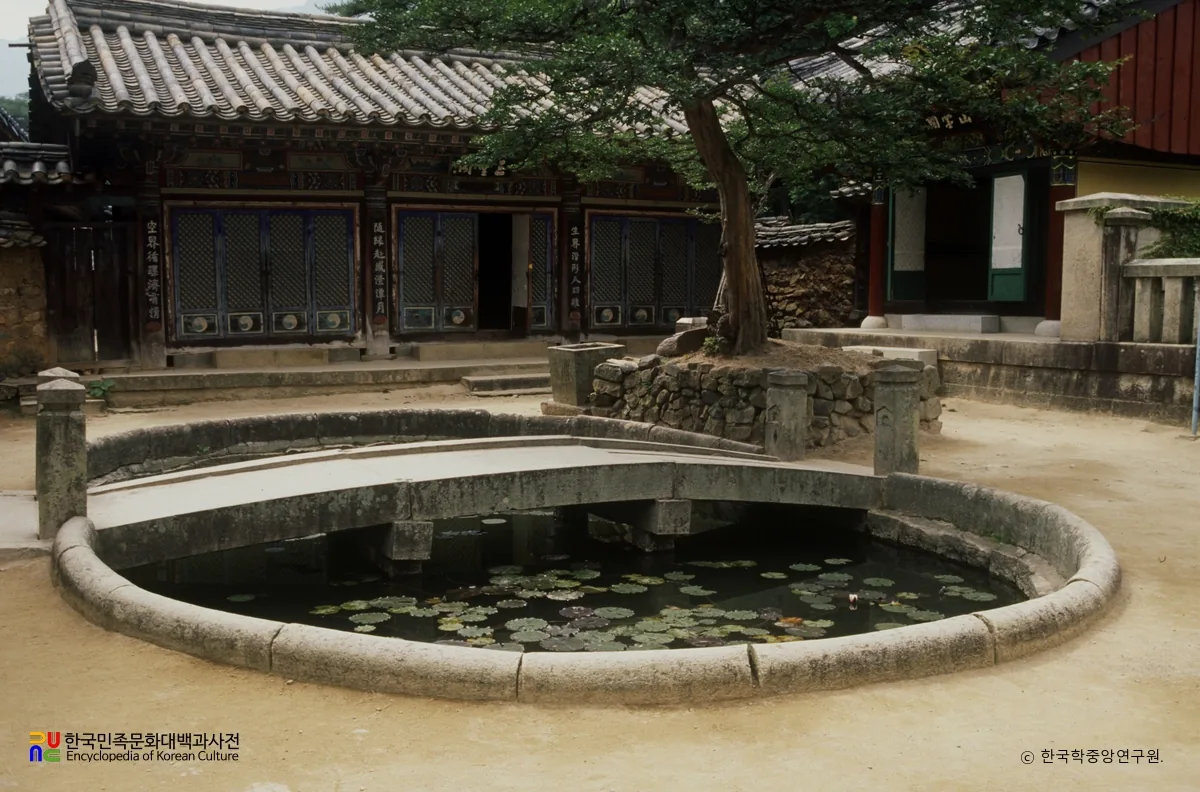
Every year at Dano, a traditional festival in early summer, the temple holds a rite for the Dragon King beside Guryongji.
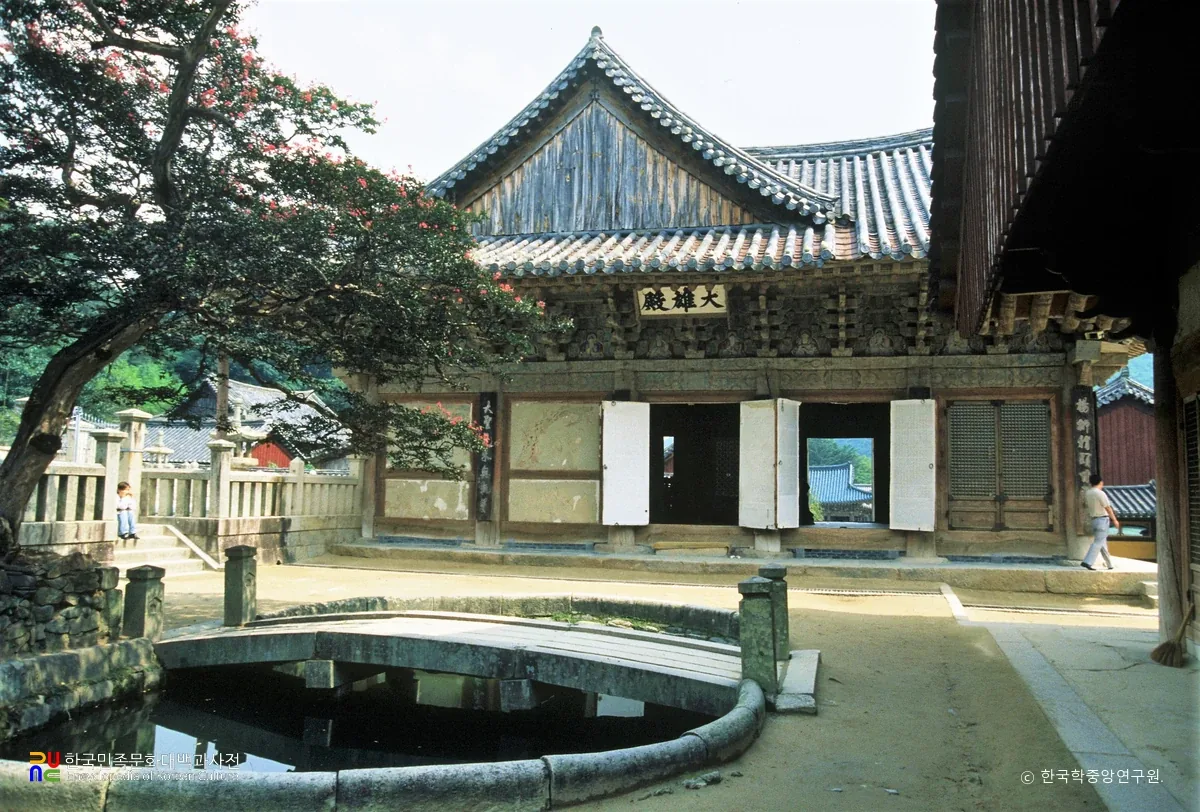
A main hall with no Buddha
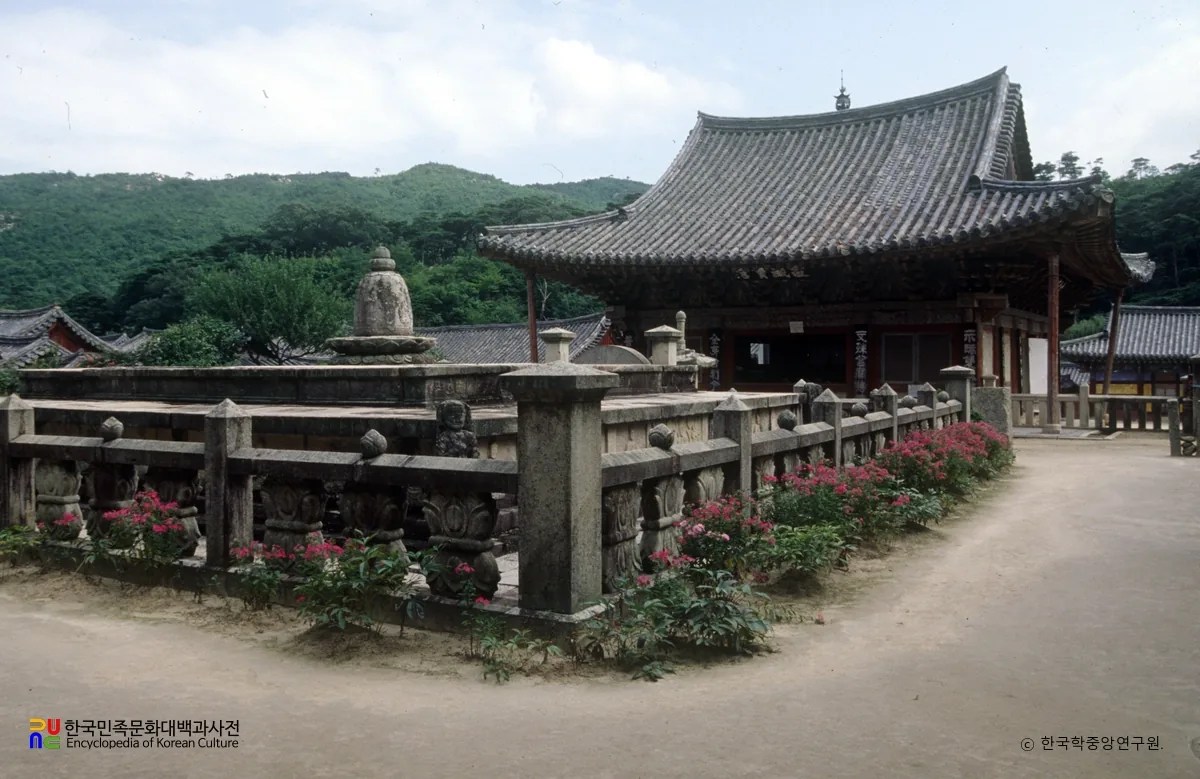
Step into Tongdosa's main hall and you notice something missing: there is no statue of the Buddha. Right behind the hall stands the Diamond Precepts Platform, where the relics Jajang brought back are said to be enshrined. Because the relic stupa is the heart of the temple, the hall does without one.
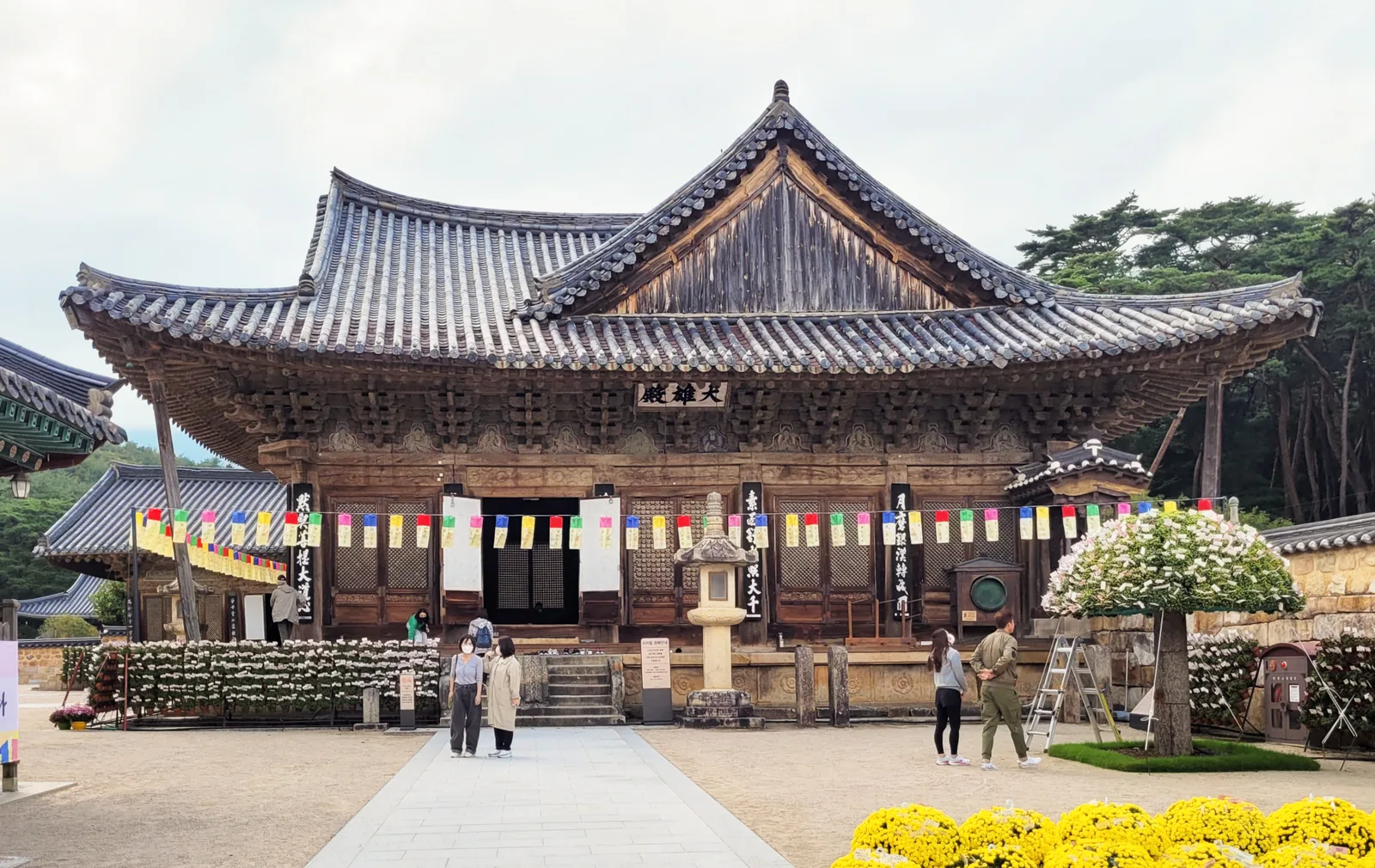
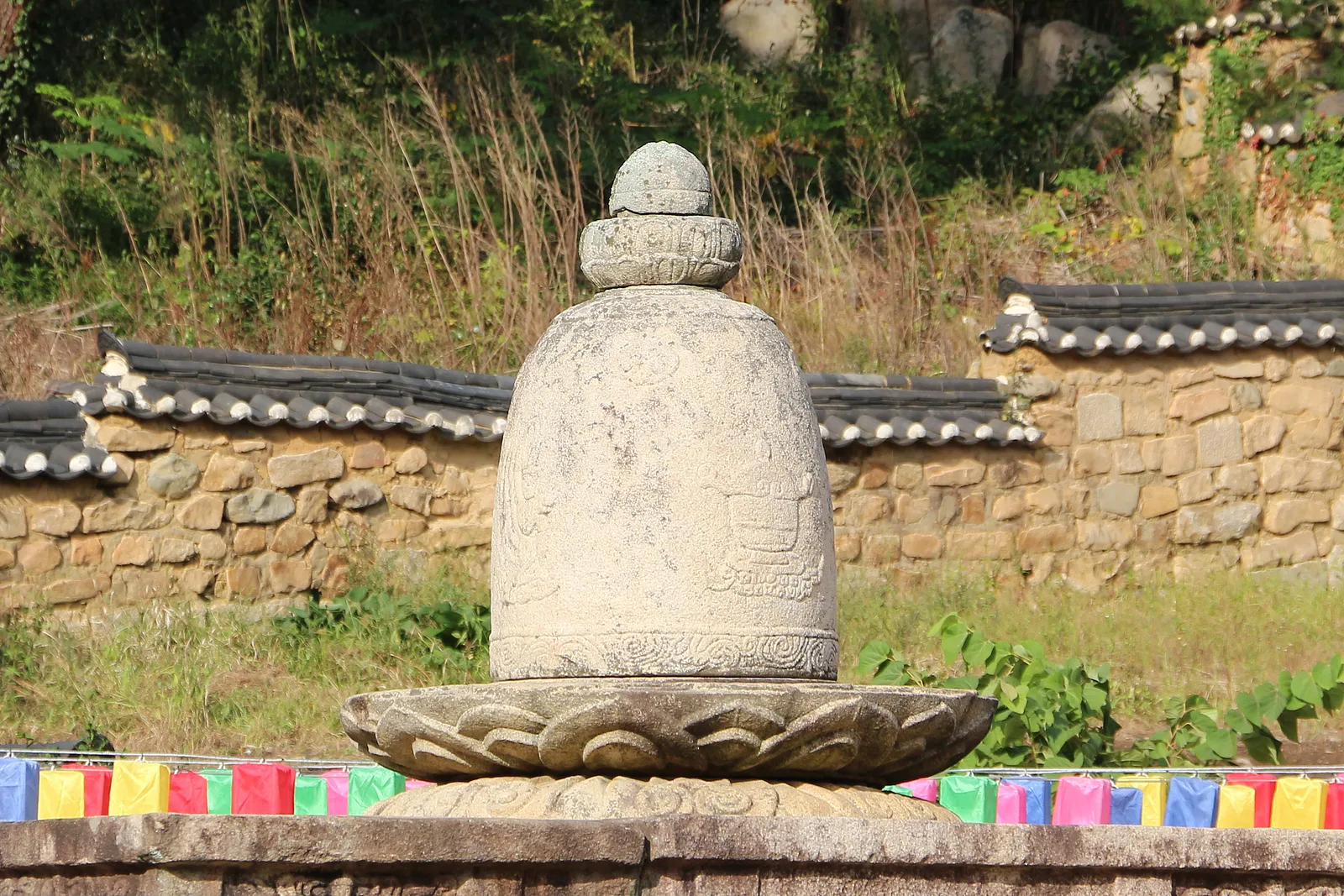
The present main hall was rebuilt in 1645, under King Injo of the Joseon dynasty. Together, the main hall and the Diamond Precepts Platform are designated a National Treasure of Korea.
A World Heritage mountain monastery
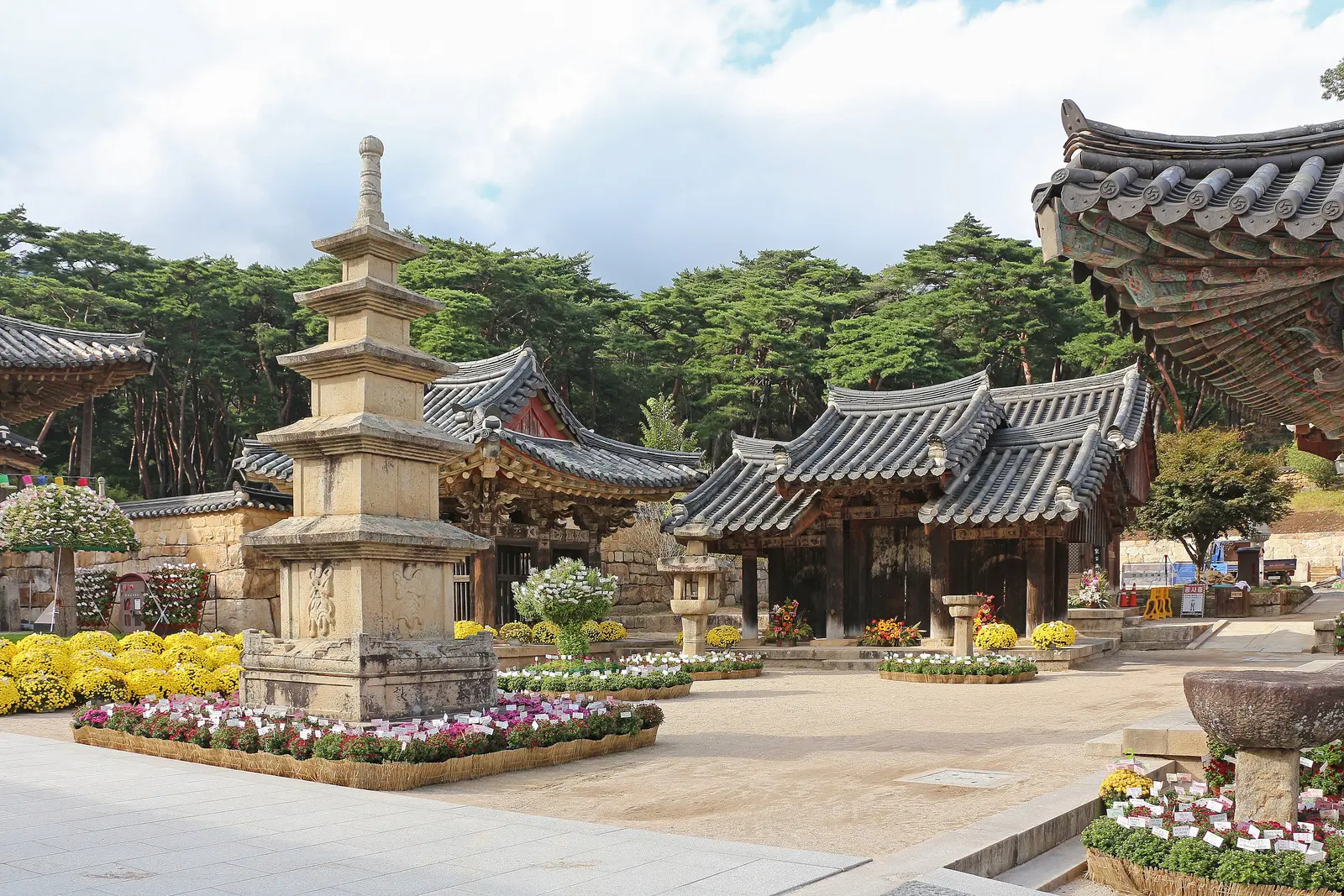
In 2018 Tongdosa was inscribed on the UNESCO World Heritage List as one of seven temples in "Sansa, Buddhist Mountain Monasteries in Korea," all founded between the 7th and 9th centuries. Its history goes back to 646, more than 1,300 years ago.
Find Tongdosa on Wooriyeojido
Eight dragons left, and one blind dragon stayed behind in a tiny pond. Tongdosa, home of Guryongji, is pinned on the Wooriyeojido map. Look it up in the app, and if you go, leave your photos and the story of your day right beside it.
View this place in the Wooriyeojido app


