Tanah Lot: The Sea Snake Said to Guard Bali's Temple on the Waves
At high tide, Bali's Tanah Lot temple seems to float in the open sea. Discover, in video and photos, the legend of the 15th-century priest Nirartha who turned his sash into a sea snake, and the real effort to protect the rock from the waves.
On the coast of Bali, Indonesia, a Hindu temple stands on a rock battered by endless waves. When the tide comes in, it looks as if it is floating in the open sea. And people here say the temple is guarded by a sea snake. Where did that snake come from? Start with the short video.

 Watch the one-minute video on YouTube
Land in the sea
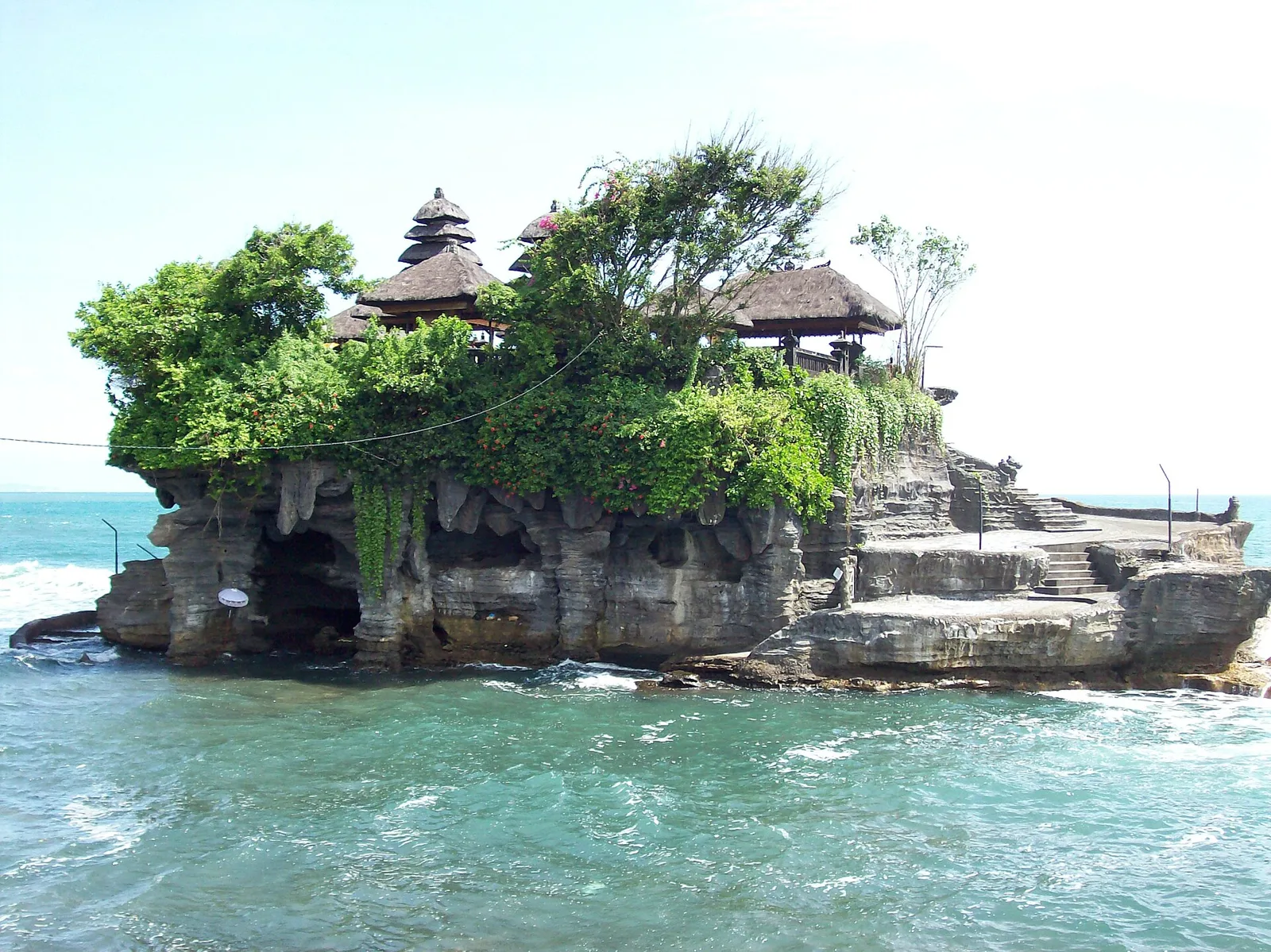
Tanah Lot lies on the coast of Tabanan in south-western Bali, about 30 kilometres from the island's capital, Denpasar. The temple's full name is Pura Luhur Tanah Lot. "Tanah" means land and "lot" means sea, and Indonesia's tourism ministry translates the name as "Land in the Sea."
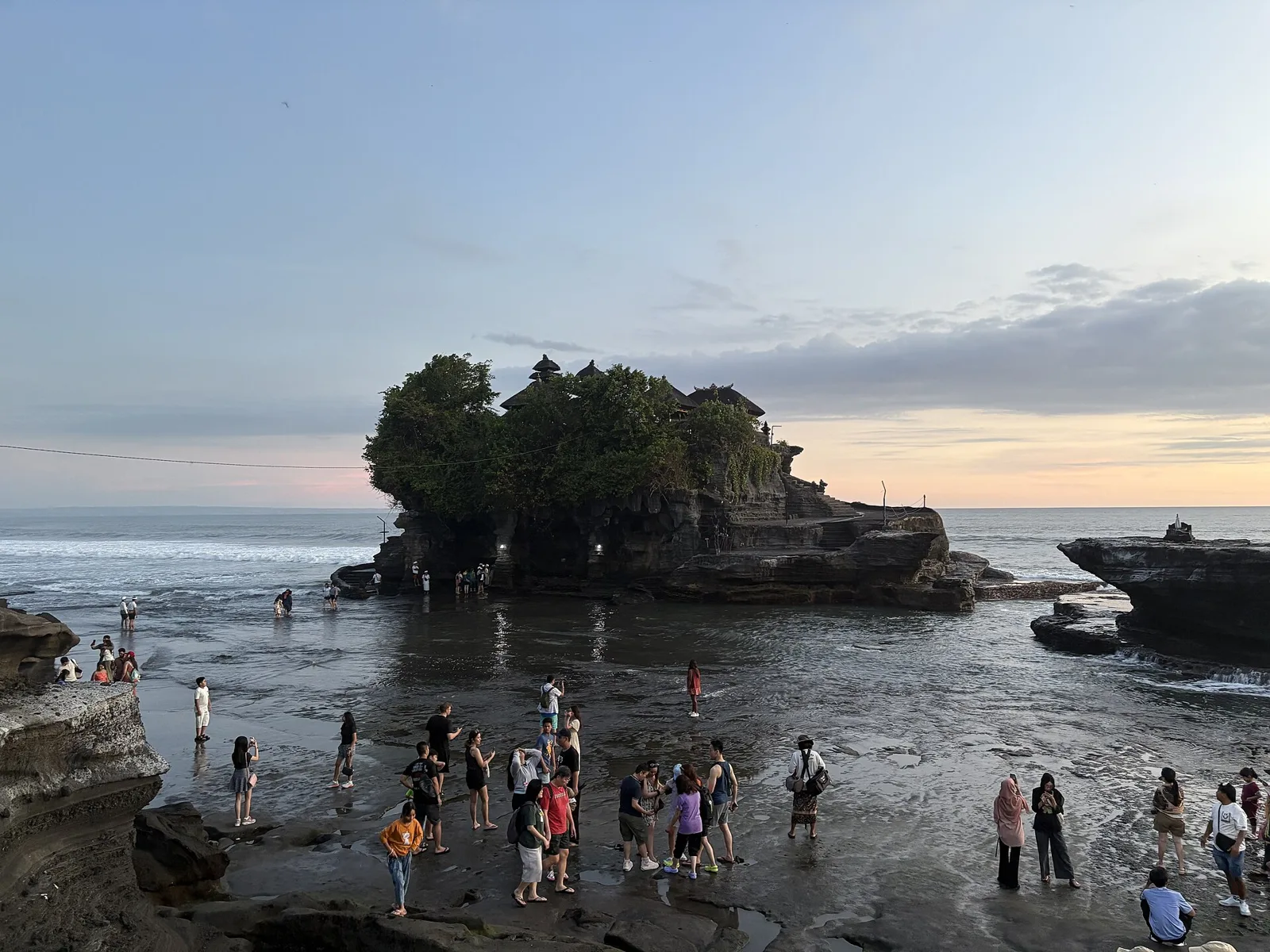
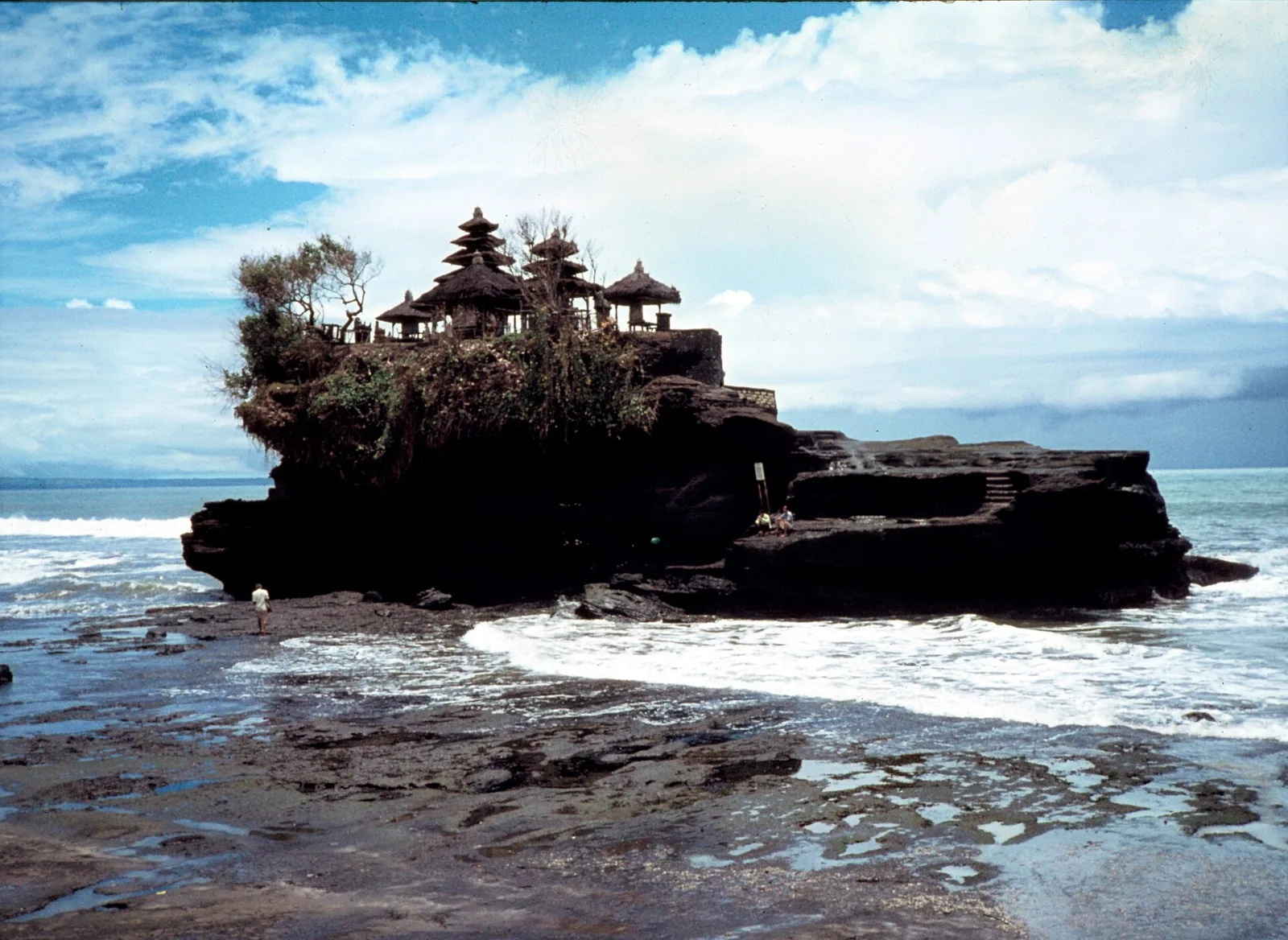
The name fits. The temple sits on a rock just off the shore. At high tide the sea fills the gap and cuts the rock off from the land; at low tide its base is exposed. The difference between high and low water can be more than two metres, so whether you can walk out to the foot of the rock depends on the tide.

A priest from Java
Who built the temple? The official Tanah Lot website recounts a story preserved in an old manuscript. In the 15th century, during the Majapahit kingdom in East Java, there lived a revered Hindu priest named Dang Hyang Nirartha. He came to Bali and travelled from west to east along its southern coast, until he found a beautiful, peaceful rocky islet known as Gili Beo. There, the story goes, he meditated and prayed to the god of the sea.
Tanah Lot is dedicated to that sea god, Bhatara Segara. Indonesia's tourism ministry estimates that the temple was founded sometime between the 15th and 16th centuries, though its English-language page dates it to the 16th century, so the sources differ slightly.

The sash that became a snake
Here is where the snake comes in. To protect the temple, the legend says, Nirartha used his power to turn the sash he wore into a venomous sea snake. The snake is believed to live to this day around the caves at the base of the rock, keeping evil intruders away from the temple.
This is local folklore, not recorded history, and Indonesia's tourism ministry is careful to say that it cannot be treated as historical fact.
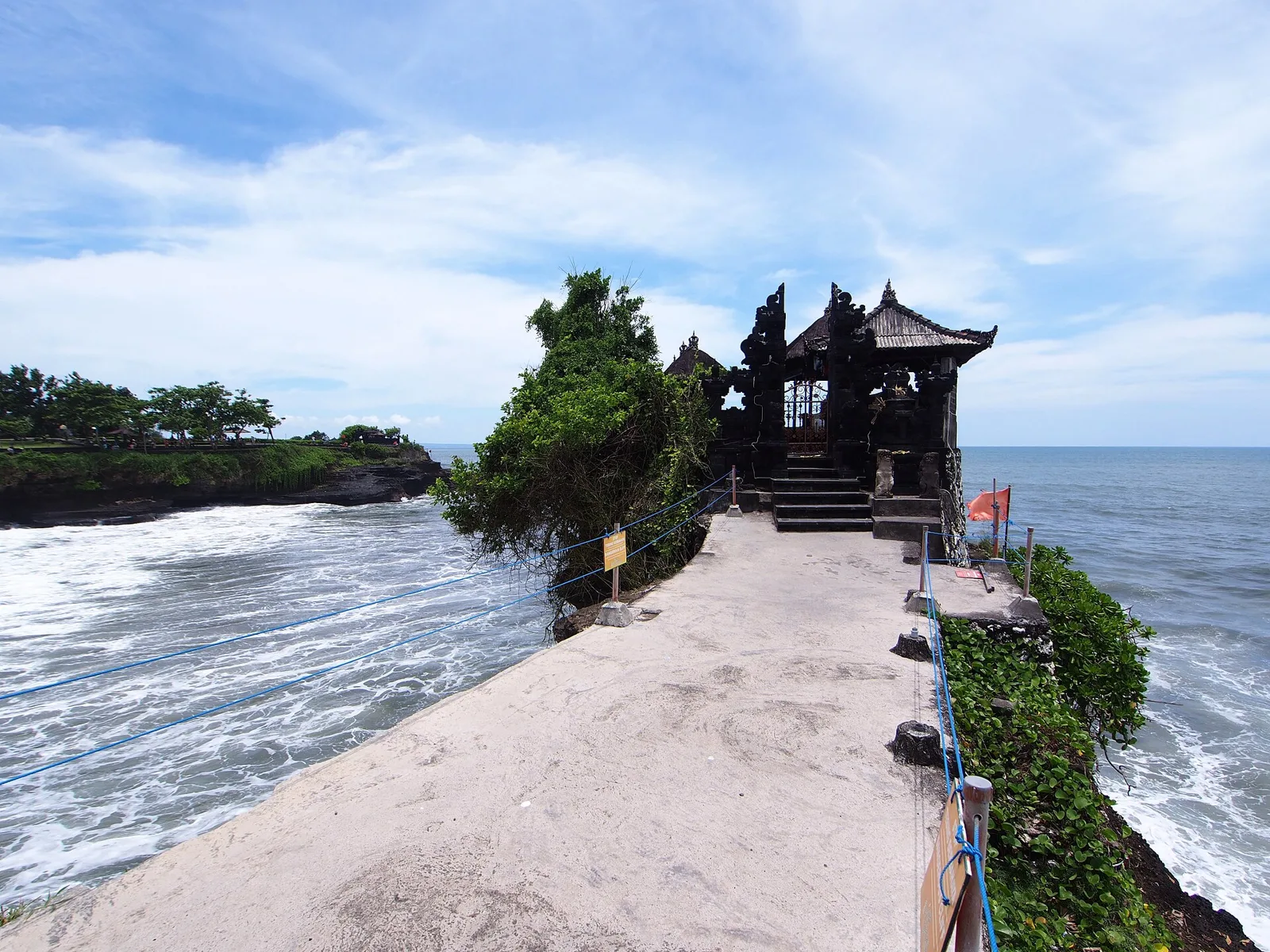
Tanah Lot is not alone on this stretch of coast. On a nearby clifftop, Batu Bolong temple stands on a rock jutting out to sea, and Batu Mejan temple has a spring whose water is regarded as holy.

Holding back the waves
Whatever the snake may do, the real threat to the temple has been the sea itself. According to an evaluation report by the Japan International Cooperation Agency (JICA), waves had badly eroded the rocks around Tanah Lot, and there was a risk of collapse. A project installed a submerged breakwater and 7,110 tetrapods, and the work was completed in February 2003.
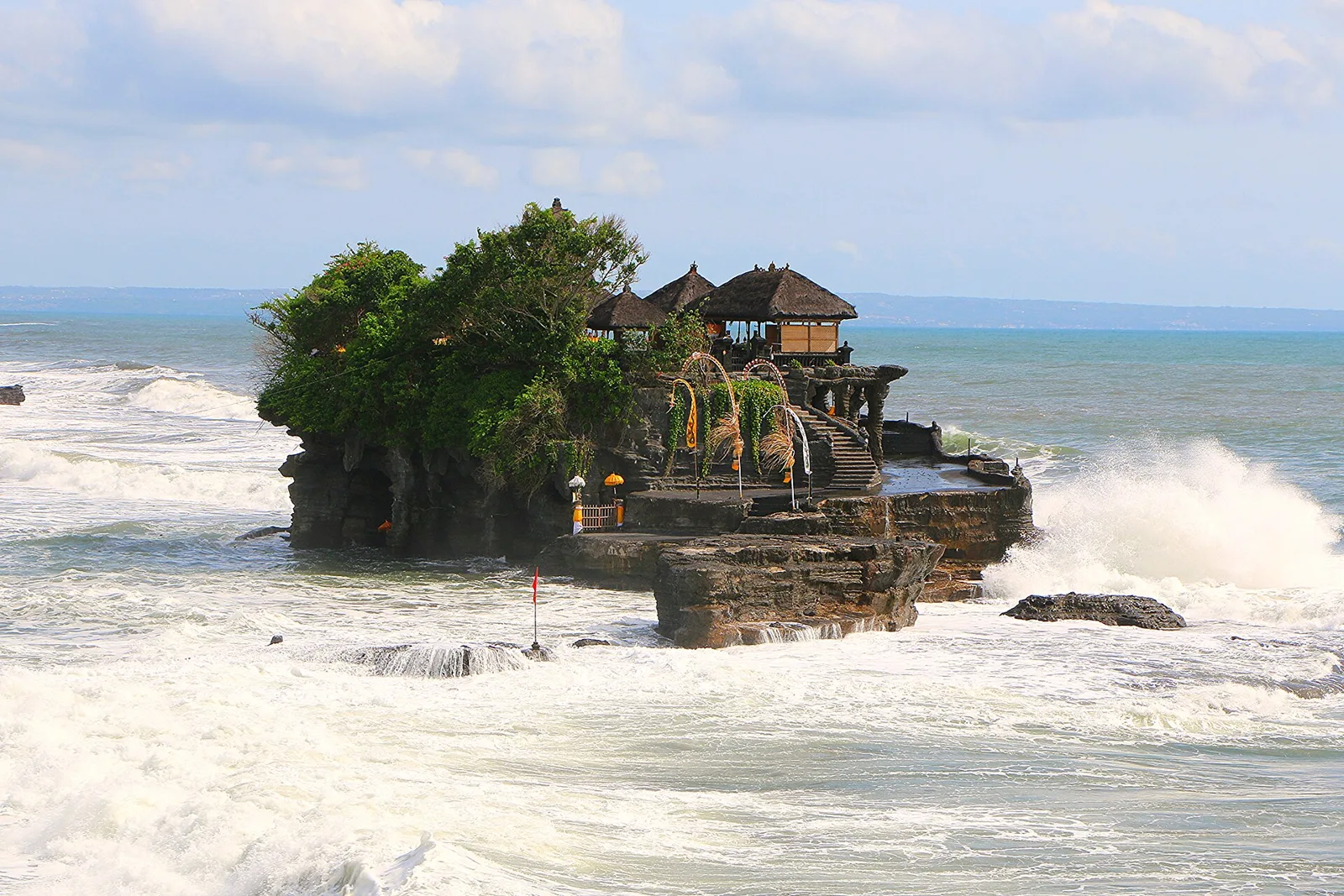

Admiring the temple from outside
Tanah Lot is famous for its sunsets over the ocean. According to the site's management, more than 1.4 million people visited in 2025 alone.
Above all, though, it is a place of worship. Indonesia's tourism ministry asks visitors to give priority to prayer and to follow the rules on dress, photography and access to sacred areas. The site's management says tourists currently cannot enter the temple itself, and at high tide warning signs go up to keep people away from danger. Enjoy the view from the clifftops on shore, and follow the guidance of local staff.
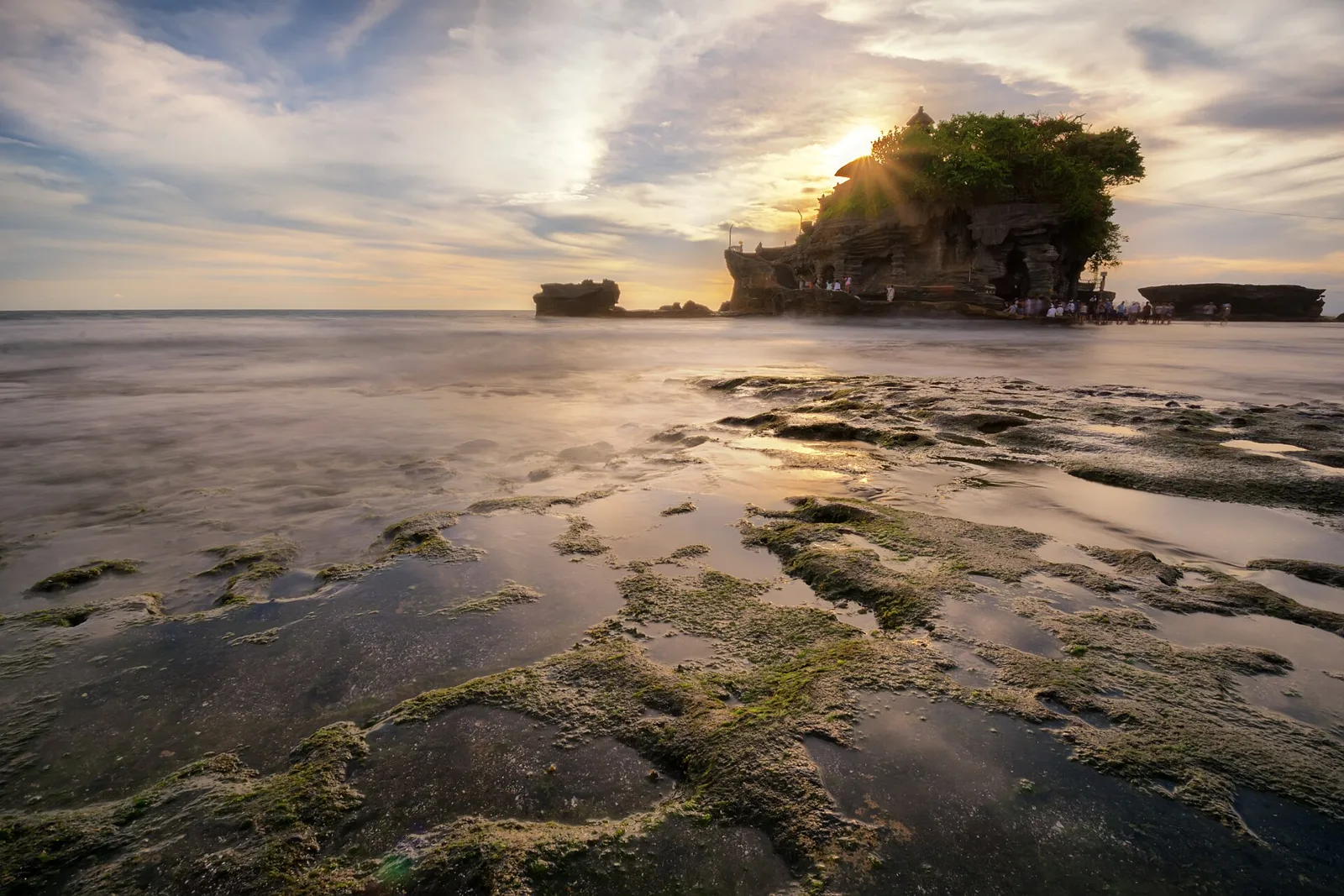

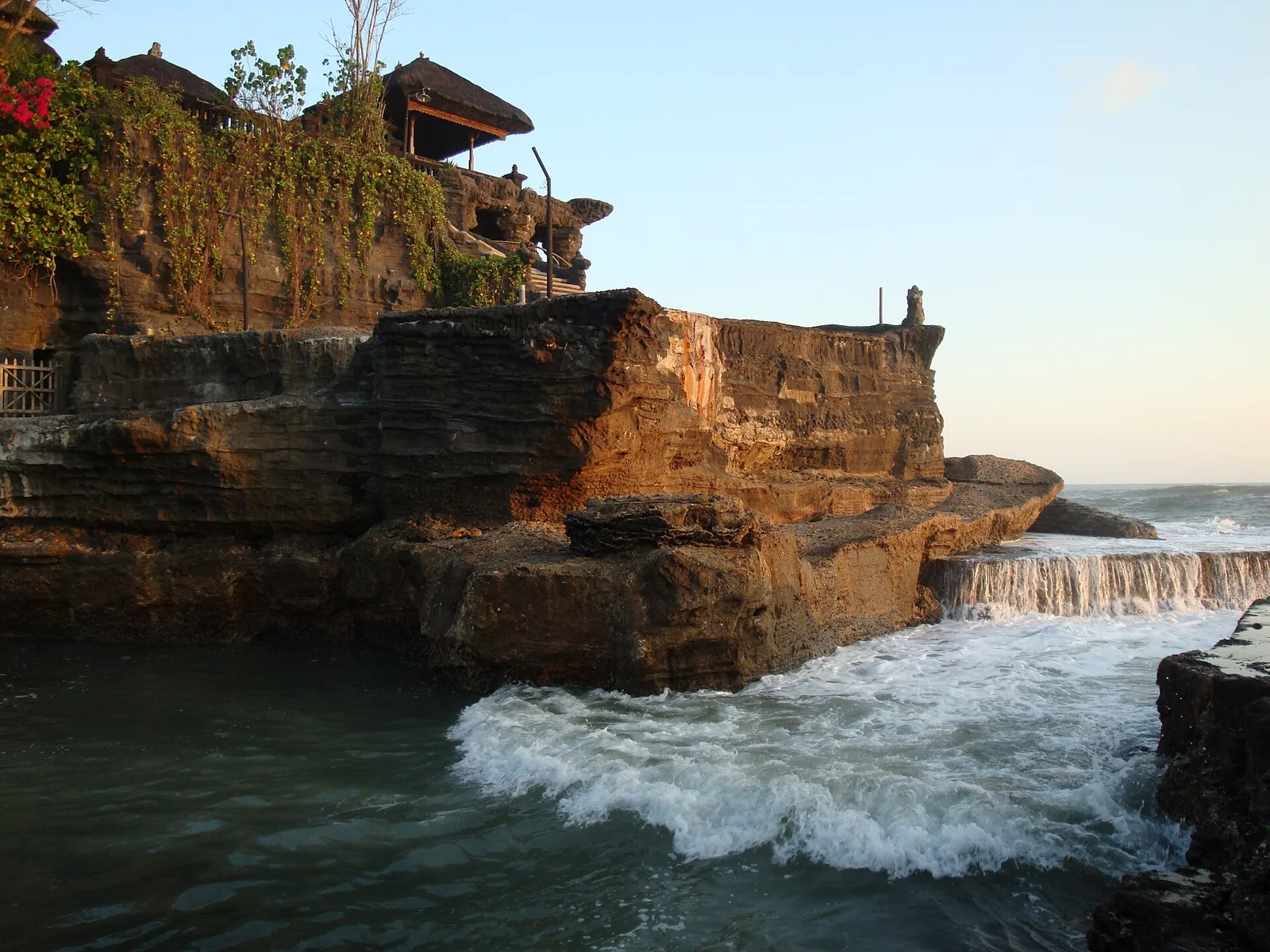

Find Tanah Lot on Wooriyeojido
A temple that floats on the high tide, with a legend of a sea snake standing guard beneath it. Tanah Lot is pinned on the Wooriyeojido map. Find Tanah Lot in the Wooriyeojido app, and if you go, leave your photos and stories from the day right beside it.
View this place in the Wooriyeojido appVideos of nearby places
 Why does this torii stand in the sea? Itsukushima Shrine, Miyajima, Japan
 Did a dragon's jewels turn into islands? The legend of Ha Long Bay, Vietnam
 A temple built by the gods? Who really built Angkor Wat, Cambodia
Sources
- Ministry of Tourism of Indonesia (Wonderful Indonesia) — Tanah Lot
- Kementerian Pariwisata Indonesia (Wonderful Indonesia) — Tanah Lot (Bahasa Indonesia)
- Daya Tarik Wisata Tanah Lot — History & Natural Environment
- JICA — Ex-post evaluation: Bali Beach Conservation Project (2010)
- ANTARA Bali — Menanti sunset yang dramatis dan sakral di pesisir Tanah Lot
- Detik Bali — Sepanjang tahun 2025, kunjungan ke Tanah Lot tembus 1,4 juta (2025-12-30)