Angkor Wat: The Legend of a Temple Built by the Gods, and the King Who Really Built It
Among the Khmer people, a story is told that a god of the heavens built Angkor Wat. The legend preserved in a poem from around 1620, and the real history of King Suryavarman II, who built the temple in the 12th century, in a video and photos.
There is a temple in Cambodia that, people say, was built not by human hands but by the gods. That temple is Angkor Wat. The legend is a measure of how astonishing the building is, but history knows exactly who built it. What does the legend say, and what really happened? Start with the short video.
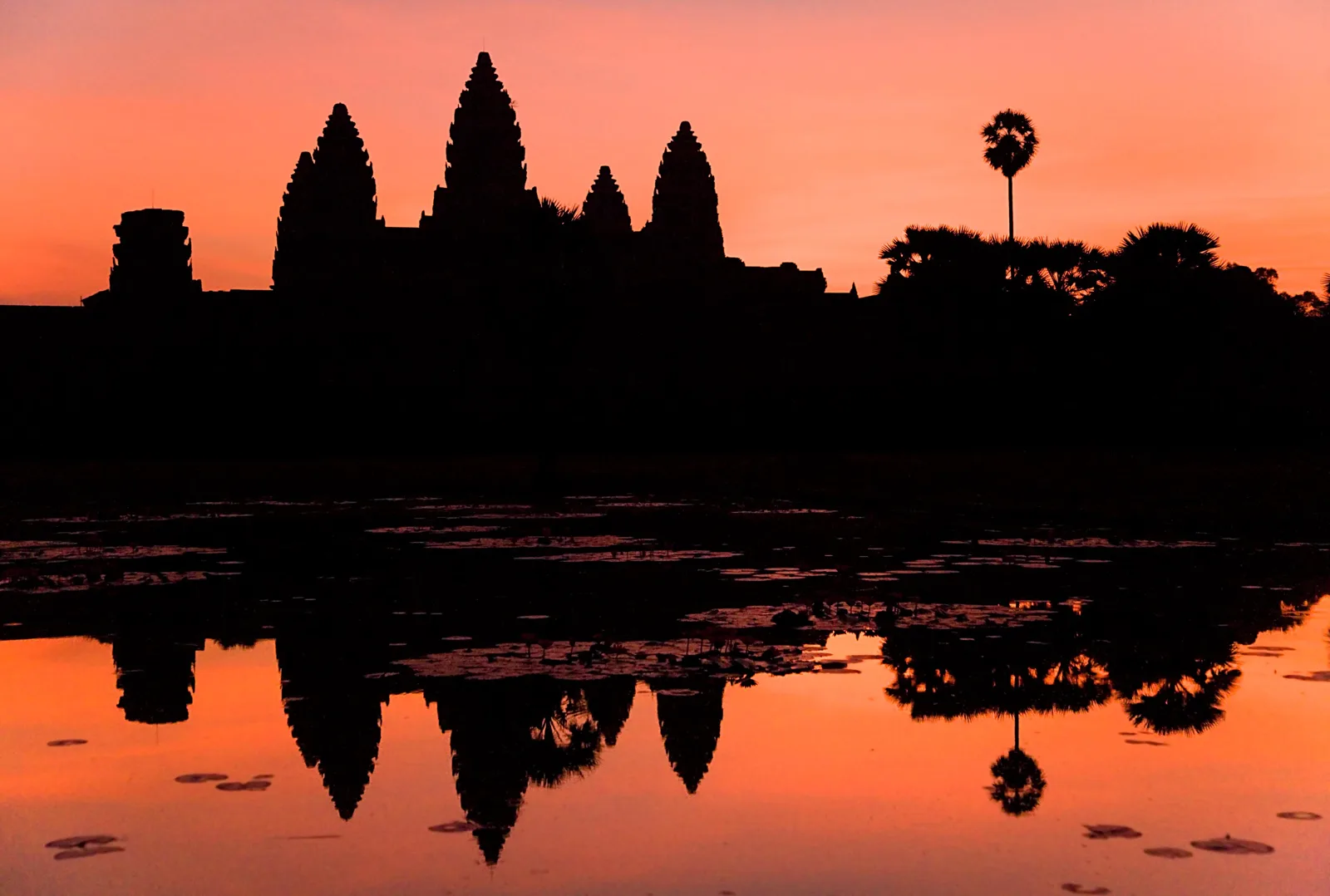
 Watch the one-minute video on YouTube
At the heart of the Khmer capitals
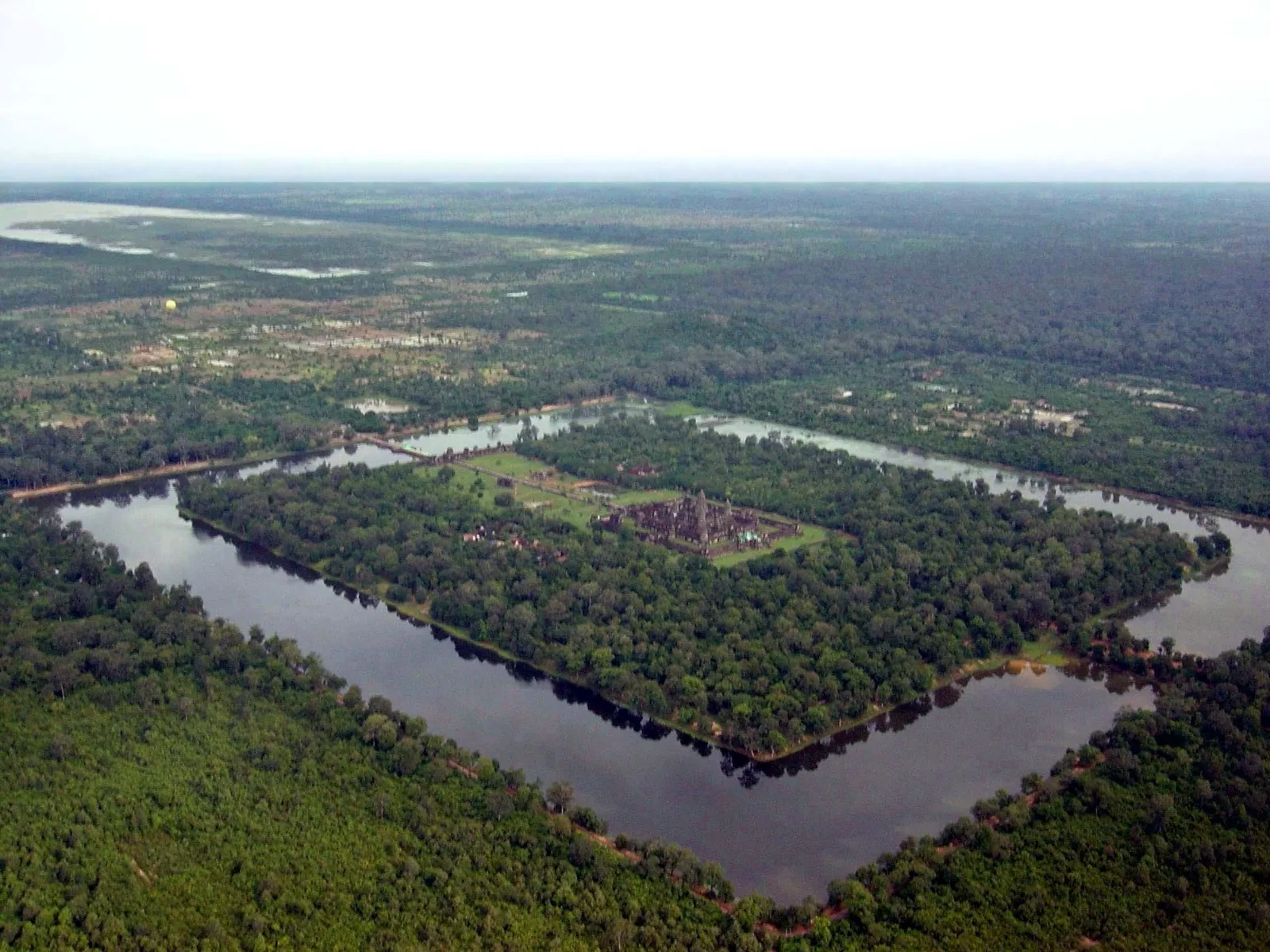
Angkor Wat stands in the forest north of the town of Siem Reap. Between the 9th and 15th centuries, one Khmer capital after another rose in this area, and their remains are scattered across some 400 square kilometres. Angkor became a UNESCO World Heritage Site in 1992, and Angkor Wat is counted as its masterpiece.
A palace from heaven, rebuilt on Earth
Among the Khmer people, this story has been handed down. Indra, king of the gods, had a son in a past life, a prince named Ketmealea. Indra took the prince up to his heavenly home, but the other gods complained that he smelled of humans, and so the prince had to return to Earth.
To console his grieving son, Indra made a promise: he would build on Earth a palace just like the one in heaven. He sent Pisnukar, the architect of the gods, to do the work. That palace, the story goes, is Angkor Wat.
The tale appears in the Poem of Angkor Wat, written in Khmer around 1620, more than 400 years ago. The poem goes through the temple's gallery carvings one by one and likens each to a scene in heaven. Scholars think the legend grew up because the building seemed too extraordinary to be the work of mere humans.
The real builder: Suryavarman II
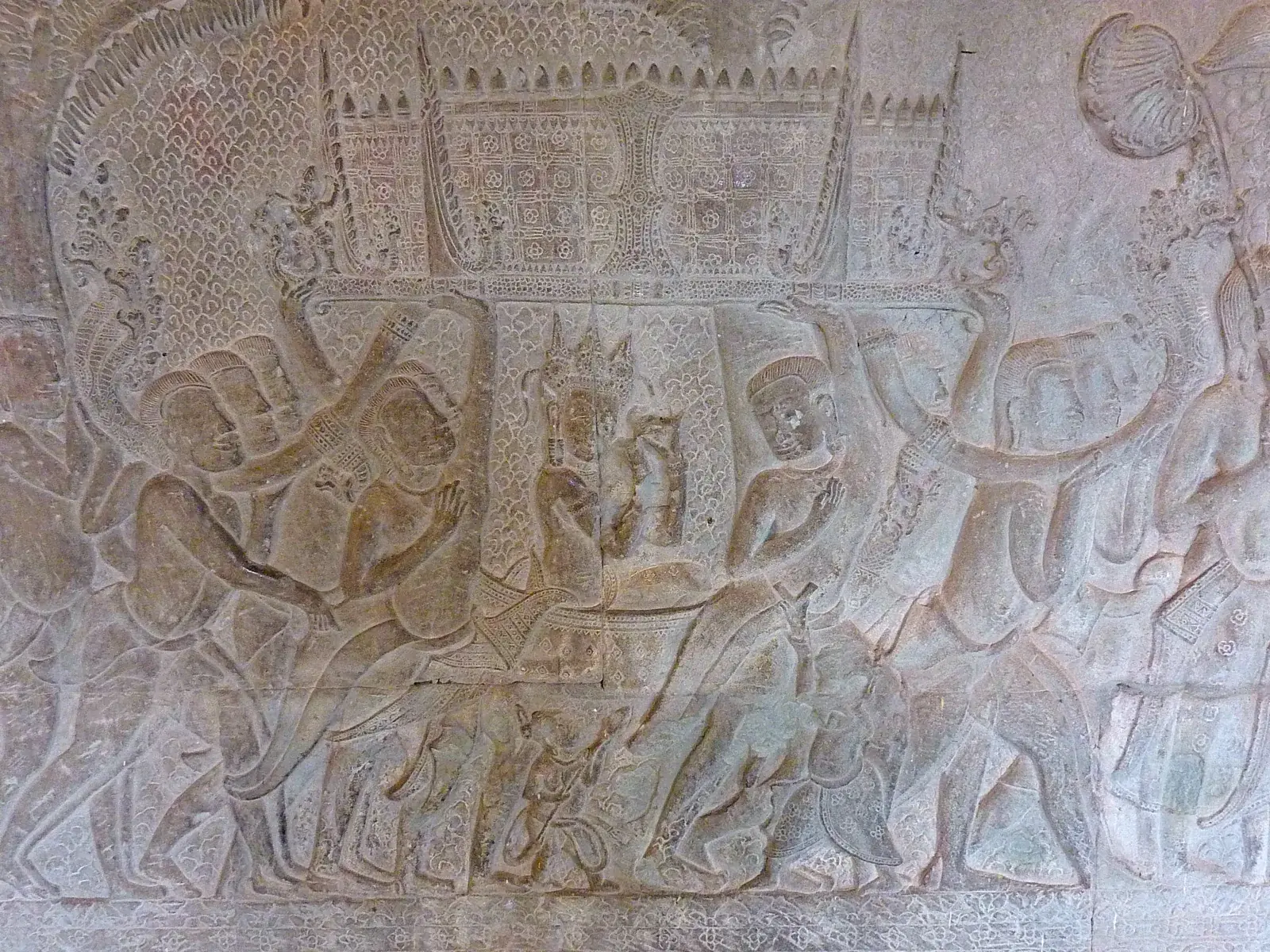
In history, Angkor Wat was built in the first half of the 12th century by the Khmer king Suryavarman II, who reigned from 1113 until about 1150. On the wall of the south gallery, he is carved in a procession, issuing orders to his ministers. Not a god from a legend, but the temple's real founder, preserved in stone.
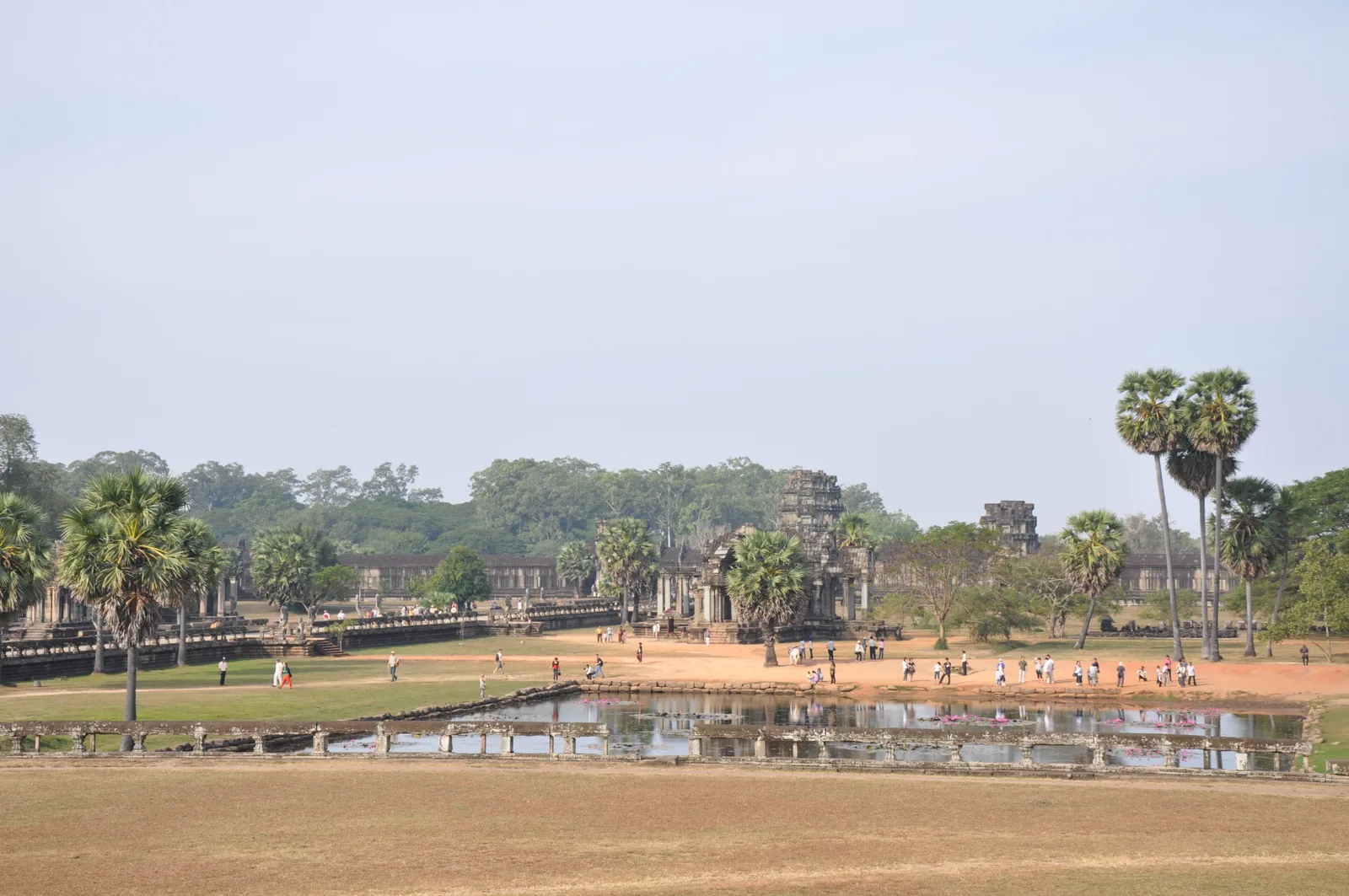
The temple was first dedicated to the Hindu god Vishnu. Its soaring central tower represents Mount Meru, home of the gods, and the surrounding moat stands for the oceans at the edge of the universe. Cross the causeway from the west and approach the entrance, and a pool and the long galleries open up before you.
Heaven carved in stone
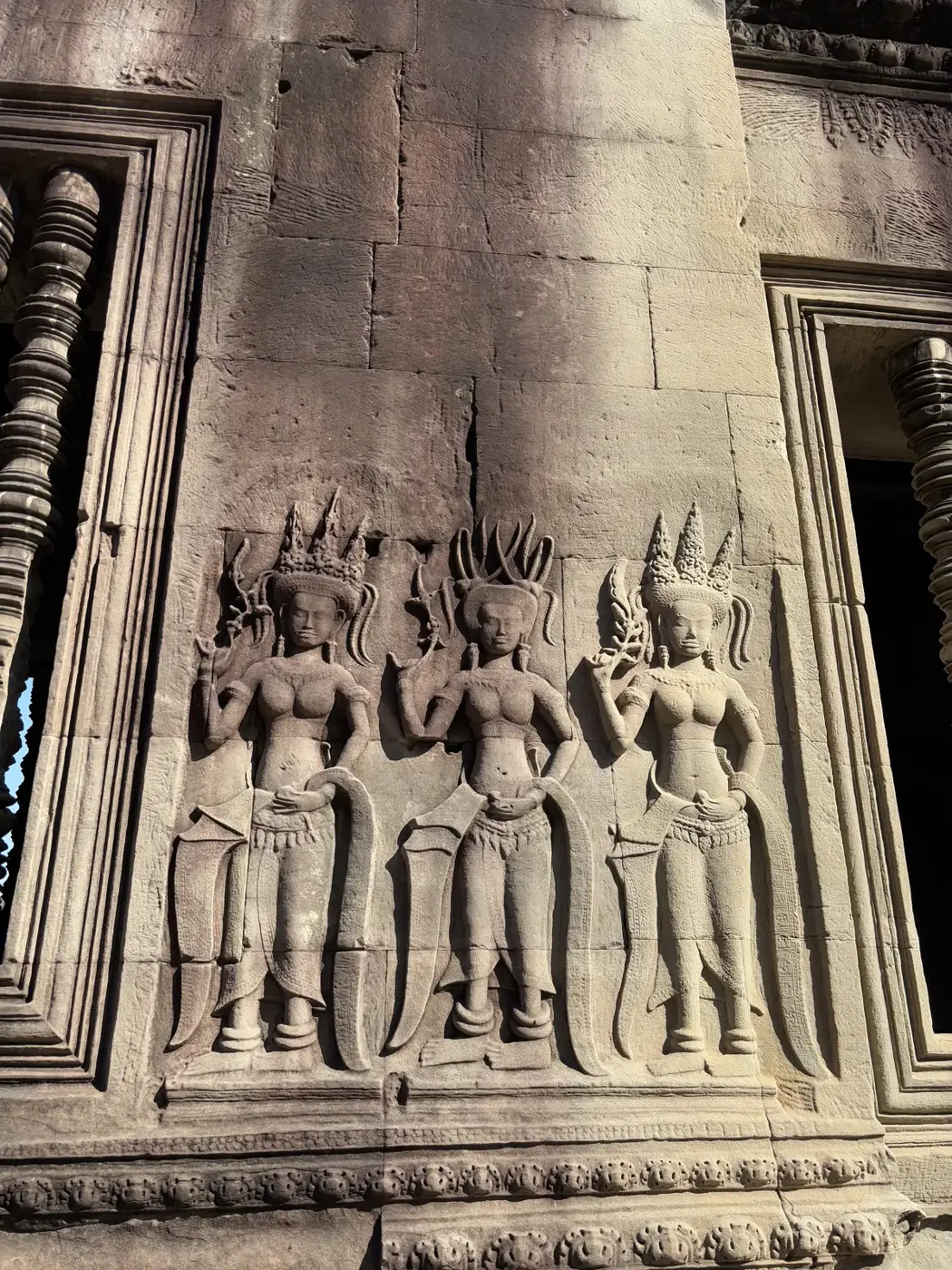
Inside, the walls and pillars are covered in shallow relief. There are apsaras, celestial dancers in tall crowns and jewellery, along with processions, soldiers, elephants and parasols. It's easy to see why the poet compared these carvings to heaven.
In an old drawing, and on the national flag
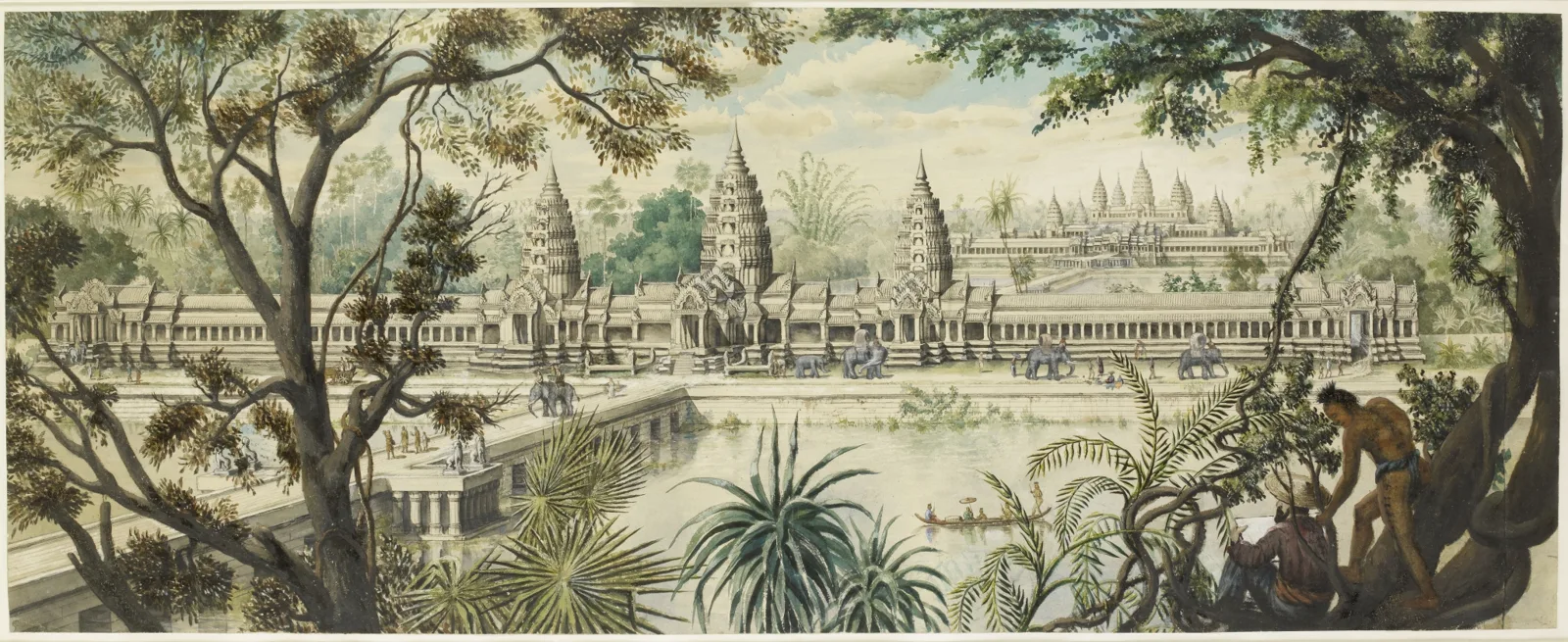
Louis Delaporte drew the west entrance and the temple beyond it in 1873. Today Angkor Wat sits at the centre of Cambodia's national flag, a sign of how much it means to the country.
Find Angkor Wat on Wooriyeojido
The gods building it is legend; in reality, the Khmer people built this temple some 900 years ago. Angkor Wat is pinned on the Wooriyeojido map. Look it up in the Wooriyeojido app, and if you go, leave your photos and stories from the day right beside it.
View this place in the Wooriyeojido appVideos of nearby places





Sources
- UNESCO World Heritage Centre — Angkor (668)
- NASA Earth Observatory — Angkor Wat
- NHIM Sotheavin, A Commentary on Lpoek Aṅgar Vat (Poem of Angkor Wat), Renaissance Culturelle du Cambodge 31, Sophia University (2021)
- National Geographic — Angkor Wat, the world's biggest religious complex, is sacred to two faiths
- Encyclopaedia Britannica — Angkor Wat