Seonjakjiwat: The Hallasan Plateau Where a Giantess Piled Up a Mountain
High on Jeju's Hallasan, the plateau of Seonjakjiwat is strewn with standing stones and blazes pink with azaleas each spring. Discover what its name means, the Jeju legend of the giantess Seolmundae Halmang and the volcano that really built the mountain.
Climb Hallasan, the volcano at the heart of Korea's Jeju Island, and at some point the forest falls away. In its place opens a high plateau of low shrubs and scattered black rocks. This is Seonjakjiwat. For generations, Jeju islanders have told how a giant grandmother piled up this mountain with her own hands. Start with the short video.

 Watch the one-minute video on YouTube
A plateau above Yeongsil
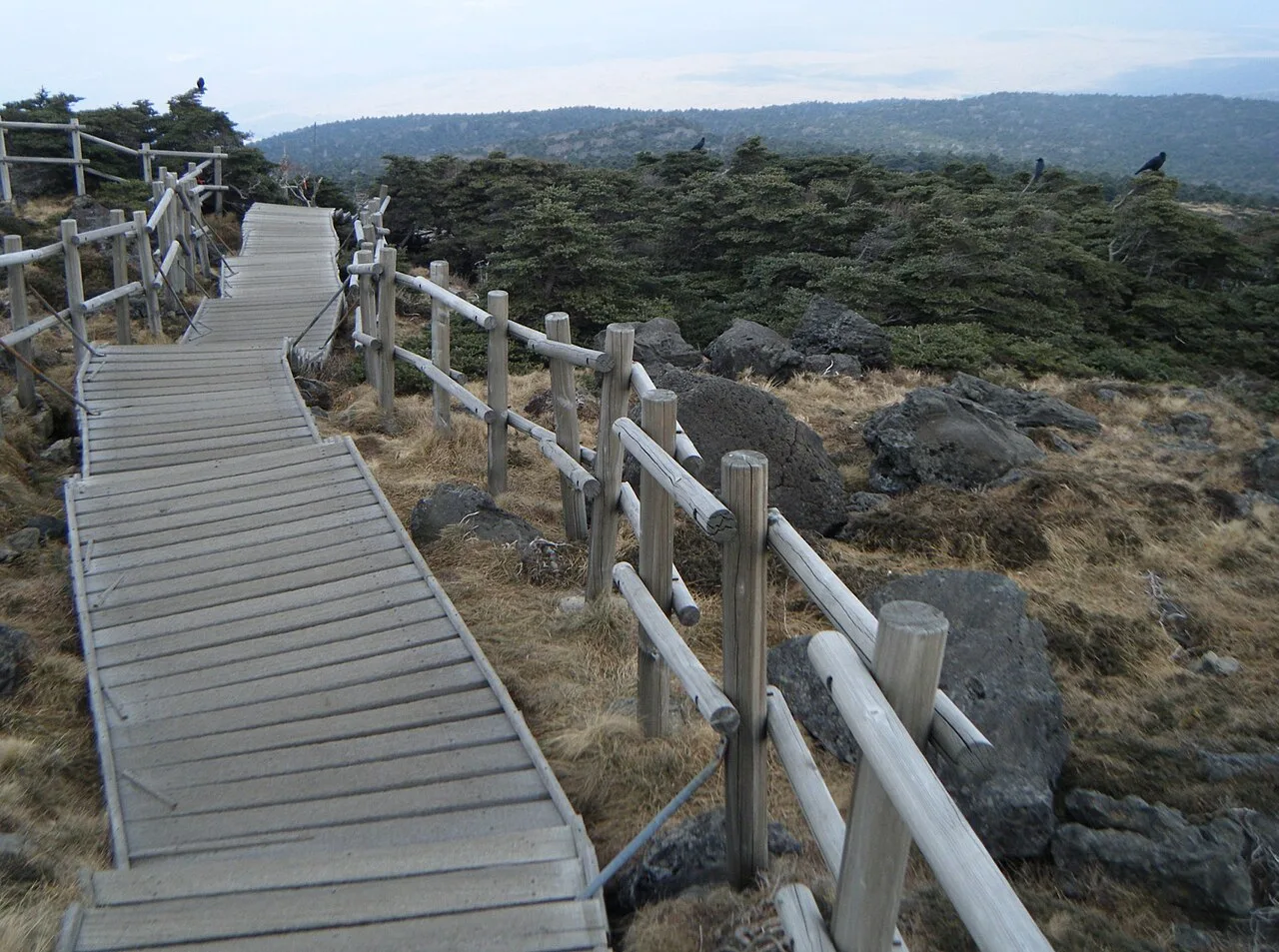
Seonjakjiwat is the upland that stretches from the top of the Yeongsil rock formations to Witse Oreum. Hikers reach it on the Yeongsil Trail. On 17 December 2012, Korea's national heritage agency designated it Scenic Site No. 91.

A field of standing stones
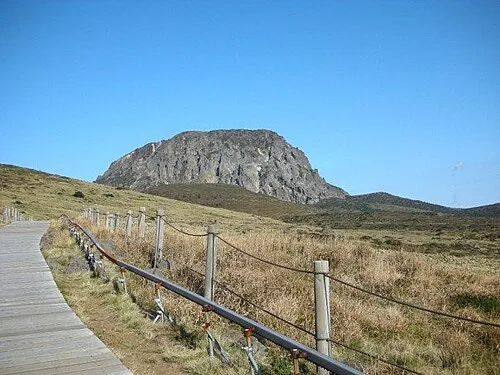
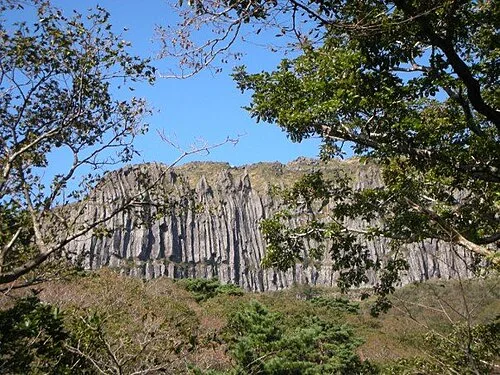
Seonjakjiwat means "a field where small stones stand," and the name fits. Black rocks rise here and there among the low shrubs, and in places, stone towers formed by lava line up like castle walls.
Come spring, the plateau changes colour. From April to June, the pale pink of hairy azaleas and the deep pink of Korean azaleas spread across the entire upland, which is why the national park calls it a paradise of subalpine plants.
The giantess who built a mountain
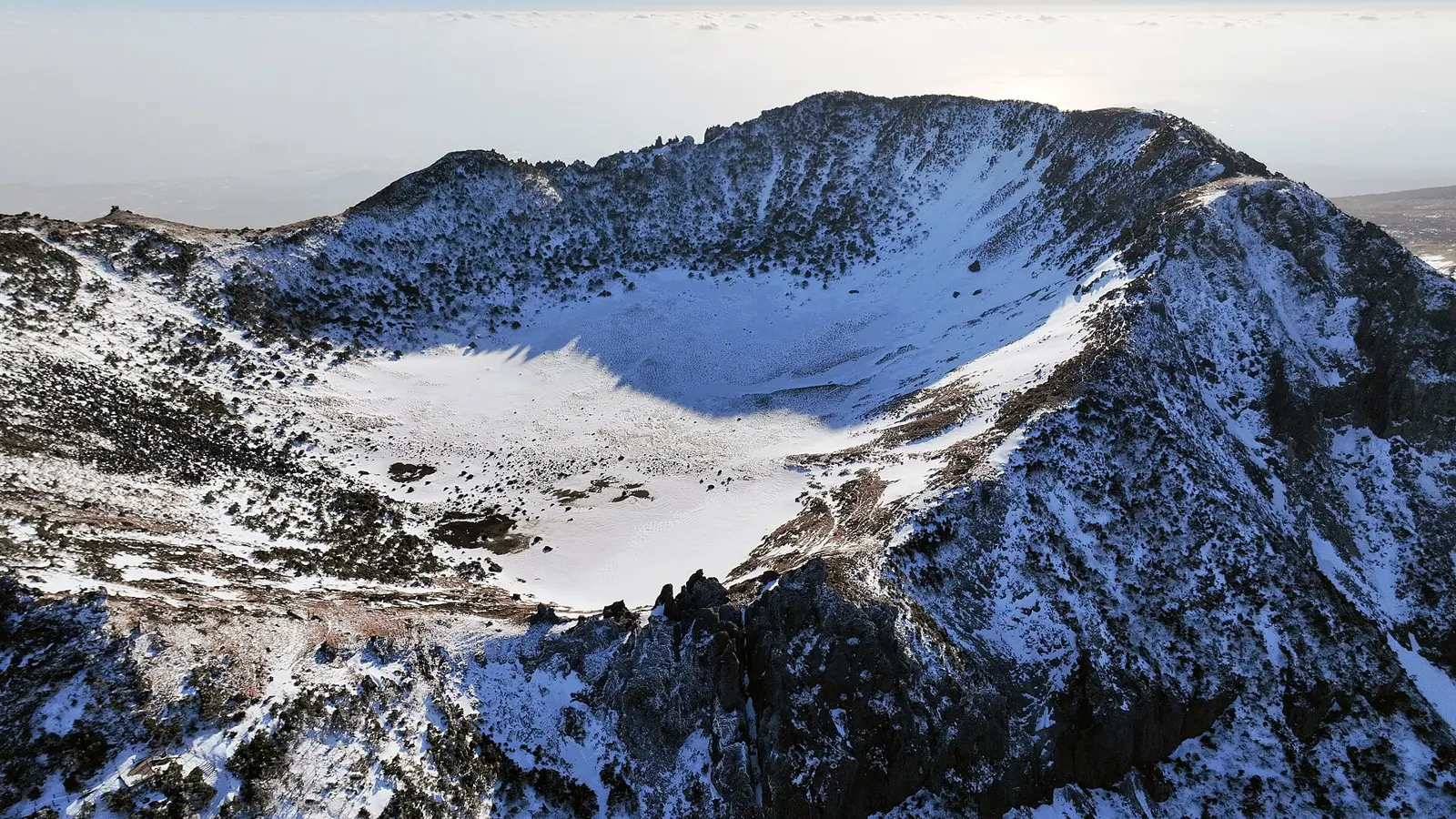
Jeju has long told stories of Seolmundae Halmang, a giant grandmother ("halmang" means grandmother in the Jeju language). The details and even her name vary from village to village, but the best-known version goes like this. She scooped up earth in her skirt and used it to make Jeju Island. She then poured out the leftover earth again and again, and the last heap became Hallasan. Some tellings say she did it in seven loads. Earth that spilled through holes in her skirt became the island's 360-odd oreum, or small volcanic cones. And in fact, some 360 oreum really do dot the land around Hallasan.
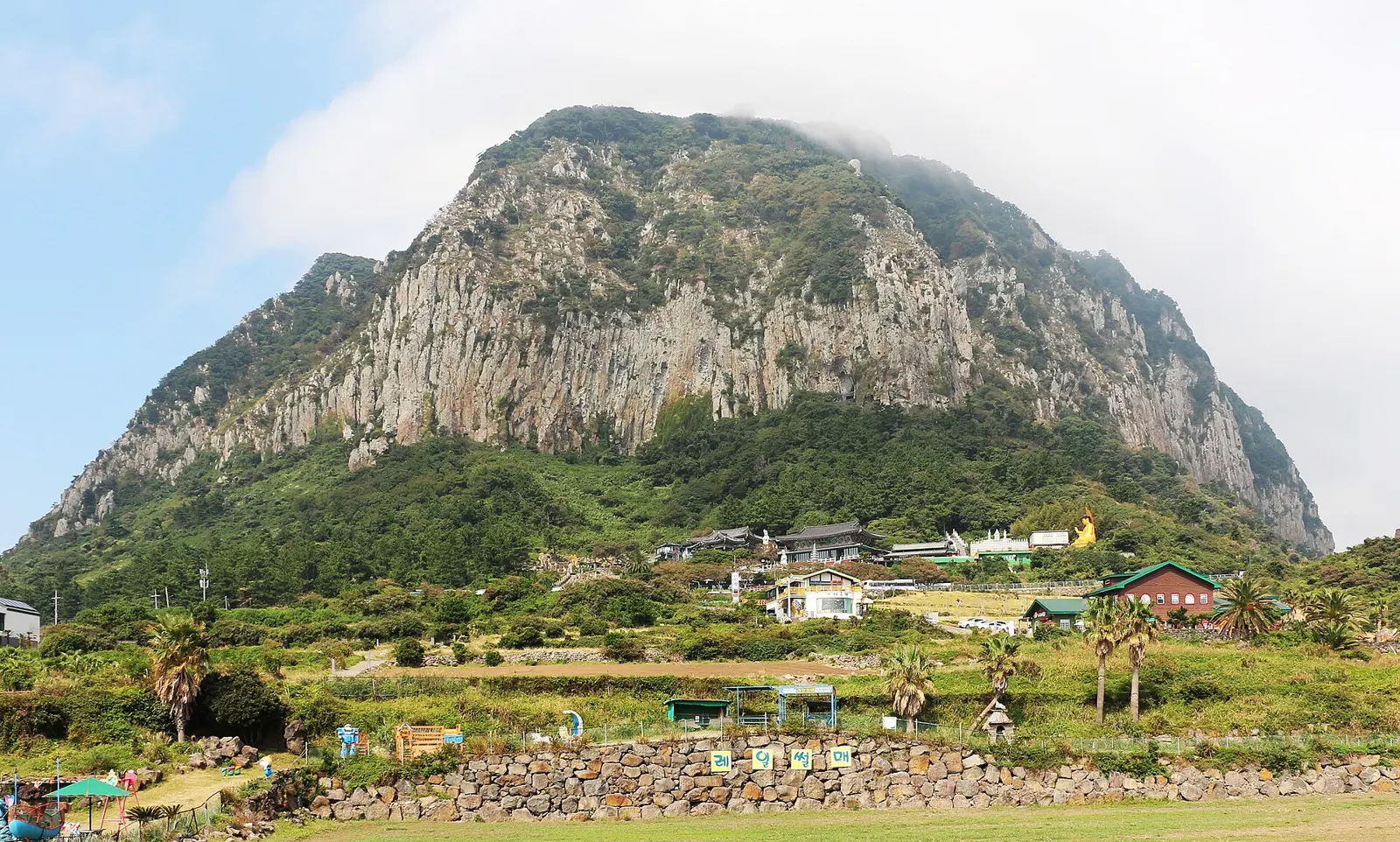
The story goes on. The giantess snapped off the mountain's sharp peak and hurled it away. The flying peak landed as Sanbangsan, and the hollow it left behind became Baengnokdam, the crater lake at the summit.


The Five Hundred Generals of Yeongsil
Just below Seonjakjiwat lies Yeongsil, and another tale explains its rocks. The giantess had five hundred sons. One day, while cooking porridge for them, she slipped and fell into the pot. The sons ate the porridge without knowing, and when they learned the truth, their grief turned them to stone. The strange pillars of rock lining Yeongsil are said to be those Five Hundred Generals.
The heritage agency lists the spot as Scenic Site No. 84, under a name that translates as "Yeongsil's Strange Rocks and the Five Hundred Arhats". Depending on where you stand, the rocks look like generals or like arhats, the enlightened saints of Buddhism.

The real builder: a volcano
Science tells a different story. Hallasan is a young volcanic island from the Quaternary period, and it was still erupting as recently as 25,000 years ago. At 1,950 metres, it is the highest mountain in South Korea. In June 2007, Jeju Volcanic Island and Lava Tubes became Korea's first UNESCO World Natural Heritage Site. Even Seonjakjiwat's black stone towers are the work of lava.
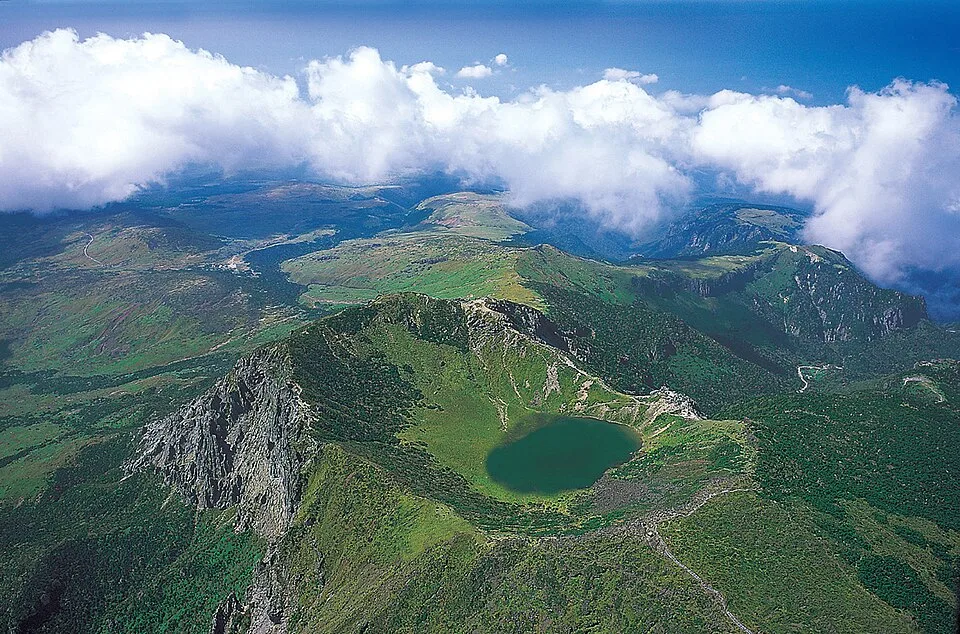

Whether a giantess or a volcano did the piling, standing on the plateau and looking up at the summit is humbling either way.
Before you go
Hallasan National Park warns that the weather around Seonjakjiwat and the Nambyeok loop changes quickly. Thick fog and lightning are both possible, and hikers can lose their way, walk in circles or develop hypothermia. Check the forecast before you set out, and always stay on the marked trail.
Find Seonjakjiwat on Wooriyeojido
A plateau of standing stones, with the story of a giant grandmother behind it. Seonjakjiwat is pinned on the Wooriyeojido map. Find it in the Wooriyeojido app, and if you go, leave your photos and stories from the day right beside it.
View this place in the Wooriyeojido appVideos of nearby places
 Born from the Earth? The Jeju Samseonghyeol Legend
 The Rock That Never Reached Mount Kumgang: Ulsanbawi Legend
 A Drifting Peak and a Tax Quarrel: The Legend of Dodamsambong
Sources
- Korea Heritage Service — Hallasan Seonjakjiwat (Scenic Site No. 91)
- Korea Heritage Service — Yeongsil Strange Rocks and the Five Hundred Arhats (Scenic Site No. 84)
- Korea Heritage Service — Hallasan Baengnokdam (Scenic Site No. 90)
- Jeju Special Self-Governing Province World Heritage Office — Hallasan National Park, About the Park
- Hallasan National Park — Trail Information, Yeongsil Trail
- Encyclopedia of Korean Culture — The Seolmundae Halmang Tale
- Digital Jeju Grand Encyclopedia of Local Culture — Seolmundae Halmang