The Lighthouse of Alexandria: Where Did a Wonder of the World Go?
On the waterfront of Alexandria, Egypt, a medieval fort now stands where a colossal lighthouse rose about 2,300 years ago. How the lighthouse fell, why a fort was built on its site, and the stones still being raised from the sea, in a short video and photos.
The Lighthouse of Alexandria was one of the Seven Wonders of the Ancient World. Go to the spot today and you will not find it. Instead, a medieval fort stands on the waterfront of Alexandria, Egypt, and the lighthouse's stones lie on the seabed just offshore. So what happened to it? Start with the short video.

 Watch the one-minute video on YouTube
The tip of the old island of Pharos
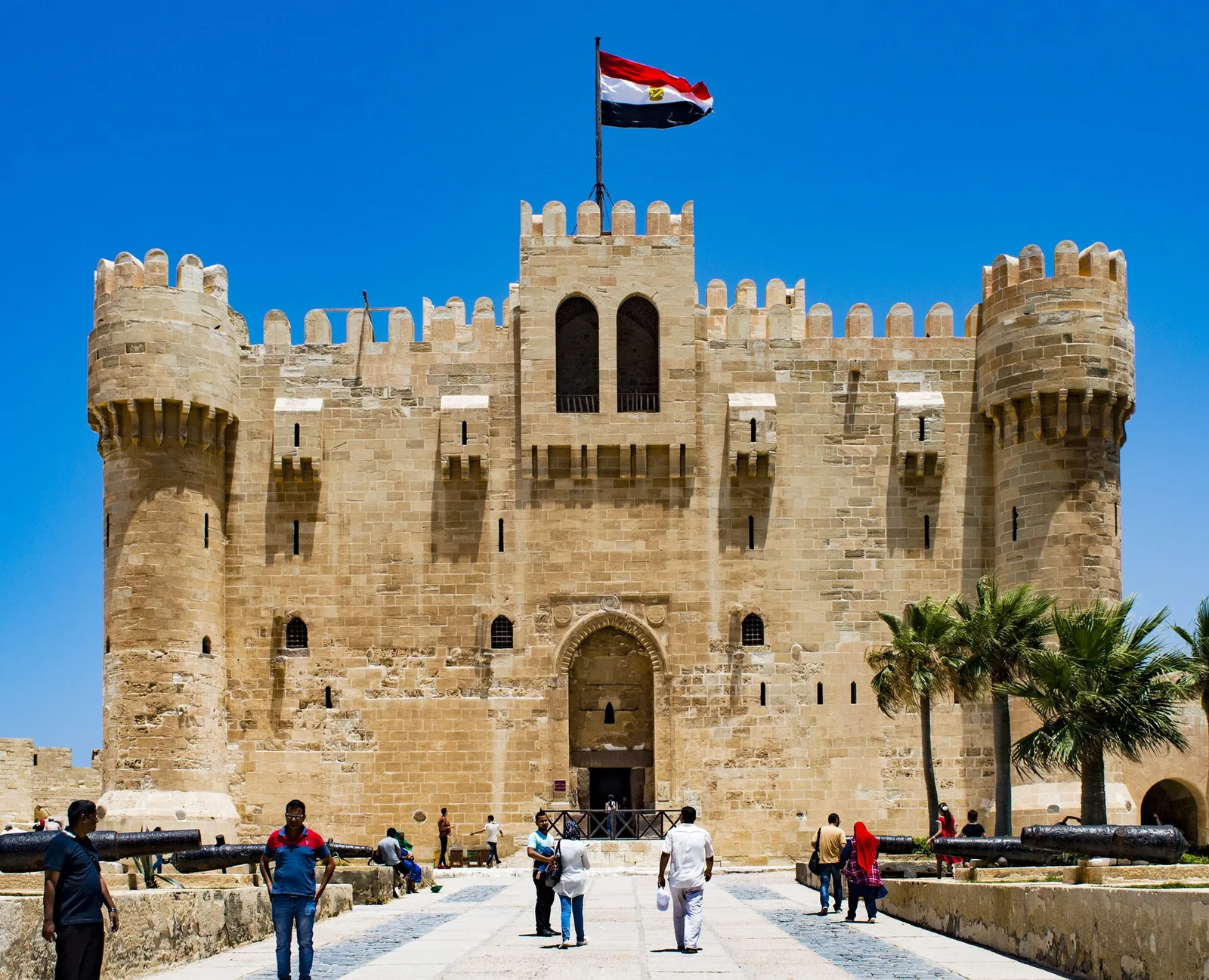
Alexandria sits on Egypt's Mediterranean coast. At the mouth of its Eastern Harbour, a long spit of land juts out into the sea; in ancient times it was an island called Pharos. At its eastern tip stands Qaitbay Fort, on the very spot where the Lighthouse of Alexandria once rose.
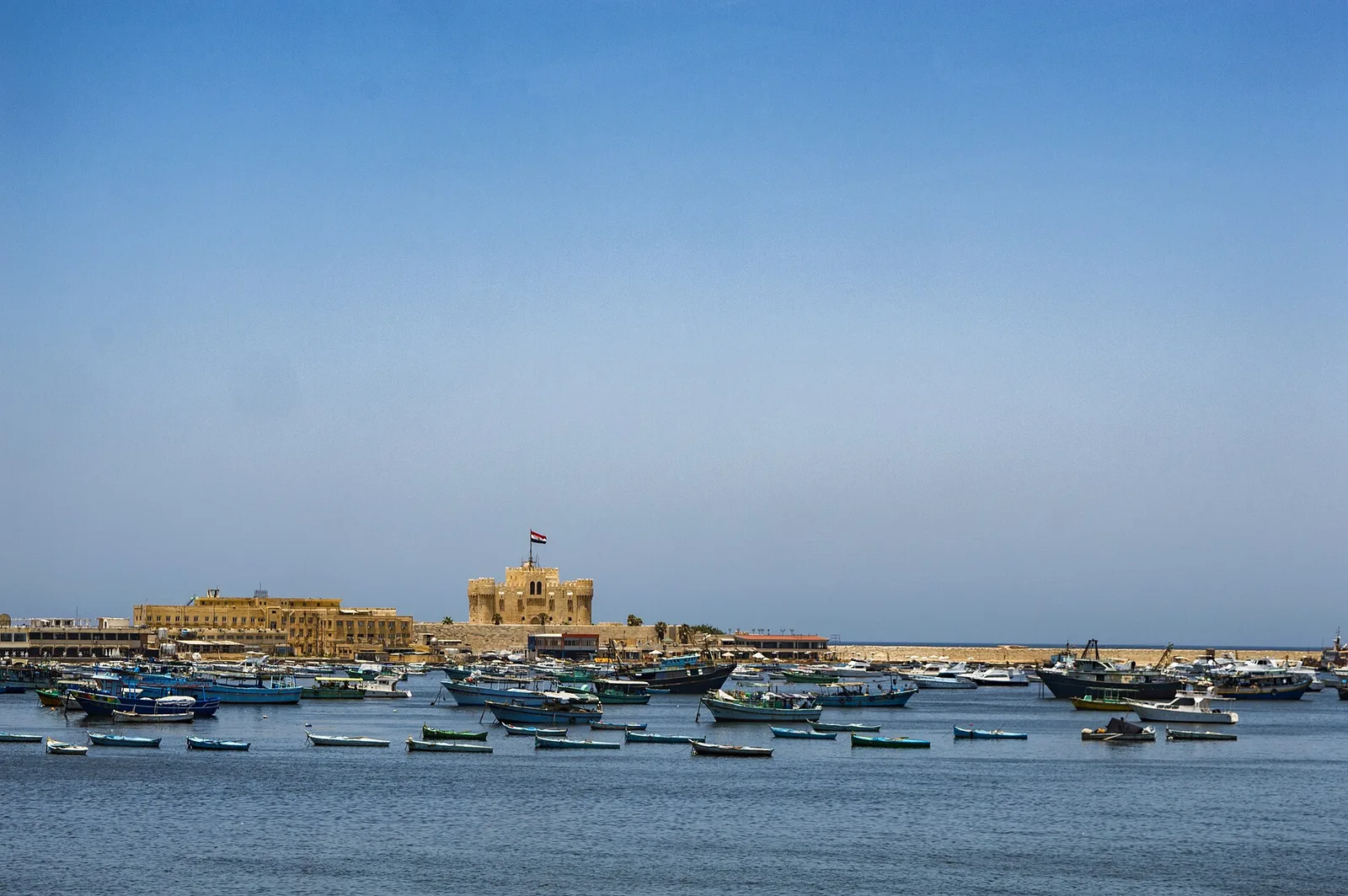

Built in fifteen years, some 2,300 years ago
The coast here is lined with shoals and reefs, which made it dangerous for ships coming in. According to the Centre d'Études Alexandrines (CEAlex), the French research centre that has been excavating the seabed here since 1994, ancient sources date the start of construction to 297 BC, roughly 2,300 years ago.
Ptolemy I began the project but did not live to see it finished. The lighthouse was completed under his successor, Ptolemy II, between 283 and 281 BC, after only about fifteen years of work.
How tall was it? The November/December 2025 issue of *Archaeology*, the magazine of the Archaeological Institute of America, puts it at nearly 350 feet, more than 100 metres. Scholars disagree on the figure, though, and the exact height remains uncertain. Tradition has it that a fire burned at the top.
Its likeness on coins and in drawings
The lighthouse is gone, but we know roughly what it looked like. For nearly a century during the Roman period, Alexandria struck coins bearing its image: a square lower section, further levels stacked on top, and a statue at the summit.
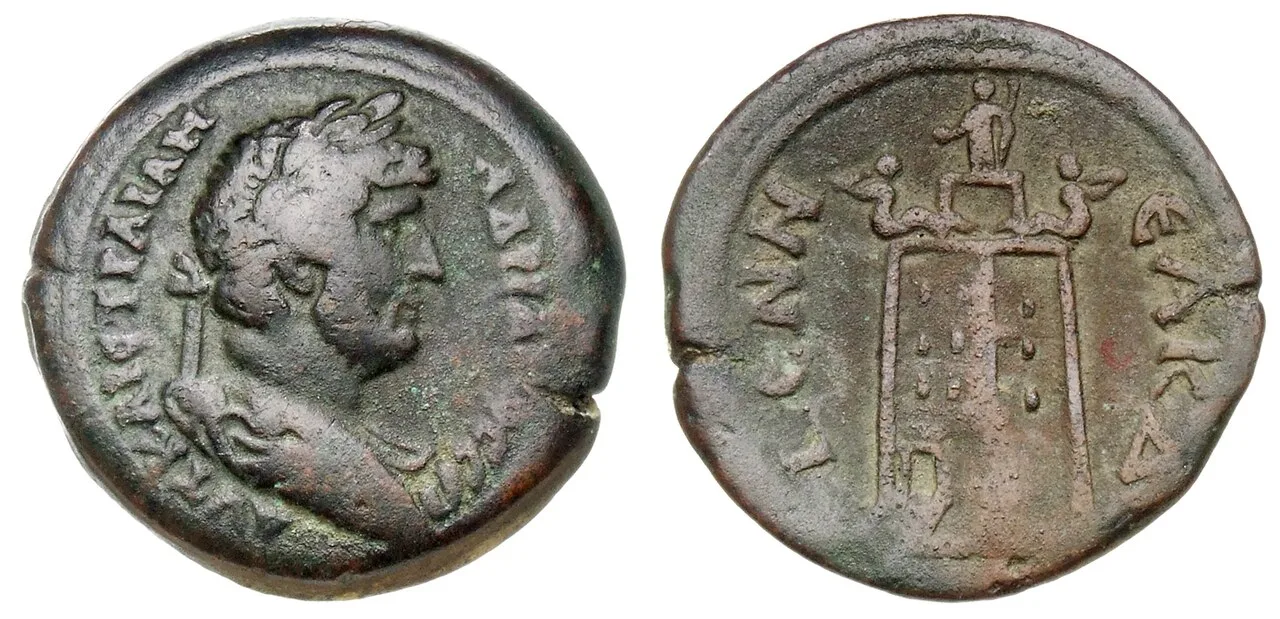

In 1909, the German scholar Hermann Thiersch pulled together coins like this and ancient texts to draw a reconstruction. CEAlex describes its own work as the first comprehensive review of the evidence since Thiersch.
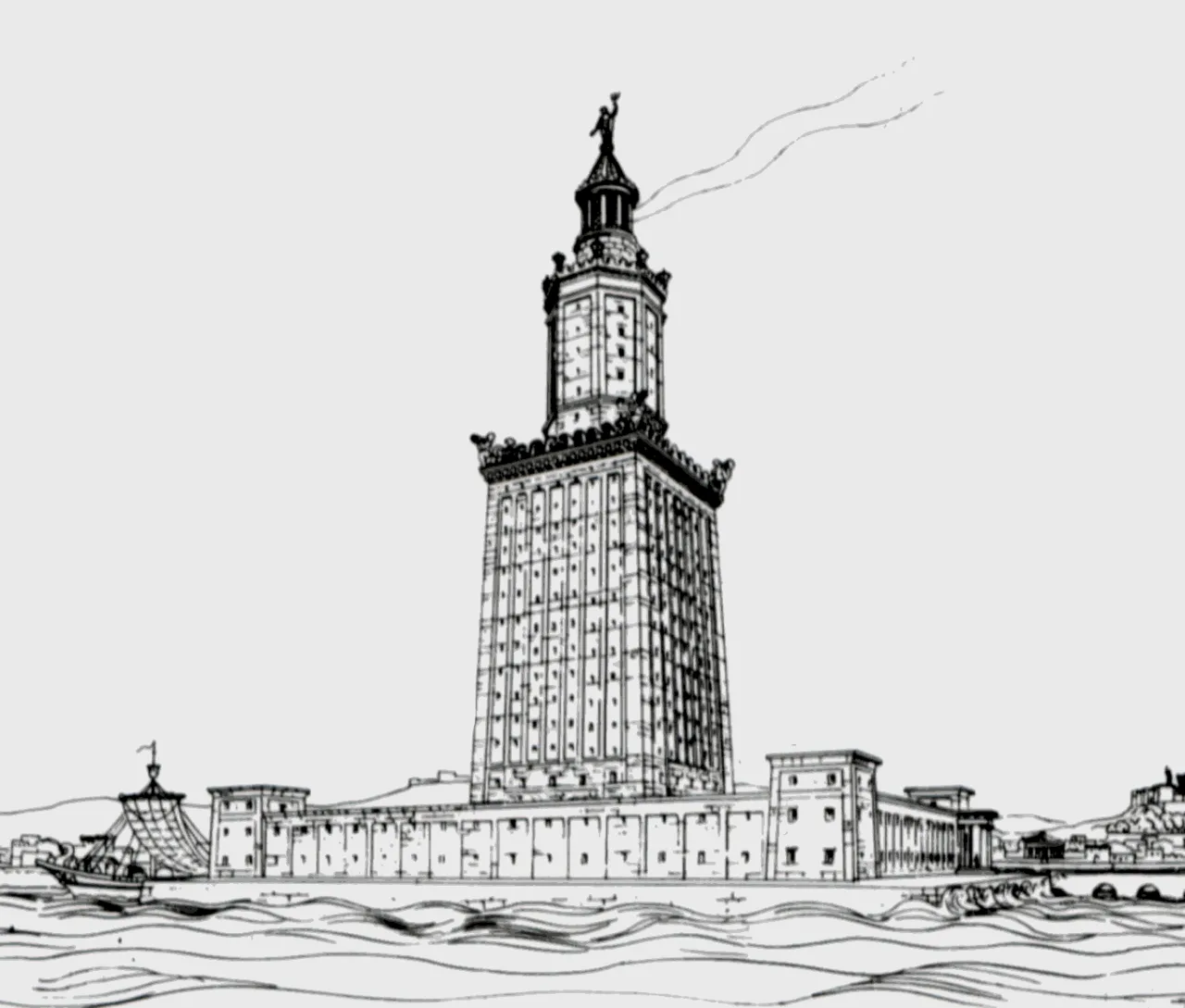

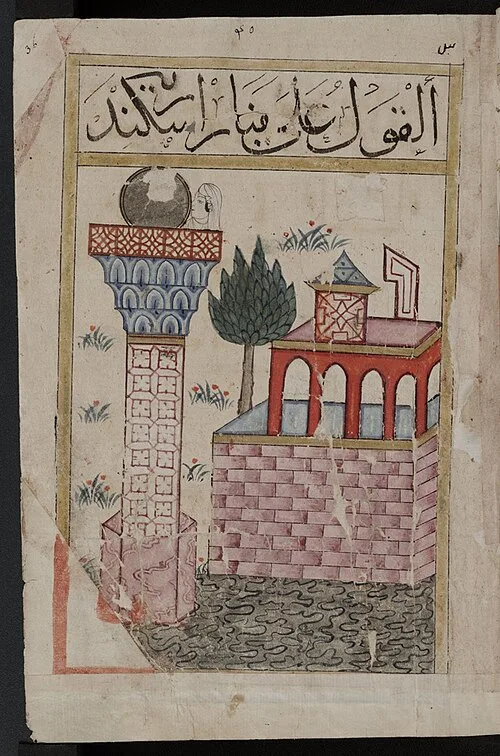
There are medieval Arab images of it too, like this one from the 15th-century Book of Wonders.

A smaller copy still standing
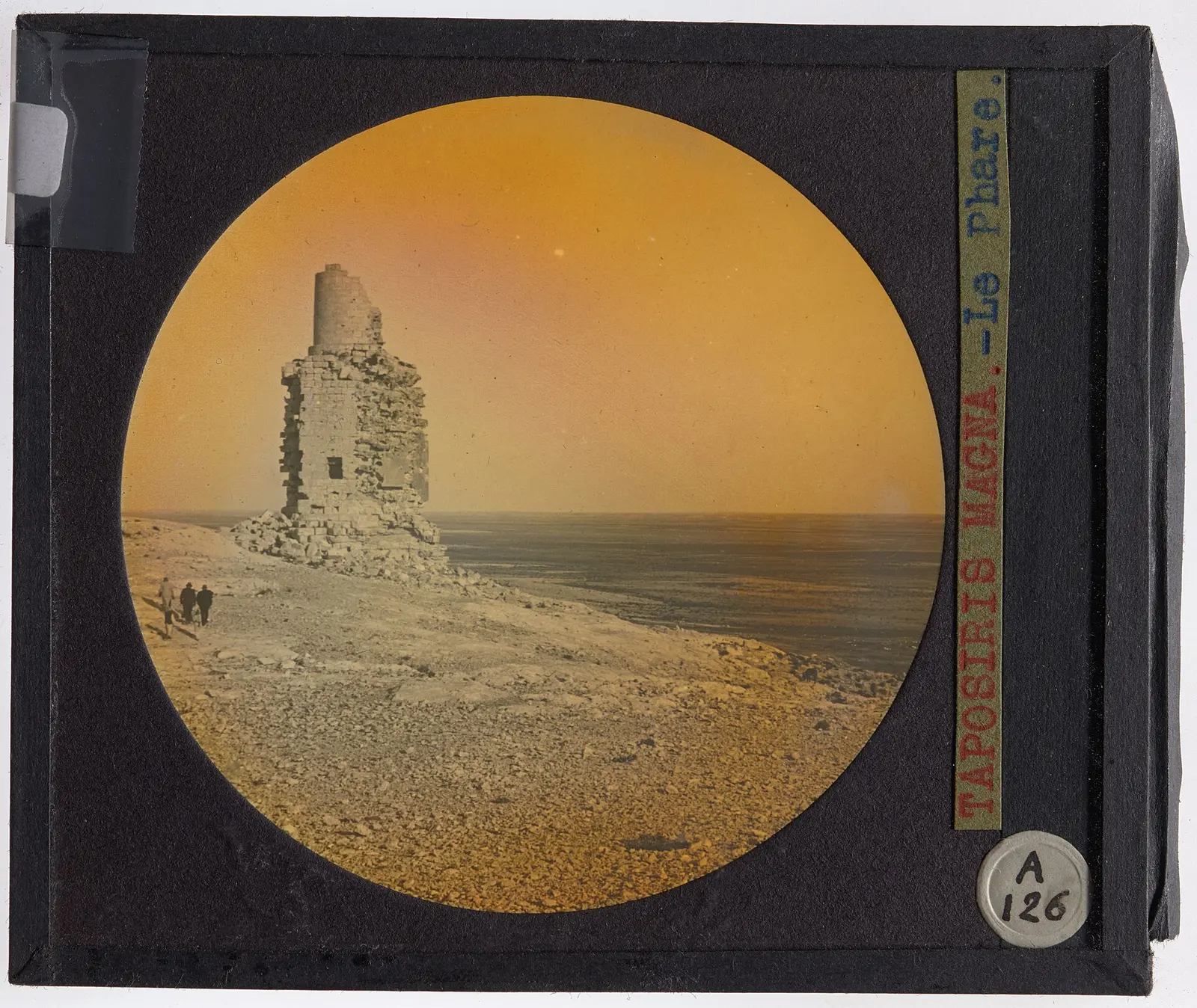
At Taposiris Magna, about 40 kilometres west of Alexandria, an ancient tower some 30 metres tall still stands. According to CEAlex, it is considered a smaller-scale replica of the great lighthouse.

The morning of 8 August 1303
The lighthouse shone for more than 1,500 years. Then, on the morning of 8 August 1303, a powerful earthquake and tsunami destroyed about a third of the city. The lighthouse was badly damaged, and its light went out.
When the traveller Ibn Battuta came by in 1349, he wrote that the building was in such bad condition that it was impossible even to reach the door and go inside. Attempts to build a new lighthouse on the ruins came to nothing. The wreck was used as a quarry, and the stones that broke loose sank beneath the waves.
A fort on the old foundations
In June 1477, the Mamluk sultan Qaitbay visited the site of the ruined lighthouse and ordered a tower to be built on the old foundations. The result, built of limestone between 1477 and 1479, is the fort you see today. Its keep is a massive three-storey square tower with a half-round tower at each corner.
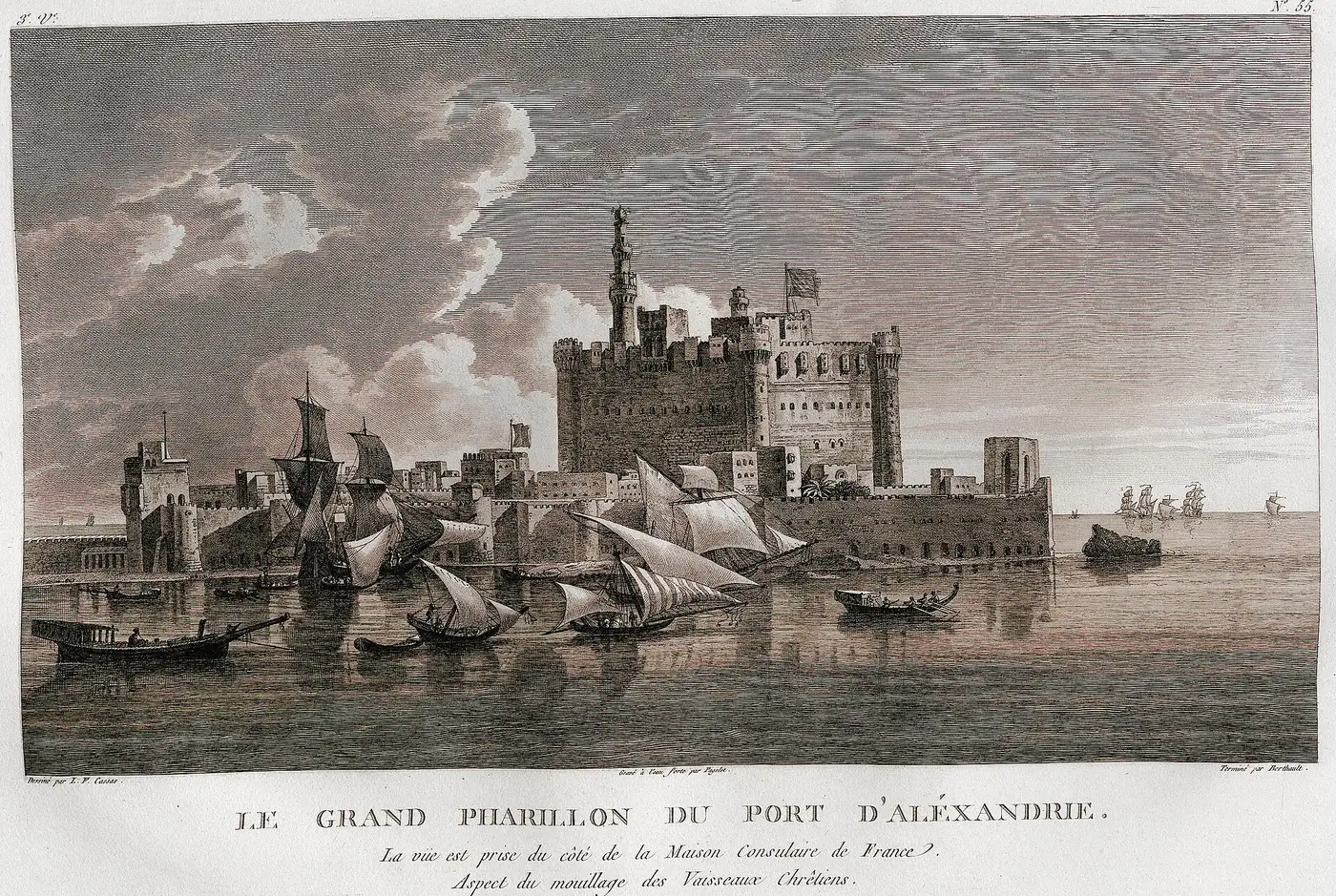

The fort has had its own share of troubles. In 1882 it was heavily damaged by a British naval bombardment, and in 1904 its two upper storeys were pulled down. Rebuilding of the keep began in 1939.
Stones rising from the sea
So where are the lighthouse's stones? On the seabed just off the fort. According to Egypt's Ministry of Tourism and Antiquities, work began in 1994 on an underwater site that starts right at the edge of the fort and extends about 150 metres out, in water 6 to 8 metres deep.
More than 3,000 architectural pieces have been found there, including columns, statues and capitals. Blocks weighing over 20 tonnes lie in a line running north, a sign that they fell from a tall or massive structure. Thirty-six pieces raised in 1995 and 1996 can be seen in Alexandria today, at the Roman Theatre and in front of the Bibliotheca Alexandrina. CEAlex reports that in 2025 more large blocks, including a fragment of the lighthouse's monumental doorway, were brought to the surface.
Find the Lighthouse of Alexandria on Wooriyeojido
Where a wonder of the world once stood, a medieval fort now rises, and the lighthouse's stones still rest on the seabed in front of it. The Lighthouse of Alexandria is pinned on the Wooriyeojido map. Look it up in the app, and if you go, leave your photos and stories from the day right beside it.
View this place in the Wooriyeojido appVideos of nearby places
 How were about 2.3 million stones stacked? The Great Pyramid of Giza
 The Great Sphinx of Giza and the Dream Stele
 The Suez Canal: a sea road through the desert, opened in 1869
Sources
- Egyptian Ministry of Tourism and Antiquities — Qaitbay Fort
- Egyptian Ministry of Tourism and Antiquities — Qaitbay Fort site (sunken monuments)
- CEAlex — The Pharos Project
- CEAlex — The Lighthouse of Alexandria
- CEAlex — The Lighthouse of Alexandria on coins
- CEAlex — Qaitbay Fort, the pharos' successor
- CEAlex — Underwater excavations on the Lighthouse of Alexandria site
- Archaeology (Archaeological Institute of America) — Secrets of the Seven Wonders: Lighthouse of Alexandria (Nov/Dec 2025)