Why Does Angkor Wat Face West? Three Theories About Its Orientation
Nearly every great temple at Angkor faces east, yet Angkor Wat's main entrance looks west. How Suryavarman II built it in the 12th century, and three explanations for its direction, from Vishnu to a royal tomb to the equinox sunrise, in a video and photos.
Deep in the Cambodian rainforest stands Angkor Wat, a colossal temple of stone. It has one curious quirk. Almost all the great temples around it open to the east, but Angkor Wat's main entrance faces west. Why? Start with the short video.
 Watch the one-minute video on YouTube
A temple that glows in the afternoon
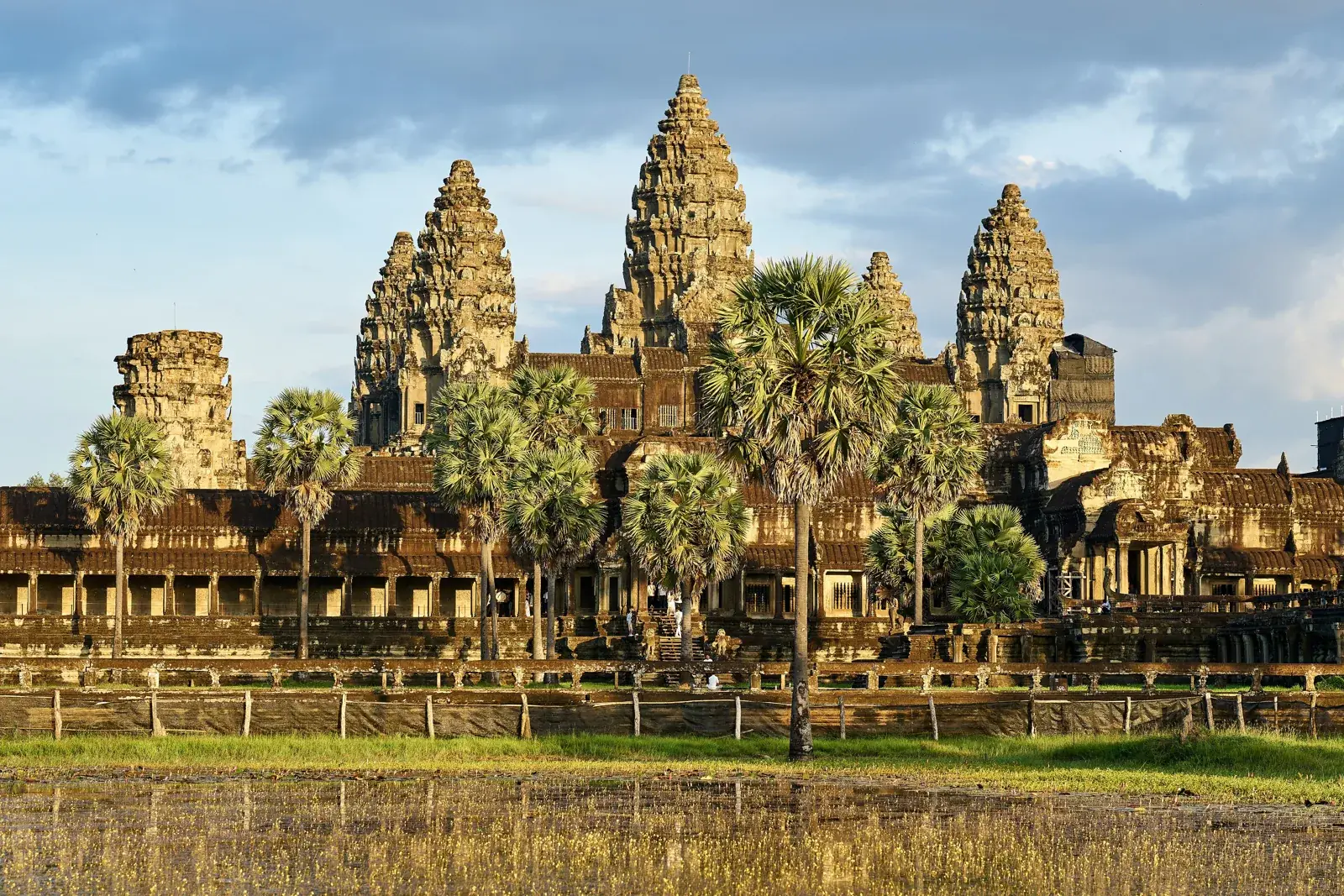
Angkor Wat lies in the forest north of the town of Siem Reap, and in 1992 it was inscribed as a UNESCO World Heritage Site together with the rest of Angkor. Because its front faces west, the afternoon sun lights it up full on as it sinks. That's when the golden photo above was taken.
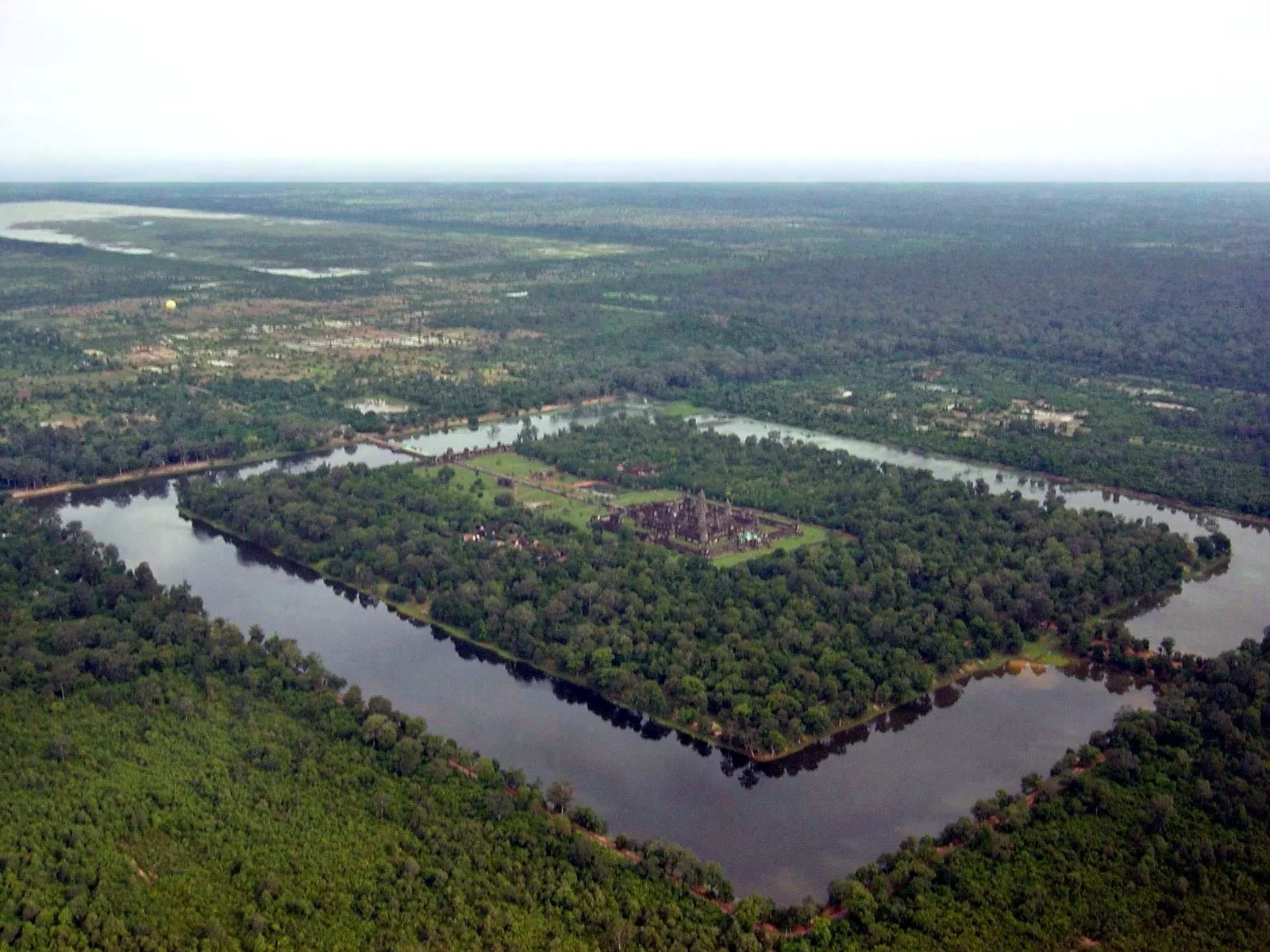
From above, you can see at a glance how a broad square moat encloses the whole temple.
Built for Vishnu in the 12th century
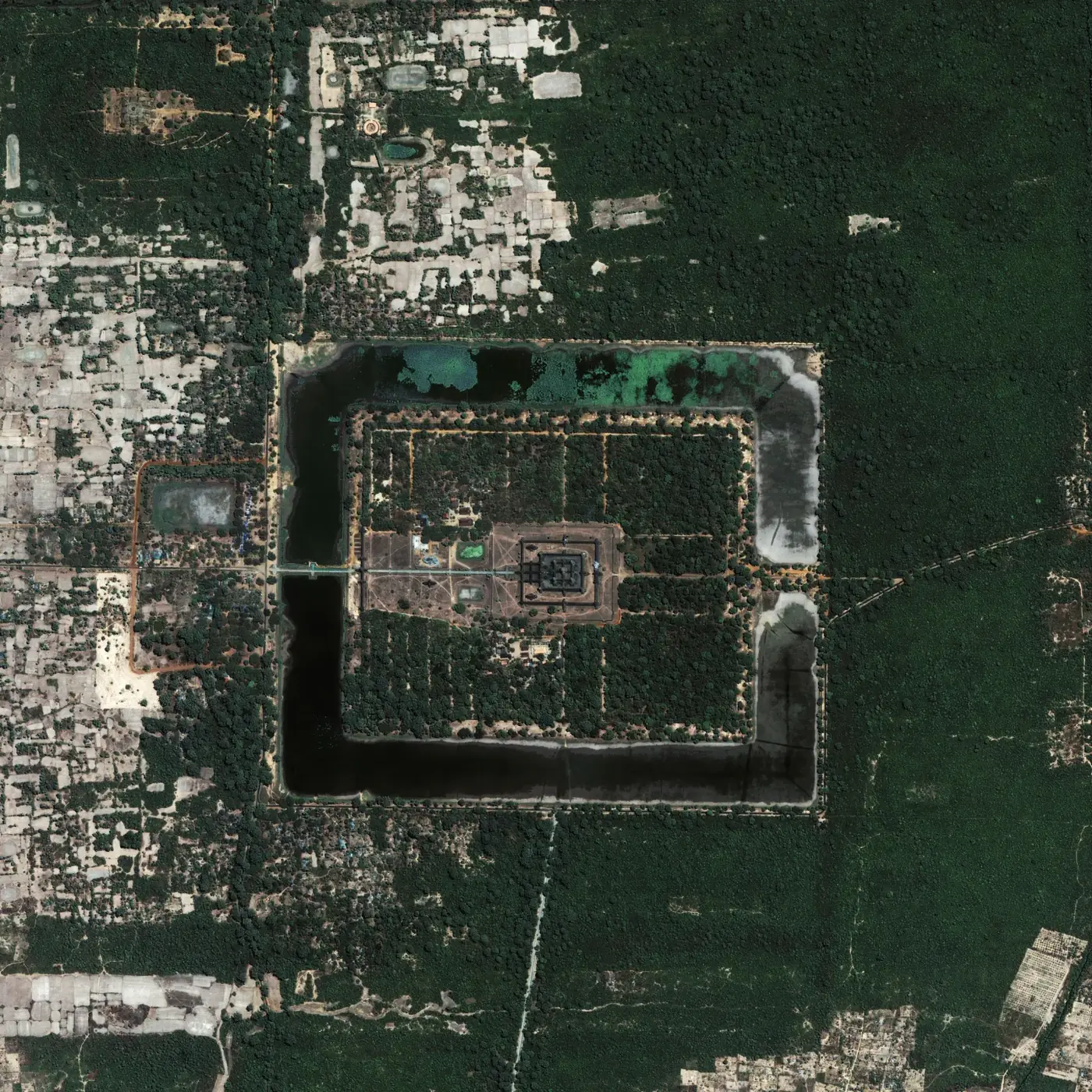
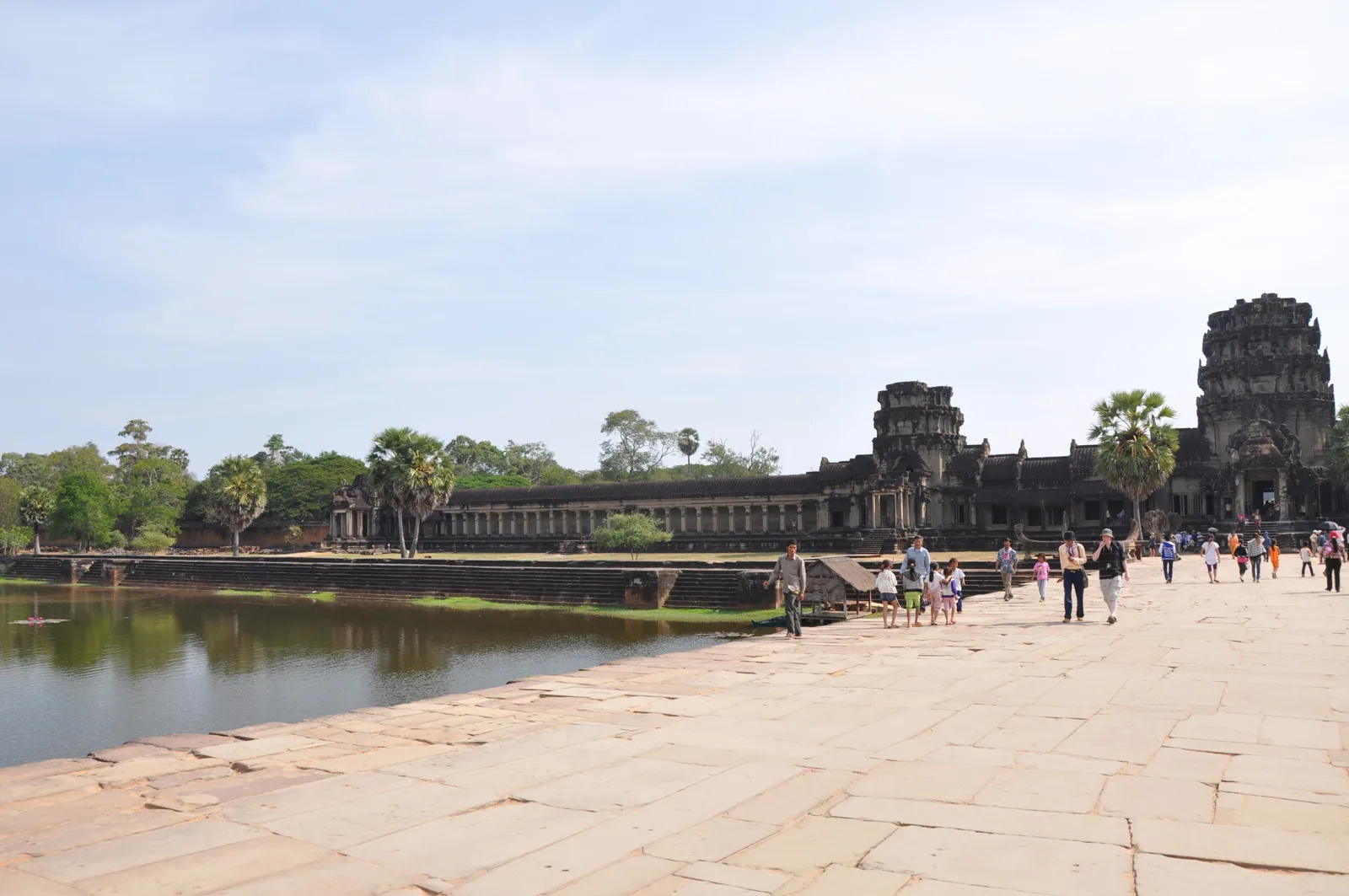
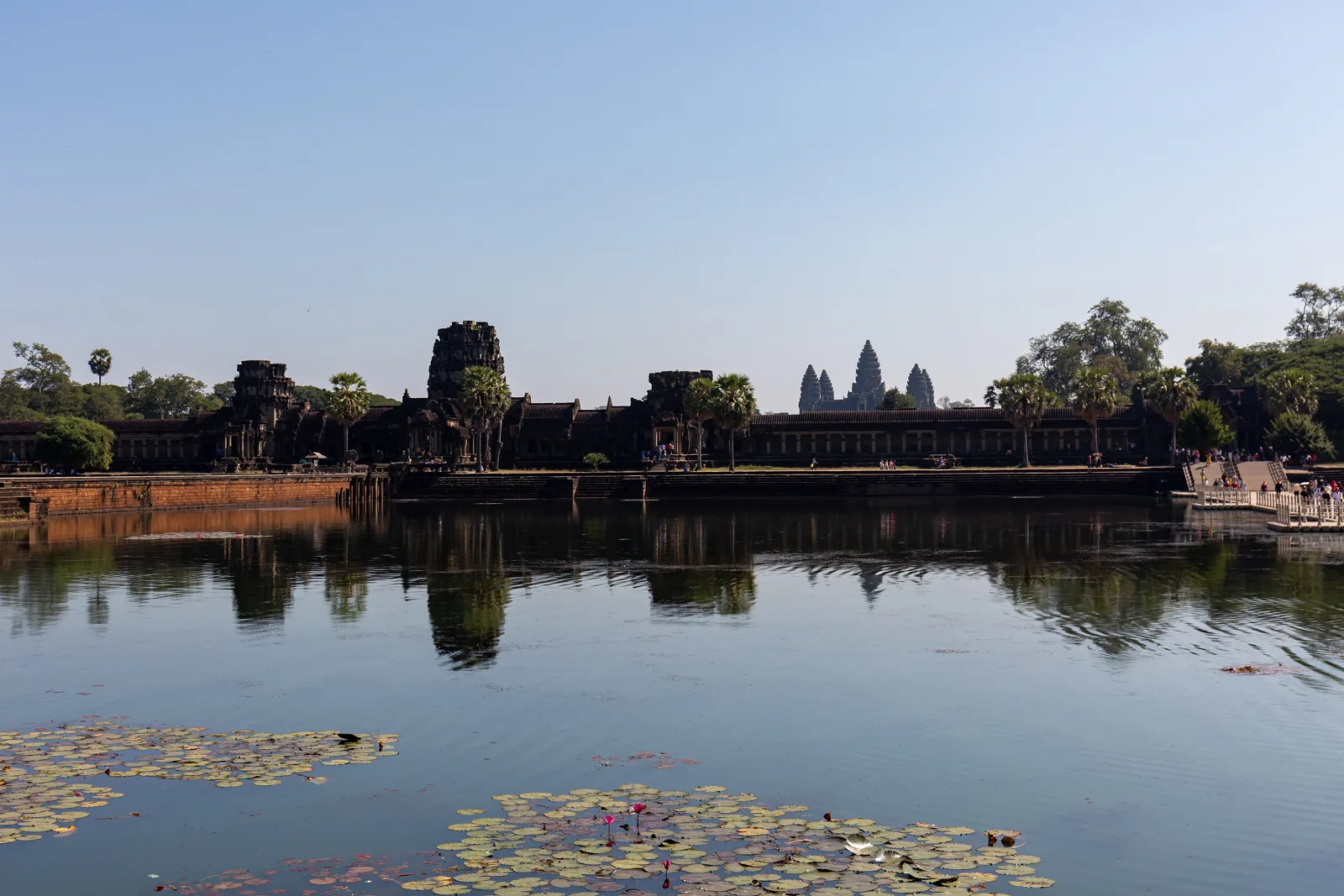
Angkor Wat was built by the Khmer king Suryavarman II between 1113 and 1150 and dedicated to the Hindu god Vishnu. The way in is from the west, along a wide stone causeway across the moat.
The king who built it appears on the gallery walls, too, carved in relief as he advances in procession with his court.
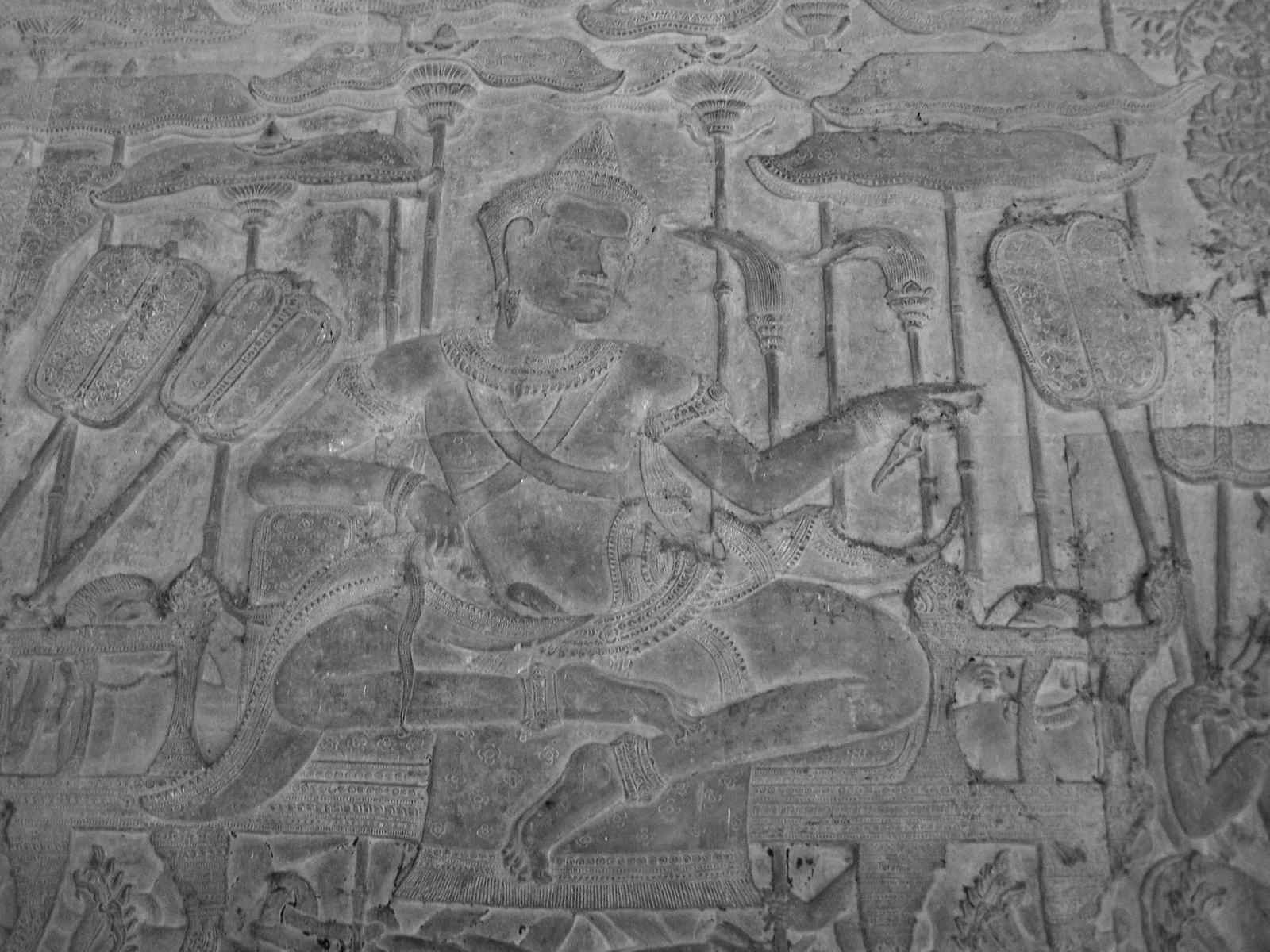
Where did all that stone come from? One study argues it was quarried at the foot of Phnom Kulen, more than 30 kilometres away, and floated in along canals. The researchers identified around 50 quarry sites.
The rule at Angkor: face east
In a 2016 paper, Giulio Magli of the Polytechnic University of Milan surveyed which way Angkor's state temples face. Their main entrances all point east, with just two exceptions: Angkor Wat, and Wat Athvear, a small temple built by the same king. Angkor Wat's azimuth is 270.5 degrees, almost due west.
No surviving record explains the choice, so there is no single answer. Instead there are three main lines of thought.
Theory one: Vishnu belongs to the west
This is the explanation Magli finds most likely. Angkor Wat was originally dedicated to Vishnu, a god closely tied to the west, so the temple was turned to face its god's direction.
Theory two: a tomb for the king?
The west, where the sun sets, is also associated with the dead. National Geographic says Angkor Wat was probably meant to be the king's vast funerary temple, and some scholars agree. Magli, though, points out that a funerary role, while likely, has never been proved. No evidence has been found that the king was buried here.
Theory three: the equinox sunrise
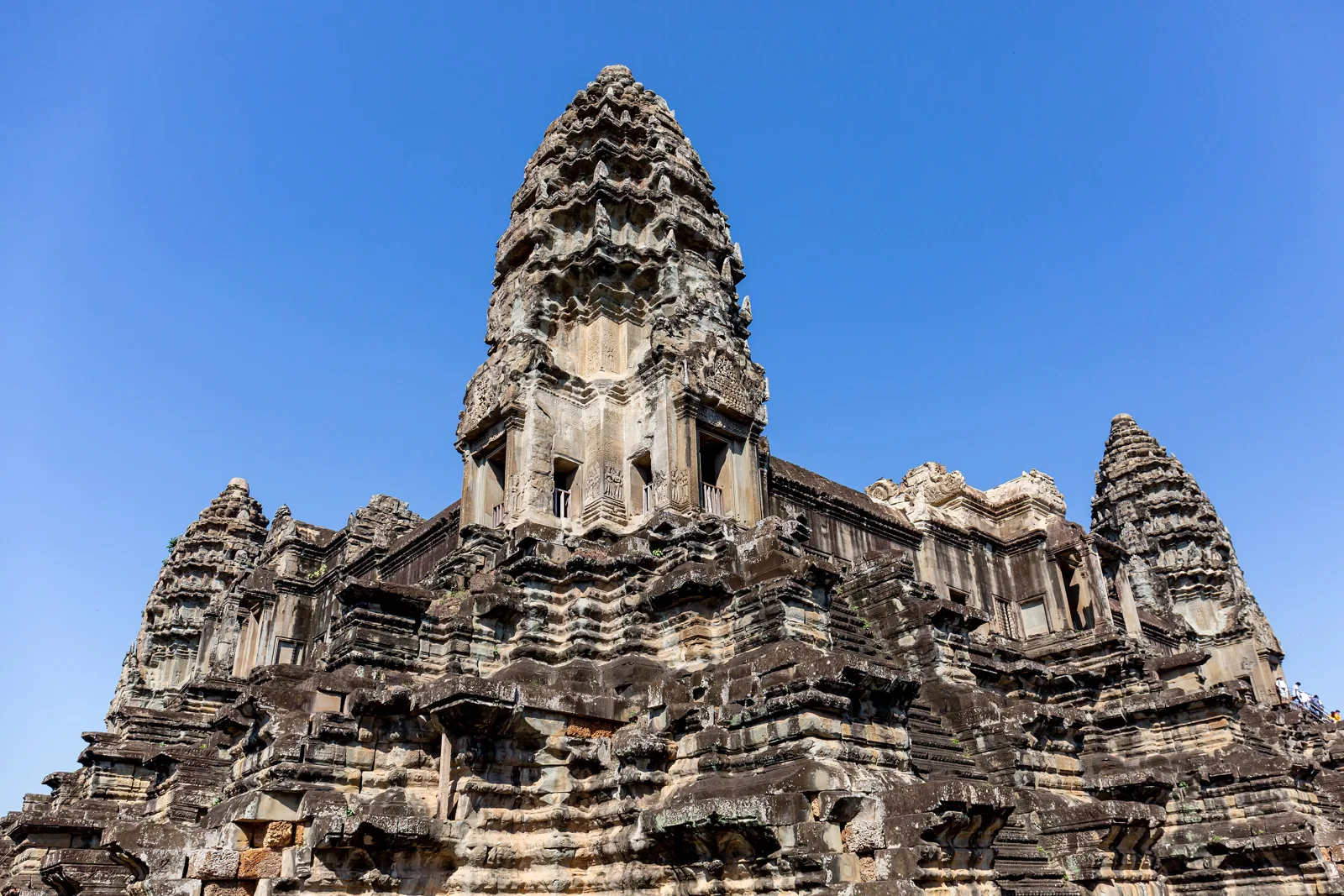
A third idea became widely known through a study published in the journal Science in 1976. At dawn on the spring and autumn equinoxes, if you stand at the west gate and look toward the temple, the sun appears to rise right above the central tower. Magli cautions that there is no evidence Khmer temples were used for precise astronomical observation, and argues that alignments like this are best read as symbolic.
Find Angkor Wat on Wooriyeojido
A temple in the jungle that turns its face to the west: come in the afternoon and you'll see its front glowing gold, and at dawn on an equinox you might catch the sun climbing over the central tower. Angkor Wat is pinned on the Wooriyeojido map. Look it up in the Wooriyeojido app, and if you go, leave your photos and stories from the day right beside it.
View this place in the Wooriyeojido appVideos of nearby places




Sources
- UNESCO World Heritage Centre — Angkor (668)
- NASA Earth Observatory — Angkor Wat
- National Geographic — Angkor Wat, the world's biggest religious complex, is sacred to two faiths
- Giulio Magli — Archaeoastronomy in the Khmer heartland (arXiv, 2016)
- Stencel, Gifford, Morón — Astronomy and Cosmology at Angkor Wat, Science 193 (1976)
- World History Encyclopedia — Angkor Wat
- Uchida & Shimoda — Quarries and transportation routes of Angkor monument sandstone blocks, Journal of Archaeological Science 40 (2013)
- NBC News — Mystery of Angkor Wat Temple's huge stones solved (2012)