The Secret Stairway Under the Temple Floor: The Tomb of the Maya King Pakal at Palenque
Beneath the floor of the Temple of the Inscriptions at Palenque, Mexico, a hidden stairway led down to a Maya king's tomb that no one had entered in more than 1,200 years. Follow the four-year excavation that found it.
Deep in the rainforest of Chiapas, in southern Mexico, lies Palenque, a city built by the ancient Maya. In the floor of its Temple of the Inscriptions was one odd stone slab, pierced with holes set in pairs. Beneath it, a stairway led down into the dark. Where did it go? Start with the short video.

 Watch the one-minute video on YouTube
A Maya city in the rainforest
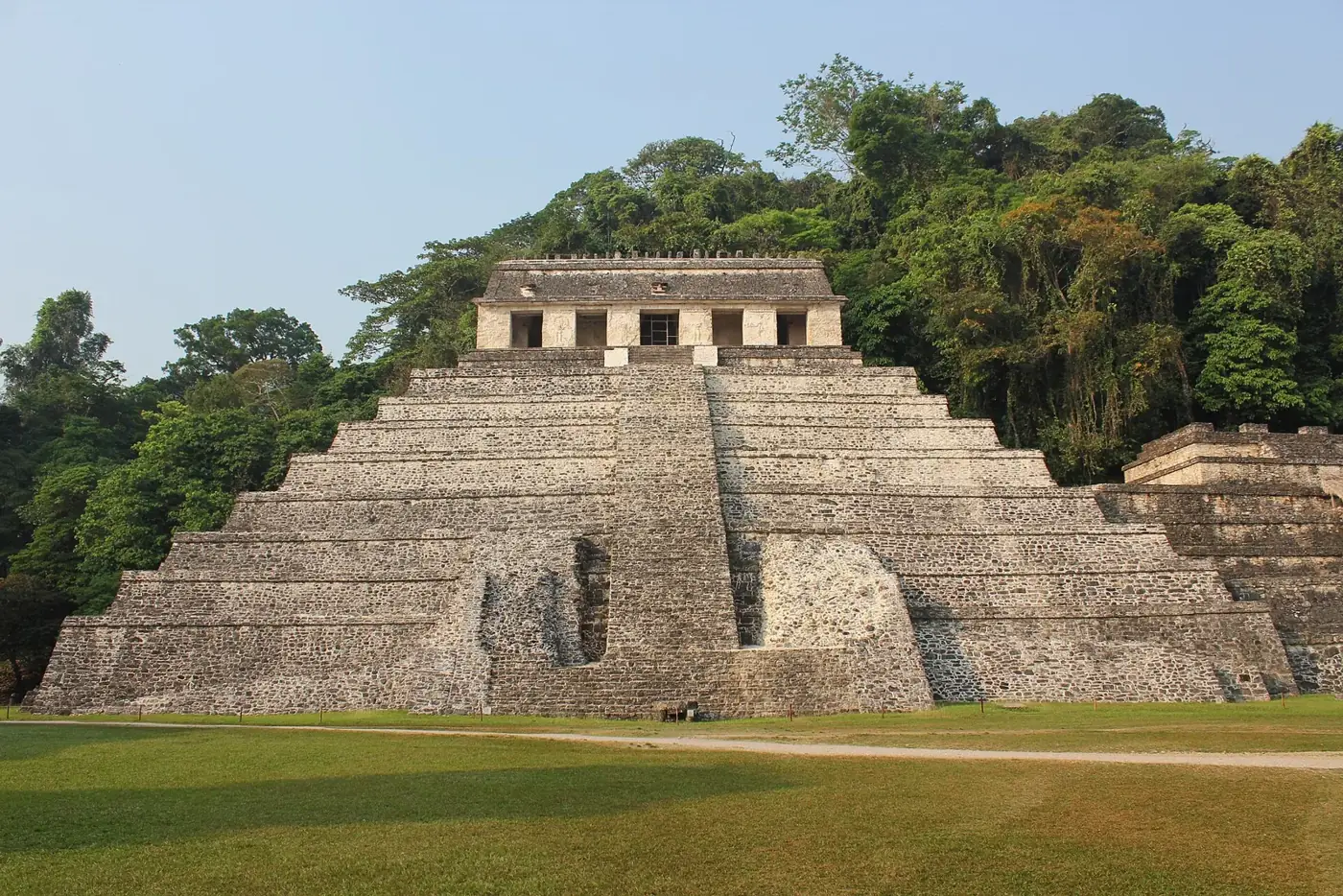
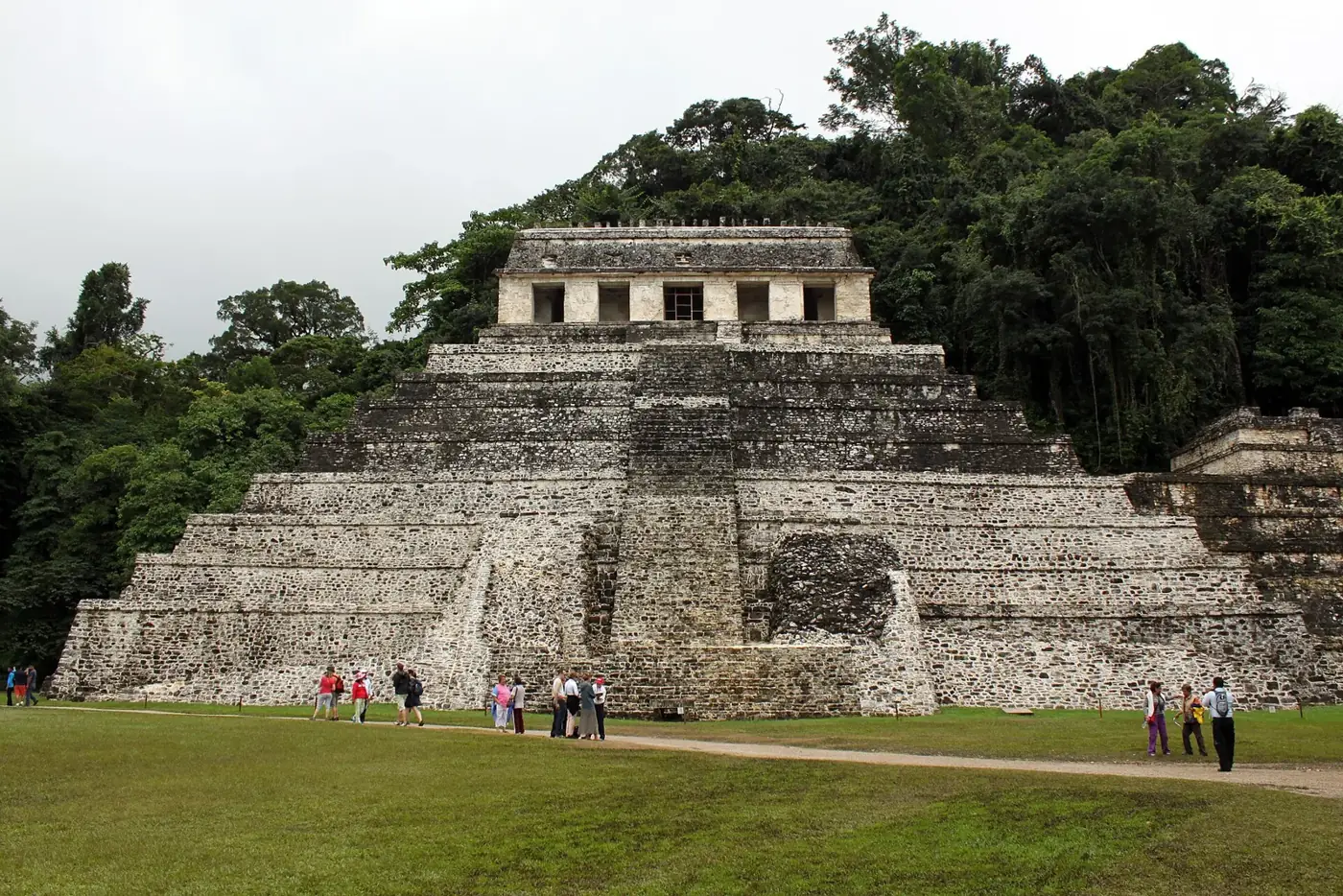
Palenque was at its height between AD 500 and 700, and it became a UNESCO World Heritage Site in 1987. The first building to catch your eye is the Temple of the Inscriptions: a temple with five doorways perched on top of a stepped pyramid, with the forest pressing close behind it.

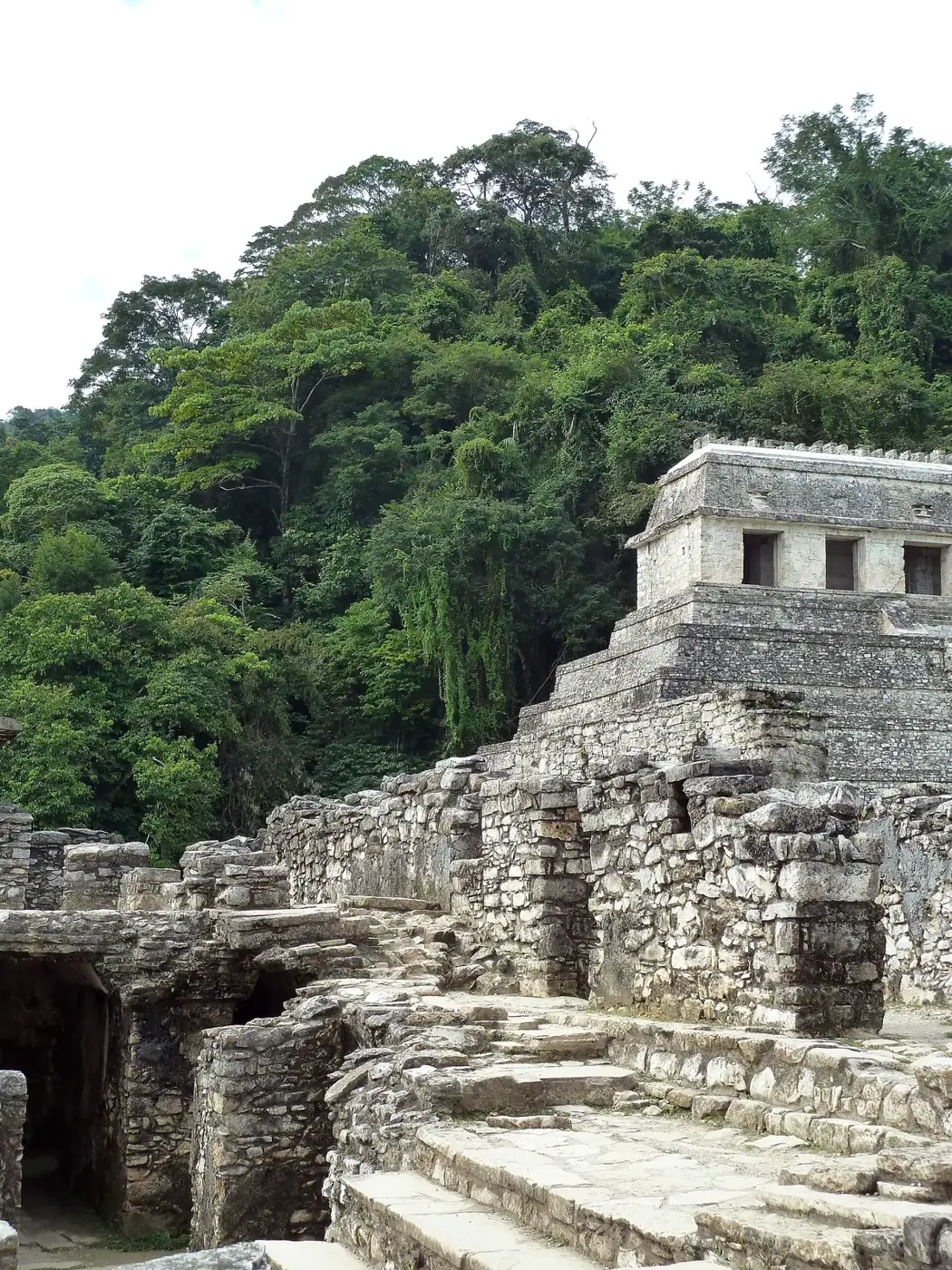
Nearby stands the cluster of buildings known as the Palace, where low galleries run across a broad platform and a four-story square tower rises above them.

A pierced slab and a stairway packed with stone
In 1949, Alberto Ruz Lhuillier, an archaeologist with Mexico's National Institute of Anthropology and History (INAH), began investigating the temple. Its floor was paved with large square slabs. One of them was drilled with holes arranged in pairs, each plugged with a removable stone stopper. Next to it, where the floor was broken, Ruz dug down, and about two meters below the floor he struck a step.
The stairway wasn't empty. It had been completely filled with large stones bound together with clay. Clearing that fill took four field seasons, from 1949 to 1952, as the stairway turned at a landing and kept descending deeper into the pyramid. Ruz later reported that the pierced slab he had first noticed was in fact the lid of this inner stairway.
The triangular stone at the bottom
In 1952, the team finally reached the bottom. Behind a blocking wall they found a stone box of offerings — pottery, shells, jade and pearls — along with the remains of five or six people buried together. Beyond them, a triangular stone slab sealed the way.
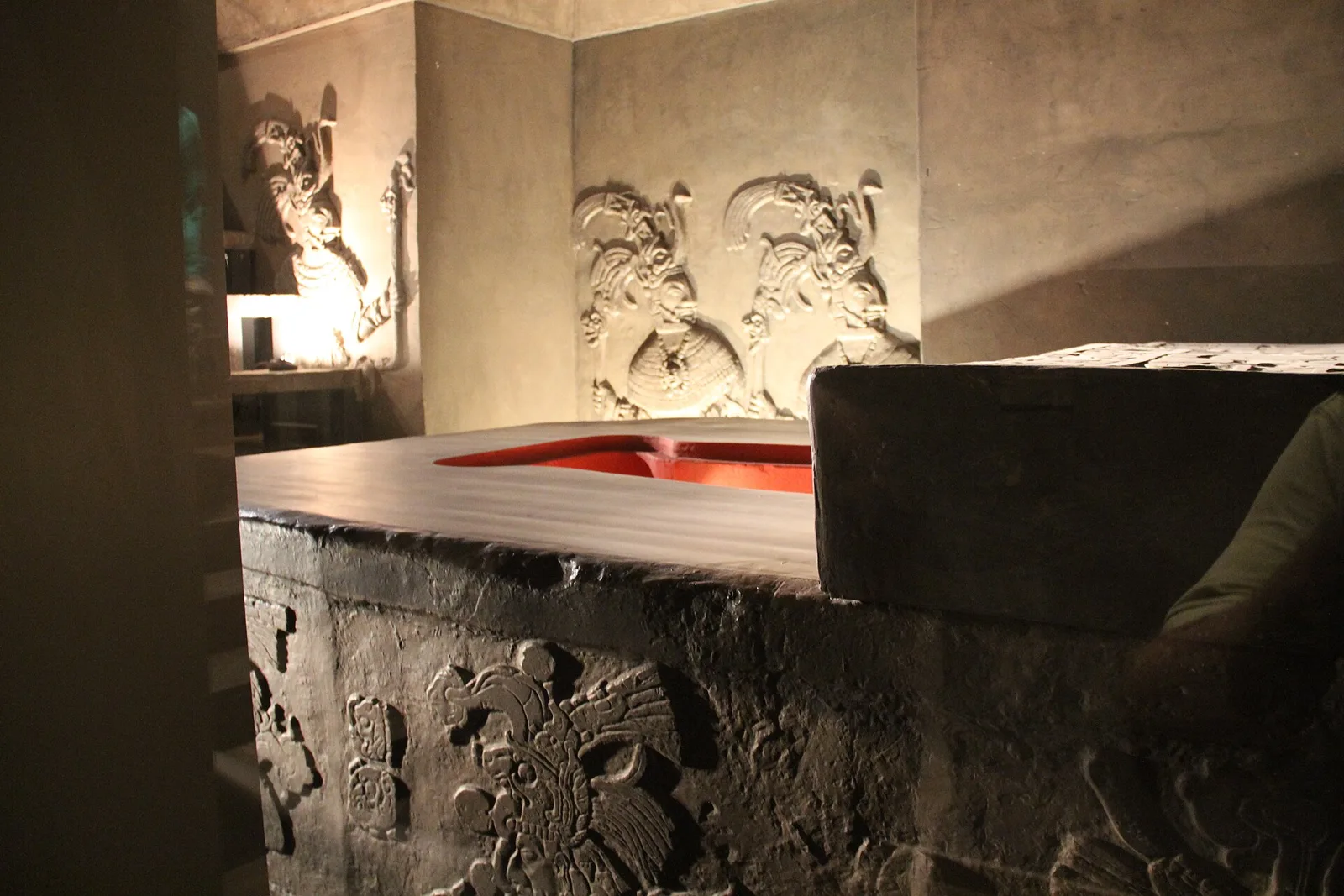
On June 15, the team swung the slab open using ropes, pulleys and iron bars. Nearly 20 meters below the temple floor lay a chamber that no one had entered since a king was laid to rest there in 683. Nine stucco reliefs representing gods of the underworld lined its walls.

Twenty-four hours with car jacks
In the middle of the chamber, a massive sarcophagus rested on six supports. Its lid was a single slab 3.80 meters long, 2.20 meters wide and 25 centimeters thick. On November 27, after placing car jacks at the four corners and propping the lid on tree trunks as it rose, the team worked 24 hours straight to lift it.
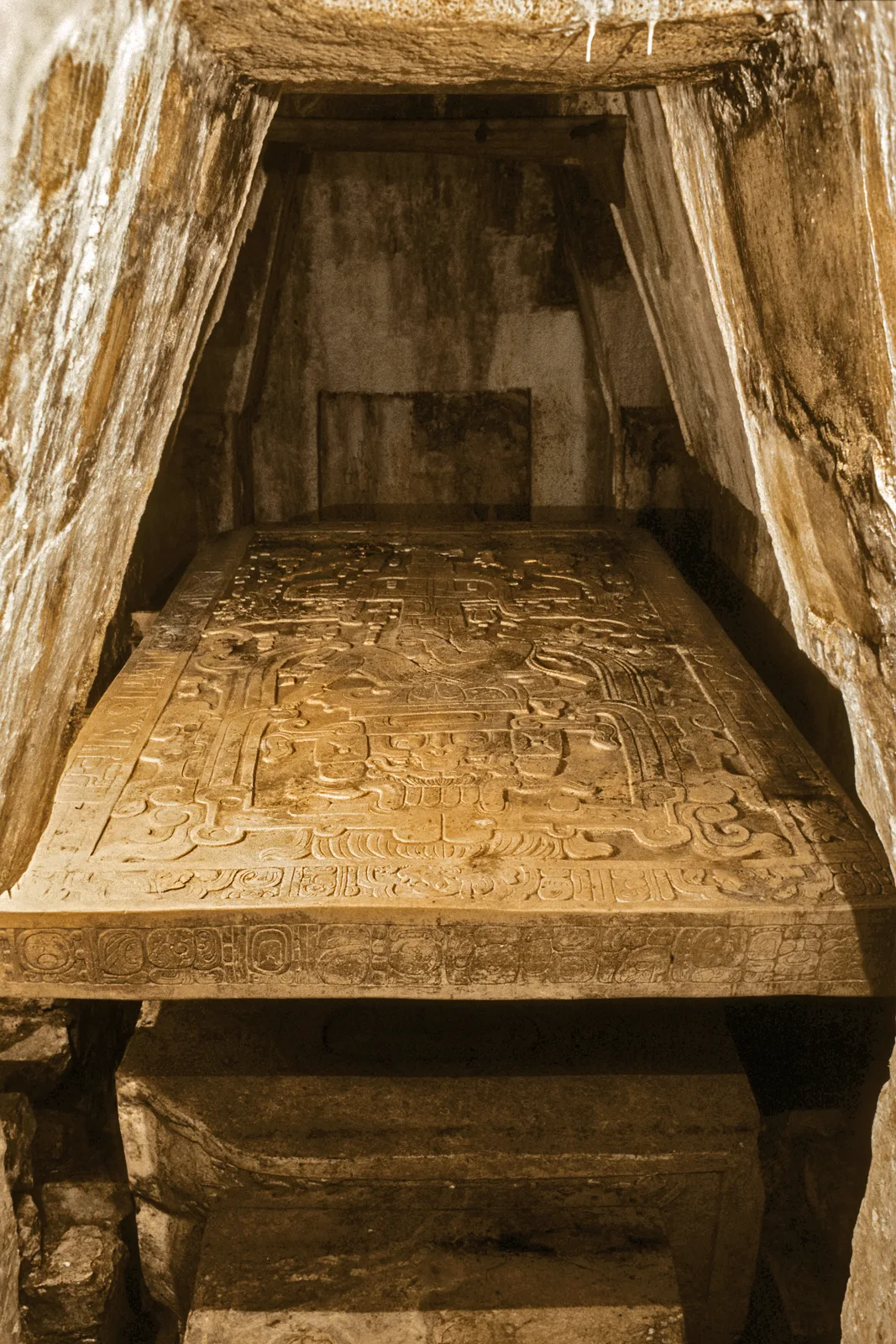

The king in the sarcophagus
Inside lay the king. With him was a mask made from about 200 pieces of jade, with eyes of shell and irises of obsidian.
Who he was became clear only later, as scholars learned to read Maya writing. His name was K'inich Janaab' Pakal. He was born in 603, came to the throne around 615 and died in 683. The carvings on the sarcophagus lid tell of the lives of Pakal and his ancestors, and show Pakal, in the guise of the maize god, being reborn from the jaws of an earth monster and rising toward the sky.
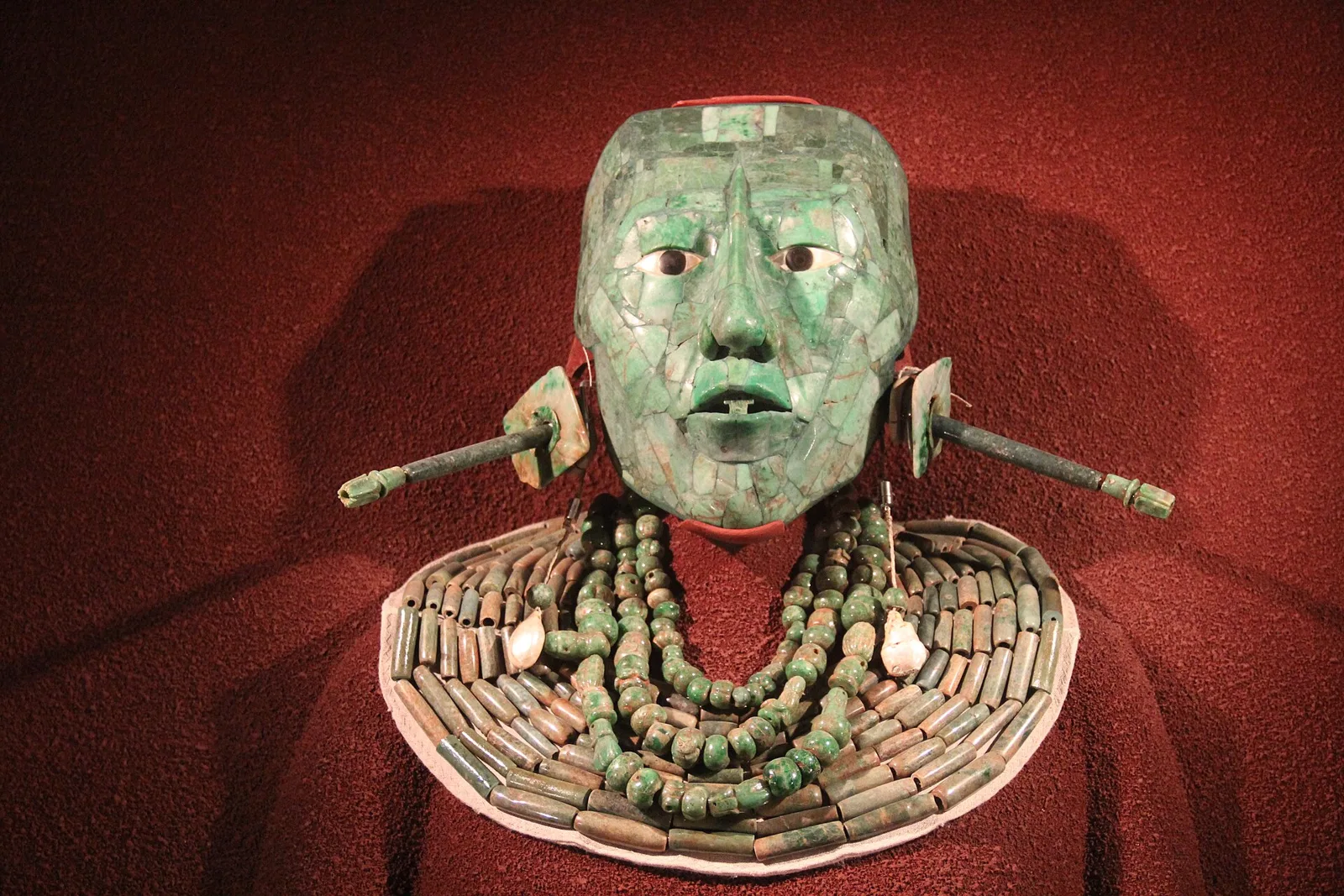

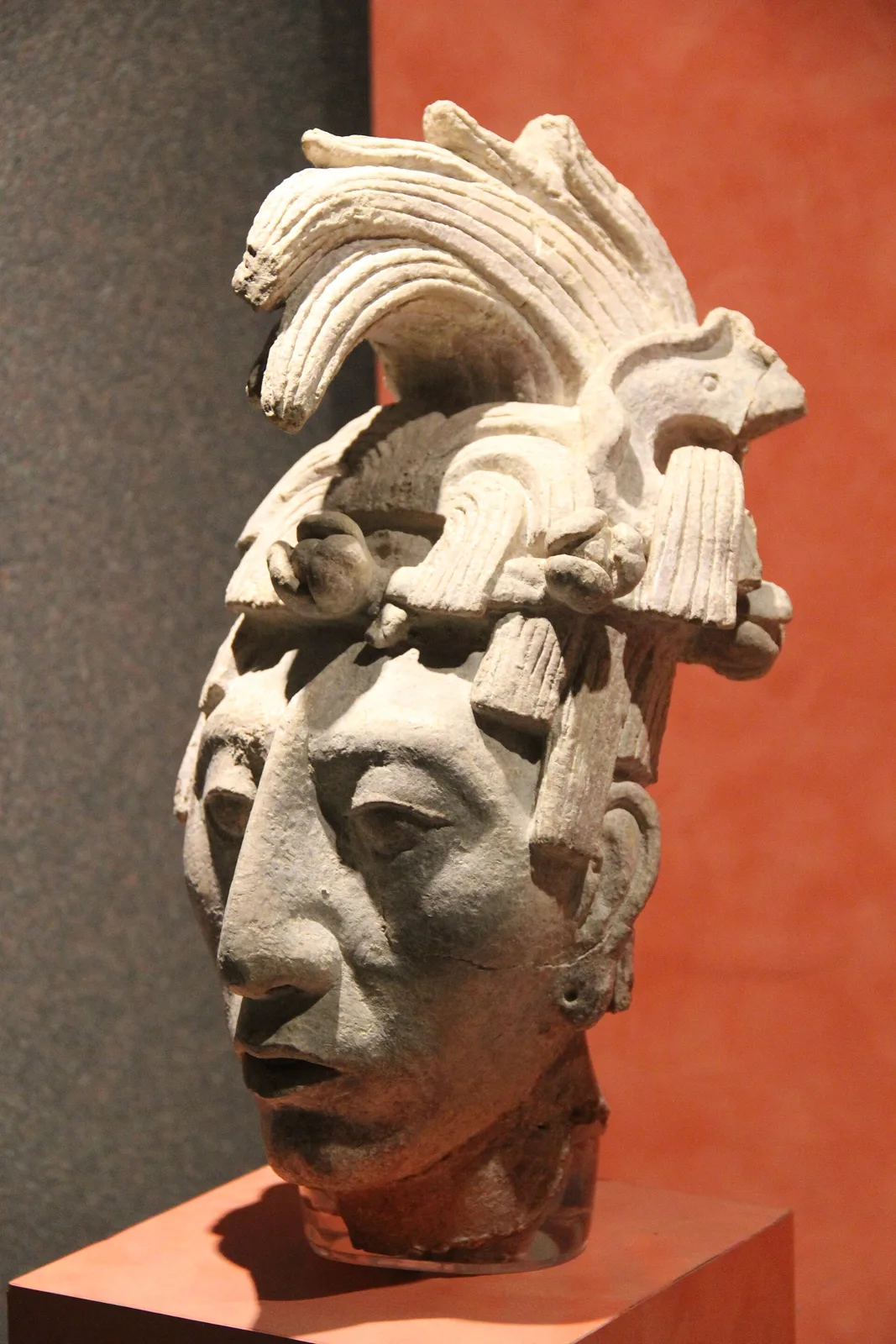
Two stucco heads were also found in the chamber, left there as offerings. The jade mask and the tomb's other treasures are now on view at the National Museum of Anthropology in Mexico City, which also houses a reconstruction of the tomb chamber.

Find the Temple of the Inscriptions on Wooriyeojido
One slab in a temple floor turned out to be the doorway to a king's tomb, sealed for more than 1,200 years. The Temple of the Inscriptions at Palenque is pinned on the Wooriyeojido map. Look it up in the app, and if you visit, leave your photos and stories from the day right beside it.
View this place in the Wooriyeojido appVideos of nearby places
 Chichen Itza's Kukulkan Temple: a serpent on the stairs at the equinox?
 The fall of Tenochtitlan: how a lake city became Mexico City
 The Nazca Lines: pictures only the sky can see
Sources
- UNESCO World Heritage Centre — Pre-Hispanic City and National Park of Palenque (411)
- INAH boletín 372 (2023) — Se cumplen 71 años del descubrimiento de la tumba de Pakal 'el Grande', en Palenque
- INAH boletín 91 (2024) — La ciencia y paciencia detrás de la restauración de la máscara de Pakal
- INAH boletín 659 (2024) — Pakal El Grande, Soberano maya de Palenque
- Alberto Ruz Lhuillier — Exploraciones arqueológicas en Palenque (1949), Anales del INAH
- Alberto Ruz Lhuillier — Exploraciones en Palenque: 1950, Anales del INAH
- Alberto Ruz Lhuillier — Exploraciones en Palenque: 1952, Anales del INAH
- Haydeé Orea Magaña — La conservación de la tumba de K'inich Janahb' Pakal de Palenque, Lakamha' (INAH)