Fushimi Inari Taisha: Kyoto's Mountain of 10,000 Red Gates and Its Fox Messengers
At the foot of Mount Inari in Kyoto, some 10,000 vermilion torii gates climb the mountain trails. Why the shrine's foxes are messengers rather than gods, and how the name Inari came about, in a short video and photos.
On a wooded slope in southern Kyoto, stone foxes keep watch at every turn. Some clutch keys in their jaws, others jewels, and behind them a mountain trail disappears into a seemingly endless corridor of red gates. Yet the god worshipped here is not a fox. So why are there foxes everywhere? Start with the short video.

 Watch the one-minute video on YouTube
Head shrine of 30,000
Fushimi Inari Taisha sits on the western slope of Mount Inari in Kyoto's Fushimi Ward. Japan is said to have some 30,000 Inari shrines, and this is the head shrine of them all. The grounds cover roughly 870,000 square metres, so in practice the whole mountain is the shrine. Its highest peak, Ichinomine, rises 233 metres above sea level.
According to shrine tradition, the deity came to dwell on Mount Inari on the first Day of the Horse in February 711. That makes the mountain the birthplace of Inari worship.
Hideyoshi's gate and a 500-year-old hall
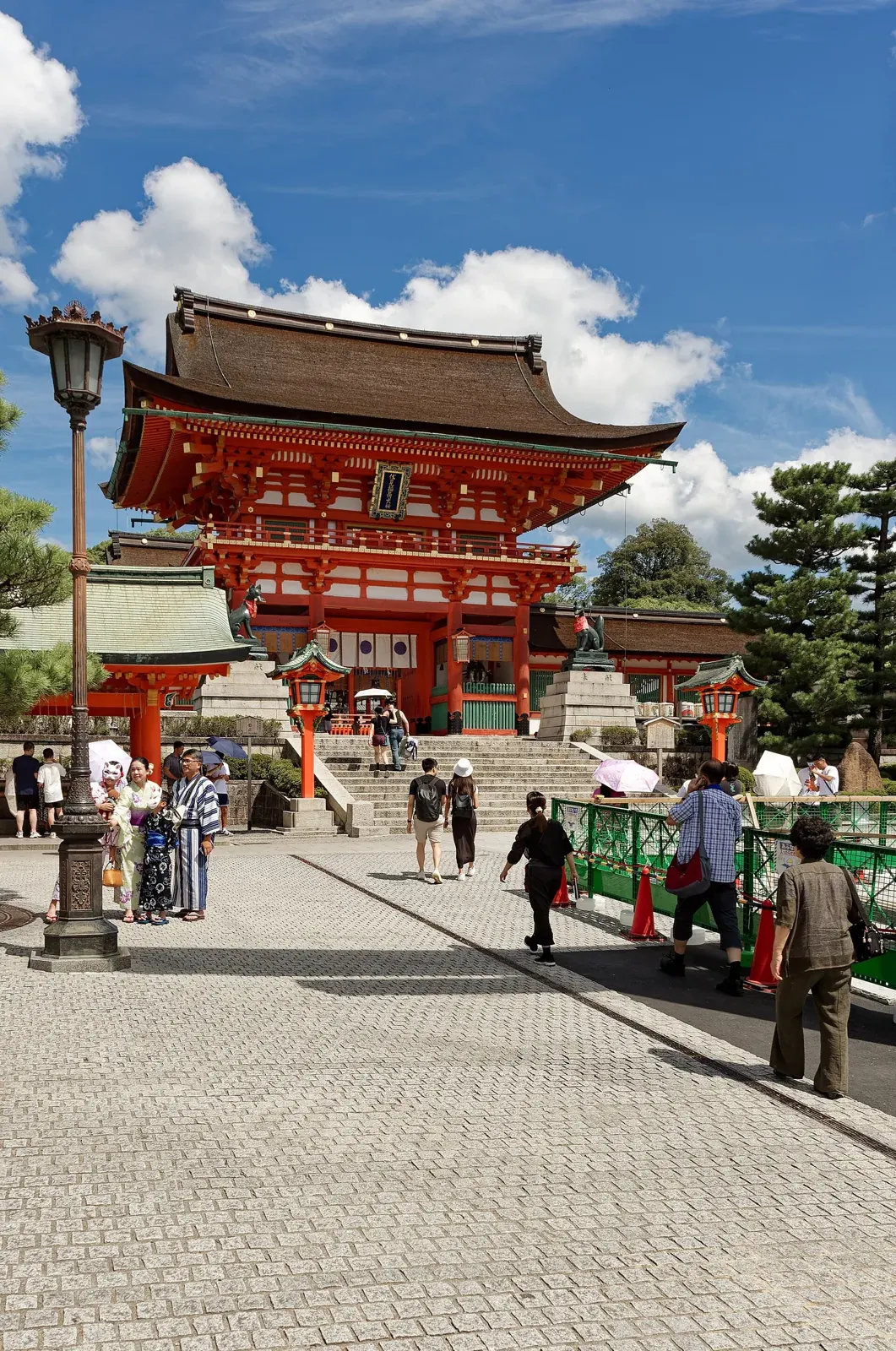
The first landmark on the approach is the great vermilion Tower Gate. The shrine has long credited it to the warlord Toyotomi Hideyoshi, who is said to have built it in 1589.

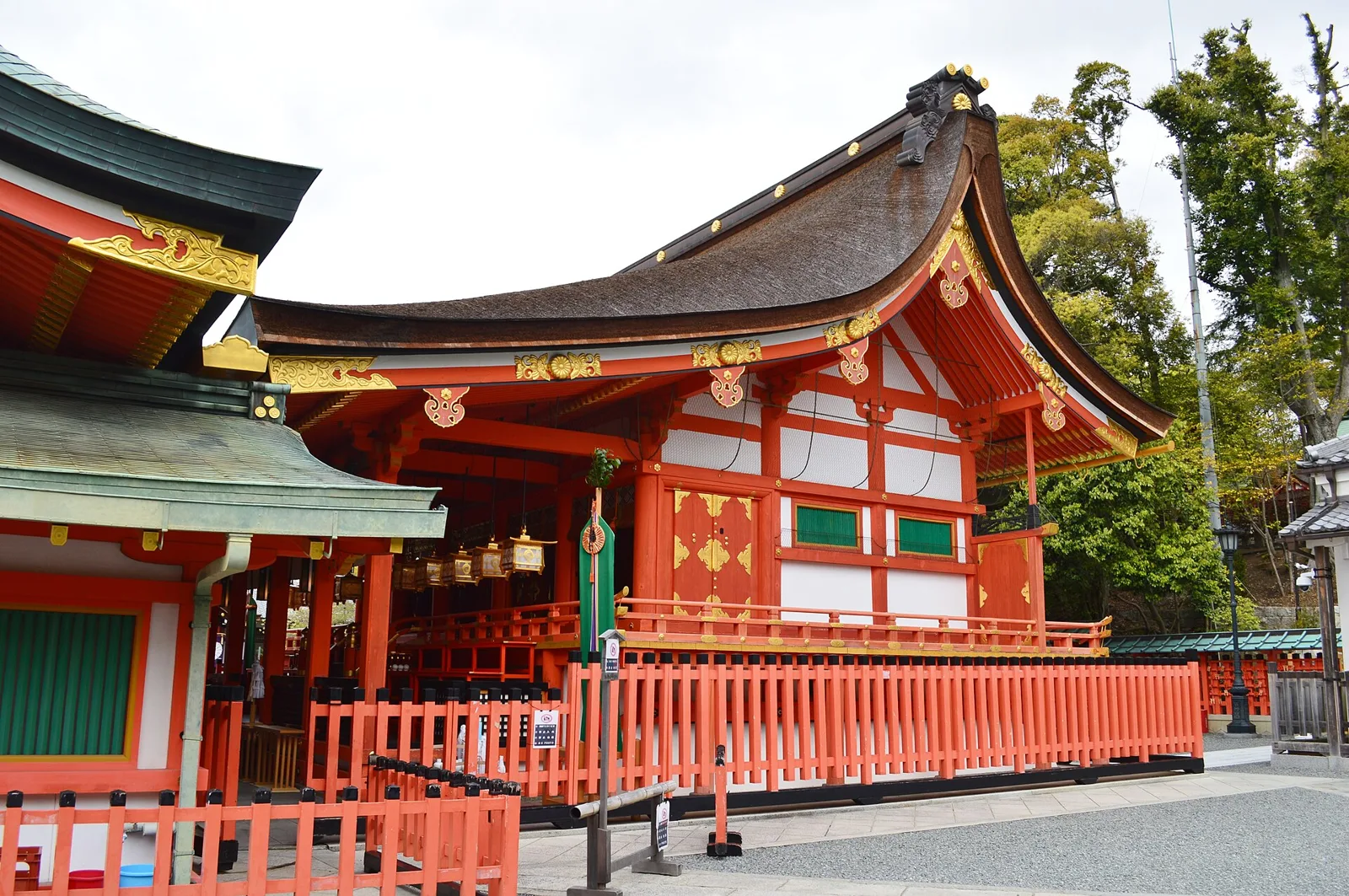
Beyond it stands the main hall. The earlier building burned in 1468 during the Ōnin War, and the present hall went up in 1499. It is designated an Important Cultural Property.

A rice cake that took flight
The name Inari has a legend attached. In a tale preserved from the Yamashiro no Kuni Fudoki, an ancient record of the province, a man named Irogu used a rice cake as an archery target. When his arrow struck, the cake turned into a white bird and flew off to a mountain peak. Rice sprang up where it landed, and the shrine says the name Inari comes from that miracle. It was first written 稲成り, "rice grows," and only later with the characters 稲荷 used today.
The deity, Inari Ōkami, is a god of grain and good harvests. Kyoto's tourism association traces the shrine to the 8th century, when the local Hata clan honoured a god of rice and sake. As fewer people farmed, Inari also became the god to ask for a thriving business.
Messengers, not gods
The shrine's own FAQ is blunt about it: foxes are the messengers of Inari Ōkami, and Inari Ōkami is not a fox. These messengers are invisible, which is why they are also called byakko-san, the "white foxes."
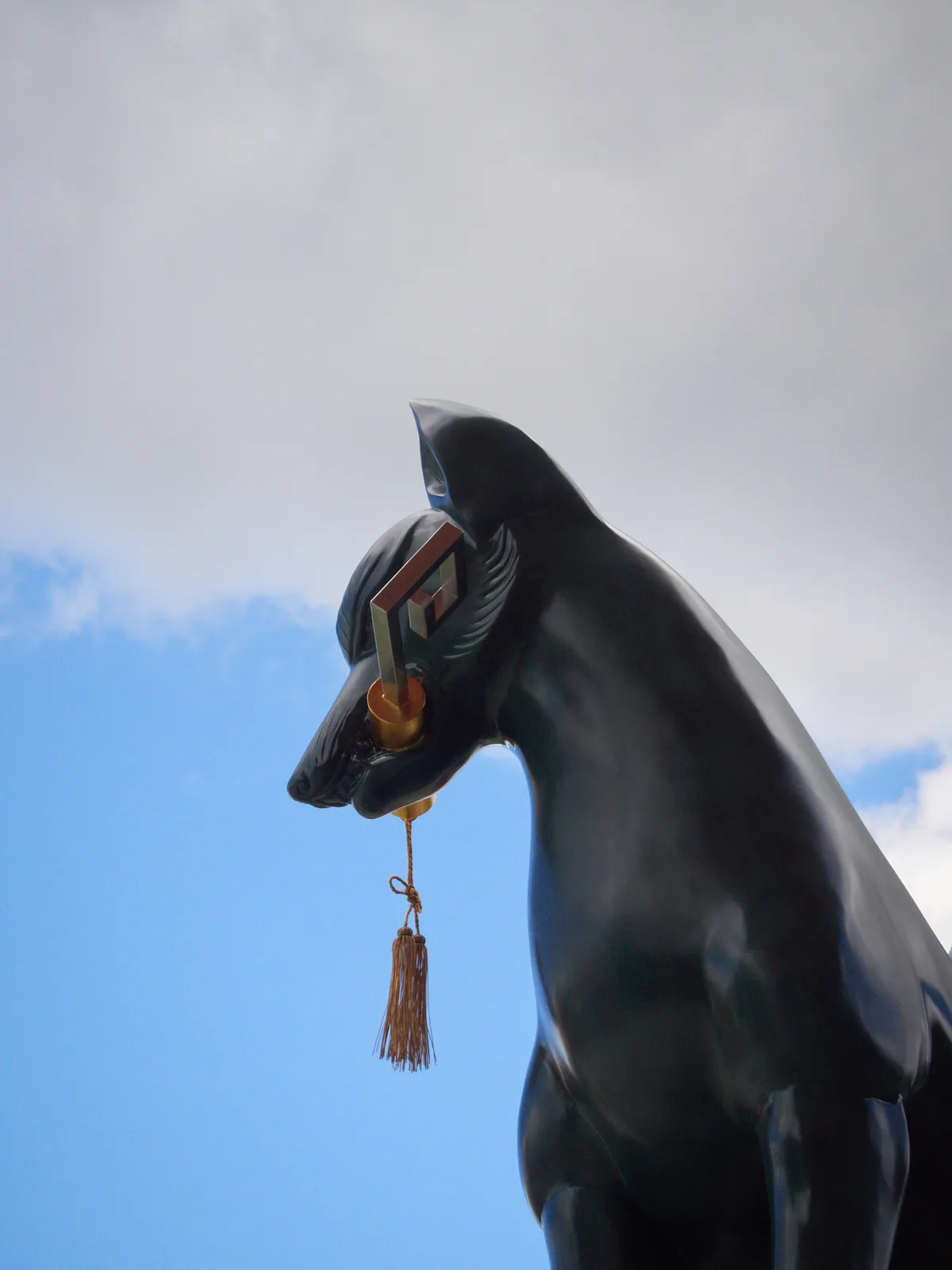

Look closely and each stone fox holds something different: a jewel, a sheaf of rice, a key. According to Kyoto's tourism association, the key opens a granary.
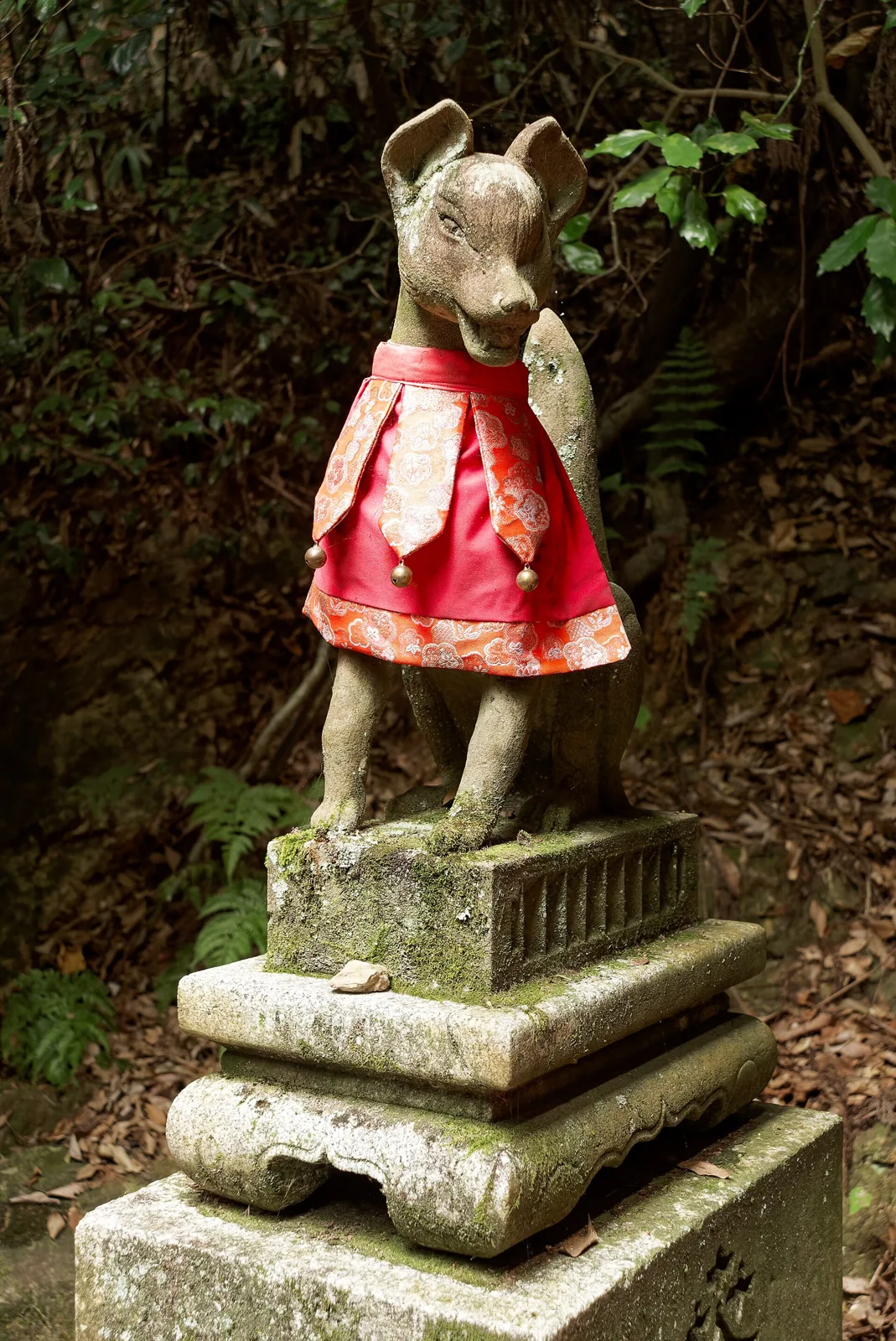

Why a fox, of all animals?
Nobody can say for certain. Kikuko Hirafuji, a mythology scholar at Kokugakuin University, lays out several theories. One is that foxes are among the first animals to come down from the mountains in early spring, so people saw them as guides leading the god of the rice paddies down to the fields. Another points to the fox's bushy tail, which looks like a heavy, ripe ear of rice. A third holds that foxes keep away sparrows and other creatures that eat the rice.
Ten thousand gates of gratitude
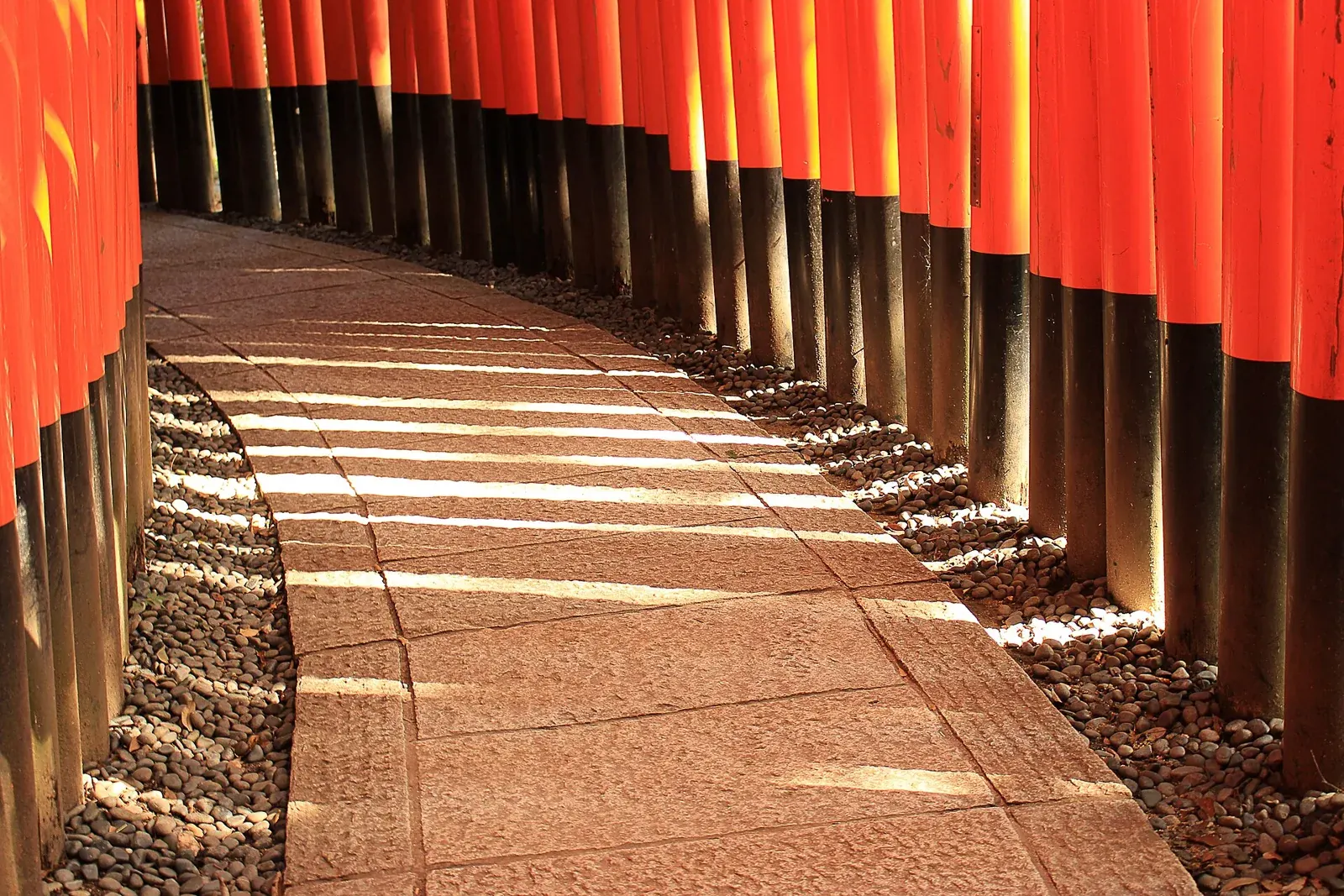
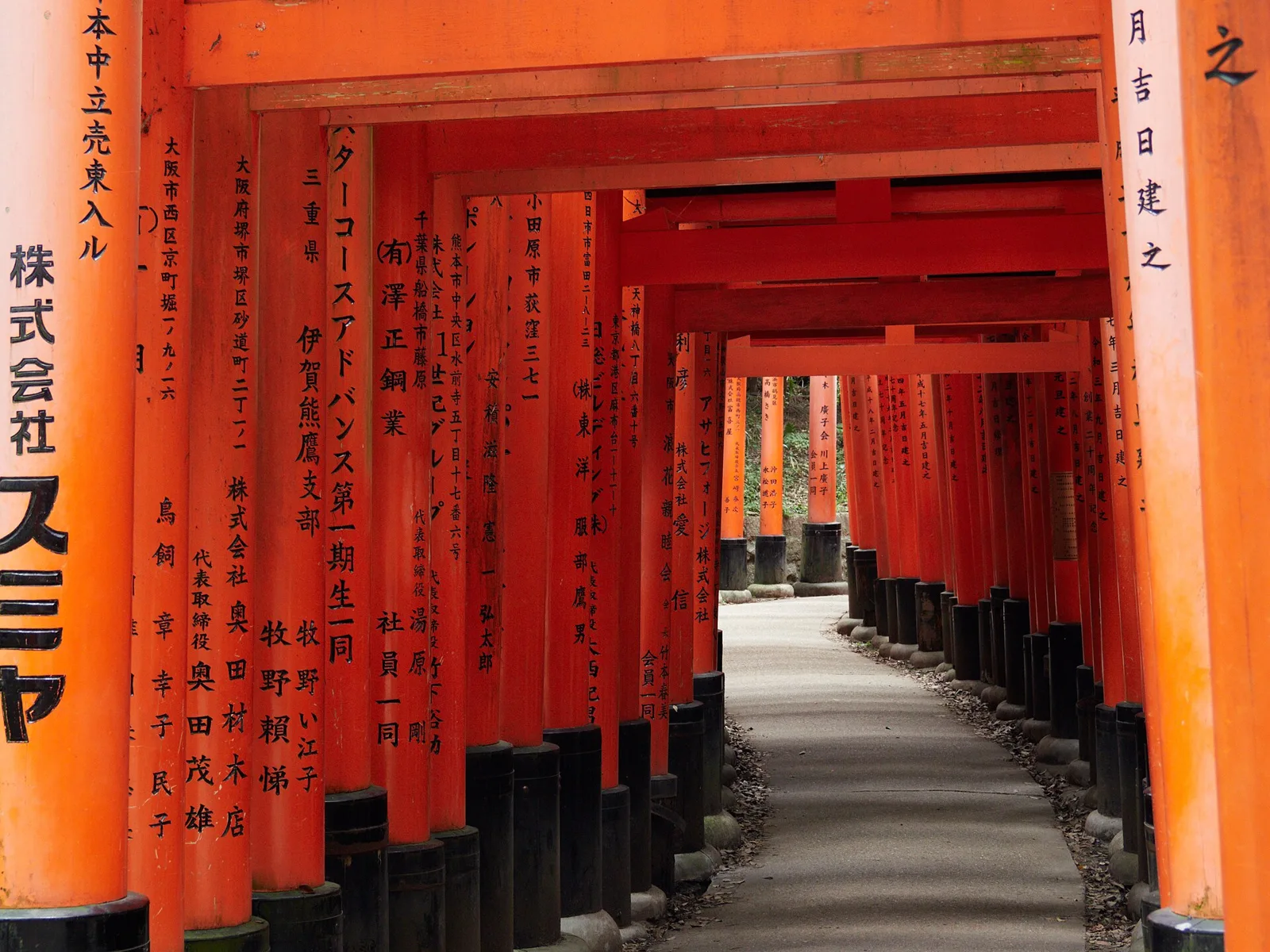
Every red torii on the mountain was given by someone whose prayer was answered. The custom spread from the Edo period (1603–1868) onward, and today, the shrine says, around 10,000 gates of all sizes line the trails across the mountain. The stretch where they stand closest together is called Senbon Torii, the "Thousand Torii." The vermilion is said to stand for brightness and hope.

Find Fushimi Inari Taisha on Wooriyeojido
A god of grain with foxes for messengers, and a mountain path built one gate at a time by people whose wishes came true. Fushimi Inari Taisha is pinned on the Wooriyeojido map. Look it up in the Wooriyeojido app, and if you go, leave your photos and stories from the day right beside it.
View this place in the Wooriyeojido appVideos of nearby places
 Why is the deer a messenger of the gods? Kasuga Taisha in Nara
 Why does a torii stand in the sea? Itsukushima Shrine on Miyajima
 Where do the gods of Japan gather for a meeting? Izumo Taisha
Sources
- 伏見稲荷大社 公式 — よくあるご質問 (FAQ)
- Fushimi Inari Taisha Official — FAQ (English)
- 伏見稲荷大社 公式 — 伏見稲荷大社とは
- Fushimi Inari Taisha Official — History
- 伏見稲荷大社 公式 — 境内マップ
- Fushimi Inari Taisha Official — Senbon Torii
- Kyoto Travel — Fushimi Inari Taisha Shrine (Kyoto City Tourism Association)
- nippon.com — 平藤喜久子「八百万の神々」入門 第4回 (2024-01-18)