Kasuga Taisha: Why Nara's Deer Are Called Messengers of the Gods
Nara's famous deer owe their title, "messengers of the gods," to a legend told at Kasuga Taisha about a god who arrived riding a white deer. A short video and photos on the myth, the deer's near disappearance and comeback, and how to meet them safely.
In Nara, deer wander the open lawns as calmly as the people around them. For centuries they have been known as messengers of the gods. How did they earn that title? Start with the short video.
 Watch the one-minute video on YouTube
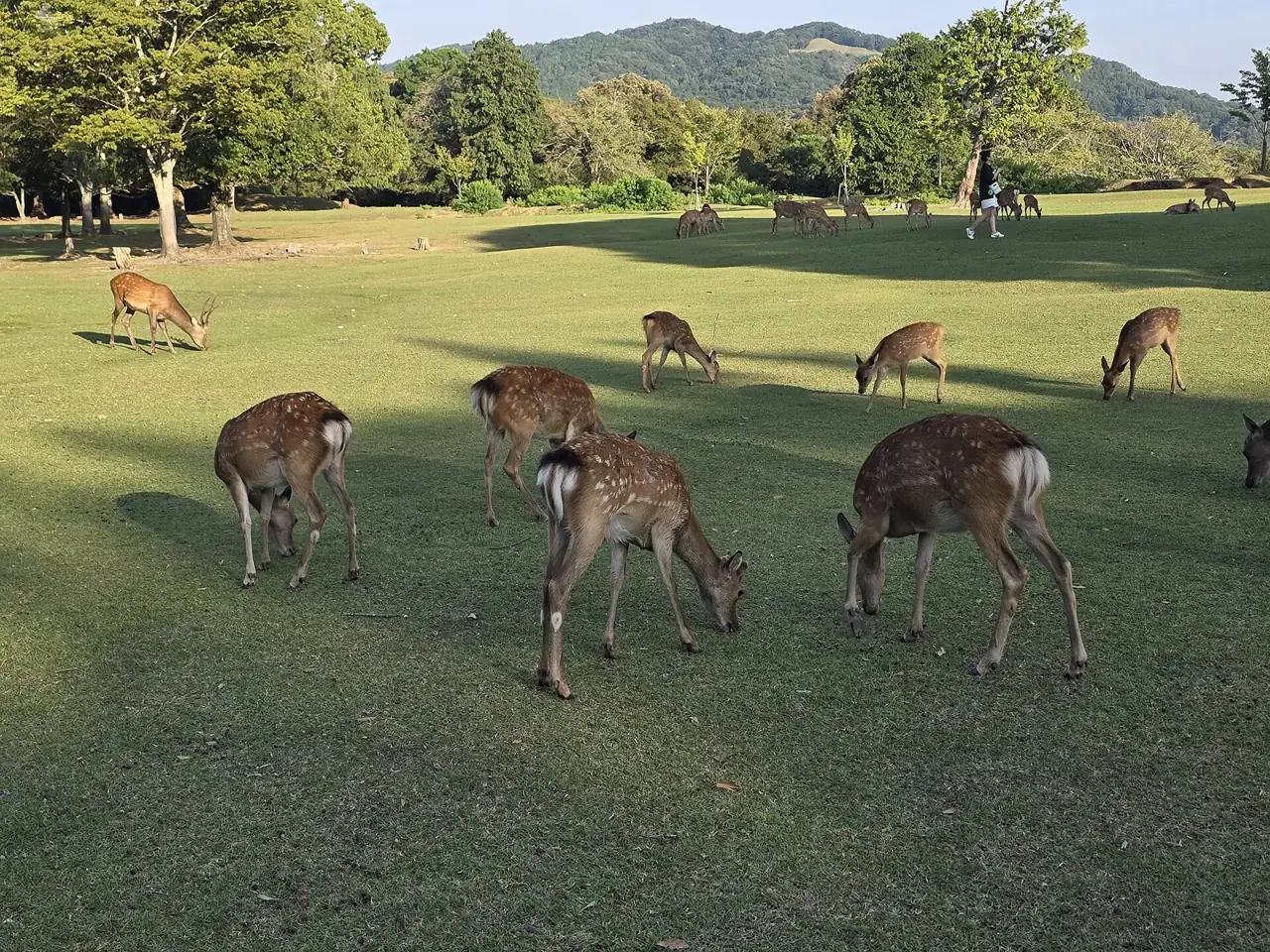
A shrine with deer on the lawn
Kasuga Taisha (春日大社) is a Shinto shrine in the city of Nara. Behind it rises Mount Mikasa, revered as a sacred mountain, and in front of it spreads Nara Park, home to the deer. The deer also graze on Tobihino, a broad lawn near the shrine. Tobihino actually belongs to the shrine grounds, not to Nara Park.
According to the Nara Deer Preservation Foundation's count in July 2026, 1,687 deer live in and around Nara Park.
A god on a white deer
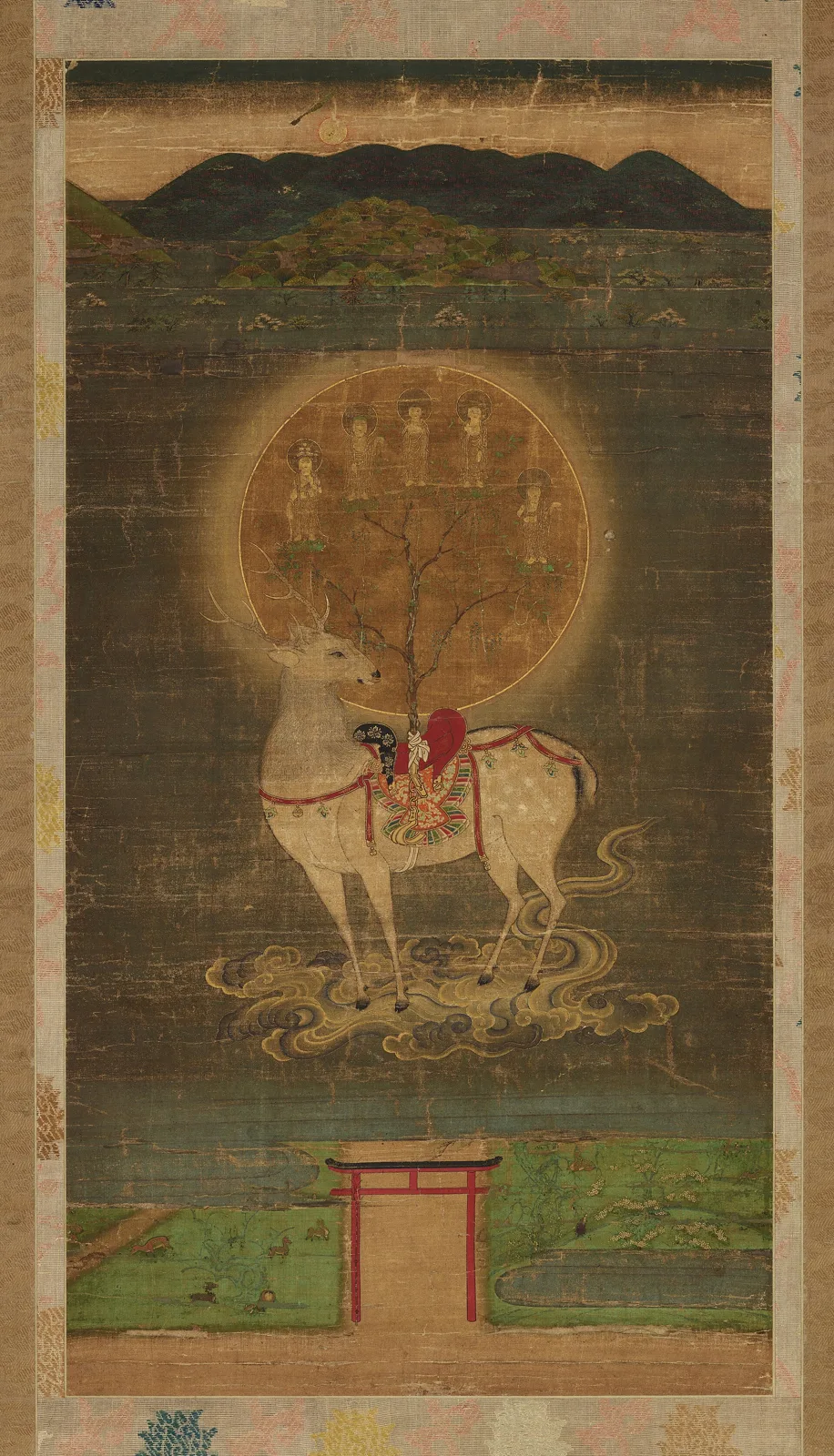
The answer lies in a story handed down at Kasuga Taisha. Early in the Nara period, the tale goes, a god was brought from Kashima, far to the east, to protect the new capital of Heijō-kyō. That god, Takemikazuchi-no-Mikoto, is said to have descended onto the summit of Mount Mikasa riding on the back of a white deer. The shrine still has a place for worshipping that peak from afar.
Several decades later, in 768, a sanctuary was built at the foot of the mountain by imperial order, and that is said to be the beginning of Kasuga Taisha. Because a deer had carried the god there, deer came to be cherished as the god's companions and messengers.
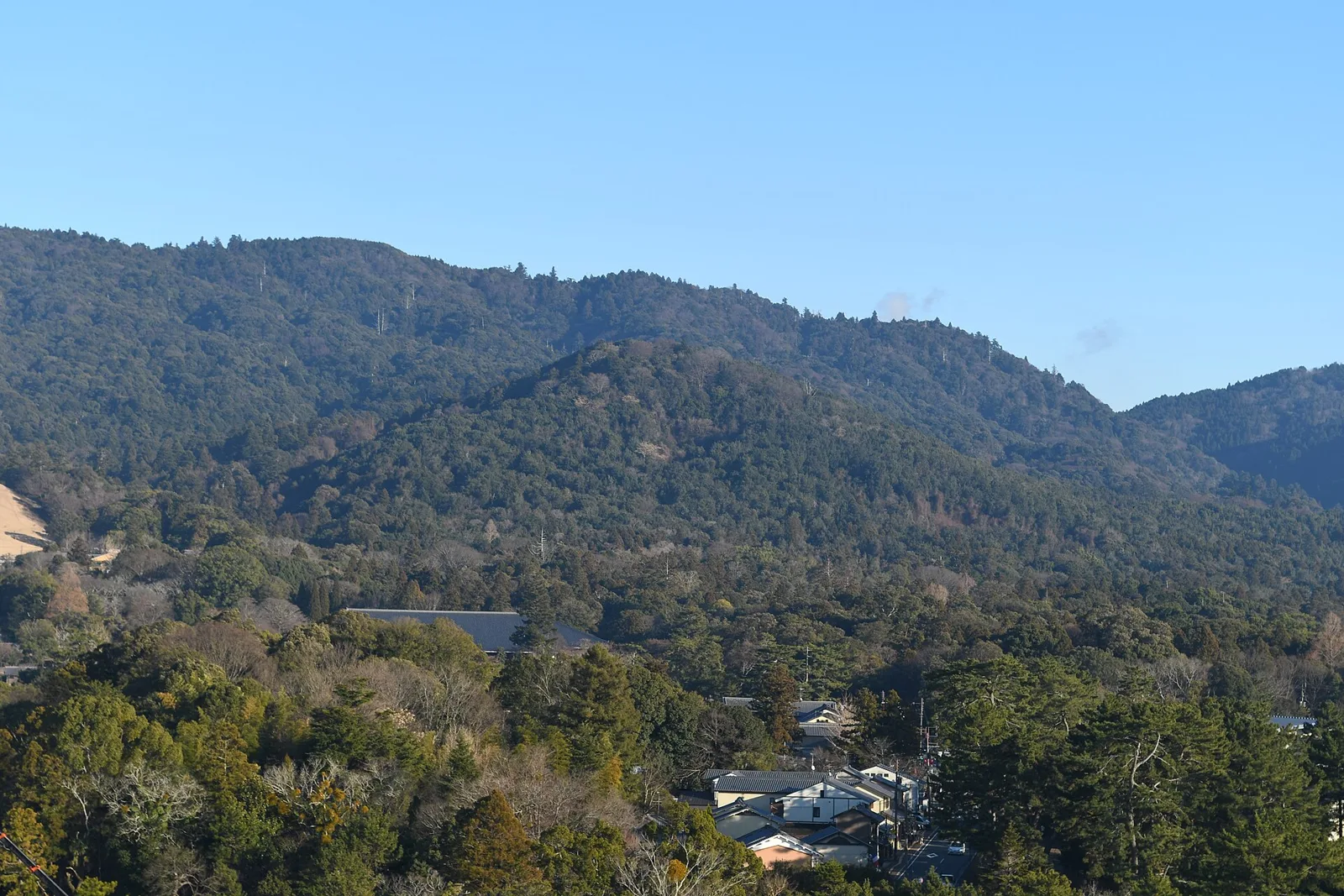
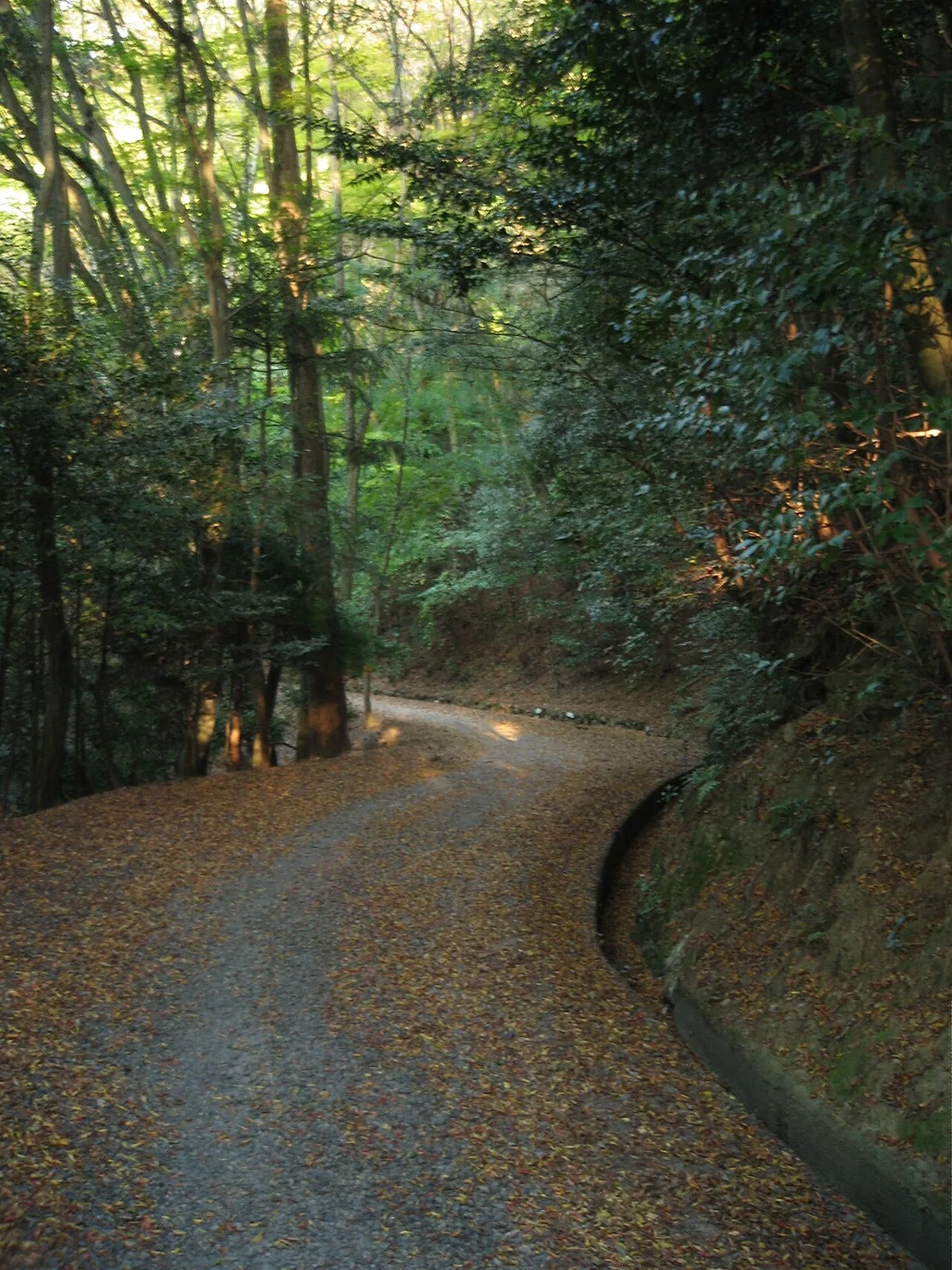
Mount Mikasa is sacred ground, and visitors may not enter it. Hunting and logging there were banned by order of the imperial court back in the Heian period, which is why primeval forest still covers the Kasugayama hills today.
The sacred deer in art
The belief was painted, too. The 14th-century Kasuga Deer Mandala shows the sacred deer flying to Kasuga on a cloud. Instead of a figure of the god, a sacred tree stands upright on its saddle.
Down to 80, and back
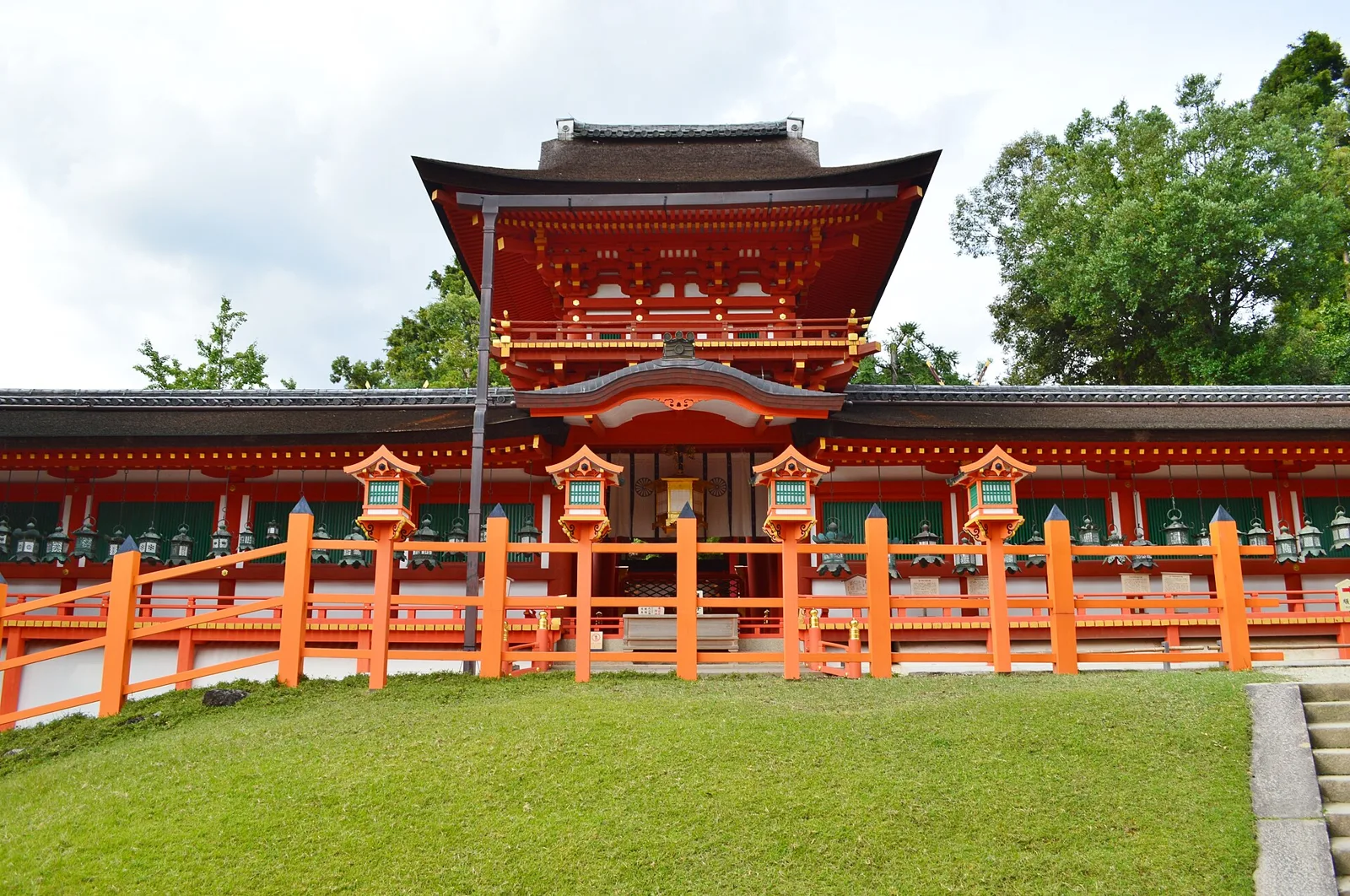
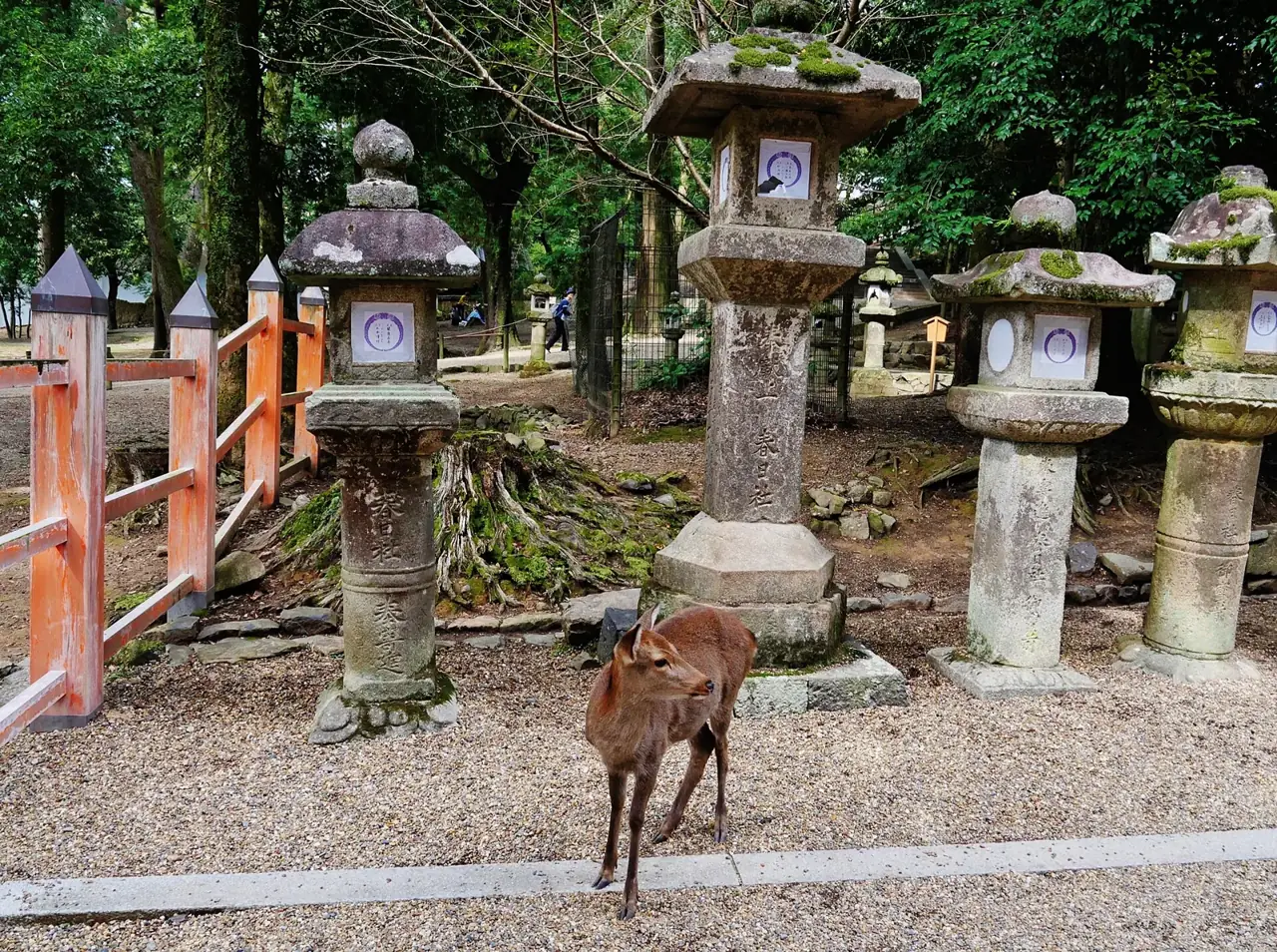
About 3,000 lanterns, donated from the Heian period onward, fill the shrine grounds, and deer often wander between them.
The herd was not always this large. Amid the turmoil during and after the Second World War, poaching surged, and by 1946 only about 80 deer were left. Protection brought them back, and in 1957 the Deer of Nara were designated a Natural Monument of Japan. In 1998 Kasuga Taisha and the Kasugayama Primeval Forest became part of the UNESCO World Heritage Site "Historic Monuments of Ancient Nara."
Meeting the deer
The deer are used to people, but they are still wild animals. People have been seriously hurt by antlers or knocked over by a charging deer, so don't approach or touch them carelessly. Children need extra care, since their eyes are roughly level with a deer's.
The only food you should give them is shika senbei, crackers made from rice bran. Human food such as snacks or vegetables will make them ill. A deer will sometimes bow its head when it sees you holding a cracker. When it does, hand the cracker over promptly. Teasing a deer, or pretending to have a cracker when you don't, can make it agitated and aggressive.

Find Kasuga Taisha on Wooriyeojido
Thanks to the legend of a god who rode in on a white deer, Nara's deer have been cherished as divine messengers for more than a thousand years. Kasuga Taisha is pinned on the Wooriyeojido map. Look it up in the app, and if you go, leave your photos and stories right beside it.
View this place in the Wooriyeojido app


