Devils Tower: The Wyoming Rock Said to Bear the Claw Marks of Giant Bears
Devils Tower rises 867 feet above the plains of northeastern Wyoming. Here is the Kiowa story of the seven girls and the bears that left their claw marks on it, alongside the geology of a 50-million-year-old column of cooled magma.
In the open country of northeastern Wyoming, a colossal stone tower stands on its own, its sides grooved from top to bottom with long vertical lines. For generations people have said those grooves were left by the claws of bears. Could that be true? Watch the short video first.

 Watch the one-minute video on YouTube
America's first national monument
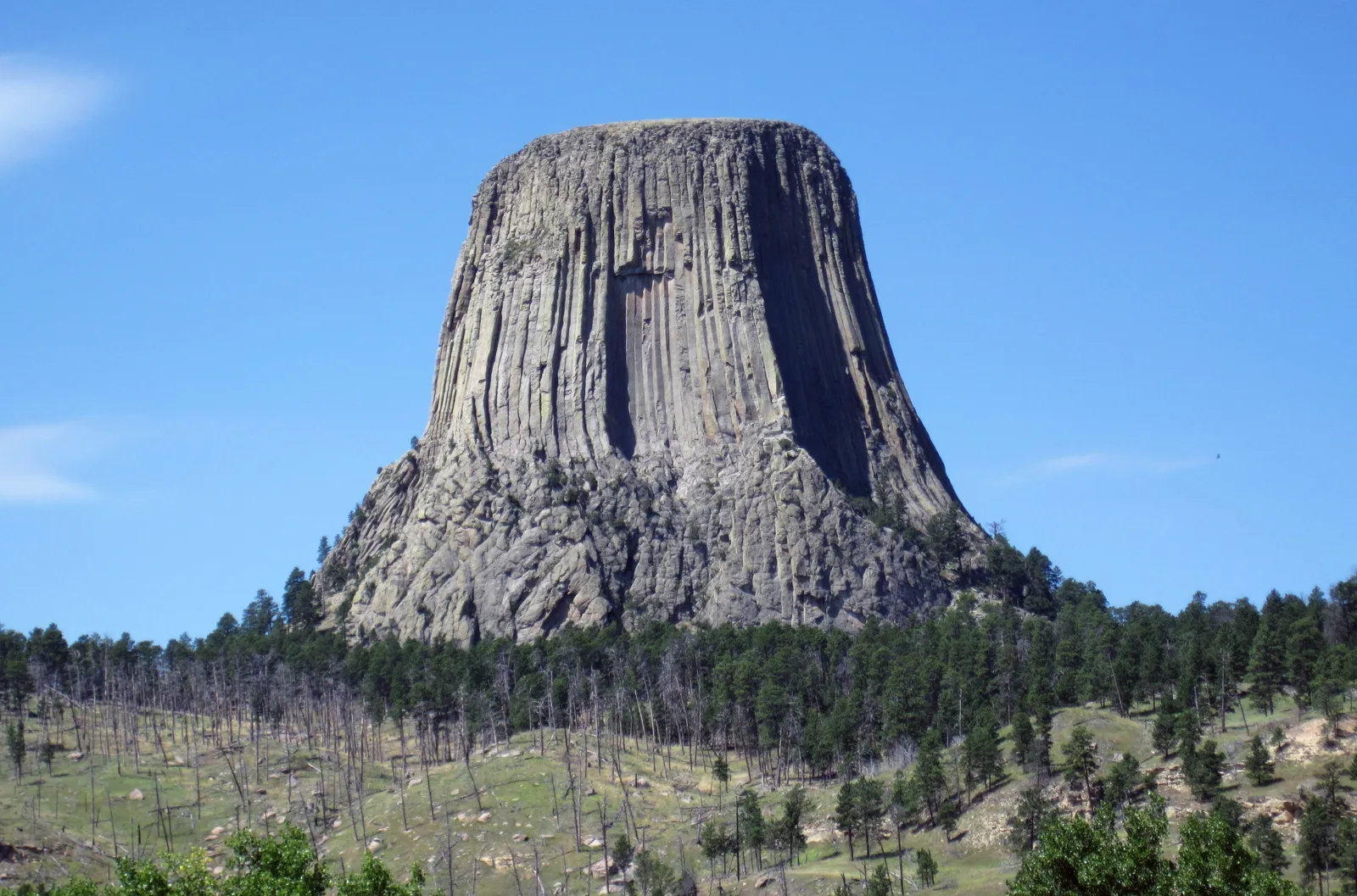
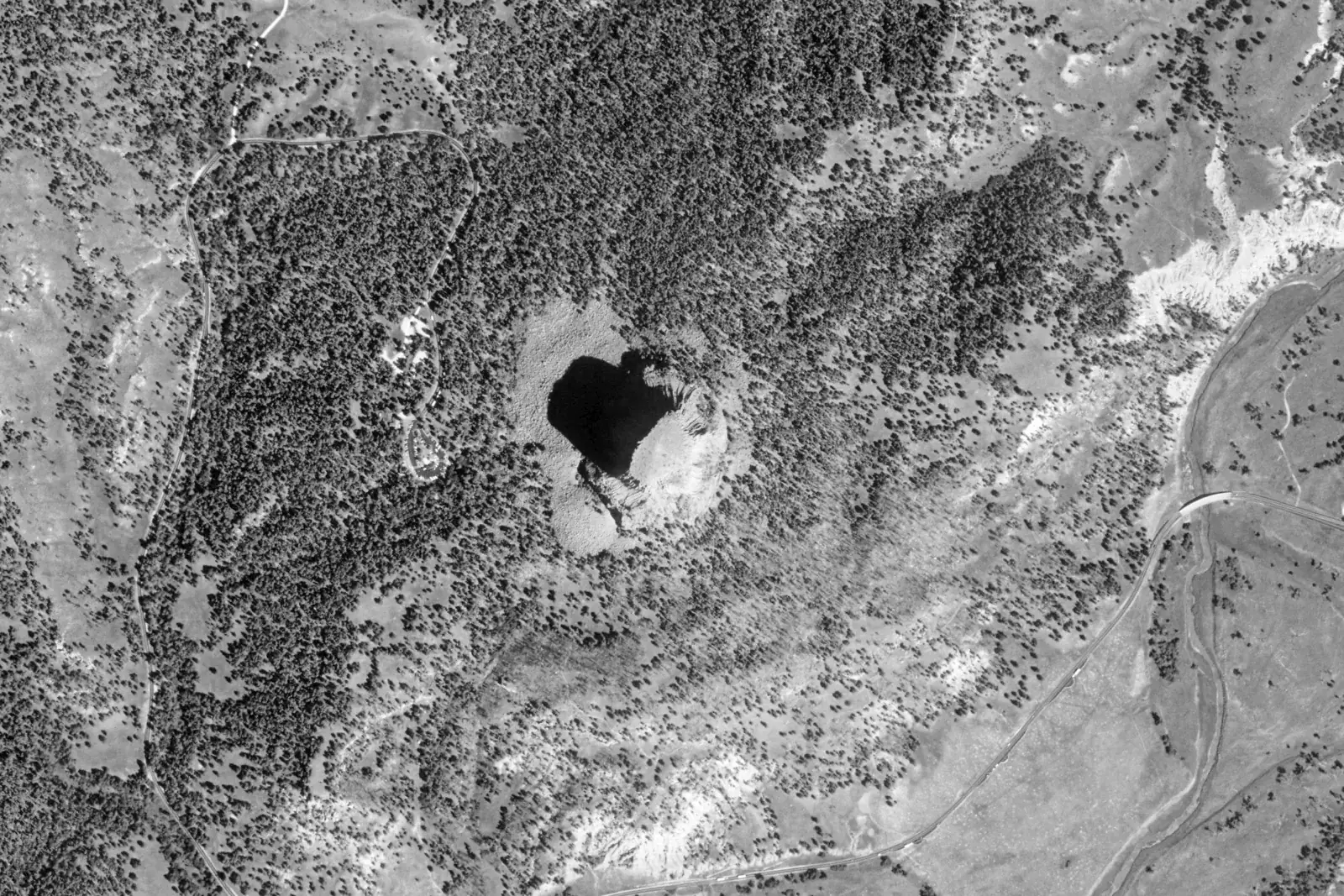
Devils Tower stands in northeastern Wyoming. It rises 867 feet (264 m) from its base to its summit, and 1,267 feet (386 m) above the Belle Fourche River that runs nearby. With its flat top and broad, flaring base, it is unmistakable from miles away. In 1906 President Theodore Roosevelt proclaimed it the first national monument in the United States.
A bundle of stone columns
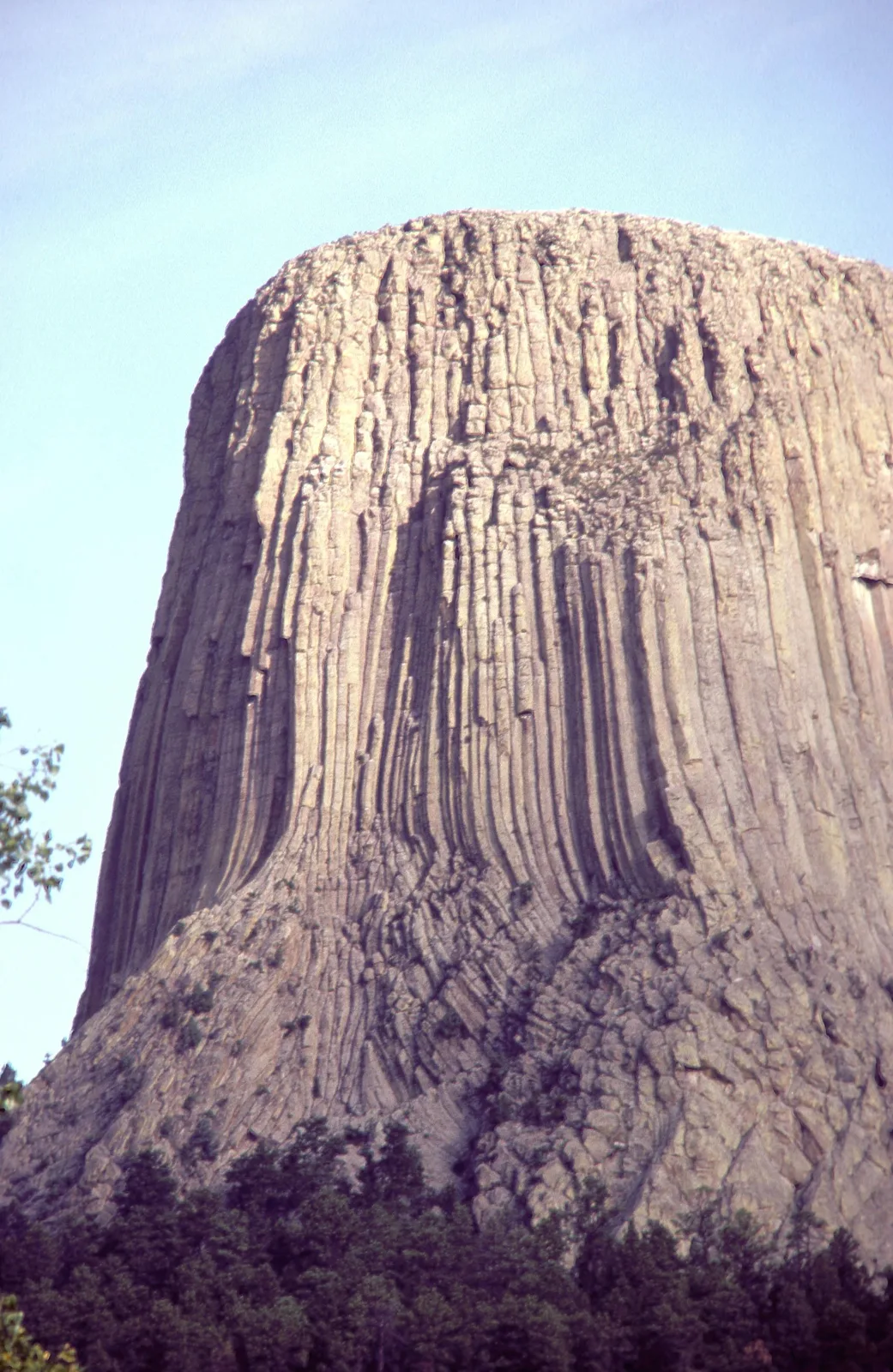
Get closer and the lines start to make sense. The tower is made of long, narrow columns of rock packed tightly together like a bundle of pencils, and the cracks between them run unbroken all the way to the top.
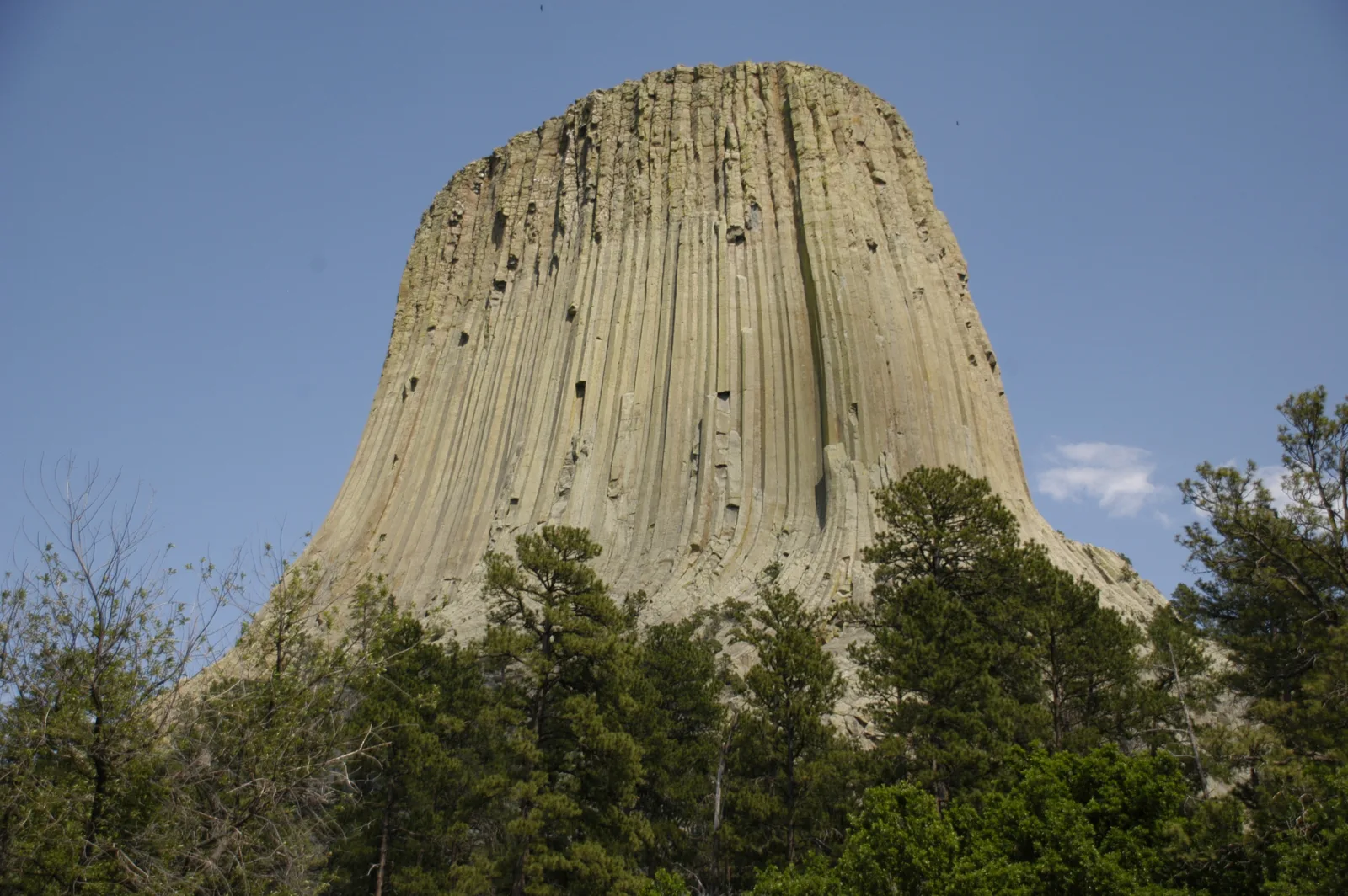

A paved trail circles the base of the tower, a loop of about 1.3 miles (2 km).

The seven girls and the bears
The tower is sacred to dozens of tribes in the region, among them the Arapaho, Cheyenne, Crow, Kiowa, Lakota and Shoshone, and many have their own stories about it. The National Park Service notes that "oral histories" or "sacred narratives" are better words for these stories than "myths" or "legends."
The video follows one of them, a Kiowa story told in 1897 by a Kiowa soldier at Fort Sill, Oklahoma, and published by the Park Service. It goes like this.
While the Kiowa were camped along a stream to the north, seven girls were chased by bears. The girls climbed onto a low rock, only about three feet high, and prayed to it to save them. The rock began to rise, pushing them toward the sky. The bears clawed at its sides, trying to reach them, but their claws broke off and fell to the ground. The scratches they left are the grooves you see on the tower today. It is said that the bears' claws, turned to stone, can still be found around its base.
The girls were carried up into the sky, where they became seven stars: the Pleiades. In the middle of winter, the story says, the cluster shines directly above the rock at midnight. The Kiowa name for the tower, Tso-aa, means "tree rock."


Bear Lodge, not the Devil's
Bears turn up again and again in the tribal names for the tower. The Lakota call it Mato Tipila, "Bear Lodge," and the Crow name means "Bear's House."
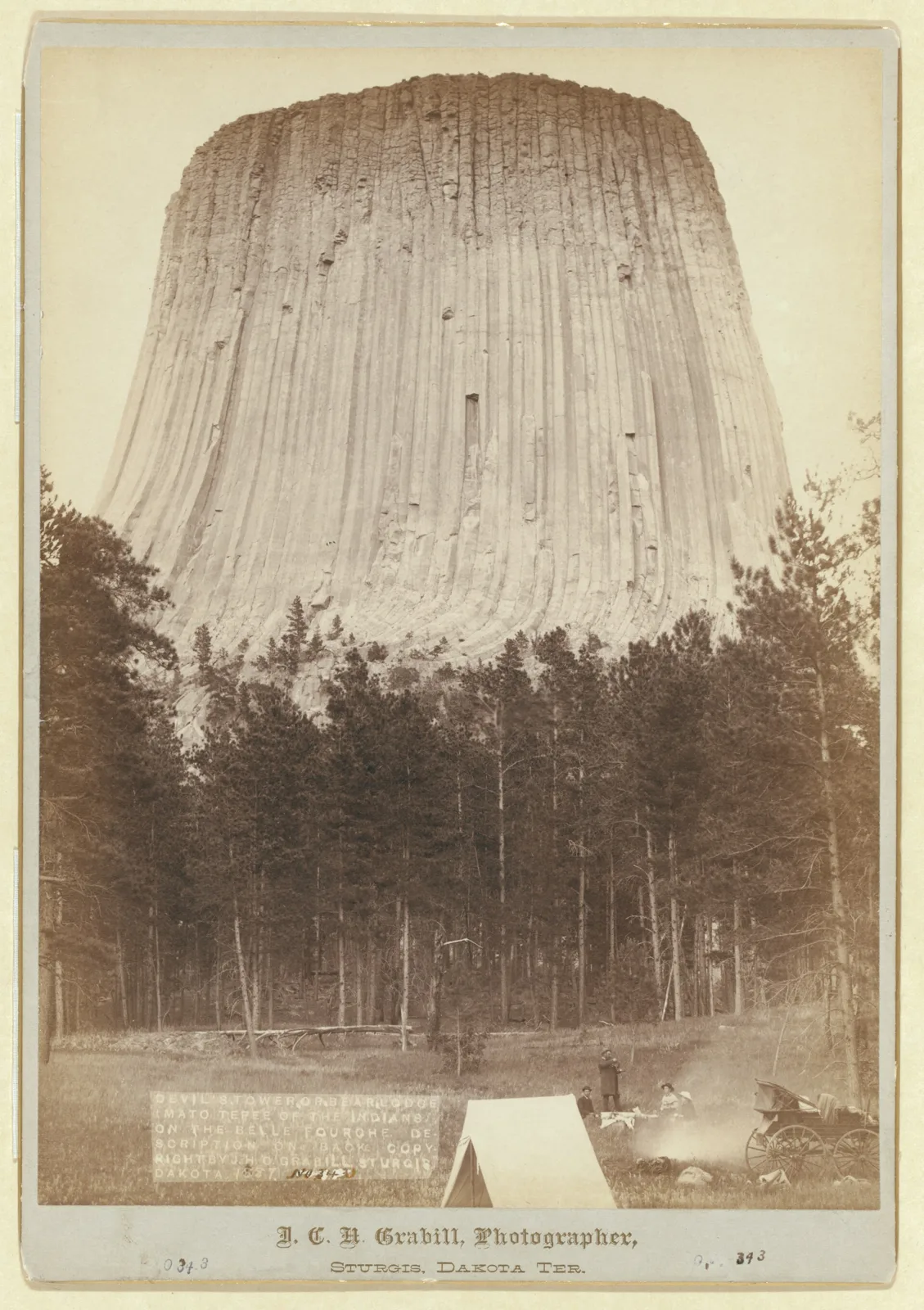
So where did "Devils Tower" come from? In 1875, Colonel Dodge, travelling with a scientific expedition, wrote that the local people called it "Bad God's Tower," and he recorded it as Devil's Tower. Many Native people still prefer the name Bear Lodge.
What the geologists see
Geologists explain the grooves with magma. Around 50 million years ago, molten rock cooled and contracted one to two miles underground, cracking into columns as it shrank. Many are six-sided, plenty are five-sided, and the widest are about 10 feet across. Exactly how that magma cooled is still debated among geologists.
Starting some 5 to 10 million years ago, erosion stripped away the softer sedimentary rock around it, leaving the hard igneous core standing in the open. The jumble of boulders around the base is made of columns that have broken off and fallen; some are as big as a bus, and the boulder field covers about 13 acres.

A request for June
Every June, the National Park Service asks climbers to voluntarily refrain from climbing the tower. June is a culturally significant month, when many (though not all) American Indian ceremonies take place, and the request aims to build understanding of, and respect for, the tribal cultures connected to the tower. It has been part of the climbing management plan since 1995.
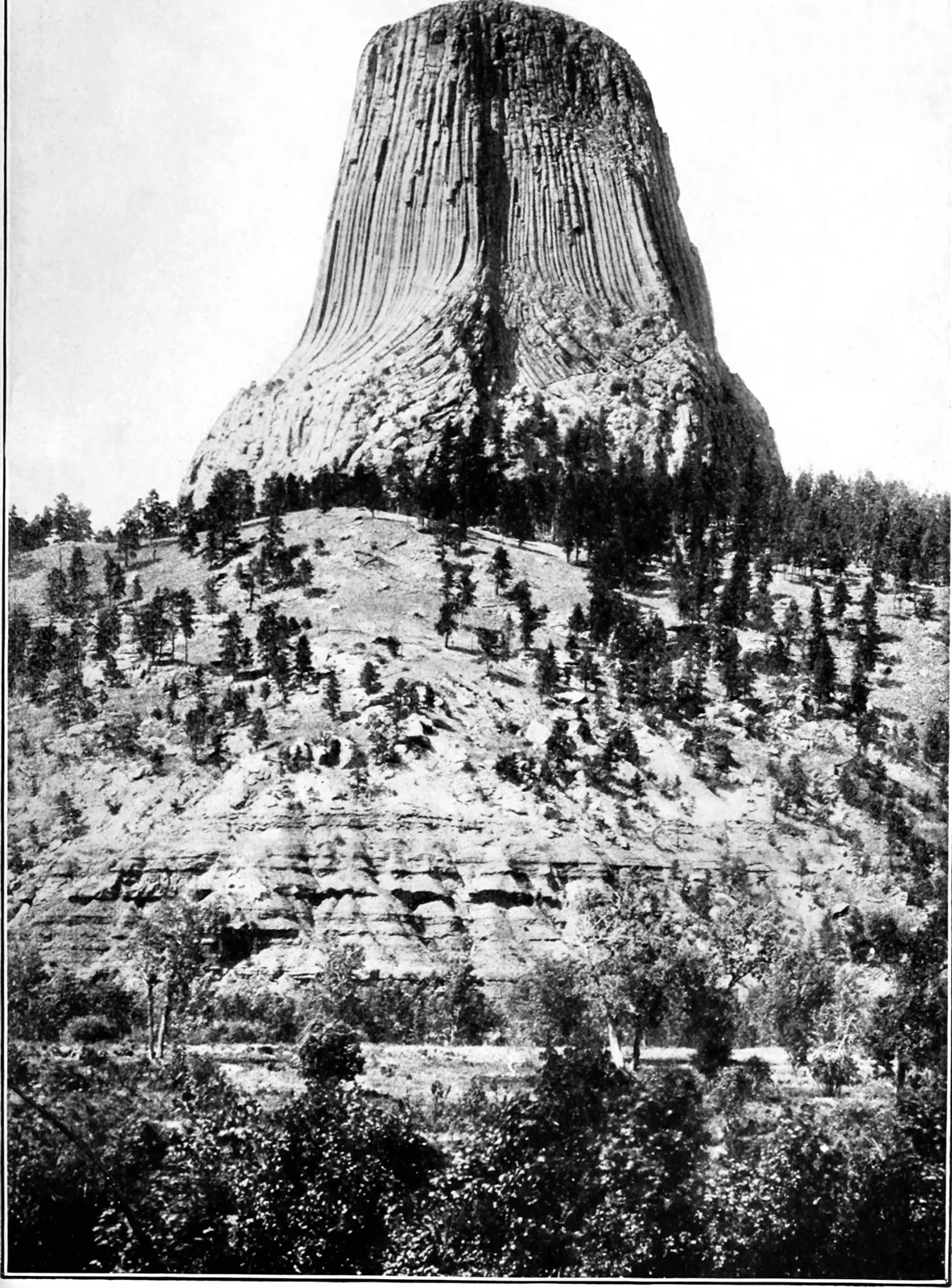

Geology reads the grooves as the gaps between columns; the Kiowa story reads them as the marks of bears' claws. Both are answers from people who have looked long and hard at this rock.
Find Devils Tower on Wooriyeojido
Bear Lodge to some, Devils Tower to others, it is pinned on the Wooriyeojido map. Look it up in the app, and when you visit, add your own photos and stories right beside it.
View this place in the Wooriyeojido appVideos of nearby places
 Where does the giant's stone road lead? Giant's Causeway, Northern Ireland
 Why did the giant lying on the lake turn to stone? The Sleeping Giant of Thunder Bay
 Stones carried across the sea by a wizard? Stonehenge
Sources
- U.S. National Park Service — Devils Tower: First Stories
- U.S. National Park Service — Devils Tower: Frequently Asked Questions
- U.S. National Park Service — Devils Tower: Tower Formation
- U.S. National Park Service — Devils Tower: Geologic Formations
- U.S. National Park Service — Devils Tower: Climbing
- U.S. National Park Service — Devils Tower or Bear Lodge?