CN Tower: How a Helicopter Built the Top of Toronto's Landmark, One Piece at a Time
Toronto's 553-metre tower was built to beam TV and radio signals over a rising skyline, and in 1975 a helicopter named Olga flew its antenna up in 39 pieces. Here is the story, with a short video and photos.
The antenna on top of one of the world's most famous towers arrived by air, flown up piece by piece by a helicopter. That is exactly how the CN Tower in Toronto was finished in 1975. Watch the short video first, then read on.

 Watch the one-minute video on YouTube
A 553-metre spike in downtown Toronto
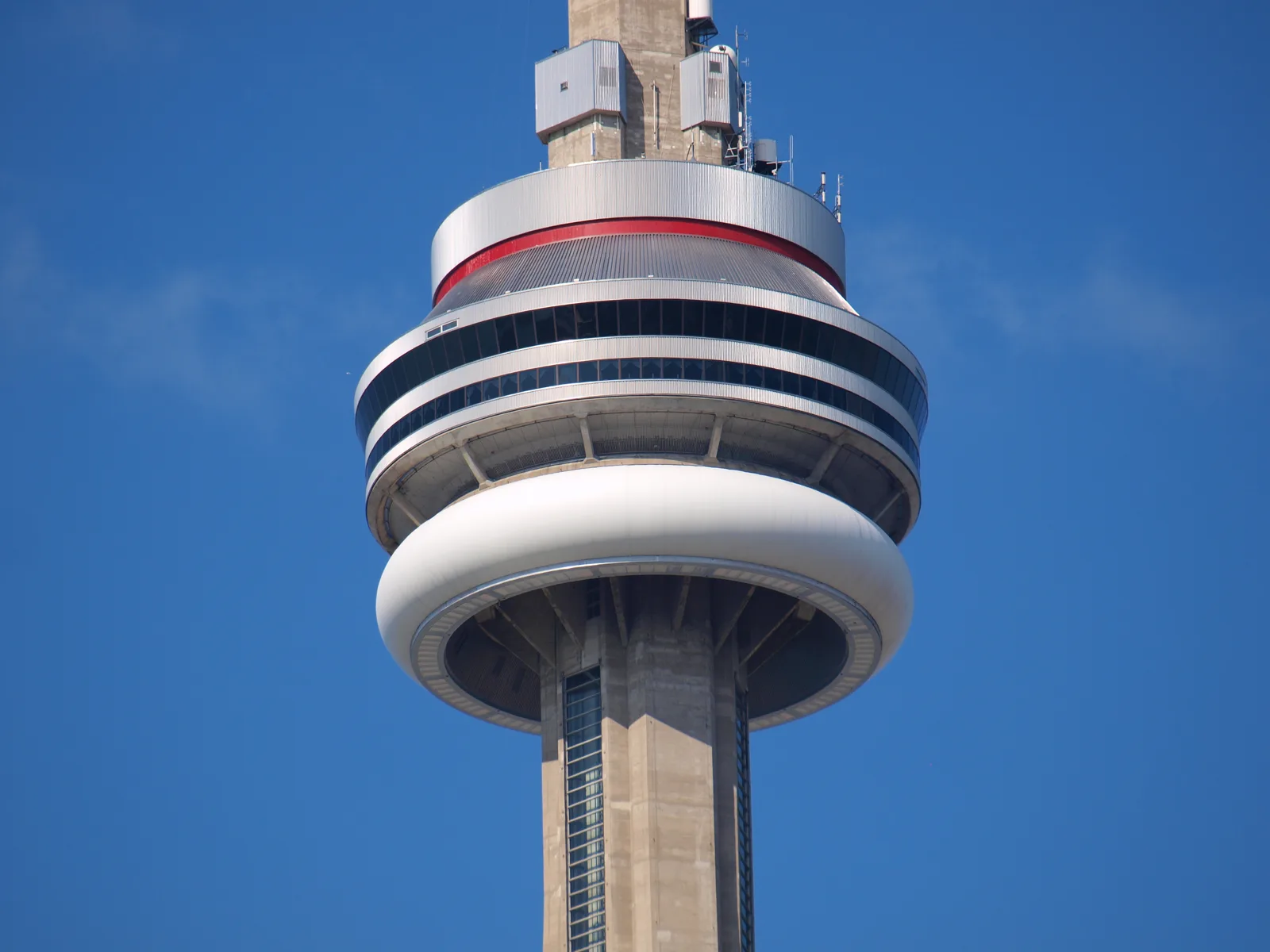
The CN Tower rises from the heart of downtown Toronto, Ontario. At its base are a broad plaza and a low entrance building; crane your neck and you will find the main observation level hanging 346 metres up. Measured to the tip of the antenna, the tower stands 553.33 metres tall.
Built for broadcasting, not for the view
Today it is a magnet for visitors, but sightseeing was never the main point. As Toronto's skyscrapers went up, they began to block television and radio signals, and the existing transmission towers were simply too short to clear them. Canadian National Railways decided to build something taller than every building in the city and broadcast from the top. The observation decks were a secondary purpose.
A shaft poured on the move
Crews broke ground on 6 February 1973. They poured concrete into a massive mould called a slipform and jacked it slowly upward as they went, angling it inward so the walls tapered as they climbed. The result was a 335-metre concrete shaft that narrows toward the sky.
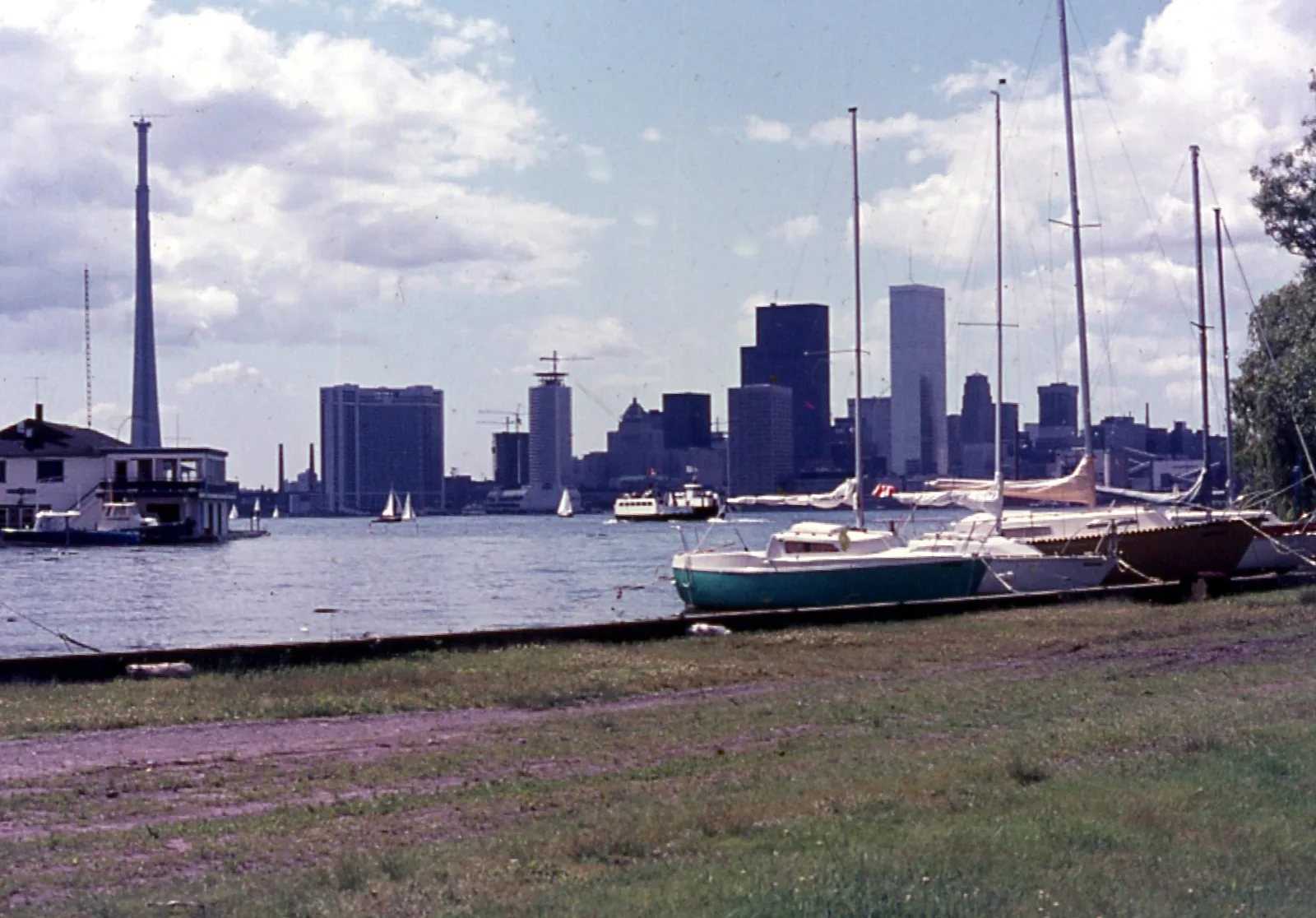
In August 1974 a seven-storey sphere was completed on top of the shaft. It would eventually house the observation decks and the revolving 360 Restaurant. All told, more than 1,500 workers spent 40 months building the tower.
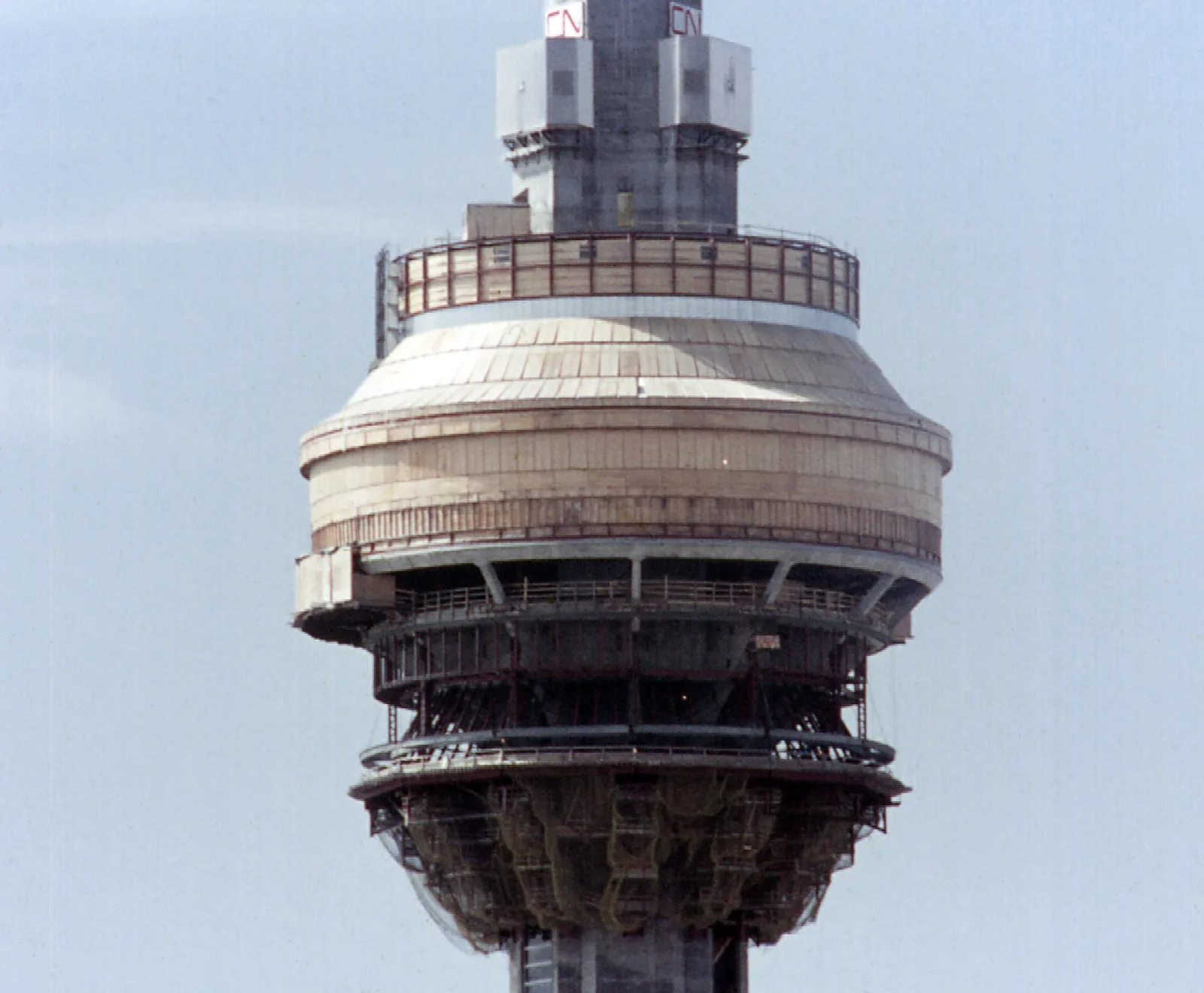
Olga and the 39 pieces
That left the antenna. In March 1975 a giant Sikorsky helicopter nicknamed Olga flew into the city. One by one, Olga lifted the 39 pieces of the antenna to the summit and set each one in place.
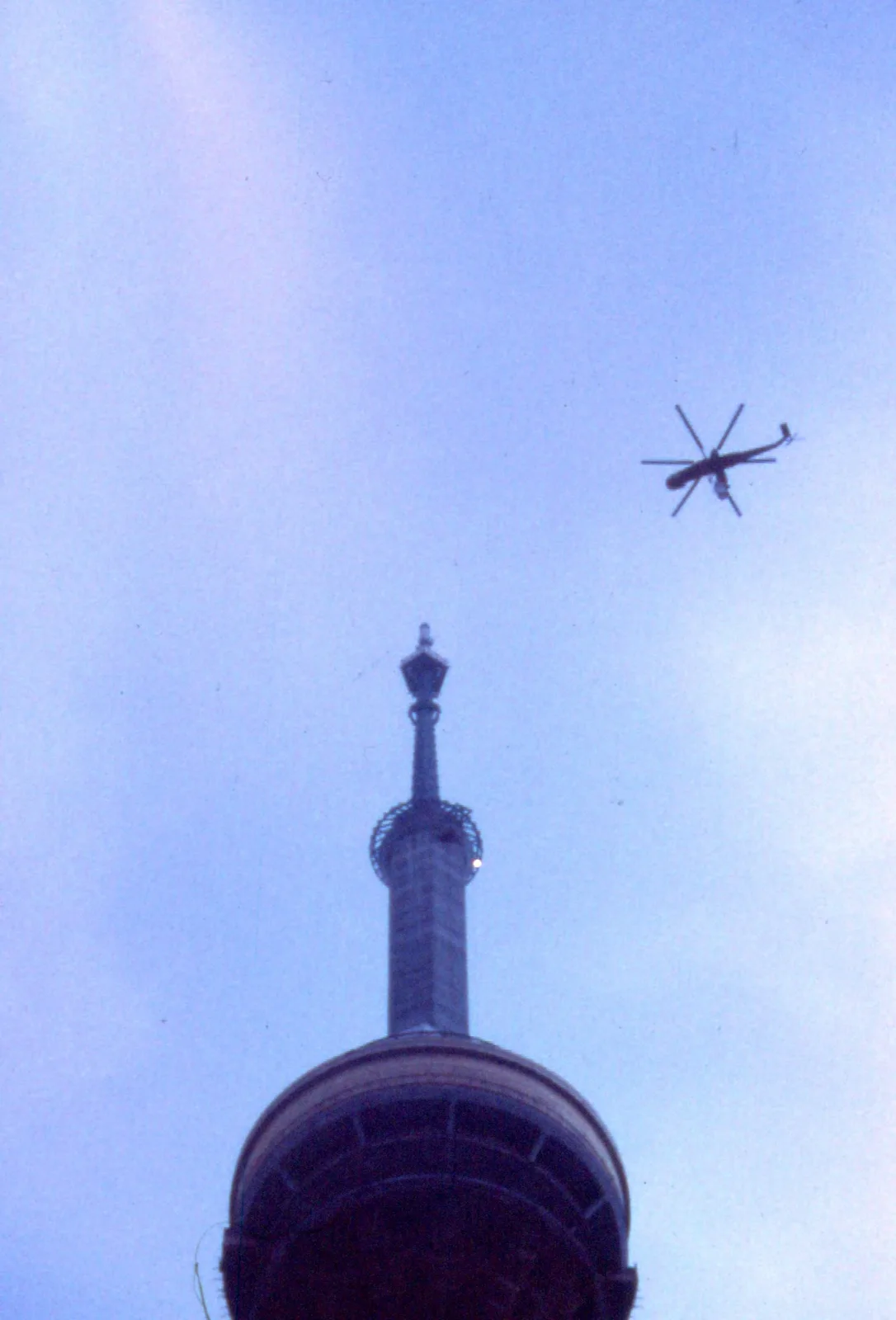
The final piece went in on 2 April 1975, and with it the CN Tower became the tallest free-standing structure on Earth. It opened to the public on 26 June 1976. From 1976 until 2010 it held the title of the world's tallest tower, and in 1995 the American Society of Civil Engineers named it one of the Seven Wonders of the Modern World.
346 metres in 58 seconds
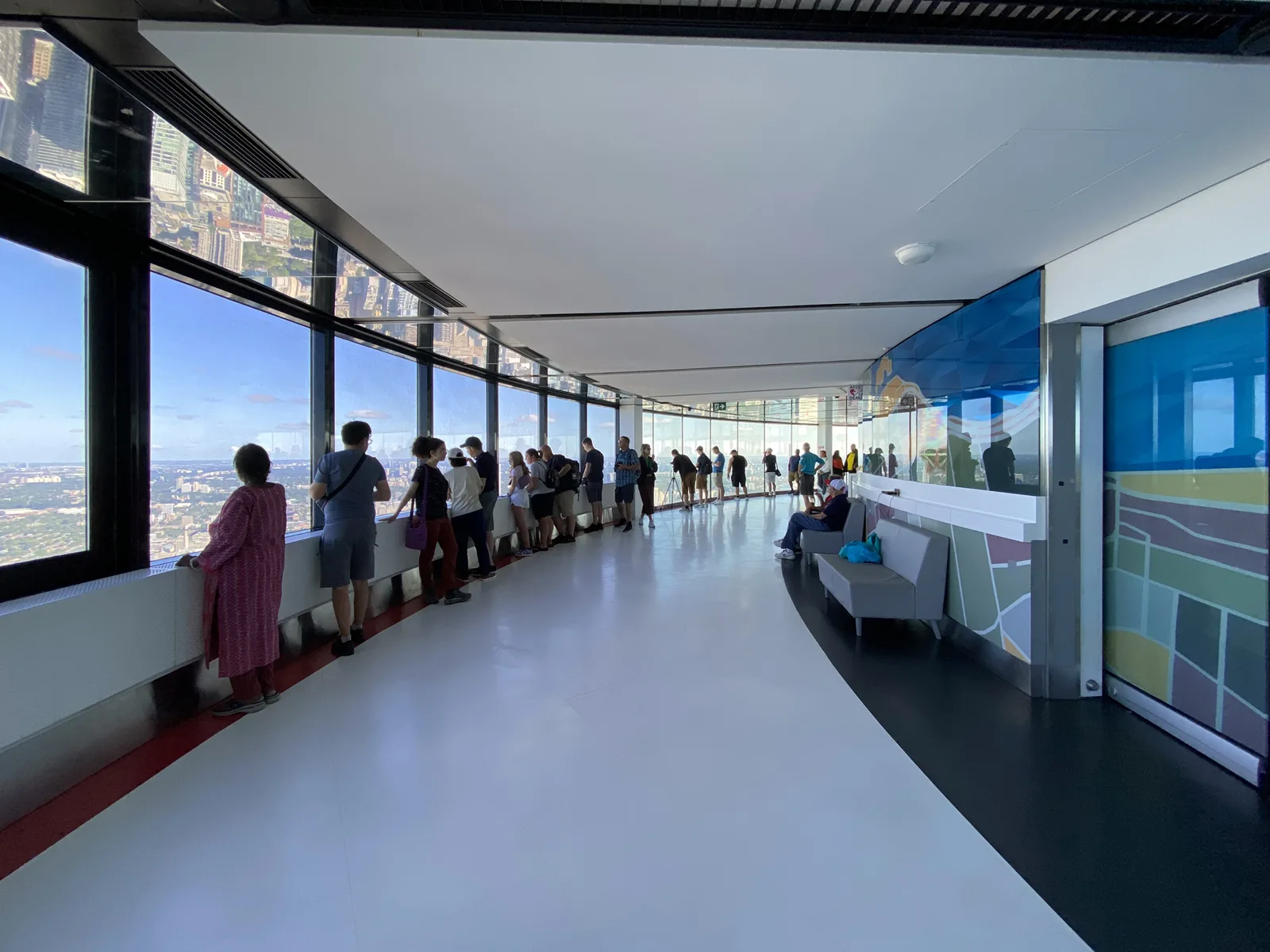
Elevators whisk visitors to the main observation level in 58 seconds, hitting a top speed of 22 km/h. One level down, at 342 metres, part of the floor is made of glass, so you can stand over the city and look straight down at the streets far below.
Lightning strikes, again and again
On average the CN Tower is hit by lightning about 75 times a year, and it shrugs every bolt off. A series of copper strips runs the entire length of the tower, carrying the current down and dispersing it safely into the ground.
The tower still does the job it was built for, too. More than 17 television and FM radio stations broadcast from it, making it the centre of Toronto's telecommunications.
Find the CN Tower on Wooriyeojido
A tower raised to send signals over the skyline has become the best seat in the city for looking down on it. The CN Tower is pinned on the Wooriyeojido map. Look it up in the app, and when you visit, add your own photos and stories right beside it.
View this place in the Wooriyeojido app