Tangeumdae: Why Did General Shin Rip Fight with a River at His Back?
At Tangeumdae in Chungju, where the Dal Stream meets the Namhan River, a Korean general made his stand in 1592 with nowhere to retreat. Why here? The surviving records and the historians' readings, told in a video and photos.
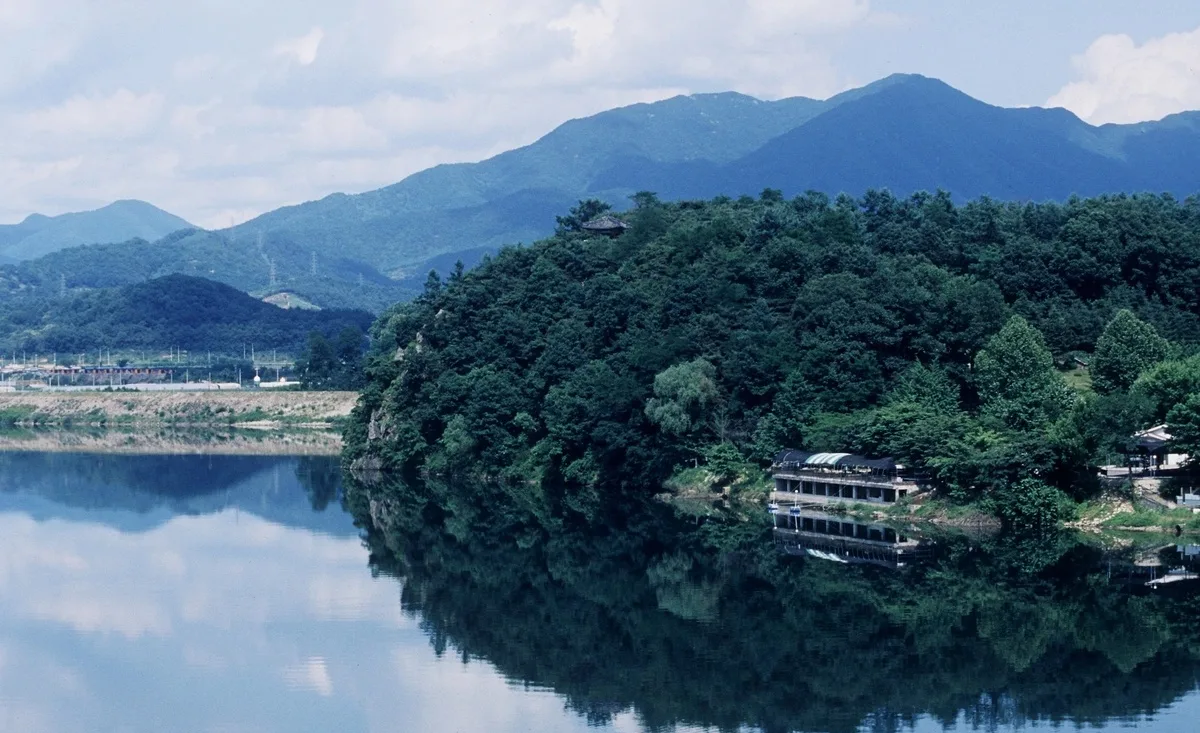
Outside the city of Chungju, in the middle of South Korea, a wooded hill rises above a sharp bend in the Namhan River. In the spring of 1592, a general deployed his army here with the river directly behind them, cutting off his own line of retreat. Why would anyone choose ground like that? Start with the short video.
 Watch the one-minute video on YouTube
A hill named for music
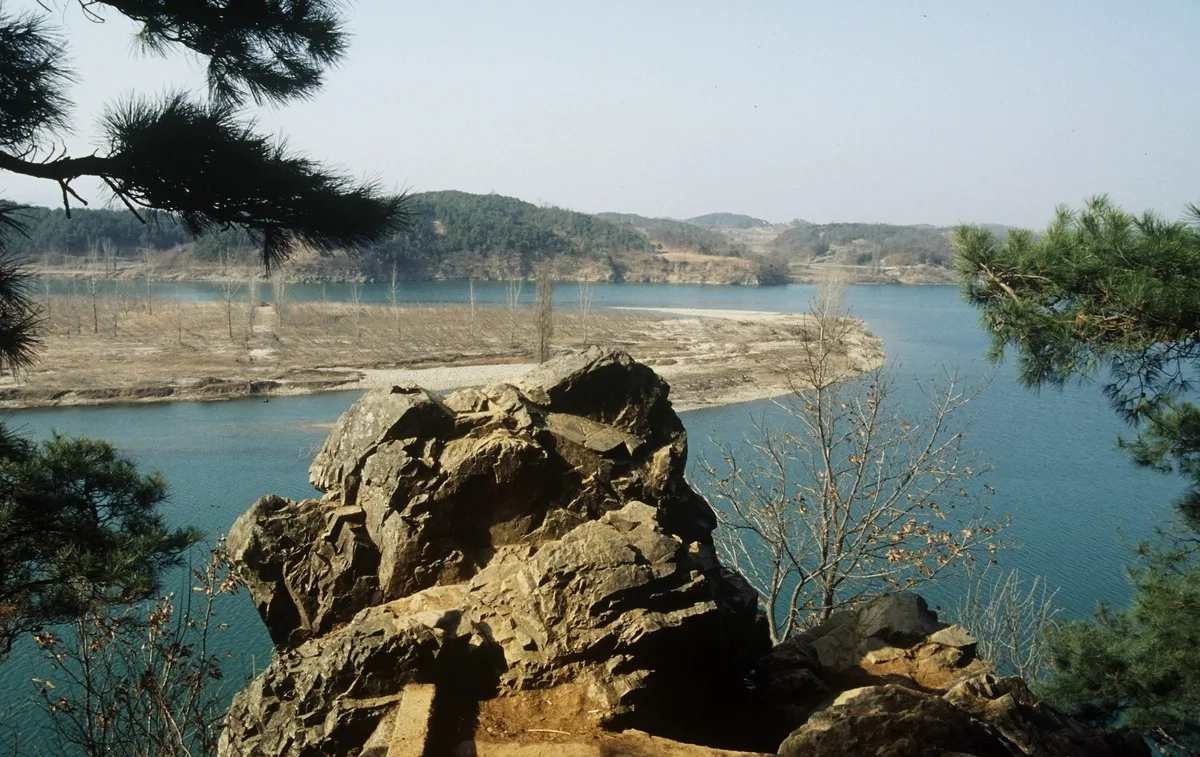
Tangeumdae is the summit area of Daemunsan, a modest hill 108 meters above sea level in Chilgeum-dong, Chungju. It stands exactly where the Dal Stream flows into the Namhan River. Dense pines and the river wrapping around its cliffs earned it a place among Korea's national Scenic Sites in 2008.
The name means "terrace where the zither was played." Tradition holds that Ureuk, one of the great musicians of ancient Korea, played his gayageum here. A memorial to him still stands in the park, along with a pavilion called Tangeumjeong and a war memorial tower.
Hold the pass, or fight in the open?
In April 1592, a Japanese army landed at Busan and drove north toward Seoul at startling speed. It was the opening of the Imjin War.
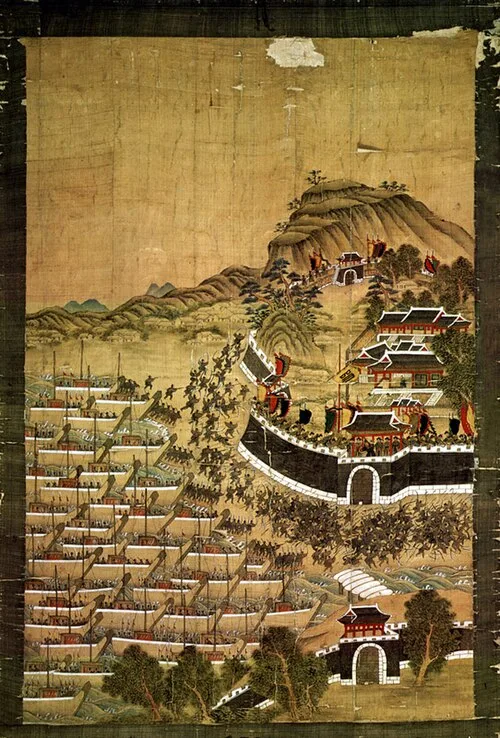
The Joseon court sent Shin Rip to stop them. As a frontier magistrate in the far north he had trained some 500 elite armored horsemen and won fame fighting along the border. Now he commanded around 8,000 men, hurriedly gathered from towns across Chungcheong Province.
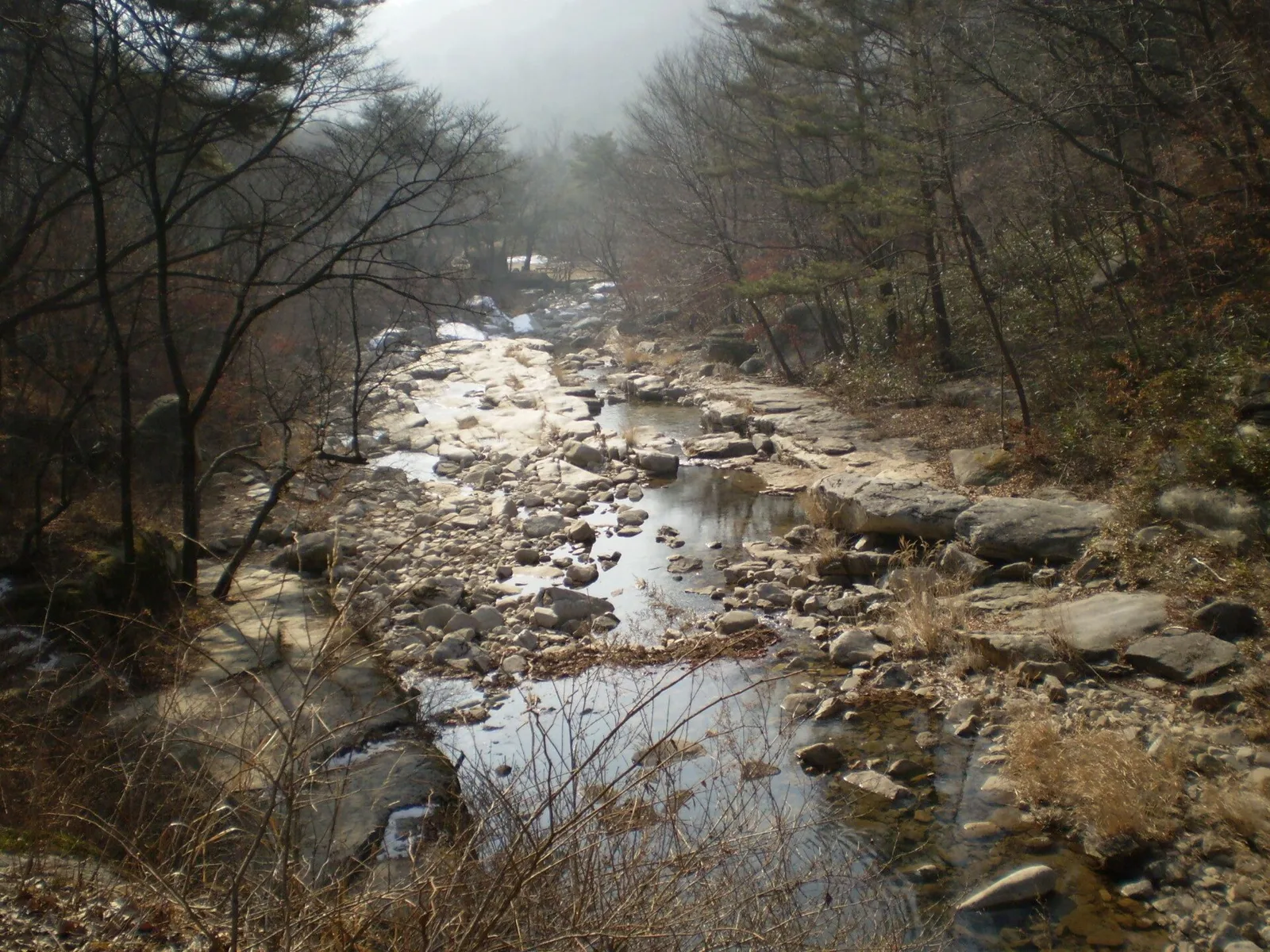
South of Chungju lay Joryeong, the mountain pass known today as Mungyeong Saejae, a narrow road threading between high peaks. Shin Rip's lieutenant, Kim Yeo-mul, wanted to make a stand there. According to the Revised Veritable Records of King Seonjo, he argued that the enemy was many and they were few, so they could not meet the Japanese spearhead head-on; better to hold the rugged pass, or seize high ground and strike back from above.
Shin Rip said no. He marched his troops back to Chungju and drew them up in front of Tangeumdae with the river at their backs. Koreans call this a baesujin, a formation backed against water. Once you take it, there is no stepping back.
Why Tangeumdae?
There is no single answer. But the explanations can be sorted by how solid the evidence is.
The firmest is Shin Rip's own reasoning, preserved in the Veritable Records: this country was no place for cavalry, he said, and the right move was to fight it out on open ground. For a general who had made his name with horsemen, a broad plain where they could charge made sense. Yet the same record notes, almost in passing, that the field in front of Tangeumdae was full of rice paddies, which made it hard to ride at all.
The other two explanations come from historians, not from the sources. An essay in the Digital Chungju Culture Encyclopedia suggests the Japanese were moving so fast that there may simply not have been time to get troops up to the pass. It also suggests that Shin Rip, knowing his raw, untrained levies could not hold, deliberately put the river behind them for a final fight to the death. Both are plausible readings, but readings all the same.
The end at the river
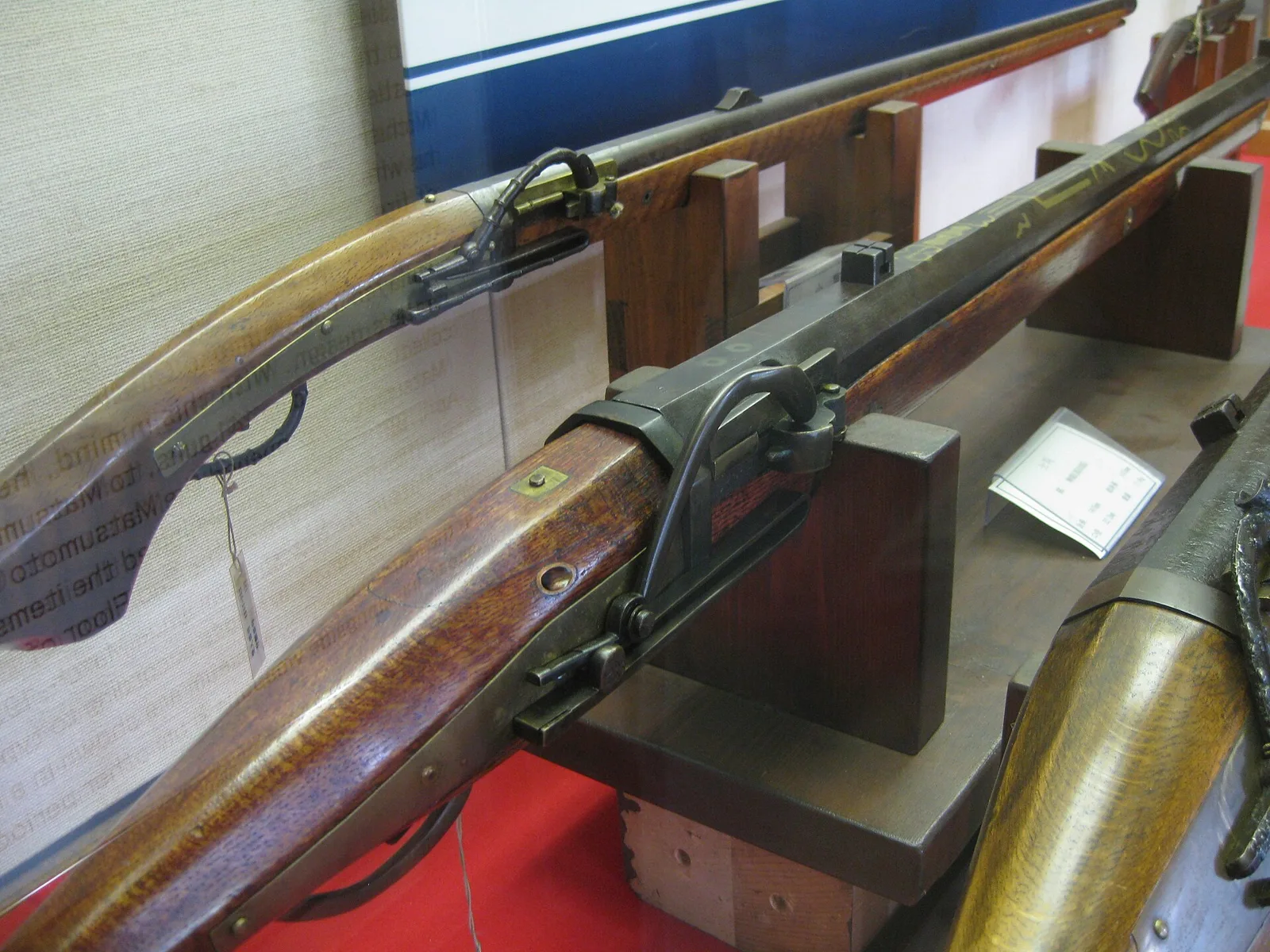
The Veritable Records describe the Japanese advancing in separate columns. The main body marched straight into Chungju fortress, one wing came down along the Dal Stream, and another swung east through the hills and crossed the river upstream. Their weapons glittered in the sun, and the thunder of their guns shook heaven and earth. The photo shows antique Japanese matchlocks, now on display at Kumamoto Castle.
The Joseon army collapsed. Shin Rip and Kim Yeo-mul rode through the fighting, shooting down dozens of the enemy, and then both threw themselves into the river. The news from Chungju sent the country into panic, and the king abandoned Seoul and fled north to Pyeongan Province.
Tangeumdae today
On the hill stands a memorial to Shin Rip, erected in 1981. The stone rests on a carved tortoise, and its face is inscribed as the monument to Chungjang-gong General Shin Rip, who died for his country. Chungjang was the honorary posthumous name the state gave him.
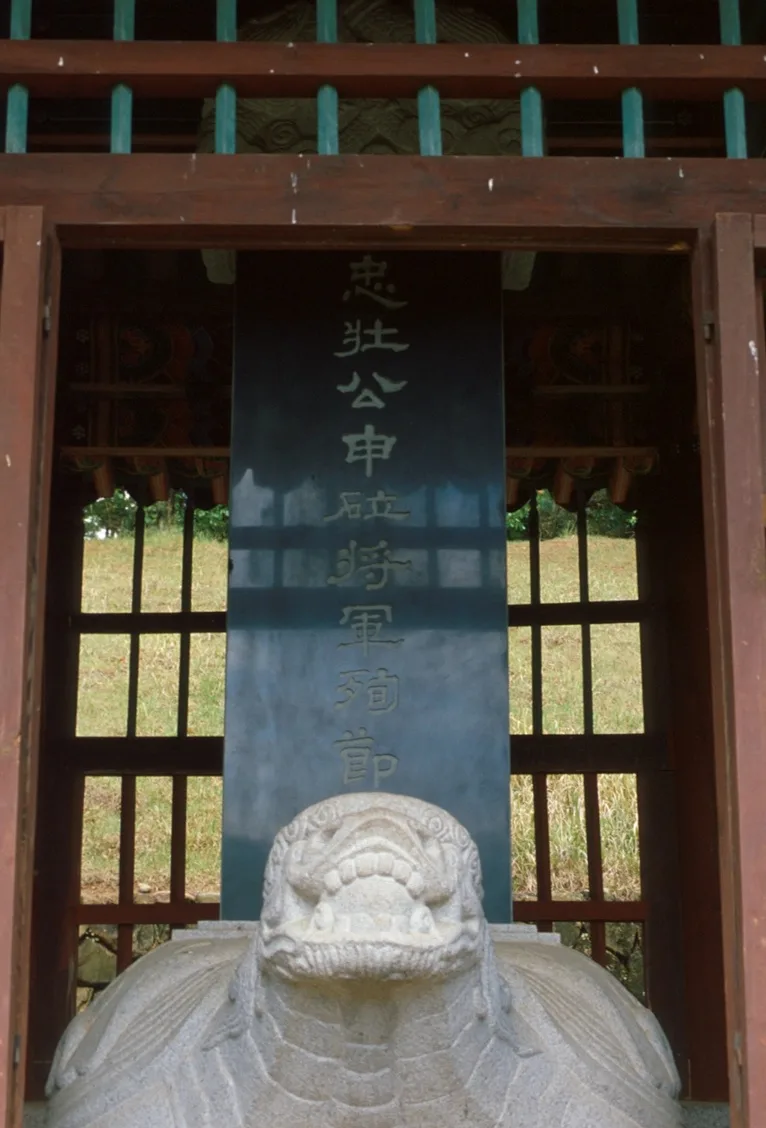
Chungju's tourism office describes it as the place where some 8,000 soldiers died with nowhere to retreat and nowhere to hide. Today it is a shady riverside park under the pines, but stand on the cliff above the bending river and it is hard not to think about the choice made here that spring.
Find Tangeumdae on Wooriyeojido
Tangeumdae, the hill where the Dal Stream meets the Namhan River in Chungju, is pinned on the Wooriyeojido map. Look it up in the app, and if you go, leave your photos and the story of your day right beside it.
View this place in the Wooriyeojido appVideos of nearby places



Sources
- Cultural Heritage Administration (Korea) open API — Scenic Site: Chungju Tangeumdae
- Veritable Records of King Seonjo (Revised), vol. 26, 14th day of the 4th month, Seonjo 25
- Encyclopedia of Korean Culture — Battle of Tangeumdae
- Encyclopedia of Korean Culture — Shin Rip
- Digital Chungju Culture Encyclopedia — Why did General Shin Rip form a river-backed formation at Tangeumdae?
- Digital Chungju Culture Encyclopedia — Chungju Tangeumdae
- Digital Chungju Culture Encyclopedia — Monument to General Shin Rip
- Chungju City Tourism — Tangeumdae