HMS Victory: Nelson's Flagship Is Still a Royal Navy Warship
In a dry dock at Portsmouth Historic Dockyard sits HMS Victory, the ship Nelson commanded at Trafalgar in 1805. Why she is still a commissioned warship more than 220 years later, and the Big Repair that will run until 2032, in a short video and photos.
In the old naval dockyard at Portsmouth, on England's south coast, sits a ship that fought at the Battle of Trafalgar more than 220 years ago: HMS Victory, Admiral Nelson's flagship. You might take her for a museum piece. In fact she is still a commissioned warship of the Royal Navy. How does that work? Start with the short video.

 Watch the one-minute video on YouTube
Dry Dock No. 2
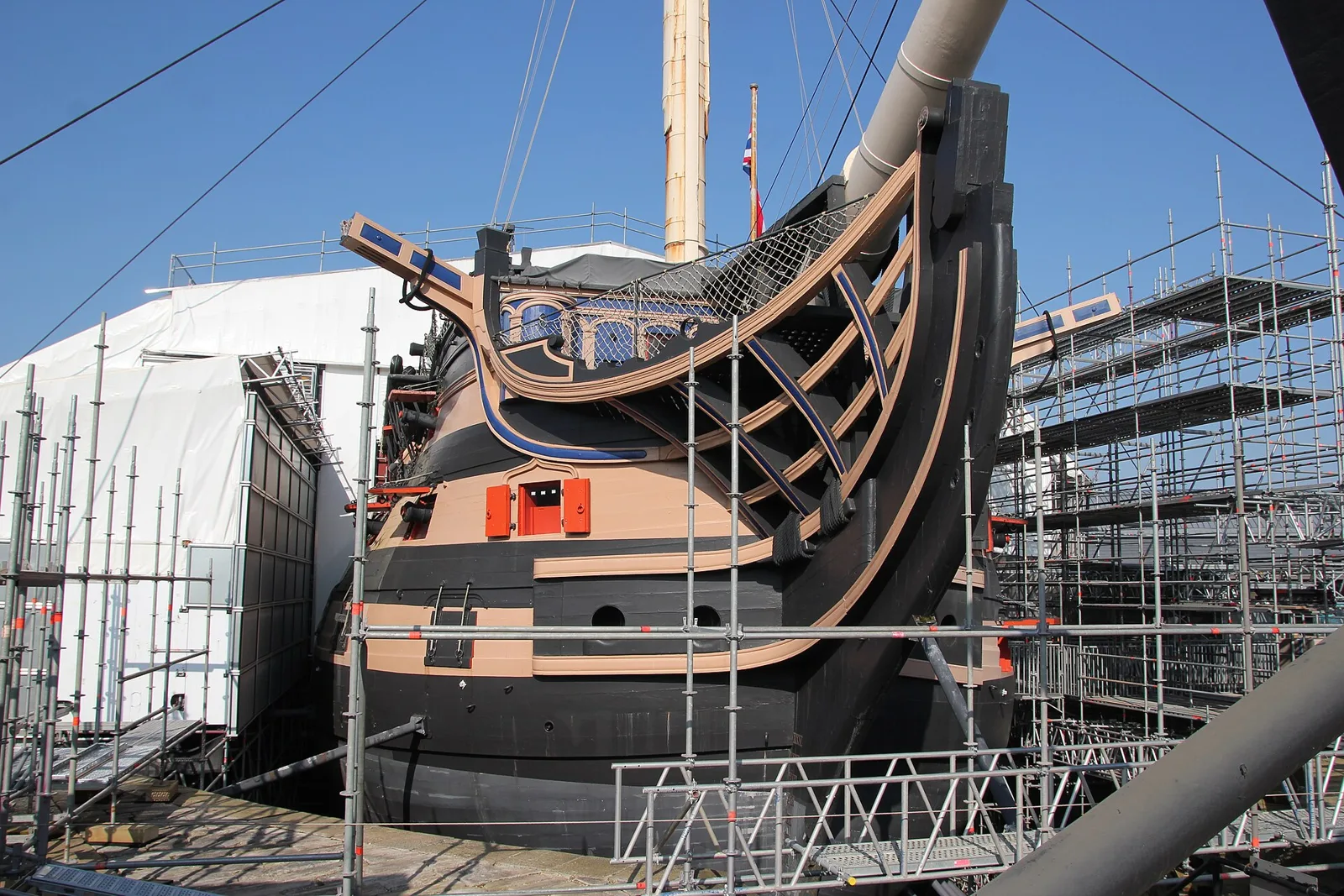
HMS Victory rests in Dry Dock No. 2 at Portsmouth Historic Dockyard. She was moved there on 12 January 1922 and has not left in the century since. Right now she is in the middle of a major restoration, with scaffolding and a white cover wrapped around her midsection, so she looks quite different from the postcards.
A fortress of 104 guns
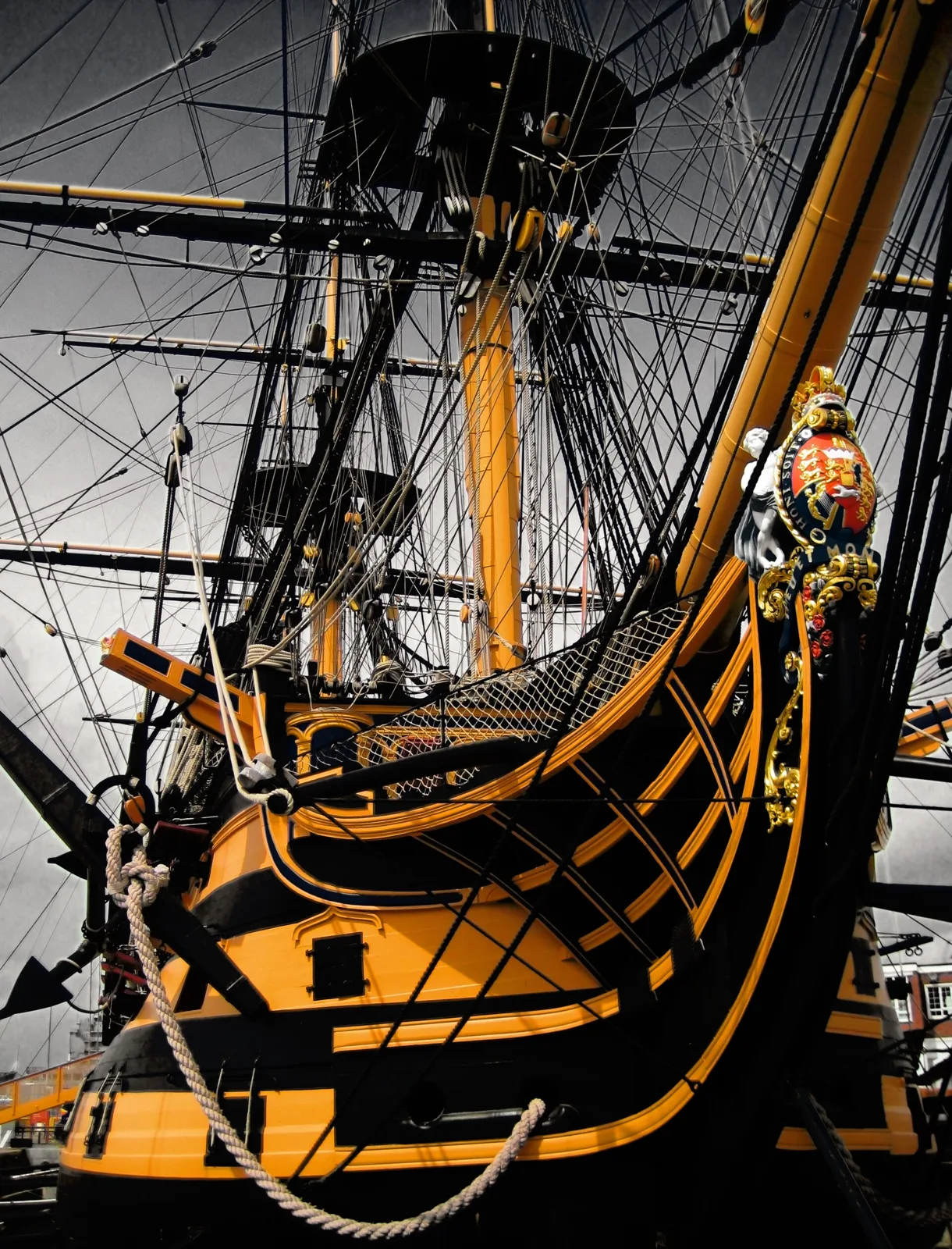
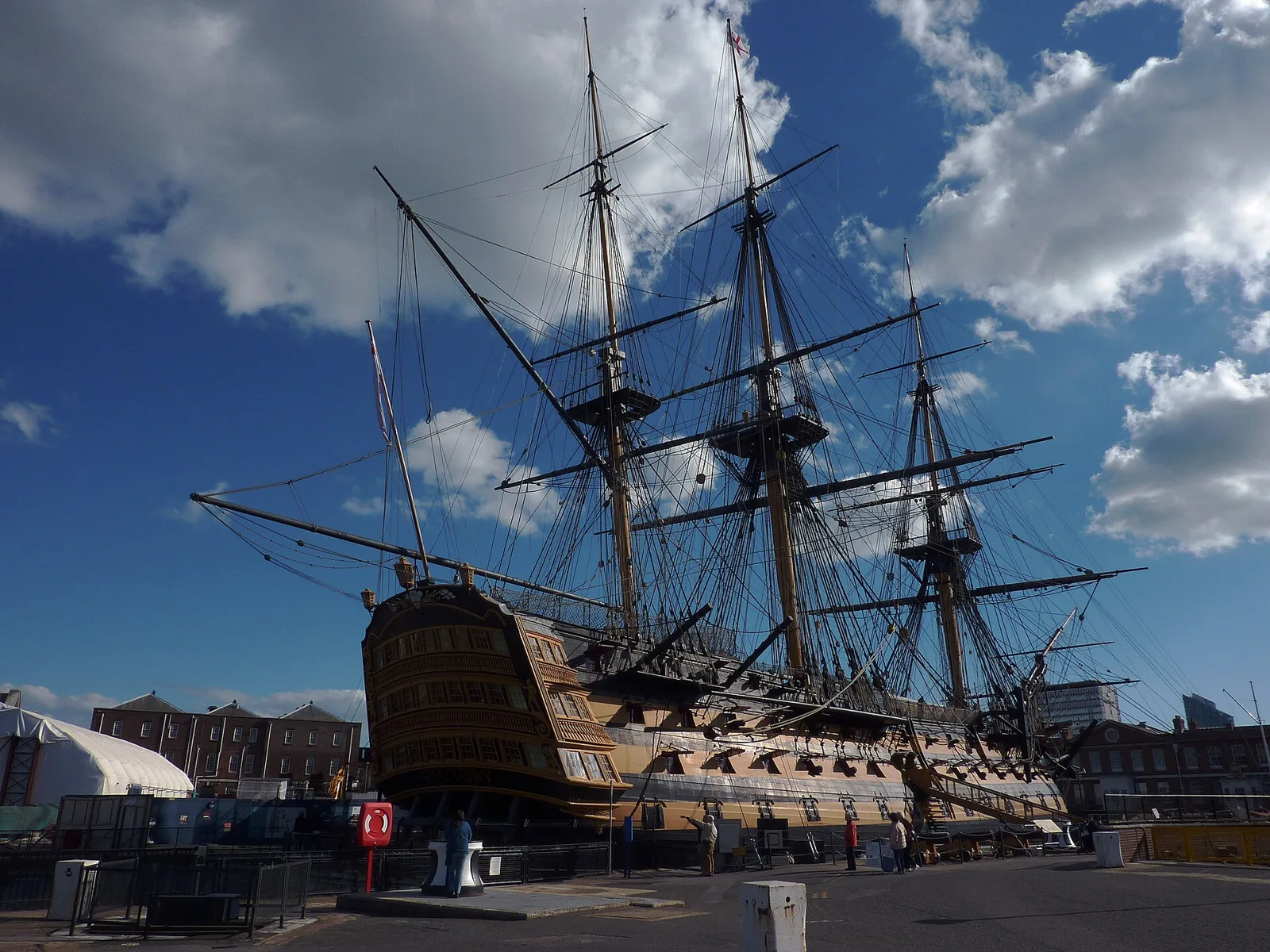
Victory was first floated out at Chatham in 1765. She is a first-rate ship of the line, which the National Museum of the Royal Navy describes as a fortress of 104 guns, standing 62 metres high. On the eve of Trafalgar, 820 men were aboard. This is how she looked with all her masts and rigging in place.

21 October 1805, off Cape Trafalgar
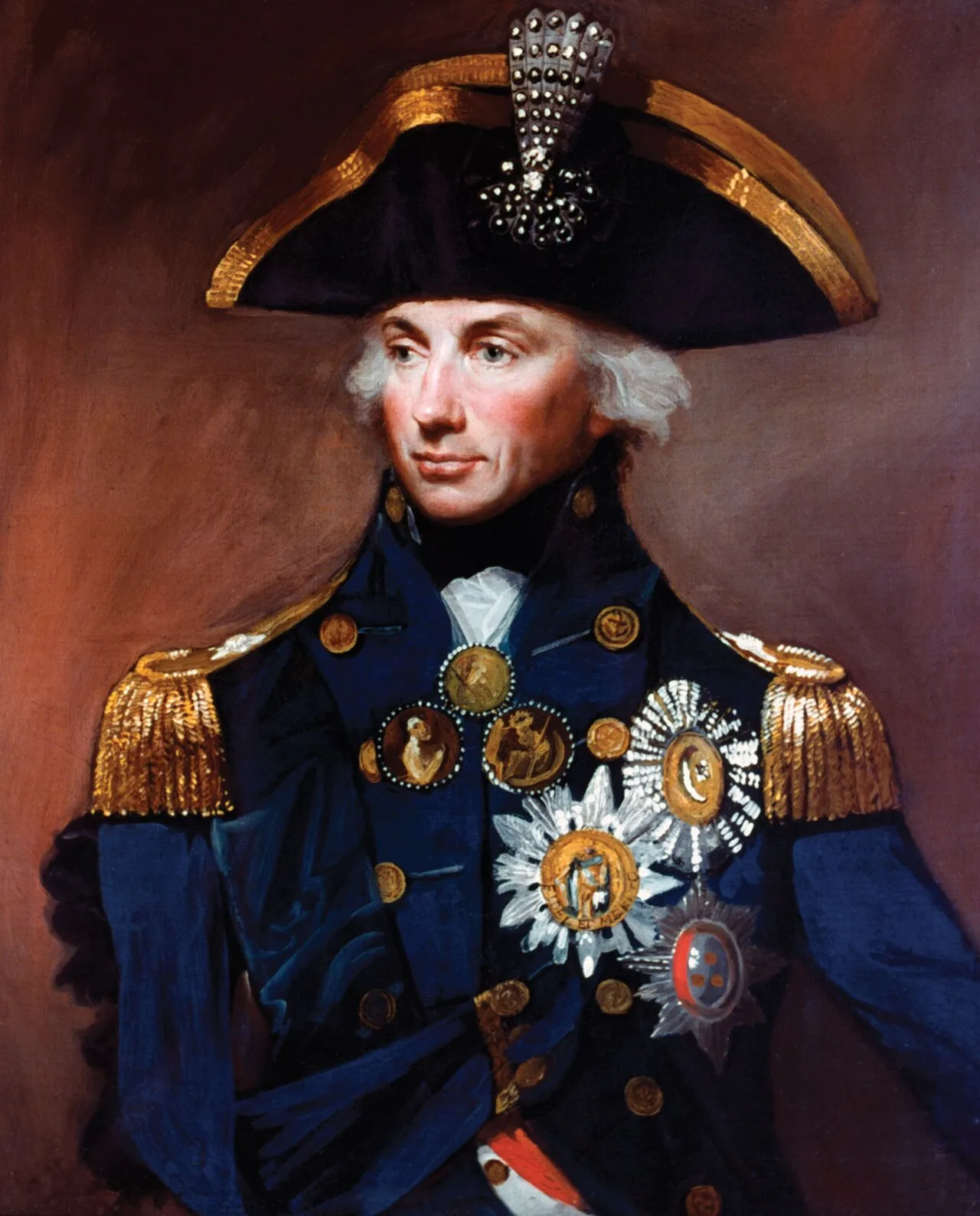
Britain was at war with Napoleon's France, and Vice-Admiral Horatio Nelson, commanding the British fleet, chose Victory as his flagship.

At 6 am on 21 October, off Cape Trafalgar in south-west Spain, the two fleets sighted each other. The British were outnumbered: the combined French and Spanish fleet had nearly 30,000 men and 2,632 guns, against Nelson's 18,000 men and 2,148 guns. The British came in from the west, gradually forming two lines.
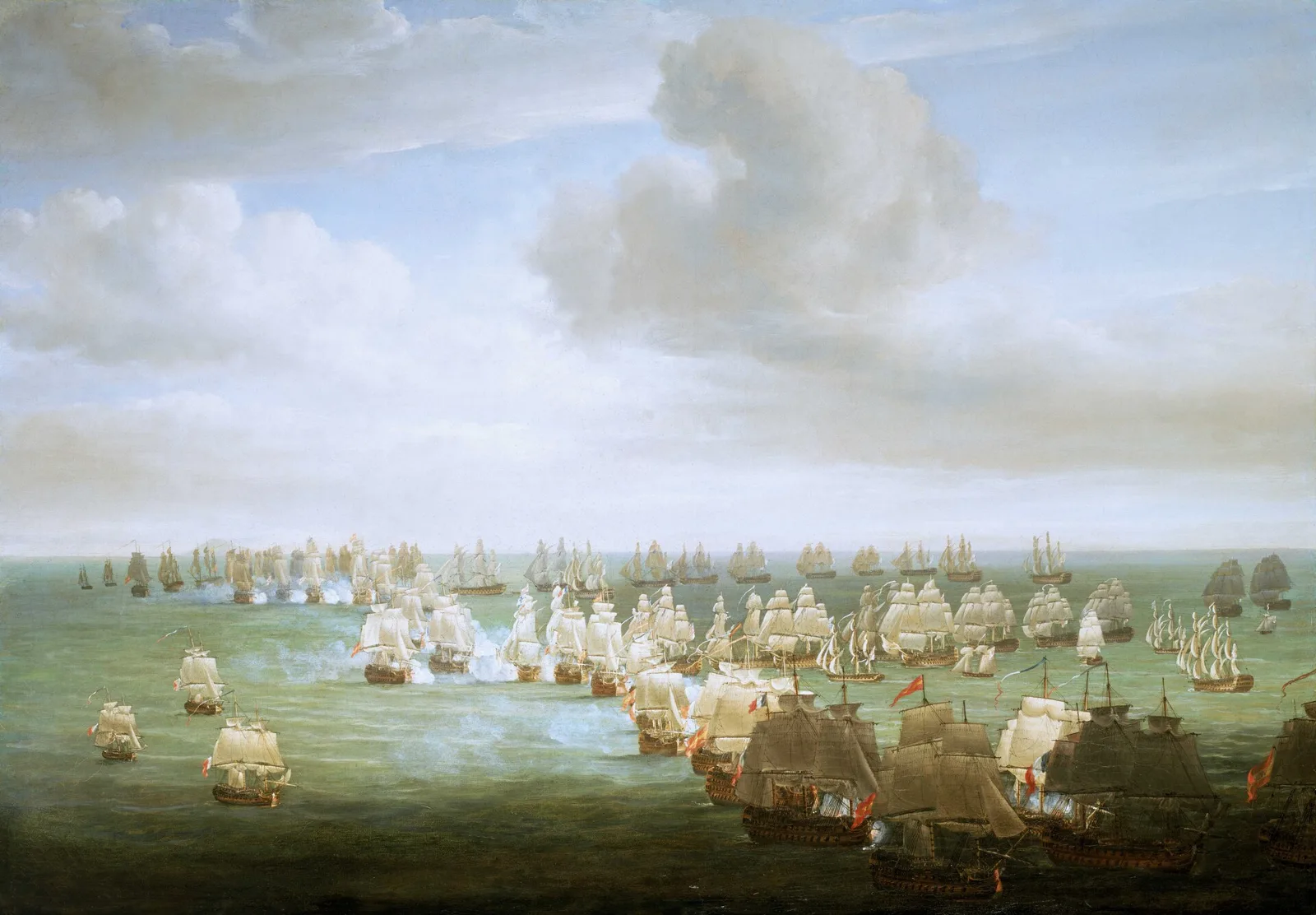
At 11:45 am, a signal went up from Victory: "England expects that every man will do his duty." The two British columns then drove straight into the enemy line and split the Franco-Spanish fleet in two, exactly as Nelson had planned.
At around 1:15 pm, as he paced Victory's quarterdeck, Nelson was hit by a musket ball fired by a French sharpshooter. He died at 4:30 pm. When the guns finally fell silent at about 5:30, Britain had won decisively and 17 enemy ships had been captured. The news reached London a fortnight later, in the early hours of 6 November, but celebrations were muted by grief at Nelson's death.
The oldest commissioned warship in the world
After a long and varied career, Victory entered her Portsmouth dry dock in 1922, and she has never stopped being a warship. The Royal Navy calls her the oldest commissioned warship in the world. She is the flagship of the First Sea Lord, head of the Naval Service, and she still has her own commanding officer. On Trafalgar Day 2025, that post was held by her 102nd.
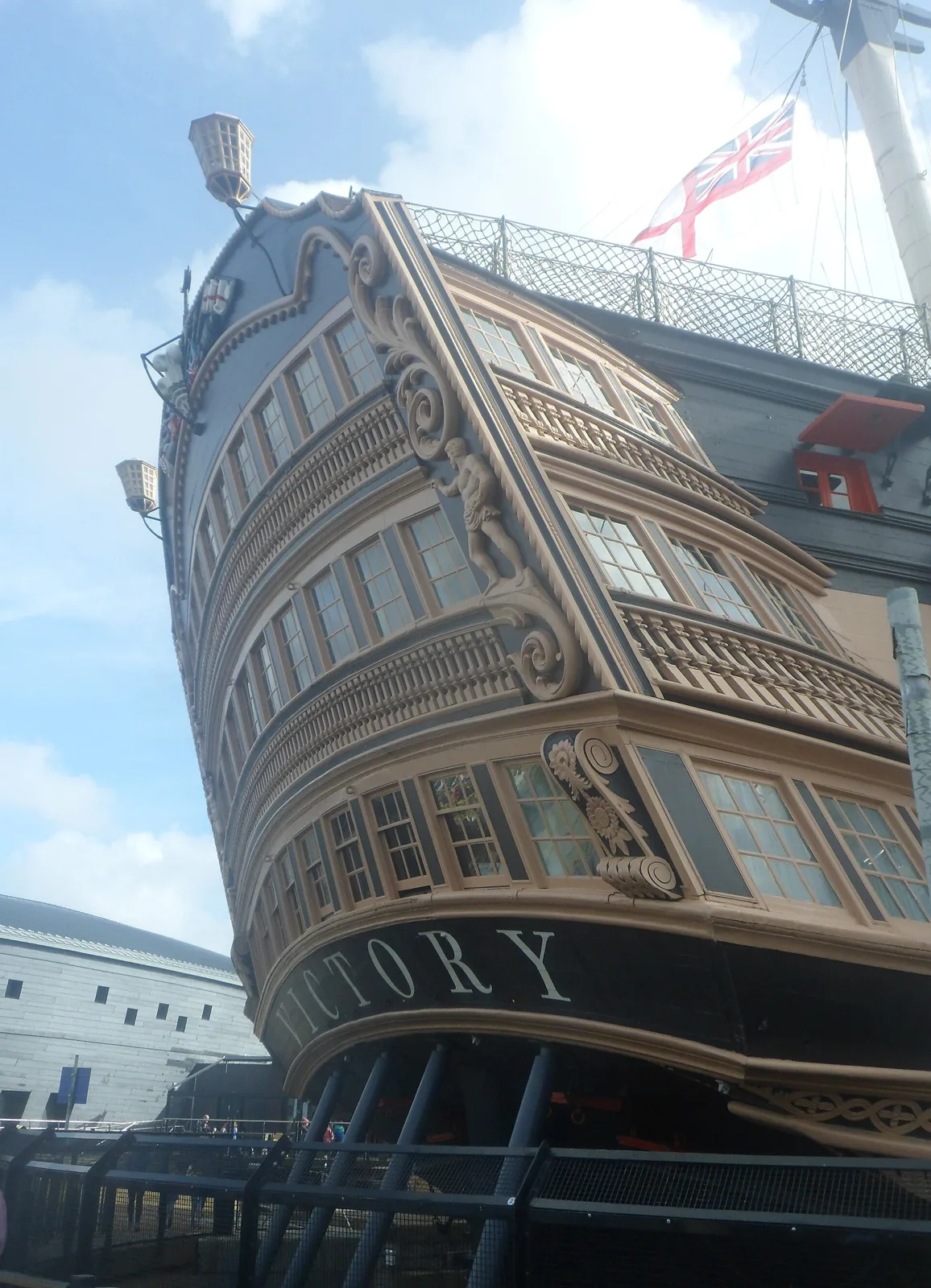

The Royal Navy calls Trafalgar Day the most important date in Victory's calendar. Every 21 October, the day begins on board with Colours, the daily ceremony of raising the White Ensign and the Union Jack. Shortly afterwards, the flags spelling out Nelson's famous signal are hoisted once again.
The Big Repair, until 2032
Since 2022, Victory has been going through the most extensive conservation project in her 260-year history. Her foremast, mizzen mast and bowsprit have been taken down, and a vast scaffolding structure over the middle of the ship shields her from the British weather. The work is due to finish in 2032, when she will be fully re-rigged. In the meantime she remains the First Sea Lord's flagship, and the White Ensign still flies from her ensign staff.
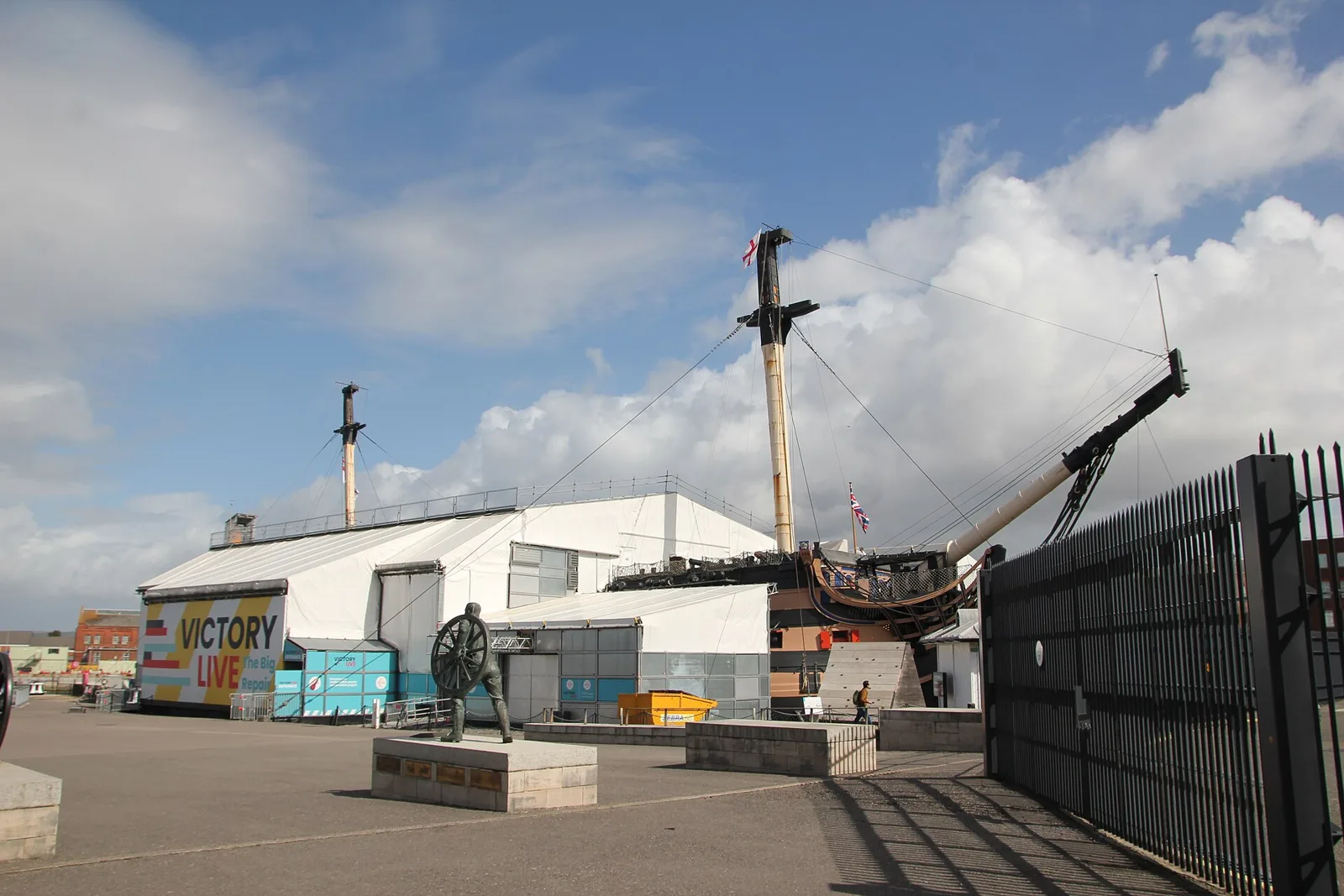

Still open to visitors
The ship stays open throughout the work. The museum invites visitors to step aboard Nelson's flagship and take a moment of reflection at the spot where he fell. The dockyard's address is Main Rd, HM Naval Base, Portsmouth PO1 3LJ.
Seeing her under full rig again will mean waiting for the repair to finish. But the scaffolding has its own appeal: this is your chance to watch, up close, as a ship launched in 1765 is mended piece by piece rather than left to decay.

Find HMS Victory on Wooriyeojido
A ship where Nelson's signal is raised again every year, still a warship after more than two centuries, HMS Victory is pinned on the Wooriyeojido map. Look her up in the Wooriyeojido app, and if you visit, leave your photos and stories from the day right beside her.
View this place in the Wooriyeojido appVideos of nearby places
 Napoleon's last battle: Waterloo and the Lion's Mound
 The Battle of Hastings, 1066, and why English is full of French
 Botany Bay, where Captain Cook first set foot in Australia
Sources
- Royal Navy — Royal Navy marks 220th anniversary of Trafalgar Day in annual ceremony on board HMS Victory (2025-10-21)
- National Museum of the Royal Navy — HMS Victory's Conservation Announced as Victory Commemorates 100 Years in Dry Dock (2022-01-11)
- National Museum of the Royal Navy — Major new conservation phase for HMS Victory (2022-05-23)
- National Museum of the Royal Navy — HMS Victory: Conservation work continues at pace (2025-03-12)
- National Museum of the Royal Navy — HMS Victory: The Big Repair
- Portsmouth Historic Dockyard — HMS Victory
- Royal Museums Greenwich — Battle of Trafalgar