The Gutenberg Bible: How Mainz Ended the Age of Copying by Hand
In 1450s Mainz, Johannes Gutenberg printed a Bible with movable metal type. How a book that once took fifteen months to copy could be produced in batches, plus Korea's Jikji, printed 78 years earlier, in a short video and photos.
There was a time when copying a single Bible by hand could take fifteen months. The city that changed that was Mainz, on the Rhine in Germany. What happens when the way we make books changes? Start with the short video.

 Watch the one-minute video on YouTube
Gutenberg's hometown
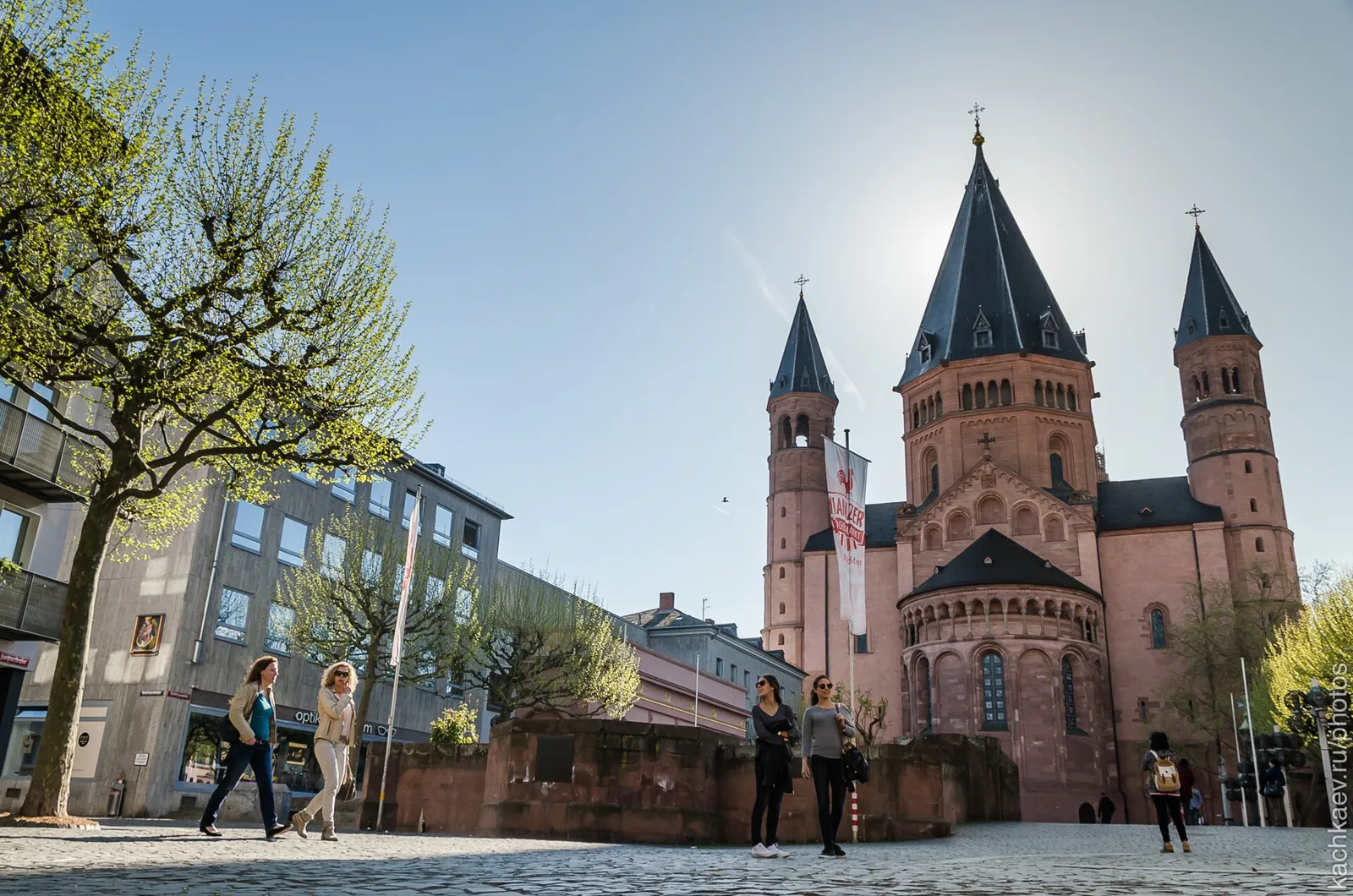
Mainz is the birthplace of Johannes Gutenberg, who was born around 1400 and died around 1468. The city's Gutenberg Museum was founded by its citizens in 1900. The original museum building closed in October 2024 to be rebuilt, and for now the Gutenberg Bibles are on show in a temporary exhibition space inside the Natural History Museum.
Fifteen months with a pen
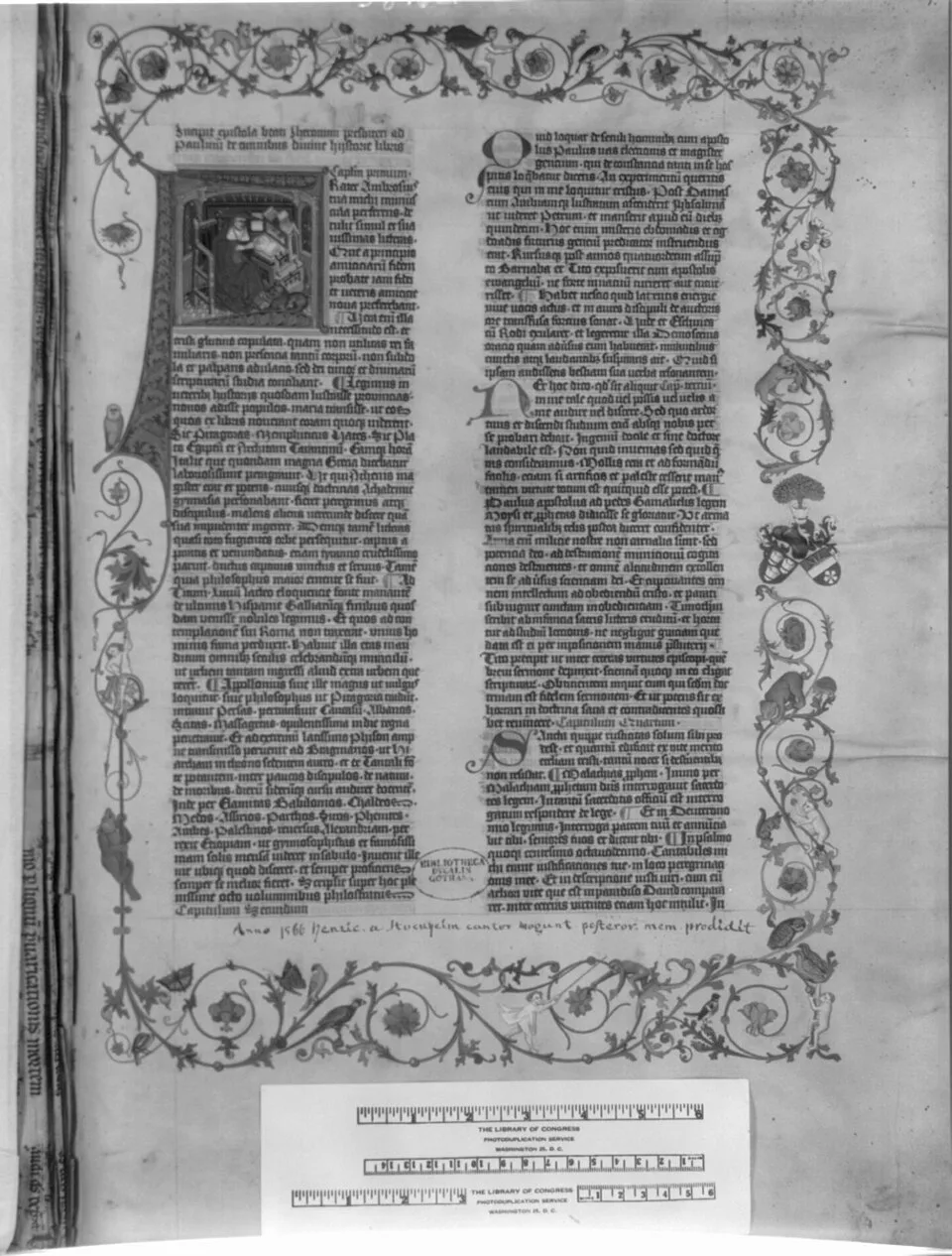
The Library of Congress holds a handwritten Bible known as the Giant Bible of Mainz, made in 1452–1453, probably in Mainz. Its scribe started work on 4 April 1452 and finished on 9 July 1453. One book, fifteen months.

Casting letters one at a time
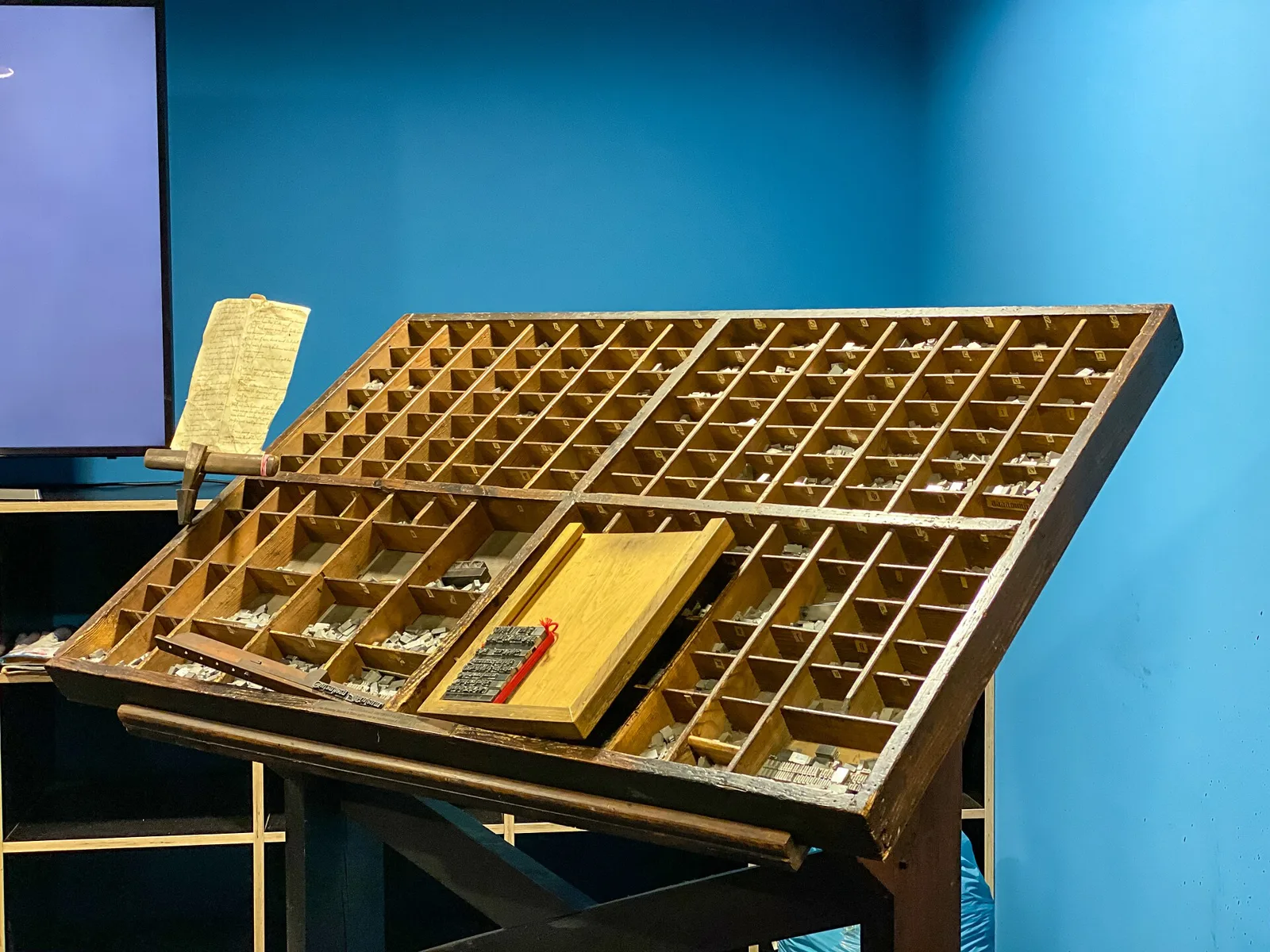
Gutenberg's idea was to break text down into individual characters and make each one out of metal. First, a letter was cut in mirror image into the tip of a steel punch. The punch was struck into copper to form a mould of the letter, called a matrix. The matrix went into a hand-held casting instrument, and molten metal, an alloy of lead, tin and other additives, was poured in. Out came a piece of type, and the process could be repeated as many times as needed.
Every piece of type came out exactly the same height. That made it easy to set them into words, lines and whole pages, and to break the pages up and reuse the letters again.

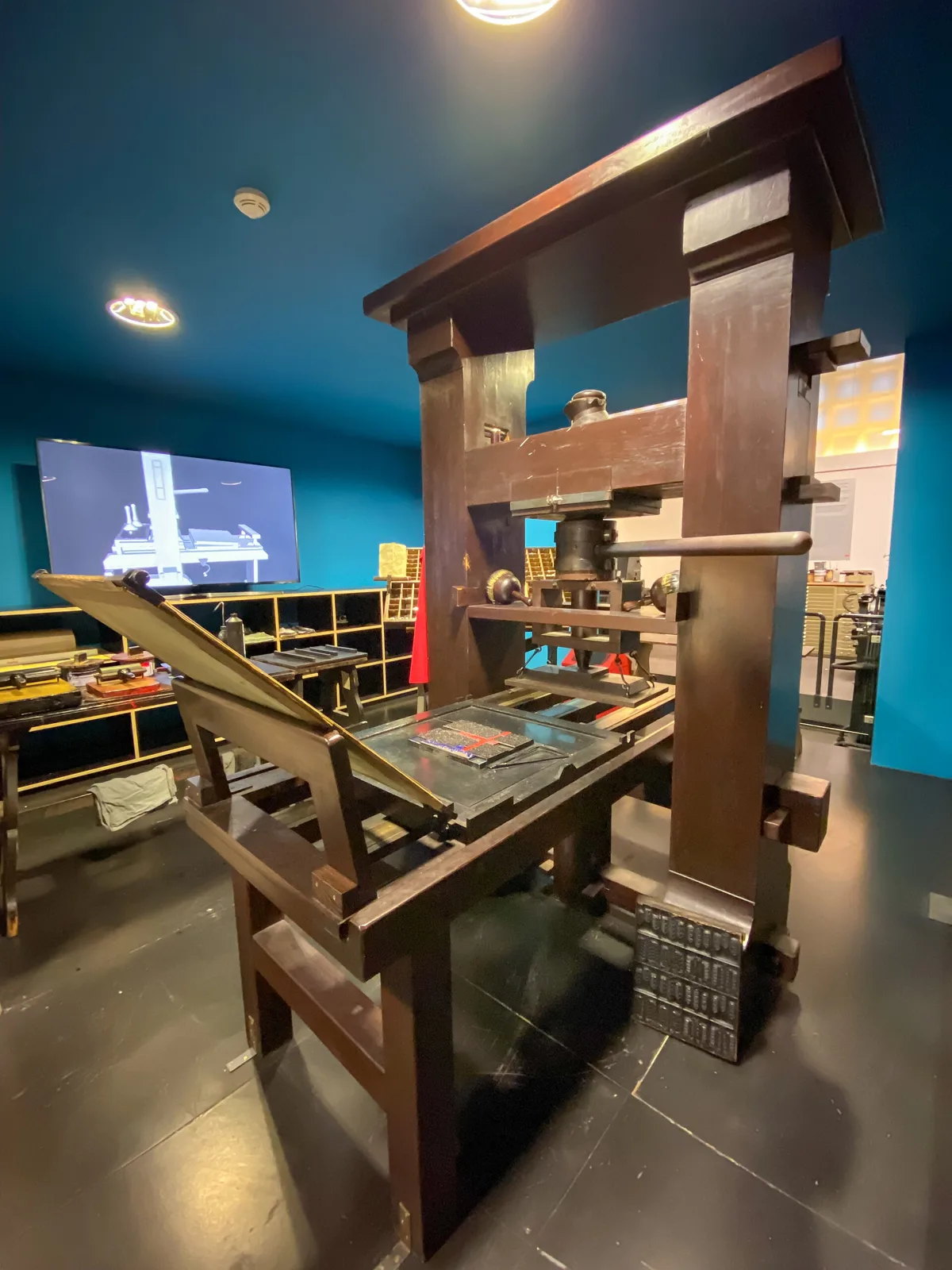
The set type was inked and pressed onto paper or parchment with a screw press that transferred the ink evenly. The museum displays a reconstruction of the press.

The 42-line Bible
Most pages of the Gutenberg Bible hold 42 lines of text, which is why it is also called the 42-line Bible. Some twenty workers produced it between 1452 and 1455. It runs to two volumes and 1,282 pages, and 290 different characters were cast to print it. The Library of Congress believes it was probably completed in Mainz late in 1455.
Over those few years, about 180 copies were made, probably 150 on paper and 30 on parchment. But the press only printed the text. Coloured initials and floral decoration were added by hand afterwards, by craftsmen each buyer hired separately, so no two copies look alike.
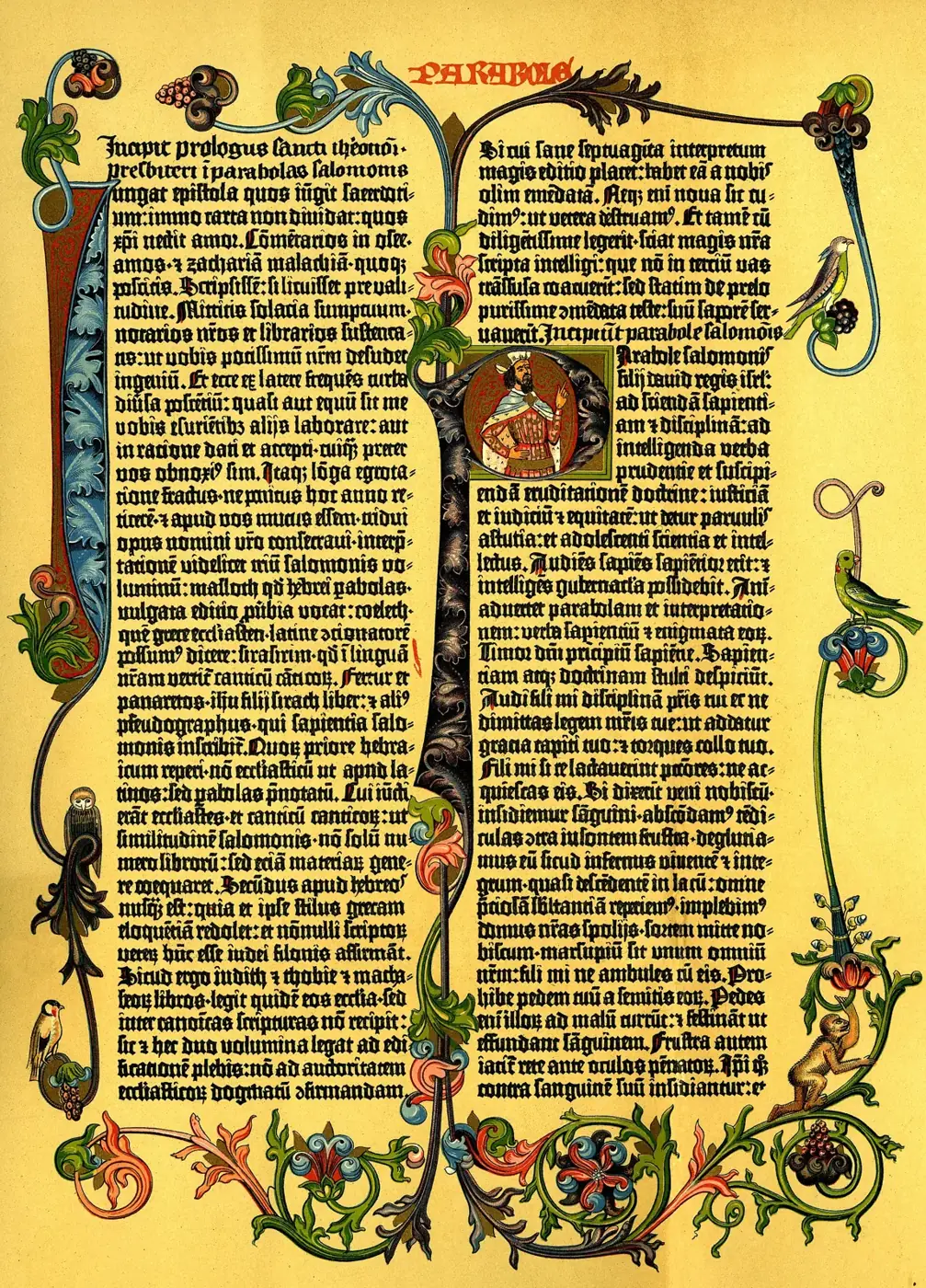

Forty-nine copies survive today. Of the 30 printed on parchment, only four remain complete with all 1,282 pages. The parchment copy in Göttingen, Germany, was added to UNESCO's Memory of the World Register in 2001, and the Gutenberg Museum in Mainz owns two copies.
Korea's Jikji, 78 years earlier
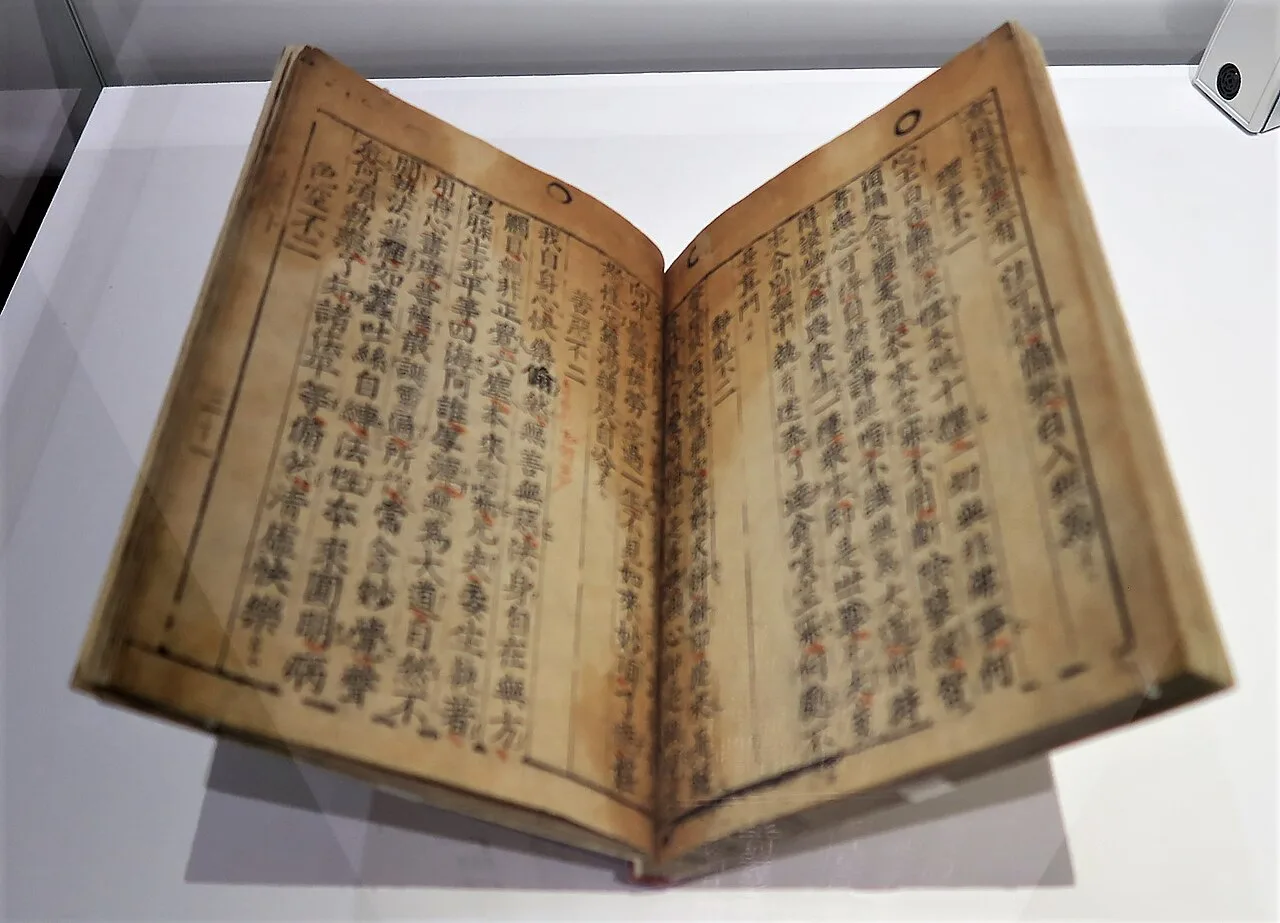
No story of movable type is complete without another book: the Jikji, held by the Bibliothèque nationale de France. It was printed with movable metal type in 1377 at Heungdeok Temple, in what is now the city of Cheongju, Korea, during the Goryeo dynasty. It is the oldest surviving book printed with movable metal type, 78 years older than the Gutenberg Bible. The Jikji, too, joined the Memory of the World Register in 2001.

From Mainz to the world
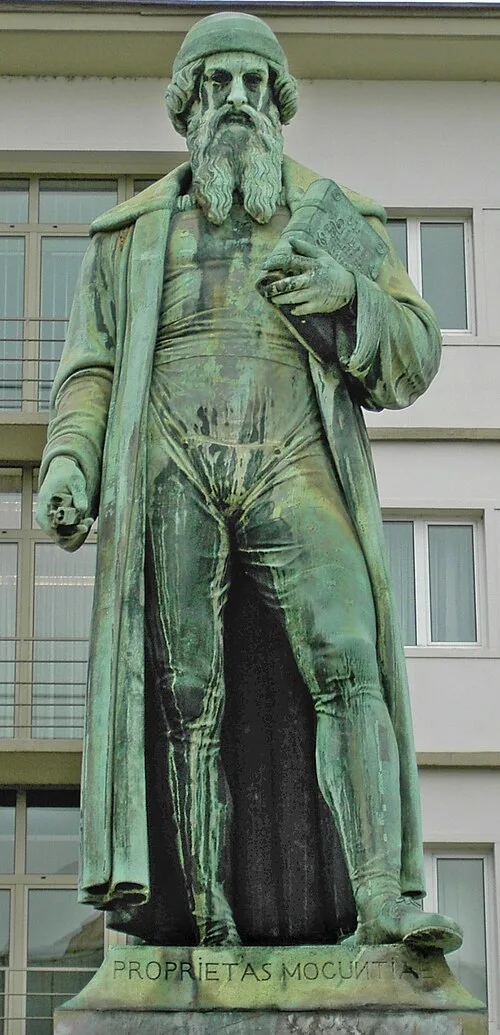
A monument to Gutenberg has stood in Mainz since 1837. As UNESCO puts it, the new technology spread from Mainz across Europe and then around the world. Books that had been copied one at a time by hand could now be printed many at once, with metal type that could be set, broken up and set again.

Find the Gutenberg Museum in Mainz on Wooriyeojido
From a handwritten Bible that took fifteen months to some 180 printed copies in a few years, the change began in Mainz. The Gutenberg Museum in Mainz is pinned on the Wooriyeojido map. Look up Mainz, the city of the Gutenberg Bible, in the Wooriyeojido app, and if you go, leave your photos and stories from the day right beside it.
View this place in the Wooriyeojido appVideos of nearby places
 Seven officials jailed for opposing Hangeul? The 1444 Hunminjeongeum
 How did 80,000 wooden blocks last 750+ years without rotting? Tripitaka Koreana, Haeinsa
 167 scholars followed an army to the Pyramids? Napoleon in Egypt and the Rosetta Stone
Sources
- City of Mainz, Gutenberg Museum — The Gutenberg Bibles
- City of Mainz, Gutenberg Museum — About the museum
- gutenberg.de (City of Mainz) — Gutenberg Bible, Invention, Mainz
- UNESCO Memory of the World — 42-line Gutenberg Bible, printed on vellum, and its contemporary documentary background
- Library of Congress — The Giant Bible of Mainz
- Library of Congress — The Gutenberg Bible
- Bibliothèque nationale de France — Jikji, a treasure of the world of printing